A Woman of Opinion by Sean Lusk

In his new novel, A Woman of Opinion, Sean Lusk tells the story of Lady Mary Wortley Montagu, based closely on her own published letters. Montagu, whom I previously knew almost nothing about, lived from 1689 to 1762, and was an English writer, poet and medical pioneer. She led a fascinating life and I enjoyed seeing it unfold through the pages of this novel.

A Woman of Opinion begins in 1712 with Mary eloping with Edward Wortley Montagu in order to avoid being pushed into marriage to her father’s choice of husband, the Irish nobleman Clotworthy Skeffington. Edward is a Whig politician and the two settle in London for a few years until, growing impatient with her husband’s lack of ambition and desperate to see more of the world, Mary manages to engineer a job offer for him as ambassador to Constantinople.

While Edward is busy trying to negotiate an end to the Austro-Turkish War, Mary gets to know some of the local Turkish women and is intrigued when she observes them inoculating their children against smallpox, through the method of ‘engrafting’ – taking pus from an infected person and introducing it into the arm or leg of an uninfected child. Mary, who has suffered from smallpox herself and been left with scarring to the face, is so impressed by the results of this procedure that when she returns to England she becomes determined to inoculate as many children as possible.

Most of the novel is narrated by Mary herself – in a formal, eloquent style that fits the 18th century setting, with no glaringly anachronistic language – but some chapters are narrated by her sister, Frances. Unlike Mary, who is the strong, independent ‘woman of opinion’ of the title, Frances has a gentler, more trusting nature. She is easier to like than Mary but her story is much less interesting and I didn’t feel that her perspective really added anything to the book.

Although the Constantinople episode is the most engaging part of the novel, Mary’s life continued to be eventful after her return. She formed a friendship and then a rivalry with the poet Alexander Pope, travelled to Italy where she began an affair with Count Francesco Algarotti, and produced a number of poems and essays. She also left behind her collection of letters, which were published in three volumes after her death as Turkish Embassy Letters (and are still in print today). Her other lasting legacy – her role in the development of the smallpox vaccine – has been overshadowed by Edward Jenner and I’m pleased that this novel has been able to raise some awareness of her contributions.

I enjoyed A Woman of Opinion much more than Sean Lusk’s debut, The Second Sight of Zacahary Cloudesley, which I felt had an unnecessary magical realism element and lost its way halfway through. However, I discovered from Lusk’s author’s note at the end of this book that one of the characters in Zachary Cloudesley was also based on Mary Wortley Montagu. If you’ve read both books, I’ll leave you to guess which one!

Thanks to Doubleday for providing a copy of this book for review via NetGalley.

This is book 9/20 of my 20 Books of Summer 2024.

Book 27/50 for the Historical Fiction Reading Challenge 2024

Six Degrees of Separation: From Kairos to Weyward

It’s the first Saturday of the month which means it’s time for another Six Degrees of Separation, hosted by Kate of Books are my Favourite and Best. The idea is that Kate chooses a book to use as a starting point and then we have to link it to six other books of our choice to form a chain. A book doesn’t have to be connected to all of the others on the list – only to the one next to it in the chain.

This month we’re starting with the 2024 winner of the International Booker Prize, Kairos by Jenny Erpenbeck (translated by Michael Hofmann). I haven’t read it, but here’s what it’s about:

Berlin. 11 July 1986. They meet by chance on a bus. She is a young student, he is older and married. Theirs is an intense and sudden attraction, fuelled by a shared passion for music and art, and heightened by the secrecy they must maintain. But when she strays for a single night he cannot forgive her and a dangerous crack forms between them, opening up a space for cruelty, punishment and the exertion of power. And the world around them is changing too: as the GDR begins to crumble, so too do all the old certainties and the old loyalties, ushering in a new era whose great gains also involve profound loss.

From a prize-winning German writer, this is the intimate and devastating story of the path of two lovers through the ruins of a relationship, set against the backdrop of a seismic period in European history.

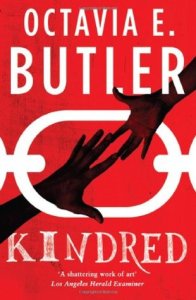
I struggled to get started with this month’s chain. I know I have already used Berlin as a link in several previous chains, so I wanted to do something different. Eventually I decided to go with another book with a one-word title beginning with K: Kindred by Octavia E. Butler (1). This is a fascinating novel exploring slavery on a Maryland plantation through the eyes of a woman from 1976 who travels back in time to the 1800s.

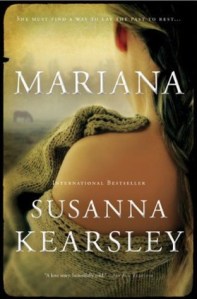
Another time travel novel, also with a one-word title, is Mariana by Susanna Kearsley (2), although the setting is quite different. Our heroine, Julia Beckett, moves into a lonely farmhouse and finds that her life has become linked with the life of a woman who lived there centuries earlier, during the aftermath of the English Civil War. This was one of my first Susanna Kearsley novels and still a favourite.

Staying with women’s names, my next link is to Theodora by Stella Duffy (3). This novel is set in 6th century Constantinople and tells the story of Empress Theodora, wife of Justinian I. Theodora begins life as an actress and entertainer, before rising to become one of the most powerful women in the Byzantine Empire.

Booth by Karen Joy Fowler (4) also has a theatrical theme (and another one-word title). I loved this fictional biography of the 19th century theatrical family, the Booths, which focuses not just on the infamous John Wilkes Booth, the assassin of Abraham Lincoln, but also on his parents, brothers and sisters.

Junius Brutus Booth and Edwin Booth were renowned Shakespearean actors, which leads me to a play by William Shakespeare himself: Macbeth (5). I could have picked any play here, but my reasons for selecting Macbeth are simple – it’s one of the few Shakespeare plays I’ve actually posted about on my blog and, most importantly, it has a one-word title which keeps that theme going throughout my chain!

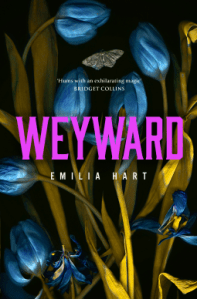
The three witches in Macbeth are referred to as the ‘weyward sisters’ in Shakespeare’s First Folio (and later, the ‘weird sisters’) so my final link is to Weyward by Emilia Hart (6). In this novel, Hart explores the stories of women from three generations of the same family who are connected through witchcraft and the power of nature.

~

And that’s my chain for July! My links have included titles beginning with K, time travel, women’s names, acting, Shakespeare and witches. As an extra challenge to myself I only used books with one-word titles in this month’s chain.

In August we’ll be starting with The Museum of Modern Love by Heather Rose.

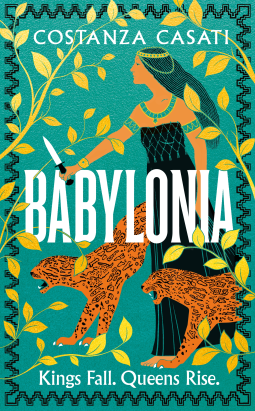
Babylonia by Costanza Casati

‘Not all of us are made for the dust. Those who are destined to rise will rise one way or another.’

Babylonia was something slightly different for me. Although I read a lot of historical fiction, I’m not often drawn to ancient history and I think this could possibly be the first novel I’ve read set at the time of the Assyrian Empire. I enjoyed Costanza Casati’s previous book, Clytemnestra, though, so I decided to give this one a try.

Babylonia is set in the 9th Century BC and tells the story of the legendary Semiramis, thought to be based on the historical Assyrian queen, Sammuramat. I had heard of Semiramis before beginning the book, but knew almost nothing about her or the legends surrounding her.

Semiramis, at least in this version of the story, is the daughter of Derceto, who kills her lover after he denies being the father of her child and then drowns herself. The orphaned Semiramis is taken in by a shepherd, Simmas, who raises her along with his own son. However, Simmas is not a loving father and treats Semiramis so badly that as she grows into a woman she begins to plan her escape from the village. She finally gets her chance to move on and start a new life when she marries Onnes, the new governor of Eber-Nari. Onnes is the illegitimate half-brother of King Ninus and through marriage to him, Semiramis becomes close to the royal household. Still not content with how far she has come, Semiramis sets her sights on the throne, but when it comes to politics she may have met her match in the King’s mother, Nisat.

Much of the focus of the novel is on the relationships between Ninus, Onnes and Semiramis and the different kinds of love and hate each one of them has for the other two. It’s a fascinating triangle to read about with the dynamics shifting and changing throughout the book and the use of multiple perspectives helps us to see that there’s more than one side to the story. These three are not the only interesting characters in the novel – I’ve already mentioned Nisat, but two others who stood out for me were Sasi, the King’s spymaster, and Ribat, a young slave who serves as Semiramis’ eyes and ears in the palace, while dreaming of becoming a scribe.

Because of my lack of knowledge of Semiramis and this period of history in general, I can’t really comment on how this novel compares to other retellings of the same legends. I suppose one of the advantages of writing about a mythical figure is that it does allow the author a lot of freedom in how they choose to approach the story. As for the Assyrian world Casati builds around Semiramis, it feels real, believable and rooted in historical research, from the descriptions of food and clothing to the accounts of battles and political intrigue. Casati writes so beautifully this novel really was a pleasure to read.

If any of you have read any other books about Semiramis/Sammuramat or the Assyrian Empire, I would love to hear your recommendations.

Thanks to Michael Joseph, Penguin Random House for providing a copy of this book for review via NetGalley.

This is book 8/20 of my 20 Books of Summer 2024.

Book 26/50 for the Historical Fiction Reading Challenge 2024
Top Ten Tuesday: Going Green

This week’s topic for Top Ten Tuesday (hosted by That Artsy Reader Girl) is “Books with My Favourite Colour on the Cover”.

I’ve always loved green so here are ten books I’ve read and enjoyed with green on the cover:

1. The Village of Eight Graves by Seishi Yokomizo – A Japanese classic crime novel first published in 1950 and available in a new English translation by Bryan Karetnyk.

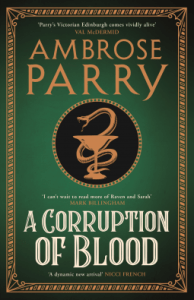
2. A Corruption of Blood by Ambrose Parry – The third book in one of my favourite historical mysteries series, set in the medical world of 19th century Edinburgh.

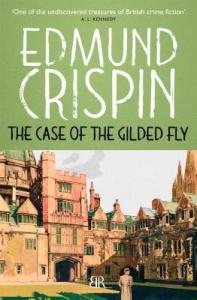
3. The Case of the Gilded Fly by Edmund Crispin – A Gervase Fen mystery with a theatrical theme. I’ve only read two books in the series so far and must read more!

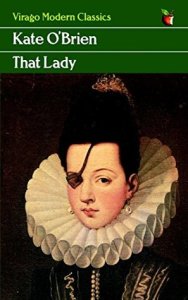
4. That Lady by Kate O’Brien – The first of two Virago Modern Classics on my list, with those famous green covers. This one is about Ana de Mendoza, Princess of Eboli and Duchess of Pastrana.

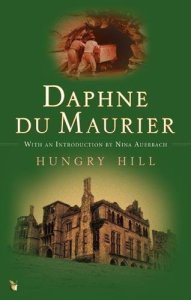
5. Hungry Hill by Daphne du Maurier – This family saga set in Ireland is a particularly bleak du Maurier novel and not a favourite, but I did still like it.

6. Anne Boleyn: A King’s Obsession by Alison Weir – Part of Weir’s Six Tudor Queens series, retelling the stories of the six wives of Henry VIII.

7. The No. 1 Ladies’ Detective Agency by Alexander McCall Smith – The first in McCall Smith’s popular detective series set in Botswana and still the only one I’ve read!

8. Troy Chimneys by Margaret Kennedy – Another VMC book. I loved this one, set in Regency England and telling the story of a man with two very different sides to his character.

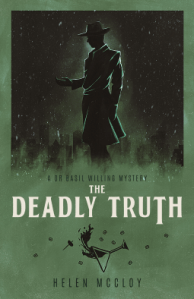
9. The Deadly Truth by Helen McCloy – A 1941 mystery featuring the New York psychiatrist Dr Basil Willing. McCloy’s books seem to have gone back out of print again, so I’m glad I managed to read some of them while they were available!

10. Human Croquet by Kate Atkinson – This early Atkinson novel is an unusual, imaginative read that plays with the concept of time in some fascinating ways.

~

Have you read any of these? Are there any other books you’ve enjoyed with green covers?

My Commonplace Book: June 2024

A selection of quotes and pictures to represent June’s reading:

commonplace book
noun
a book into which notable extracts from other works are copied for personal use.

~

Houses have their own personalities. Or, at the very least, a house and its inhabitants cannot escape each other’s mutual influence over their many years in each other’s company.

The Noh Mask Murder by Akimitsu Takagi (1949)

~

“Is that a good thing or a bad thing?”

“Neither,” he said. “It’s just different. The trick is to learn to work with the change, rather than around it. If you spend all your time trying to ignore it or avoid it, you’ll never get anything done.”

The Ballad of Jacquotte Delahaye by Briony Cameron (2024)

~

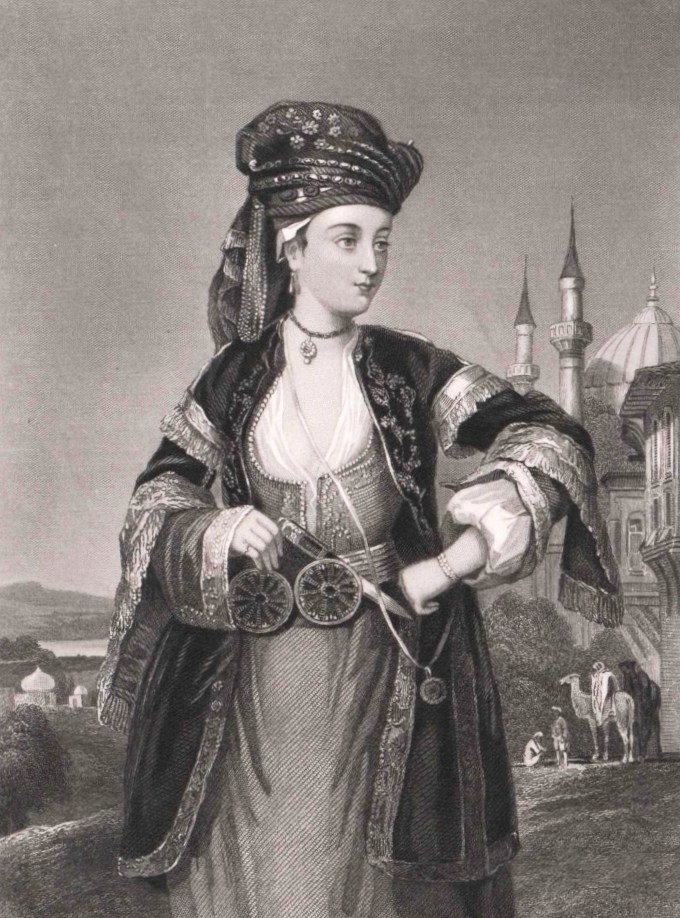
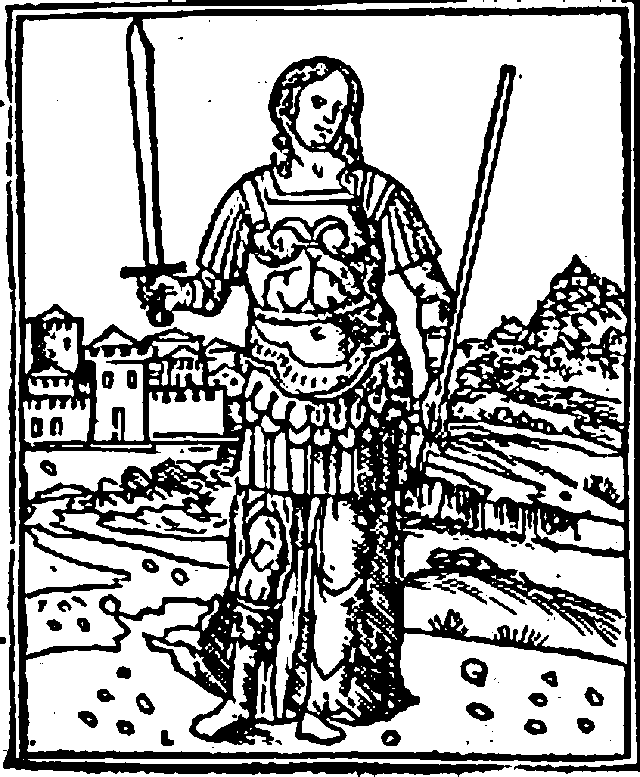
Lady Mary Wortley Montague in Turkish dress

‘And some rules of taste are poor, indeed the very obsession with taste is absurd, as if there can be only one flavour or fashion, and all must follow it like sheep in a field being chased by a dog. Variety and unconvention are at the heart of all new art and science, and I fear that we live in an age where people are too inclined to follow fashion.’

A Woman of Opinion by Sean Lusk (2024)

~

I loved the odour of lavender. Smells, almost more than noises, seem to bring on the happiness or unhappiness memories. You might not remember what it was about a smell that made you angry at the time, or afraid, but as soon as you come across it again you are angry or fearful.

Thomasina by Paul Gallico (1957)

~

‘But I hate surprises.’ She nestled closer to him. ‘I always like to know what’s happening.’

‘Then I pity you, for you have never appreciated the joy of anticipation, or had a good surprise.’

The Burial Plot by Elizabeth Macneal (2024)

~

‘Though we can’t travel the world, we can still be curious as to how the earth is shaped. I learnt cartography from a master who had never left the small island of his birth, barely ten miles across. “Everything you need,” he used to say to me, “is here beneath your feet, but it will take two lifetimes to understand it.”

The Cautious Traveller’s Guide to the Wastelands by Sarah Brooks (2024)

~

Semiramis, in an 18th century Italian illustration

‘Is it true?’ he asks.

Her mouth twists into a sad smile. ‘Truth and lies are closer than you think. Often, what one man believes to be true, another deems outrageously false.’

Babylonia by Costanza Casati (2024)

~

“A knowledge of human nature – what a dangerous thing it can be.”

“A useful thing,” corrected Mr Satterthwaite.

“Perhaps. It depends upon the point of view.”

Three Act Tragedy by Agatha Christie (1934)

~

‘Your logic may well be right, but governments are not like that. In this world of men, a government cannot embody justice.’

The Meiji Guillotine Murders by Futaro Yamada (1979)

~

Anna of Denmark, portrait by John de Critz

‘Life is a journey, just like this,’ Bishop Larsen said, settling onto his seat. He pointed ahead. ‘We all reach a fork in the road, exactly like that one, do you see? One path goes through the wheat fields and all the way to Copenhagen. The other path leads up to the cliff edge, which is a treacherous place to be. Think about which path you would like to be on, your Royal Highness.’

The King’s Witches by Kate Foster (2024)

~

Favourite books read this month:

The Noh Mask Murder, Babylonia, A Woman of Opinion and Thomasina

Authors read for the first time this month:

Akimitsu Takagi, Briony Cameron, Paul Gallico, Sarah Brooks, Futaro Yamada, Kate Foster

Places visited in this month’s reading:

Japan, Hispaniola, Jamaica, Scotland, England, Russia, China, Turkey, Denmark, Assyrian Empire

~

Reading Notes: June has been devoted to reading books from my 20 Books of Summer list and I’m pleased to report that I’ve now read ten of them and reviewed seven! This gives me a lot of confidence that I actually have a chance of completing the challenge this year, but that will depend on whether I get distracted by other books in July and August. I’m also happy to see that I’ve read about so many different countries this month – and that two of the books I read were translations.

In July, Stu is hosting Spanish/Portuguese Lit Month and Words and Peace is hosting Paris in July. As we’re halfway through the year, it also means it’s time for Six in Six again!

How was your June? What are you planning to read in July?

The Puzzle Wood by Rosie Andrews

Rosie Andrews’ debut novel, The Leviathan, left me with mixed, but generally positive, feelings – I loved the setting and atmosphere, but was less interested in the fantasy/horror elements that began to dominate in the second half. I was curious to see whether her new novel, The Puzzle Wood, would be more to my taste.

The novel begins in 1852 with the recently widowed Catherine Symonds applying for the position of governess at Locksley Abbey in Herefordshire. Catherine doesn’t really need the work – her husband was a wealthy man – but she has another reason for her application: her sister, Emily, was the previous governess at Locksley Abbey and has been found dead in the woods nearby, believed to have taken her own life. Catherine is not satisfied with this explanation and in order to investigate her sister’s death, she needs to find a way to insert herself into the household without anyone guessing her connection with Emily.

Once at Locksley Abbey, Catherine meets her new employer, Sir Rowland, and her young charge, his daughter Georgie. The more she learns about the family and their history, the more she becomes convinced that there’s more to her sister’s death than has so far been revealed. Meanwhile, there’s another newcomer – Arthur Sidstone, a doctor who has recently returned to the area after working abroad. Arthur’s grandfather, who is interested in the history of the forests surrounding Locksley, has grown concerned by reports that Sir Rowland is planning to sell off the land for development. Arthur has come to ask him to reconsider, but ends up becoming much more closely involved in the affairs of Locksley Abbey than he had bargained for.

Set in the Black Mountains of Herefordshire close to the England-Wales border, on a remote estate surrounded by ancient woods steeped in folklore, with a plot incorporating family secrets and mysterious deaths, The Puzzle Wood promised to be a great, atmospheric Gothic novel. However, it didn’t have as much atmosphere as I expected and the Puzzle Wood itself played a surprisingly small part in the story. Instead, a lot of time is spent on another storyline revolving around the productivity of the mine on Sir Rowland’s land and the working conditions of the miners employed there, as well as Arthur Sidstone’s backstory and his involvement with the Chartist movement. I found these two threads quite interesting but they didn’t really blend together very well with Catherine’s story. The spooky/supernatural elements grow stronger towards the end, although certainly not as strong as in The Leviathan and I think readers who pick up this book hoping for something similar could be disappointed.

I seem to have read a few other novels recently with similar plots involving young women working as governesses or servants in lonely Victorian mansions – Elizabeth Macneal’s The Burial Plot and Katie Lumsden’s The Secrets of Hartwood Hall are two that come to mind and both were more enjoyable than this one. Maybe if I hadn’t read so many of this kind of book I would have found The Puzzle Wood more captivating as I do like Rosie Andrews’ writing. I’m not sure if I’ll try more of her books, but depending on the setting and subject I could be tempted.

Thanks to Raven Books for providing a copy of this book for review via NetGalley.

Book 25/50 for the Historical Fiction Reading Challenge 2024

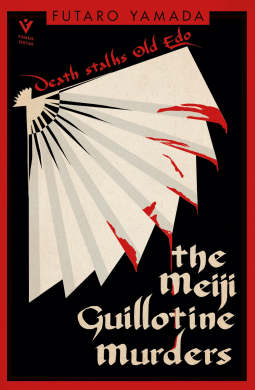
The Meiji Guillotine Murders by Futaro Yamada

Translated by Bryan Karetnyk

It’s 1869 and Japan has entered the Meiji era. The Tokugawa shogunate has fallen and the Emperor Meiji has been restored to the throne. After centuries of isolation, Japan is finally opening up to foreign trade and undergoing social, industrial and military reform. In Tokyo, a group of corrupt rasotsu (policemen) have found ways to exploit this period of change and upheaval for their own gain. With the arrival of two Chief Inspectors from the Imperial Prosecuting Office, Kawaji and Kazuki, it seems that the rasotsu will be forced to mend their ways – although the two men have other things to occupy their time as well as dealing with corruption.

With a number of bizarre murders taking place around Tokyo, Kazuki and Kawaji (based on a real person who is considered the founder of Japan’s modern police system) engage in a friendly competition to see who can solve the crimes first. A separate chapter is devoted to each case, which at first seem to be unrelated, making the book feel almost like a collection of short stories. There are five cases for the two detectives to solve, with the help of Esmeralda, a young Frenchwoman from a family of executioners whom Kazuki has brought to Japan along with that most deadly of French weapons: the guillotine. Despite the title, the guillotine is not necessarily used to carry out all of the murders in the book, but it represents the changes that Japan is experiencing as the country becomes exposed to modern, western influence. It also provides a reason for Esmeralda’s presence in Tokyo, which is important as she has a significant role to play in the solving of the mysteries.

The Meiji Guillotine Murders was first published in 1979 and is one of several Japanese crime novels that have recently been made available in English by Pushkin Press. However, although I’ve loved some of the others, I didn’t enjoy this one quite as much. Bryan Karetnyk’s translation is clear and readable (I’m already familiar with his work through some of his other translated novels), but I had problems with other aspects of the book. I struggled with the number of characters, particularly as so few of them have clearly defined personalities and with more and more of them being introduced with each new case the detectives investigate. My lack of engagement with the characters made it difficult for me to concentrate on following the plot, which is important as all of the separate cases are quite complex and you do need to be paying attention! I persevered and was rewarded with the final section of the book where, after some surprising twists and turns, everything is tied together perfectly.

I did like the historical setting of the book and felt I was learning a lot about Japan during the Meiji era. At times it seemed more like historical fiction than a murder mystery, which was fine with me, but I think someone picking the book up expecting a more traditional crime novel may be surprised by the amount of historical detail. It’s an interesting, unusual book, and although I’m not sure whether I would read any more by Yamada, I do hope more of them are translated into English for those readers who loved this one. I’m enjoying discovering Japanese crime authors through Pushkin and so far my favourites have been Seishi Yokomizo and Akimitsu Takagi.

Thanks to Pushkin Vertigo for providing a copy of this book for review via NetGalley.

This is book 7/20 of my 20 Books of Summer 2024.

Book 24/50 for the Historical Fiction Reading Challenge 2024