Top Ten Tuesday: Special books from my childhood

This week’s Top Ten Tuesday, hosted by Jana at That Artsy Reader Girl, asks for our top ten childhood favourites.

There were many, many books that I loved as a child, so this is by no means a definitive top ten and if I did this again next week it could be a different list entirely. For now, though, here are ten books – in no particular order – that bring back special memories.

~

1. Watership Down by Richard Adams

I was about ten years old when I first read this book and it immediately became a favourite. I have re-read it many times since – the last time was in 2010 and I still loved it as much as ever. It’s beautifully written and certainly doesn’t deserve to be dismissed as just ‘a book about talking rabbits’; it’s about so much more than that and has a lot to offer an adult reader as well as a child.

~

2. Gobbolino the Witch’s Cat by Ursula Moray Williams
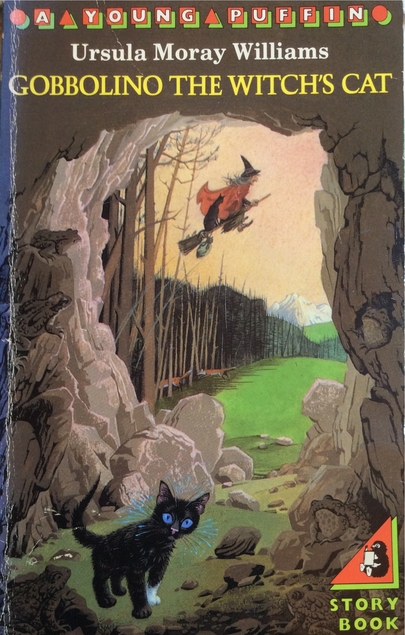
I think I was probably about seven years old when I fell in love with Gobbolino, a little cat who is rejected by his mistress, a witch, because he has blue eyes and a white paw. Dreaming of being an ordinary kitchen cat, Gobbolino sets out in search of a new owner, but finds that nobody wants to give a home to a witch’s cat. This book was published in 1942, a few years after Williams’ more famous children’s book The Adventures of the Little Wooden Horse. I loved the little wooden horse too, but his adventures never resonated with me as much as Gobbolino’s!

~

3. Black Beauty by Anna Sewell

I loved this book as a child, despite it being so sad and despite the themes of animal cruelty and suffering making me cry every time I used to read it. I had (and still have, somewhere) a gorgeous hardback edition with colour illustrations and it’s the book itself that I remember as much as the story. The image above doesn’t really do it justice!

~

4. The Secret Garden by Frances Hodgson Burnett

I had a lovely hardback edition of The Secret Garden too, although I’m not sure what happened to it (it was not the one pictured above). It’s been a very long time since I last read this book but I still remember the excitement when Mary discovers the door to the locked garden at Misselthwaite Manor. I’ll have to put it on my list for a re-read in the near future, if I can find my copy.

~

5. Ballet for Drina by Jean Estoril

I loved books about ballet as a child, and nearly included Noel Streatfeild’s Ballet Shoes on this list, but I think I preferred the Drina series by Jean Estoril (a pseudonym of Mabel Esther Allan). The series was published in the 1950s and 60s and consisted of eleven books following the dancing career of Drina Adams. Some of the later books were stronger and more interesting, but the first, Ballet for Drina, is the one I remember most clearly.

~

6. Little Women by Louisa May Alcott

I can’t remember how old I was when I first read Little Women, but my first copy of it was an abridged version for younger children with the cover shown above. It was part of a series of classics and I also had a few of the others including Treasure Island, Robinson Crusoe, Gulliver’s Travels and Kidnapped. I didn’t like any of them as much as Little Women! My grandmother later gave me her own old copy which contained both Little Women and Good Wives and I still have that book on my shelf.

~

7. A Visit to Folly Castle by Nina Beachcroft
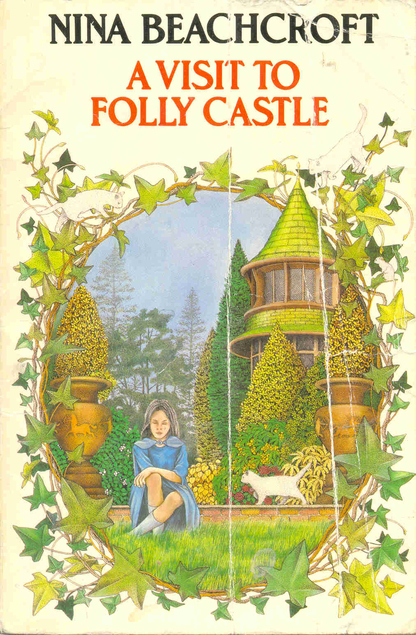
A more obscure one next. I read this several times as a child and loved it, but had forgotten both the title and the author’s name so spent hours a few months ago googling everything I could remember about the plot to try to identify it! It was a fantasy novel about a girl called Emma who finds a message in a bottle that leads her to the home of Cassandra, a lonely girl who is desperate for a friend. As Emma begins to get to know Cassandra, she discovers that there is something not quite human about her new friend’s family. Does anyone else remember this one?

~

8. Charlotte’s Web by E.B. White

It seems that a lot of my childhood favourites involved animals! I loved this classic novel about the friendship between Wilbur the pig, Charlotte the spider and a little girl called Fern. I used to like the film too (the animated one from 1973, not the more recent live-action one).

~

9. The Valley of Adventure by Enid Blyton
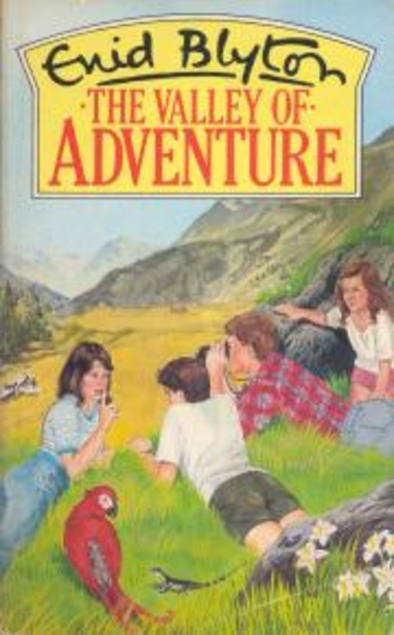
I could have included almost any Enid Blyton book here, as I read and loved so many of them. Her Malory Towers and St Clare’s school stories and The Five Find-Outers mystery series were particular favourites, but if I had to pick just one of her books it would be The Valley of Adventure. In this book, a group of children find themselves stranded in a lonely Austrian valley surrounded by mountains and waterfalls, trying to hide from a gang of criminals who are searching for hidden treasure.

~

10. Anne of Green Gables by L.M. Montgomery
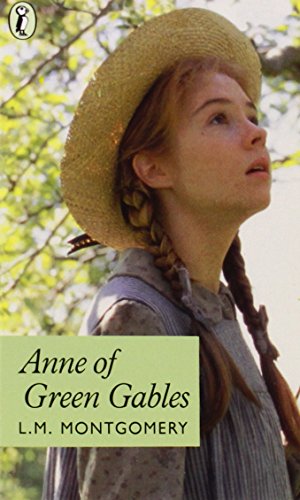
I was torn between several books for the final place on my list, but I finally decided on L.M. Montgomery’s classic Anne of Green Gables. I did read some of the other titles in the Anne series as well, but was less interested in the later ones. The first book was my favourite because I loved watching the development of Anne’s relationships with Matthew and Marilla.

~

Have you read any of these? Which books would be on your list?

Six Degrees of Separation: From Murmur to Great House

It’s the first Saturday of the month which means it’s time for another Six Degrees of Separation, hosted by Kate of Books are my Favourite and Best. The idea is that Kate chooses a book to use as a starting point and then we have to link it to six other books of our choice to form a chain. A book doesn’t have to be connected to all of the others on the list – only to the one next to it in the chain.

This month we are starting with a book I haven’t read and know nothing about: Murmur by Will Eaves. Goodreads tells me that “taking its cue from the arrest and legally enforced chemical castration of the mathematician Alan Turing, Murmur is the account of a man who responds to intolerable physical and mental stress with love, honour and a rigorous, unsentimental curiosity about the ways in which we perceive ourselves and the world.”

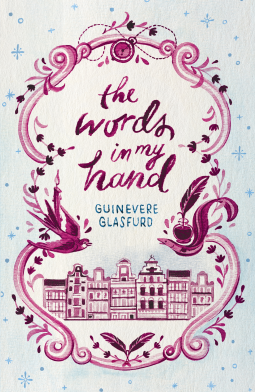
I struggled to think of how to link this to another book, especially as I prefer to only use books in my chains that I’ve actually read and reviewed. I’ve never read anything else by Will Eaves or anything about Alan Turing and neither the book cover nor the word ‘murmur’ gave me any inspiration either. Eventually, I decided that, as Alan Turing was a mathematician, I would simply choose another novel I’ve read about a mathematician – The Words in My Hand by Guinevere Glasfurd.

The Words in My Hand tells the story of Helena Jans van der Strom, a Dutch woman who was in a relationship with the 17th century French philosopher and mathematician René Descartes for more than a decade. The novel explores the significance of the roles they played in each other’s lives and the barriers of class and gender that meant their relationship could never be an equal one.

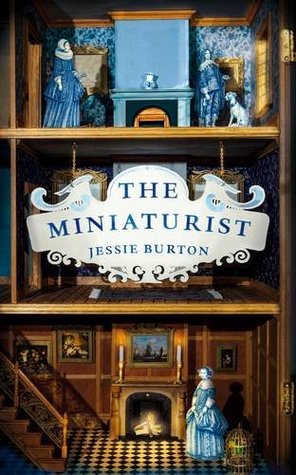
The story is set mainly in Amsterdam, which is where Helena is working as a maid at the time when Descartes comes to stay in the city. Another book set in 17th century Amsterdam is Jessie Burton’s The Miniaturist, a novel inspired by Petronella Oortman’s doll’s house which is on display in the Rijksmuseum.

In The Miniaturist, a young woman is given a special wedding present by her husband: a cabinet containing a doll’s house that resembles their own home. She writes to a ‘miniaturist’ asking for some tiny items and figures to put inside it, but when they begin to arrive she is surprised to find how closely they correspond to people and things from her own life. I enjoyed the book but was also disappointed by it because I felt that the mystery of the miniaturist was never fully resolved.

In 2014, The Miniaturist was voted Waterstones Book of the Year, a prize which has been running since 2012. Last year’s winner was Normal People by Sally Rooney, a book I haven’t read, but one that I have read and loved is Stoner by John Williams, which won the award in 2013.

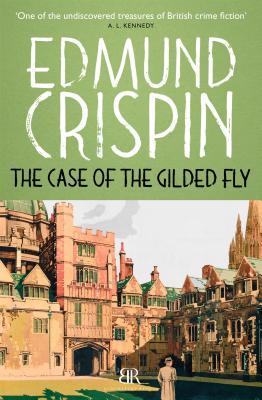
Stoner, published in 1965, is the story of farmer’s son William Stoner who attends the University of Missouri to study agriculture but discovers a passion for literature instead and stays on at the university to teach for the next forty years. Stoner becomes a Professor of English Literature and that makes me think of Edmund Crispin’s detective Gervase Fen, who was Professor of English Language and Literature at Oxford University. Fen stars in a series of mystery novels, the first of which is The Case of the Gilded Fly.

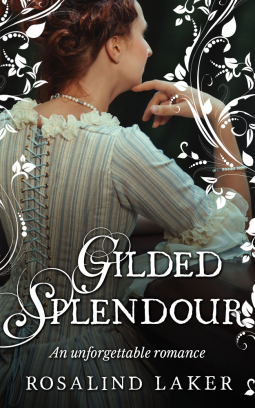
In The Case of the Gilded Fly, Fen is investigating a locked room murder which takes place during rehearsals for the premiere of a new play. An Egyptian-style gilded ring is found on the dead woman’s finger. The word ‘gilded’ in the title leads me to Gilded Splendour by Rosalind Laker, a fictional account of the life of the 18th century cabinet-maker and furniture designer Thomas Chippendale.

Despite the cover, I didn’t find this a very romantic story, especially as I really disliked the hero and wished the heroine would just forget about him! However, I did love the descriptions of Chippendale’s work and the techniques he used to create his furniture. I particularly enjoyed reading about a doll’s house that he built and furnished in miniature – which of course links this book back to an earlier book in my chain, The Miniaturist!

I need one more link to finish the chain, though, and I have chosen another novel where an item of furniture plays an important part. Great House by Nicole Krauss consists of several stories set in different times and places which are all linked by a writing desk with a dramatic and complex history.

And that’s my chain for this month! My links have included mathematicians, Amsterdam, prize winners, English professors, the word ‘gilded’ and items of furniture. Have you read any of these books?
In July, we will be starting with the children’s classic, Where the Wild Things Are by Maurice Sendak.

Six Degrees of Separation: From The Dry to The Red House Mystery

It’s the first Saturday of the month which means it’s time for another Six Degrees of Separation, hosted by Kate of Books are my Favourite and Best. The idea is that Kate chooses a book to use as a starting point and then we have to link it to six other books of our choice to form a chain. A book doesn’t have to be connected to all of the others on the list – only to the one next to it in the chain.

This month we are beginning with The Dry by Jane Harper. I haven’t read that book, but I know that a lot of bloggers whose opinions I trust have enjoyed it so I would like to give it a try. The story is set in a fictional Australian community during a drought. The opposite of a drought is a flood, so for my first link I have chosen Flood of Fire by Amitav Ghosh. This was the third book – and probably my favourite – in Ghosh’s Ibis Trilogy, set in India, China and at sea during the period of the First Opium War.

Opium provides the link to the next book in my chain, which is The Mystery of Edwin Drood by Charles Dickens. In the opening scene of the book, we see Edwin Drood’s uncle, the choirmaster John Jasper, visiting a London opium den run by a mysterious woman known as Princess Puffer.

The Mystery of Edwin Drood was the novel Dickens was working on when he died and was unfortunately left unfinished. I enjoyed it and do recommend reading it, but the fact that it ends before the mystery is solved is as frustrating as you would expect! Another classic novel that was unfinished at the time of the author’s death is Elizabeth Gaskell’s Wives and Daughters, although I found the ending of that one much more satisfying.

I want to move the chain away from classic Victorian novels now, so I have selected a very different type of book for my next link, but one which also has ‘Wives’ in the title: The Secret Lives of Baba Segi’s Wives by Lola Shoneyin. The novel describes a polygamous marriage through the stories of Nigerian businessman Baba Segi and his four wives, who each take their turn as narrator.

I’ve read a few other books set in Nigeria, the most memorable being Half of a Yellow Sun by Chimamanda Ngozi Adichie, a beautiful, emotional novel which follows the lives of several characters before and during the Nigerian-Biafran War of 1967-1970.

To bring my chain to an end, I have chosen another book with a colour in the title, not yellow this time but red. That book is The Red House Mystery by A.A. Milne. Although Milne is best known for the Winnie the Pooh stories, he also wrote this detective novel, published in 1922, which I thought was great fun to read!

And that is my chain for this month. My links included droughts and floods, opium dens, unfinished novels, wives, Nigeria and colours!

In June we’ll be starting with Murmur by Will Eaves, another book I haven’t read.

Top Ten Tuesday: Lines from Lymond

This week’s topic for Top Ten Tuesday (hosted by That Artsy Reader Girl) is:

Inspirational/Thought-Provoking Book Quotes

There are so many quotes I find thought-provoking or inspirational from various books that I really didn’t know where to begin, so I decided to narrow things down slightly by choosing ten from my favourite series, The Lymond Chronicles by Dorothy Dunnett. I say ‘slightly’ because all six of these books are worth quoting in full, in my opinion! Anyway, here is a selection…

~

1. “You cannot love any one person adequately until you have made friends with the rest of the human race also. Adult love demands qualities which cannot be learned living in a vacuum of resentment.”
Checkmate

~

2. “I despised men who accepted their fate. I shaped mine twenty times and had it broken twenty times in my hands.”
The Game of Kings

~

3. “Lack of genius never held anyone back,” said Lymond. “Only time wasted on resentment and daydreaming can do that.”
Queens’ Play

~

4. “Man is a being of varied, manifold and inconstant nature. And woman, by God, is a match for him.”
The Disorderly Knights

~

5. “I don’t like this war. I don’t like the cold-blooded scheming at the beginning and the carnage at the end and the grumbling and the jealousies and the pettishness in the middle. I hate the lack of gallantry and grace; the self-seeking; the destruction of valuable people and things. I believe in danger and endeavour as a form of tempering but I reject it if this is the only shape it can take.”
The Game of Kings

~

6. “Man is not intellect only,” Guthrie said. “Not until you reject all the claims of your body. Not until you have stamped out, little by little, all that is left of your soul.”
The Ringed Castle

~

7. “Remember, some live all their lives without discovering this truth; that the noblest and most terrible power we possess is the power we have, each of us, over the chance-met, the stranger, the passer-by outside your life and your kin. Speak, she said, as you would write: as if your words were letters of lead, graven there for all time, for which you must take the consequences. And take the consequences.”
Queens’ Play

~

8. “The more modest your expectations, the less often you will court disappointment.”
Checkmate

~

9. “I ask for no apology,” said Míkál. “I ask nothing but kindness.”
“I have learned,” said Lymond, “that kindness without love is no kindness.”
Pawn in Frankincense

~

10. “Today,” said Lymond, “if you must know, I don’t like living at all. But that’s just immaturity boggling at the sad face of failure. Tomorrow I’ll be bright as a bedbug again.”
The Disorderly Knights

~

What are your favourite lines from your favourite books?

Six Degrees of Separation: From How to be Both to Bitter Greens

It’s the first Saturday of the month which means it’s time for another Six Degrees of Separation, hosted by Kate of Books are my Favourite and Best. The idea is that Kate chooses a book to use as a starting point and then we have to link it to six other books of our choice to form a chain. A book doesn’t have to be connected to all of the others on the list – only to the one next to it in the chain.

This month the chain begins with How to be Both by Ali Smith, which is a book I’ve never read or considered reading. It does sound interesting – a novel written from two perspectives, one a contemporary teenager and the other a Renaissance artist, where the two narratives are printed in a different order depending on which version you buy. I suspect it wouldn’t be my sort of book, though I could be wrong.

How to be Both won the Women’s Prize for Fiction in 2015. I don’t make a point of deliberately reading the winners of this prize, but I appear to have read quite a few of them over the years anyway. However, I haven’t yet read last year’s winner, Home Fire by Kamila Shamsie – although I have read another of her books, A God in Every Stone.

A God in Every Stone is set mainly in Peshawar during and after the First World War and two of the main characters – Vivian and Najeeb – are archaeologists. Another book I’ve read about archaeologists is Crocodile on the Sandbank by Elizabeth Peters, the first in a series of mysteries featuring Amelia Peabody, a Victorian Egyptologist.

I have still only read the first two books in the Amelia Peabody series, although I really enjoyed them and have no idea why it is taking me so long to get round to reading the third. Another historical mystery series that I started a few years ago but have still only read the first two books is Laurie R. King’s Mary Russell and Sherlock Holmes series, which begins with The Beekeeper’s Apprentice.

The word apprentice in the title leads me quite naturally to Assassin’s Apprentice by Robin Hobb – a very different sort of apprenticeship from beekeeping, but I suppose they could be equally dangerous! Assassin’s Apprentice is the first book in the wonderful Farseer Trilogy, which I highly recommend.

I don’t read a lot of fantasy, but I do always enjoy Robin Hobb’s books. Another fantasy author I’ve enjoyed reading recently is Katherine Arden. Her Winternight trilogy begins with The Bear and the Nightingale and is inspired by Russian myths and fairy tales. I loved the setting and the characters and thought each book in the trilogy was better than the one before.

Another book I loved that was inspired by a fairy tale was Bitter Greens by Kate Forsyth, which combines a retelling of Rapunzel with the story of Charlotte-Rose de Caumont de La Force, the 17th century woman who wrote the original tale on which it was based.

So those are my links for this month: Prize-winners, archaeology, unfinished series, apprentices, fantasy and fairy tales. Have you read any of the books in my chain?

Next month we will be starting with The Dry by Jane Harper.

Top Ten Tuesday: Books on my Spring 2019 TBR

This week’s Top Ten Tuesday, hosted by That Artsy Reader Girl, asks us for ten books on our spring TBR. I have a lot more than ten books that I would like to read this spring, but I’ve chosen a selection of them to list below.

~

1. The Confessions of Frannie Langton by Sara Collins – I’ll be reading this soon for a blog tour on the 10th of April.

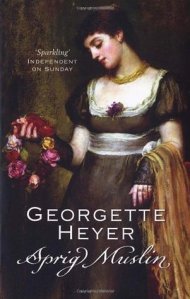
2. Sprig Muslin by Georgette Heyer – I have a few unread Heyer novels on my shelf, but this one is a library book so I will need to read it first.

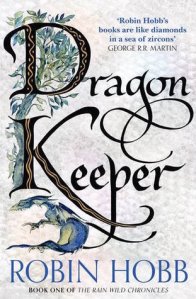
3. The Dragon Keeper by Robin Hobb – Having read and loved Hobb’s Farseer Trilogy, Liveship Traders Trilogy and Tawny Man Trilogy over the last few years, I think it’s time to move on to her next series, The Rain Wild Chronicles!

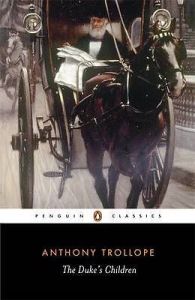
4. The Duke’s Children by Anthony Trollope – This is on my Classics Club list. I’m looking forward to reading it as it will bring the wonderful Palliser series to a close and will mean I can then try some of Trollope’s standalones.

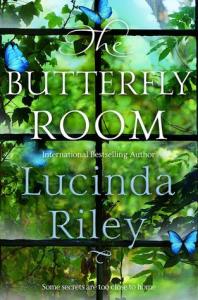
5. The Butterfly Room by Lucinda Riley – I’ve received a review copy of Lucinda Riley’s latest novel, which is being published in May.

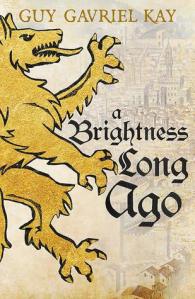
6. A Brightness Long Ago by Guy Gavriel Kay – On my NetGalley shelf. I can’t wait to read Kay’s new historical fantasy novel inspired by Renaissance Italy.

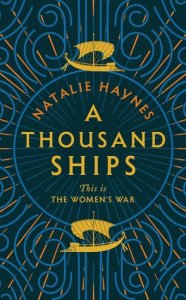
7. A Thousand Ships by Natalie Haynes – There have been several retellings of the Trojan War from female perspectives recently and this is another one.

8. The Wheel of Fortune by Susan Howatch – I’ve just finished re-reading Howatch’s Cashelmara and it has left me wanting to move straight on to a re-read of this one.

9. The Surgeon’s Mate by Patrick O’Brian – It’s been far too long since I last read an Aubrey/Maturin book. This will be my seventh.

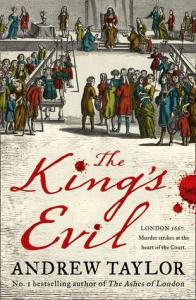
10. The King’s Evil by Andrew Taylor – I enjoyed the first two books in Andrew Taylor’s Marwood and Lovett series, so I’m expecting to enjoy this one too.

~

As well as these books, I will be continuing to take part in the Agatha Christie Challenge for which I’ve been reading one Christie novel every month, and I also need to choose something to read for the upcoming 1965 Club in April. I have lots of books to explore from this year’s Walter Scott Prize longlist too! I think it’s safe to say that I won’t be running out of things to read in the near future.

Have you read – or will you be reading – any of these books? What is on your spring TBR?

Six Degrees of Separation: From The Arsonist to Seven for a Secret

It’s the first Saturday of the month which means it’s time for another Six Degrees of Separation, hosted by Kate of Books are my Favourite and Best. The idea is that Kate chooses a book to use as a starting point and then we have to link it to six other books of our choice to form a chain. A book doesn’t have to be connected to all of the others on the list – only to the one next to it in the chain.

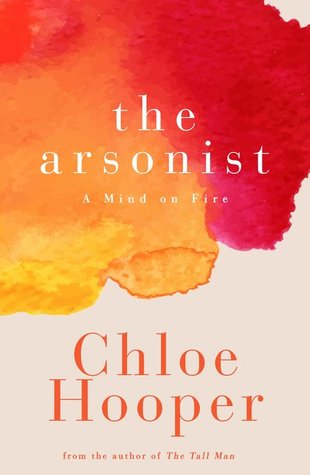
This month we begin with The Arsonist by Chloe Hooper. I haven’t read this book – in fact, it isn’t out in the UK until the end of May – but it does sound like an interesting Australian true-crime book about ‘Black Saturday’, the day in February 2009 when a man lit two fires in Victoria’s Latrobe Valley.

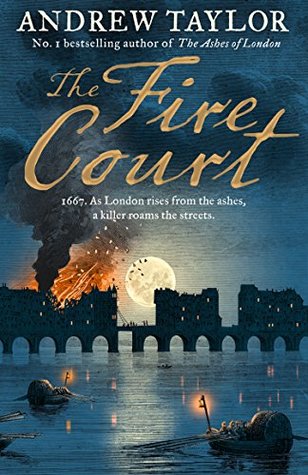
For my first link, I have chosen another book on a fire-related subject, although this one is fiction: The Fire Court by Andrew Taylor, a historical mystery set in the aftermath of the Great Fire of London. This is part of a series featuring the characters of Cat Lovett and James Marwood (I used the first book, The Ashes of London, in a previous Six Degrees post) and the next book, The King’s Evil, is on my shelf waiting to be read soon.

My next link is to another historical crime novel written by an author whose name is Andrew. He is Andrew Hughes and the book is The Convictions of John Delahunt. Set in Dublin in the 1840s, this is a dark, atmospheric novel with an unusual and intriguing narrator. I remember loving it.

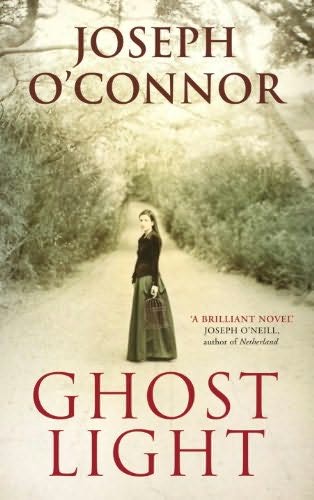
Another book set at least partly in Dublin – in the early twentieth century this time – is Ghost Light by Joseph O’Connor, the story of the Irish actress Molly Allgood and her relationship with the playwright John Millington Synge. I thought this was a beautifully written novel, but I still haven’t read any of Joseph O’Connor’s other books yet.

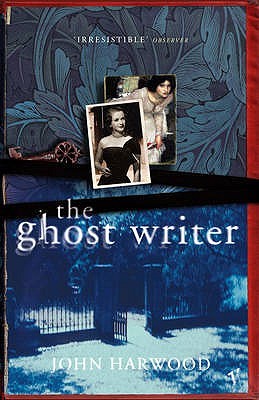
Despite the title, Ghost Light is not actually a ghost story. A novel with the word ‘ghost’ in the title that really does feature ghosts is The Ghost Writer by John Harwood. The main character discovers that his great-grandmother, Viola Hatherley, was a writer of ghost stories and some of the tales she had supposedly written are incorporated into the plot.

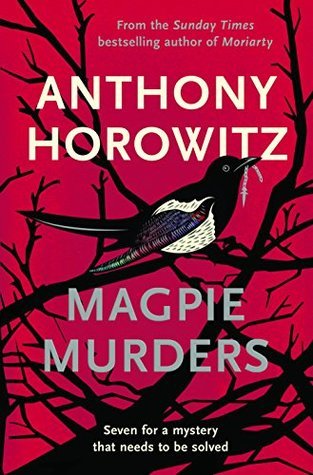
This leads me to another book which uses the story-within-a-story concept, but in a very different way: the wonderful Magpie Murders by Anthony Horowitz. The novel includes, almost in its entirety, an Agatha Christie-style murder mystery written by a fictional author called Alan Conway.

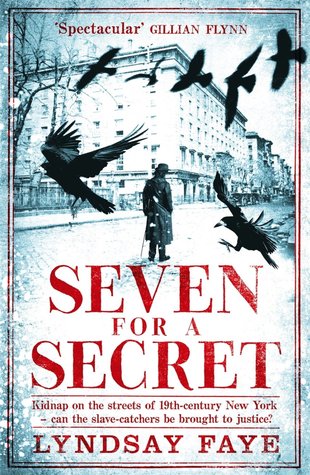
My final link is to Seven for a Secret by Lyndsay Faye, the middle book in her Timothy Wilde trilogy which I loved and was sorry to see come to an end. It can be linked to the previous book in the chain in two ways – as well as having birds pictured on the cover, the title refers to the famous rhyme about magpies (One for sorrow, two for joy, three for a girl, four for a boy, five for silver, six for gold, seven for a secret never to be told).

And that’s my chain for this month! Have you read any of the books I’ve mentioned?

In April we will be starting with How to be Both by Ali Smith.