Top Ten Tuesday: Books on my Autumn TBR

This week’s topic for Top Ten Tuesday (hosted by That Artsy Reader Girl) is: “Books on My Fall 2024 To-Read List”.

I have a lot more than ten books I’m hoping to read this autumn, but here’s a selection of them:

For the upcoming 1970 Club:

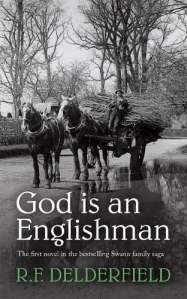
1. God is an Englishman by RF Delderfield
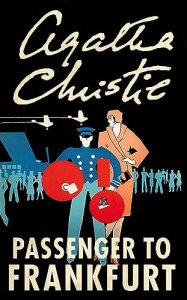
2. Passenger to Frankfurt by Agatha Christie

For Margaret Atwood Reading Month:

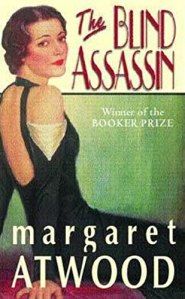
3. The Blind Assassin by Margaret Atwood

For Novellas in November:

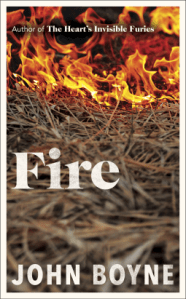
4. Fire by John Boyne

Some review copies:

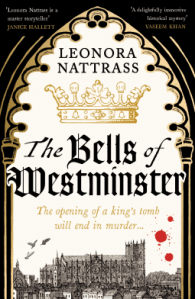
5. The Bells of Westminster by Leonora Nattrass
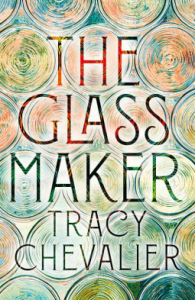
6. The Glassmaker by Tracy Chevalier
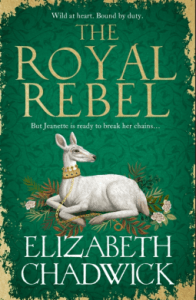
7. The Royal Rebel by Elizabeth Chadwick
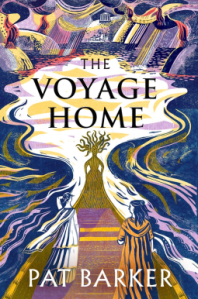
8. The Voyage Home by Pat Barker
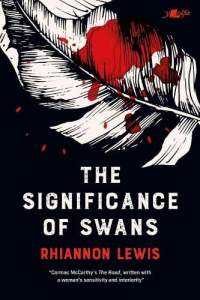
9. The Significance of Swans by Rhiannon Lewis
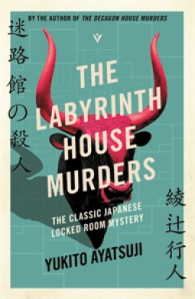
10. The Labyrinth House Murders by Yukito Ayatsuji

~

Which books are on your autumn/fall TBR?

Six Degrees of Separation: From After Story to The Testaments

It’s the first Saturday of the month which means it’s time for another Six Degrees of Separation, hosted by Kate of Books are my Favourite and Best. The idea is that Kate chooses a book to use as a starting point and then we have to link it to six other books of our choice to form a chain. A book doesn’t have to be connected to all of the others on the list – only to the one next to it in the chain.

This month we’re starting with After Story by Larissa Behrendt. As usual, I haven’t read it, but here’s what it’s about:

When Indigenous lawyer Jasmine decides to take her mother, Della, on a tour of England’s most revered literary sites, Jasmine hopes it will bring them closer together and help them reconcile the past. Twenty-five years earlier the disappearance of Jasmine’s older sister devastated their tight-knit community. This tragedy returns to haunt Jasmine and Della when another child mysteriously goes missing on Hampstead Heath. As Jasmine immerses herself in the world of her literary idols – including Jane Austen, the Brontë sisters and Virginia Woolf – Della is inspired to rediscover the wisdom of her own culture and storytelling. But sometimes the stories that are not told can become too great to bear. Ambitious and engrossing, After Story celebrates the extraordinary power of words and the quiet spaces between. We can be ready to listen, but are we ready to hear?

I was drawn to the line ‘to rediscover the wisdom of her own culture and storytelling’, which reminded me of The Story Keeper by Anna Mazzola (1) in which a young woman applies for a job as assistant to a folklorist and travels to the Isle of Skye to collect folk tales from the local people. I enjoyed this book, with its wonderfully atmospheric setting.

To the Lighthouse by Virginia Woolf (2) is also set on the Isle of Skye, where the Ramsay family have a summer home. The novel begins with six-year-old James Ramsay being promised a trip to the lighthouse the next day if the weather is fine – but the weather is not fine and James won’t get to visit the lighthouse until ten years later. Although this is one of her best known books, it wasn’t really for me and I’ve enjoyed others by Woolf much more.

Another book featuring a lighthouse is The Light Between Oceans by ML Stedman (3). Tom Sherbourne is a lighthouse keeper on the island of Janus Rock, off the coast of Australia. When a boat is washed up on the shore with a baby girl inside, Tom and his wife decide to keep her and raise her as their own child. This is a beautiful, thought-provoking novel which perfectly captures the isolation endured by lighthouse keepers and their families, as well as the guilt experienced after making an impulsive decision that you know was wrong.

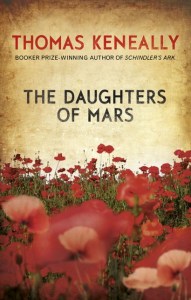
The Daughters of Mars by Thomas Keneally (4) is also set, at least partly, in Australia. It tells the story of two sisters who join the Australian Army Nursing Service during the First World War and serve on a hospital ship in the Dardanelles and on the Western Front. It’s a fascinating novel but was spoiled for me by the unconventional punctuation and the distance I felt from the two main characters.

Another book about nursing during the Great War is Testament of Youth by Vera Brittain (5). This is the only non-fiction book in my chain and is Brittain’s memoir covering the years 1900-1925 and describing her experiences as a VAD nurse during the First World War. I highly recommend reading this book if you haven’t already, but be warned that it’s completely heartbreaking in places!

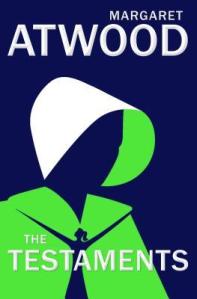
My final book has a shared word in the title. Margaret Atwood’s The Testaments (6) is a sequel to her earlier novel, The Handmaid’s Tale and is again set in Gilead, a dystopian community ruled by a patriarchal regime. The novel is made up of the ‘testaments’ of three characters, giving us three different perspectives of life in Gilead. I didn’t like it as much as the first book, but still found it interesting.

~

And that’s my chain for this month. My links have included: Collecting stories, the Isle of Skye, lighthouses, Australia in WWI, wartime nursing and the word ‘testament’. In October, we’ll be starting with Colm Tóibín’s Long Island.

Top Ten Tuesday: Planes, Trains and Automobiles

This week’s topic for Top Ten Tuesday (hosted by That Artsy Reader Girl) is: “Planes, Trains & Automobiles/Books Featuring Travel (books whose plots involve travel or feature modes of transportation on the cover/title) (submitted by Cathy @ What Cathy Read Next)”.

I have listed below four books featuring planes, four with trains and two with automobiles!

~

Planes

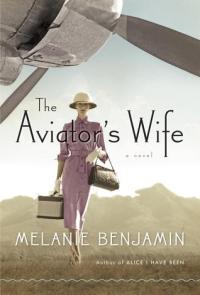
1. The Aviator’s Wife by Melanie Benjamin – The story of Anne Morrow Lindbergh, wife of the famous aviator, Charles Lindbergh, and an accomplished pilot in her own right.

2. The Hazelbourne Ladies Motorcycle and Flying Club by Helen Simonson – I’ve just recently finished this one, so no review yet. A group of ladies in post-WWI England form a motorcycle club, then come up with the idea of expanding to offer flying lessons to women.

3. Death in the Clouds by Agatha Christie – A Poirot mystery in which a woman is found dead on a plane flying between Paris and London. After landing in England, Poirot must decide which of his fellow passengers was responsible for the murder.

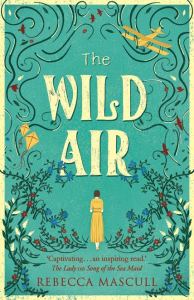
4. The Wild Air by Rebecca Mascull – I loved this novel about a young woman who decides she wants to become an aviator and sets out to pursue her dream.

Trains

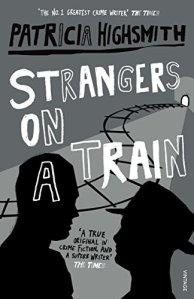
5. Strangers on a Train by Patricia Highsmith – Only a small part of this psychological thriller is actually set on a train, but it’s the scene of a very significant meeting between a pair of strangers who find themselves discussing a plan to commit two perfect murders!

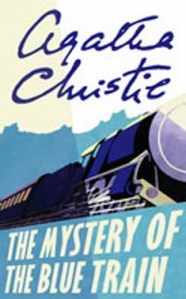
6. The Mystery of the Blue Train by Agatha Christie – Christie wrote several novels set, or at least partly set, on trains: Murder on the Orient Express and 4.50 from Paddington are two others. In this one, Poirot investigates the murder of an American heiress found dead in her compartment on the famous Blue Train.

7. The Venice Train by Georges Simenon – Another psychological novel in which a man travelling from Venice to Paris by train agrees to deliver another passenger’s briefcase to an address in Switzerland. I read an English translation by Ros Schwartz.

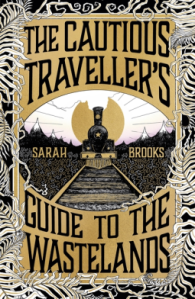
8. The Cautious Traveller’s Guide to the Wastelands by Sarah Brooks – An alternative history/fantasy novel set on the Great Trans-Siberian Express in 1899. A book that leaves us with lots to think about!

Automobiles

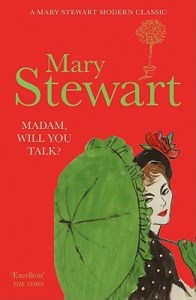
9. Madam, Will You Talk? by Mary Stewart – This suspense novel set in Provence is one of my favourites by Mary Stewart and features a very memorable car chase scene.

10. Maureen Fry and the Angel of the North by Rachel Joyce – A sequel to The Unlikely Pilgrimage of Harold Fry, in which Harold’s wife, Maureen, travels by car from the south of England to the north to visit a garden containing a memorial to her son.

~

Have you read any of these? Which other books can you think of featuring forms of transport?

Top Ten Tuesday: Ten Favourite Books from Ten Series

This week’s topic for Top Ten Tuesday, hosted by That Artsy Reader Girl, is “Ten Favourite Books from Ten Series” (submitted by A Hot Cup of Pleasure).

I have limited this to one series per author and have only included series where I have read most or all of the published books. I’ve linked to my reviews where available.

1. Agatha Christie’s Miss Marple series: A Murder is Announced

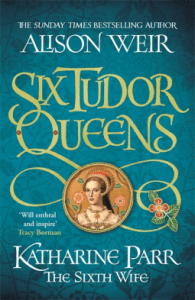
2. Alison Weir’s Six Tudor Queens: Katharine Parr, The Sixth Wife

3. Dorothy Dunnett’s Lymond Chronicles: The Disorderly Knights

4. Anthony Trollope’s Chronicles of Barsetshire: Doctor Thorne

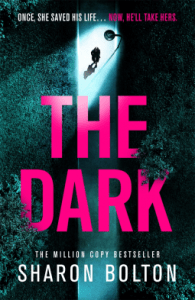
5. Sharon Bolton’s Lacey Flint series: The Dark

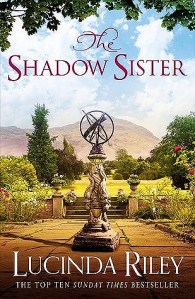
6. Lucinda Riley’s Seven Sisters: The Shadow Sister

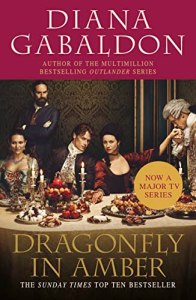
7. Diana Gabaldon’s Outlander series: Dragonfly in Amber

8. Andrew Taylor’s Marwood and Lovett series: The Royal Secret

9. Anthony Horowitz’s Horowitz and Hawthorne series: Close to Death

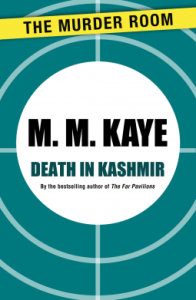
10 M.M. Kaye’s Death In… series: Death in Kashmir

~

What do you think? Have you read any of these series – and if so, do you disagree with my choices?

Six Degrees of Separation: From The Museum of Modern Love to The Woman in Black

It’s the first Saturday of the month which means it’s time for another Six Degrees of Separation, hosted by Kate of Books are my Favourite and Best. The idea is that Kate chooses a book to use as a starting point and then we have to link it to six other books of our choice to form a chain. A book doesn’t have to be connected to all of the others on the list – only to the one next to it in the chain.

This month we’re starting with The Museum of Modern Love by Heather Rose. I haven’t read it, but here’s what it’s about:

Arky Levin, a film composer in New York, has promised his wife that he will not visit her in hospital, where she is suffering in the final stages of a terminal illness. She wants to spare him a burden that would curtail his creativity, but the promise is tearing him apart. One day he finds his way to MOMA and sees Mariana Abramovic in The Artist is Present. The performance continues for seventy-five days and, as it unfolds, so does Arky. As he watches and meets other people drawn to the exhibit, he slowly starts to understand what might be missing in his life and what he must do.

I’m going to start this month’s chain with a book that shares a word in the title: Behind the Scenes at the Museum by Kate Atkinson (1). This was Atkinson’s first novel, published in 1995, and is narrated by Ruby Lennox, who lives above a pet shop in York with her parents and two older sisters. The book takes us through Ruby’s life from birth to adulthood, while also moving backwards and forwards in time to tell the stories of previous generations of the family.

Ruby is also the name of a character in Agatha Christie’s Miss Marple mystery, The Body in the Library (2). When a young woman is found dead on the floor of the library of Gossington Hall in St Mary Mead, she is identified as Ruby Keene. Dolly Bantry, who lives at the Hall with her husband Colonel Bantry, calls in her friend Miss Marple to help investigate.

From a library in a country house to a very different kind of library: the Seward Park branch of the New York Public Library, where Zia de Luca works in The Orchid Hour by Nancy Bilyeau (3). This historical thriller set in New York’s Little Italy during Prohibition is maybe not one of my favourites by Bilyeau but it does have a fascinating setting and some interesting facts about growing orchids!

There are lots of books with flowers in the titles (I put a list together for a recent Top Ten Tuesday post), but the one I’m going to link to here is Rose Cottage by Mary Stewart (4), in which a young woman returns to her grandmother’s cottage at the end of World War II and makes some unexpected discoveries about her past. This is a lovely, gentle novel but has none of the suspense and mystery I love in Stewart’s other books.

The next book in my chain is by another author with the surname Stewart, although as far as I know they’re not related. In Ill Will (5), Michael Stewart creates a story to fill in the gap in the middle of Emily Brontë’s Wuthering Heights, where Heathcliff disappears for three years with no explanation. Although the Brontë novel is one of my favourite classics, I didn’t like this book much at all, mainly due to the language and the fact that the characters barely resembled the originals.

The cover of Ill Will, with a tree that has lost its leaves, reminds me of the cover of The Woman in Black by Susan Hill (6). In this ghost story, Arthur Kipps, a young lawyer, has several encounters with a mysterious woman in black while staying at Eel Marsh House to sort through the papers of a client who has recently died. I enjoyed it, although I didn’t find it as frightening as I was expecting!

~

And that’s my chain for August! My links have included: the word ‘museum’, characters with the name Ruby, libraries, books with flowers in the title, the surname Stewart and trees with no leaves.

In September we’ll be starting with After Story by Larissa Behrendt.

Top Ten Tuesday: Ten Things I Love About The Count of Monte Cristo

This week’s topic for Top Ten Tuesday (hosted by That Artsy Reader Girl) is “Ten Things I Loved About [Insert Book Title Here]” (Pick any book and tell us ten things you loved about it!) (submitted by Cathy @ WhatCathyReadNext)

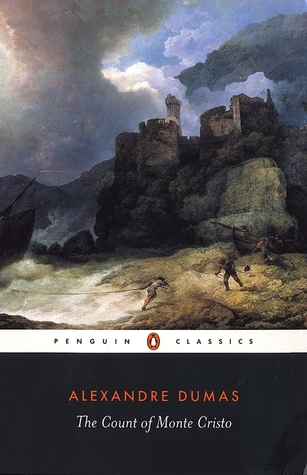
I’ve just finished reading The Club Dumas by Arturo Pérez-Reverte, so when I saw the topic for this week’s TTT the first book to come to mind was Alexandre Dumas’ The Count of Monte Cristo, a French classic I love and have read several times, despite the length! Here are ten things I particularly enjoyed about it:
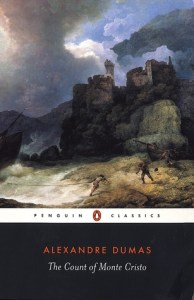
1. Edmond Dantès – Our hero (or anti-hero, at various times in the book) and one of my favourite characters in all of literature. Early in the novel, he is falsely accused of treason and imprisoned for fourteen years. He finally engineers an escape, but we quickly find that the youthful, naive Edmond Dantès we once knew has been transformed into the bitter and vengeful Count of Monte Cristo, out to hunt down the men who betrayed him and make them pay!

2. The exciting plot – With murders, poisonings, court cases, duels, thefts, anonymous letters, illegitimate children and searches for buried treasure, there’s always something happening. Most editions have over 1000 pages, so naturally there are some slower sections, but everything is relevant and I wouldn’t recommend reading an abridged version.

3. The setting – Or rather settings, as there are several. From Marseille with its island fortress, the Château d’If, and the small Catalan community where Edmond’s fiancée Mercédès lives, to Rome during Carnival, they are all memorable.

4. The Abbé Faria – When Edmond is imprisoned in the Château d’If, the Abbé Faria is occupying a neighbouring cell and the two manage to communicate and become friends. Faria passes on his wisdom and knowledge to Edmond and encourages him to never give up hope.

5. Monsieur Noirtier – M. Noirtier is the elderly father of Villefort, one of the Count’s main enemies. After suffering a stroke, he devises a form of communication using only his eyes and forms a special bond with his granddaughter, Valentine, two things that endeared him to me as a character!

6. The revenge theme – Stories of victims getting their revenge against the people who wronged them are usually very satisfying, but in this book the revenge plot has more layers to it. At times Dantès has doubts about the path he has set out on, regretting that “I did not tear out my heart the day I resolved to revenge myself”. When you finish the book you can decide for yourself whether it was all worth it in the end.

7. Monsieur Morrel – Another favourite character is M. Morrel, who makes Edmond Dantès captain of his ship, the Pharaon. During Edmond’s imprisonment, Morrel tries unsuccessfully to get him released, while also taking care of his elderly father in his absence, and his kindness is later rewarded by the Count.

8. The way there’s always something new to discoverThe Count of Monte Cristo is a book that rewards multiple readings as there’s so much to take in the first time and it’s easy to miss important details. Re-reading has given me an even greater appreciation for the complexity of the story and how things that initially seem irrelevant are actually crucial to the plot.

9. The entertaining subplots – On re-reading the book, I found that I could slow down and enjoy some of the longer digressions and stories-within-stories that I got impatient with on my first read. During my most recent read I found that I particularly enjoyed the subplot involving La Carconte (the wife of Caderousse, another of Dantès’ enemies) and a valuable diamond ring. It could almost have made a great short story on its own.

10. The writing – It’s not just an adventure novel; there’s also some great writing, with quotes like this:

“Life is a storm, my young friend. You will bask in the sunlight one moment, be shattered on the rocks the next. What makes you a man is what you do when that storm comes.”

And this:

“Live, then, and be happy, beloved children of my heart, and never forget that until the day when God shall deign to reveal the future to man, all human wisdom is summed up in these two words —’Wait and hope’.”

~

Have you read The Count of Monte Cristo? If so, what did you love (or not love) about it?

Six in Six: The 2024 Edition

Unbelievably, we’re more than halfway through the year and Six in Six, hosted by Jo of The Book Jotter, is back again! I love taking part in this as I think it’s the perfect way to look back at our reading over the first six months of the year.

The idea of Six in Six is that we choose six categories (Jo has provided a list of suggestions or you can come up with new topics of your own if you prefer) and then fit six of the books or authors we’ve read this year into each category. It’s more difficult than it sounds, especially as I try not to use the same book in more than one category, but it’s always fun to do – and always a bit different as my reading tastes and patterns seem to change slightly each year.

Here is my 2024 Six in Six, with links to my reviews:

~

Six books set in countries other than my own

1. Silence by Shūsaku Endō (Japan)
2. The House of Doors by Tan Twan Eng (Malaysia)
3. Water Baby by Chioma Okereke (Nigeria)
4. Hungry Ghosts by Kevin Jared Hosein (Trinidad)
5. The Nightingale’s Castle by Sonia Velton (Hungary)
6. Spitting Gold by Carmella Lowkis (France)

Six classic crime books not by Agatha Christie

1. The Undetective by Bruce Graeme
2. Impact of Evidence by Carol Carnac
3. Opening Night by Ngaio Marsh
4. Fear Stalks the Village by Ethel Lina White
5. They Found Him Dead by Georgette Heyer
6. Deadly Duo by Margery Allingham

Six books with a touch of fantasy

1. The Last Murder at the End of the World by Stuart Turton
2. The Warm Hands of Ghosts by Katherine Arden
3. Deep Secret by Diana Wynne Jones
4. The Cautious Traveller’s Guide to the Wastelands by Sarah Brooks
5. Doomed Romances: Strange Tales of Uncanny Love by various authors
6. The Fox Wife by Yangsze Choo

Six authors I’ve read for the first time this year

1. Akimitsu Takagi (The Noh Mask Murder)
2. Zadie Smith (The Fraud)
3. Alexander Lernet-Holenia (Count Luna)
4. Paul Gallico (Thomasina)
5. Neil Jordan (The Ballad of Lord Edward and Citizen Small)
6. Benjamin Myers (Cuddy)

Six books about real people

1. The Tower by Flora Carr (Mary, Queen of Scots)
2. The Household by Stacey Halls (Angela Burdett-Coutts)
3. The Black Count by Tom Reiss (General Thomas-Alexandre Dumas)
4. The Angel Makers by Patti McCracken (Zsuzsanna Fazekas)
5. Clairmont by Lesley McDowell (Claire Clairmont)
6. The Reckoning by Sharon Penman (Llewelyn ap Gruffydd and Ellen de Montfort)

Six book covers that catch the eye

1. The Beholders by Hester Musson
2. The Book of Secrets by Anna Mazzola
3. The Burial Plot by Elizabeth Macneal
4. The Ballad of Jacquotte Delahaye by Briony Cameron
5. The Puzzle Wood by Rosie Andrews
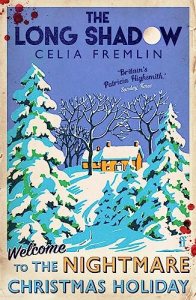
6. The Long Shadow by Celia Fremlin

~

Have you read any of these books or authors this year? Are you taking part in Six in Six?