Six Degrees of Separation: From Prophet Song to The Old Man’s Birthday

It’s the first Saturday of the month which means it’s time for another Six Degrees of Separation, hosted by Kate of Books are my Favourite and Best. The idea is that Kate chooses a book to use as a starting point and then we have to link it to six other books of our choice to form a chain. A book doesn’t have to be connected to all of the others on the list – only to the one next to it in the chain.
This month we’re starting with Prophet Song by Paul Lynch. It’s not a book I’ve read, but here’s what it’s about:

“On a dark, wet evening in Dublin, scientist and mother-of-four Eilish Stack answers her front door to find the GNSB on her step. Two officers from Ireland’s newly formed secret police are here to interrogate her husband, Larry, a trade unionist.

Ireland is falling apart. The country is in the grip of a government turning towards tyranny and when her husband disappears, Eilish finds herself caught within the nightmare logic of a society that is quickly unravelling. Soon, she must decide just how far she is willing to go to keep her family safe.

Exhilarating, terrifying and propulsive, Paul Lynch’s Booker Prize-winning novel is a devastating vision of a country falling apart and a moving portrait of the resilience of the human spirit when faced with the darkest of times.”

~

It can be difficult to know where to begin when you haven’t read the starter book. I’m going to focus on two words from the first sentence of the blurb – Dublin and scientist. The Coroner’s Daughter by Andrew Hughes (1) is also set in Dublin – in this case in the 19th century – and features a young woman, Abigail Lawless, who, as the title suggests, is the daughter of a coroner. The novel follows Abigail’s investigations into the deaths of a maid and her newborn baby, as well as her determination to pursue her passion for astronomy and forensic science at a time when they were not considered suitable interests for a woman.

Next, a simple link using the word ‘daughter’. Faro’s Daughter by Georgette Heyer (2) was published in 1941 and is one of her Georgian novels, set slightly earlier than her more famous Regencies. The hero, Max Ravenscar is enlisted by his aunt to prevent the marriage of her son, Adrian, to Deb Grantham, the hostess of a gaming house. Although Heyer is always entertaining, this book isn’t one of my favourites as I never really warmed to the characters.

The word ‘faro’ makes me think of ‘pharaoh’. In fact, it has been suggested that the name of the card game faro could be derived from the picture of a pharaoh on an early set of cards. When Women Ruled the World by Kara Cooney (3) is a biography of six female rulers of Ancient Egypt – Merneith, Neferusobek, Hatshepsut, Nefertiti, Tawosret and Cleopatra. I found it interesting because, apart from Cleopatra, I knew nothing at all about these female pharaohs, but I also felt that I didn’t learn as much about them as I would have liked because Cooney spent too much time drawing parallels with modern day world leaders, which seemed to be the real focus of the book.

A much more enjoyable non-fiction book about female rulers is The Dark Queens by Shelley Puhak (4). The book explores the lives of Brunhild and Fredegund, who belonged to the Merovingian dynasty in the 6th century and ruled over large areas of what are now known as France and Germany. Not knowing anything about either of these queens, I found this book completely fascinating and also very entertaining, although it might not suit readers who want something more academic.

I’m linking to another book with the word ‘dark’ in the title now: Full Dark House (5), the first book in Christopher Fowler’s series about two octogenarian detectives, Arthur Bryant and John May, who work for the Peculiar Crimes Unit, a branch of the London Metropolitan Police created to deal with unusual cases. This book includes flashbacks to Bryant and May’s first ever case involving some murders in a London theatre during the Blitz, while another mystery begins to play out in the modern day. I really enjoyed the first four books in this series and still need to continue with the others!

Another book with an elderly protagonist is The Old Man’s Birthday by Richmal Crompton (6). Matthew Royston is preparing to celebrate his ninety-fifth birthday with a family party to which he has invited all of his children, grandchildren and great-grandchildren. The novel is set during the course of that one day, as we meet each member of the family in the hours leading up to the party. I really enjoyed it and although I can’t find a way to link it back to the starting book this month, I think it’s a good place to end my chain!

~

And that’s my chain for March. My links included scientists in Dublin, the word ‘daughter’, faro/pharaoh, women rulers, the word ‘dark’ and elderly characters.

In April we’ll be starting with Salman Rushdie’s memoir, Knife.

Top Ten Tuesday: Books set in the Ancient World

This week’s topic for Top Ten Tuesday (hosted by That Artsy Reader Girl) is “Books Set in Another Time”.

This is perfect for me as historical fiction is one of my favourite genres. There are many different ways I could approach this topic, but I’ve decided to list ten books I’ve read that are set in the Ancient World (most of my historical reading is set in much more recent periods). To make the list more fun, the final two books aren’t just set in the ancient past, they were also written then.

~

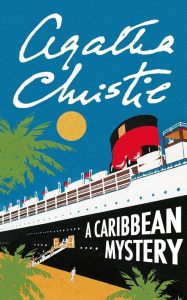
1. Death Comes as the End by Agatha Christie – Christie’s only historical novel is set in Ancient Egypt and deals with a series of murders in the household of the priest Imhotep. The book is written mainly from the perspective of Imhotep’s daughter, Renisenb, who has just recently returned to her father’s home after being widowed and finds that many tensions and rivalries have formed between the family members during her absence. It’s an unusual Christie novel, but one I really enjoyed!

2. I, Claudius by Robert Graves – This is the first part of Graves’ fictional autobiography of the Roman emperor, Claudius, who ruled from AD 41 to 54. This book deals with Claudius’ childhood and his experiences during the reigns of his three predecessors, Augustus, Tiberius and Caligula. I found it a bit intimidating at first due to not being very familiar with the lives of the emperors, but I did enjoy the book and am still planning to continue with the second one.

3. The King Must Die by Mary Renault – This is the first of Renault’s two novels about the life of Theseus, the Greek hero most famous for the slaying of the Minotaur. One of the things I loved about this book and its sequel, The Bull from the Sea, is the way Renault gave logical, rational explanations for the various aspects of the myth instead of magical ones, which made the two books feel more like historical fiction rather than mythology retellings.

4. Babylonia by Costanza Casati – This book is set in the 9th Century BC at the time of the Assyrian Empire and tells the story of the legendary Semiramis, who is thought to be based on the historical Assyrian queen, Sammuramat. I had never read a book set in this period before, so I found it fascinating. It’s also beautifully written and I would happily recommend it to anyone interested in reading about periods of Ancient history other than Greek, Roman or Egyptian!

5. The Mark of the Horse Lord by Rosemary Sutcliff – This book is set during the time of the Roman Empire, in what we now call Scotland and the north of England. The story follows the gladiator Phaedrus who becomes part of a plot to impersonate King Midir of the Dalriadain. Although it’s marketed as a book for younger readers, I found it had a lot to offer adults too.

6. House of Names by Colm Tóibín – Set in Ancient Greece, this is a retelling of the tragic story of the House of Atreus, described in Aeschylus’ trilogy, the Oresteia. Written from the perspectives of first Clytemnestra, then her children Orestes and Electra, I wasn’t very familiar with this story at the time when I read Tóibín’s novel, but having read several other retellings since then I think I might get more out of this one if I read it again.

7. The Cicero trilogy by Robert Harris – I’m cheating slightly here because this is three books, not just one: Imperium, Lustrum and Dictator, which together tell the story of the Roman statesman and lawyer Marcus Tullius Cicero, as seen through the eyes of his slave and secretary, Tiro. I loved all three of these novels and had never imagined reading about Roman politics could be so exciting!

8. Priestess of Ishana by Judith Starkston – I’m including this one because it’s the only book I’ve read set in the Bronze Age. It’s historical fantasy but set in a world based on the real Hittite Empire and the main character, Tesha, is inspired by the historical Puduhepa, a priestess of Ishtar. There are three other books in the series, but I’ve only read the first one.

9. The Odyssey by Homer – The first eight books on my list are historical fiction, but the final two are works that were both set and written in the ancient past. There are many different versions of Homer’s Odyssey, and I read a translation by T.E. Lawrence from 1932. It was very readable and captured the excitement of Odysseus’s adventures, but I would be interested to see how a more modern translation compares.

10. The Epic of Gilgamesh – This epic poem was written on a set of clay tablets from ancient Mesopotamia which were discovered in the 19th century and are believed to date from around 2000 BC. It tells the story of Gilgamesh, a powerful Sumerian king, and his relationship with his friend Enkidu. I read a translation by Andrew George and found it surprisingly easy to read and also very enjoyable.
~

There are several more books I could have included on this list, but I had to restrict myself to ten and wanted to represent as many different periods and locations as I could.

Have you read any of these? Which other books set in the Ancient world can you think of?

Six Degrees of Separation: From Dangerous Liaisons to Birdcage Walk

It’s the first Saturday of the month which means it’s time for another Six Degrees of Separation, hosted by Kate of Books are my Favourite and Best. The idea is that Kate chooses a book to use as a starting point and then we have to link it to six other books of our choice to form a chain. A book doesn’t have to be connected to all of the others on the list – only to the one next to it in the chain.

This month we’re starting with Dangerous Liaisons by Pierre Choderlos de Laclos.

Published in 1782, just years before the French Revolution, Les Liaisons Dangereuses is a disturbing and ultimately damning portrayal of a decadent society. At its centre are two aristocrats, former lovers, who embark on a sophisticated game of seduction and manipulation to bring amusement to their jaded existences. While the Marquise de Merteuil challenges the Vicomte de Valmont to seduce an innocent convent girl, the Vicomte is also occupied with the conquest of a virtuous married woman. But as their intrigues become more duplicitous and they find their human pawns responding in ways they could not have predicted, the consequences prove to be more serious, and deadly, than Merteuil and Valmont could have guessed.

Dangerous Liaisons has been adapted for film several times, sometimes transposing the setting to different periods and countries. The most famous version was the 1988 one, which received seven Oscar nominations including one for Glenn Close for Best Actress. She also appeared in an adaptation of Agatha Christie’s Crooked House (1) in 2017.

In the foreword, Christie states that “practically everybody has liked Crooked House, so I am justified in my own belief that it is one of my best”. Similarly, Thomas Hardy named his novel The Woodlanders (2) as a personal favourite, saying “I like it as a story best of all”. It’s one of my favourite Hardy novels as well – definitely in my top three!

Trees grow in woodlands, so the next book I’m linking to is The Dance Tree by Kiran Millwood Hargrave (3). This fascinating novel is set in Strasbourg in 1518 during a plague of dancing – something which may sound strange, but did actually happen!

Another novel I’ve read with a dancing theme is Russian Winter by Daphne Kalotay (4) in which a retired ballerina looks back on her career with the Bolshoi Ballet in the 1940s and 50s.

A simple link to another book with ‘winter’ in the title: The Winter Garden by Nicola Cornick (5), which tells the story of the family of Robert Catesby, one of the conspirators involved in the failed Gunpowder Plot of 1605. I found it interesting to read about Catesby as the name usually associated with the Gunpowder Plot is Guy Fawkes.

Lizzie Fawkes is the main character in Birdcage Walk by Helen Dunmore (6). Although the novel is set in England, the lives of the characters are affected by events in France as the French Revolution gathers pace. With our starting book, Dangerous Liaisons, being set just before the Revolution, I think this brings the chain full circle!

~

And that’s my chain for February! My links this month have included: Glenn Close adaptations, authors’ personal favourites, woods and trees, dancing, the word ‘winter’ and the name Fawkes.

In March we’ll be starting with Prophet Song by Paul Lynch.

Top Ten Tuesday: Authors I discovered in 2024

This week’s topic for Top Ten Tuesday (hosted by That Artsy Reader Girl) is “New-to-Me Authors I Discovered in 2024”. There were lots of authors I tried for the first time last year, but the ten I’m listing below are all authors whose work I enjoyed and would consider reading again.

1. Benjamin Myers – I read Cuddy early last year and although I wasn’t sure at first if it would be my sort of book, I enjoyed it much more than I’d expected. I have The Gallows Pole waiting to be read!

2. Alexander Lernet-HoleniaCount Luna was a great book – so unusual and thought-provoking! I’m pleased to see there are more of Lernet-Holenia’s books available in English translations.

3. Tove Jansson – I finally read my first Moomin book, Finn Family Moomintroll, thanks to last year’s #MoominWeek. I might read more of them at some point, but would also like to try one of Jansson’s adult books.

4. Charlotte Armstrong – I didn’t know where to start with Charlotte Armstrong’s books, but I think I made a good choice with Mischief. There are lots more to explore now!

5. Clare Whitfield – I loved Clare Whitfield’s Poor Girls, about the fascinating Forty Elephants gang. Now I’m looking forward to reading her previous novel, People of Abandoned Character.

6. Akimitsu Takagi – Takagi’s The Noh Mask Murders is one of the best Japanese crime novels I’ve read so far. I would like to read more of his books, although I think there’s only one other currently in print in English – The Tattoo Murder.

7. Penelope Mortimer – I read a short story by Penelope Mortimer in A Different Sound, a collection of stories by women authors of the mid 20th century. It was one of the highlights of the book and made me want to read more of her work.

8. Kate Foster – I read Kate Foster’s The King’s Witches last year and enjoyed it, so I’m looking forward to reading my review copy of her new novel, The Mourning Necklace.

9. Jane ThynneMidnight in Vienna, a thriller set in the 1930s, is the first Jane Thynne novel I’ve read, but I’m sure I’ll be reading more of them now. I really liked this one!

10. Alice Loxton – I read very little non-fiction in 2024, but I did enjoy Alice Loxton’s Eighteen, which explored the history of Britain through the lives of eighteen famous young people. She has written another book about Georgian London which also sounds interesting.

~

Have you read books by any of these authors or would you like to? Which new authors did you discover last year?

Top Ten Tuesday: Recent Additions to my TBR

This week’s topic for Top Ten Tuesday (hosted by That Artsy Reader Girl) is: “The Ten Most Recent Additions to My Book Collection (or to your to-read list!)”.

These aren’t strictly the last ten as I wanted to highlight books I haven’t already mentioned in other posts, but they are all books I’ve acquired recently. Let me know if you’ve read them or are planning to read them!

1. The Official Agatha Christie Puzzle Book – This was a Christmas present from my sister. It will take me a while to work through all 100 of these Christie-themed puzzles, but I’m enjoying them so far!

2. The Hymn to Dionysus by Natasha Pulley – I didn’t get on with Pulley’s The Bedlam Stacks and thought she probably wasn’t an author for me, but then I read one of her short stories and enjoyed it. I have a NetGalley copy of her new book, out in March, and look forward to giving her another chance.

3. The Eagle and the Hart by Helen Castor – I want to read more non-fiction this year and have enjoyed Helen Castor in the past. This is her most recent book, about the relationship between Richard II and Henry IV.

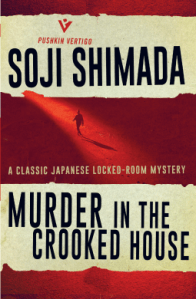
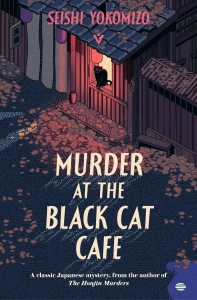
4. The Little Sparrow Murders by Seishi Yokomizo – I’ve already read this one and my review will be up later this week. I enjoyed the five previous Yokomizo mysteries published in new English translations by Pushkin Press and this is the sixth.

5. There’s a Reason for Everything by E.R. Punshon – This mystery from 1945 was a Dean Street Press free ebook of the week just before Christmas. A few people reviewed it for Dean Street December and it sounded interesting.

6. Secrets of the Bees by Jane Johnson – Another review copy from NetGalley, but it won’t be published until June. I’ve enjoyed some of Jane Johnson’s other books, particularly the ones set in Morocco, although she also writes beautifully about Cornwall, which is the setting for this new one.

7. Cleopatra by Natasha Solomons – This, as you may have guessed, is a novel about Cleopatra – also from NetGalley and being published in May. I’ve loved some of Solomons’ books but not others, so I’ll be interested to see what this one is like.

8. Theirs was the Kingdom by RF Delderfield – The second book in the Swann family saga. The first one, God is an Englishman, was one of my favourite books of last year so I’m sure I’ll enjoy this one.

9. The Thirteen Problems by Agatha Christie – I’m not joining in with the Read Christie 2025 challenge this month because I’ve already read the selected book (and the suggested alternatives) but I haven’t yet read the February choice, a collection of Miss Marple stories.

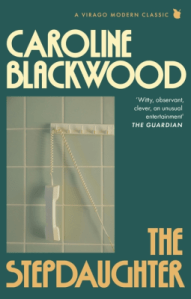
10. This Sweet Sickness by Patricia Highsmith – This 1960 psychological thriller is one of ten classics reissued as Virago Modern Classics this month. I’ve been wanting to read something else by Highsmith since reading Strangers on a Train a few years ago.

~

What have you added to your book collection recently?

Top Ten Tuesday: New releases to look out for

This week’s topic for Top Ten Tuesday (hosted by That Artsy Reader Girl) is: “Most Anticipated Books Releasing in the First Half of 2025”.

I’ve already listed some of my most anticipated historical fiction releases in a recent post, which you can see here. I’m listing below another ten books that I either found out about after putting that post together or that fall into other genres – so these are not necessarily my *most* anticipated books, but are still some that I would like to read.

The covers for the last two books haven’t been revealed yet.

1. Black Wood, Blue Sky by Eowyn Ivey (4th February 2025) – I’m pleased to see there’s a new Eowyn Ivey book on the way. I enjoyed her first two.

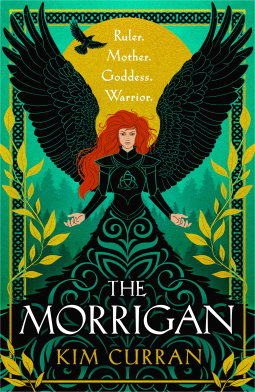
2. The Morrigan by Kim Curran (6th February 2025) – An Irish mythology retelling, which makes a change from the Greeks!

3. Woman in Blue by Douglas Bruton (20th February 2025) – A new novella from Bruton about a painting in the Rijksmuseum.

4. Dream Count by Chimamanda Ngozi Adichie (4th March 2025) – It’s been such a long time since Adichie’s last novel!

5. The Other People by CB Everett (10th April 2025) – I have this one from NetGalley and it sounds intriguing.

6. Marble Hall Murders by Anthony Horowitz (10th April 2025) – A third Atticus Pünd book at last! This is definitely one of my most anticipated books of the year.

7. The Pretender by Jo Harkin (24th April 2025) – A new historical novel based on the story of the royal pretender, Lambert Simnel.

8. Air by John Boyne (8th May 2025) – The final book in Boyne’s Elements quartet. I enjoyed all of the first three.

9. Written on the Dark by Guy Gavriel Kay (27th May 2025) – I always enjoy Kay’s historical fantasy, so I’m looking forward to this.

10. The Jealous One by Celia Fremlin (5th June 2025) – An older book set to appear in a new edition from Faber & Faber.

~

Do you want to read any of these? Which new releases are you anticipating in the first half of 2025?

Six Degrees of Separation: From Orbital to Prague Nights

It’s the first Saturday of the month which means it’s time for another Six Degrees of Separation, hosted by Kate of Books are my Favourite and Best. The idea is that Kate chooses a book to use as a starting point and then we have to link it to six other books of our choice to form a chain. A book doesn’t have to be connected to all of the others on the list – only to the one next to it in the chain.

This month we’re starting with Orbital by Samantha Harvey. I haven’t read it and it doesn’t sound like my usual sort of book, but so many people have loved it that I’m starting to think I’ll have to at least try it. Here’s what it’s about:

A team of astronauts in the International Space Station collect meteorological data, conduct scientific experiments and test the limits of the human body. But mostly they observe. Together they watch their silent blue planet, circling it sixteen times, spinning past continents and cycling through seasons, taking in glaciers and deserts, the peaks of mountains and the swells of oceans. Endless shows of spectacular beauty witnessed in a single day.

Yet although separated from the world they cannot escape its constant pull. News reaches them of the death of a mother, and with it comes thoughts of returning home. They look on as a typhoon gathers over an island and people they love, in awe of its magnificence and fearful of its destruction.

The fragility of human life fills their conversations, their fears, their dreams. So far from earth, they have never felt more part – or protective – of it. They begin to ask, what is life without earth? What is earth without humanity?

I’ll start with a book I have read by Samantha Harvey, The Western Wind (1). This is a mystery novel set in a small English village in 1491 and taking place over a period of four days. Unusually, the story is told in reverse, beginning on the fourth day and then moving backwards in time.

Another novel written in reverse is The Night Watch by Sarah Waters (2). This is one of my favourite books by Waters and follows the stories of four people during and after World War II, introducing us to the characters in 1947 before moving back in time to 1944 and then 1941.

The word ‘watch’ also appears in the title of Watch the Lady by Elizabeth Fremantle (3). This is a novel about Penelope Devereux, 16th century noblewoman and sister of Robert Devereux, Earl of Essex, a favourite of Elizabeth I’s. Penelope is thought to be the inspiration for the poet Philip Sidney’s Astrophil and Stella.

The name Penelope leads me to my next book, The Penelopiad by Margaret Atwood (4). This is a retelling of the events of the Odyssey from the perspectives of Penelope and the twelve maids who were hanged by her son, Telemachus. The sections narrated by the maids are written in a different style every time – a poem, a ballad, a lecture and even a trial.

Cuddy by Benjamin Myers (5) is also written in a range of styles including a narrative poem and a ghost story told through diary entries. The separate sections of the book all add up to paint a picture of the life and legacy of the Anglo-Saxon monk St Cuthbert, sometimes known by the nickname Cuddy.

My final link is a simple one – another author with the name Benjamin. Well, actually Benjamin Black is a pseudonym of the Irish author John Banville. He has written a number of crime novels under the Black name, including the Quirke series about a 1950s pathologist and a standalone mystery, Prague Nights (6), set in 16th century Prague.

~

And that’s my first chain of 2025! My links included Samantha Harvey books, novels with reverse timelines, the word ‘watch’, characters called Penelope, books written in mixtures of styles and authors with the name Benjamin.

In February we’ll be starting with Dangerous Liaisons by Pierre Choderlos de Laclos.