Six Degrees of Separation: From The Museum of Modern Love to The Woman in Black

It’s the first Saturday of the month which means it’s time for another Six Degrees of Separation, hosted by Kate of Books are my Favourite and Best. The idea is that Kate chooses a book to use as a starting point and then we have to link it to six other books of our choice to form a chain. A book doesn’t have to be connected to all of the others on the list – only to the one next to it in the chain.

This month we’re starting with The Museum of Modern Love by Heather Rose. I haven’t read it, but here’s what it’s about:

Arky Levin, a film composer in New York, has promised his wife that he will not visit her in hospital, where she is suffering in the final stages of a terminal illness. She wants to spare him a burden that would curtail his creativity, but the promise is tearing him apart. One day he finds his way to MOMA and sees Mariana Abramovic in The Artist is Present. The performance continues for seventy-five days and, as it unfolds, so does Arky. As he watches and meets other people drawn to the exhibit, he slowly starts to understand what might be missing in his life and what he must do.

I’m going to start this month’s chain with a book that shares a word in the title: Behind the Scenes at the Museum by Kate Atkinson (1). This was Atkinson’s first novel, published in 1995, and is narrated by Ruby Lennox, who lives above a pet shop in York with her parents and two older sisters. The book takes us through Ruby’s life from birth to adulthood, while also moving backwards and forwards in time to tell the stories of previous generations of the family.

Ruby is also the name of a character in Agatha Christie’s Miss Marple mystery, The Body in the Library (2). When a young woman is found dead on the floor of the library of Gossington Hall in St Mary Mead, she is identified as Ruby Keene. Dolly Bantry, who lives at the Hall with her husband Colonel Bantry, calls in her friend Miss Marple to help investigate.

From a library in a country house to a very different kind of library: the Seward Park branch of the New York Public Library, where Zia de Luca works in The Orchid Hour by Nancy Bilyeau (3). This historical thriller set in New York’s Little Italy during Prohibition is maybe not one of my favourites by Bilyeau but it does have a fascinating setting and some interesting facts about growing orchids!

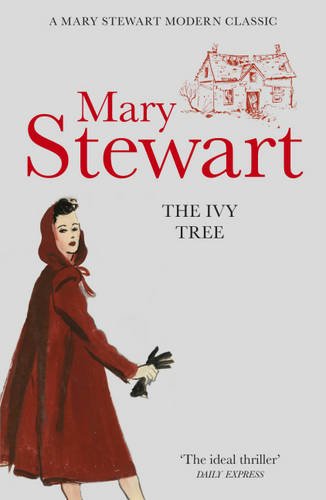
There are lots of books with flowers in the titles (I put a list together for a recent Top Ten Tuesday post), but the one I’m going to link to here is Rose Cottage by Mary Stewart (4), in which a young woman returns to her grandmother’s cottage at the end of World War II and makes some unexpected discoveries about her past. This is a lovely, gentle novel but has none of the suspense and mystery I love in Stewart’s other books.

The next book in my chain is by another author with the surname Stewart, although as far as I know they’re not related. In Ill Will (5), Michael Stewart creates a story to fill in the gap in the middle of Emily Brontë’s Wuthering Heights, where Heathcliff disappears for three years with no explanation. Although the Brontë novel is one of my favourite classics, I didn’t like this book much at all, mainly due to the language and the fact that the characters barely resembled the originals.

The cover of Ill Will, with a tree that has lost its leaves, reminds me of the cover of The Woman in Black by Susan Hill (6). In this ghost story, Arthur Kipps, a young lawyer, has several encounters with a mysterious woman in black while staying at Eel Marsh House to sort through the papers of a client who has recently died. I enjoyed it, although I didn’t find it as frightening as I was expecting!

~

And that’s my chain for August! My links have included: the word ‘museum’, characters with the name Ruby, libraries, books with flowers in the title, the surname Stewart and trees with no leaves.

In September we’ll be starting with After Story by Larissa Behrendt.

Top Ten Tuesday: Ten Things I Love About The Count of Monte Cristo

This week’s topic for Top Ten Tuesday (hosted by That Artsy Reader Girl) is “Ten Things I Loved About [Insert Book Title Here]” (Pick any book and tell us ten things you loved about it!) (submitted by Cathy @ WhatCathyReadNext)

I’ve just finished reading The Club Dumas by Arturo Pérez-Reverte, so when I saw the topic for this week’s TTT the first book to come to mind was Alexandre Dumas’ The Count of Monte Cristo, a French classic I love and have read several times, despite the length! Here are ten things I particularly enjoyed about it:

1. Edmond Dantès – Our hero (or anti-hero, at various times in the book) and one of my favourite characters in all of literature. Early in the novel, he is falsely accused of treason and imprisoned for fourteen years. He finally engineers an escape, but we quickly find that the youthful, naive Edmond Dantès we once knew has been transformed into the bitter and vengeful Count of Monte Cristo, out to hunt down the men who betrayed him and make them pay!

2. The exciting plot – With murders, poisonings, court cases, duels, thefts, anonymous letters, illegitimate children and searches for buried treasure, there’s always something happening. Most editions have over 1000 pages, so naturally there are some slower sections, but everything is relevant and I wouldn’t recommend reading an abridged version.

3. The setting – Or rather settings, as there are several. From Marseille with its island fortress, the Château d’If, and the small Catalan community where Edmond’s fiancée Mercédès lives, to Rome during Carnival, they are all memorable.

4. The Abbé Faria – When Edmond is imprisoned in the Château d’If, the Abbé Faria is occupying a neighbouring cell and the two manage to communicate and become friends. Faria passes on his wisdom and knowledge to Edmond and encourages him to never give up hope.

5. Monsieur Noirtier – M. Noirtier is the elderly father of Villefort, one of the Count’s main enemies. After suffering a stroke, he devises a form of communication using only his eyes and forms a special bond with his granddaughter, Valentine, two things that endeared him to me as a character!

6. The revenge theme – Stories of victims getting their revenge against the people who wronged them are usually very satisfying, but in this book the revenge plot has more layers to it. At times Dantès has doubts about the path he has set out on, regretting that “I did not tear out my heart the day I resolved to revenge myself”. When you finish the book you can decide for yourself whether it was all worth it in the end.

7. Monsieur Morrel – Another favourite character is M. Morrel, who makes Edmond Dantès captain of his ship, the Pharaon. During Edmond’s imprisonment, Morrel tries unsuccessfully to get him released, while also taking care of his elderly father in his absence, and his kindness is later rewarded by the Count.

8. The way there’s always something new to discoverThe Count of Monte Cristo is a book that rewards multiple readings as there’s so much to take in the first time and it’s easy to miss important details. Re-reading has given me an even greater appreciation for the complexity of the story and how things that initially seem irrelevant are actually crucial to the plot.

9. The entertaining subplots – On re-reading the book, I found that I could slow down and enjoy some of the longer digressions and stories-within-stories that I got impatient with on my first read. During my most recent read I found that I particularly enjoyed the subplot involving La Carconte (the wife of Caderousse, another of Dantès’ enemies) and a valuable diamond ring. It could almost have made a great short story on its own.

10. The writing – It’s not just an adventure novel; there’s also some great writing, with quotes like this:

“Life is a storm, my young friend. You will bask in the sunlight one moment, be shattered on the rocks the next. What makes you a man is what you do when that storm comes.”

And this:

“Live, then, and be happy, beloved children of my heart, and never forget that until the day when God shall deign to reveal the future to man, all human wisdom is summed up in these two words —’Wait and hope’.”

~

Have you read The Count of Monte Cristo? If so, what did you love (or not love) about it?
Six in Six: The 2024 Edition

Unbelievably, we’re more than halfway through the year and Six in Six, hosted by Jo of The Book Jotter, is back again! I love taking part in this as I think it’s the perfect way to look back at our reading over the first six months of the year.

The idea of Six in Six is that we choose six categories (Jo has provided a list of suggestions or you can come up with new topics of your own if you prefer) and then fit six of the books or authors we’ve read this year into each category. It’s more difficult than it sounds, especially as I try not to use the same book in more than one category, but it’s always fun to do – and always a bit different as my reading tastes and patterns seem to change slightly each year.

Here is my 2024 Six in Six, with links to my reviews:

~

Six books set in countries other than my own

1. Silence by Shūsaku Endō (Japan)
2. The House of Doors by Tan Twan Eng (Malaysia)
3. Water Baby by Chioma Okereke (Nigeria)
4. Hungry Ghosts by Kevin Jared Hosein (Trinidad)
5. The Nightingale’s Castle by Sonia Velton (Hungary)
6. Spitting Gold by Carmella Lowkis (France)

Six classic crime books not by Agatha Christie

1. The Undetective by Bruce Graeme
2. Impact of Evidence by Carol Carnac
3. Opening Night by Ngaio Marsh
4. Fear Stalks the Village by Ethel Lina White
5. They Found Him Dead by Georgette Heyer
6. Deadly Duo by Margery Allingham

Six books with a touch of fantasy

1. The Last Murder at the End of the World by Stuart Turton
2. The Warm Hands of Ghosts by Katherine Arden
3. Deep Secret by Diana Wynne Jones
4. The Cautious Traveller’s Guide to the Wastelands by Sarah Brooks
5. Doomed Romances: Strange Tales of Uncanny Love by various authors
6. The Fox Wife by Yangsze Choo

Six authors I’ve read for the first time this year

1. Akimitsu Takagi (The Noh Mask Murder)
2. Zadie Smith (The Fraud)
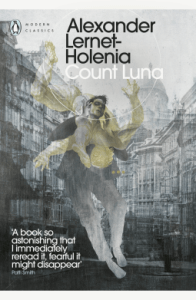
3. Alexander Lernet-Holenia (Count Luna)
4. Paul Gallico (Thomasina)
5. Neil Jordan (The Ballad of Lord Edward and Citizen Small)
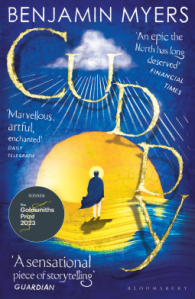
6. Benjamin Myers (Cuddy)

Six books about real people

1. The Tower by Flora Carr (Mary, Queen of Scots)
2. The Household by Stacey Halls (Angela Burdett-Coutts)
3. The Black Count by Tom Reiss (General Thomas-Alexandre Dumas)
4. The Angel Makers by Patti McCracken (Zsuzsanna Fazekas)
5. Clairmont by Lesley McDowell (Claire Clairmont)
6. The Reckoning by Sharon Penman (Llewelyn ap Gruffydd and Ellen de Montfort)

Six book covers that catch the eye

1. The Beholders by Hester Musson
2. The Book of Secrets by Anna Mazzola
3. The Burial Plot by Elizabeth Macneal
4. The Ballad of Jacquotte Delahaye by Briony Cameron
5. The Puzzle Wood by Rosie Andrews
6. The Long Shadow by Celia Fremlin

~

Have you read any of these books or authors this year? Are you taking part in Six in Six?

Six Degrees of Separation: From Kairos to Weyward

It’s the first Saturday of the month which means it’s time for another Six Degrees of Separation, hosted by Kate of Books are my Favourite and Best. The idea is that Kate chooses a book to use as a starting point and then we have to link it to six other books of our choice to form a chain. A book doesn’t have to be connected to all of the others on the list – only to the one next to it in the chain.

This month we’re starting with the 2024 winner of the International Booker Prize, Kairos by Jenny Erpenbeck (translated by Michael Hofmann). I haven’t read it, but here’s what it’s about:

Berlin. 11 July 1986. They meet by chance on a bus. She is a young student, he is older and married. Theirs is an intense and sudden attraction, fuelled by a shared passion for music and art, and heightened by the secrecy they must maintain. But when she strays for a single night he cannot forgive her and a dangerous crack forms between them, opening up a space for cruelty, punishment and the exertion of power. And the world around them is changing too: as the GDR begins to crumble, so too do all the old certainties and the old loyalties, ushering in a new era whose great gains also involve profound loss.

From a prize-winning German writer, this is the intimate and devastating story of the path of two lovers through the ruins of a relationship, set against the backdrop of a seismic period in European history.

I struggled to get started with this month’s chain. I know I have already used Berlin as a link in several previous chains, so I wanted to do something different. Eventually I decided to go with another book with a one-word title beginning with K: Kindred by Octavia E. Butler (1). This is a fascinating novel exploring slavery on a Maryland plantation through the eyes of a woman from 1976 who travels back in time to the 1800s.

Another time travel novel, also with a one-word title, is Mariana by Susanna Kearsley (2), although the setting is quite different. Our heroine, Julia Beckett, moves into a lonely farmhouse and finds that her life has become linked with the life of a woman who lived there centuries earlier, during the aftermath of the English Civil War. This was one of my first Susanna Kearsley novels and still a favourite.

Staying with women’s names, my next link is to Theodora by Stella Duffy (3). This novel is set in 6th century Constantinople and tells the story of Empress Theodora, wife of Justinian I. Theodora begins life as an actress and entertainer, before rising to become one of the most powerful women in the Byzantine Empire.

Booth by Karen Joy Fowler (4) also has a theatrical theme (and another one-word title). I loved this fictional biography of the 19th century theatrical family, the Booths, which focuses not just on the infamous John Wilkes Booth, the assassin of Abraham Lincoln, but also on his parents, brothers and sisters.

Junius Brutus Booth and Edwin Booth were renowned Shakespearean actors, which leads me to a play by William Shakespeare himself: Macbeth (5). I could have picked any play here, but my reasons for selecting Macbeth are simple – it’s one of the few Shakespeare plays I’ve actually posted about on my blog and, most importantly, it has a one-word title which keeps that theme going throughout my chain!

The three witches in Macbeth are referred to as the ‘weyward sisters’ in Shakespeare’s First Folio (and later, the ‘weird sisters’) so my final link is to Weyward by Emilia Hart (6). In this novel, Hart explores the stories of women from three generations of the same family who are connected through witchcraft and the power of nature.

~

And that’s my chain for July! My links have included titles beginning with K, time travel, women’s names, acting, Shakespeare and witches. As an extra challenge to myself I only used books with one-word titles in this month’s chain.

In August we’ll be starting with The Museum of Modern Love by Heather Rose.

Top Ten Tuesday: Going Green

This week’s topic for Top Ten Tuesday (hosted by That Artsy Reader Girl) is “Books with My Favourite Colour on the Cover”.

I’ve always loved green so here are ten books I’ve read and enjoyed with green on the cover:

1. The Village of Eight Graves by Seishi Yokomizo – A Japanese classic crime novel first published in 1950 and available in a new English translation by Bryan Karetnyk.

2. A Corruption of Blood by Ambrose Parry – The third book in one of my favourite historical mysteries series, set in the medical world of 19th century Edinburgh.

3. The Case of the Gilded Fly by Edmund Crispin – A Gervase Fen mystery with a theatrical theme. I’ve only read two books in the series so far and must read more!

4. That Lady by Kate O’Brien – The first of two Virago Modern Classics on my list, with those famous green covers. This one is about Ana de Mendoza, Princess of Eboli and Duchess of Pastrana.

5. Hungry Hill by Daphne du Maurier – This family saga set in Ireland is a particularly bleak du Maurier novel and not a favourite, but I did still like it.

6. Anne Boleyn: A King’s Obsession by Alison Weir – Part of Weir’s Six Tudor Queens series, retelling the stories of the six wives of Henry VIII.

7. The No. 1 Ladies’ Detective Agency by Alexander McCall Smith – The first in McCall Smith’s popular detective series set in Botswana and still the only one I’ve read!

8. Troy Chimneys by Margaret Kennedy – Another VMC book. I loved this one, set in Regency England and telling the story of a man with two very different sides to his character.

9. The Deadly Truth by Helen McCloy – A 1941 mystery featuring the New York psychiatrist Dr Basil Willing. McCloy’s books seem to have gone back out of print again, so I’m glad I managed to read some of them while they were available!

10. Human Croquet by Kate Atkinson – This early Atkinson novel is an unusual, imaginative read that plays with the concept of time in some fascinating ways.

~

Have you read any of these? Are there any other books you’ve enjoyed with green covers?

Six Degrees of Separation: From Butter to The Land of Green Ginger

It’s the first Saturday of the month which means it’s time for another Six Degrees of Separation, hosted by Kate of Books are my Favourite and Best. The idea is that Kate chooses a book to use as a starting point and then we have to link it to six other books of our choice to form a chain. A book doesn’t have to be connected to all of the others on the list – only to the one next to it in the chain.

This month we’re starting with a Japanese novel, Butter by Asako Yuzuki. I haven’t read it and probably won’t, but here’s what it’s about:

Gourmet cook Manako Kajii sits in Tokyo Detention Centre convicted of the serial murders of lonely businessmen, who she is said to have seduced with her delicious home cooking. The case has captured the nation’s imagination but Kajii refuses to speak with the press, entertaining no visitors. That is, until journalist Rika Machida writes a letter asking for her recipe for beef stew and Kajii can’t resist writing back.

Rika, the only woman in her news office, works late each night, rarely cooking more than ramen. As the visits unfold between her and the steely Kajii, they are closer to a masterclass in food than journalistic research. Rika hopes this gastronomic exchange will help her soften Kajii but it seems that she might be the one changing. With each meal she eats, something is awakening in her body, might she and Kaji have more in common than she once thought?

Inspired by the real case of the convicted con woman and serial killer, “The Konkatsu Killer”, Asako Yuzuki’s Butter is a vivid, unsettling exploration of misogyny, obsession, romance and the transgressive pleasures of food in Japan.

Butter is a dairy product, which makes me think of Nick Davenant, a character in Bee Ridgway’s The River of No Return (1) who owns a dairy farm in Vermont and is anxiously awaiting a visit from the cheese inspector at the beginning of the book. Nick is not just a dairy farmer, however – he is also a time traveller and was once an English nobleman who fought in the Napoleonic Wars. I think this book was intended to be the first in a series, but a sequel has never appeared.

Next is a simple link to another book with ‘river’ in the title: River of Stars by Guy Gavriel Kay (2). This novel is set in an alternate world based on China during the time of the Song Dynasty. Although Kay’s books are often described as historical fantasy, there are very few actual fantasy elements in this one, apart from some mentions of the spirits and fox-women who are part of Chinese myth.

Fox spirits also feature heavily in The Fox Wife by Yangsze Choo (3), set in Manchuria in 1908. The novel follows the dual stories of an elderly private detective investigating a suspicious death and a white fox spirit who has taken the form of a human woman while she searches for the man who killed her daughter. I found this book very slow, but enjoyed the details of Chinese myth and foklore.

The title character in the Yangsze Choo novel is called Snow, so my next book is one in which snow features heavily in the plot: The Sittaford Mystery by Agatha Christie (4). The village of Sittaford is cut off by snow, making it the perfect setting for a murder mystery to unfold. This is a wonderful standalone Christie novel and I loved the heroine, Emily Trefusis.

Like my edition of The Sittaford Mystery, Benighted by J.B. Priestley (5) also has a picture of a house on the cover. A married couple and their friend get caught in a storm while driving through the Welsh countryside one night and take shelter in a crumbling old mansion inhabited by a very strange family! This was my first book by Priestley and I’m sure I’ll be looking for another one.

Benighted was published in 1927, so the final book in my chain is another published in that same year. The Land of Green Ginger by Winifred Holtby (6) is about a missionary’s daughter who is born in South Africa but comes to England to be raised by her aunts in a small rural community in Yorkshire. I’ve read nearly all of Holtby’s novels now and this is probably my least favourite, but it still explores some interesting topics.

~

And that’s my chain for June! My links have included: Dairy products, the word ‘river’, fox-women, snow, pictures of houses and the year 1927.

In July we’ll be starting with Kairos by Jenny Erpenbeck.

Top Ten Tuesday: May Flowers

This week’s topic for Top Ten Tuesday (hosted by That Artsy Reader Girl) is “May Flowers”. There are a number of suggestions for ways to approach this topic, such as books with flowers on the covers or books about flowers or gardeners, but I’ve decided just to list ten books with names of flowers in the title.

These are all books that I’ve read and reviewed on my blog – and I’ve managed to find ten different flower names!

1. Blackberry and Wild Rose by Sonia Velton – An interesting historical novel about the community of Huguenot silk weavers living and working in London’s Spitalfields in the 18th century. I was drawn to this book by the pretty cover, but enjoyed the story as well.

2. The Lady of the Camellias by Alexandre Dumas, fils – The novel which inspired the opera La traviata. I read a translation by Liesl Schillinger and enjoyed this story of Marguerite Gautier, who uses bouquets of red and white camellias to send messages to her lovers.

3. The Orchid Hour by Nancy Bilyeau – Historical thriller set in New York’s Little Italy during Prohibition. It’s a fascinating setting and we do learn a little bit about growing orchids too.

4. Daisy in Chains by Sharon Bolton – This is a contemporary crime novel about a man serving a life sentence for murder and the lawyer he chooses to help him overturn the verdict. A typical Bolton novel with lots of twists and turns!

5. The Red Lily Crown by Elizabeth Loupas – An excellent historical fiction novel set in 16th century Florence and following the story of an alchemist’s daughter who enters the household of Francesco de’ Medici, Grand Duke of Tuscany.

6. The Black Tulip by Alexandre Dumas, père – I would never have imagined that a book about a tulip-growing contest could be so exciting, but this one is! I love Dumas and have thoroughly enjoyed everything I’ve read by him so far.

7. The Poppy Field by Deborah Carr – A dual-timeline novel split between the present day and 1916-18 where the story unfolds of a VAD nurse at a casualty clearing station in France during the war. Interesting but predictable.

8. Black Narcissus by Rumer Godden – This classic novel from 1939 follows a group of nuns who set out to establish a new convent in the Himalayas. I loved the atmosphere Godden creates as she explores the relationships between the nuns and how they adjust to the unfamiliar environment.

9. Jasmine Nights by Julia Gregson – A novel about a singer working for ENSA (Entertainments National Service Association) during World War II, performing for the troops in North Africa. An aspect of the war I hadn’t read about before.

10. The Daffodil Affair by Michael Innes – This 1942 mystery novel about a stolen horse, a missing girl and a haunted house is part of Innes’ Inspector Appleby series. I found it too bizarre to be very enjoyable and would recommend starting with a different Appleby novel.

~

Have you read any of these? Which other books can you think of with flowers in the title?