The Count of Monte Cristo by Alexandre Dumas (re-read)

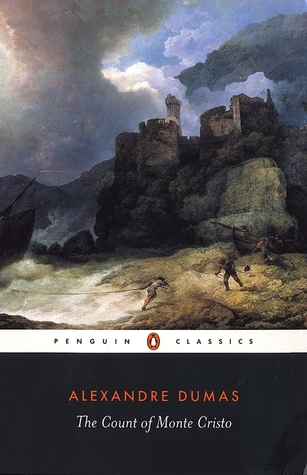
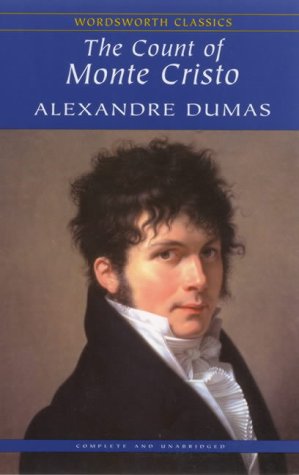
When I joined the Classics Club in 2012 and put together the list of books I wanted to read, I decided that, whichever order I read the others in, I would save my re-read of The Count of Monte Cristo until last. It’s one of my favourite books (I had already read it twice) and I thought it would be something to look forward to, even if some of the other classics on my list turned out to be disappointing.

Picking it up to start reading for the third time, I did have a few doubts – there’s always a chance that a book you once loved might have lost its magic – but of course I needn’t have worried. The opening line (“On the 24th of February 1815, the lookout at Notre-Dame de la Garde signalled the arrival of the three-master Pharaon, coming from Smyrna, Trieste and Naples”) is hardly the most scintillating or memorable in literature but reading it, knowing what is to come, gives me the same feeling as when I re-read the first line of other favourite books, such as Rebecca (“Last night I dreamt I went to Manderley again”), Jane Eyre (“There was no possibility of taking a walk that day”) or Watership Down (“The primroses were over”).

Anyway, back to The Count of Monte Cristo! Our hero, or anti-hero (he can be considered to be both), is Edmond Dantès, a young sailor who, at the beginning of the novel, feels that he is the luckiest man in the world. Not only is his marriage to the beautiful Mercédès approaching, but following the death of his captain, he is also about to be given a ship to command. Things couldn’t be better…until the day of his wedding, when he is arrested on suspicion of conspiring against the king with the exiled Napoleon Bonaparte. Of course, Edmond has done nothing of the sort – it is all part of a plot by his jealous shipmate, Danglars, and his rival for Mercédès’ love, Fernand Mondego.

A third man, Villefort, has reasons of his own for wanting Dantès imprisoned and safely out of the way, so with these three enemies ranged against him, Edmond is thrown into a dungeon in the Château d’If where he remains for the next fourteen years. Although he does eventually find a way to escape, his life has been ruined: all of his hopes and dreams have been destroyed, Mercédès is lost to him and he can never get back the years of his youth that have been stolen from him. Vowing to punish his enemies for what they have done, Edmond transforms himself into the Count of Monte Cristo and launches an intricate and carefully planned system of revenge.

The events I have described above take up only a relatively small section of the novel; most of the book is devoted to following the Count as he sets his plans into action. It takes a long time before he begins to see results, but if there is one thing he has learned in prison it is how to be patient – and so he is prepared to spend years devising the perfect methods of revenge. This means the reader is faced with a series of seemingly unrelated subplots and a huge cast of characters; it can be quite overwhelming on a first read, but when you’re reading for the second or third time you can appreciate how things that appear to be irrelevant actually have great significance. This time round, without the same urgency to turn the pages to ‘see what happens next’, I was able to read at a slower pace and enjoy some of the episodes I had previously seen as unnecessarily long digressions, such as Franz and Albert’s adventures in Rome, La Carconte and the diamond ring, and the story of the bandit Luigi Vampa.

Does the Count achieve his aims – and is he happy with the final outcome? I’m not going to tell you (and if you haven’t read the book I’m sure you don’t want me to) but I will say that he does have some doubts along the way, particularly when he discovers that innocent people he never intended to hurt have also become caught up in his web of revenge. “What a fool I was,” said he, “not to tear my heart out on the day I resolved to avenge myself”. I always find it sad to see how he has changed as a result of his imprisonment – when we first meet him again after his escape from the Château d’If, the lively, optimistic young man has disappeared, to be replaced by someone much more cynical and bitter – but towards the end of the book there are signs that the old Edmond is still there, beneath the surface. Most people think of this as a revenge novel, which it certainly is, but we should remember that the Count also takes care to help and reward the friends who stayed loyal to him throughout everything.

Although The Count of Monte Cristo was published around the same time as Dumas’ d’Artagnan series, I think this is a much more mature novel, dealing with serious issues and raising some thought-provoking questions. There are moments of reflection and philosophy like this:

“The friends that we have lost do not repose in the bosom of the earth, but are buried deep in our hearts, and it has been thus ordained that we may always be accompanied by them.”

And this:

“It is the way of weakened minds to see everything through a black cloud. The soul forms its own horizons; your soul is darkened, and consequently the sky of the future appears stormy and unpromising.”

And this:

“Joy to hearts which have suffered long is like the dew on the ground after a long drought; both the heart and the ground absorb that beneficent moisture falling on them, and nothing is outwardly apparent.”

The novel takes the reader through a range of emotions, from anger to pity to frustration to sadness (some of Edmond’s scenes with a certain other character always bring tears to my eyes, thinking of everything he has lost and can never regain). As always with Dumas, though, you can expect an exciting and entertaining read, so there are also murders, poisonings, court cases and duels, thefts, anonymous letters, illegitimate children and searches for buried treasure. Not everything that happens feels entirely realistic and you do need to suspend disbelief now and then, but I don’t mind that when a book is so enjoyable to read.

I haven’t said very much about the other characters in the book (and apart from Edmond Dantès himself, whom I have always found fascinating and complex), I have to admit that most of them don’t have a lot of depth. There are two, however, that I do particularly love. The first is the Abbé Faria, a fellow prisoner of Edmond’s in the Château d’If, an extraordinary man who acts as inspiration, adviser and teacher to Edmond and without whom he would have lost the will to live. The other is Monsieur Noirtier, an elderly man who has been left unable to walk and talk, but who devises an unusual form of communication and forms a special bond with his granddaughter, Valentine.

There is so much more I would like to say about this wonderful book, but I would have to give spoiler warnings, and I think this post is long enough now anyway! I will leave you to read The Count of Monte Cristo for yourself, if you haven’t already. I know the length of the book can seem off-putting, but I wouldn’t recommend reading an abridged edition as the story is so complex I think you would be missing out on a lot.

This is book 100/100 read for the Classics Club, which means I have now completed my list! I’ll be posting a summary of my Classics Club experience soon.

Rebecca by Daphne du Maurier (re-read)

Sometimes re-reading a favourite book can be a disappointment; perhaps you’ve changed too much as a person since the last time you read it and the story and characters no longer have the appeal they used to have – or maybe it just loses some of its magic because you’ve read other books in the meantime that are similar and better. Luckily, I experienced none of that disappointment when I picked up Rebecca for a re-read recently. I fell in love with it all over again!

For those of you who have not yet read Rebecca, I’ll give a brief summary of the plot – and the first thing I should probably say is that we never actually meet Rebecca herself. She dies a year before the novel opens, although with her bright and vibrant personality she is a very strong presence throughout. Our narrator, in contrast, is a shy and awkward young woman who remains nameless from beginning to end; our only clue is that she has a ‘lovely and unusual’ name and one which is difficult to spell. It is while working as a companion to the overbearing Mrs Van Hopper in Monte Carlo that the narrator meets and falls in love with Rebecca’s widowed husband, Maxim de Winter, who is thought still to be grieving for his wife. The last thing she expects, then, is to receive a proposal of marriage from Maxim and to be whisked off back to England to his house in Cornwall.

Although the narrator is captivated by the magnificence of her new home, Manderley, and its beautiful surroundings, she also feels intimidated and out of place. She knows that Rebecca lived here with Maxim for years and that Rebecca was so much better at everything than she will ever be – something the housekeeper, Mrs Danvers, won’t let her forget. It’s not long before the narrator begins to tell herself that her marriage is a mistake…she’s convinced that Maxim still loves Rebecca, but is there more to this situation than meets the eye?

I’m not sure whether this is the third or the fourth time I have read Rebecca, but I do know that it must be at least ten years since I read it last – long enough that I can remember the outline of the plot but not every little detail. Reading it again was a wonderful experience, right from the famous opening line, “Last night I dreamt I went to Manderley again”. As I’ve said before, du Maurier is one of the most atmospheric writers I’ve ever come across; she makes it so easy to picture every scene in vivid detail. All of her novels are beautifully written, but this one particularly so.

I know a lot of readers find the second Mrs de Winter frustrating, but I have never had a problem with her, probably because when I first read this book as a teenager I was also a shy, sensitive person so I found it easy to understand and sympathise with her. It’s worth remembering that she is only twenty-one, completely alone in the world (to the point where, when she sits down at her new writing desk at Manderley, she can think of no one to write to but Mrs Van Hopper) and has never been taught to manage servants, host a party or do any of the other things that are suddenly required of her. Not everyone can be as confident as Rebecca, after all, and it is the narrator’s sense of inferiority whenever Rebecca is mentioned which drives the plot forward and adds to the feeling of tension and claustrophobia.

I didn’t care for Maxim this time round, though. I know his distant, brooding nature is as important to the plot as his wife’s uncertainty and paranoia – and if they had been different people the story would not have worked – but I thought he could have been much more supportive of her, particularly after (trying not to spoil too much here) the white dress scene. It’s sad that she seems so much more comfortable and at ease with Maxim’s friend, Frank Crawley, than she does with her own husband. On the other hand, I felt slightly more sympathetic towards Mrs Danvers this time; I can see that she’s much more complex than I’d thought on my earlier reads.

Finally, I want to say that this is one of the few cases where I think the film (the 1940 one with Joan Fontaine and Laurence Olivier) is as good as the book. What do you think?

This re-read means that I’m coming to the end of a little project I have been working on over the last few years. In 2009, having previously only read Rebecca and Jamaica Inn, I decided I wanted to read the rest of du Maurier’s novels and I have now read all of them, with the exception of Castle Dor which I’m hoping to read soon (after I’ve read that one I’ll do a round-up post and pick out some of my favourites). I do still have some of her short story collections and most of her non-fiction books to look forward to, though!

This is book 8/20 of my 20 Books of Summer – and also book 99/100 from my Classics Club list.

Hemmed In edited by M.R. Nelson

This is another collection of classic short stories edited by M.R. Nelson. I have previously read two of her others – Love and Other Happy Endings and Small and Spooky – and enjoyed them both, so I was looking forward to finding out what was in store this time! Nelson calls her collections ‘taster flights’ because they give us a taste of each author’s writing; this particular book contains only one author (Willa Cather) whose work I have previously read – the other five were new to me. Although the stories are very different, they are all linked by a common theme. The title, Hemmed In, should be a clue as to what that theme is!

The opening story is A Jury of Her Peers (1917) by Susan Glaspell, in which a sheriff and a witness are accompanied by their wives on a visit to a house where, it appears, a woman has murdered her husband. This is a cleverly written story, showing how men and women can perceive the same situation differently. The two wives in the story pick up on things that their husbands would never have noticed and are able to use their own knowledge and experience to understand the misery and oppression that may have led the accused woman to commit murder. I have never read anything by Susan Glaspell before but I’m aware that two of her novels have been published by Persephone and now I’ll have to consider reading them.

Kate Chopin’s A Pair of Silk Stockings (1897) appears next and follows the story of Mrs Sommers, who unexpectedly finds herself in possession of fifteen dollars and the luxury of deciding what to spend the money on. She knows she should be sensible and buy things for her children, but when a pair of beautiful silk stockings catches her eye, she finds it hard to resist. Despite being so short, this is a powerful story about how a woman reacts when given the chance to escape her responsibilities and have just one day to herself.

The next story – probably the most famous of the six – is one that I’ve wanted to read for a while and I’m pleased that I’ve finally had the opportunity. It’s The Yellow Wallpaper (1892) by Charlotte Perkins Gilman, in which a woman is prescribed a rest cure for a ‘nervous complaint’. Spending hour after hour alone in a room at the top of the house, the narrator becomes obsessed with the patterns on the yellow wallpaper because she has nothing else to stimulate her mind. This is a disturbing and unsettling story, but also a fascinating one and I can see why it is considered a feminist classic.

In Little Selves (1916) by Mary Lerner we meet Margaret O’Brien, an elderly woman who is dying and looking back on her earlier life. Not having had any children, she thinks instead about the little girls who were her own younger selves and laments the fact that ‘there’s all those poor dear lasses there’s nobody but me left to remember, and soon there’ll not even be that’. This is an interesting and unusual story by an author I’ve never come across before.

Edna Ferber is yet another author I’ve never read until now and although her story The Leading Lady (1912) is probably my least favourite in this collection, I did still enjoy it. The main character is an actress on tour with a small company and suffering from loneliness and boredom. Like the woman in Kate Chopin’s story, she jumps at the chance to break out and do something different for the day.

Finally, we have a story by Willa Cather, The Bohemian Girl (1912). This one feels slightly different from the previous five as it features a male protagonist, Nils Ericson, who is returning to his hometown after an absence of many years. However, once his sister-in-law Clara Vavrika arrives on the scene and we learn a little bit about her life, I could see why this story had been included along with the others. It’s the longest and most developed story in the book – more of a novella, I would say – and I found it very reminiscent of My Ántonia.

I loved reading Hemmed In. It contains a great selection of stories, all six of which could be considered important works of feminist literature. Of course, I could have read them at any time as they have all been published in other books or are in the public domain and available online, but I wouldn’t have read them all together and that’s what makes M.R. Nelson’s anthologies so good. It’s always interesting to read her thoughts at the back of the book on why she chose each particular story and how it fits with the overall theme. Best of all, I have now been introduced to five new authors, all of whom I would like to explore further!

The Leopard by Giuseppe Tomasi di Lampedusa

This novel by Italian author Giuseppe Tomasi di Lampedusa, published posthumously in 1958, is one I had been interested in reading for a few years, having seen lots of very positive reviews, but it was including it on my 20 Books of Summer list that pushed me into picking it up towards the end of June. I have to confess, when I first started reading it I wasn’t at all sure whether I was going to like it, but I think that was mainly because I had no understanding of the historical context. Google came to the rescue and after I’d familiarised myself with the background to the novel I found it much easier to follow what was happening.

The Leopard is set in 19th century Sicily during the Risorgimento (the movement for the unification of Italy). We explore this period of Italian history through the eyes of a Sicilian nobleman, Don Fabrizio Corbera, Prince of Salina, who is forced to watch as the world around him changes beyond his control. Beginning in 1860, the year Garibaldi lands on the coast of Sicily, we see the gradual decline of the Prince’s family and the nobility as a whole.

While Don Fabrizio regrets the loss of values he once held dear and hopes that somehow, once Italy has been united, the class system will be able to survive, his nephew Tancredi has a very different outlook, explaining that “everything needs to change, so that everything can stay the same”. The relationship which develops between Tancredi and the beautiful Angelica, daughter of a wealthy businessman, is only possible because of the breakdown in the class structure; characters like Angelica represent the future, whereas those like Don Fabrizio are becoming part of history.

Although the novel is set in the past – and does immerse the reader in another time and place, with some elegant and vivid descriptive writing – the author occasionally reminds us that he is viewing events from a point many years in the future. For example, he lets us know that the palace he is describing with painted gods on the ceiling will be destroyed by a bomb in 1943. It all adds to the poignancy and to the atmosphere of decay and decline.

If you’re wondering about the title, it refers to the symbol of the Salina dynasty and, I think, the power and grace of the aristocracy. As the Prince himself muses, “We were the Leopards, the Lions; those who’ll take our place will be little jackals, hyenas…” The whole novel is rich in symbolism: a stone leopard above the door has the legs broken off in a sign of things to come, while the initals engraved on Don Fabrizio’s wine glass are fading away and even the fate of his dog Bendico is another reminder that everything must come to an end.

The Leopard is a beautifully written book and although it’s surprisingly short, there’s so much packed into its pages I think a re-read would be necessary to be able to fully appreciate it. After an uncertain start, I was very impressed with this book and can see why it is considered a classic Italian novel.

This is Book 4/20 for my 20 Books of Summer challenge.

I, Claudius by Robert Graves

When I decided, a few years ago, to include I, Claudius on my list of books to read for the Classics Club I didn’t really expect to enjoy it. It was a book that I felt I should read, due to its status as a work of classic historical fiction, rather than one that I actually wanted to read. The reason I didn’t particularly want to read it was because Ancient Rome was not a setting I found very appealing. That has slowly begun to change since reading Robert Harris’ excellent Cicero trilogy in 2015 and then Margaret George’s The Confessions of Young Nero earlier this year. It’s probably a good thing, then, that I, Claudius has lingered on my Classics Club list until almost the end – it meant that when I did finally pick it up last month, I was much more receptive to it than I would have been a while ago.

I, Claudius, as you would expect, is narrated by Claudius, the fourth Roman emperor. It takes the form of a fictional autobiography:

I, Tiberius Claudius Drusus Nero Germanicus This-that-and-the-other (for I shall not trouble you yet with all my titles) who was once, and not so long ago either, known to my friends and relatives and associates as “Claudius the Idiot”, or “That Claudius”, or “Claudius the Stammerer”, or “Clau-Clau-Claudius” or at best as “Poor Uncle Claudius”, am now about to write this strange history of my life; starting from my earliest childhood and continuing year by year until I reach the fateful point of change where, some eight years ago, at the age of fifty-one, I suddenly found myself caught in what I may call the “golden predicament” from which I have never since become disentangled.

Claudius doesn’t actually tell us about his time as emperor in this novel – that will come later, in the sequel Claudius the God – but instead he gives us a very detailed account of his family background, his childhood and what it was like to live through the reigns of his three predecessors, Augustus, Tiberius and Caligula, who seemed to become progressively more corrupt, unstable and dangerous. However, it is obvious that the real power in Rome is wielded by Livia, the wife of Augustus (and Claudius’ grandmother) who systematically removes various rivals to the throne to ensure the succession of her own line. The ambitious, manipulative Livia is a great character and a constant presence throughout the novel as she works to control and shape the future of the Empire.

Of course, life for someone part of the imperial family as Claudius is comes with its own set of dangers. With his stammering, his twitching and his limp, he is regarded as an embarrassment, kept in the background and not taken seriously as a possible contender for the throne. There are hints and omens from the beginning – including one memorable scene which takes place early in the novel involving a poetic prophecy spoken by a Sibyl – but otherwise the very qualities that appear to make Claudius unsuitable as an emperor seem to keep him safe as those around him are methodically poisoned, exiled or assassinated. This might not be entirely down to luck, though, as Graves has the historian Asinius Pollio advising Claudius to exaggerate these qualities as they could be his only means of survival.

Although I did enjoy I, Claudius, it was a bit of a challenging read for me at times – but that was mainly due to the fact that I haven’t read a lot of fiction (or non-fiction, for that matter) about the Roman Empire so I only have a basic familiarity with the important events and people of the period. I wouldn’t say that it’s necessary to have any prior knowledge before starting this book, but it would certainly help! A piece of advice for future readers: you may find it useful to draw a family tree as you read, if your edition doesn’t already include one. The relationships between the characters quickly become very complicated, especially as so many of them marry and divorce several times, with children from each marriage (as well as adopted children) – but with a little bit of effort and attention, keeping track of the major players in the story isn’t too difficult.

If I have a criticism of this book it would be that as Claudius spends most of his time telling us about events that happened before his birth, elsewhere in the Empire or in which he had no personal involvement, this occasionally takes away the sense of drama and immediacy that there could have been had our narrator always been at the heart of the action. It’s still quite gripping in places – such as the sequence of events leading up to the death of his cousin Postumus, or the ‘haunting’ of his brother Germanicus (two of the few people to actually show Claudius any kindness) – but it’s probably worth being aware that this is not just a book about Claudius himself but also the history of the Roman Empire in general (the real Claudius was a writer and historian so Graves’ decision to have him tell the story in this way feels authentic).

I can’t comment on the accuracy of this novel, the sources Graves has used or the way he has chosen to interpret the characters, because I simply don’t know enough about the subject, but I do know that I found it much more enjoyable than I’d expected – and that I’m glad I decided to read it, despite my ambivalent feelings about Roman history. I’ll look forward to continuing the story soon with Claudius the God.

Crime and Punishment by Fyodor Dostoevsky

This is one of my final reads from my Classics Club list and, I have to admit, it wasn’t one that I was looking forward to, having had at least two previous attempts to read it. I did read The Idiot a few years ago (also for the Classics Club) and got on much better with that one, so I was prepared to give Crime and Punishment another chance. I’m glad I did, because I managed to get to the end this time and enjoyed it much more than I thought I would.

Crime and Punishment, Dostoevsky’s 1866 novel, follows the actions and thought processes of Rodion Romanovich Raskolnikov, an impoverished former student living in St Petersburg. In the first chapter we learn that Raskolnikov is planning the murder of an elderly pawnbroker, Alyona Ivanovna, a crime he proceeds to carry out, although it doesn’t go entirely according to plan. At this stage his motives are not completely clear, but it seems that he is simply in need of money: he is struggling to pay the rent, can’t afford to continue with his studies and has discovered that his sister is about to marry a man she doesn’t love for his money.

Nothing in a Dostoevsky novel is simple, however, and other motives soon begin to emerge. At one point Raskolnikov states that the old woman he has killed is just a ‘louse’ and of no use to society. He also explains that he believes in the theory that there are some people who are superior to others and have the right to commit serious crimes such as murder. He considers Napoleon to be one example of such a person and he is keen to test the theory out for himself. Are some men really so great that the law doesn’t apply to them and that they have no need to worry about the consequences of their actions because by committing murder they will have proved their greatness?

Of course, Raskolnikov does not escape the consequences and from the moment he kills the pawnbroker, his emotions are thrown into turmoil. Although he gets away from the scene of the crime presumably undetected, he obsesses over every detail of the murder, becoming feverish and causing his family and friends – who know nothing of what he has done – to worry about him. Despite taking some steps to cover his traces and remove the evidence, there are times when he seems to want to be discovered and goes out of his way to make himself appear suspicious. He becomes more and more tormented as the novel progresses and as Dostoevsky allows us to access Raskolnikov’s innermost thoughts, this is not the most comfortable or pleasant of reads! You wouldn’t really expect a book with the title Crime and Punishment to be comfortable and pleasant, though, would you?

The crime part of the novel is obvious enough, but the punishment takes more than one form. First, there is Raskolnikov’s psychological disarray in the days following the murder, which is a punishment in itself, but there is also the question of whether or not his crime will eventually be found out and he will receive punishment of a different kind. I won’t spoil things by telling you whether he is discovered, betrayed, confesses or escapes justice forever, because once the detective Porfiry Petrovitch gets involved, there is a certain element of suspense which I’m sure you would rather experience for yourself.

Although I don’t think I would describe this book as “one of the most readable novels ever written” as stated on the cover of my edition, once I got into it I found it very compelling and a quicker read than I’d expected it to be. I’m so pleased I gave it another try and that I persevered past Raskolnikov’s nightmare about a horse being thrashed to death, which was where I stopped on my last attempt. And of course, the horse dream, horrible as it may be, is in the story for a reason and its significance starts to become clear later on. I won’t pretend that I fully understood everything that happens in the book, but I can always read it again one day – after I’ve read The Brothers Karamazov, which I think is going to be one of the titles on the second list I put together for the Classics Club.

Excellent Women by Barbara Pym

It’s been a few years since I read my first Barbara Pym novel, Less Than Angels, and I really thought I would have read another one before now. For some reason, though, it has just never felt like the right time and poor Excellent Women has lingered on my Classics Club list until almost the end. I wish I’d managed to read it sooner as I did enjoy it, although I think I preferred Less Than Angels, which is surprising as this is certainly Barbara Pym’s best known book and seems to be many people’s favourite as well.

Mildred Lathbury is one of the excellent women of the title and is also our narrator. An unmarried woman in her early thirties, she lives alone in a flat in 1950s London and works part-time at a society for impoverished gentlewomen. Although her parents are both dead, Mildred’s father had been a clergyman and the church is still a big part of her life. She devotes her spare time to helping out at her local parish church, St Mary’s, where she has become good friends with the vicar, Julian Malory, and his sister Winifred.

As the novel opens, Mildred discovers she has new neighbours moving in below – they are Helena Napier, an anthropologist, and her husband Rockingham (Rocky), who has just come home from the Navy. After being apart for so long, the Napiers are struggling to settle down into married life; Helena is preoccupied with her work and spending a lot of time with another anthropologist, Everard Bone, leaving Rocky to turn to Mildred for companionship and support. Soon Mildred finds herself more deeply involved in the problems of Helena, Rocky and Everard than she had intended to be – and a further complication arrives in the form of Allegra Grey, an attractive widow who takes the spare room at the vicarage and quickly begins to cause trouble for the vicar and his sister.

Excellent Women is definitely the sort of book in which characters are more important than plot, and I’m happy with that when the characters are as real and as convincing as these. I liked Mildred from the beginning – partly because, as a single woman myself, I could understand and sympathise with her in a lot of ways, but also because she seems a genuinely nice person. Her friends and neighbours expect Mildred to always have time for them and their problems, to listen, to give advice and to provide cups of tea – all the things that make an ‘excellent woman’ – but there’s also a sense that she is often taken for granted and misunderstood. She likes living on her own and values her independence and, while she hasn’t completely ruled out the prospect of marrying one day, it isn’t a priority for her either.

I enjoyed getting to know Mildred and spending some time in her world, but I didn’t love this novel as wholeheartedly as I hoped I would and as I know most other readers have. Although the writing is quite witty in places, I remember finding Less Than Angels a much more humorous book and I think that could be why I liked that one more. Or maybe I just like to be different! Still, I’m looking forward to reading more of Barbara Pym’s work – and will try not to wait so long before picking up another one.