Captain Blood by Rafael Sabatini

Captain Blood

“Thief and pirate is what you heard Miss Bishop call me today – a thing of scorn, an outcast. And who made me that? Who made me thief and pirate?”

One of my favourite books of last year was Scaramouche by Rafael Sabatini, a classic historical adventure novel set during the French Revolution. I loved it so much I immediately added two more of Sabatini’s books to my Classics Club list – Captain Blood and The Sea-Hawk – though not without some reservations as these are both books about pirates and with my general dislike of books set on ships I thought the seafaring elements might be too much for me. I was wrong. Captain Blood is another wonderful book and I enjoyed it almost as much as Scaramouche!

Peter Blood, an Irish physician and former soldier, is arrested during the Monmouth Rebellion of 1685 when he is discovered tending the wounds of an enemy of King James II. Wrongly found guilty of treason, he is lucky enough to avoid hanging but instead he is sent into slavery on a sugar plantation in Barbados. Here Blood meets two people who will have a huge influence on his future: Colonel Bishop, the cruel, brutal plantation owner and his beautiful niece, Arabella, with whom Blood falls in love. When the island is attacked by Spanish raiders, he seizes his chance to escape by commandeering one of their ships and after transforming himself into the notorious Captain Blood, our hero becomes a pirate both feared and respected throughout the Caribbean.

Sailing up and down the shores of Barbados, Jamaica and Tortuga, Captain Blood becomes involved in a series of exciting adventures and daring escapades, while being pursued by both Colonel Bishop and a Spanish rival, Don Esteban, who has sworn revenge – but what sets Blood apart from the other pirates he meets is his sense of honour and his dream of one day clearing his name and settling down to a peaceful life with Arabella. To the reader, it’s obvious that Peter Blood has become a pirate because he feels he has no choice – his only other option is to remain in slavery – but Arabella doesn’t understand this and when she tells him she can never love a “thief and pirate”, he must find a way to redeem himself in her eyes.

It amazes me that Rafael Sabatini’s books are not more widely read. As well as his great writing style, clever plots and vividly described characters, his novels also have well-researched and believable historical settings. While I was reading this book, I never questioned that I was in the Caribbean of the 17th century, just as when I read Scaramouche I was fully immersed in revolutionary France. And my fears that I might struggle with the pirate theme proved to be completely unfounded!

Sabatini keeps the sailing terminology to a level that even I could cope with and I found that even without understanding every nautical reference it didn’t affect my understanding of the story (which is what I also discovered when I read Master and Commander by Patrick O’Brian earlier this year). Although there were a lot of sea battles, they weren’t too difficult to follow and in fact, not only could I follow them but I actually enjoyed them too, which is something I never thought I would say! I suspect that the descriptions of these battles were not completely realistic and in real life Blood would never have been able to overcome such great odds every time, but with my total lack of naval knowledge I’m happy to pretend that he could.

But Captain Blood is more than just a swashbuckling adventure story and even if it had only been half as exciting, I would still have loved it solely for the great characterisation of Peter Blood, a true romantic hero (in the old-fashioned sense of the term). Like Andre-Louis Moreau from Scaramouche, Edmond Dantes from The Count of Monte Cristo or Francis Crawford from the Lymond Chronicles, Blood is one of those characters who can sometimes seem to be almost superhuman. He has an intelligence and wit superior to everyone else’s, he’s charismatic and quick thinking, multilingual, as talented a swordsman as he is a surgeon, and when it comes to buccaneering, he’s a brilliant leader and tactician. However difficult the situation he and his men might find themselves in, he never fails to come up with an imaginative and ingenious way to get out of it. But despite his perfection or perhaps because of it, things don’t always go smoothly for Captain Blood and like the other characters I’ve mentioned, he experiences a series of injustices and misfortunes that makes him a character we can sympathise with and believe in.

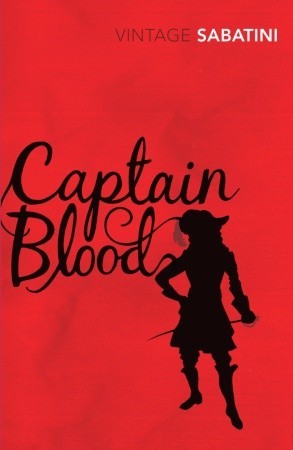
Captain Blood was published in 1922 and is available online as a free ebook, though the edition I read was the Vintage Classics paperback pictured here. I recommend giving it a try even if pirate stories don’t sound appealing to you, as it’s worth reading this one just to meet Peter Blood!
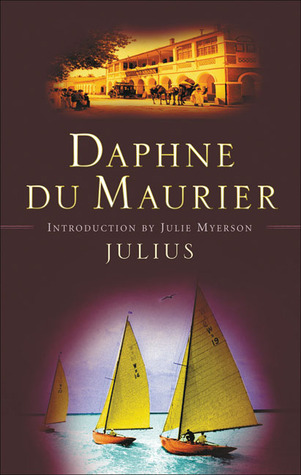
Julius by Daphne du Maurier

Julius This book was originally published under the title The Progress of Julius and is the chilling story of an ambitious and ruthless man who goes through life determined to get “something for nothing” and not caring who gets hurt in the process.

The novel begins in 1860 when Julius Levy is born into a family of French peasants who live in a small village on the banks of the Seine. The biggest influences on Julius’s early life are his loud, coarse grandfather and irresponsible mother, but he later grows closer to his father, Paul, a quiet Jewish man. With the outbreak of the Franco-Prussian war the Levys take refuge in Paris until a tragedy results in Julius and his father fleeing for the safety of Paul’s home country, Algeria.

At first, Julius plans to follow a religious life, but he soon finds that buying and selling in the marketplace holds more attraction for him and that he enjoys cheating people out of their money. When life in Algeria starts to bore him, Julius travels to England where he begins to build up a huge business empire. But even as Julius becomes one of the richest and most successful men in the world, he continues to show a complete lack of regard for the people around him, using and manipulating them to get what he wants…until his daughter Gabriel is born.

This was Daphne du Maurier’s third novel, published in 1933 when she was only twenty six years old and it amazes me that she was able to write such a sophisticated, powerful novel at such an early stage of her career. I’ve found that all of du Maurier’s books have some dark and disturbing elements, but this must surely be the darkest and most disturbing of them all – though not in a gothic way like Rebecca or Jamaica Inn. The main reason I found this book so disturbing is because Julius Levy is one of the most horrible, despicable characters I’ve ever come across in literature.

He’s completely heartless, cruel and callous with no redeeming features at all. Early in the story when the Levy family are forced to leave their village for Paris, Julius drowns his beloved cat rather than leave her with a neighbour, because if he can’t have her he doesn’t want anyone else to have her. This is an early indication of what Julius is like and as the story continues there are dozens of other examples of his selfishness and cruelty. And yet, for some reason, he still inspires feelings of love and friendship in other people, which is hard to understand as he rarely, if ever, shows any consideration or compassion for anybody but himself – they always come second to his latest money-making schemes.

As usual, du Maurier’s settings are wonderfully atmospheric, from the small French village of Puteaux to the dusty marketplaces of Algeria to the area of London in which Julius gets his first job in a bakery. The historical setting, beginning with the Franco-Prussian War and the Siege of Paris, is interesting too. This was not one of my favourite du Maurier novels (it was much too uncomfortable and unpleasant for that) but, like all of her books, it kept me gripped and fascinated from the first page to the last.

A Hero of Our Time by Mikhail Lermontov

A Hero of Our Time - Lermontov

Again, you’ll tell me, no man can be as bad as that; and I’ll ask you why, if you have believed in the possibility of the existence of all the villains of tragedy and romance, you should not believe in the reality of Pechorin? If you have admired inventions far more terrible and monstrous, why does this character, even as an invention, not deserve your mercy? Could it be because there is more truth in him than you would like?

A Hero of Our Time is described as one of the first great Russian novels, though I have to confess that until recently I had never even heard of it or Mikhail Lermontov. Having read the biographical information about the author included in this book, it seems Lermontov’s life was almost as unusual and interesting as his fiction! A Hero of Our Time was published in 1840, just before he was killed in a duel at the age of twenty six.

This is not a novel with a chronological structure or a conventional plot with a beginning and an end. Instead it consists of five separate stories, some very short and some much longer. Together they create a portrait of Grigory Pechorin, a young army officer – though as the author tells us in the preface, it’s also “a portrait built up from the vices of our whole generation, in all the fullness of their development”.

Far from being the hero suggested by the title, Pechorin is actually much more of an anti-hero, selfish, cruel, manipulative and motivated by boredom and disillusionment. He is not a likeable character at all and isn’t supposed to be, but as the novel unfolds and we are given his own version of events as well as seeing him from the perspective of others, we come to understand him better. By the end of the book I found I didn’t hate Pechorin as much as I thought I would at first and for all his faults and flaws I thought he was a fascinating character.

In the first story, an unnamed narrator is travelling through the Caucasus where he is joined by an army captain, Maxim Maximich. As they travel together, the captain tells the narrator about his friendship with Pechorin. In the second story the narrator briefly meets Pechorin and the final three stories are entries from Pechorin’s own journal. With each of these five chapters we learn a little bit more about Pechorin’s life and follow him through a series of adventures, romances and even a thrilling duel. Despite the disjointed and episodic feel of the book it’s fast-paced and never boring. I was also pleased to find that although the main characters are soldiers, the story concentrates on their personal lives and there are no long battle scenes or detailed descriptions of military tactics to struggle with – though there are some great descriptions of the landscape of the Caucasus, where the novel is set.

I really enjoyed A Hero of Our Time. Of all the Russian novels I’ve read, I found this one by far the easiest to read, despite it being written in the early 19th century. This Oxford World’s Classics edition is translated by Nicolas Pasternak Slater (the nephew of Boris Pasternak who wrote Dr Zhivago) and I think it’s an excellent translation; it flows so effortlessly it hardly feels like a translation at all. It’s a very short novel too (the actual story is less than 140 pages long – the rest of the book is made up of the introduction, notes, maps and other additional material) so could be a good choice if you want to read some Russian literature but feel intimidated by Tolstoy or Dostoyevsky.

This edition also includes a piece of writing by Alexander Pushkin entitled A Journey to Arzrum in which Pushkin describes his own travels through the Caucasus. It’s really more of a travelogue or journal than a story but it works as an interesting companion to Lermontov’s novel.

Have you read this book? Which other Russian classics would you recommend?

Cold Comfort Farm by Stella Gibbons

Cold Comfort Farm Cold Comfort Farm was the book the recent Classics Club Spin chose for me to read. I did actually manage to read it before the end of June, as the rules stated, despite the fact that I’m posting my review in July!

This is the story of Flora Poste, nineteen years old and recently orphaned, who decides to go and live with her relations. After writing to various family members and dismissing their offers as being unsuitable, something in the reply she receives from her cousin Judith Starkadder at Cold Comfort Farm in Sussex appeals to Flora and her mind is made up. Flora thinks she knows what to expect from life on a typical Sussex farm (it will be bleak, miserable and old-fashioned – and there’s sure to be a farmer called Amos and two young cousins called Seth and Reuben). As soon as she arrives she discovers that Cold Comfort Farm really is the typical farm she had imagined. Each of the farm’s inhabitants has their own set of problems that require Flora’s assistance, so armed with one of her favourite books, The Higher Common Sense by the Abbé Fausse-Maigre, she begins to ‘tidy up’ the lives of the Starkadders and help them adapt to modern life.

Not having read this book before or seen the adaptation, I didn’t know much about it before I started except that it was a parody of the British rural novel and supposed to be funny. Now, I’m going to be completely honest here and admit that I didn’t find it as funny as I’d expected. A sense of humour is such a personal, individual thing (and I do have one, honestly!) so who can say why a book works perfectly for one person and not so perfectly for another. I did think it was very clever, amusing and witty, but not hilarious. Anyway, it helped that I’ve read some of the types of books Gibbons is parodying (such as Thomas Hardy’s rural novels, for example) though it’s probably not essential to be familiar with these books.

What I enjoyed most about this book was meeting the collection of eccentric characters who live on the farm, from Amos Starkadder, Judith’s husband, who preaches at the Church of the Quivering Brethren to Aunt Ada Doom who “saw something nasty in the woodshed” when she was young and hasn’t left the farm since. Another of my favourites was Adam, the old farm hand who “cletters” the dishes with a twig (isn’t that a great word?) and refuses to use the little dishmop Flora buys him because it’s too pretty.

Something else I found interesting was the fact that this book is set in the future (at least, the future for when it was published in 1932) and there are a few references to video phones and other futuristic elements. I didn’t know about this before I started reading and saw the note at the beginning that told us “the action of the story takes place in the near future”. I’m not sure what the point of this was, though, as it didn’t seem to be necessary or to have any effect on the story.

I didn’t love Cold Comfort Farm the way most people seem to, which is a bit disappointing, and it’s probably not a book I’ll want to re-read, but I did still enjoy it and am grateful to the Classics Club Spin for picking it for me!

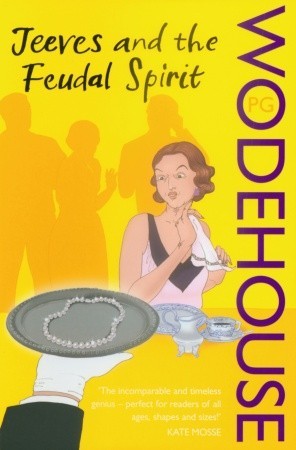
Jeeves and the Feudal Spirit by P.G. Wodehouse

Jeeves and the Feudal Spirit I’ve always loved going to the library and spending some time browsing the shelves, discovering books I’d never seen or heard of before and choosing which ones to take home with me. Browsing their ebook collection online isn’t quite the same, but I was pleased to discover recently that they had added a few P.G. Wodehouse books that I hadn’t read. Jeeves and the Feudal Spirit (also published as Bertie Wooster Sees it Through) was one of them.

At the beginning of the book, Bertie Wooster has grown a moustache while his valet, Jeeves, is away on a shrimping holiday. When Jeeves returns, it’s obvious that he disapproves – and so does everybody else, with the exception of Lady Florence Craye. After a series of misunderstandings, Florence’s suspicious fiancé, G. D’Arcy ‘Stilton’ Cheesewright becomes convinced that Bertie is trying to steal Florence from him. The jealous Cheesewright threatens to break Bertie’s spine in three places (soon increasing to four, then five) so that Bertie is forced to spend most of the novel devising ways to avoid him.

Meanwhile, Aunt Dahlia (Bertie’s “aged relative”) begs Bertie and Jeeves to help her conceal the fact that she has pawned her pearl necklace to fund the rights to a new serial novel for her magazine, Milady’s Boudoir. When her unsuspecting husband invites an expert to the house to have the pearls valued, Dahlia knows she’s in trouble, so she asks Bertie to pretend to ‘steal’ the necklace – which he does, with disastrous results! As usual, it’s up to Jeeves to get everyone out of the predicaments they’ve found themselves in.

I loved this book; it was so funny, though I would find it difficult to actually quote any examples as a lot of the humour results from the ridiculous, complicated situations Bertie gets himself into. The language is great too, of course. What ho! The only problem I had is that as I haven’t read all the previous Jeeves and Wooster books there were sometimes references to things that had obviously happened in earlier novels that I haven’t read yet. It wasn’t too big a disadvantage, though, and I could still follow the story without having all of the relevant background knowledge.

Jeeves and the Feudal Spirit may not be a hugely important, must-read novel that will change your life, but it’s perfect for brightening up a boring Sunday afternoon or relaxing after a long day at work – and sometimes that’s all I really want from a book.

Far from the Madding Crowd by Thomas Hardy

Far from the Madding Crowd Far from the Madding Crowd is set in Thomas Hardy’s fictional Wessex and tells the story of Bathsheba Everdene and her relationships with three very different men. Near the beginning of the book, Bathsheba inherits her uncle’s farm and, being confident in her ability to make a success of the business, decides to run it herself. This is not a conventional thing for a woman to do in Victorian England and it’s not suprising that Bathsheba attracts a lot of attention.

Soon she has two men in love with her: the first is the shepherd, Gabriel Oak, who had already proposed to Bathsheba before she inherited the farm and had been turned down. Despite being rejected, Gabriel remains quietly devoted to Bathsheba and as time goes by she comes to rely on him more than she realises. Her second suitor, Mr Boldwood, is a well-respected neighbouring farmer. When Bathsheba sends him a valentine saying “Marry me”, Farmer Boldwood becomes determined to make her his wife, unaware that the valentine was intended as a joke. But neither Gabriel nor Boldwood can hope to compete with the handsome but untrustworthy Sergeant Troy who seems set to succeed where they have both failed.

I loved Far from the Madding Crowd. Thomas Hardy is one of my favourite Victorian authors and having read five of his books now, none of them have disappointed me. I read the beautiful Penguin English Library edition of this book which I won in a giveaway from Heavenali last year, and I would like to say how much I appreciated the fact that the ‘introduction’ is at the back of the book instead of the front! I wish all publishers would do that, as it would reduce the risk of an unsuspecting reader having the story spoiled for them (I have never understood why it’s apparently considered acceptable to give away the entire plot of a novel in the introduction or on the back cover just because the book is a classic).

Hardy is often criticised for being too depressing, but this one isn’t really a tragic, heartbreaking book like Tess of the d’Urbervilles or Jude the Obscure – although it does still have its moments of sadness. Things do go wrong, bad things happen and not every character gets a happy ending. However, it also has some humour, which is maybe not something usually associated with Hardy. Most of this is provided by the wonderful collection of secondary characters – the eccentric villagers and rustic farm workers who gather at the Buck’s Head Inn in the evenings to discuss the day’s news. Their conversations are so funny and give some relief from the darker parts of the central storyline.

I found Bathsheba very frustrating, although it’s her flaws – her vanity and her impulsive nature – that make her such a fascinating character. There’s a lot to admire about her, such as her desire to run the farm and be successful at it, despite farm management still being very much a man’s world, but after seeming to be such a strong, independent person at the start of the book, she begins to make one mistake after another. Gabriel Oak, though, I loved. I loved him for his patience and devotion, for the way he coped with rejection, and the fact that he didn’t judge too harshly. Like the oak tree his name suggests, he is a constant, reassuring presence throughout the story and certainly my favourite character in any of the Hardy novels I’ve read so far.

Of all the Hardy novels that I’ve read, with the possible exception of Under the Greenwood Tree, this is the most pastoral, with lots of beautiful descriptions of the countryside and lots of information on farming and agriculture. I should now be able to shear sheep, hive bees, forecast the weather by watching the movements of slugs and toads, and deal with a fire in a hayrick! (Well, maybe not.)

I need to choose my next Thomas Hardy book now so any recommendations are welcome. I’ve already read Tess of the d’Urbervilles, Jude the Obscure, Under the Greenwood Tree and A Pair of Blue Eyes.

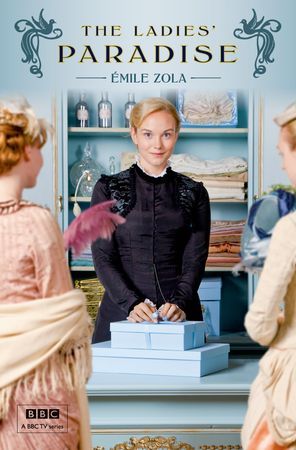
The Ladies’ Paradise by Émile Zola

The Ladies' Paradise The Ladies’ Paradise is only the second book I’ve read by Zola; my first was Thérèse Raquin and the two are very, very different. Au Bonheur des Dames, to give it its French title, was published in 1883 and is the story of a Paris department store, based on the real-life Le Bon Marché.

At the beginning of the novel, Denise Baudu arrives in Paris with her two younger brothers, hoping to find work in her uncle’s draper’s shop. She is disappointed to discover that he is unable to offer her a job because his shop, along with the other small shops in the street, is losing business to a new department store, the Ladies’ Paradise. The new store is able to offer a larger selection of products at cheaper prices all under one roof, and none of the smaller traders can hope to compete. Still, Denise desperately needs to earn money to support her brothers so although she understands how her uncle feels, she is pleased when she is offered a job at the Paradise.

Denise quickly finds that life as a salesgirl at the Paradise is not easy but she’s determined to succeed and overcome whatever obstacles are put in her way. And when she catches the eye of the owner of the Paradise, Octave Mouret, he soon discovers that she is a woman with morals and principles; it’s obvious that she is not going to give him any encouragement – but this only makes him want her more.

I was hoping to love this book as much as Thérèse Raquin but that didn’t happen. The Ladies’ Paradise is a book that I enjoyed, but not one that I loved. It offers some fascinating insights into both Parisian life and the rise of the department store in the late 19th century – and of course, the idea of a larger, cheaper store putting all the small, independent shops out of business is still very relevant today – but I disliked most of the characters and while the long descriptions of the silks, satins and other fabrics sold at the Paradise were beautifully detailed I did get a bit bored after a while. Maybe I just don’t like shopping enough!

However, I did find it fascinating to read about the way the Paradise was run and what it was like to work there. In some ways working at the Paradise was a very different experience from working in retail today, one of the biggest differences being that the salesgirls employed by the Paradise lived and ate on the premises and were treated almost like servants. But from a selling and marketing perspective, I was surprised to learn how modern and sophisticated Mouret’s methods were; a lot of the ideas he had for running the store, advertising its products and attracting customers are still used today (though I didn’t really like the implication that women are so easy to trick and tempt into parting with their money).

The only character I really liked was Denise. I had sympathy with all the ordeals she faced after starting her new job: having trouble fitting in with the other women, feeling that her clothes and hair weren’t right, being bullied by other employees, and worrying about making enough money to take care of her two younger brothers. I found it harder to like or care about any of the other characters (Denise’s brother, Jean, particularly annoyed me – surely he was old enough to take more responsibility for himself and his actions), though I did admire what Mouret had achieved in making the Paradise such a success.

I don’t want to sound too negative about this book because I still found a lot of things to enjoy about it, but I’m hoping the next Zola novel I read will be more to my taste than this one. Any suggestions are welcome!