Madame Bovary by Gustave Flaubert

Madame Bovary I read Madame Bovary during April as part of a readalong hosted by Juliana of Cedar Station and CJ of ebookclassics. It was a book I’d been thinking about reading for a while anyway so the announcement of the readalong couldn’t have come at a better time for me.

Madame Bovary is a French realist novel published in 1856. The title character, Emma Bovary, longs to experience the drama and excitement she has read about in romantic novels but she is unlikely to find it in her marriage to Charles Bovary, an unambitious country doctor. Charles loves his wife and is not unkind to her, but Emma finds him boring and her life dull and meaningless. After she and Charles attend a ball hosted by the Marquis d’Andervilliers, Emma becomes depressed and miserable; she has had a glimpse of a more glamorous world and it has left her even more disillusioned and dissatisfied with her own situation.

Charles wonders whether a move to a larger town will make her happy but Emma is no more content in their new home in Yonville-l’Abbaye than she was in the small village they’ve left behind. Seeking an escape from her unhappy existence, Emma has affairs and spends money she can’t afford, but as she becomes more reckless in both her romantic and financial entanglements, her life begins to spiral out of control.

It has been interesting to read the opinions of other readalong participants, because while I think we all agree that Emma’s behaviour is silly and self-destructive, the amount of sympathy we have for her seems to vary widely. Some readers can relate to Emma and admire her for doing something to try to change her life and find some happiness; other readers find her very selfish and annoying.

I’m one of those readers who didn’t like Emma at all, though I did have some pity for her, because I know there weren’t many options open to women in the 19th century, particularly those living in provincial areas, who wanted more from life than just to be a wife and mother. I can see why she may have felt that adultery was a way of escape and a way to find the passion she’d read about in books. I thought it was sad that Emma couldn’t even take any pleasure in her daughter (when Berthe is born, her first emotion is disappointment that the baby isn’t a boy). Later, when Berthe comes up to her hoping for affection Emma pushes the little girl away so that she falls and hurts herself. Poor Berthe – and life doesn’t get any better for her later in the book either.

I don’t think Charles was entirely blameless as he could have made more effort to understand his wife’s feelings and he was so naïve that he seemed completely oblivious to what was going on, but my sympathy was definitely with him and with Berthe more than with Emma. I noticed, though, that Flaubert himself seems to stay neutral throughout the novel, reporting on his characters’ thoughts and actions without actually passing judgment on them and telling us what we should think.

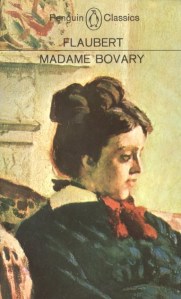
There were parts of this book that I really enjoyed, but I’ll have to be honest and say that much as I wanted to love this book I just didn’t. I think my dislike of Emma was part of the problem, but not the whole problem, as I didn’t find the writing style very engaging either. The version of Madame Bovary that I read was an older Penguin edition (pictured above) translated by Alan Russell – I had no reason for choosing this translation other than that it happened to be the one I already had on my shelf, which seemed as good a reason as any. I didn’t really have any problems with it and found it easy enough to read, but having since read that Flaubert prided himself on always searching for the perfect word, in this case it’s possible that the translation did affect my enjoyment. I didn’t like the book enough to want to read it again in a different translation to find out, though!

While this has not become a favourite classic, I’m still glad I’ve read it. If nothing else, I can now see where Mary Elizabeth Braddon’s inspiration for her novel The Doctor’s Wife came from!

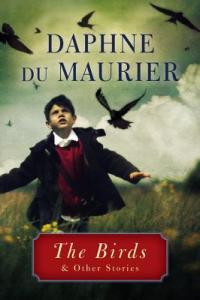
The Birds and Other Stories by Daphne du Maurier

The Birds and Other Stories I have never enjoyed reading short stories as much as full length novels and my various attempts over the years at increasing the number of short stories I read have generally failed. However, one of the few authors whose short stories I do enjoy is Daphne du Maurier (in fact, I’ve loved almost everything I’ve ever read by du Maurier, whatever the format). I have actually read The Birds before (soon after reading Rebecca for the first time as a teenager) but I never went on to read the other stories in this collection so when I saw that this book was available through NetGalley, it seemed a good opportunity to rectify this.

I read another du Maurier collection a few years ago – The Rendezvous & Other Stories – which contained some of the earliest examples of her work, but I found the stories in The Birds and Other Stories much stronger – the work of an accomplished author rather than a beginner. There are six stories in the book, including The Birds, and all of them are excellent, although I felt that two were slightly weaker than the other four.

The Birds, made famous by Alfred Hitchcock’s film of the same name, is the first story in the book and one of my favourites. For those of you not familiar with the plot, this is the story of Nat Hocken, a farm worker who lives with his wife and two young children. When Nat notices an unusually large number of birds in the skies above him, he senses that the weather must be about to change. The next day a national emergency is declared: Britain is under attack from huge flocks of birds. Nat begins to board up the windows and doors, but will he and his family survive the night?

This is such an atmospheric story; you can feel the claustrophobia inside Nat’s house, you can hear the sounds of pecking and tapping at the windows, and you can see the birds gathering in the sky:

He walked down the path, halfway to the beach and then he stopped. He could see the tide had turned. The rock that had shown in midmorning was now covered, but it was not the sea that held his eyes. The gulls had risen. They were circling, hundreds of them, thousands of them, lifting their wings against the wind. It was the gulls that made the darkening of the sky. And they were silent.

I loved this story and it was certainly worth re-reading, but the next two that followed were also very enjoyable. Monte Verita is a haunting tale of a lonely monastery high in the mountains, an isolated community of priestesses and a village of superstitious peasants. The Apple Tree is a great little story about a man who becomes obsessed by the old apple tree in his garden, believing that it is taking on the characteristics of his dead wife, Midge. Whether this is really happening or whether it’s all in his imagination you will have to read the story to decide.

Stories four and five were the ones I didn’t like as much as the others. The Little Photographer tells the story of a beautiful married woman who has a summer affair with a photographer and gets a lot more than she bargained for when she tries to end the relationship. In Kiss Me Again, Stranger, the narrator remembers a girl he once met and fell in love with, only to have his heart broken when he makes a macabre discovery. There was nothing wrong with either of these stories, but they didn’t have the eerie, otherworldly feel of the previous three.

Finally, The Old Man is the shortest story in the book, but also the cleverest. I’m not going to give any more details except to say that when I reached the end of this particular story, I was so surprised and delighted that I had to go straight back to the beginning and read it again!

So, a very impressive selection of stories! They contain many of the same elements that du Maurier uses in her full-length novels, such as the male narrative voice, the unnamed characters, the ambiguous endings, the wonderful use of atmosphere and the vivid sense of place. They are the ideal length too – each one is long enough to allow the reader to be fully drawn into the story, but short enough to read in one sitting. I would highly recommend this collection even to those readers who, like me, don’t often choose to read short stories.

Thanks to Little, Brown and Company for providing a review copy via NetGalley

Can You Forgive Her? by Anthony Trollope

Can You Forgive Her This was the book chosen for me by the recent Classics Club Spin and yet again the Spin has been very good to me by selecting a book that I loved. Can You Forgive Her? is the first in Anthony Trollope’s Palliser series and based on this one I can’t wait to read the other five. Before starting this book, the only Trollopes I had read were his six Barsetshire novels and I felt so comfortable in that world that I was slightly worried about venturing away into the unknown world of the Pallisers. I needn’t have worried, of course, because as usual with a Trollope novel, I was completely drawn into the lives of the characters and enjoyed all 690 pages!

Like the other Trollope novels I’ve read, this one has several different storylines running alongside each other, meeting and intersecting occasionally. First we have the story of Alice Vavasor, the woman whom Trollope is asking whether we can forgive. Alice is twenty-four years old and at the beginning of the novel she is engaged to be married to John Grey, a country gentleman from Cambridgeshire. But there is also another man in Alice’s life – her cousin, George Vavasor, with whom she was romantically involved several years earlier. John is a good, honourable, dependable man, though slightly bland and boring, but he truly loves Alice, whereas the selfish, untrustworthy George only seems to be interested in using her money to further his political career. Throughout the book Alice wavers between John and George and even after it becomes obvious to the reader which of them she should choose, her own nature makes the decision much more complicated than it should have been.

We also meet Alice’s cousin and best friend, Kate Vavasor (George’s sister), who would love to see Alice marry her brother and decides to do everything she can to influence Alice’s decision. Kate herself has no plans to marry and spends a lot of time with her Aunt Greenow, a rich widow who has two rival suitors of her own, Captain Bellfield and Mr Cheeseacre. Cheeseacre, a farmer, is in the better financial position of the two and believes he has more to offer a wife, but Mrs Greenow makes no secret of the fact that she prefers the poorer but more attractive Bellfield and it seems that Cheesacre is the one who is going to be disappointed.

The third storyline involves the Pallisers themselves. Plantagenet Palliser is a politician who is devoted to his work and is considered to have a good chance of becoming Chancellor of the Exchequer. His young wife, Lady Glencora, is another cousin of Alice Vavasor’s. Before their marriage, Glencora was in love with the handsome but irresponsible Burgo Fitzgerald, and as she struggles to understand her new husband, she realises she may have made a big mistake. She and Burgo are still part of the same social circle and when he tells her that he still loves her, Glencora must decide whether to run away with him or whether to stay with her husband and try to make their relationship work.

Whereas the Barsetshire novels revolve around the church and the lives of clergymen and their families, the focus in this series is on the lives of politicians. This hadn’t initially sounded very appealing to me, but luckily I found that the level of political detail in this book was easy enough to follow and understand. I don’t know a lot about the way parliament worked in the 19th century but the thing that does come across very clearly is how corrupt the system was, where a man like George Vavasor, for example, could simply try to buy his way into parliament whether he was actually a good candidate or not.

One of the things I really love about Trollope is the way he makes me care so much about each of his characters, even the ones who seem uninteresting or unsympathetic earlier in the book. As he moves from one character’s perspective to another, he changes my perceptions of each one. In the case of Plantagenet Palliser, for example, I was inclined to agree with Glencora that he was dull and boring and indifferent to his wife’s feelings – until Trollope allows us to get inside Palliser’s head for a while and we see that he does care about his wife after all and is prepared to make huge sacrifices on her behalf.

I think Trollope shows a good understanding in this book of the choices and difficulties facing women, though he offers no real alternatives other than marriage and after a certain point in the book, the outcome of each storyline becomes quite predictable. Each one features a woman forced to choose between two men – one who is respectable but not very exciting and the other who is less respectable but more exciting. However, the way in which each woman deals with the situation she is in varies depending on her personality and her experience of life.

So, to go back to the question the title poses: could I forgive Alice? Well, I could forgive her for vacillating and having doubts and struggling to make up her mind. I understood that although she loved John Grey she was frustrated by what she saw as a lack of passion and ambition and that she wanted to feel she was doing something worthwhile with her life. I found it harder to forgive her for some of the ridiculous decisions she made regarding her money and who to give it to. But really, I don’t think she was in any more need of forgiveness than most of the other characters in the book as they all made mistakes and all had their flaws.

This post is starting to get very long and I haven’t even mentioned the fox hunt, Aunt Greenow’s picnic, the disputed will or the two trips to Switzerland! This is definitely one of my favourite Trollope novels so far and I’m now looking forward to reading the rest of the Pallisers, starting with the second in the series, Phineas Finn.

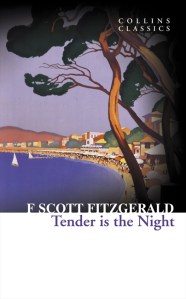
Tender is the Night by F. Scott Fitzgerald

Tender is the Night - Like many people, my first encounter with Fitzgerald was The Great Gatsby, but while I remember being impressed with his writing, I didn’t love the book the way I know so many other readers do. That must have been seven or eight years ago and I haven’t read any of his other books since then (apart from his short story, The Curious Case of Benjamin Button, which I enjoyed) so I decided it was time to try another one to see whether The Great Gatsby, despite being his most popular book, might not have been the best place for me to start.

Tender is the Night, published in 1934, is the story of the disintegration of the marriage of psychiatrist Dick Diver and one of his former patients, Nicole Warren. The novel is divided into three sections and the first is told from the perspective of Rosemary Hoyt, a young American actress spending some time in the south of France with her mother while she recuperates from an illness. One morning she goes down to the beach where she meets Dick and Nicole for the first time. Immediately attracted by their glamorous lifestyle and personal charm, Rosemary becomes captivated by both Divers.

In the second section of the book we move back in time to the beginning of Dick’s relationship with Nicole at a psychiatric clinic in Switzerland. By the time the story returns to the present again, both the reader and Rosemary can see that the Divers’ marriage is not as perfect as it first appeared. The rest of the novel follows the breakdown of their marriage as Nicole grows stronger and Dick’s life goes into a decline.

After I got past the wonderful opening scenes set on the beach, I quickly became bored. I finished the first section with a growing sense of dread at the thought of having to write a negative review of a book that I was sure must be a beloved favourite of so many other people – or worse still, having to abandon it. I’m glad I persevered because it turned out to be only the first section of the book that was a problem and after the focus switched to Dick and Nicole in the second and third parts, I found the story much more engaging.

I know there is another revised version of this book that rearranges the story chronologically and I can understand the reasoning behind that. I’m sure I would have found it much easier to get into the book if it had started with Dick and Nicole instead of Rosemary. However, I think taking Rosemary’s section away from the beginning would remove the sense of mystery – the fact that we first see the Divers through Rosemary’s youthful and naïve eyes means there is more impact when we discover that there’s actually much more to their marriage than meets the eye.

I’m aware that Tender is the Night is partly autobiographical and inspired by Fitzgerald’s own life with his wife, Zelda, who also suffered from mental illness. As I’ve never had enough interest in the Fitzgeralds to have read about their lives in any depth, the autobiographical aspect of the story didn’t have a lot of meaning for me, but I could appreciate that he was drawing on his own experiences with Zelda to give his portrayal of Dick and Nicole’s relationship a feeling of authenticity.

However, I’m not sure if I really liked this book any more than I liked The Great Gatsby. It’s a more complex, mature and emotionally moving story, but with both novels I have struggled to fully connect with any of the characters, something that is more important to me than the elegant writing and complex themes. It’s possible that if I was married I might have more understanding of Dick and Nicole – although I couldn’t identify with Rosemary either, so maybe that wasn’t the problem.

I do think Fitzgerald’s prose is beautiful (I loved the descriptions of the French Riviera, Italy and Switzerland) and this is a book that needs to be read slowly so that you can really appreciate the beauty of each sentence. If I’m going to be honest, though, the feeling of boredom I felt near the beginning stayed with me throughout the whole book. I know now that Fitzgerald is never going to be a favourite author of mine, but I’m glad I’ve at least given him a chance by reading two of his novels before coming to that conclusion.

The Frozen Deep by Wilkie Collins

The Frozen Deep I love Victorian literature and if I had to choose a favourite Victorian author it would probably be Wilkie Collins. The Woman in White was the first book of his that I read, in 2006, and within a year I had also read The Moonstone, Armadale and No Name. Since then I’ve read several of his lesser-known books, most of which I’ve reviewed on this blog, and while they weren’t as good as his ‘big four’ novels, I still found something to enjoy in all of them. Sometimes you can have too much of a good thing, though, and it’s now been a few years since I’ve felt like reading any of Wilkie’s books. But when the Estella Society announced their Wilkie in Winter event I decided to join in and read one of the titles I hadn’t already read, The Frozen Deep.

The Frozen Deep is a novella which Collins based on a play he had written, with the help of Charles Dickens, in 1856. The story was inspired by reports of a voyage to the Arctic led by Sir John Franklin in 1845 during which the members of the expedition disappeared without trace.

At the beginning of the book we meet Clara Burnham who is saying goodbye to the man she loves, Frank Aldersley, whose ship is leaving the next day in search of the Northwest Passage. However, another man is also in love with Clara. His name is Richard Wardour, and when he discovers that she has become engaged to somebody else, he vows to take his revenge on the man he believes has stolen her from him. Clara, who is gifted with the Second Sight, is convinced that Richard will succeed in finding and destroying Frank – and when she learns that Richard has also joined the same Arctic voyage she becomes even more afraid.

I really enjoyed reading The Frozen Deep. It’s not one of Collins’ best books, but I hadn’t expected it to be so I wasn’t disappointed and with less than one hundred pages it was perfect for those busy days just before Christmas when I was looking for something quick and entertaining to read. But while I was impressed that Collins could tell such a compelling story in so few pages, I do think there was the potential for it to have been expanded into a full-length novel. I would have liked more details of the Arctic expedition itself and the experiences of the men left stranded by the ice-bound ships. And I thought Richard Wardour could have been a fascinating character, if only there had been time to explore his thoughts and emotions in more depth.

Although this book wasn’t without some flaws, I thought it was very enjoyable and I’m hoping to find time soon to read (or re-read) another of Collins’ books.

A Tale of Two Cities by Charles Dickens

A Tale of Two Cities When I decided to take part in the Classics Club Spin last month, in which a book would be chosen for me from a list of twenty, A Tale of Two Cities was not one of the titles I was hoping would be picked. I have to be in the right mood to want to read Dickens and I wasn’t really in that mood. Expecting it to be a long and boring read, I thought it would be a good idea to start immediately so that I would have a chance of being finished by the end of December…

I actually finished it within a week and despite my lack of enthusiasm when the spin number was announced, A Tale of Two Cities is one of the best books I’ve read this year!

The novel is set before and during the French Revolution; Paris and London are the two cities of the title. The story begins with Doctor Manette being released from the Bastille after eighteen years as a political prisoner. Reunited with his daughter, Lucie, and returning with her to England, the lives of the Manettes become entwined with the lives of two young men who are both in love with Lucie. One of these is Charles Darnay, a former French aristocrat, and the other is Sydney Carton, an English lawyer. We follow these characters and others as they return to France where they become caught up in the dramatic events of the French Revolution – and the scheming of wine shop owner, Monsieur Defarge, and his sinister wife, who is never seen without her knitting!

This is the sixth Dickens novel I’ve read and my favourite so far. I find it interesting that everyone who reads Dickens has different favourites and least favourites; there doesn’t seem to be one book that is universally regarded as his best. I think part of the reason I loved this book so much was that in many ways it was very different from the others I’ve read but I know that some readers will probably dislike it for that same reason, so it’s really a matter of personal opinion.

One of the things that struck me about this book was the absence of humour, in comparison to the other Dickens novels I’ve read – and as Dickens and I don’t usually share the same sense of humour, this was definitely a positive thing for me! Of course, the French Revolution is a serious subject, so the more serious tone of the writing was quite appropriate. I also thought the characters felt more realistic and well-rounded than usual (if there is a comedy character in the novel, it’s probably Jerry Cruncher). My favourite character, which probably won’t surprise anyone else who has read this book, was Sydney Carton – although I didn’t fall in love with him until the last few chapters. I hadn’t guessed when we first met him that he would turn out to be so heroic and self-sacrificing.

I was also impressed by how tightly plotted the book is. The focus stays firmly on the main storyline which makes it easy to follow, unlike Bleak House or Our Mutual Friend which have more complex structures with lots of subplots and lots of long descriptive passages. In A Tale of Two Cities, everything feels relevant and helps to move the story forward. The novel begins with some of the most famous lines in literature (It was the best of times, it was the worst of times…) and closes with some that are almost as well known (It is a far, far better thing that I do, than I have ever done; it is a far, far better rest that I go to than I have ever known). I’ve seen those final lines quoted many times before but out of context they didn’t mean much to me; now that I know who and what they refer to they have much more significance. I don’t want to say too much and spoil the story for anyone who hasn’t read it yet, but the ending is heartbreaking. This is the first Dickens novel that has made me cry!

The Classics Club spin was a success for me this time, then. I do have some other Dickens novels on my Classics Club list and feel much happier about reading them now!

The Odyssey – translated by T.E. Lawrence

The Odyssey - Homer Ten years have passed since the Trojan War ended but Odysseus has still not returned home, having been held captive by the nymph Calypso, who has fallen in love with him. At home in Ithaca, his wife, Penelope, has found herself besieged by a large group of suitors who are hoping to persuade her to marry one of them. The suitors have taken over Odysseus’s palace and are helping themselves to his food and drink; his son, Telemachus, is desperate for them to leave but doesn’t have the courage to throw them out.

The Odyssey tells the story of Odysseus and his journey home to Ithaca – a journey involving encounters with the one-eyed Cyclops, the witch Circe, the sea monster Scylla, and the tempting music of the Sirens. But it’s also the story of Telemachus and his quest to find out what has happened to his father; of Penelope, faithfully waiting for her husband to return; and of the Greek gods and goddesses who try to help or hinder Odysseus on his travels.

I’m so happy to have finally read The Odyssey as it was one of the least appealing books on my Classics Club list, not necessarily because I was intimidated by it (well, maybe a little bit) but because I’m just not very interested in mythology. I can’t really explain why I’m not a fan; I did enjoy reading Greek myths as a child, but since then my reading has taken me in other directions. I know that probably puts me in a minority as most people seem to love mythology and have a lot more knowledge of the subject than I do!

I’ve started to read The Odyssey before but didn’t finish it so this is the first time I’ve actually read it from beginning to end. I did already know most of the story, partly from school and partly because this is the sort of story that I think many people will have at least some familiarity with even if they’ve never read it in its entirety. There were some things I wasn’t aware of, though – for example, I was surprised by how little time is actually devoted to Odysseus’s journey. This section of the epic, in which Odysseus describes his adventures and the monsters and mythical beings he outwits, is by far the most well-known section, but it actually only takes up four of the twenty-four books that make up The Odyssey. The rest of the time is spent on the suitors, Telemachus and Penelope, and what Odysseus does after he eventually returns to Ithaca.

There are lots of different themes and ideas contained in The Odyssey – storytelling, disguise and deception, temptation, and the relationship between mortals and gods are a few that I noted and I’m sure there are others that I missed. There is also a lot of focus on hospitality. It seemed a weary traveller would be made welcome wherever they went, offered food, a bath and a bed for the night.

There are many different editions and translations of The Odyssey, some in verse and some in prose, but the book I read was the Wordsworth Classics edition pictured above from 1992 with a 1932 prose translation by T.E. Lawrence (better known as Lawrence of Arabia). There was no special reason why I decided to read this version, other than that I happened to have it on my shelf (I can’t remember where I got it from). I’m not sure if you can even still buy this particular translation in this edition anymore. However, this turned out to be a perfect translation for me. I know I’ve probably missed out on a lot of the beauty of The Odyssey by reading a prose version, but I don’t get on very well with narrative poems – apart from The Epic of Gilgamesh which I loved in verse form – so reading it in prose was probably a much better choice for me personally.

I have no idea how technically accurate Lawrence’s translation might be, but all I was really hoping for was something enjoyable and reasonably easy to read, and that’s what I got. I was surprised by how exciting and readable it actually was; I wonder if the fact that Lawrence himself had such an eventful life was an influence here in helping him to convey the drama of Odysseus’s adventures in such a compelling way.

I’m sorry about the lack of insight and analysis in this post. It doesn’t seem right to just ‘review’ an epic like The Odyssey as I would any other book, but that’s what I’ve had to do as I really don’t feel that there’s much I can add to everything that’s already been said about it over the centuries. It’s actually been a lot harder to write about The Odyssey than it was to read it!

Have you read The Odyssey? If I read it again, is there a translation you would recommend?