Doctor Zhivago by Boris Pasternak

Doctor Zhivago Do you ever find that after finishing a book you’re still not sure what you thought of it and couldn’t even say whether you had actually enjoyed it or not? That’s the way I felt about Doctor Zhivago. I’m glad I’ve finally read it as it’s a book I’ve been curious about for a long time, but while I didn’t dislike it I didn’t love it either. Thankfully I don’t even attempt to rate books on my blog but I do on Goodreads and wavered between three and four stars for a long time before settling on three. Doctor Zhivago is a long book and definitely not a light, easy read, so I was disappointed that I couldn’t rate it more highly after investing so much time and effort in it.

Doctor Zhivago was published in 1957 and Pasternak was awarded the Nobel Prize for Literature a year later. The novel is set in Russia and follows the life of Yuri Zhivago, a doctor and poet. Yuri’s mother dies when he is still a young child and he is raised by his Uncle Kolya. After studying medicine at university, he marries his childhood friend, Tonya, and they have a son together but Yuri and Tonya are separated when Yuri joins the army as a doctor. Recovering in a field hospital after being wounded, he is drawn to another woman, Lara, who is working there as a nurse and over the years that follow he is torn between his loyalty to Tonya and his love for Lara. But this is more than just Yuri’s story…it’s also the story of Russia itself and the events that shaped the country throughout the first half of the twentieth century.

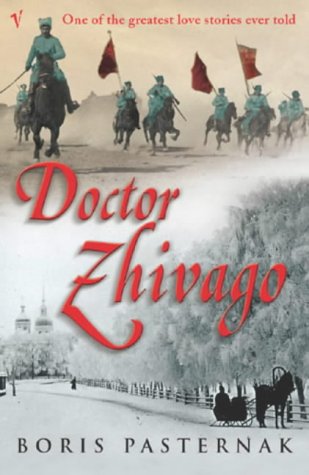
I have to admit that before I started reading this book I had absolutely no idea what it was about, though I think I must have had the impression it was a romantic historical epic set against a backdrop of beautiful snowy landscapes. Although I’ve never actually watched any of the film or television adaptations of this book it seems that they have chosen to focus more on the love story aspect, which is probably why I had this misconception of what the book would be like. This particular edition of the book does nothing to dispel that idea, with the claim on the cover that this is “one of the greatest love stories ever told”. It isn’t. Not in my opinion, anyway. After reaching the end of the book it seemed to me that the romance had only formed a minor part of the story, taking second place to the Russian history and politics, though whether this is a good thing or a bad thing depends on your personal preference, of course!

Doctor Zhivago was originally written in Russian and the translators of this edition are Max Hayward and Manya Harari. I hadn’t looked into which other translations are available – I just picked the book up on a whim when I noticed it on the library shelf because I’ve been interested in reading it for a while. Maybe there are other translations that are better, but I didn’t have any problems with this one; I thought the writing flowed well and was easy enough to read (although the story itself is disjointed, almost episodic). There are some beautiful, moving passages, and yes, some wonderful descriptions of snowy Russian landscapes too. But what did make this book very challenging for me was my complete lack of knowledge of most of the history involved: the February and October Revolutions, for example, and the Civil War between the Reds and the Whites. If you’re planning to read Doctor Zhivago and know nothing about the historical context I would strongly recommend doing some background reading first – I wish I had as I’m sure it would have made the story a lot easier to understand and follow!

The parts of the book that I did enjoy were excellent – I particularly loved the penultimate chapter, Again Varykino, and its atmospheric descriptions of a deserted town surrounded by howling wolves – but I was disappointed that I never managed to form any kind of emotional connection with any of the characters. Although Yuri, Lara and Tonya found themselves in situations that I could sympathise with, I thought their characters felt underdeveloped. They never felt like real people to me, so their stories didn’t affect me as much as they should have done.

I wish I had been able to write a more intelligent, articulate review but I think I’ll have to leave that to other people as I’m aware that a lot of the political and philosophical aspects of the story just went over my head. To fully appreciate this book I would have to read it again and I don’t think that’s something I’ll ever want to do! I do usually like Russian literature in general – I loved Mikhail Bulgakov’s The Master and Margarita, I enjoyed Anna Karenina and am currently taking part in a group read of War and Peace – so I have to conclude that Pasternak and Doctor Zhivago are just not for me.
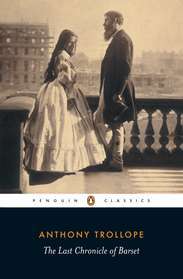
The Last Chronicle of Barset by Anthony Trollope

The Last Chronicle of Barset In April 2010 I read my first Anthony Trollope novel, The Warden, and now here I am, three years and six books later, at the end of the Chronicles of Barsetshire at last!

Being the final book in this series, characters from all five previous novels are brought together in this one, so if you have yet to start reading the Chronicles I would strongly recommend leaving this one until last. If you approach this book having already read the first five, you will be as excited as I was to discover how many old friends reappear in The Last Chronicle…Archdeacon Grantly, Mr Harding (probably my favourite Trollope character) and his daughter Eleanor, Mark Robarts, Bishop and Mrs Proudie, Dr Thorne and too many others to list here!

The main storyline follows the Reverend Josiah Crawley, a poor clergyman who has been accused of stealing a cheque for twenty pounds from Lord Lufton to pay his debts to the butcher. Crawley is unable to explain how it came into his possession but he insists that he didn’t steal it. As news of the scandal begins to spread through Barsetshire, some people believe that Crawley is guilty while others are convinced that he is innocent.

Most of Trollope’s characters are fully developed, three-dimensional people with believable motivations and emotions, but I thought Mr Crawley was particularly complex and fascinating. He did appear earlier in the series, in Framley Parsonage, but we get to know him much better here, with all his conflicting flaws and virtues. He has a lot of admirable qualities but at the same time he is very frustrating; he’s too proud to accept help from anyone, he insists on walking all the way from Hogglestock to Barchester rather than letting a friend drive him (even though it nearly kills him), and stubbornly refuses to have a lawyer defend him. This is what Trollope has to say about him:

“I think that at this time nobody saw clearly the working of his mind,—not even his wife, who studied it very closely, who gave him credit for all his high qualities, and who had gradually learned to acknowledge to herself that she must distrust his judgment in many things. She knew that he was good and yet weak, that he was afflicted by false pride and supported by true pride, that his intellect was still very bright, yet so dismally obscured on many sides as almost to justify people in saying that he was mad. She knew that he was almost a saint, and yet almost a castaway through vanity and hatred of those above him. But she did not know that he knew all this of himself also. She did not comprehend that he should be hourly telling himself that people were calling him mad and were so calling him with truth. It did not occur to her that he could see her insight into him.”

I won’t tell you whether or not Crawley really was guilty of stealing the money, but as the story progresses it starts to look less and less likely that the truth will ever be discovered. To make things worse, his daughter Grace is romantically involved with Major Henry Grantly, the son of Archdeacon Grantly. While Crawley is suspected of theft, the Archdeacon is opposed to the idea of his son marrying Grace – and although Grace is sure her father is innocent, she doesn’t want to damage Henry’s reputation through association with her family. Two other people with an interest in Mr Crawley’s fate are the long-suffering Bishop Proudie and his formidable wife. Mrs Proudie is a real masterpiece of characterisation and their conversations continue to be hilarious.

“Under these circumstances,” continued the bishop, “looking to the welfare of your parish, to the welfare of the diocese, and allow me to say, Mr. Crawley, to the welfare of yourself also—”

“And especially to the souls of the people,” said Mrs. Proudie.

The bishop shook his head. It is hard to be impressively eloquent when one is interrupted at every best turned period, even by a supporting voice.

Lily Dale and Johnny Eames, who we first met in The Small House at Allington, also return in this book. Their storyline was left unresolved at the end of The Small House and is picked up again here several years later. Will Lily agree to marry Johnny at last or will she stick to her decision to remain single forever? And although Johnny does still seem to love Lily, he also becomes involved with another woman in London, Madalina Demolines, while his friend, the painter Conway Dalrymple, begins an affair with the married Mrs Dobbs Broughton. My only criticism of this book is that I felt some of these subplots were unnecessary. I didn’t have much interest in the new characters such as Miss Demolines or Mrs Dobbs Broughton and their storylines were a distraction from the much more absorbing storylines involving the Crawleys, Grantlys and Proudies.

Looking back at the series, my favourites are still Barchester Towers and Doctor Thorne, but I can honestly say I’ve enjoyed all of them. I’m looking forward to starting the Palliser novels next, but I’m sure I’ll be returning to Barsetshire again in the future!

Classics Club May Meme

classicsclubI haven’t participated in the last few monthly memes from the Classics Club but I thought I would join in this month as it’s a nice, easy question to answer.

Tell us about the classic book(s) you’re reading this month. You can post about what you’re looking forward to reading in May, or post thoughts-in-progress on your current read(s).

Before I start to discuss this month’s books, I should probably mention the three books from my Classics Club list that I read in March and April and still haven’t found time to write about yet! They are:

Doctor Zhivago by Boris Pasternak
The Last Chronicle of Barset by Anthony Trollope
The Ladies’ Paradise by Emile Zola

I’ve been behind with my reviews all year, but I hope to post my thoughts on these three in the next couple of weeks.

This month I’m planning to read these:

Far from the Madding Crowd

Far from the Madding Crowd by Thomas Hardy

I received a beautiful Penguin English Library edition of this book in a giveaway from Heavenali last year and feel bad that I haven’t had a chance to read it yet. This will definitely be the next classic I read and I’ll probably start it this weekend. I’ve only read a few of Thomas Hardy’s books but I loved them and am really looking forward to reading more of his work.

Twenty Years After

Twenty Years After by Alexandre Dumas

I re-read The Three Musketeers recently and mentioned that I want to continue with the other books in the Musketeers series. Twenty Years After is the second one and I can’t wait to read it as I’ve loved everything else I’ve read by Dumas. This is a very long book, though, so I might not finish it before the end of the month.

And those are my plans for May! I also need to read this month’s section of War and Peace (Book 2, Parts 3 and 4) for the readalong I’m taking part in.

Are there any classics you’re looking forward to reading this month?

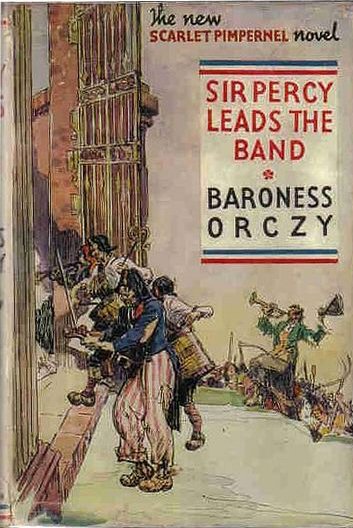
Sir Percy Leads the Band by Baroness Emmuska Orczy

Sir Percy Leads the Band This is one of the many sequels to Baroness Orczy’s classic historical adventure novel, The Scarlet Pimpernel. The story is again set during the French Revolution and at the beginning of the novel, in January 1793, King Louis XVI of France – now known simply as Louis Capet – has been found guilty of ‘conspiring against liberty’.

With their former king sentenced to death it’s a dangerous time for the French aristocracy, and Sir Percy Blakeney and his men are in France to help the La Rodière family avoid the guillotine. Knowing that his old enemy Chauvelin will be determined to track him down, a disguise is necessary – so Sir Percy becomes the fiddle-playing leader of a disreputable band of musicians entertaining crowds of revolutionaries in a tavern near the Château de la Rodière. This means Percy and the League of the Scarlet Pimpernel are ideally placed to be able to protect the family when the mob decides to attack the Château…but could someone within the League be about to betray their plans?

After reading (and loving) The Scarlet Pimpernel last year, I wanted to try another book in the series. I wasn’t sure which one to choose as I’ve seen a few different recommended reading orders, but I decided on this one as it is set immediately after the events of The Scarlet Pimpernel. I enjoyed it but it wasn’t as good as the original book. With all the action taking place in France, this means we don’t see anything of Sir Percy’s wife, Marguerite, which I thought was a bit disappointing as their relationship had formed such a big part of the story in The Scarlet Pimpernel. Marguerite was not a particularly strong character but I connected with her more than I did with either of the two female characters in this book, Blanche Levet or Cécile de la Rodière.

We do spend a lot of time with the other men of the League of the Scarlet Pimpernel. I remembered some of them from the previous book – Lord Anthony Dewhurst, Sir Andrew Ffoulkes and Lord Hastings – but there was also one who was new to me, St John Devinne. From the start it seems that Devinne is distrusted by everyone except Sir Percy and as Percy has previously proved to be so good at judging people and situations, the reader is made to wonder who is right and who is wrong. A lot of the novel’s tension and suspense comes from waiting to see whether he is going to betray Percy and the rest of the League.

Sir Percy Leads the Band was entertaining enough but I didn’t think it was anything very special and there’s really not a lot more I can say about it! Although I didn’t like it as much as The Scarlet Pimpernel it won’t deter me from trying some of the other books in the series at some point. Maybe those of you who are Scarlet Pimpernel fans can tell me whether it’s best to continue reading the series chronologically or if there’s another order you would recommend.

War and Peace Readalong: March and April

warandpeace2013

This year I’m taking part in a year-long group read of War and Peace, hosted by Amy and Iris. I had fallen behind with the reading in March (which is why I didn’t post an update for that month) but I managed to catch up again in April.

After struggling with February’s very war-dominated section I’m now enjoying the book again and I’m pleased that there does seem to be more balance between the war scenes and domestic scenes than I had feared at first! I also made things easier for myself this month by doing what I should probably have done from the beginning and printing off a character list to keep beside me while I read – although as I get further into the book I’m finding the number of characters less overwhelming and easier to keep track of anyway.

Book 1 Part 3

This was the section I really should have read in March. In the first half of this section we return to Russian society and rejoin some of the female characters we haven’t seen since Part 1, including Princess Helene, who marries Pierre, and poor Princess Marya, who turns down the chance of happiness for the sake of her father. In the second half we are with the army again, before and during the Battle of Austerlitz. Although I still don’t think the ‘war’ scenes of War and Peace are ever going to be my favourites, I found these easier to follow and understand than the battle scenes in Part 2 (see my comments from February). They still feel a bit chaotic and confusing, but that’s probably the point!

The most memorable parts of this section for me were Nikolai Rostov getting his first glimpse of Tsar Alexander, and Andrei Bolkonsky meeting his hero, Napoleon. The scene with Napoleon shows how we can build people up in our minds to be something they’re not, which can lead to disillusionment when we finally meet them and discover they are ordinary human beings like ourselves. In Rostov’s case the fact that he idolises the Tsar so much means that when he finally gets the chance to speak to him he is too awestruck to approach him and ends up regretting a missed opportunity.

Book 2 Parts 1 & 2

And this was April’s reading. There was a lot happening this month, including a birth, a death and a duel! With Nikolai Rostov coming home on leave, we are also reacquainted with the members of the Rostov household, including Natasha and Sonya.

From these two sections, I thought some of the scenes that stood out the most were the ones where Pierre, after leaving his wife, meets a mysterious stranger at the station and makes the decision to become a Freemason. There are a few chapters devoted to this part of the story and they had a slightly surreal, otherworldly feel in comparison to what we’ve read so far. I also thought Pierre’s discussions with Andrei were interesting, with Pierre explaining how much happier he has been since he stopped being selfish and started considering other people, and Andrei arguing that his actions could actually be making things worse rather than better.

Towards the end of this month’s reading we return to the ‘war’ when Rostov rejoins the army and feels the same joy on being welcomed back to his regiment that he felt on being welcomed home by his family. But this time, rather than facing chapter after chapter of military tactics and strategies (the reason I wasn’t enjoying the book in February) we are shown more of the human side of war, as the men begin to suffer from starvation and illness. Rostov experiences more of the disillusionment I mentioned earlier when he visits the wounded Denisov in a military hospital and is shocked by the way the patients are being treated.

I really enjoyed April’s two sections and found them surprisingly quick to get through. And we’re now 33% into the book, which is very encouraging!

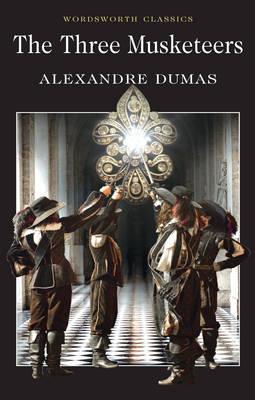
The Three Musketeers by Alexandre Dumas (re-read)

The Three Musketeers One of my goals for 2013 was to re-read more of my favourite books, something I’ve been neglecting in recent years. Well, here we are in the middle of April and so far I’ve only re-read one!

The Three Musketeers may be the title, but our hero is not a musketeer when we first meet him at the beginning of the novel, in the year 1625; his name is d’Artagnan and he’s a young man from Gascony in France, on his way to Paris where he hopes to join the King’s Musketeers under the command of Monsieur de Tréville. On his arrival in Paris, d’Artagnan encounters three of the musketeers – Athos, Porthos and Aramis – in one of those wonderful openings to a book that once you’ve read you’re unlikely ever to forget.

Soon d’Artagnan and the three musketeers become the best of friends, and when d’Artagnan meets and falls in love with Constance Bonancieux, one of the Queen of France’s ladies, all four of them are drawn into the intrigue surrounding the Queen’s affair with the powerful English nobleman, the Duke of Buckingham. With the King’s advisor, Cardinal Richelieu, hoping to expose the affair, Constance, d’Artagnan and his three friends become targets of the Cardinal and his spy, the beautiful Lady de Winter. But Milady, as she is known, is hiding a secret of her own and if d’Artagnan discovers the truth, he and Constance could find themselves in even greater danger.

I first read The Three Musketeers five years ago and when I finished it I had intended to read the other books in the trilogy (the second is Twenty Years After and third is the three-volume The Vicomte de Bragelonne/Louise de la Valliere/The Man in the Iron Mask) but as so often happens other books got in the way and I never did get around to continuing with the d’Artagnan series. And so when I made my list for the Classics Club I put all of them on there – along with a re-read of The Three Musketeers as I thought it would be a good idea to remind myself of the characters and story before embarking on Twenty Years After – and anyway, I never need an excuse to re-read a book that I enjoyed so much the first time!

I love Alexandre Dumas and although The Three Musketeers is not my favourite of the three novels of his that I’ve read (that would be The Count of Monte Cristo) I still think it’s a wonderful book with some great characters. The musketeers all have such different personalities: the aristocratic, melancholy Athos, the loud, brash Porthos, the fastidious would-be priest, Aramis, and of course, the brave, passionate d’Artagnan. Everyone will be able to pick a favourite musketeer, and mine is Athos. In her recent post on The Count of Monte Cristo, Lisa compared the character of Edmond Dantes with Francis Crawford of Lymond from the Lymond Chronicles by Dorothy Dunnett (two other great fictional characters, by the way); I agree, but I can also see some of Athos’ character traits in Lymond too, especially during one of the most memorable set pieces in the book, where the four friends eat breakfast in a fortress surrounded by enemy soldiers because it’s the only place they can find to talk in private.

It seems five years is a good length of time to wait between re-reads of a book. I had forgotten enough so that I could be surprised by the twists and turns of the plot, but remembered just enough to be able to look forward to some of my favourite parts: the breakfast scene I mentioned above, the episode with the Queen’s diamond studs, and especially the sequence of chapters in the middle (entitled Porthos, The Thesis of Aramis and The Wife of Athos) which is just a joy to read. The friendship between d’Artagnan, Athos, Porthos and Aramis is so inspiring and heartwarming (all for one, one for all!) and this is why, for me, there’s a change in the tone of the book when towards the end, the focus switches from the musketeers to Milady and I don’t enjoy the final third quite as much as the first two thirds.

Now, a note on the translation. I read the Wordsworth Classics edition of The Three Musketeers which uses the first English translation by William Barrow in 1846 (I think this is also the one used by Oxford World’s Classics). I would be interested to try a newer translation, such as Richard Pevear’s, to see how it compares – and also because I’m aware that the older translations altered certain parts of Dumas’ original text because they considered it too sexually explicit for Victorian readers. I can see that some readers today would probably find the Barrow translation too literal and antiquated but I didn’t have a problem with it at all; I actually quite like the way the sentences are constructed and I think it has a certain romantic, old-fashioned quaintness about it.

I’ll be moving on to Twenty Years After very soon!

Aurora Floyd by Mary Elizabeth Braddon

Aurora Floyd When I decided to take part in the recent Classics Club Spin I was delighted when the book chosen for me was Aurora Floyd. I have read two of Mary Elizabeth Braddon’s other books – Lady Audley’s Secret and The Doctor’s Wife – and loved them both, so I had high hopes for this one.

Aurora Floyd, like Lady Audley’s Secret, is a Victorian sensation novel which means you can expect a story filled with mystery, murder and family secrets. Aurora Floyd is a young woman who lost her mother at an early age and was raised by her father, a rich banker. We are told that the lack of a feminine influence has led to Aurora having some unsuitable and unconventional hobbies, including an obsession with dogs and horse racing. It’s this interest in horses that causes Aurora to become involved in a scandal that her father does his best to cover up.

Time passes and Aurora attracts the attentions of two very different men: the handsome, proud Cornishman Talbot Bulstrode and the loyal, loving Yorkshire squire John Mellish (one of my favourite characters). She marries one of them but it’s not long before the secrets of Aurora’s troubled past come back to haunt her. Of course I’m not going to tell you what Aurora’s secret is, and if you really don’t want to know I would also advise not reading the blurb on the back of the Oxford World’s Classics edition. It’s not all that hard to guess, admittedly, but it’s completely unnecessary for the publisher to spoil the story for people in my opinion! Even after the truth about Aurora’s past starts to become obvious, though, there are still more mysteries to be solved and plenty of suspense right until the end of the book.

I’ve mentioned that I liked John Mellish; I also loved Aurora’s uncle, Samuel Prodder, and there are some great villains too, including the governess, Mrs Powell, who is jealous of Aurora, and Steven Hargraves, who is looking for revenge after losing his position as groom for kicking Aurora’s dog. As I’ve already said, Aurora is not a typical Victorian heroine, especially in contrast to the novel’s other main female character, her cousin Lucy, who is portrayed as gentle, feminine and obedient. But while Lucy is presented as the 19th century ideal and Aurora as ‘unwomanly’, the author never sounds disapproving or judgmental of Aurora and she is by far the more interesting and engaging of the two. At first, to maintain the aura of mystery and secrecy surrounding her, we are not allowed into Aurora’s head; everything we learn about her is through either the authorial voice (Braddon, like many Victorian authors, has a habit of talking directly to the reader) or through the eyes of Talbot Bulstrode, John Mellish and various other characters. Later, after her secrets start to be revealed, we get to know her better.

In some ways Aurora Floyd is definitely a product of its time – attitudes towards class, for example, and the offensive terms used to describe Hargraves, who has what we would probably call learning difficulties today – but in other ways, Braddon’s views feel refreshingly modern. I also liked the fact that while many authors would have ended the novel with the heroine’s marriage, in Aurora Floyd the marriage takes place less than a third of the way through the book, when the story is only just beginning rather than ending:

Yet, after all, does the business of the real life drama always end upon the altar-steps? Must the play needs be over when the hero and heroine have signed their names in the register? Does man cease to be, to do, and to suffer when he gets married? And is it necessary that the novelist, after devoting three volumes to the description of a courtship of six weeks duration, should reserve for himself only half a page in which to tell us the events of two-thirds of a lifetime?

It has been a few years since I last read anything by Mary Elizabeth Braddon and I had forgotten how much I like her writing. I still prefer Wilkie Collins’ sensation novels, but Braddon’s are not far behind. I didn’t find Aurora Floyd as exciting and gripping as Lady Audley’s Secret but I think I liked the characters better in this one and am grateful to the Classics Spin for selecting such an enjoyable book for me!