Doctor Thorne by Anthony Trollope

Anthony Trollope was a new discovery for me last year and has now become one of my favourite Victorian authors. I read The Warden last April and Barchester Towers in November and then I swore I wouldn’t wait another six months before reading my next Trollope. And that’s exactly what I have done! Maybe it’s a good thing that I’ve waited so long though, because I love Trollope’s books so much I don’t really want to rush through them too quickly.

In this third volume of the Chronicles of Barsetshire, Trollope takes us away from the cathedral town of Barchester (the setting for the previous two novels) to Greshambury, a small town in another part of the county. Here we meet Dr Thorne, and his beloved niece, Mary. Mary’s birth was surrounded by scandal and she has been brought up by her uncle unaware of her mother’s family and the fact that she is related to the wealthy baronet Sir Roger Scatcherd, the doctor’s friend who is slowly drinking himself to death.

Another friend of the doctor’s is Squire Gresham, whose son, Frank, falls in love with Mary. Unfortunately the Greshams are having money problems and Frank’s family are determined that he must marry a rich woman, which Mary is not. The squire’s wife, Lady Arabella, does her best to keep Frank and Mary apart but will she succeed – or will something happen to change Mary’s fortunes?

As well as the class divide and the social stigma of illegitimacy, other themes include the corruption involved in Victorian politics and the effects of alcoholism. None of the Trollope books I’ve read so far could be described as having an enthralling plot and this one even less so. After reading the first few chapters, although I did enjoy them, I was starting to wonder when the story was going to begin. But although Trollope’s books may initially appear to be about very little, his plots are deceptively clever and intricate, and he has a way of pulling the reader into the story so that you become completely absorbed in the moral dilemmas of his characters. And he does apologise for the slow start too…

I feel quite an apology is due for beginning a novel with two long dull chapters full of description. I am perfectly aware of the danger of such a course… It can hardly be expected that any one will consent to go through with a fiction that offers so little allurement in its first pages; but twist it as I will I cannot do otherwise. I find that I cannot make poor Mr Gresham hem and haw and turn himself uneasily in his arm-chair in a natural manner till I have said why he is uneasy. I cannot bring my doctor speaking his mind freely among the bigwigs till I have explained that it is in accordance with his usual character to do so.

I mentioned in my review of Barchester Towers the habit Trollope has of telling us in advance what’s going to happen and he does it again in this book. The outcome of the novel is completely obvious from the beginning, so if you prefer your books to be full of suspense and surprises then Trollope is maybe not the author for you – although I do usually prefer suspense and surprises myself and yet I still like Trollope. I love his warm, witty writing style so much that I don’t at all mind the number of pages he spends introducing us to his characters and describing their backgrounds, appearances and personality traits. This is something that often bores me in books by other authors, but Trollope’s characters are so interesting that I really enjoy getting to know them all.

I was slightly disappointed that our old friends from the previous two books, Mr Harding, his daughter Eleanor and son-in-law Archdeacon Grantly didn’t feature in Doctor Thorne (although the Bishop and Mrs Proudie from Barchester Towers do make a brief appearance), but the new set of characters made up for it. In fact, the relationship between Dr Thorne and his niece Mary reminded me very much of Mr Harding and Eleanor. With the exception of Frank himself, I didn’t really like any of the Greshams or their relatives, the de Courcys (how much sympathy can you have with characters who are constantly saying things like, “If you marry a girl without a fortune, Frank, how are you to live?”) I did like Frank, Dr Thorne and Mary, and I also enjoyed all the scenes involving the two baronets Sir Roger Scatcherd and his son Louis, both unforgettable characters!

Next in the series is Framley Parsonage. I won’t make any promises this time about how long it will be before I read it, but I’m already looking forward to another enjoyable visit to Barsetshire.

North and South by Elizabeth Gaskell

North and South is the story of Margaret Hale, a young woman who lives with her parents at their parsonage in the idyllic village of Helstone in the south of England. When Margaret’s father decides to resign as parson and takes a new job as a tutor in the northern manufacturing town of Milton, the Hale family initially find it difficult to adapt to their new environment. It is not until Margaret meets some of the inhabitants of Milton that the town begins to feel like home. She forms a close friendship with the Higgins family – the invalid Bessy, her younger sister Mary and their father, Nicholas, who works at the cotton mill. But when the Hales also get to know Mr Thornton, a wealthy mill owner, Margaret finds herself caught in a conflict between the poor mill workers and their rich masters.

There’s also a romantic element to the novel: Mr Thornton falls in love with Margaret who unfortunately is prejudiced against what she calls ‘shoppy people’. She seems to make up her mind to dislike him before she even gets to know him because he’s a tradesman who has earned his money rather than inheriting it and is not her idea of a real gentleman. And to make things worse, Mr Thornton’s mother thinks Margaret is haughty and wants to stop her son from becoming involved with her.

Although there were also a lot of things to like about Margaret, her attitude towards Mr Thornton prevented me from really warming to her until the second half of the book when after meeting different types of people and being exposed to important social issues she begins to reassess some of her views and starts to grow as a person. By the end of the book I didn’t find her the annoying character I did at the beginning. It was interesting to see how both Mr Thornton and Nicholas Higgins also changed due to Margaret’s influence. There’s a lot of character development in this book, which was one of the things I loved about it.

The book takes place during the industrial revolution, an important and interesting period of history. It was a time of progress, allowing the factory owners to develop great wealth and the country’s economy to grow. However, the factory employees were working under appalling conditions, with absolutely no regard for their health and safety. Bessy Higgins is one example of this: she is only nineteen years old and has already developed a lung disease which she blames on inhaling ‘fluff’ from the cotton in the mill where she used to work.

Most of this industry was concentrated in the north of the country, in towns and cities such as the fictional Milton. Gaskell herself was born in London but spent most of her childhood in Cheshire and then settled in Manchester after her marriage (the town of Milton is thought to be based on Manchester), so she would have had first-hand knowledge of the northern way of life and how it may have differed from life in the south. Even today many people still have certain views and misconceptions about the differences between northern and southern England and even more so at the time when Gaskell was writing this novel, so I did appreciate the way she showed both the positive and the negative things about both regions.

North and South hasn’t become one of my favourite classics, but I did still enjoy it, although I was slightly disappointed by the way the book ended – not because I was unhappy with the outcome but because it seemed too abrupt. After reading The Moorland Cottage in February, I’ve now read the required two books to complete the Gaskell Reading Challenge, but as I’ve enjoyed both of my choices I’m sure I’ll be reading more of Gaskell’s work in the future!

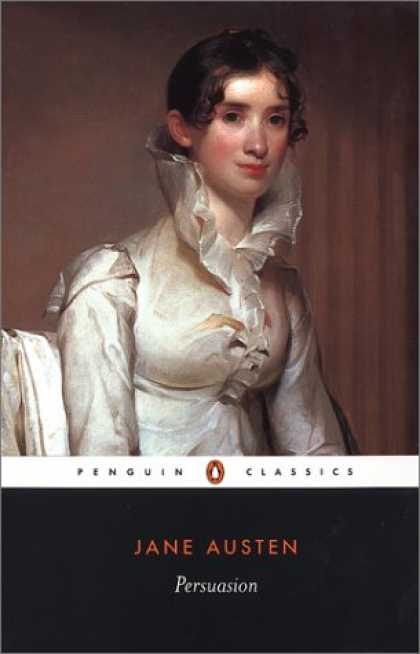
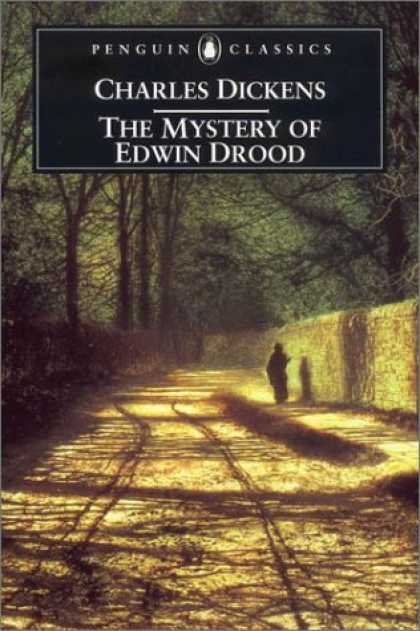
Classics Circuit Tour: Jane Austen (Persuasion) vs Charles Dickens (The Mystery of Edwin Drood)

Today, as part of a Classics Circuit Tour, I’m hosting a duel between two very different authors: Jane Austen and Charles Dickens!

Tour participants were invited to choose a novel by either Austen or Dickens – or both. As there were still a couple of Austen novels I hadn’t read, as well as a whole pile of unread Dickens books, I decided this would be a good opportunity to read one of each. But which one would I like the best?

The first book I want to discuss is Jane Austen’s Persuasion, a moving story of mistakes, misunderstandings and second chances.

Austen begins by introducing us to the Elliot family: the vain and conceited Sir Walter of Kellynch Hall and his three daughters, Elizabeth, Anne, and Mary. Mary is married with children of her own, but Elizabeth and Anne still live at home. Elizabeth is very like her father but Anne is gentle, kind-hearted and intelligent. We also meet Lady Russell, a family friend who took on the role of advisor to the girls following the death of their mother.

Several years prior to the beginning of our story, Lady Russell persuaded Anne against marrying Frederick Wentworth, who at that time was a poor young naval officer. Anne has tried to move on with her life but has been unable to forget her first love and she is still unmarried eight years later when she hears that he has returned as the wealthy and respectable Captain Wentworth. Unexpectedly thrown back into his company and forced to see him with another woman, Louisa Musgrove, Anne knows she still loves him – but can Wentworth forgive her for breaking off their engagement all those years ago?

In comparison to the other Austen books I’ve read this one feels more serious and subdued. Anne Elliot is twenty-seven years old which makes her the oldest of Austen’s heroines and this could explain the different tone of the book (as well as the fact that Jane Austen herself was older, this being her final novel). We don’t see Anne as a younger girl in the days of her original romance with Wentworth; instead we meet her when she’s older and more mature. Anne is not a lively, spirited young woman like Elizabeth Bennet or Emma Woodhouse but she has a quiet strength and a warm heart and it’s easy to see what Captain Wentworth loved in her.

It’s slightly disappointing that Anne and Wentworth are kept apart through most of the novel and have little direct interaction with each other, but I appreciated the way Austen kept the reader waiting and wondering, giving the story a sense of restraint and tension. I loved this book and I think it might even have become my favourite Austen novel – although that could still change after I read Sense and Sensibility, which is the only one of her books that I still need to read.

Moving on to Charles Dickens…

There were plenty of Dickens books I could have chosen, as I’ve only read three of them so far (A Christmas Carol, Bleak House and Our Mutual Friend) but as I’d also committed to reading a Jane Austen book I thought I’d better pick one of his shorter novels.

Trying to avoid one of his eight hundred page tomes played a large part in my decision to read The Mystery of Edwin Drood for the Duelling Authors tour. In comparison to other Dickens novels it’s relatively short – and for a good reason. It’s the novel Dickens was working on when he died in 1870 and unfortunately he was unable to complete it. I wasn’t sure how I would feel about reading an unfinished book but I can tell you that reaching the final page and realising that the mystery wasn’t going to be solved was every bit as frustrating as you might expect!

A large part of the novel is set in the fictional cathedral town of Cloisterham, which is thought to have been based on Rochester, where Dickens lived. We are also taken on a journey into the darker side of Victorian London; the opening scenes of the book take place in Princess Puffer’s opium den, to which Cloisterham choirmaster and piano teacher John Jasper is a regular visitor.

We learn that Jasper is in love with Rosa Bud, an orphan who lives at the Nun’s House in Cloisterham. There are only two problems with this: the first is that Rosa finds Jasper terrifying; the second is that she’s already engaged to his nephew, Edwin Drood, who is only a few years younger than Jasper himself. So when Drood disappears and is presumed to have been murdered it should be obvious who’s to blame, shouldn’t it? Well, no. There’s another suspect: Neville Landless, recently arrived in Cloisterham with his twin sister Helena, who is known to have previously had a violent argument with Drood and was with him the night before his disappearance.

Unfortunately we never find out what really happened to Drood and a number of other storylines are also left unresolved. We can guess what might have been going to happen, and I was able to find lots of possible theories online, but maybe Dickens had a few surprise twists planned for us – we’ll probably never know for certain.

Compared to the other Dickens books I’ve read, I found this one more direct and easy to follow, with less sub-plots and superfluous characters. Almost every chapter helps to move the story forward significantly. It was also quite funny in places, which was good as I haven’t really got on with Dickens’ sense of humour in the past. I can’t help thinking I’ve done things backwards though: I read Drood by Dan Simmons last year, which meant that when I started this book I felt I knew part of the story already. Many of the characters’ names were familiar and I could appreciate how cleverly Simmons had incorporated elements of Dickens’ novel into his own: the opium dens, the tours of the cathedral vaults and crypts, Drood’s interest in Egypt, the ‘hideous small boy’ who throws stones at Durdles. I think it would have been more sensible to have read this book first before the Dan Simmons one!

So who has emerged as the victor of this duel? Well, The Mystery of Edwin Drood was a fun, entertaining read but Persuasion I’m sure will be one of my books of the year – so I think Jane Austen is the winner here!

If you’re still not sure which author you prefer, the other Classics Circuit participants’ Austen and Dickens reviews might help you decide – you can find a full list of tour stops on the Classics Circuit blog.

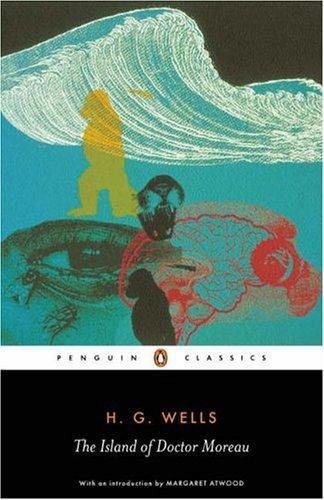
The Island of Doctor Moreau by H.G. Wells

After reading my first H.G. Wells book, Ann Veronica, in March I mentioned that I now felt ready to try one of his science fiction books. The Island of Doctor Moreau is the one I chose to read, and it certainly couldn’t be more different from Ann Veronica!

The story is narrated by Edward Prendick who, having been shipwrecked, is rescued by the crew of the Ipecacuanha. Whilst on board, he becomes acquainted with one of the other passengers, the mysterious Montgomery, who is transporting a cargo of wild animals home to the island where he lives. When the drunken captain of the Ipecacuanha attempts to have Prendick thrown overboard, Montgomery takes pity on him and invites him to accompany him to the island. Here Prendick meets the famous vivisectionist Doctor Moreau, who is carrying out some secret experiments on animals – and as the true horrors of Moreau’s island are revealed, Prendick begins to realise that his own life could be in danger.

I’ve never been a fan of science fiction and wasn’t sure what to expect from this book, but I enjoyed it more than I thought I would. The opening chapters were a bit slow, but things became much more interesting when Prendick arrived on the island and after that the pages flew by.

I didn’t think the story was frightening, although I did feel a growing sense of disgust and repulsion. Some of Moreau’s nightmarish creations were truly horrible to read about. Whatever your personal views on animal testing may be, the way Wells describes the unnecessary pain and suffering Moreau inflicts on his animals is very sad and disturbing. Like Frankenstein and more recently, Jurassic Park, The Island of Doctor Moreau can be seen as a warning of the negative effects of science and the dangers of ‘playing God’. When this book was published in 1896, the kind of technology Wells described only really existed in fiction. But during the 20th and 21st centuries the advances scientists have made in areas such as genetic engineering and cloning mean that Wells’ ideas are no longer so far-fetched. And that’s what really is frightening!

Ethan Frome by Edith Wharton

Ethan Frome is married to Zeena, a woman he doesn’t love. Trapped in his unhappy marriage, Ethan has no joy in his life and no hope for the future. One day Zeena’s cousin, Mattie Silver, comes to stay with the Fromes. Mattie is everything Zeena isn’t – warm and loving and pretty – and soon she and Ethan begin to fall in love.

Ethan Frome is a short book with a simple but very effective plot, so for those of you who haven’t read it yet, I don’t want to go into any more detail about it and risk spoiling the story for you. But although this is not a particularly complex story, it is a powerful and memorable one.

The tone of the book is very bleak, filled with foreboding and a hint of tragedy to come. The only characters explored in any depth are the three main ones (Ethan, Zeena and Mattie) but all three are realistic, believable people. Ethan and Mattie’s relationship felt real and natural, and I wanted them to find happiness together. Zeena, as seen through Ethan’s eyes, was portrayed as such an unpleasant person I found it difficult to have much sympathy for her, but it was clear that she was also stuck in a desperately sad situation.

The most striking thing about this book, for me, was the tense, claustrophobic atmosphere Wharton created, making the reader feel locked within Ethan’s miserable world. The town of Starkfield, Massachusetts is as stark as its name suggests; the descriptions of the snow, the ice and the cold all contribute to the heavy feeling of oppression which hangs over the entire book. The wintry landscapes are so vivid I wished I’d saved this book to read on a snowy day, as I think it would have made a perfect seasonal read! As well as the winter imagery, I also loved the way the book ended. I thought it was obvious what was going to happen but I was wrong; there was a twist at the end that gave the story an unexpected conclusion.

This is the first book I’ve read by Edith Wharton and although I did like it, it hasn’t become an instant favourite. I can definitely understand why people love it, but it didn’t affect me emotionally as much as I had expected it to. I don’t know why not because it was certainly a tragic story, so maybe I just wasn’t in the right mood for it. Overall, my first experience of Wharton’s work was a good one, but I think I’ll have to try another of her books before I can decide if she’s my type of author or not – any suggestions as to which one I should read next?

Three Men in a Boat (To Say Nothing of the Dog) by Jerome K. Jerome

I have book blogging to thank for the fact that I’ve finally read this wonderful classic. It’s not a book I would ever have thought of reading until I started to notice other bloggers giving it glowing reviews and decided I really had to read it for myself. I’m pleased to say that it lived up to my expectations – I found it an easy, entertaining read, not to mention a genuinely hilarious one! I can’t remember the last time I read such a funny book and I would recommend it to anyone who feels daunted by the thought of reading a Victorian classic.

The ‘three men’ are our narrator, J., and his two friends, George and Harris. When they decide they need a break, the three men (accompanied by Montmorency the dog), set off on a boat trip along the River Thames – and everything that can go wrong does go wrong!

What makes Three Men in a Boat so funny is that, despite the book being written such a long time ago, so much of it is still true of modern day life. The accuracy of the British weather forecast, for example, doesn’t seem to have improved at all since Victorian times!

I do think that, of all the silly, irritating tomfoolishness by which we are plagued, this “weather-forecast” fraud is about the most aggravating. It “forecasts” precisely what happened yesterday or the day before, and precisely the opposite of what is going to happen to-day.

Most people should be able to identify with at least a few of the disasters that J. and his friends recount. I’m sure anybody who has ever been camping will laugh at the descriptions of two people trying to put up a tent in the rain. And what about Uncle Podger hanging a picture on the wall? Does this scenario sound familiar?

“There!” he would say, in an injured tone, “now the nail’s gone.”

And we would all have to go down on our knees and grovel for it, while he would stand on the chair, and grunt, and want to know if he was to be kept there all the evening.

The nail would be found at last, but by that time he would have lost the hammer.

“Where’s the hammer? What did I do with the hammer? Great heavens! Seven of you, gaping round there, and you don’t know what I did with the hammer!”

Some of the funniest parts are when the three men relate to each other little anecdotes about things that happened to them in the past – my favourite was George getting up and going to work in the middle of the night because his watch had stopped and he thought it was morning. I also loved the story Harris told about the time he got lost in Hampton Court Maze.

During their journey up the Thames, we are given lots of historical and geographical facts about the places the three men pass in their boat; these sections read almost like a travel guide and I suspect they might have been of more interest to me if I lived near the Thames and was more familiar with the area. I also don’t have any interest at all in sailing, rowing or boats in general so a lot of the boating jokes went over my head – but I suppose I shouldn’t really complain about there being too much boating terminology in a book called Three Men in a Boat!

Whether you’ll enjoy this novel or not will depend on whether you can connect with Jerome K. Jerome’s sense of humour. If you can’t then you might be disappointed because the book doesn’t really have a plot, other than the outline I’ve given above – so if you do read it I hope you’ll be able to laugh at it as much as I did!

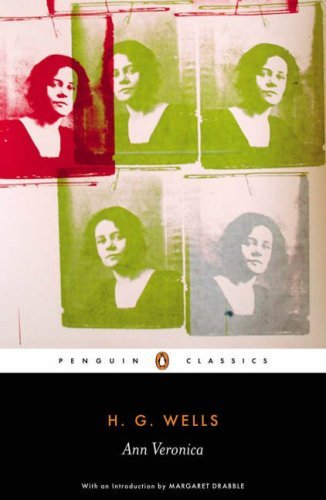
Ann Veronica by H.G. Wells

I’ve never read anything by H.G. Wells before and never thought he would be an author I would enjoy. In fact, I hadn’t even realised he had written anything other than the science fiction books he’s famous for (The War of the Worlds, The Invisible Man, The Time Machine etc) and as I’m not a lover of science fiction, none of those have ever really appealed. So when I noticed this one in the library, sounding entirely different to the books I’ve just mentioned, I was intrigued and decided to give it a try.

The story is set in the early years of the 20th century and the title character is twenty-one-year-old biology student Ann Veronica Stanley. Tired of being locked in a constant battle of wills with her father, a strict and conservative solicitor who has very strong opinions about women and their place in society, she decides to run away to London to start an independent life of her own. In London, she is exposed to a range of influences and experiences (including the suffragette movement), becomes involved with several different men, and discovers that life can be difficult for a young single woman living on her own.

I wouldn’t recommend this novel to people who are looking for something with lots of action but if you’re in the mood for a slower, more character-driven story this is a very interesting read. And as a book about feminism written by a male author, I’m sure it must have caused controversy when it was first published in 1909. The book wasn’t perfect though – the main character started to irritate me after a while and at times it felt less like a novel and more of a vehicle for Wells to express his views on feminism, politics and science.

The first half of the book is concerned mainly with Ann Veronica’s struggle to gain independence from her father. She considers it unreasonable that he won’t let her go to a party in London with her friends and that he refuses to let her attend Imperial College to study for her science degree. And yet Ann Veronica’s father clearly loves his daughter and is not trying to be unkind to her – he truly believes women should behave in a certain way and it puzzles him that Ann Veronica doesn’t want to conform.

After a promising beginning, the second half of the book was dominated by a romantic storyline which became very sentimental and started to bore me. And although I can’t say too much because I don’t want to spoil the story for anyone, I was quite disappointed with the way the book ended and felt confused as to exactly what point Wells was trying to make. So, although I was left with mixed feelings about this book, at least it’s taught me not to have pre-conceived ideas about certain authors. I do feel happier about maybe trying one of his science fiction books now.

The version I read was the Penguin Classics one, but for those of you who like to collect Virago Modern Classics it has also been published as a VMC (and is one of the few written by a man).