Review: Poor Miss Finch by Wilkie Collins

You are here invited to read the story of an Event which occurred in an out-of-the-way corner of England, some years since.
The persons principally concerned in the Event are: – a blind girl; two (twin) brothers; a skilled surgeon; and a curious foreign woman. I am the curious foreign woman. And I take it on myself – for reasons which will presently appear – to tell the story.

Having read all four of Wilkie Collins’ best known books in my pre-blogging days (The Woman in White, Armadale, No Name and The Moonstone), I am now exploring his less popular novels. I recently reviewed Basil and A Rogue’s Life, two of his earlier books from the 1850s. This one, Poor Miss Finch, was published in 1872 and unlike most of the books that preceded it, is not really a ‘sensation novel’, although it does have certain sensational elements (mysterious strangers, theft, assault, letters being intercepted, mistaken identities etc). What it is is an interesting study into what it’s like to be blind since infancy and the emotions a person experiences on learning that there may be a chance of regaining their sight.

The story is told by a Frenchwoman called Madame Pratolungo, the widow of a South American political activist, who has just arrived in the village of Dimchurch in England to take up a position as companion to Lucilla Finch. Lucilla has been blind since she was a child and her blindness has led to a strange phenomenon – she has developed an irrational fear of darkness and dark colours. Even knowing that someone is wearing a dark purple dress, for example, sends her into a panic.

Oscar Dubourg and his twin brother Nugent are newcomers to Dimchurch. Soon after their arrival, Oscar suffers a fit and learns that he has epilepsy. In the 19th century a common cure for epilepsy was to take nitrate of silver. Unfortunately, a side effect of nitrate of silver consumption is that the skin turns blue. When Oscar and Lucilla fall in love, Oscar feels secure in the knowledge that Lucilla will never be able to see him and need never be told that his face is dark blue. However, when Nugent introduces them to the German oculist Herr Grosse, it appears that there could still be hope for Lucilla after all.

This book handles the topic of blindness in a sensitive and intriguing way. It’s obvious that Collins had done a lot of research into the subject and the results are fascinating. He discusses the theory that when a person is blind their other senses improve to compensate for their lack of sight and he weighs up the advantages and disadvantages there would be if this person then regained their sight. I had never even thought about some of the aspects of blindness that are mentioned in the book. For example, there’s an interesting moment when Madame Pratolungo realises why Lucilla shows little regard for normal Victorian conventions and proprieties.

What did it mean?
It meant that here was one strange side shown to me of the terrible affliction that darkened her life. It meant that modesty is essentially the growth of our own consciousness of the eyes of others judging us – and that blindness is never bashful, for the one simple reason that blindness cannot see.

The characters, as usual, are wonderful – most of them anyway. I didn’t find Lucilla very likeable (she has a tendency to throw foot-stamping tantrums when she doesn’t get her own way) but I loved Madame Pratolungo – she was such an amusing and engaging narrator!

I cast all feminine restraints to the winds. I sat down with my legs anyhow, like a man. I rammed my hands into the pockets of my dressing-gown. Did I cry? A word in your ear – and let it go no farther. I swore.

We also meet Reverend Finch, Lucilla’s father, who chooses to recite Hamlet at the most inappropriate moments, and his wife, Mrs Finch, who is ‘never completely dressed; never completely dry; always with a baby in one hand and a novel in the other’. With Lucilla’s little half-sister Jicks’, Collins even makes a three year old girl into an unusual and memorable character:

This amazing apparition advanced into the middle of the room, holding hugged under one arm a ragged and disreputable-looking doll; stared hard, first at Oscar, then at me; advanced to my knees; laid the disreputable doll on my lap; and, pointing to a vacant chair at my side, claimed the rights of hospitality in these words:
“Jicks will sit down.”

Although I thought parts of the plot felt contrived, the story did become very gripping towards the end. This was an interesting and thought provoking read, and if you have enjoyed any other Wilkie Collins books, then I suspect you might enjoy this one too.

Recommended
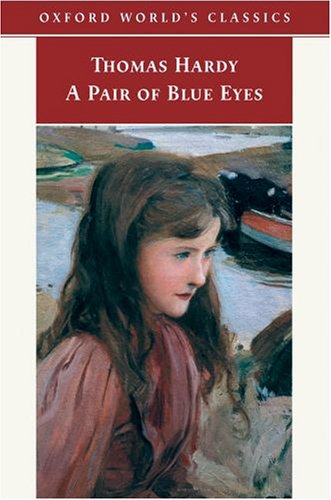
Review: A Pair of Blue Eyes by Thomas Hardy

These eyes were blue; blue as autumn distance – blue as the blue we see between the retreating mouldings of hills and woody slopes on a sunny September morning. A misty and shady blue, that had no beginning or surface, and was looked into rather than at.

I’m loving Thomas Hardy more and more with every book of his that I read. A Pair of Blue Eyes was one of his earliest books, originally serialised in Tinsley’s Magazine from September 1872 to July 1873. Although this is not generally noted as being one of his better novels and is certainly one of his least well known, there was something about it that appealed to me – and I would even say that of all the classics I’ve read so far this year, this might be my favourite.

A Pair of Blue Eyes is the story of Elfride Swancourt, a vicar’s daughter living in a remote corner of England, who is forced to choose between two very different men. One of these, Stephen Smith, is a young architect whom she meets when he is sent by his employer to survey the church buildings. At first, the vicar approves of Stephen and encourages his daughter to spend time with him. It soon emerges, however, that Stephen has been hiding an important secret from the Swancourts; something that could put his relationship with Elfride in jeopardy. Later in the book, another man arrives at Endelstow Vicarage – Henry Knight, an essayist and reviewer from London – and Elfride has to make a difficult decision.

As you might expect with this being a Hardy book, nothing goes smoothly for any of the characters. I would describe A Pair of Blue Eyes as being similar in some ways to the later Tess of the d’Urbervilles, though not as dark and bleak – and not quite as tragic either. Although I didn’t find Elfride particularly likeable, I thought she was an interesting character. Her lonely, secluded life gives her a childlike innocence and vulnerability and at one point Hardy draws a comparison with Miranda from Shakespeare’s The Tempest – both characters have little knowledge of men and a male visitor is a big event (and Elfride even plays chess with Stephen Smith and Henry Knight as Miranda did with Ferdinand in The Tempest). Of the two men, Stephen was the only one I had any real sympathy for. Knight, although another interesting character, annoyed me almost as much as Angel Clare in Tess annoyed me.

The descriptions of scenery in this book are stunningly beautiful and bring the setting vividly to life. If you’re familiar with Hardy you’ll know that he sets most of his works in the fictional region of Wessex in the southwest of England. This story actually takes place in Off-Wessex or Lyonesse, which equates to Cornwall. I had no problem at all in picturing the lonely vicarage, the windswept hills, and the dark cliffs towering over the sea below. Speaking of cliffs, it is thought that the term ‘cliffhanger’ originates from a scene in this book, though I’m not going to say any more about it than that!

Another interesting aspect of this book is that it’s loosely based on Hardy’s relationship with his first wife, Emma Gifford. Unfortunately I don’t know enough about Hardy to have picked up on all the allusions and references to events in his own life. I would like to eventually read a biography as I think it would help my understanding of both this book and his work as a whole.

I found A Pair of Blue Eyes very easy to read. I thought the pacing and flow of the story were perfect and the pages flew by in a weekend. It’s so sad that this book has been ignored and underrated to the point where, until not long ago, I hadn’t even heard of it. Maybe it won’t appeal to everyone and it might not be the best introduction to his work, but I loved it and would highly recommend it to all Hardy fans.

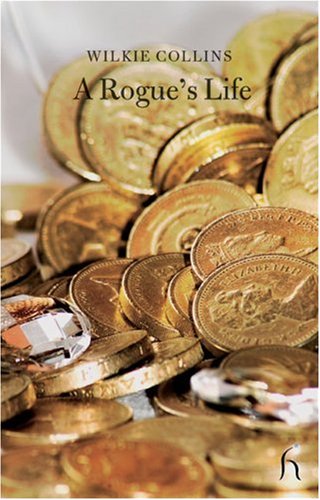
Review: A Rogue’s Life by Wilkie Collins

Frank Softly is a Rogue. Refusing to follow in his father’s footsteps and become a doctor, he has tried out a number of different careers since leaving school – and failed at them all. However, he remains optimistic and sees each failure as an opportunity to make a fresh start. Even when he is sent to a debtors’ prison he simply asks himself, “What of that? Who am I that I should object to being in prison, when so many of the royal personages and illustrious characters of history have been there before me?”

While working as a forger of old paintings, Frank meets Alicia Dulcifer in an art gallery and immediately falls in love. Unfortunately even this relationship seems likely to fail, because Alicia is the daughter of the sinister Dr. Dulcifer – a man who lives in a house with bars on the windows, never receives visitors and conducts mysterious experiments in his laboratory. Frank becomes determined to discover Dr. Dulcifer’s secret, at all costs.

As in many Victorian novels, there’s also an inheritance involved: Frank’s sister Annabella will only receive her three thousand pounds if Frank outlives their grandmother Lady Malkinshaw. This leads to some amusing situations as Annabella’s greedy husband desperately tries to prevent Frank from dying!

This was one of Wilkie Collins’ first books to be published (in 1856) and I could tell it was the work of a young, inexperienced writer – the plot was less developed than in his later books and the characters (apart from the Rogue himself) were less memorable. However, his enthusiasm shines through on every page, making this a fun, light-hearted read – but with plenty of suspense and excitement too. Although Frank Softly is dishonest, irresponsible, reckless – and definitely a rogue – he tells his story with so much humour and energy that you can’t help liking him.

Rather changeable this life of mine, was it not? Before I was twenty-five years of age, I had tried doctoring, caricaturing, portrait-painting, old picture-making, and Institution-managing…Surely, Shakespeare must have had me prophetically in his eye, when he wrote about ‘one man in his time playing many parts’. What a character I should have made for him, if he had only been alive now!

While I don’t think I would recommend this as a first introduction to his work, if you have enjoyed any of Collins’ other books there’s no reason why you shouldn’t enjoy this one too. And the short length of this book – only 150 pages – makes it a quick, fast-paced read, so anyone who has had trouble getting into one of his longer novels may find this one easier to read.

I’m going to leave you with Wilkie’s own thoughts on this novel, taken from the author’s preface:

The Rogue may surely claim two merits, at least, in the eyes of the new generation – he is never serious for two moments together; and ‘he doesn’t take long to read’.

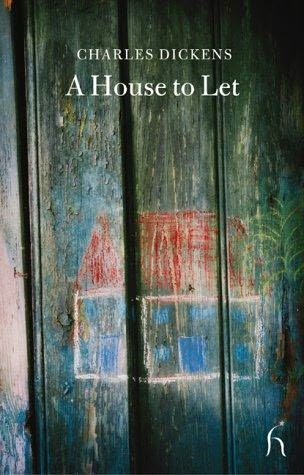
Review: A House to Let by Charles Dickens, Wilkie Collins, Elizabeth Gaskell and Adelaide Anne Procter

A House to Let, at less than 100 pages, is a collaboration between four 19th century authors which originally appeared as the Christmas edition of Charles Dickens’ weekly magazine, Household Words, in 1858.

The book is divided into six sections; the first, Over the Way, and the sixth, Let at Last, are joint efforts by Charles Dickens and Wilkie Collins, and provide the framework for the story. The other four sections are individual contributions from Elizabeth Gaskell, Charles Dickens, Adelaide Anne Procter and Wilkie Collins, in that order.

Over the Way introduces us to Sophonisba, an elderly woman who has never married but has two men vying for her attentions – one is her old admirer Jabez Jarber; the other is her servant, Trottle. When Sophonisba’s doctor advises a change of air and scene, she leaves her home in Tunbridge Wells and moves into new lodgings in London, where she immediately becomes obsessed with the house opposite – a house which has been vacant for many years and is permanently ‘to let’. Determined to discover why the house has remained empty for so long – and convinced she has seen an eye staring out from one of the windows – she asks Jarber and Trottle to investigate.

Over the Way and Let at Last are credited to both Dickens and Collins, but there’s no way to tell exactly which parts were contributed by which writer. The other four chapters, though, are each written in the distinctive style of their respective authors and each tell the story of a previous occupant of the house to let.

The chapter I liked the least was actually the one written solely by Dickens, Going Into Society. The story of a showman and a circus dwarf called Mr Chops, it was just too weird for me and was also quite difficult to read as it was written in dialect. It’s probably significant that I found the two Dickens/Collins collaborations much easier to read than this solo effort, as I’ve always thought Collins was a lot more readable than Dickens.

Three Evenings in the House, the contribution by Adelaide Anne Procter, whose work I was previously unfamiliar with, is in the form of a narrative poem. I’m not a big lover of poetry but luckily for me this was only thirteen pages long and quite easy to understand. Other than providing some variety though, I don’t think this chapter really added much to the story.

The Manchester Marriage
by Elizabeth Gaskell stands out as an excellent piece of writing: a tragic story of Alice Wilson, who is widowed when her husband is lost at sea. After marrying again, she and her new husband move into the house to let where further tragedy awaits them. This is good enough to work as a stand-alone short story (and according to the Biographical Notes, it was actually published separately in its own right). This and the Wilkie Collins contribution, Trottle’s Report, were my favourite chapters. Trottle’s Report is a typical Collins story, with unusual, quirky characters, a mysterious secret, and a slightly dark and gothic feel.

After exploring the histories of the various tenants of the house, the mystery is finally solved in the final chapter, Let at Last, which neatly ties up all the loose ends of the story.

If you like any of these four authors or Victorian fiction in general, then A House to Let is definitely worth reading. It also provides a good introduction to Dickens, Collins, Procter and Gaskell without having to commit yourself to one of their longer works.

Classics/Pages: 97/Publisher: Hesperus Press/Year: 2004 (originally published 1858)/Source: Library book

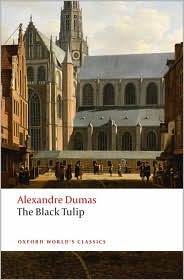
Review: The Black Tulip by Alexandre Dumas

Who would have thought that a book about growing tulips could be so exciting? And yet Alexandre Dumas managed to write a compelling page turner based on that very subject. Dumas became one of my favourite authors a few years ago when I read The Count of Monte Cristo and The Three Musketeers but I had not read any of his lesser-known works until now. I regret not reading The Black Tulip sooner because I enjoyed it almost as much as the two books I’ve just mentioned.

The book is set in seventeenth century Holland and begins with the violent murders of John and Cornelius De Witt, suspected of conspiring against the young Stadtholder, William of Orange. Our hero is the fictional godson of Cornelius De Witt, who is also called Cornelius. Cornelius Van Baerle is a keen tulip-fancier whose biggest goal in life is to produce the world’s first black tulip. However, Van Baerle is not the only tulip-grower in the race for the Grand Black Tulip – and his rival Isaac Boxtel will stop at nothing to get there first!

The first few chapters put the novel in historical context and will be slightly challenging to anyone like myself, who doesn’t have much knowledge of Dutch history, but if you read carefully and refer to the notes it’s easy enough to follow. As soon as Dumas finishes setting the scene, the story explodes into action and never stops until the final page, taking us on a journey through the full range of human emotions – love, hatred, greed, loyalty, jealousy and obsession.

Rosa, the only female character in the book, is a jailer’s daughter who falls in love with Cornelius and finds herself having to compete with the tulip for his affections. Despite making a few remarks of the “I am but a woman” variety she is otherwise a strong and quick-thinking character who does what she knows is right, even if it means going against the wishes of Cornelius or her father. The starring role in the story, though, goes to the elusive black tulip itself.

As you might have guessed, I really loved this book. If you enjoyed The Count of Monte Cristo there’s a good chance that you’ll like this one too, as it’s very similar in writing style, pace and even several plot elements. It could almost be described as a shorter, less epic, less complex version of The Count.

Highly recommended

Publisher: OUP (Oxford World’s Classics)/Year: 2008 (originally published 1850)/Pages: 258/Source: Library book

Review: Agnes Grey by Anne Bronte

After reading The Tenant of Wildfell Hall earlier this year, I wanted to read Anne Bronte’s other book, Agnes Grey.  I approached it with trepidation having read some quite negative reviews of it.  However, I was pleased to find that I enjoyed the book.  Although I didn’t think it was as good as The Tenant and it didn’t have the feel of a must-read classic like Jane Eyre or Wuthering Heights, there was still a lot to like about Agnes Grey.

The plot is simple, plain and linear.  It’s the story of a young woman in 19th century England who goes out to work as a governess when her family fall on hard times. Unfortunately Tom, Mary Ann and Fanny Bloomfield are three of the most badly-behaved children imaginable. When her short, unhappy time with the Bloomfields comes to an end, Agnes finds another situation with two older pupils, Rosalie and Matilda Murray. This second position is not much better than the first – the Murray girls are selfish and thoughtless and the only thing that makes Agnes’s life bearable is her friendship with Mr Weston, the village curate.

Agnes Grey has an autobiographical feel because Anne Bronte herself had worked as a governess and was able to draw on her own personal experiences to show how servants were often treated with cruelty and contempt by their employers. I could sympathise with Agnes as I would soon have lost my patience with the spoilt Bloomfield children and the self-centred, inconsiderate Murrays. I also thought it was unfair that the parents expected Agnes to control their children without actually giving her any real authority over them. It was such a difficult position to be in.  However, I found it slightly disappointing that Agnes seemed prepared to just accept things the way they were and not do anything to change the situation.  The book was more about tolerance and perseverance than about taking action to try to make things better.

Another of the book’s themes is the importance of morality, virtuousness and goodness, qualities in which the Bloomfield and Murray families seem to be sadly lacking, leading Agnes to feel isolated and miserable.  However, I think many readers will find Agnes too self-righteous and superior, so if you prefer your heroines to be flawed and imperfect this probably isn’t the book for you!  Reading about the day to day life of a governess is not particularly exciting or dramatic, but I still found the book enjoyable and interesting – and at under 200 pages a very quick read compared to many of the other Bronte books.

Recommended

Classic/Publisher: OUP (Oxford World’s Classics)/Year: 1998 (originally published in 1847)/Source: Library book

Review: Basil by Wilkie Collins

In 19th century literature, a man can approach a girl’s father, ask for permission to marry her and be given that permission, all without the girl having any say in the matter whatsoever. Sometimes the potential husband has only actually spoken to the girl once or twice; sometimes not at all – and they certainly haven’t had time to get to know each other properly. Basil by Wilkie Collins is a good example of why these arrangements were often doomed to failure and caused unhappiness both for the husband and the wife.

Our narrator, the Basil of the title, is the son of a rich gentleman who is proud of his family’s ancient background and despises anyone of a lower social standing. When Basil meets Margaret Sherwin on a London omnibus he falls in love at first sight and becomes determined to marry her. Unfortunately Margaret is the daughter of a linen-draper, the class of person Basil’s father disapproves of most of all, so he decides not to tell his family about her just yet.

Mr Sherwin agrees to Basil marrying Margaret – but he insists that the wedding must take place immediately and that Basil must then keep the marriage secret for a whole year, not even seeing his wife unless Mr or Mrs Sherwin are present. This unusual suggestion should have told Basil that something suspicious was going on but he’s so blinded by love that he doesn’t care – until it’s too late…

Basil was one of Collins’ earliest novels and it shows, as it’s just not as good as his more famous books such as The Woman in White. The story took such a long time to really get started, with Basil introducing us to the members of his family, giving us every tiny detail of their appearance, personality and background. The second half of the book was much more enjoyable, filled with action, suspense and all the elements of a typical sensation novel including death, betrayal and adultery (Victorian readers apparently found the adultery scenes particularly shocking). There are lots of thunderstorms, people fainting and swooning, fights in the street, and everything you would expect from a Victorian melodrama.

All of Collins’ books are filled with strong, memorable characters and this was no exception. There’s Basil’s lively, carefree brother Ralph, his gentle, kind hearted sister Clara, the poor, frail Mrs Sherwin and the sinister Mr Mannion. However, I thought the overall writing style of this book was slightly different to what I’ve been used to in his later books – although I can’t put my finger on exactly what the difference was. This is not a must-read book but if you like the sensation novel genre, you’ll probably enjoy this one.