Review: A House to Let by Charles Dickens, Wilkie Collins, Elizabeth Gaskell and Adelaide Anne Procter

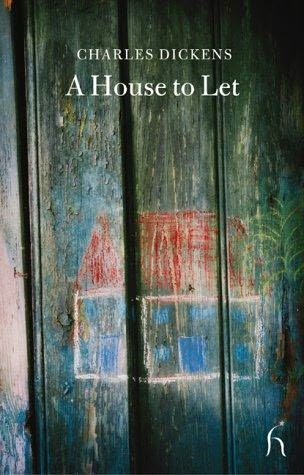
A House to Let, at less than 100 pages, is a collaboration between four 19th century authors which originally appeared as the Christmas edition of Charles Dickens’ weekly magazine, Household Words, in 1858.

The book is divided into six sections; the first, Over the Way, and the sixth, Let at Last, are joint efforts by Charles Dickens and Wilkie Collins, and provide the framework for the story. The other four sections are individual contributions from Elizabeth Gaskell, Charles Dickens, Adelaide Anne Procter and Wilkie Collins, in that order.

Over the Way introduces us to Sophonisba, an elderly woman who has never married but has two men vying for her attentions – one is her old admirer Jabez Jarber; the other is her servant, Trottle. When Sophonisba’s doctor advises a change of air and scene, she leaves her home in Tunbridge Wells and moves into new lodgings in London, where she immediately becomes obsessed with the house opposite – a house which has been vacant for many years and is permanently ‘to let’. Determined to discover why the house has remained empty for so long – and convinced she has seen an eye staring out from one of the windows – she asks Jarber and Trottle to investigate.

Over the Way and Let at Last are credited to both Dickens and Collins, but there’s no way to tell exactly which parts were contributed by which writer. The other four chapters, though, are each written in the distinctive style of their respective authors and each tell the story of a previous occupant of the house to let.

The chapter I liked the least was actually the one written solely by Dickens, Going Into Society. The story of a showman and a circus dwarf called Mr Chops, it was just too weird for me and was also quite difficult to read as it was written in dialect. It’s probably significant that I found the two Dickens/Collins collaborations much easier to read than this solo effort, as I’ve always thought Collins was a lot more readable than Dickens.

Three Evenings in the House, the contribution by Adelaide Anne Procter, whose work I was previously unfamiliar with, is in the form of a narrative poem. I’m not a big lover of poetry but luckily for me this was only thirteen pages long and quite easy to understand. Other than providing some variety though, I don’t think this chapter really added much to the story.

The Manchester Marriage
by Elizabeth Gaskell stands out as an excellent piece of writing: a tragic story of Alice Wilson, who is widowed when her husband is lost at sea. After marrying again, she and her new husband move into the house to let where further tragedy awaits them. This is good enough to work as a stand-alone short story (and according to the Biographical Notes, it was actually published separately in its own right). This and the Wilkie Collins contribution, Trottle’s Report, were my favourite chapters. Trottle’s Report is a typical Collins story, with unusual, quirky characters, a mysterious secret, and a slightly dark and gothic feel.

After exploring the histories of the various tenants of the house, the mystery is finally solved in the final chapter, Let at Last, which neatly ties up all the loose ends of the story.

If you like any of these four authors or Victorian fiction in general, then A House to Let is definitely worth reading. It also provides a good introduction to Dickens, Collins, Procter and Gaskell without having to commit yourself to one of their longer works.

Classics/Pages: 97/Publisher: Hesperus Press/Year: 2004 (originally published 1858)/Source: Library book

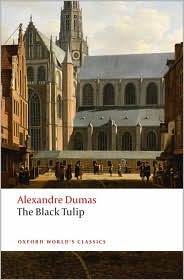
Review: The Black Tulip by Alexandre Dumas

Who would have thought that a book about growing tulips could be so exciting? And yet Alexandre Dumas managed to write a compelling page turner based on that very subject. Dumas became one of my favourite authors a few years ago when I read The Count of Monte Cristo and The Three Musketeers but I had not read any of his lesser-known works until now. I regret not reading The Black Tulip sooner because I enjoyed it almost as much as the two books I’ve just mentioned.

The book is set in seventeenth century Holland and begins with the violent murders of John and Cornelius De Witt, suspected of conspiring against the young Stadtholder, William of Orange. Our hero is the fictional godson of Cornelius De Witt, who is also called Cornelius. Cornelius Van Baerle is a keen tulip-fancier whose biggest goal in life is to produce the world’s first black tulip. However, Van Baerle is not the only tulip-grower in the race for the Grand Black Tulip – and his rival Isaac Boxtel will stop at nothing to get there first!

The first few chapters put the novel in historical context and will be slightly challenging to anyone like myself, who doesn’t have much knowledge of Dutch history, but if you read carefully and refer to the notes it’s easy enough to follow. As soon as Dumas finishes setting the scene, the story explodes into action and never stops until the final page, taking us on a journey through the full range of human emotions – love, hatred, greed, loyalty, jealousy and obsession.

Rosa, the only female character in the book, is a jailer’s daughter who falls in love with Cornelius and finds herself having to compete with the tulip for his affections. Despite making a few remarks of the “I am but a woman” variety she is otherwise a strong and quick-thinking character who does what she knows is right, even if it means going against the wishes of Cornelius or her father. The starring role in the story, though, goes to the elusive black tulip itself.

As you might have guessed, I really loved this book. If you enjoyed The Count of Monte Cristo there’s a good chance that you’ll like this one too, as it’s very similar in writing style, pace and even several plot elements. It could almost be described as a shorter, less epic, less complex version of The Count.

Highly recommended

Publisher: OUP (Oxford World’s Classics)/Year: 2008 (originally published 1850)/Pages: 258/Source: Library book

Review: Agnes Grey by Anne Bronte

After reading The Tenant of Wildfell Hall earlier this year, I wanted to read Anne Bronte’s other book, Agnes Grey.  I approached it with trepidation having read some quite negative reviews of it.  However, I was pleased to find that I enjoyed the book.  Although I didn’t think it was as good as The Tenant and it didn’t have the feel of a must-read classic like Jane Eyre or Wuthering Heights, there was still a lot to like about Agnes Grey.

The plot is simple, plain and linear.  It’s the story of a young woman in 19th century England who goes out to work as a governess when her family fall on hard times. Unfortunately Tom, Mary Ann and Fanny Bloomfield are three of the most badly-behaved children imaginable. When her short, unhappy time with the Bloomfields comes to an end, Agnes finds another situation with two older pupils, Rosalie and Matilda Murray. This second position is not much better than the first – the Murray girls are selfish and thoughtless and the only thing that makes Agnes’s life bearable is her friendship with Mr Weston, the village curate.

Agnes Grey has an autobiographical feel because Anne Bronte herself had worked as a governess and was able to draw on her own personal experiences to show how servants were often treated with cruelty and contempt by their employers. I could sympathise with Agnes as I would soon have lost my patience with the spoilt Bloomfield children and the self-centred, inconsiderate Murrays. I also thought it was unfair that the parents expected Agnes to control their children without actually giving her any real authority over them. It was such a difficult position to be in.  However, I found it slightly disappointing that Agnes seemed prepared to just accept things the way they were and not do anything to change the situation.  The book was more about tolerance and perseverance than about taking action to try to make things better.

Another of the book’s themes is the importance of morality, virtuousness and goodness, qualities in which the Bloomfield and Murray families seem to be sadly lacking, leading Agnes to feel isolated and miserable.  However, I think many readers will find Agnes too self-righteous and superior, so if you prefer your heroines to be flawed and imperfect this probably isn’t the book for you!  Reading about the day to day life of a governess is not particularly exciting or dramatic, but I still found the book enjoyable and interesting – and at under 200 pages a very quick read compared to many of the other Bronte books.

Recommended

Classic/Publisher: OUP (Oxford World’s Classics)/Year: 1998 (originally published in 1847)/Source: Library book

Review: Basil by Wilkie Collins

In 19th century literature, a man can approach a girl’s father, ask for permission to marry her and be given that permission, all without the girl having any say in the matter whatsoever. Sometimes the potential husband has only actually spoken to the girl once or twice; sometimes not at all – and they certainly haven’t had time to get to know each other properly. Basil by Wilkie Collins is a good example of why these arrangements were often doomed to failure and caused unhappiness both for the husband and the wife.

Our narrator, the Basil of the title, is the son of a rich gentleman who is proud of his family’s ancient background and despises anyone of a lower social standing. When Basil meets Margaret Sherwin on a London omnibus he falls in love at first sight and becomes determined to marry her. Unfortunately Margaret is the daughter of a linen-draper, the class of person Basil’s father disapproves of most of all, so he decides not to tell his family about her just yet.

Mr Sherwin agrees to Basil marrying Margaret – but he insists that the wedding must take place immediately and that Basil must then keep the marriage secret for a whole year, not even seeing his wife unless Mr or Mrs Sherwin are present. This unusual suggestion should have told Basil that something suspicious was going on but he’s so blinded by love that he doesn’t care – until it’s too late…

Basil was one of Collins’ earliest novels and it shows, as it’s just not as good as his more famous books such as The Woman in White. The story took such a long time to really get started, with Basil introducing us to the members of his family, giving us every tiny detail of their appearance, personality and background. The second half of the book was much more enjoyable, filled with action, suspense and all the elements of a typical sensation novel including death, betrayal and adultery (Victorian readers apparently found the adultery scenes particularly shocking). There are lots of thunderstorms, people fainting and swooning, fights in the street, and everything you would expect from a Victorian melodrama.

All of Collins’ books are filled with strong, memorable characters and this was no exception. There’s Basil’s lively, carefree brother Ralph, his gentle, kind hearted sister Clara, the poor, frail Mrs Sherwin and the sinister Mr Mannion. However, I thought the overall writing style of this book was slightly different to what I’ve been used to in his later books – although I can’t put my finger on exactly what the difference was. This is not a must-read book but if you like the sensation novel genre, you’ll probably enjoy this one.

Review: Tess of the D’Urbervilles by Thomas Hardy

Tess Durbeyfield’s life changes forever when her father learns that he is descended from the noble D’Urbervilles. After discovering that he has some wealthy D’Urberville relatives living nearby, Tess is sent to visit them in an attempt to improve the family’s fortunes. While there she is taken advantage of by Alec D’Urberville and returns to her parents pregnant. A few years later when she falls in love with Angel Clare, the parson’s son, she is forced to decide whether to trust Angel with the truth about her past…

It seems that people either love or hate Tess of the D’Urbervilles. Among those who hate it the main reasons for disliking it appear to be that the book was too dark and depressing, or that Tess was too passive and weak. Although I can understand these complaints, I personally fall into the group of readers who loved the book. I don’t have a problem with a story being tragic, melodramatic or depressing as long as it’s well-written. And Hardy’s writing is beautiful. With other books I am often tempted to skim through pages of descriptions of trees, fields, sunrises etc, but Hardy’s portrayal of nature and the English countryside is so poetic I wanted to read every word. Be prepared, though – you will learn more than you ever wanted to know about milking cows, threshing wheat and slicing turnips!

It’s true that Tess doesn’t stand up for herself enough – there were plenty of times when I wanted to scream at her – but I mostly felt sorry for her. She was young (sixteen I think at the start of the book), innocent, naive, and didn’t have the best family life, with a father who was often drunk.  It seemed that everything that could go wrong for her did go wrong. More than poor Tess, it was Alec d’Urberville and Angel Clare who both really infuriated me – and I actually thought Angel was worse than Alec in some respects.

The injustice of a society with different sets of rules for men and women, Christianity vs pagan symbolism, the Industrial Revolution, and the class system of Victorian England are some of the interesting topics this book covers. The only thing I didn’t like about the book was the ending – the final chapters just didn’t seem to fit with the rest of the novel.

So, if you haven’t read this book yet give it a try – you might hate it…but you might just love it like I did.

Highly Recommended

Genre: Classics/Pages: 464/Published:BBC Books (Random House)/Year: 2008 (originally published 1891)/Source: Library book

Review: The Warden by Anthony Trollope

Being a lover of Victorian fiction, I have wanted to read something by Anthony Trollope for a long time but didn’t know which of his books to begin with. I’ve heard a lot about The Way We Live Now and Can You Forgive Her? but I decided to go with The Warden because it’s relatively short and I thought that if I wasn’t enjoying it I’d be more likely to finish a book with 200 pages than one with 800. Luckily, this wasn’t a problem – I enjoyed the book and wouldn’t have minded if it had been longer.

In the year 1434 John Hiram established a hospital (or almshouse) in the town of Barchester where for centuries to come, twelve elderly, infirm men could live under the care of a warden. At the time when the story takes place, Septimus Harding is the current warden and whilst the amount of money given to the old men has barely changed at all over time, the warden’s income has increased to eight hundred pounds a year. When reformer John Bold decides to investigate, Harding finds himself facing a moral dilemma.

The book really made me stop and think, because none of the characters seemed to be either completely in the wrong or completely in the right.  Although it was clearly unfair that Mr. Harding was receiving so much money, I sympathised with him because as soon as the unfairness of his position was brought to his attention he became determined to do the right thing.  As for the other main characters – John Bold and Harding’s son-in-law Archdeacon Grantly – although they are on opposite sides of the debate and have very different opinions regarding the warden’s situation, Trollope presents them both as well-intentioned people with normal human flaws.  The female characters don’t play a very big role in this book, but I loved the relationship between Mr. Harding and his daughter Eleanor.

I really liked Trollope’s writing style which is elegant, insightful and witty in a gentle way.  There are a few chapters where he departs from the main storyline to spend several pages talking about politics or the media but this is a common trait of Victorian writers.  Although it was slow moving in places, Trollope managed to keep me interested from beginning to end.  I’m sure some of his other books will be better, but this one was good enough to make me want to read more of his work.

Recommended

Publisher: Penguin Classics/Year: 1984 (first published 1855)/Pages: 240/Source: My own copy bought used

Review: The Doctor’s Wife by Mary Elizabeth Braddon

Isabel Sleaford lives in a dream world filled with characters from novels by Dickens, Scott and Thackeray. She longs to break away from her boring existence as a children’s governess and live the exciting life of one of the heroines in her favourite books. When parish doctor George Gilbert proposes to her, she accepts but quickly finds that her marriage isn’t providing the drama and adventure she’s been dreaming of. George is a good man, but he’s practical, down to earth – and boring, at least in Isabel’s opinion. After meeting Roland Lansdell, the squire of Mordred Priory, she becomes even more discontented. Roland is romantic, poetic and imaginative – in other words, he’s everything that George isn’t…

This is the second Mary Elizabeth Braddon book I’ve read – the first was the book that she’s best known for today, the sensation novel Lady Audley’s Secret. Apparently The Doctor’s Wife was Braddon’s attempt at writing a more serious, literary novel, with a plot inspired by Gustave Flaubert’s Madame Bovary. The Doctor’s Wife is not very ‘sensational’ – apart from maybe the final few chapters – and although it’s interesting and compelling in a different way, if you’re expecting something similar to Lady Audley you might be slightly disappointed. At one point in the book, Braddon even tells us “this is not a sensation novel!”

The focus of The Doctor’s Wife is the development of Isabel Gilbert from a sentimental girl with her head permanently in the clouds into a sensible and mature woman. I didn’t like Isabel much at all, though I’m not really sure if I was supposed to. Throughout most of the book she was just so silly and immature – wishing that she would catch a terrible illness or some other tragedy would befall her, just so she could have some excitement in her life – although as several of the other characters pointed out, she wasn’t a bad person, just childish and foolish. It was sad that her own romantic notions and ideals were preventing her from having any chance of happiness.

I thought some of the minor characters were much more interesting and I would have liked them to have played a bigger part in the story. I particularly loved Sigismund Smith, who was a friend of both George and Isabel, and a ‘sensation author’ – probably a parody of Mary Elizabeth Braddon herself. Sigismund (whose real name is Sam) is a writer of ‘penny numbers’ – cheap, serialised adventure stories. His enthusiasm for his work and his unusual methods of researching his novels provide most of the humour in the book.

Due to Isabel’s reading, almost every page contains allusions to characters and events from various novels, plays and poems – most of which I haven’t read – so I found myself constantly having to turn to the notes at the back of the book (until I decided I could follow the story well enough without understanding all the references to Edith Dombey and Ernest Maltravers).

Overall, this was another great book from Mary Elizabeth Braddon, although not quite what I was expecting.

Highly Recommended

Genre: Classics/Pages: 431/Publisher: Oxford University Press/Year: 2008 – originally published 1864/Source: My own copy purchased new