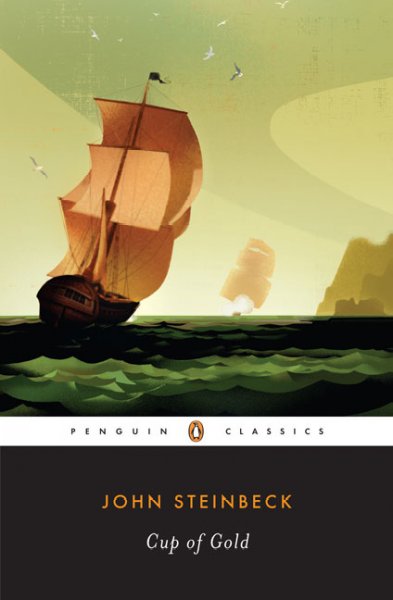
Cup of Gold by John Steinbeck – #1929Club

It’s always interesting, when an author has become famous for books written later in their career, to go back to the very beginning and read their earliest work. Cup of Gold, John Steinbeck’s first novel, was published in 1929 and is my second choice for this week’s 1929 Club hosted by Simon and Karen.

I’ve previously only read two of Steinbeck’s books (East of Eden and The Pearl) and hadn’t even heard of this one until I started to look at options for 1929 Club. I was intrigued because it sounded so completely different from his other books – not the sort of plot or genre I would have associated with Steinbeck at all. It’s also a short novel (just over 200 pages) so I could easily fit it into my busy October reading schedule!

Cup of Gold opens in 17th century Wales where a fifteen-year-old boy, Henry Morgan, lives on a farm with his parents and his grandmother, Gwenliana, who claims to have second sight. Growing up in a remote part of the Welsh countryside, Henry is growing restless to leave home and see more of the world. When Dafydd, an old farmhand who left many years earlier to go to sea, returns to the farm to tell the family of his adventures, Henry becomes determined to do the same. His mother, who still considers him a child, tells him not to be ridiculous, but his father accepts that this is something his son must do and sends him off with his blessing.

Before leaving, Henry consults the wise, white-bearded poet known as Merlin, who lives alone with his red-eared dog in the hills above the Morgans’ valley. Merlin makes the following observation, words Henry will remember for the rest of his life:

“You are a little boy. You want the moon to drink from as a golden cup; and so, it is very likely that you will become a great man – if only you remain a little child. All the world’s great have been little boys who wanted the moon; running and climbing, they sometimes caught a firefly. But if one grow to a man’s mind, that mind must see that it cannot have the moon and would not want it if it could – and so, it catches no fireflies.”

Arriving in Cardiff – the first time he has seen a large town – Henry secures passage on a ship to Barbados, where he finds himself indentured to a plantation owner. This is not what Henry had been hoping for, but he knows it will only be for a few years and then he’ll be free again to achieve his dream of becoming a buccaneer and making his fortune.

If the name Henry Morgan is familiar to you, then you’ve probably already guessed that this is the story of the notorious pirate of the Caribbean, a real historical figure (and the inspiration for Captain Morgan rum). In fact, the full title of the novel is Cup of Gold: A Life of Sir Henry Morgan, Buccaneer, with Occasional Reference to History. ‘Occasional reference’ is not an exaggeration because it seems that very little of Steinbeck’s account has anything to do with historical fact – although, to be fair, there are lots of gaps in our knowledge of Morgan’s early life and career so plenty of scope for an author to use their imagination. It’s unclear whether I should even be referring to Morgan as a pirate; many sources describe him as a privateer, although the only difference I can see is that one is declared ‘legal’ by the government who stands to gain from their raiding and pillaging and the other isn’t.

The ’cup of gold’ of the title, which Merlin compares to reaching for the moon, refers to two things – Panama, which Henry sees as the ultimate prize just waiting to be captured from the Spanish, and a beautiful woman known as La Santa Roja (the Red Saint). Henry’s yearning for both of these is what drives him – and the narrative – forward. Yet I found this book to be neither the swashbuckling adventure novel nor the romance I’ve seen it described as and it’s certainly not as much fun as Georgette Heyer’s Beauvallet or Rafael Sabatini’s Captain Blood. It’s a more serious novel than either of those and never loses sight of its central themes: the quest for happiness and the question of whether we can ever be truly content with what we have or will go on searching for something that’s always out of reach. However, I discovered that I didn’t really care about Henry’s happiness as I found it so difficult to relate to somebody who deliberately set out on a life of piracy and committed so many terrible acts! That was a bit of a problem with so much of the story told from Henry’s perspective.

This is a beautifully written novel, though, and the sections set in Wales – or Cambria, as Steinbeck usually calls it – feel mystical and dreamlike. The inclusion of Merlin in the plot is intriguing: are we supposed to believe that he is really the legendary magician, alive in the 17th century, or is he just an eccentric old man who believes he is Merlin? Either way, Arthurian legend is obviously something that interested Steinbeck and he would later go on to write The Acts of King Arthur and His Noble Knights, which was posthumously published in 1976.

I wouldn’t describe this as a must-read classic, but it’s worth reading if the subject or setting appeal or if you’re interested in experiencing the work of a famous author at the very start of his career.

I’m also counting this as book #57 for the Historical Fiction Reading Challenge 2022.

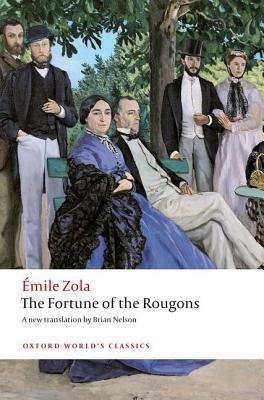
The Fortune of the Rougons by Émile Zola

La Fortune des Rougon, originally published in French in 1871, is the first novel in Émile Zola’s twenty-volume Les Rougon-Macquart cycle. It’s also the book selected for me in the recent Classics Club Spin and the edition I read is an English translation by Brian Nelson.

I’ve already read one of the later books from the cycle – The Ladies’ Paradise – but rather than continue picking them out at random, I thought it might be more sensible to go back to the beginning of the series and try to read them in order. I was a bit hesitant about reading this first book, however, because it sounded as though it was mainly concerned with setting things up for the rest of the series – and that was the case, up to a point, but I found that there was still enough plot to make this an interesting novel in its own right.

The Fortune of the Rougons is set in the fictional French town of Plassans and opens on a Sunday night in December 1851 with two young lovers, Silvère and Miette, joining up with an army of insurgents. It’s the eve of Louis Napoleon’s coup d’état which will result in the formation of the Second Empire under Napoleon III. Silvère wants to give his support to the Republicans who are opposing the coup and thirteen-year-old Miette finds herself coming along to carry the flag.

We then leave Silvère and Miette behind for a while so that Zola can take us back several generations and introduce us to Adelaide Fouque who, through her marriage to the peasant Rougon and a later relationship with the alcoholic smuggler Macquart, is the ancestor of most of the other major characters in the novel. He then follows the lives of Adelaide’s three children – her eldest son, Pierre Rougon, and his illegitimate half-brother and sister, Antoine and Ursule Macquart – as they grow into adults and embark on a family feud. Finally we meet Adelaide’s grandchildren (of whom Silvère is one) and see how they all fit into the events of the formation of the Second Empire.

Once Pierre, Antoine and Ursule have married and had children of their own, the number of characters in the novel quickly multiplies and I’m glad my copy of the book included a family tree as I found myself constantly needing to refer to it. The Rougon-Macquart family are largely an unpleasant group of people – Pierre Rougon tricks his mother into signing over her house to him, depriving his brother of his inheritance, while Antoine Macquart is a violent, aggressive drunk – but there are still some characters with traits I could admire and some I could pity. It seems that Zola’s aim in writing the series was to explore the effects of heredity, so in this book the legitimate Rougon branch of the family are shown to be scheming, avaricious social-climbers while the Macquarts, descended from a rogue, are leading miserable, sordid lives.

The history of the coup d’état and the Second Empire is quite complicated, particularly if, like me, you come to the book with no prior knowledge of these events. With Plassans (based on Aix-en-Provence, where Zola himself grew up) being so far from the action, information comes to the Rougons via the eldest son, Eugène, who lives in Paris, and the people of the town gather in the Rougons’ yellow drawing room to discuss the latest developments. This keeps the reader at a bit of a distance and it took me a while to get everything straight in my head, but later in the book when we rejoin Silvère and Miette marching with the army we get a little bit closer to some of the action.

I didn’t really love The Fortune of the Rougons, but there were parts that I enjoyed very much and I’ll look forward to meeting some of the characters again in the other books in the cycle. I wish I had read this one before jumping straight into The Ladies’ Paradise as I would then have had more understanding of Octave Mouret’s background (he is another descendant of Adelaide Fouque).

Have you read any of the Rougon-Macquart novels? Did you read them in order or at random and do you think it makes any difference?

This is book 33/50 from my second Classics Club list.

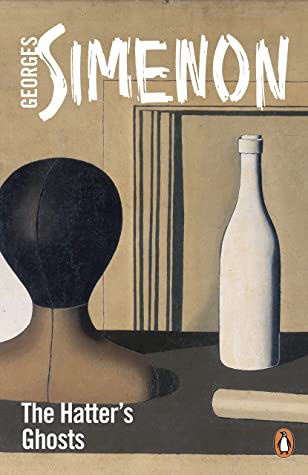
The Hatter’s Ghosts by Georges Simenon (tr. Howard Curtis)

This standalone novel by Belgian author Georges Simenon was originally published in 1949 as Les Fantômes du chapelier and is now available from Penguin Classics in an English translation by Howard Curtis. Although Simenon is better known for his series of Maigret detective novels, he also wrote many books like this one – short psychological thrillers, some of which he referred to as romans durs, or ‘hard novels’. I have read a few of them and my favourite so far has been The Venice Train; this one has some similar plot elements, but is a much darker story.

The novel is set in La Rochelle during a wet and miserable December. It has been raining for twenty days, ever since an old lady was found murdered near the canal. Since then, more bodies have been discovered, all of them elderly women and all of them strangled with a cello string. The newspapers are full of speculation over who the murderer might be, but the reader knows from the opening pages exactly who is responsible – and so does the tailor Kachoudas, who has seen something that has convinced him of the killer’s identity. As the rest of the story unfolds, we are kept wondering whether Kachoudas will go to the police or whether he’ll be the murderer’s next victim.

Although we know from the beginning who the culprit is, there’s still a sense of mystery because we have no idea why he has set out to kill so many women and how he has chosen his victims. The truth is eventually revealed and we discover exactly what is going on behind closed doors, but as this is just a short novel (as many of Simenon’s seem to be), I can’t really go into the plot in any more detail without spoiling it. Anyway, the mystery is only one aspect of the story; the real interest is in following the thought processes of the murderer as he tries to justify his actions to himself and deal with his conflicted thoughts and emotions. I was reminded very much of In a Lonely Place by Dorothy B. Hughes, another novel where we know the killer’s identity from the beginning and spend the rest of the book inside his mind, wondering whether he will give himself away.

The Hatter’s Ghosts is an atmospheric, unsettling novel and I loved the descriptions of the dark, rainy streets of La Rochelle. The Howard Curtis translation is clear and accessible and feels quite modern, while also preserving the tone of the 1940s. If you’re new to Simenon, or have only read his Maigret books, I can definitely recommend any or all of the romans durs I’ve read so far – as well as this one and The Venice Train, I have read The Man from London and The Strangers in the House and am looking forward to investigating some of his others.

Thanks to Penguin Classics for providing a copy of this book for review via NetGalley.

Book #2 read for R.I.P. XVII

Dubliners by James Joyce

I read Dubliners at the end of July but haven’t had a chance to post my thoughts on it until now as my 20 Books of Summer reviews had to take priority. This is not my first experience of James Joyce’s work as I have read one of his novels, A Portrait of the Artist as a Young Man, but that was about twenty years ago and I can remember very little of it now except a long and vivid description of the horrors of hell! Not being a fan of experimental writing, Ulysses and Finnegans Wake have never appealed at all, but Dubliners sounded much more accessible.

First published in 1914, this is a collection of fifteen short stories. Apparently they are arranged so that the first three are about children, the next few about young adults and the rest about older characters – although I didn’t notice this while I was reading and wasn’t aware of it until after I’d finished the book. Each story provides a snapshot of Dublin life in the early part of the 20th century and I found each one interesting for the insights it gave me into the people, society and culture of that time and place. However, they are not the sort of stories I personally prefer; I like them to have a beginning, middle and end, like a novel in shorter form, but many of the stories in Dubliners are more what I would describe as character sketches and others introduce ideas that are not fully developed, leaving the reader to decide for themselves what might happen next.

I’m not going to discuss all fifteen of them here and I don’t think I would have much to say about some of them anyway, but one I particularly liked was Eveline, about a young woman who made a promise to her dying mother to keep the family home together. Now she has fallen in love with a sailor who wants her to go with him to Buenos Aires and she must choose between keeping her promise and staying at home with her abusive father or seizing her own chance of happiness. I also enjoyed The Dead, the longest and most developed story in the book – almost a novella – in which a man makes an unexpected discovery about his wife at a Christmas party, while the snow falls outside. This has been described as one of the greatest stories in the English language and although I wouldn’t go that far myself, I did find it the most intriguing and satisfying story in this collection.

The other themes and topics Joyce includes in Dubliners range from religion, politics and Irish nationalism to poverty, loneliness and marriage. Together they paint a portrait of a city and its people, often bleak and miserable, but that’s how life would have been for some of these people, I suppose. Although most of the stories feel incomplete and leave a lot open to interpretation, I’m still glad I read them.

This is book 32/50 from my second Classics Club list.

The Chrysalids by John Wyndham

The Chrysalids is the book that was chosen for me in the recent Classics Club Spin. The deadline for posting our Spin book reviews was supposed to be yesterday, but I got confused with the dates and am a day late! Anyway, after enjoying all of the books I’ve previously read by John Wyndham – The Midwich Cuckoos, Chocky and The Day of the Triffids – I had high hopes for this one and wasn’t disappointed. It’s another fascinating, exciting and thought-provoking novel – although not quite what I’d been expecting.

I deliberately tried not to read too much about this book before I started it, so I assumed the Chrysalids must be some sort of monstrous alien beings similar to the Triffids. However, this is not really that kind of book at all; it’s a post-apocalyptic novel exploring the changes in society brought about by an unspecified (though presumably nuclear) disaster known as the ‘Tribulation’. There are no monsters, although some of the characters view their fellow humans that way.

Our narrator, David Strorm, was born many years after the Tribulation in rural Labrador, a part of the world where normal life has resumed to some extent, although the ‘Old People’ have been almost forgotten and their technological advances have been lost in the mists of time. The people of Labrador are living an almost medieval existence, ruled by religious zealots who believe that as God created humans in his image, all human life should conform to a set of strict specifications. Anyone who is found to deviate from this in any way is considered a blasphemy and exiled to the Fringes, a wild and lawless region to the south. Unfortunately, as a result of the nuclear apocalypse, mutations have become very common.

David is still a child when his best friend Sophie is banished to the Fringes after her shoe comes off, revealing a sixth toe. Having witnessed Sophie’s fate, David becomes aware of the importance of keeping his own mutation – the power of telepathy – a secret. A mental abnormality should be easier to hide than a physical one, but the very fact that he and his telepathic friends look just like everyone else makes them a bigger threat to the religious leaders who are determined to identify and drive out every blasphemy. Can David and the others continue to keep their special ability hidden – and what will happen if they get caught?

What makes The Chrysalids so interesting is that although it was published in 1955 and set in some distant point in the future, the themes and ideas it explores are still very relevant to our lives today. Intolerance, bigotry and prejudice have sadly not gone away and there is still a tendency for some groups to judge others for not being ‘people like us’. The Chrysalids raises the interesting question of what being normal actually means and why any of us should have the right to decide whether another person is normal or not. Later in the novel another community is introduced who also consider their own way of life to be superior and to them it’s the religious fundamentalists of Labrador who are seen as primitive and savage.

Like the other Wyndham novels I’ve read, the science fiction elements in this one are really quite understated; the main focus is on the changes in society and in daily life caused by an apocalyptic or paranormal incident. I think this is why I enjoy reading Wyndham so much even though I don’t consider myself a big fan of science fiction in general. However, although I loved most of this book and found it quite gripping, I felt that the message became a bit unclear towards the end, possibly intentionally, with the introduction of that other community (it’s difficult to discuss it properly here while trying to avoid spoilers). Still, I was left with a lot to think about, which is always a good thing, and I wished there had been a sequel, or at least a few more chapters, as it seemed there was a lot more to learn about this world and our characters’ place in it. If you’ve read this book I would love to hear your thoughts!

This is book 31/50 from my second Classics Club list.
Pied Piper by Nevil Shute

Nevil Shute is an author I’ve been intending to try for a long time. His 1942 novel, Pied Piper, is on my Classics Club list and I decided to also put it on my 20 Books of Summer list to give me some extra motivation to pick it up and read it sooner rather than later! I have no idea whether this was the best Shute novel to begin with – A Town Like Alice and On the Beach are probably better known; however, it turned out to be a good choice for me.

The ‘pied piper’ of the title is John Sidney Howard, an elderly Englishman who goes to France in the spring of 1940 to spend some time fishing, relaxing and trying to come to terms with the death of his son whose plane came down in the Battle of the Heligoland Bight. It may seem a strange time to be taking a holiday in Europe, but Howard believes the situation in France is stable and that he won’t be in any danger. However, when the Nazis begin to advance much more quickly than he expected, Howard decides to return home immediately. His departure is delayed when an English couple staying in the same hotel ask him to take their two young children with him to the safety of England, but soon Howard, accompanied by little Sheila and Ronnie, is boarding the train to Paris for the first stage of his journey.

Of course, things don’t go according to plan and Howard and the children find themselves facing one obstacle after another, including sickness, cancelled trains and German bombing raids. Along the way, Howard collects more lost or orphaned children and together they try to avoid the rapidly advancing German army and make their way to safety.

I usually enjoy novels with World War II settings, but I find it particularly interesting when they were actually written during the war itself. It makes a book feel very different when you know that at the time of writing, the author had no idea what would happen next or how the war would eventually end. It’s intriguing to think of how a 1942 reader may have viewed a book like this compared to those of us who are reading it today with the benefit of hindsight and a knowledge of history.

Another thing which makes Pied Piper different from a lot of other wartime novels is that Shute’s protagonist is so ordinary – not a soldier or a spy or a romantic young lover, but a quiet, unassuming old man who becomes a hero unintentionally through a mixture of circumstance and his own basic decency and humanity. The only link between Howard and the sinister ‘Pied Piper of Hamelin’ (apart from the obvious connection with children) comes when we see Howard making whistles from hazel twigs for his young companions to play with.

Although Howard and the children witness and experience some terrible things during their journey, they also encounter several people who offer kindness and generosity, so the novel shows us both the best and the worst of human nature. The book is structured using a framing narrative where Howard is relating the story of his adventures in France to a friend in a London club during an air raid several weeks into the future. This means we know almost from the first page that Howard has survived to tell the tale, yet there’s still plenty of suspense and I was genuinely afraid for him and for the children at various points throughout the novel!

Which of Nevil Shute’s books should I read next?

~

This is book 7/20 from my 20 Books of Summer list.

~

This is also book 29/50 from my second Classics Club list.
Moll Flanders by Daniel Defoe

This 1722 classic by Daniel Defoe is not a book I was planning to read this year, if at all; I’m not really a fan of 18th century literature (I prefer the Victorians) and I should really be concentrating on the classics on my Classics Club list anyway. Then I noticed that it was being serialised by Pigeonhole in daily instalments and I was tempted – although I ended up just reading it on my own, at my own pace. Although it’s not a particularly long book (by 18th century standards), my progress through it was very slow at first, until I hit a point somewhere near the middle where I became more engaged with the story and then flew through the rest of it.

Considering that this is one of the very earliest novels in the English language, it’s surprisingly readable, although like other early authors, Defoe never uses one word if he can use fifty and doesn’t bother with things like chapter breaks either. However, with a bit of concentration it’s easy enough to follow what is happening and I certainly found reading this book a more enjoyable experience than, for example, Samuel Richardson’s Clarissa!

It’s difficult to know how much I can say about the plot without spoiling it. I find that publishers of classic novels often give away too much on the back cover or in an introduction, but in my reviews I prefer to treat them like any other book and assume that readers know nothing about the story and don’t want me to tell them exactly what’s going to happen. Having said that, the full title of this particular novel, along with Defoe’s own preface, do give quite a detailed outline of the plot, so be aware!

I think I can safely tell you that our narrator, Moll Flanders (not her real name, but one she is given much later on), is born in Newgate Prison to a woman who is convicted of theft and transported to Virginia, leaving Moll to be raised by a foster mother. What follows is the story of Moll’s ‘fortunes and misfortunes’ as she reaches adulthood, has several marriages (some happy and some disastrous), gives birth to many children, most of whom are never mentioned again, falls into poverty and is drawn into a life of crime. Although Moll does some terrible things, whether she is driven to this by necessity or whether she could have chosen a different path is open to interpretation. Either way, she never quite loses her compassion and sense of humour and you can’t help but hope that she’ll find some happiness in the end.

What is certain is that the world Moll lives in is not an easy one for an unmarried, working class woman to navigate. It’s not hard to see why she places so much importance on finding a rich husband and why, when for one reason or another each marriage fails, she searches for other ways to survive. I found it interesting that Defoe chose to write a novel like this, from a female perspective, and that, although there’s obviously a moral to the story, he did seem to have a lot of sympathy with Moll’s situation. It’s also interesting that the novel is actually set in the 17th century rather than the 18th, something I hadn’t even been aware of until I came to the end where we are told that Moll had written this account of her life in the year 1683, at the age of around seventy.

Although I can’t say that I loved this book or that it’s become a favourite classic, I’m pleased I’ve read it. Maybe I’ll read something else by Daniel Defoe one day, but first I really need to concentrate on finishing my Classics Club list!