Crippen by John Boyne

Crippen I read my first John Boyne book, the Gothic ghost story This House is Haunted, last year just in time for Halloween. Since then I’ve been wanting to read another of his books and this novel, based on a real-life crime which took place in London more than a century ago, is the one I chose. It turned out to be a good choice because I enjoyed it as much as I enjoyed This House is Haunted, although the two books are quite different.

Crippen is a fictional account of the life of the notorious murderer, Dr Hawley Harvey Crippen, who was found guilty of murdering his wife and hiding the remains in the cellar of his home at 39 Hilldrop Crescent. It sounds very morbid and gruesome, I know, but the book is actually not as dark as you might imagine thanks to Boyne’s sense of humour, colourful characters and storytelling flair.

The story begins in the summer of 1910 and introduces us to a group of passengers on board the SS Montrose, sailing from Belgium to Canada. There’s Mrs Drake, a demanding, overbearing woman, and her daughter, Victoria, who is hoping to find romance on the journey. Then there’s Martha Hayes, who would prefer to hide herself away in her cabin with a pile of novels than mix with the other passengers, and Matthieu Zela, a Frenchman travelling with his obnoxious nephew, Tom. And finally, we meet Mr Robinson and his teenage son, Edmund, who are hoping for a quiet and uneventful journey.

If you’re not already familiar with the Crippen murder case, you might be wondering what the relevance is of the Atlantic voyage I’ve just described. I can promise you it is very relevant, although we don’t find out why until later in the book. Before we reach that point, we go back in time to the 1860s where we follow the young Hawley Harvey Crippen through his childhood in Michigan. As a teenager he decides he wants to study medicine, but when his parents refuse to help him financially it seems unlikely that Hawley will ever become a fully qualified doctor. After marrying Cora Turner, a music hall singer, the Crippens move to London where Hawley becomes an assistant in a homeopathic medicines company. Several years later, Cora disappears, her friends become convinced she has been murdered, and Hawley finds himself under suspicion…

Before beginning this book, I had heard of Dr Crippen but didn’t know any of the details of the case. I didn’t even know that there was so much controversy surrounding it. Boyne presents an interesting theory as to what may have actually happened, though I have no idea whether there could be any truth to this theory or not – I suspect there probably isn’t, but the book certainly does show Crippen in a much more sympathetic light than you might expect. It would be hard not to feel sorry for Boyne’s portrayal of a boy forced to abandon his dreams, a quiet and mild-mannered man bullied and abused by his selfish, manipulative wife.

My only complaint is that it was difficult to know exactly which parts of the novel were fictional and which weren’t. I looked up some factual information about Hawley Harvey Crippen after I read the book and was surprised to find that Boyne had changed so many biographical details, such as the names of Crippen’s parents and the fact that his first wife had actually died of a stroke rather than a road accident as described in the novel. When writing a fictional account of a real person’s life, it’s obvious that things like conversations, thoughts and emotions will have to be invented, but I’m not sure what the point was in altering all those little details.

Anyway, I didn’t worry about any of this until after I’d finished the book. While I was reading I was completely captivated by the twists and turns of the story and by Boyne’s wonderful writing style. I’m looking forward to exploring the rest of his novels now!
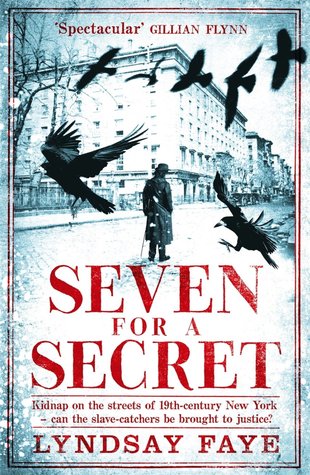
Seven for a Secret by Lyndsay Faye

Seven for a Secret One of the most surprising books I read last year was The Gods of Gotham by Lyndsay Faye. Surprising because it didn’t really sound like my type of book, yet once I started reading I loved it from the first page. Seven for a Secret is the second in the series and just as good as the first. While I like discovering new authors and meeting new characters, there is something comforting about reading a book that is the second or subsequent in a series and returning to a world you’re familiar with and characters you already know.

This series is set in 19th century New York City and follows the adventures of Timothy Wilde, a ‘copper star’ with the newly formed New York Police Department (the name comes from the copper stars the officers are required to wear for identification). After Timothy’s crime-solving skills in The Gods of Gotham brought him to the attention of Chief George Washington Matsell, he has now been given a special position as one of the department’s first detectives. In Seven for a Secret, Timothy is on the trail of a gang of ‘blackbirders’ (people employed to catch runaway slaves and return them to slavery in the South). The gang have captured the family of Lucy Adams, who insists that they are free New Yorkers and not slaves. Timothy promises to help and with the assistance of his brother Valentine sets out to investigate the crime.

Some of the characters we met in the previous novel are back again in this one including Julius Carpenter, Gentle Jim, Bird Daly and Silkie Marsh, but there are plenty of new characters too, from six-year-old chimney sweeps to corrupt Democratic Party members. But one of my favourite things about this series is the relationship between the two Wilde brothers, Timothy and Valentine. Tim continues to be torn between admiration for Val and disgust with his less savoury habits; Val continues to be the exasperated but protective older brother. I love them both, but I have to say I think Val is a wonderful creation and the more interesting character of the two.

The thing that really sets this series apart from other historical mystery novels I’ve read is the setting and the plots that arise from that setting. Before discovering these books I had virtually no knowledge at all of the early days of policing in New York or the work of the ‘copper stars’. And although I have read quite a lot of novels that deal with the subject of slavery, I hadn’t read anything that looked at this particular aspect of slavery. But much as I love Timothy Wilde and think he’s a great narrator, I did sometimes feel that his attitudes towards slavery and other issues raised in this book seemed more like the reactions of someone living in 2013 rather than the 1840s. Other than that, the atmosphere of 19th century New York is completely believable; as in the first novel, the feeling of authenticity is enhanced by the inclusion of ‘flash’, a sort of slang used mainly by criminals but also spoken by both Wildes. There’s a useful flash dictionary at the front of the book to help translate any unfamiliar words, but in most cases it’s easy enough to work out what is being said.

If you’re new to this series you could certainly enjoy Seven for a Secret without having read The Gods of Gotham first, but I would still recommend reading them in the correct order if you can. And really, they are both so good I’m sure whichever one you read first you will want to read the other anyway. I really hope there are going to be more books in this series as I can’t wait to see what the future has in store for Tim and Val!

Like This, For Ever by S.J. Bolton

Like This For Ever Although I don’t read as much contemporary crime fiction as I used to, S.J. Bolton is one author whose books I always look out for. This is the third in her Lacey Flint detective series (or the fourth if you include the novella, If Snow Hadn’t Fallen, which I haven’t read yet). After the events of the previous book, Dead Scared, Lacey has been recovering from her traumatic experiences and is still not ready to return to work. But when young boys start going missing in Lacey’s area of London and their bodies are discovered in the river a few days later drained of blood, Lacey finds herself drawn into another mystery – despite the attempts of DI Dana Tulloch to keep her out of the investigation. However, Dana’s team are making slow progress in solving the crime as whoever is committing these murders does not appear to have a motive and doesn’t seem to fit the typical profile of a serial killer.

The house next door to Lacey’s is the home of eleven-year-old Barney Roberts and his father. Being the same age as the other boys who have disappeared, Barney and his friends are following the case very closely on Facebook. As his father always seems to be working late leaving Barney at home on his own, he has plenty of time to keep up to date with the latest news on the crimes. As Lacey gets to know her young neighbour better she grows concerned for this intelligent boy who is so obsessed with the murders and who still seems to be grieving for the mother who vanished from his life seven years earlier. Can Lacey help Barney find his mother? Will the murderer be caught before he or she has time to kill again? And what is the true identity of the mysterious Peter Sweep, who always seems to be one step ahead of the police?

Bolton’s standalone novels, Awakening and Sacrifice are still my favourites (I loved the gothic elements of her earlier books), but I do like the Lacey Flint series too and Like This, For Ever is the best so far, in my opinion. I found the mystery in this one very difficult to solve – there were several times when I was convinced I knew who the murderer was, only to be proved wrong, wrong and wrong again! I was completely taken by surprise by most of the plot twists (and there are a lot of them). I should have remembered that nothing is ever as it seems in a Bolton novel and if things appear too obvious, it’s usually because they are.

Lacey herself continues to be a flawed and fascinating character and in this book she is more isolated than ever, refusing to allow anyone to get close to her – including Mark Joesbury, another recurring character, with whom she has a very turbulent relationship. In the previous two books, Now You See Me and Dead Scared, Lacey was narrating in the first person, but this story is told in the third person which I thought allowed the real Lacey Flint to be even more obscured from the reader. And with Lacey not at work and on the outside of the investigation, we spend more time getting to know the other members of the Major Investigation Team – especially Dana Tulloch, though I’ve never found Dana a very appealing character and in this book I really disliked her because of the way she was treating Lacey. I did love the character of Barney, the eleven-year-old-boy with a gift for finding everything else apart from his missing mother, and for me he was the real star of the book.

S.J. Bolton’s books can sometimes be very dark and they can sometimes be gory. I tend to avoid this type of crime fiction but am happy to make an exception for Bolton. I didn’t think the gory parts in this book were too excessive, so if you’ve coped with any of her other books you should be fine with this one. While my preference is for historical or vintage mysteries and the traditional methods of detection, it can’t be denied that modern technology opens up lots of fascinating new ways to both commit crimes and solve them. The use of social media, especially Facebook, features very strongly in the plot and we are shown how it can be of help to the police as a source of information and discussion, as well as causing problems when people decide to abuse it.

This is my favourite of the series so far but if you’re new to the Lacey books I would probably recommend starting at the beginning with Now You See Me and reading them in order so that you can get to know the characters and the relationships between them. If you do choose to start with this one, though, it shouldn’t be a problem as Bolton has taken care not to spoil too much of the previous novels. Now I just need to find time to read Blood Harvest, the other S.J. Bolton book I still haven’t read.

Please note that the US title of this book is Lost.

I received a copy of this book via Netgalley for review

The English Monster by Lloyd Shepherd

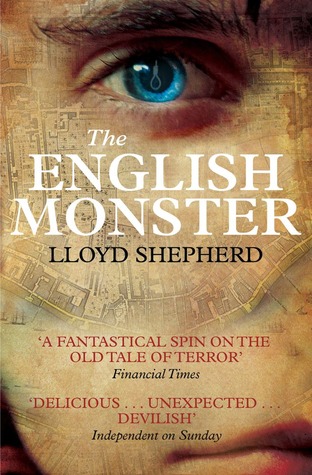
Well, this was one of the most unusual books I’ve read for a long time! It got off to a great start and after reading the first few chapters (in which we witness six pirates being hanged at London’s Execution Dock, go on a midnight journey through the dark streets of 19th century Wapping, and meet a sea captain at an inn in Plymouth) I was beginning to feel very excited about this book. It seemed destined to become one of my favourites of the year, although by the time I finished it, I did feel a little bit less enthusiastic about it.

The novel consists of two alternating stories set in different time periods, but while they may appear to be entirely separate at first, there is in fact a link between the two of them. The way in which they are linked is not immediately obvious so I’ll leave you to discover the connection for yourself.

The first story, set in the Regency period, is based on a true crime which involved the killing of members of two different families in the Wapping area of London in December 1811. These deaths became known as the Ratcliffe Highway Murders. There was no official police force in England at that time and the way the case was handled was amateurish and incompetent. The English Monster introduces us to John Harriott, the magistrate of the Thames River Police Office, and Waterman-Constable Charles Horton as they attempt to investigate the murders.

The second thread of the novel, beginning in October 1564, is a good old fashioned swashbuckling adventure story following Billy Ablass, a young man who decides to go to sea to make his fortune and finds himself aboard a ship owned by Queen Elizabeth I, ready to embark on England’s first official slaving voyage. Or at least, I thought I was reading a good old fashioned adventure story – until I came to a very surprising and dramatic twist that made it obvious this was definitely not going to be a conventional historical fiction novel or a conventional murder mystery either. And of course I’m not going to tell you what the twist is – you’ll have to read the book yourself to find out.

When a novel has multiple timelines, I usually find I’m drawn to one period more than the other but with this book I think I can honestly say I enjoyed them both equally. The Ratcliffe Highway story was fascinating, especially the insights we are given into how useless and inadequate the investigation was. I found Charles Horton a very interesting character: a ‘detective’ working in an era when modern methods of detection were almost non-existent. I believe Horton and the magistrate John Harriott are going to reappear in Lloyd Shepherd’s next book and I’m looking forward to meeting them again.

The Billy Ablass sections of the novel were very compelling too, although some of the scenes that dealt with the cruelty and brutality of the slave trade were uncomfortable to read, as you might expect. Unfortunately though, slavery is part of our history and we can’t ignore the fact that it happened. A lot of real historical figures make an appearance throughout these chapters, such as Francis Drake (who is usually thought of as an Elizabethan hero but was also involved in the slave trade), the Welsh pirate Henry Morgan, the notoriously violent buccaneer L’Ollonais, and John Hawkyns, captain of England’s first slave ship. At the end of the book there’s an interesting note from the author in which, among other things, he explains how much of his portrayal of these characters is based on fact and how much is purely fiction.

As a first novel, I thought The English Monster was very impressive. I’m not sure I wouldn’t have preferred the straightforward historical fiction novel the book had initially seemed to be and that’s why some of my enthusiasm faded slightly as I got further into the story, but there’s no doubt Lloyd Shepherd has come up with something very different and very imaginative here. I’m already looking forward to the sequel, The Poisoned Island.

Thanks to Simon & Schuster for sending me a review copy of this book

The Quarry by Johan Theorin

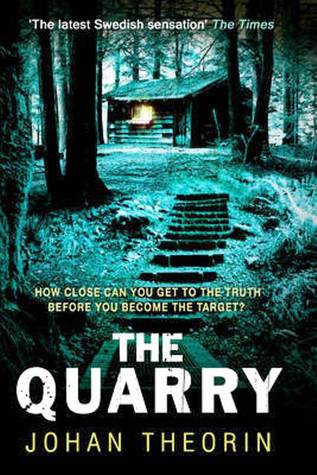
This is the third in Johan Theorin’s Öland Quartet, a series of four crime novels set on the Swedish island of Öland. Each book in the series is set during a different season, with the changes in weather and landscape affecting the mood and atmosphere of the story. I loved the first two books, Echoes from the Dead and The Darkest Room, so I was looking forward to my third visit to Öland. I couldn’t wait to meet my favourite character, Gerlof Davidsson, again and to find out what life on the island was like during the spring months.

In The Quarry, Gerlof is now eighty-three years old and, deciding he doesn’t want to spend the remainder of his life in the residential care home he’s been living in, he moves out and returns to his old cottage in the village of Stenvik. Once back in his own home, he finds some of his late wife’s old diaries written while he was away at sea many years earlier. What he discovers in the diaries could be connected to the story of Vendela Larsson, who has recently moved into a luxury house nearby with her husband, Max. Vendela grew up on the island listening to her father’s tales of myths and legends, and returning to Öland as an adult she finds herself wondering whether the elves and trolls she believed in as a child might really exist.

Meanwhile, Gerlof and Vendela also have another new neighbour: Per Mörner, a divorced father, who has inherited his uncle’s cottage beside an abandoned quarry. Per is looking forward to spending the Easter holidays there with his two children, but he has to change his plans when his daughter becomes seriously ill and his father, Jerry, is almost killed in an arson attempt. Per has barely spoken to Jerry for years but feels obliged to help him, and when he begins to investigate he becomes drawn into his father’s sordid past.

“If you like Stieg Larsson, try a much better Swedish writer” it says on the back cover of this book. I can’t comment on that as I’ve never read Stieg Larsson and am not an expert on Swedish crime fiction, but I would certainly be happy to recommend Theorin’s Öland novels. They are all standalone stories and with the exception of Gerlof, they have different characters so can be read in any order, though I would suggest leaving The Quarry until you’ve read the previous two as I found this one the weakest book of the three.

I still love Gerlof and enjoyed being reacquainted with him. I can only hope that I’m as independent, alert and intelligent as he is when I’m in my eighties! I also liked Per, who was doing his best to deal with his various problems including his daughter Nilla’s illness and his difficult relationship with Jerry. And as usual, the descriptions of the island of Öland are beautifully written. This book is set in the spring, as the last of the winter snows are melting away, so the story is not quite as dark as the first two but there’s still a feeling of loneliness and isolation. The translator, Marlaine Delargy, deserves a word of praise for not losing any of the atmosphere or sense of place.

So why didn’t I enjoy this book as much as the others in the series? The reason, I think, was that Vendela’s story, filled with folklore and magical stories of battles between elves and trolls, didn’t really work very well with the other main storyline. Although I was interested in the fates of both Vendela and Per, I thought their stories could have been the subjects of separate books rather than being combined in the same novel and because of this, I found The Quarry less satisfying than Echoes from the Dead and The Darkest Room (the best of the three, in my opinion). I was disappointed after loving the first two so much, but that won’t stop me reading more Johan Theorin books in the future.

Towards Zero by Agatha Christie

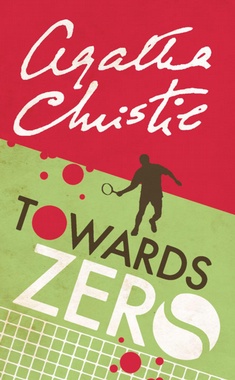
Towards Zero is one of only a few Agatha Christie novels to feature the detective Superintendent Battle. There’s no Poirot or Miss Marple in this one (although there is a TV adaptation – which I haven’t seen – where Miss Marple does appear) but even without them I thought this was an excellent murder mystery novel that deserves to be more popular. The story revolves around the murder of an elderly woman, Lady Tressilian, who has invited a group of guests to her seaside home at Gull’s Point.

With this novel, Christie takes a slightly different approach to normal. Instead of beginning with a murder and then following the detective’s attempts to solve it, she chooses to spend half the book describing the backgrounds of the characters, some seemingly unconnected episodes from their pasts, and the sequence of events that lead to the murder finally being committed and the murderer’s objective being achieved (what one of the characters refers to as ‘Zero Hour’).

“I like a good detective story,” he said. “But, you know, they begin in the wrong place! They begin with the murder. But the murder is the end. The story begins long before that – years before sometimes – with all the causes and events that bring certain people to a certain place at a certain time on a certain day.”

So by the time the murder takes place halfway through the book, the characters are quite well-developed and we know a lot about each of the possible suspects. Could the murderer be the tennis player, Nevile Strange, one of Lady Tressilian’s guests? Or his beautiful wife, Kay? Or could it be his first wife, Audrey, who happens to be visiting at the same time? Maybe it’s Thomas Royde, who is secretly in love with Audrey – or Ted Latimer, a friend of Kay’s. And what about Mary Aldin, Lady Tressilian’s companion?

I thought the mystery was a difficult one to solve and I think I suspected all of the above people at some point in the story! I thought I’d figured it out once or twice but was proved wrong and there were at least two big plot twists towards the end of the book that took me by surprise. Looking back, there were plenty of clues, but plenty of red herrings too.

Towards Zero is atmospheric, very cleverly plotted, and although it’s not one of my favourite Agatha Christie novels it’s still one that I would highly recommend.

The Gods of Gotham by Lyndsay Faye

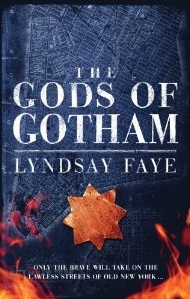
New York City, 1845: When Timothy Wilde loses everything in a fire that destroys a large part of Manhattan, his brother Valentine helps him get a job as a ‘copper star’ in New York’s newly formed police force. Due to his knowledge of ‘flash’, a slang spoken largely by criminals, Timothy is assigned to the Sixth Ward, one of the city’s most notorious areas where crime rates are high and where racial and religious tensions are increasing with the influx of Irish immigrants fleeing the potato famine.

Timothy is unenthusiastic about his new job until one night when he’s walking home from work and a ten-year-old girl runs into him, covered in someone else’s blood. Soon Tim finds himself on the trail of a child killer and discovers that he has an unexpected talent for detective work.

I must admit that when I received a copy of The Gods of Gotham from the publisher, I wasn’t sure this was going to be the type of book I would enjoy. Well, I couldn’t have been more wrong, because I loved it! I could tell from the first page that I liked the writing style and by the end of the first chapter I knew I was going to like the narrator too. But the thing I enjoyed most about The Gods of Gotham was the wonderful setting. Every time I picked up this book and started to read I felt I had left the modern world behind for a while and was actually there, walking through the streets of 19th century New York, which is the highest praise I can give to any historical fiction novel. I’ve read so many books set in Victorian London, and it made a nice change to read one set in New York during the same period.

We also meet lots of strong, interesting characters – Mercy Underhill, the reverend’s daughter and the woman Timothy loves; Bird Daly, the little Irish girl he met in the street at the start of the novel; and Silkie Marsh, who runs the brothel at the centre of the murder investigations. And at the heart of the story is the relationship between Tim and his brother Valentine. Timothy himself is easy to like but he isn’t perfect and has enough flaws to make him a believable character. Although he doesn’t always interpret things correctly, he’s intelligent, observant and compassionate. Val is a very different type of person – tough, aggressive, addicted to morphine and drinking – but by the end of the book we learn that there’s more depth to Val than there seemed to be at first.

The use of flash is something that you will probably either love or hate – personally I thought it added to the atmosphere of the book and made the dialogue feel lively and fun. I was surprised to find that I was already familiar with some of the words and it was interesting to see how many of them have now come into everyday use. But there were other words and phrases that meant nothing to me and so the glossary at the front of the book (based on George Washington Matsell’s Vocabulum, or The Rogue’s Lexicon) was very helpful, especially at first!

For me, the actual crime plot was secondary to the setting, the atmosphere and the characters but it was still good enough to keep me guessing until the truth was finally revealed. The Gods of Gotham was something different and original – I loved it and was pleased to discover that there’s going to be a sequel!

I received a review copy of this book from Headline Review.