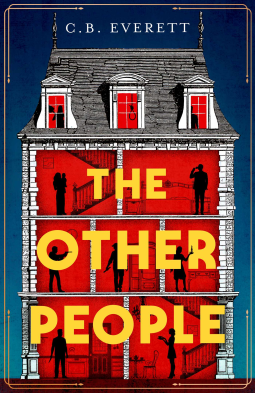
The Other People by C.B. Everett

Imagine you wake up in an unfamiliar room with no idea where you are or how you got there. Venturing through the door you discover that you’re locked inside an old country house with nine strangers, none of whom know what’s going on either. Once you’re all gathered in one room, a woman enters and introduces herself as Amanda. She explains that a girl has been abducted and is imprisoned somewhere within the house. Twelve hours from now her oxygen will run out and she’ll die; if you can find her, you’ll save her life and will also find the way out of the house. Amanda has barely finished speaking when she is shot dead. Unless you want to be next, it seems you have no choice but to find the missing girl as soon as possible.

This is what happens to student Kyle Tanner, executive Diana Landor, retired policeman Len Melville, mother and baby Cerys and Monica Herbert, military man Captain Saint, warehouse clerk Sylvia Moult, thief Iain Wardle-Roberts, stripper Ramona O’Rourke and child molester Desmond Blaine. As these ten people begin to search the house for the hidden prisoner, they start to get killed off one by one. Is the murderer one of the ten – or are there other people in the house as well?

This book is being compared to Agatha Christie’s And Then There Were None – and there are some obvious similarities – but it reminded me more of The Seven Deaths of Evelyn Hardcastle by Stuart Turton. Like the Turton novel, this one requires the reader to accept an unlikely scenario that feels contrived and implausible, which is something some readers will be happy to do and some won’t. In this case, it does all make perfect sense by the end of the book, but in the meantime you have to be prepared to be patient and just go along with the plot.

The novel is narrated by all ten characters (well, nine – baby Monica only gets a few sentences), with the perspective switching rapidly between them throughout the book. We hardly get to know some of them before they are killed, but the ones who survive further into the book become more developed as characters. None of them are very pleasant people, though, and I can’t say that I really enjoyed being inside any of their minds – particularly not Desmond’s! There’s also another narrator, one who’s known only as The Beast in the Cellar, who interrupts the story now and then to speak directly to the reader, make observations and, I suppose, provide some humour. I found these chapters fun at first, but they quickly started to irritate me.

I was expecting a stronger murder mystery element to the book, so I was surprised to find that the characters don’t actually seem to have much interest in looking for the abducted girl and just wander around the house arguing with each other and wasting time. It’s not really the sort of book that has clues and red herrings and where you can try to work out who the murderer is. The real mystery is the one surrounding the house itself, why the characters have been brought there and why those ten in particular have been chosen. I came up with lots of theories while I was reading, but didn’t come close to the correct answer.

This is definitely a book that needs to be read right to the end to be fully appreciated, then. It was only when the truth was revealed that I understood some of the things that had confused or annoyed me earlier on. It would be interesting to read it again from the beginning, with the knowledge of how it ends, but I’m not going to do that as I have far too many other books waiting to be read! It’s a fascinating book, though, even if it didn’t entirely work for me.

Thanks to Simon & Schuster UK for providing a copy of this book for review via NetGalley.
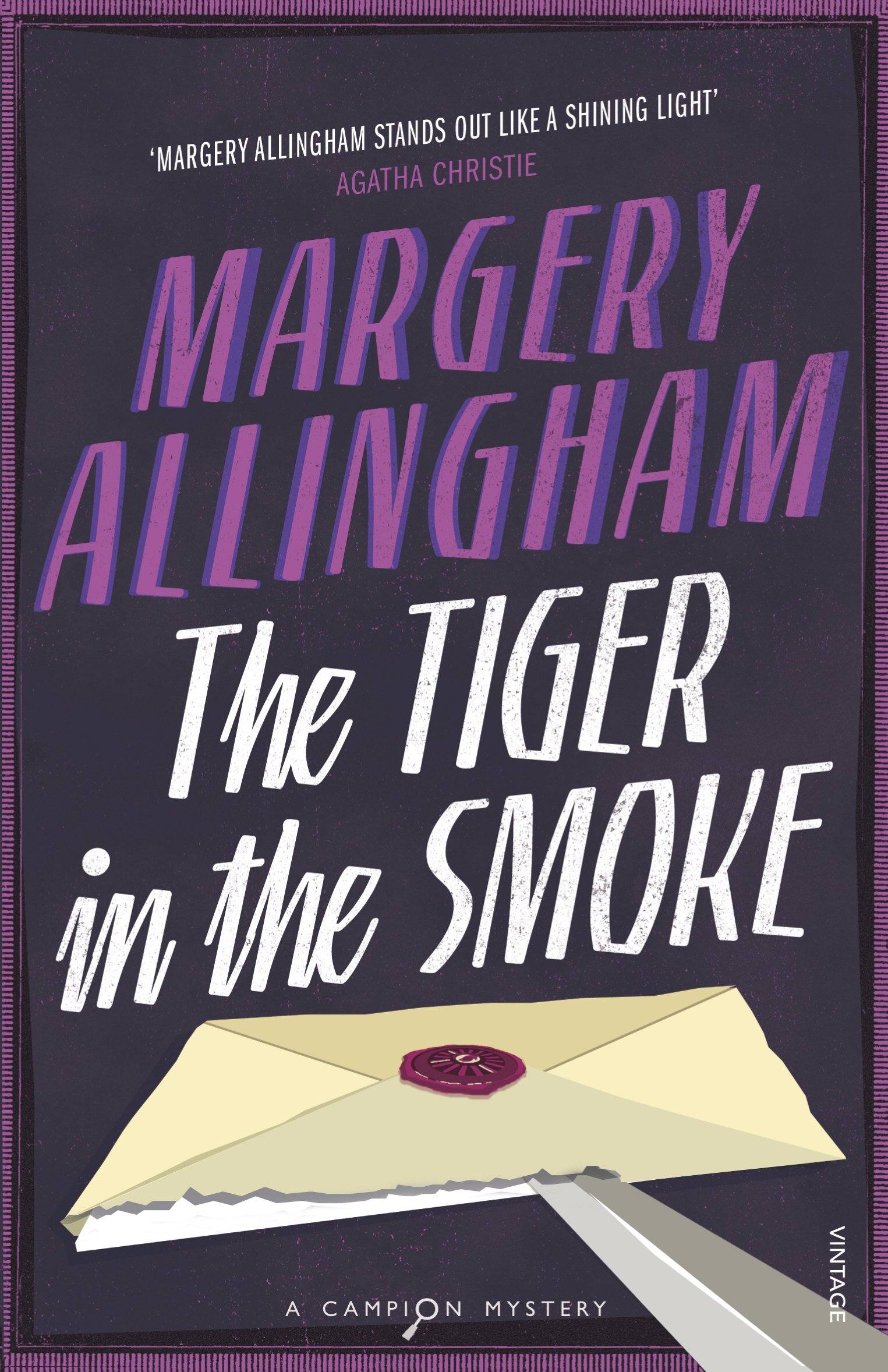
The Tiger in the Smoke by Margery Allingham – #1952Club

I’ve read a lot of Margery Allingham’s books but, maybe surprisingly, not many of the Albert Campion ones and not the book that is often described as her best, The Tiger in the Smoke. When I saw that it was published in 1952, it seemed an ideal choice for this week’s 1952 Club, hosted by Karen and Simon.

The Tiger in the Smoke is the fourteenth novel in the Albert Campion series – although Campion himself barely appears in it. Despite the exotic title, the Tiger refers to an escaped prisoner, Jack Havoc, and the Smoke is a nickname for London. At the beginning of the book, we meet Meg, who has believed herself to be a war widow since her husband, Major Martin Elginbrodde, was reported dead in Normandy during the D-Day landings. Meg has recently become engaged to another man, Geoffrey Levett, but has started receiving mysterious photographs which seem to show that Martin is still alive. As a thick fog descends on London, Meg asks her cousin Albert Campion and Chief Inspector Charlie Luke to help her find out who is sending the photos and what they mean.

The connection between all of this and the escape of Jack Havoc – whom Campion’s friend Superintendent Oates describes as ‘a truly wicked man’ – is not immediately obvious, but gradually becomes clear as the story progresses. First, though, we meet a gang of ex-Army men trying to make a living as a band of street musicians, all with some kind of disability or war injury. They are also criminals and associates of Havoc, so portraying them all with disabilities is something I’m sure a modern author would avoid, even if Allingham got away with it in the 1950s. Havoc himself is a great villain, surrounded by a real aura of danger due to his unpredictability and ruthlessness.

This book is much more of a thriller than a mystery. In fact, there’s very little mystery at all, beyond the question of who is responsible for the photographs and how Martin Elginbrodde is linked to Havoc and his gang. There’s nothing for the reader to really try to solve, so you just have to sit and watch as the story unfolds. This probably explains why we see so little of Campion, as there’s not much for him to do from an investigative point of view. I have to admit that I was quite happy with his absence as I’ve found so far that I tend to prefer Allingham’s books without Campion to the ones with him – although having said that, this is one of the later books in the series and he seems to have matured a lot since the earliest book I’ve read (Mystery Mile).

I loved the atmospheric descriptions of London in the fog in the first half of the book, with the limited visibility making it easier for the criminals to avoid capture. Allingham finds so many evocative ways to describe the fog and it really adds to the sense of tension and confusion. I’m pleased I decided to read this one for 1952 Club – and I have another Campion novel, The China Governess, on the TBR which I hope to get to soon as well.

The Impossible Thing by Belinda Bauer

I loved this! I remember enjoying Belinda Bauer’s first two books, Blacklands and Darkside, around the time they were published in 2009 and 2011 respectively, but I seemed to lose track of her work after that. When this one caught my eye, I decided to give it a try and I’m very pleased that I did. The plot is completely different from any other crime novel I’ve read.

The Impossible Thing is a novel set in two different periods almost one hundred years apart and linked by the same crime – the theft and illegal trading of wild birds’ eggs. In 1926, gangs of ‘egg-climmers’ gather on the Yorkshire coast and lower each other from ropes over the cliffs to steal eggs from the seabirds nesting there. Traders and collectors are willing to hand over large sums of money for the most rare and beautiful eggs, so when little Celie Sheppard from Metland Farm makes the dangerous descent through a crack in a ledge of rock and obtains a perfect red guillemot egg, it creates a sensation.

In the present day, in rural Wales, Patrick Fort decides to visit his friend, Nick, and arrives just in time to discover that both Nick and his mother have been tied up and robbed. The only thing stolen is an old wooden box containing a red egg. Nick had found the egg in the attic and put it on eBay, only for it to be taken down almost immediately for breaching eBay’s policy on selling illegal items. It seems that, even in the short space of time it was advertised, someone saw it, tracked it down to Nick’s address and decided they must have it no matter what. Although Nick had no idea that owning birds’ eggs was illegal, he is afraid to admit to the police that he had one, so he and Patrick set out to find the thief themselves.

This is definitely the first book I’ve read about egg trafficking! It’s an unusual subject for a crime novel, but Bauer builds a story around it that I found completely fascinating and unexpectedly exciting. I assumed that everything in the book was fictional, so I was interested to learn that the red Metland Egg really existed – or to be more accurate, Metland Eggs, as one was collected every year for over twenty years from the same location on the Bempton Cliffs near Bridlington. Something I learned from the novel is that female guillemots lay only one egg a year and if it is stolen, they will return to the same spot the following year to lay an almost identical egg. It made me feel sad to think of the bird that laid the red eggs never actually getting to see one hatch and I’m so glad that the Protection of Birds Act 1954 made egg theft illegal in the UK – even though it hasn’t stopped it completely, it’s a big step in the right direction.

Patrick Fort, the main character in the present day sections of the novel, was apparently introduced in a previous Belinda Bauer novel, Rubbernecker, which I haven’t read. I can see why she decided to bring him back for a second book, because he’s a very engaging, intelligent and likeable character. Patrick has a form of autism which affects his social interactions, but he has a good friend in Nick, who understands why he sometimes behaves the way he does. I loved seeing them work together to hunt down the egg thieves and I must go back and read about their earlier adventures in Rubbernecker!

The historical sections are also very well done and the scenes where young Celie Sheppard is dangled over the cliff in search of the eggs are very dramatic; I can’t imagine how dangerous and terrifying that would be, yet Celie did it year after year from such an early age. At least she was rewarded financially for her efforts, at a time of poverty when her family desperately needed the money. It was interesting to see how big and well organised the egg trafficking industry was in those days, with collectors and traders prepared to go to great lengths – and great expense – to obtain the rarest and most unusual eggs.

I picked a great book for my return to Belinda Bauer after such a long time and am looking forward to reading the others that I’ve missed.

Thanks to Bantam for providing a copy of this book for review via NetGalley.

Strange Pictures by Uketsu – #ReadIndies

Translated by Jim Rion

Strange Pictures is a strange novel, but it’s also a completely fascinating one. I’ve been reading a lot of the classic Japanese crime published by Pushkin Vertigo recently, but this is a modern crime novel, first published in Japan in 2022 and made available in an English translation last month. I had never heard of the author, but apparently he’s a ‘YouTube sensation’ known only by the single-word pseudonym Uketsu. He always appears in his videos wearing a mask and his true identity has not been revealed to the public.

In this book, Uketsu takes as his premise the idea that studying drawings made by victims or perpetrators of crime can give us important insights into the psychological state of those people, which could provide clues to help solve the mystery. Strange Pictures consists of three interconnected short stories based around this concept. The links between the stories are not clear at first, but gradually an overall narrative starts to form, raising questions that are answered in a final, fourth section of the book.

Each of the three stories involves some ‘strange pictures’. First, a series of drawings made by a pregnant woman before her death, which her husband posts on his blog. Then, a disturbing picture of a house drawn by a child at school. And finally a sketch of the mountains drawn by a murder victim in the final moments of his life. These pictures are reproduced in the book, along with various other illustrations, and Uketsu interprets them for us step by step as the characters begin to uncover the clues they contain. He discusses the symbolism in some of the pictures and in other cases the physical drawing itself – the paper it was drawn on; the way images can be digitally resized, rotated and layered; the use of gridlines to help with proportion and perspective; coloured crayons that smudge and blur. All of these things and many more are significant to the plot.

The first two stories in the book help to introduce the characters and provide context, but the third one is a great little murder mystery in its own right. I loved the interactive feel, with not just the main drawings but also other sketches, maps and diagrams helping to clarify what’s happening and lead us to the solution. There are also some very creepy moments, particularly a scene with a woman and child convinced they are being followed home to their apartment, and another where a man awakes in his tent in the mountains to discover that he’s no longer alone.

Although I found this book very enjoyable, it’s not one that you would choose to read for the beauty of the prose as the writing style is very plain and simplistic. However, it’s easy to read and while it’s obviously better if you can experience the book in its original language, I think Jim Rion has done a good job with the translation. A second Uketsu book, Strange Houses, revolving around a series of floorplans, is due to be published in English later this year. I’m already looking forward to it!

As Pushkin Press are an independent publisher, I am counting this book towards this year’s #ReadIndies event hosted by Kaggsy’s Bookish Ramblings and Lizzy’s Literary Life.

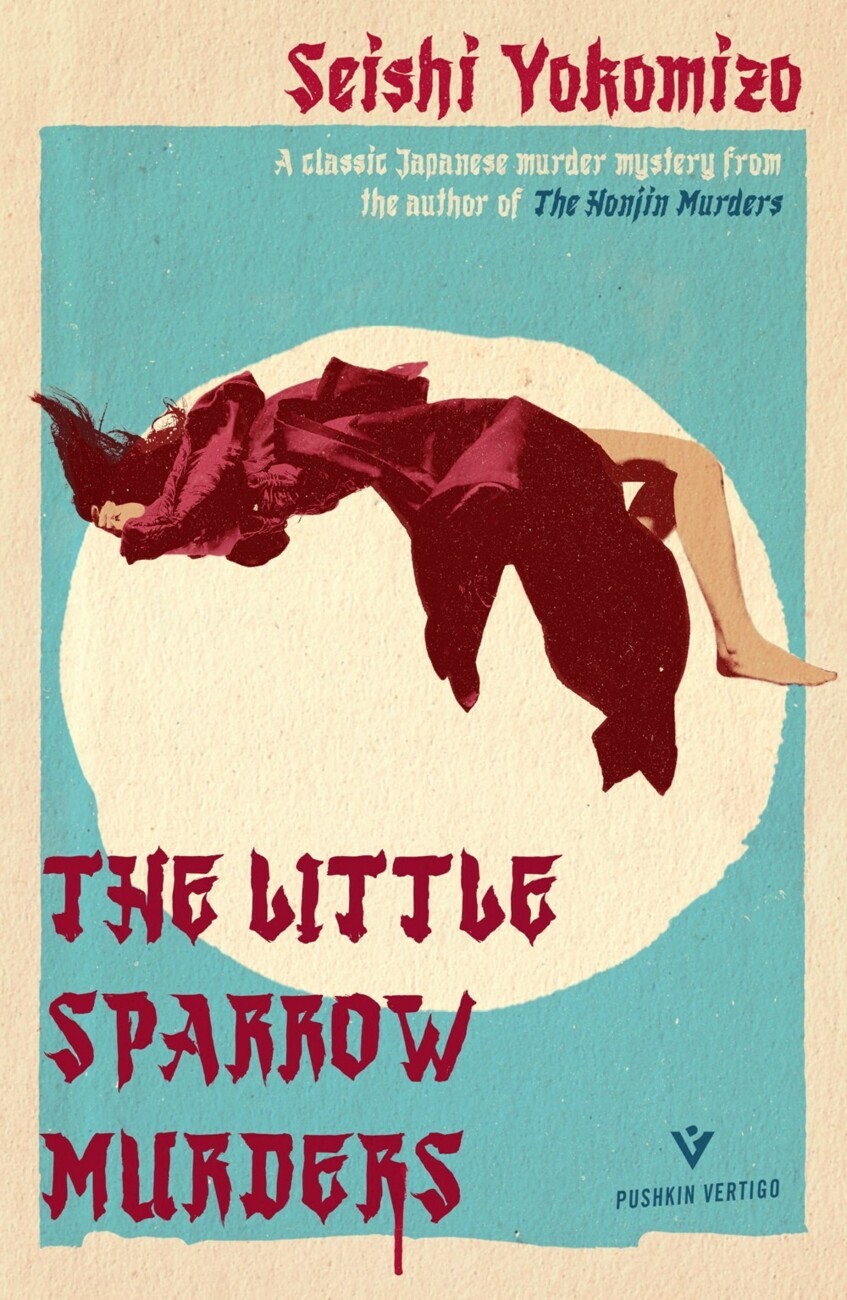
The Little Sparrow Murders by Seishi Yokomizo

Translated by Bryan Karetnyk

I’ve read all five of Seishi Yokomizo’s Kosuke Kindaichi mysteries that have previously been published by Pushkin Press in new English translations. This is the sixth, with another due later this year, and I decided to read it for the Japanese Literature Challenge being hosted this month and next by Dolce Bellezza.

The Little Sparrow Murders was originally published in Japanese in 1959 and is set a few years earlier in the village of Onikobe in Okayama Prefecture. Private detective Kosuke Kindaichi is taking a break from crime-solving and has decided to travel to Okayama to visit his old friend, Inspector Isokawa, at the prefectural police headquarters. Isokawa gives him the address of a nearby inn to stay at, run by Rika Aoike, a widowed friend. Although Kindaichi had been hoping to relax and avoid any mysteries for a while, he finds himself drawn into one when he learns that Rika’s husband, Genjiro, was murdered twenty years earlier – and the killer was never found.

As Kindaichi hears more about the events before and after Genjiro’s death and gets to know some of the people involved, another murder takes place, coinciding with the disappearance of the village chieftain and a sighting of a mysterious old woman on a mountain path. It seems that Kindaichi’s relaxing break is over before it even started. He and Isokawa begin to investigate, convinced that the key to the present day mystery lies in determining what really happened to Rika’s husband all those years ago.

Having read a lot of older Japanese crime novels over the last few years, thanks mainly to Pushkin who are doing a wonderful job with their new translations, I’ve found that many of them – most notably the ones I’ve read by Yukito Ayatsuji and Soji Shimada – are more concerned with solving seemingly impossible crimes and complex puzzles than with characters and motives. Yokomizo, I think, usually finds a better balance between the two; although his books still have intricate plots, the focus is often not so much on working out how the murders were committed, but rather on why they were committed and who could have had a reason for doing so. The impossible crime books can sometimes be fun as well, but I personally prefer the more character-driven ones. In this particular novel, the murders take place out in the open, not in locked rooms, and there’s almost no discussion of alibis, timings or similar things that can sometimes bog down a plot.

One thing I loved about The Little Sparrow Murders is that Yokomizo builds the story around a children’s rhyme – a device that Agatha Christie also often used. The killer in this novel is inspired by a temari song (a song sung by children in Japan while bouncing colourful embroidered temari balls). It begins “In the trees in the garden behind our house, Three little sparrows came to stay” and goes on to describe three young women from different families, who were “all of them sent away” – in other words, murdered. The deaths in the book correspond to the rhyme, which adds some extra interest to the mystery. I hadn’t heard of temari songs or balls before so, as always, a Yokomizo novel has contributed to my knowledge of Japanese culture.

This is one of my favourite Yokomizo novels so far, along with The Honjin Murders and The Inugami Curse, but I did have one problem with it – trying to keep track of the huge number of characters! There are five families in the book and it’s not easy to remember which family each character belongs to and how they’re connected to people in the other families. If you’re reading the ebook version (or maybe even if you’re not), I recommend taking the time to draw some family trees using the character list at the front of the book before you start, then you can easily refer to them as you read. I would have been lost otherwise, I think.

I’m now looking forward to the next Yokomizo book, Murder at the Black Cat Café, coming in September. Pushkin Vertigo also have another Ayatsuji novel, The Clock House Murders, on the way, as well as others by authors I haven’t tried yet, so 2025 should be a good year if you’re a fan of Japanese mysteries!

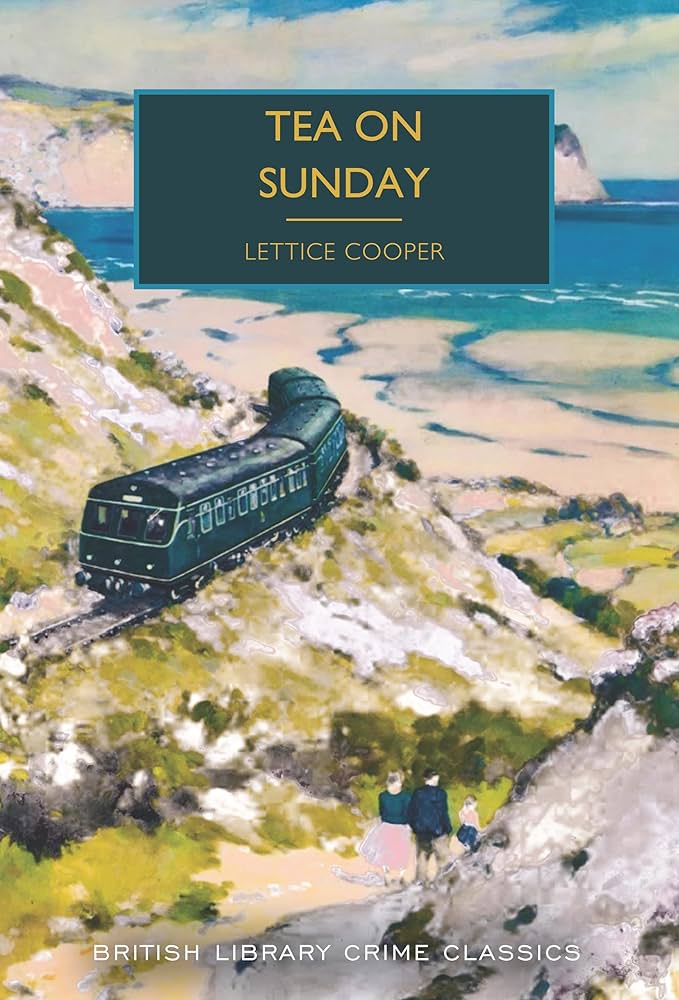
Tea on Sunday by Lettice Cooper

Lettice Cooper is a new author for me. I’m aware that two of her books from the 1930s, National Provincial and The New House, have been published by Persephone, but I haven’t read either of them yet. Tea on Sunday, her only detective novel, sounded appealing, though; it was published in 1973, very late in her life, but has the feel of a Golden Age mystery and has recently been reissued as a British Library Crime Classic.

The plot is quite a simple one. On a snowy winter’s day, Alberta Mansbridge invites eight guests to a tea party at her home in London. The guests include her family doctor, her ‘man of business’, an old friend, the manager of her late father’s engineering company, her nephew Anthony and his wife, and two young men she has taken under her wing – an Italian and an ex-prisoner. As the group gather outside her door that Sunday afternoon, they become concerned when their knocking goes unanswered. Eventually the police are called and force open the door to find that Alberta has been strangled while sitting at her desk.

There’s no real mystery regarding how the murder took place. The doors and windows had been locked and there’s no sign of a burglary, so the police are satisfied that the killer must have been someone Alberta knew and let into the house – probably one of the eight guests who arrived early, committed the murder, then left again to return a few minutes later with the others. But which of the eight was it and why did they want Alberta dead?

Tea on Sunday is a slow paced novel where, once the murder is discovered, not much else actually happens. Most of the focus is on Detective Chief Inspector Corby interviewing the various suspects one by one and delving into Alberta’s personal history to see if the answer lies in her past in Yorkshire. Despite the lack of action, I still found the book surprisingly absorbing and that’s because of Cooper’s strong characterisation. Any of the eight could be the culprit as none of them have alibis and this means Corby has to learn as much as he can about each person and whether or not they have a motive.

Corby is a likeable detective and it’s a shame he only appears in this one book by Lettice Cooper as she could probably have built a whole series around him. Although a few of his comments about women are questionable, I could make allowances for the period in which the novel was written and in general he’s respectful towards the people he interviews and doesn’t judge until he’s heard all the facts. It would be easy, for example, for him to pin the blame on Barry Slater, the former prisoner Alberta met through her charitable work and who runs away as soon as the police are called to the scene, but he doesn’t do this and waits to form his own opinion.

Of the eight suspects, the characters who stand out the most, in my opinion, are Anthony Seldon and his wife, Lisa. As the dead woman’s nephew and the only direct family member invited to the tea party, Anthony naturally comes under suspicion, so a lot of time is spent on his background, painting a picture of a young man who disappointed his aunt by refusing to go into the family business and by marrying a woman she dislikes quite intensely. Another interesting character is Myra Heseltine, Alberta’s close friend who lodged with her until discovering that Alberta’s latest protégé, Marcello Bartolozzi, whom Myra distrusts, may be moving in as well.

It’s Alberta Mansbridge herself, however, whose character comes across most strongly. Despite being murdered so early in the book, she is brought to life through the words and memories of those who knew her: a woman proud of her family’s legacy, stubbornly resistant to change and progress, who interferes in other people’s business but at the same time is generous and giving. At first it’s difficult to see why so many people may have wanted her dead, but gradually motives emerge for almost all of the suspects.

The actual solution to the mystery is disappointingly simple and there are no clever twists along the way, like we would expect from Agatha Christie, for example. I felt let down by the ending, but it was still an enjoyable read up to that point and as the first book I’ve completed in 2025 it means my reading for the year is off to a good start.

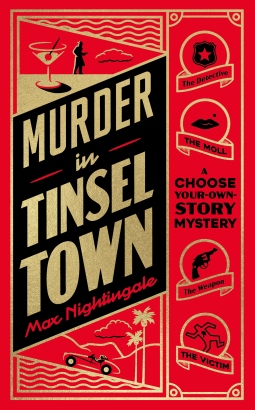
Murder in Tinseltown by Max Nightingale

I used to love Choose Your Own Adventure books as a child – who else remembers them? – so when I saw this new adult version of the same concept, I couldn’t wait to read it. Murder in Tinseltown is set in Los Angeles in the 1950s and the reader takes on the role of a detective investigating the murder of an actress. At various points in the story you’ll have the opportunity to choose your own actions and decide what happens next, either by turning to different numbered pages or, in the Kindle edition I read, simply clicking on a link.

You start your adventure at LAPD headquarters on the weekend of the Golden Star Awards when some of Hollywood’s biggest stars have descended on the city. It’s a busy day in the squad room, but when a disturbing call comes through from the Royal Premiere Hotel – “Trouble…hurt…not my fault…help…it’s them…I’m sorry…” – you head straight to the hotel to investigate. You arrive just in time to learn that one of the waiters has discovered Blanche Aikerman, probably the world’s most famous actress, stabbed to death in her room. After witnessing the dead body for yourself, you accompany the hotel manager to the suite of Peter von Hiltz, Blanche’s director, to give him the news. However, he doesn’t answer the door. What will you do next?

This is where the interactive part of the novel begins. Will you ask the manager to let you into von Hiltz’s room? Will you return to the crime scene to look for more clues? Or would you prefer to interview the waiter who found the body? Each option takes you to a different location in the book and the story continues from there until you reach another turning point and are presented with a new set of choices. It could and should have been a lot of fun working through the book and trying to solve the mystery – unfortunately, there were some problems with the structure which made the whole experience less satisfying than I’d hoped.

Maybe there was one route I could have followed through the novel where the story would have flowed perfectly, but surely somebody should have checked that all of the other possible routes also made sense. Early on, I saw a character die right in front of my eyes at an airport – then I returned to the hotel, where that same character was still walking around alive and well as if nothing had happened. Similarly, I found the murder weapon and then someone else found it again later in the book. Looking at other reviews, it seems that most of us noticed those same two things so I’m not sure how they weren’t picked up on by the author or an editor. Also, there are several outcomes where you die, but instead of the book ending as you would expect, you just come straight back to life and are directed to the ‘correct’ option so the story can continue.

From a nostalgia perspective, it was nice to have the opportunity to read a book like this, but I’m disappointed that it didn’t work as well as it could have done.

Thanks to HarperNorth for providing a copy of this book for review via NetGalley.