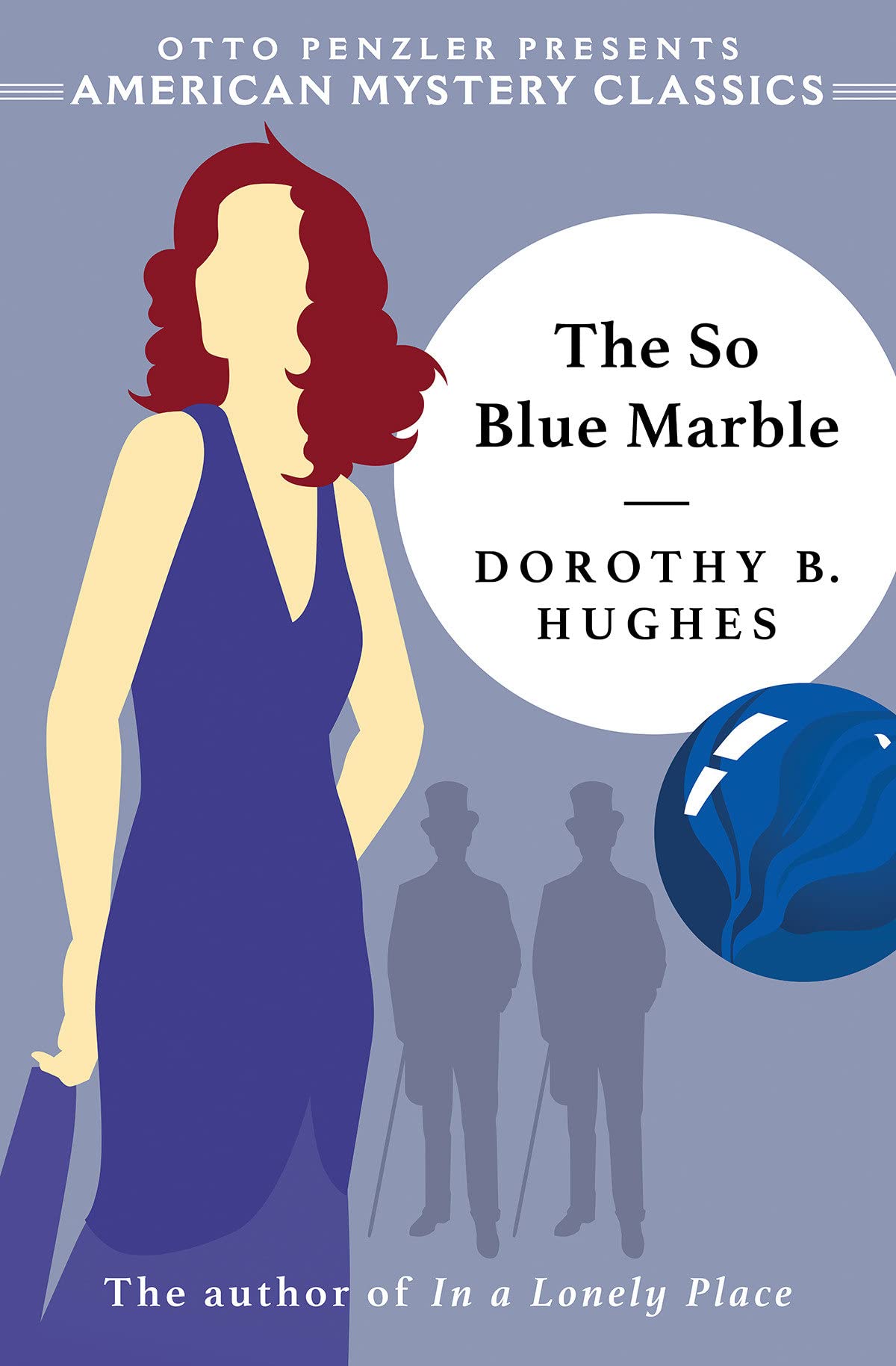
The So Blue Marble by Dorothy B. Hughes – #1940Club

I’ve read and loved three books by Dorothy B. Hughes – The Expendable Man, Ride the Pink Horse and In a Lonely Place, all of which featured on my books of the year list in the respective years in which I read them – so when I was looking for possible titles to read for Karen and Simon’s 1940 Club my eye was immediately drawn to The So Blue Marble. Published in 1940 (obviously), this was Hughes’ first novel and although it doesn’t feel as elegant and polished as her later ones, it’s still very enjoyable.

Twenty-four-year-old Griselda Satterlee has abandoned a promising career as an actress and returned home to New York to start a new life as a costume designer. Walking along Fifth Avenue one night on her way back to her ex-husband Con’s apartment, where she is staying in his absence, she is accosted by two young men who force their way into the apartment with her. The men, whom she later learns are twins Danny and David Montefierrow, seem to know all about Griselda, although she’s sure she’s never met them before. However, it’s not Griselda herself that they are interested in – all they are looking for is a blue marble, which they insist must be somewhere inside the apartment.

Griselda has no idea why they are so desperate to find the blue marble – the very blue marble or the so blue marble, as they always describe it – but she is determined that, whether it’s in Con’s apartment or not, it must not fall into the hands of the twins. But David and Danny are equally determined to obtain it and will stop at nothing to get hold of it, including murder.

This book doesn’t seem to be very highly thought of by Hughes readers – there are lots of one and two star reviews on Goodreads – and I can understand why, but I did still enjoy it. It’s true that the plot is ridiculous, yet I don’t think it’s intended to be taken too seriously and if you go into the book prepared to accept it for what it is, The So Blue Marble is a lot of fun to read. It’s also quite creepy in places – the Montefierrow twins, identical but for their different coloured hair and eyes, who charm everyone else around them and move in the highest circles of society, make very sinister villains, as does Missy, Griselda’s teenage sister, who arrives from Paris and becomes caught up in the search for the marble.

Although I would describe this book as more of a thriller, there’s still a sense of mystery surrounding the importance of the very blue marble and why so many people are so keen to find it. Once these questions have been answered, I felt that things began to fall apart slightly and the story lost some of its impetus. Still, there’s plenty of suspense from beginning to end, some unexpected plot twists and some characters who are not quite what they seem, all of which makes this a very entertaining read.

If you’re new to Hughes, don’t start here – start with one of the other three books I’ve mentioned instead, but if you’re ready to explore some of her lesser known work this one is definitely worth reading. I’ve discovered that Hughes also wrote a second novel featuring Griselda Satterlee, The Bamboo Blonde, which I’ll have to look for at some point.
On Monday I reviewed The Bird in the Tree by Elizabeth Goudge.

And here’s my list of previous 1940 reads.
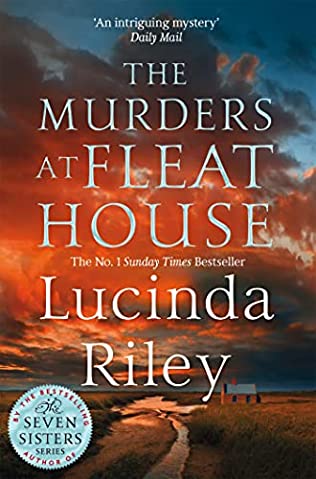
The Murders at Fleat House by Lucinda Riley

Lucinda Riley is best known for her Seven Sisters series and her other standalone dual time period novels, so The Murders at Fleat House – a contemporary crime novel – is something very different. It would have made an excellent start to a new series, but sadly that’s not to be as Lucinda passed away in 2021, leaving this book as the only example of her crime writing. It’s one of several novels she wrote early in her career, without a publisher, and it was finally published posthumously in 2022.

The novel begins with the sudden death of Charlie Cavendish, a student at St Stephen’s, a private boarding school in rural Norfolk. The cause of death is found to be aspirin, to which Charlie was allergic – a fact known to everyone else who boarded with him in Fleat House. The school headmaster, concerned about the reputation of St Stephen’s, is keen to have the incident declared a tragic accident, but the police suspect there’s more to it than that. It seems that someone switched the medication Charlie took to control his epilepsy with aspirin – but who did it and why?

Detective Inspector Jazmine ‘Jazz’ Hunter happens to be in Norfolk at the time of the death, having attempted to walk away from her police career in London for personal reasons, but she is persuaded to return to work and lead the investigation. As she begins to look into the circumstances surrounding Charlie’s death, events take an unexpected turn with the discovery of a second dead body and the disappearance of another of the Fleat House boys. The clues all seem to point towards one culprit, but Jazz is not convinced. Can she solve the mystery before the wrong person is found guilty?

Schools often make interesting settings for murder mysteries and this is no exception. However, we only get to know one or two of the children; it’s the adults – the detectives, the teachers, the staff and the parents – who are at the forefront of the story here. Jazz herself is an engaging protagonist and could have been the star of a whole series, if the author had lived to write more books. A lot of time is spent on personal storylines – a difficult relationship with her Irish ex-husband, a father ill in hospital – which sometimes detracts from the central mystery, but would be understandable if Riley was trying to round out Jazz’s character with future books in mind.

I really enjoyed The Murders at Fleat House – the worst I can say about it is that it was a bit too long and could have used some editing. Having said that, Harry Whittaker (Lucinda Riley’s son) explains in his foreword to the book why he made the decision to leave his mother’s work in its original form and largely unedited. Otherwise, I found this a very entertaining and compelling murder mystery, with a classic feel; rather than lots of blood and gore, which you often get in modern crime novels, the focus is on looking for clues, interviewing suspects and trying to unravel family secrets and complex relationships. The ending came as a surprise – I certainly hadn’t guessed the identity of the murderer or their motive!

Although I’m sorry that we won’t have a chance to meet Jazz Hunter again, I’m now looking forward to the final Seven Sisters book, Atlas: The Story of Pa Salt, which has been completed by Harry Whittaker and will be published in May. Only another month to wait!

Death of an Author by E.C.R. Lorac – #ReadIndies

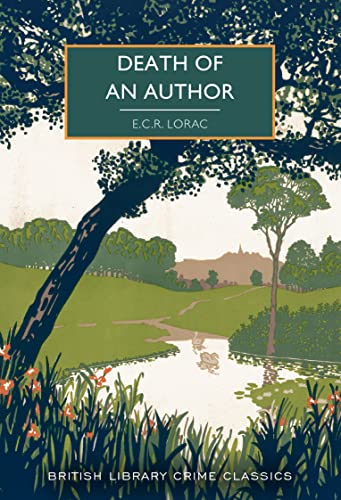
E.C.R. Lorac’s Death of an Author, first published in 1935, begins with the novelist Michael Ashe persuading his publisher to arrange a dinner party so that he can meet another of their authors, the crime writer Vivian Lestrange. Despite being famously secretive and reclusive, Lestrange accepts the invitation – but to Ashe’s surprise, a young woman arrives at the party rather than the man he had expected. Vivian, of course, could be either a man’s name or a woman’s, and Lestrange seems amused by Ashe’s assumptions. She engages Ashe in a debate on gender equality and whether it’s possible to tell a man’s writing from a woman’s – and naturally, she comes out of the argument on top.

Three months later, the same young woman approaches the police to report a crime and introduces herself as Eleanor Clarke, secretary to the author Vivian Lestrange. She admits that Lestrange really is a man, although she has impersonated him at parties a few times for fun. Her reason for contacting the police is that Mr Lestrange has disappeared along with his housekeeper, Mrs Fife, and Eleanor is unable to gain entry to his house, her place of work. She is concerned about him and wants the police to investigate. Inspector Bond, however, is convinced that Eleanor herself is Vivian Lestrange and that some sort of deception is taking place. His Scotland Yard colleague, Inspector Warner, on the other hand, believes what Eleanor has told them and accepts that she and Lestrange are two separate people. But which of them is correct – and if Eleanor is telling the truth, what has happened to the real Vivian Lestrange?

This is the first book I’ve read by Lorac, although I’ve been intending to try one for a long time as I know she’s one of the most popular authors in the British Library Crime Classics series. It was maybe not the best one to start with (it has just been reprinted in January, and I would imagine the British Library have been publishing her stronger books first), but I found it enjoyable enough, with one or two reservations. It certainly has a fascinating plot, with the police trying to investigate a crime without being sure who the victim is or even whether a crime has been committed at all. It was interesting to watch the two detectives, Warner and Bond, working together to come up with different possible scenarios and trying to decide which was the most likely.

As an author who wrote under her initials (her real name was Edith Caroline Rivett) and other pseudonyms including Carol Carnac (Lorac is Carol backwards), the arguments Eleanor Clarke makes to defend women’s writing and to refute the assumption that only men could write a certain kind of book must have been close to Lorac’s own heart. And yet, the way the story develops after this seems to contradict some of the points that were being made at the beginning and I was left feeling slightly confused as to what Lorac was actually trying to say.

Although I couldn’t quite manage to love this one, it was still an entertaining read and I’m sure I’ll try more of Lorac’s books. I know some of you have read a lot of them, so I would like to hear which ones you would recommend!

I’m counting this towards #ReadIndies, a month celebrating books from independent publishers hosted by Kaggsy’s Bookish Ramblings and Lizzy’s Literary Life.

The Mysterious Case of the Alperton Angels by Janice Hallett

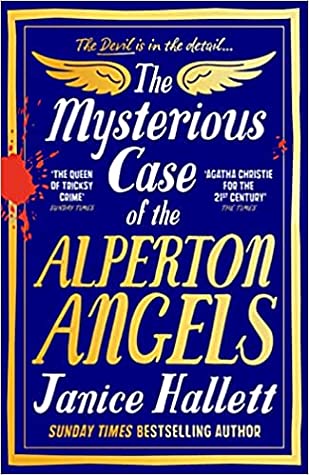
Imagine you find a box of documents that make up the research material for a true crime book. After reading them, you see that the book will shed new light on the eighteen-year-old case of the Alperton Angels – but what will you do next? Destroy the documents? Or hand them over to the police? This is the premise of Janice Hallett’s new novel, The Mysterious Case of the Alperton Angels. It’s fascinating, but Hallett has a style all of her own which can take a while to get used to. I knew what to expect as I loved her previous novel, The Twyford Code – one of my favourite books of 2022 – and I think I enjoyed this one even more.

The case of the Alperton Angels involved a cult led by a man who called himself the Angel Gabriel, two vulnerable teenagers and a baby they believed to be the Antichrist. When true crime writer Amanda Bailey is commissioned to write a book for a new series re-assessing historic crimes, she decides to write about the Alperton Angels from the perspective of the baby, who is now about to turn eighteen. The only problem is, she has no idea where the baby is – or even who they are. Even worse, she discovers that one of her rivals, Oliver Menzies, is working on the same book from the same angle. Who will find the baby first and uncover the truth behind the Alperton Angels?

The whole novel is presented as Amanda’s collection of research material: emails, letters, WhatsApp messages, and even excerpts from books and film scripts. Where she has met and interviewed people involved in the case, these conversations are transcribed by her assistant Ellie, who adds her own amusing observations and asides. This modern, multimedia style of storytelling is not something that would usually sound appealing to me, but in Janice Hallett’s hands I love it. And actually, when I think about it, it’s really just an updated form of the classic epistolary novels I’ve always enjoyed, so there’s no reason why I shouldn’t like it!

Despite the fragmentary style, I could still get a feel for the personalities of the main characters – Amanda persistent and tenacious, Oliver gullible and easily led, and Ellie witty and down to earth – but there’s also a sense that there’s a lot we’re not being told. How much can you trust what someone says in an email or in an interview where they know they’re being recorded? Similarly, the facts behind the case of the Alperton Angels are unravelled very slowly, one little piece of information at a time, and with many of the suspects and witnesses following their own agenda, we don’t even know if what we are reading is true or will be proved false later in the book. Things do eventually start to come together and make sense – and if you continue to the end, you’ll be rewarded with some great twists!

I found The Mysterious Case of the Alperton Angels completely gripping and difficult to put down, particularly as there are no traditional chapter breaks so no logical places to stop. Now I’m looking forward to reading Janice Hallett’s first novel, The Appeal.

Thanks to Viper for providing a copy of this book for review via NetGalley.

Cards on the Table by Agatha Christie

A new year means the start of a new Agatha Christie challenge! Read Christie 2023 is hosted by the official Agatha Christie site and this year the focus is on methods and motives. The theme for January is jealousy and the chosen book is Sad Cypress. However, I read that one quite recently so I’ve gone with one of the alternative suggestions for this month, Cards on the Table.

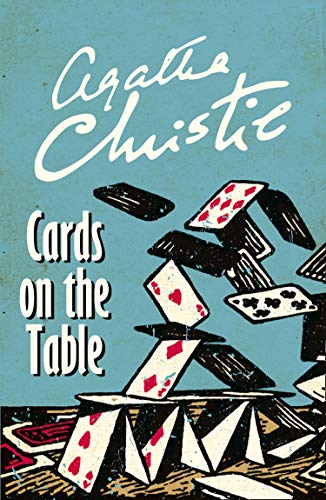
Published in 1936, this is a Poirot novel, but it also features three of Christie’s other recurring characters, all of whom work together to solve the mystery. They are Superintendent Battle, the Scotland Yard detective; former Army officer and intelligence agent, Colonel Race; and Ariadne Oliver, the famous crime author. All three, along with Poirot, are invited to a dinner party hosted by Mr Shaitana, a wealthy man known as a collector of rare objects. He tells Poirot that he will also be inviting a collection of criminals – four people he believes have committed murder but never been caught.

During the party, the eight guests divide into two groups and sit down to play bridge. Several hours later, Mr Shaitana, who wasn’t participating, is found dead in his chair by the fire – stabbed with a small dagger by one of his guests while the others were engrossed in their game. The four sleuths can obviously be ruled out, but any one of the other four could be the murderer. To get to the truth, Poirot and his friends must investigate the background of each suspect to see whether Shaitana was correct and each of them had already killed before.

Cards on the Table begins with a foreword in which Christie explains that unlike most crime novels where the least likely suspect is usually the culprit, this book has four suspects who are all equally likely. They have all (allegedly) committed murder in the past, so all have a motive – fear that Shaitana will expose their previous crimes to the other guests. There’s Dr Roberts, who may or may not have been responsible for the death of at least one of his patients; Major Despard, whose expedition to the Amazon is shrouded in mystery; young Anne Meredith, who tries to cover up her reasons for leaving a previous job; and Mrs Lorrimer, an expert bridge player whose secrets prove particularly difficult to unearth. I suspected all of them at various points, but every time I thought I’d worked it out, Christie threw another twist into the story and I had to think again!

I loved the idea of having four different detectives working together in the same novel (it’s a shame Miss Marple and Tommy and Tuppence hadn’t been invited to the party too!) and each of them has a chance to contribute to the solving of the mystery. Colonel Race has a disappointingly small part, but we see a lot of Battle and Mrs Oliver – who is often described as a self-parody of Christie herself and provides an opportunity to comment on the writing of detective novels. Of course, it’s Poirot who correctly identifies the murderer in the end!

I enjoyed this book, but I think I would have enjoyed it even more if I’d had more knowledge of bridge, which is a game I don’t play and don’t really understand. Part of Poirot’s investigation revolves around the score cards and an analysis of each suspect’s playing style, so this meant very little to me. Luckily, though, it’s not completely essential to be able to follow all of this and there are other clues to piece together as well.

February’s Read Christie theme is ‘a blunt object’ and the group read will be Partners in Crime, which again is a book I’ve already read. I’ll wait until they reveal the alternative choices for the month and see if any appeal to me.

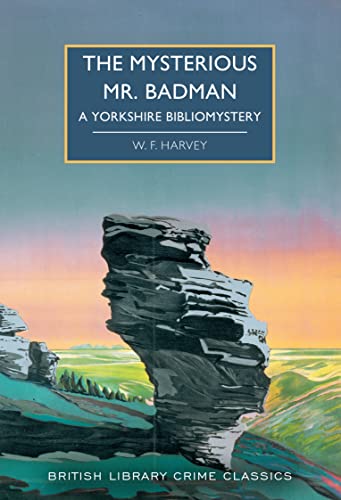
The Mysterious Mr Badman by W.F. Harvey

The British Library are doing a great job of bringing the work of obscure or long-forgotten authors back into print with their Crime Classics series and William Fryer Harvey is another. Better known for his horror stories such as The Beast with Five Fingers and August Heat, he also wrote a crime novel, The Mysterious Mr Badman, which was originally published in 1934. I was immediately drawn to this book not just by the title, but also the subtitle, A Yorkshire Bibliomystery!

As Martin Edwards points out in the introduction, this must be the only crime novel with a blanket manufacturer as the protagonist. His name is Athelstan Digby and as the novel opens he is visiting his nephew in the Yorkshire village of Keldstone. One day he offers to take charge of the village bookshop so the bookseller and his wife can go to a funeral. Digby is expecting a quiet, uneventful afternoon so he is amazed when three men separately enter the shop within the space of a few hours, all asking for a copy of the same book: Bunyan’s Life and Death of Mr Badman. Digby is unable to find this book on the shelves, but when a boy arrives at the shop later that day with a pile of old books to sell – including Mr Badman – he becomes even more suspicious. What is going on – and why is that particular book so important?

This is a short novel, so I won’t go into the plot in much more detail…except to say that it’s great fun. There are murders, incriminating letters, political conspiracies, a touch of romance and a lot of humour! With character names like Athelstan Digby, Euphemia Upstart, Olaf Wake and Kitchener Lilywhite, you can see that it’s not a book to be taken entirely seriously, but at the same time it’s a clever, interesting and well written novel and one of the most enjoyable I’ve read from the British Library Crime Classics series for a while. Just be aware that it’s more of a thriller than a conventional detective novel; the mystery is actually solved quite early in the book and the significance of Mr Badman and the identity of the villain are revealed much sooner than you would expect. The fun is in watching Digby team up with his nephew Jim Pickering and Jim’s love interest Diana Conyers to try to decide what they should do with the information they’ve obtained.

As always when I read mysteries written in this period, I was struck by not only how much more difficult some aspects of crime-solving were in those days (no internet, no DNA testing) but also how much easier other aspects were. It was far simpler to trace a particular car when there were so few of them on the roads and everyone would notice an unfamiliar one driving through their village. I really enjoyed watching Digby, Jim and Diana investigate the mystery using the methods available to them in the 1930s, even if they occasionally walk straight into traps that are quite obvious to anyone who reads a lot of Golden Age crime fiction! I also loved the Yorkshire setting, although not all of the novel is set there.

Although, as I’ve said, Harvey is better known as a horror writer, it seems that the character of Digby previously appeared in a book of short stories, The Misadventures of Athelstan Digby. I hope that one will become available as a BLCC book soon too.

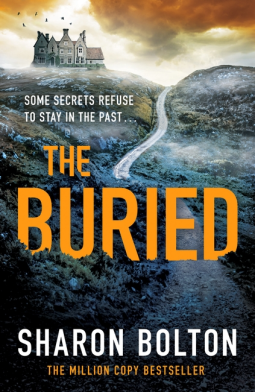
The Buried by Sharon Bolton

Two new Sharon Bolton books in one year! I loved The Dark, the latest in Bolton’s Lacey Flint series, which was published in the spring – and now, with The Buried, she returns to her Florence Lovelady series. I’ve been waiting for this sequel since I read The Craftsman in 2018 and had almost given up hope of it ever appearing, but here it is at last. It was definitely worth the wait!

The Buried begins in the summer of 1999, with Florence Lovelady visiting Larry Glassbrook in prison. Florence, now a senior police officer with the London Met, was responsible for Larry’s conviction thirty years earlier for the murder of three teenagers in Sabden, Lancashire. Now the remains of four more children have been discovered and Florence is confused. Are these more of Larry’s victims or are the remains more recent, meaning that the real killer is still on the loose? Also, the bodies were found in the grounds of Black Moss Manor Children’s Home, which Florence had helped to close down in 1969 after finding evidence of neglect and cruelty. What does this mean and how can she discover the identity of the children?

Soon after Florence’s visit, Larry Glassbrook dies of cancer and preparations are made for his funeral. His daughter Cassie returns to Sabden after a long absence and immediately sets her sights on John Donnelly, whom she loved as a teenager and who is now a married man with children. Cassie herself has become a successful songwriter, but she has never quite managed to put the past behind her and still has questions about some of the things that happened in Sabden thirty years ago.

The first section of the book alternates between Florence and Cassie during the build up to Larry’s funeral and I have to admit, I felt very confused. I found that I’d forgotten most of The Craftsman and I kept coming across references to people and events I couldn’t remember at all. Who was Marigold? What was Florence’s involvement with Black Moss Manor? I had no memories of those things at all, but they were obviously important. Then I discovered that I wasn’t supposed to remember them as they didn’t actually form part of the plot of The Craftsman. I just needed to be patient because the second section of the novel takes us back to 1969 and my questions about Marigold and Black Moss Manor were answered. The shifting timelines with various parts of this book set both before and after the events of The Craftsman means it works as both a sequel and, in a way, a prequel.

The 1969 storyline (which forms the main part of the novel) is excellent – Sharon Bolton at her best. I was completely gripped by Florence’s investigations into the allegations of abuse at the children’s home and the obstacles she faces in trying to get anybody to take her concerns seriously. The 1960s setting allows Bolton to explore the sexism and misogyny Florence faces as she tries to do her work; the other police officers are exclusively male – local men from Sabden who resent Florence’s university education, southern accent and the fact that she is a woman doing what they consider a man’s job. Meanwhile, we get to know Sally Glassbrook, Cassie’s mother, who is struggling to cope after Larry’s arrest and imprisonment. As the family of a convicted murderer, Sally and her daughters are in a vulnerable position and find themselves having to fend off the unwanted attentions of Roy Greenwood, Larry’s former business partner.

Finally, I need to mention the supernatural elements! The way The Craftsman ended made me think these were going to be a major part of the second book, but things didn’t go quite as far in that direction as I’d expected and the crimes committed are all very human ones. We do see more of the coven of witches who are operating in Sabden (Pendle Hill, site of the famous 17th century witch trials, casts its shadow over the town), the influence of the mysterious and sinister group known as the Craftsmen, and Florence’s own seeming ability to communicate with the dead, but I didn’t think these elements dominated the story too much. However, they are there and won’t appeal to everyone. I would say these books are closer in tone to Bolton’s early standalones such as Sacrifice and Awakening than they are to the Lacey Flint novels or her other recent thrillers.

I loved this book once I managed to get back into the story, but I would definitely recommend reading The Craftsman first – or re-reading it if, like me, you read it several years ago and can’t remember the details.

Thanks to Orion for providing a copy of this book for review via NetGalley.