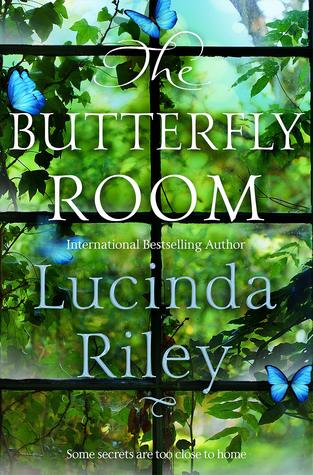
 It’s 2006 and Posy Montague has made the difficult decision to put her Suffolk home, Admiral House, up for sale. She doesn’t want to – it has belonged to her family for generations and holds lots of memories – but as she is approaching the age of seventy she has had to accept that the house is too big and too expensive to maintain. There is a chance that it could still be kept in the family, as her eldest son Sam is interested in acquiring the house for his new property development company, but Posy is not too hopeful as she knows that all of Sam’s previous business ventures have ended in failure. Then a face from her past reappears – Freddie – and gives Posy something else to think about. Why did Freddie break off their relationship without explanation so many years ago? Is it too late for them to try again?
To find the answers, we have to go back in time to the 1940s, when Posy is a child growing up at Admiral House. She shares a close bond with her father, a butterfly collector who instils in her a lifelong love of nature, but when he goes away to fly a Spitfire in the war, Posy’s idyllic childhood is destroyed. Exploring the gardens one day, she enters her father’s private ‘butterfly’ room in the Folly, where she makes the upsetting discovery that he has not been setting his specimens free as she believed, but preserving them behind glass. But does Admiral House hide an even darker secret – and if so, what is it?
Like most of Lucinda Riley’s novels, The Butterfly Room moves between two time periods, so that the story unfolding in the past sheds light on the story taking place in the present. Usually I would prefer the one set in the past, but in this case I felt that it existed mainly to provide some background for the characters rather than being an interesting historical storyline in its own right unlike, for example, the wartime espionage thread in The Light Behind the Window.
Surprisingly for me, then, it was the modern day narrative that I found myself drawn into more fully. I was particularly interested in the story of Amy, trapped in an unhappy and abusive marriage to Posy’s son Sam, and not sure how to get herself and her children out of it. Meanwhile, Tammy, the girlfriend of Posy’s other son, Nick, is also having doubts about her relationship, but for a different reason: she’s convinced that Nick is hiding something from her. It’s obvious to the reader what his secret is (or at least, it was obvious to this reader) and that was my main problem with this book – that too much of the plot was predictable. However, the revelation of Freddie’s secret came as a surprise to me, which I was pleased about; I’d had a few guesses but didn’t get it completely right!
This is not a favourite Lucinda Riley novel – apart from the points I’ve mentioned above, I thought the book was too long for the story that was being told – but in general it kept me entertained and was a change from her Seven Sisters books. I have the next book in that series, The Sun Sister, waiting to be read soon.





 She Reads Novels