South Riding by Winifred Holtby

I read South Riding in February and managed to finish it just in time to watch the recent BBC adaptation. I’m glad I was able to read the book before watching the series as I like to be able to form my own images of the characters before seeing someone else’s interpretation of them. I also think if I hadn’t read the book first I would have found some parts of the adaptation quite confusing.

I first came across Winifred Holtby in Vera Brittain’s Testament of Youth (she and Brittain were close friends) but this is the first time I’ve read any of her work. South Riding, as well as being a wonderful story, is also a realistic and insightful portrait of a community, which reminded me of Middlemarch by George Eliot. It also shares some plot elements with Jane Eyre – one of the main characters even remarks on this herself!

So what is the book actually about? Well, it’s about Sarah Burton who is appointed headmistress of Kiplington High School for Girls and who begins to fall in love with troubled gentleman farmer Robert Carne. It’s also about Lydia Holly, the brightest girl in the school, who is forced to abandon her education and stay at home to look after her younger siblings after their mother dies in childbirth. And it’s about…no, I won’t tell you any more – South Riding is about so many different things I would rather leave you to discover them for yourself. But at the centre of all these storylines is the South Riding council, which makes the important decisions that affect the lives of every character in the book. And there are a lot of characters! When I first opened the book and saw the huge character list at the front, I was slightly overwhelmed: would I be able to keep track of who was who?

The answer is yes, because every one of them is well drawn and memorable. I really admired Sarah Burton. She was a woman who thought she could make a difference and she was prepared to take action to make things happen. But even some of the minor characters (such as Miss Sigglesthwaite, the nervous science teacher and Lily Sawdon, the innkeeper’s invalid wife) get their turn in the spotlight and I was very impressed that Holtby was able to give such a large number of very different characters so much depth. They all feel like real, believable people, people you might live or work with in real life.

Another aspect of the book I enjoyed was the portrayal of Yorkshire in the 1930s. Holtby paints vivid pictures and images, from the crowded streets and alleys of Kingsport to ‘The Shacks’, a cluster of huts and converted railway carriages where the poorest families live. The ‘South Riding’ doesn’t actually exist – the North, East and West Ridings are the three historic subdivisions of Yorkshire – but the setting feels completely realistic (Holtby apparently used the East Riding, where she grew up, as her inspiration).

I admit that South Riding hadn’t previously sounded very interesting to me and I hadn’t expected to love it as much as I did. It was a book I looked forward to returning to every day and I was sorry when I reached the final page.

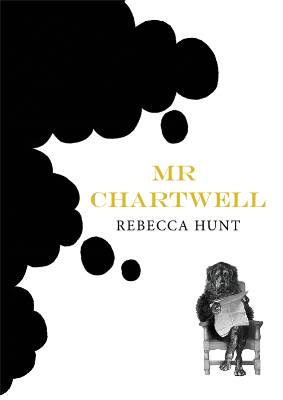
Mr Chartwell by Rebecca Hunt

It’s a well-known fact that British Prime Minister Winston Churchill experienced periods of depression which he referred to as ‘the black dog’. Just a metaphor, of course, but what if the black dog was real? Rebecca Hunt has used this idea as her inspiration for one of the most bizarre books I’ve read for a long time!

It begins with the 89-year-old Churchill waking up one morning in 1964 to find that he’s not alone in the room; someone – or something – is sitting in the opposite corner. Later that morning, librarian Esther Hammerhans is preparing to welcome the new tenant who’s going to be renting her spare room. When she opens the door and is confronted by a huge black dog who introduces himself as Mr Chartwell, Esther is shocked but agrees to let him have the room. He needs to stay in the area for a few days, he says, while he’s visiting a client. But what is Mr Chartwell’s job and who is his mysterious ‘client’?

If you’re going to read Mr Chartwell you need to be prepared to keep an open mind and just accept that one of the protagonists is a dog or you’re not going to get very far with this book! I thought bringing the ‘black dog’ of depression to life was a wonderful idea. Mr Chartwell, or Black Pat as he calls himself, is a fascinating character (and not just because he’s a huge talking dog). He’s manipulative and controlling but sometimes behaves in a more dog-like manner and can even be quite charming and likeable. But although the reader knows what the dog represents (and Churchill knows it too, having been well acquainted with him for many years) Esther has no idea what’s going on and is completely in the dark as to why Mr Chartwell has chosen her house to visit.

Another interesting aspect of the book is that there are little details of Churchill’s life incorporated into the plot, both directly and indirectly. Some of the things he says in the book are based on things that the real Churchill was quoted as saying. And even the dog’s name, Chartwell, was the name of the Churchill family home in Kent.

I loved the opening chapters of this book but started to lose interest a little bit as I got further into the story. The overall tone was quite light (which I know it was probably intended to be) but I think it would have worked better for me if it had been more serious in places and if Mr Chartwell had been portrayed as a less likeable character. The first half of the book in particular is very whimsical, though it does turn darker towards the end where Hunt starts to explain the significance of some of the metaphors and how they relate to depression. Overall though, I thought this was an impressive debut novel and I’ll be looking out for more Rebecca Hunt books in the future.

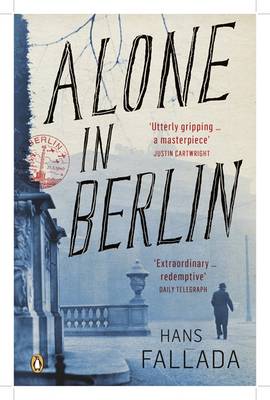
Alone in Berlin by Hans Fallada

“Mother! The Führer has murdered our son. Mother! The Führer will murder your sons too. He will not stop till he has brought sorrow to every home in the world.”

Otto Quangel writes these words on a postcard one Sunday afternoon in 1940, drops it in a crowded building the next day and waits for someone to find it. And in this way, a quiet married couple from Berlin begin their campaign of resistance to World War II.

I’ve been very lucky so far with my reading choices in 2011. Alone in Berlin (published in the US as Every Man Dies Alone) is yet another one that I thoroughly enjoyed. This book has been on my wish list since I noticed it had been translated for the first time and published as a Penguin Classic, and I’m so glad it lived up to my expectations. Not only is it a wonderful story but it’s also important historically as an anti-Nazi novel written by a German and published in 1947, just after the end of World War II.

The book is based on the true story of Otto and Elise Hampel, whom Hans Fallada renamed Otto and Anna Quangel. Fallada was given the Gestapo’s files on the Hampels and was able to draw on this information as part of his research for Alone in Berlin. Before I read this book I knew nothing about the Hampels and their postcard campaign, so I found the plot completely suspenseful, exciting and full of surprises – it was truly unputdownable, the kind of book where I knew as soon as I started reading that I was going to love it.

From the first page we are drawn straight into the action with postwoman Eva Kluge delivering a telegram to Otto and Anna Quangel, informing them that their son has been killed. Meanwhile in the apartment below, the Nazi Persicke family are celebrating the news of the capitulation of France, whilst Frau Rosenthal, the elderly Jewish woman who lives on the fourth floor, is forced to go into hiding after her husband is taken away by the Gestapo.

Devastated by his son’s death and appalled by the Nazi regime, Otto buys some blank postcards and devises a simple scheme which he hopes will raise awareness of Hitler’s atrocities and encourage other German citizens to join the resistance. On the surface, Otto is our hero, the man with the courage to stand up to Hitler, the man who refuses to join the Party although doing so is ruling him out of promotion at work. And yet Otto is not a conventional fictional hero. He comes across as cold and distant and not particularly likeable – but I could understand the reasons for him distancing himself. He was not frightened for himself, but afraid that his actions would endanger anyone associated with him, particularly his beloved Anna who insists on helping him with the postcards despite the risks involved.

The middle section of this book becomes a sort of cat-and-mouse game with Inspector Escherich of the Gestapo attempting to catch the mystery postcard writer. Escherich is a very shrewd and intelligent detective who is able to make clever deductions based on the tiniest clues – almost a brutal, sinister version of Sherlock Holmes – and I was kept in suspense wondering if Otto would give himself away.

But there are so many other things going on in this book. We also meet Enno Kluge, Eva’s husband, whose main ambition is to stay out of the army on health grounds and fill his days with gambling and drinking. Then there’s Trudel Baumann, who was once engaged to the Quangels’ son, and is opposing the war in her own way; Baldur Persicke the Hitler Youth Leader who puts Hitler and the Party before even his own father; and Kuno-Dieter, a teenage boy who flees Berlin for the countryside.

I wasn’t expecting this book to be so easy to read. The writing is clear and direct, getting straight to the point and allowing us to concentrate on the rapidly moving plot. I was concerned that my unfamiliarity with German war-time politics might be a problem, but I needn’t have worried. I had no problem understanding any part of the book. The focus is not on the politics but on the people and their lives. I went through a whole range of emotions while reading this book: fear (for Otto and Anna, for Trudel, for Frau Rosenthal, even at times for Enno); anger (at the Gestapo and the whole system of ‘justice’); and sadness, of course.

Alone in Berlin is a moving and inspirational story about two people standing up for what they know is right. I would highly recommend it if you enjoy reading World War II fiction and would like to view things from a different perspective and also if you enjoy novels that are both gripping and heartbreaking. Don’t let the 600+ pages put you off – I became so absorbed in the story I didn’t even notice the length!

We Had It So Good by Linda Grant

Stephen Newman is getting older and is finding it difficult to come to terms with the way his life has turned out. What happened to his hopes and ambitions, to the generation that was going to change the world?

We Had It So Good follows the story of Stephen and his family over several decades during the second half of the twentieth century and the beginning of the twenty-first. At times reading this book was almost like watching one of those nostalgic television documentaries that show us snapshots of life in the 1960s and 70s. We learn about Stephen’s time at Oxford University where he met his future wife Andrea, how he made LSD in the chemistry lab, lived in a commune, went to the Isle of Wight festival and ate macrobiotic food. As we move forward through the 1980s and 1990s we see the early days of computers and the internet, and learn what it was like to be a photo-journalist reporting on the Bosnian War. And finally, we are brought right up to date with the tragedies of 9/11 and the 2005 London bombings.

As the years go by we see how Stephen and Andrea have changed over time, have had to abandon some of their dreams, and are leading more conventional lives – but with Stephen in particular there’s always that feeling of regret, that he’s settled for second-best, and he does at one point decide that “that was what life was, perennially settling for less”.

The book doesn’t have much of a plot, concentrating instead on painting a detailed and realistic portrait of the Newman family. Despite the lack of action though, there are still some moments of drama – mainly the types of small dramas that most people will experience in their lifetime – and there were even a few surprises and revelations that I didn’t see coming. The viewpoint switches from chapter to chapter allowing us to see things through the eyes of Stephen, Andrea, and several of the other characters. Sometimes I couldn’t immediately tell who was narrating, but this seemed to be intentional. The story also moves around in time, showing us the significant moments that have shaped the lives of each of the characters.

Linda Grant’s writing is of a high quality and she develops her characters in great detail from their appearance and the clothes they wear, to their likes and dislikes, hopes and fears. And yet throughout the first half of the book I didn’t feel any personal involvement in their story and always felt slightly detached from what was going on. Although the Newmans and their friends felt believable and real to me, I didn’t think I liked them enough to want to spend 340 pages reading about their everyday lives. But halfway through the book I started to warm to some of the characters and as a result, the story became more compelling. And once I had settled into the pace of the writing, I started to enjoy it.

It was interesting to see how Stephen as an American (with a Polish immigrant father and a Cuban mother) adapted to life in England, first at Oxford and then in London. And equally interesting when the family went to America and this time it was Andrea who had to readjust. I also liked reading about the relationship between Stephen and his father, Si. Stephen and Andrea’s daughter, Marianne, is another intriguing character. And this post wouldn’t be complete without mentioning Andrea’s best friend, Grace, who is quite a sad and solitary figure, still clinging to her ideals and travelling aimlessly round the world on her own, running away from her past and searching for something unobtainable. Although she’s not the most pleasant of people, with a hard, prickly personality, I was far more interested in Grace than in the Newmans.

I should point out that I’m probably not really the target audience for this book and although I did end up enjoying it, I can see that it would probably be appreciated more by readers of Stephen and Andrea’s generation. However, the book still left me with a lot of things to think about, from bigger issues such as immigration, family relationships and generational differences to the smaller ones, such as the principles behind the advertising of washing powder!

We Had It So Good was the January selection for the Virago Book Club. I received a copy from Virago for review.

Baba Yaga Laid an Egg by Dubravka Ugresic

Baba Yaga Laid an Egg is part of the Myths series by Canongate Books, in which authors retell traditional myths from around the world in a new and original way. This book by Croatian author Dubravka Ugresic takes a fresh and unusual approach to the Slavic myth of Baba Yaga.

Baba Yaga (shown here in a painting by Viktor Vasnetsov – picture from Wikipedia in public domain) is usually portrayed as a hag or witch who lives in a log cabin mounted on a pair of chicken legs. She uses a giant mortar and pestle to fly through the air, kidnapping and threatening to eat small children. Although she has a terrifying appearance, Baba Yaga is also said to possess great wisdom and will sometimes give help and advice to anyone brave enough to ask.

Rather than simply reiterating this myth, Ugresic relates the myth to the lives of modern women and explores a large number of topics including ageing, feminism, love and loneliness. The book does not follow the format of a conventional novel and is divided into three separate and seemingly unconnected stories.

In the first story, the narrator travels to Varna in Bulgaria, the childhood home of her mother who is now old and ill. In the second story, we meet Beba, Pupa and Kukla, three old women who are staying together at a spa in the Czech Republic. But what is the connection between these two stories and what do they have to do with Baba Yaga? I have to admit, by this point I was starting to feel slightly confused. Yes, I had learned a lot about growing old, but how did all of these things relate to the myth of Baba Yaga? Luckily, I found the answers to my questions in the third and final section of the book.

Part 3 is presented as if a folklore expert was responding to a request for information about Baba Yaga and had been asked to explain the meaning of the first two sections. This part of the book was fascinating but began to feel like a very, very long encyclopedia entry. I previously knew almost nothing about Baba Yaga though, so it was good to learn something about the myth. I was also pleased at how well this final section pulled all the threads of the book together and helped me understand the significance of everything I had just been reading.

This book should appeal to anyone who has ever worried about growing old or anyone with an interest in mythology as it relates to feminism. I can’t honestly say that I loved this book or even that I particularly enjoyed it, but it was a very interesting concept and I’m glad I decided to give it a try.

Has anyone read any of the other Canongate Myths books. Are they similar to this one?

Virago Reading Week: The Enchanted April by Elizabeth von Arnim

This is my second post for Virago Reading Week, hosted by Rachel of Book Snob and Carolyn of A Few of My Favourite Books. When I was choosing my books for this week, I knew it was time to try something by Elizabeth von Arnim, a writer whose work I had never read but who seems to be one of the most popular and most loved Virago authors.

The Enchanted April, first published in 1922, is the story of four women who rent a castle in Italy together one April. The women are strangers to each other at the beginning of the novel, but each of them has her own reasons for wanting a holiday. Spending a month at San Salvatore surrounded by sunshine and flowers gives each woman a chance to resolve her problems and try to find happiness.

Our four main characters have very different personalities and very different circumstances. First, there’s Lotty Wilkins who has grown tired of having her life controlled by her husband and is desperate to escape from him for a while. Calm, grave Rose Arbuthnot has the opposite problem: her husband is so wrapped up in his career that he barely remembers she exists:

To be missed, to be needed, from whatever motive, was, she thought, better than the complete loneliness of not being missed or needed at all.

Then there’s Lady Caroline Dester, also known as ‘Scrap’, who is bored with her life and just wants to be left alone. And finally there’s Mrs Fisher who, at sixty-five, is older than the others, and spends most of her time reminiscing about the past.

The story begins when Lotty and Rose meet for the first time in a Women’s Club in London one rainy afternoon and decide to respond to an advertisement in The Times:

To Those Who Appreciate Wistaria and Sunshine: Small mediaeval Italian Castle on the shores of the Mediterranean to be Let furnished for the month of April. Necessary servants remain. Z. Box 1000, The Times.

How could anyone resist answering an ad like that? However, they need to find another two ladies to help share the cost and this is where Lady Caroline and Mrs Fisher come into the story. All four of the female protagonists are interesting, complex people and I enjoyed seeing how they were transformed by their time in Italy. I think my favourite was probably Lady Caroline. She’s tired of being surrounded by people who only care about her looks and money and throughout the novel she attempts to keep her companions at a distance – but as the reader, we are given an insight into her mind and can understand her unhappiness.

People were exactly like flies. She wished there were nets for keeping them off too. She hit at them with words and frowns, and like the fly they slipped between her blows and were untouched. Worse than the fly, they seemed unaware that she had even tried to hit them. The fly at least did for a moment go away. With human beings the only way to get rid of them was to go away herself.

I’m so glad my first experience with von Arnim was a good one. I hadn’t expected something so readable and full of gentle humour and wit and yet with so much depth and such a lot of character development. I also loved the setting and the atmosphere. The images of Italy in the spring were beautifully described, with the sun shining and the flowers bursting into bloom. I defy anybody to read this story and not want to immediately book a trip to Italy this April!

As the title suggests, The Enchanted April is a lovely, enchanting story! After enjoying this one so much, I’ll definitely be reading more of Elizabeth von Arnim’s books – any suggestions as to which one I should read next?

Cutting for Stone by Abraham Verghese

“I will not cut for stone, even for patients in whom the disease is manifest; I will leave this operation to be performed by practitioners, specialists in this art.” ~ the Hippocratic Oath

We’re in the middle of Virago Reading Week at the moment (I posted my thoughts on Rebecca West’s The Return of the Soldier on Tuesday and will be posting on The Enchanted April by Elizabeth von Arnim at the weekend) but today I want to talk about a non-Virago book I read earlier this month. It’s taken me a while to put this post together as I’ve had trouble finding the words to convey how wonderful the book was.

Cutting for Stone is the story of Marion and Shiva, the identical twin sons of Sister Mary Joseph Praise, an Indian nun, and Thomas Stone, a British surgeon, who are both working at Missing Hospital in Addis Ababa, Ethiopia. When Mary Joseph Praise dies in childbirth, Thomas Stone is unable to cope and, refusing to take responsibility for his children, disappears from the hospital. It falls to two of Missing’s other doctors, Hema and Ghosh, to give the twins a loving home and ensure their safety amid the political instability and military coups that affected life in Ethiopia in the second half of the twentieth century.

Cutting for Stone has an epic feel, spanning several continents and several decades. Through the eyes of our narrator, Marion Stone, we meet the people who live in and around Missing Hospital from the Matron and the Staff Probationer to Thomas Stone’s former maid, Rosina, and her daughter, Genet, the girl Marion loves. All of the characters, even the less likeable ones, have a lot of depth and as we learn more about them, we are able to understand what makes them behave the way they do. But at the heart of the story is the relationship between Marion and Shiva. Conjoined twins, born attached at the head, they have a very special bond which is put to the test several times throughout the novel.

There are some very detailed and graphic descriptions of surgical procedures throughout the whole book. This didn’t really bother me, and a lot of it was very interesting, but I feel I should warn you so that those of you who are squeamish can be prepared! Without even reading the author bio, it was obvious that Abraham Verghese must be a doctor himself because the language he uses is very technical. The fact that the book was written by a physician gives it a real authenticity and the author’s own passion for medicine and healing shines through. Medical care in 1950s Ethiopia was very basic and I had a lot of sympathy for the Matron of Missing Hospital, who did her best for the patients under her care despite the limited resources available to her. I could really feel her frustration as the hospital patrons gave her Bibles in place of the medicine and food she so desperately needed.

I think this is the first book I’ve read that is set in Ethiopia. Before I started reading I knew almost nothing about the country and its political history, but this didn’t matter at all as everything was explained in a way that was both informative and easy to understand. Little facts and details were dropped into the story, building up a clear picture of Marion’s life in Ethiopia. I love books like this one that leave me feeling that I’ve really learned something new while being entertained by a great story at the same time!

Although I’ve had a copy of Cutting for Stone since last summer I wasn’t sure I would enjoy it and hadn’t felt like reading it until I saw how many people had named it as one of their top books of 2010 and I finally decided I’d better read it as soon as possible, in the hope that it might become one of my own top books of 2011. Well, even though it’s still only January, I can’t imagine I’ll be reading a lot of books this year that are better than this one.

Highly recommended.