The Warm Hands of Ghosts by Katherine Arden

I loved Katherine Arden’s Winternight Trilogy, set in medieval Russia and drawing on elements of Russian history, folklore and fairytales. I’ve been waiting for her to write another adult novel for five years and my patience has finally been rewarded with The Warm Hands of Ghosts. Taking us to the battlefields of the First World War, this is very different in terms of setting, atmosphere and scope, but I’m pleased to say that it’s another great book.

Laura Iven has been serving as a military nurse in Belgium but in January 1918, when the novel begins, she is back at home in Halifax, Canada, having been wounded and discharged. It has not been a happy homecoming for her, as not only has she left behind a brother, Freddie, still fighting on the front line, but soon after her return to Halifax a ship exploded in the harbour, destroying part of the city and killing her parents. When Laura receives a box containing Freddie’s belongings and a note telling her that he is missing in action, she is reluctant to believe that he has also died and decides to return to Belgium as a volunteer at a private hospital where she can search for more information on his disappearance.

A second thread of the novel is set several months earlier and follows Freddie, who awakens on the battlefield to find himself wounded and alone with an enemy soldier – a German, Hans Winter, who is also badly injured. Lost in no man’s land, together they try to make their way to a place of safety, knowing that depending on whom they encounter first, one or both of them could be shot as either an enemy or deserter. It’s here that they first meet Faland, a fiddler who seems to offer them a way of escape. When Laura arrives at the hospital a few months later and hears tales of the mysterious musician who can give soldiers the gift of oblivion – if they are prepared to pay a price for it – she begins to wonder whether this is what has happened to her brother.

As I said above, this book is quite different from the Winternight Trilogy and I wouldn’t really describe it as fantasy – although it does contain some elements of the supernatural, mainly surrounding the appearances of Faland the fiddler. I don’t want to say too much about him but as Katherine Arden explains in her author’s note, if he reminds you of Woland from Bulgakov’s The Master and Margarita it’s not a coincidence! Faland is one representation of evil in the novel; the vast horror of the battlefield is another and the tired, desperate soldiers face a difficult choice between the two.

I found the opening chapters set in Halifax very interesting as I previously knew so little about life on the Canadian homefront during the First World War. This is the first time I’ve read about the explosion of the Mont Blanc and the massive loss of life it caused (nearly two thousand people were killed and thousands more injured). In Flanders, meanwhile, the details of the Battle of Passchendaele and its aftermath and the conditions faced by nurses and patients in the field hospitals are equally interesting to read about.

This is not my favourite Katherine Arden book – I preferred the characters in the Russian trilogy and the more magical setting – but I still enjoyed it very much.

Thanks to Century for providing a copy of this book for review via NetGalley.

Book 8/50 for the Historical Fiction Reading Challenge 2024

Clairmont by Lesley McDowell

I have read several novels about the Romantic poets and their social circle, including Jude Morgan’s Passion and Guinevere Glasfurd’s The Year Without Summer, but Claire Clairmont has always seemed a shadowy character, who hasn’t come to life as strongly as other women such as Mary Shelley or Lady Caroline Lamb. This new novel by Lesley McDowell changes that by giving Claire a voice and placing her at the forefront of her own story.

Clairmont follows Claire throughout three different periods of her life, beginning in 1816 when she accompanies her stepsister Mary Godwin (later Mary Shelley) to Geneva. Claire, Mary and Mary’s married lover, Percy Bysshe Shelley, with whom she already has a baby son, are renting a house by the lake, while Shelley’s friend Lord Byron is staying at the nearby Villa Diodati with his doctor, John Polidori. Claire is pregnant with Byron’s child, but it’s becoming clear that he now views her as an inconvenience and would prefer it if the child was never born.

The Geneva episode taking place in 1816, the ‘year without a summer’ which followed a volcanic eruption in Indonesia, is the part of Claire’s life most people will be familiar with (if they’re familiar with her at all). It was during their stay at the Villa Diodati that Mary began to write her famous novel Frankenstein, and it’s through her own relationships with Byron and the Shelleys that Claire has gained historical significance. In addition, this novel also follows Claire during her time working as a governess in Russia in 1825 and later when she settles in Paris in the 1840s, and we gradually begin to see how those events of 1816 have impacted the rest of her life.

There were things that I liked about this book and things that I didn’t (more of the latter than the former, unfortunately). To start with a positive, I appreciated having the opportunity to learn more about Claire Clairmont, having previously known very little about her beyond her involvement with the Romantic poets. I had no idea what she did or where she went later in life, so I found that interesting. The story is not told in chronological order, but moves back and forth in time, with a Russia chapter followed by a Paris one then back to Geneva again, which I thought was quite confusing, particularly as the gaps between the timelines aren’t adequately filled in and no backstory is given for the characters prior to 1816. It felt as though half of the story was missing and it made it difficult to become fully immersed.

The writing is beautiful and dreamlike and at times reminded me of Maggie O’Farrell’s Hamnet (especially since, like the O’Farrell novel where Shakespeare is never referred to by name, here Byron is always referred to by his nickname, Albe, and never Byron). However, sometimes beautiful writing isn’t enough and I didn’t get on very well with Hamnet so maybe it’s not surprising that I didn’t get on with this book either. The constant jumping around in time and the vagueness of the plot made it hard for me to really get to know Claire and understand her actions. Although I had a lot of sympathy for her because of the terrible way Byron treated her during and after her pregnancy (which has been well documented, including in his own letters), I had no idea what attracted her to him in the first place or how their relationship had reached this point, because none of that is explained or touched upon. Throughout the book, we are continually being dropped into situations that don’t make much sense without being given the full context.

Don’t let me put you off this book if you want to try it – there are plenty of other books I didn’t care for that other people have loved! This will probably be a good read for the right reader; it just wasn’t for me.

Thanks to Headline for providing a copy of this book for review via NetGalley.

Book 7/50 for the Historical Fiction Reading Challenge 2024
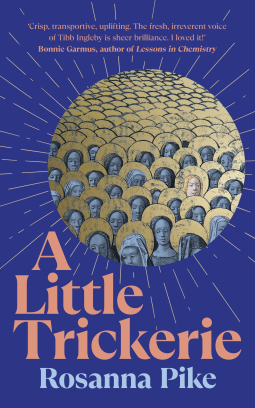
The Fox Wife by Yangsze Choo

The famous scholar Ji Yun, who was obsessed with foxes, said: Humans and things are different species, and foxes lie between humans and things; darkness and light take different paths, and foxes lie in between darkness and light.

Like Yangsze Choo’s previous two novels, The Ghost Bride and The Night Tiger, The Fox Wife is a fascinating blend of history, fantasy and folklore. It takes as its premise the idea that fox spirits, who play a large role in Chinese and Japanese mythology, really exist and can take on the appearance of human beings.

Beginning in Manchuria in the winter of 1908, one thread of the novel follows Bao, an elderly private detective who has been called in to investigate the death of a young woman. The woman’s body was found frozen in the doorway of a restaurant and people are already starting to whisper that she was lured to her death by foxes. Ever since he visited a shrine to a fox god as a child, Bao has been blessed, or maybe cursed, with the ability to detect truth from lies. Now, he hopes he can use that gift to find out what happened to the woman found dead in the cold.

In chapters that alternate with Bao’s, we meet Snow, or Ah San, a white fox spirit who is searching for the man she blames for the death of her daughter two years earlier. Snow has taken the form of a human woman and joined the household of a Chinese medicine seller. In her position as maid, she is able to accompany the family on a trip to Japan where she hopes for an opportunity to take her revenge.

At first, the two threads of the novel are very separate; Bao’s story is written in the third person and focuses on his investigations, with some flashbacks to his childhood; Snow’s narrative is in first person, giving it a more intimate feel. Eventually, their paths begin to converge, producing some interesting plot twists and revelations. We also find that there’s not just one fox in this story, but who are the others and what is their relationship with Snow? It takes a long time for everything to unfold and for a while in the middle of the book I thought it was starting to drag, but the pace does pick up again towards the end.

My knowledge of Chinese folklore is sadly very limited, so I enjoyed learning more about the significance of fox spirits, their characteristics and powers, and some of the myths and folktales that have been told about them. With the novel being set partly in Japan as well as in China, we also see how similar myths and legends about foxes cross over into Japanese culture. It’s all very fascinating, and whenever my attention was starting to wane due to the slow, meandering plot, there would be another passage about foxes that would grab my interest again.

I had mixed feelings about The Fox Wife, then, but I’m pleased to have had the opportunity to learn something new! It’s definitely worth considering this one – and Yangsze Choo’s others – if you have any interest in Chinese myth.

Thanks to Quercus Books for providing a copy of this book for review via NetGalley.

Book 6/50 for the Historical Fiction Reading Challenge 2024
A Lady to Treasure by Marianne Ratcliffe – #ReadIndies

I enjoyed Marianne Ratcliffe’s previous book, The Secret of Matterdale Hall, a Victorian Gothic novel set at a Yorkshire boarding school, so I was happy to try her new Regency romance, A Lady to Treasure. I had some doubts as to whether I would like this one as much, as Gothic novels are usually more to my taste than romances, but it actually turned out to be my favourite of the two. Both books are published by Bellows Press.

Louisa Silverton is the daughter of a rich American businessman. With the onset of the 1812 War, the Silvertons are beginning to experience financial uncertainties and Louisa is sent to stay with family in England, in the hope that she can find a wealthy husband there. Arriving at Athelton Hall in Northamptonshire, she quickly settles in, forming a friendship with her cousin, Eleanor, and getting to know the neighbouring families.

From her father, Louisa has gained a knowledge of accounting – ‘her first toy was an abacus and her earliest reading matter business receipts, from which she learnt to add and subtract’ – and she is able to use her skills to assist Sarah Davenport, who lives at nearby Kenilborough Hall. The Kenilborough estate is falling into debt due to the mismanagement of Sarah’s father, Lord Kenilborough, and the gambling habits of her stepbrother, and it has been left to Sarah to try to salvage the situation. As Louisa spends more time with Sarah, advising her on how to increase the profitability of the estate and deal with unscrupulous business associates, the two slowly become aware that what they feel for each other is more than just friendship.

The romance element of the book is more subtle and understated than I expected. Louisa and Sarah don’t immediately recognise their feelings as romantic love and it takes them a long time to start to act on it, particularly as they have other matters to deal with, such as Sarah attempting to save Kenilborough and Louisa trying to keep her father happy by looking for a rich husband. I liked both of them, particularly the independent, outspoken Sarah (a character very like the historical Anne Lister, or ‘Gentleman Jack’). Despite Sarah being an unconventional character, I still believed in her, and in Louisa, as realistic 19th century women; nothing in the book felt anachronistic or unconvincing.

As well as the two main characters, there’s also a strong supporting cast – I found Louisa’s cousin, Eleanor, an interesting character as she has curvature of the spine and therefore doesn’t conform to Regency society’s idea of how a woman should look. I wanted Eleanor to find happiness as much as I wanted Louisa and Sarah to do the same!

I knew after reading Matterdale Hall that I liked Marianne Ratcliffe’s writing style. Writing that feels too modern can pull me out of historical fiction and break the spell, but that’s not the case here – the language is carefully chosen to suit the time period and add to the overall sense of authenticity. I hope for more books from this author in the future, having enjoyed these two so much.

Thanks to the author for providing a copy of this book for review.

Bellows Press is a small independent publisher that works with “unagented, unorthodox writers of fiction, particularly queer writers, writers of colour and writers from marginalised genders.”

The Bone Hunters by Joanne Burn

The cliffs and beaches of Lyme Regis on the south coast of England are famous for their fossils, particularly the remains of dinosaurs and other prehistoric reptiles, some of which were discovered in the 19th century by the fossil collector and scientist, Mary Anning. In her new novel The Bone Hunters, Joanne Burn takes inspiration from Anning’s life and work to create the fictional story of another female fossil hunter, Ada Winters.

Ada is twenty-four years old when her story begins in 1824. Since her father’s death, she and her mother have been struggling to pay the rent and are at risk of losing their little cottage by the sea. Much to her mother’s frustration, Ada is reluctant to look for a job, instead spending her days wandering on the beach and insisting that the collection of bones and fossils she is acquiring will one day make their fortune. Ada receives a setback when her request to join the Geological Society of London is rejected, but her disappointment turns to excitement when she discovers what she believes to be the remains of a previously unidentified species.

When Ada meets another geologist, Dr Edwin Moyle, by the cliffs one day, she must decide whether to trust him with what she has found. Edwin’s support means she will be more likely to be taken seriously when she presents her discovery to the Society, but what if he tries to claim the skeleton for himself? Having come so close to achieving her dream, Ada is determined not to let anyone take it away from her!

The Bone Hunters is a beautifully written novel. I loved the descriptions of the landscape – the beach, the harbour, the cliffs of Black Ven with their ‘dark, forbidding crag face looming high above’ – and the town itself. The relationship between the people of Lyme and their natural environment is something that comes up again and again throughout the book: the dangers of landslides that can happen without warning; the severe flooding that can destroy homes and take lives. It’s one of those novels where the geographical setting takes on as much importance as the characters and the plot.

As I read, it was difficult not to make comparisons with Remarkable Creatures, Tracy Chevalier’s novel about Mary Anning, but I think I enjoyed this one more. Inventing a character based on Anning rather than writing about Anning herself allowed Joanne Burn to bring more drama into the story and to introduce other fictional characters and storylines. I particularly liked Josiah and Annie Fountain, an elderly couple who run a bookshop together and have taken Ada under their wing, and Isaac, a young man who has come to Lyme to collect local myths and legends. Ada herself frustrated me because of her single-mindedness and selfishness – I felt sorry for her mother who was making herself ill washing fleeces in a factory all day while Ada refused to go to work – but at the same time I could admire her ambition and determination as a woman trying to make a name for herself in a male-dominated field. As for Edwin, part of the story is written from his point of view which adds an extra angle of interest, but I won’t tell you whether he turns out to be hero or villain!

Joanne Burn is a new author for me. I haven’t read either of her previous novels, but I do now want to read The Hemlock Cure, based on the real life story of the village of Eyam during the Great Plague.

Thanks to Little, Brown Book Group UK for providing a copy of this book for review via NetGalley.

Book 5/50 for the Historical Fiction Reading Challenge 2024

Cuddy by Benjamin Myers

Cuddy is a nickname given to St Cuthbert, the Anglo-Saxon monk, bishop, hermit and saint who lived during the 7th century. He is associated with the island of Lindisfarne (Holy Island), where he spent many years of his life, and with Durham Cathedral, where he is buried, and these are both places I have visited several times, which is what drew me to this novel by Benjamin Myers. The publisher’s description of it as “a bold and experimental retelling of the story of the hermit St. Cuthbert” made me reconsider, as I’ve discovered over the years that experimental books usually aren’t for me, but I decided to give it a chance anyway.

The first section of the book is set in 995, more than three hundred years after the death of St Cuthbert, and is told from the perspective of Ediva, a young woman who accompanies a group of monks as they transport Cuddy’s remains to his new resting place in Durham. We then move forward several centuries in time and join the masons who are repairing the cathedral stonework in 1346. The third section is a ghost story set in 1827 when an Oxford professor, Forbes Fawcett-Black, is invited to attend the opening of Cuthbert’s tomb. Finally, the last part of the book introduces us to Michael Cuthbert, a young man living in a village near Durham in 2019 who is offered a job as a labourer during restoration work at the cathedral.

Each of the four parts could work as a standalone story, but there are also several links between the four, some of which are easy to spot and some that are more obscure. There’s always an ‘Ediva’-type character – one who fills the role of cook or healer, who sees visions and hears the voice of Cuddy – and there’s always a young man with owl-like eyes:

He has brilliant wide eyes that peer into your very
centre
Eyes that seem not to blink. Eyes that one day are
blue
and the next jade, then anthracite and once, red.

The quote above, describing the ‘Owl Boy’, is an example of the writing in the first section of the book, which takes the style of a narrative poem. I don’t think I could have read a whole book written like this, but could cope with it for a few chapters and I thought it was quite effective in creating a mystical, dreamlike atmosphere that suited the time period and the story being told. Myers also finds an appropriate voice and style for each of the other parts of the novel – for example, the 19th century ghost story, The Corpse in the Cathedral, is told through the diary entries of the Professor and is written in a very formal style which suits his character.

My favourite part of the book was actually the modern day story at the end. I loved Michael Cuthbert, who is struggling to care for his dying mother at home while trying to support them both by taking whatever work he can get, and I enjoyed watching him form a friendship with Evie, a kindhearted young woman who works in the cathedral restaurant. I found Michael and Evie’s story very moving and would have been happy to have read a whole book about them!

As for St Cuthbert himself, his own story is related to us through brief excerpts from a wide range of sources including books, essays and articles which are all acknowledged at the end of the book. It’s a lot to take in and digest and I think to really understand who Cuthbert was and why he is significant you would probably need to read some of those sources in full. However, this is a good introduction!

Thanks to Bloomsbury Publishing Plc for providing a copy of this book for review via NetGalley.

Book 4/50 for the Historical Fiction Reading Challenge 2024
The Spendthrift and the Swallow by Ambrose Parry

I loved the first four novels in Ambrose Parry’s Raven and Fisher mystery series and although there doesn’t currently seem to be any news of a fifth, I was pleased to come across this digital short story available free for Kindle. It fits into the series chronologically between the third and fourth books but if you come to it late, as I did, it doesn’t matter at all as it works as a standalone story.

Ambrose Parry is a pseudonym used by the crime author Chris Brookmyre and his wife Dr Marisa Haetzman, a consultant anaesthetist. Marisa’s knowledge is crucial to the series, which is set against the backdrop of the medical world of 19th century Edinburgh. Our two main characters are Dr Will Raven, assistant to the renowned Scottish obstetrician Dr James Simpson, and Sarah Fisher, who also assists at Simpson’s clinic but is struggling to find a way to achieve her own dream of becoming a doctor. Each book in the series features a mystery to be solved, as well as details of Victorian medical procedures and treatments.

The Spendthrift and the Swallow is only 52 pages long, including a preview for Voices of the Dead, and can easily be read in about twenty minutes. The story is set in January 1853 and we follow Will and Sarah as they investigate the death of one of Dr Simpson’s patients, Cora Carlton, the wife of an entrepreneur. The circumstances of Cora’s sudden death could raise questions over the doctor’s medical abilities, so Will and Sarah hope to uncover the truth quickly enough to save his reputation. Meanwhile, Simpson has begun experimenting with the increasingly popular science of mesmerism and places a loud and difficult patient under hypnosis with startling results. I was interested to read in the author’s note at the end of the book that both of these incidents were based on real historical cases.

If you’re new to the Raven and Fisher books, reading this story first wouldn’t be a problem as it doesn’t really spoil anything from the main series and it’s a satisfying mystery in its own right. However, it’s too short for any character development or any background information to help you understand the relationship between Sarah and Will and what has happened to them up to this point. My recommendation is to start with the first full-length novel, The Way of all Flesh. For existing Parry readers, though, this is an entertaining little book and provides an introduction to the mesmerism storyline that will play such a big part in Voices of the Dead.

Book 3/50 for the Historical Fiction Reading Challenge 2024