The Ambassador’s Daughter by Pam Jenoff

It’s 1919 and twenty-year-old Margot Rosenthal has accompanied her father, a German diplomat, to Paris for the Peace Conference that has been arranged following the end of the First World War. At first Margot is unhappy in the French capital – even though the war is over, she and her father are still thought of by the Allies as ‘the enemy’, while their Jewish background means they are viewed with suspicion by their fellow Germans – but the alternative is to return to Berlin, where her wounded fiancé Stefan awaits. Margot had agreed to marry Stefan before he went away to fight in the war, but now that he is back she’s no longer sure whether she wants to go ahead with the wedding.

Life in Paris becomes more interesting for Margot when she makes two new friends. One is Georg Richwalder, a former naval officer who has arrived with the German delegation; the other is Krysia Smok, a Polish pianist who introduces her to a group of political activists. When one of Krysia’s radical friends starts to put pressure on Margot to obtain information on Germany’s plans from Georg, suddenly Stefan and the wedding seem the least of her problems!

The Ambassador’s Daughter is a prequel to The Kommandant’s Girl and The Diplomat’s Wife, neither of which I have read, but that didn’t matter at all as this one works as a standalone novel. In fact, I suspect it’s probably better to start with this book anyway as it comes first chronologically. I do wish authors and publishers would move away from ‘wife’ and ‘daughter’ titles (which I discussed in one of my Historical Musings posts), but this series was written before that seemed to become such a popular trend, so I can be more forgiving!

Although I have read a lot of novels set during and just after World War I, I don’t think I’ve ever read anything specifically about the Paris Peace Conference, so I found that aspect of the book interesting. The German delegation was kept on the sidelines during the negotiations and excluded from decision-making, not being officially called to the conference until the details of the treaty had already been agreed upon. Because the Germans played such a minor role in all of this, it doesn’t form a big part of the novel, but I think Jenoff does a good job of showing how frustrating it was for diplomats such as Margot’s father to be kept out of making the important decisions that would affect their own country’s future.

The espionage element of the story is also well done, as we wait to see whether Margot will really betray Georg and Germany – and if so, whether she will be caught? However, a twist that comes near the end of the book is very obvious and because I had predicted it so quickly, it took away some of the suspense. The main focus of the novel, though, is not the conference or the spying, but Margot’s personal story and her relationships with Georg and Stefan, so if you’re not interested in romance, this probably isn’t the book for you. Overall, I found it quite enjoyable, but I’m not sure whether I would read anything else by Pam Jenoff – although I was intrigued by the character of Krysia and it seems she also appears in The Kommandant’s Girl, so maybe I could be tempted.
The Secret Keeper by Kate Morton

There are many events taking place in the book blogging calendar this month and AusReading Month hosted by Brona’s Books is one of them. I have a few books by Australian authors waiting to be read, but I decided to read one that has been waiting a long time: Kate Morton’s 2012 novel, The Secret Keeper. I’ve previously read three books by Morton and had mixed experiences with them; I loved The Forgotten Garden but was slightly disappointed in both The Distant Hours and The Clockmaker’s Daughter, so wasn’t sure whether I wanted to bother with this one. I’m pleased I did, because I enjoyed it much more than I expected to.

Like Morton’s other books, The Secret Keeper is set in multiple time periods. It begins in 1961, with sixteen-year-old Laurel Nicolson hiding in a wooden tree house during a family celebration. Laurel just wants some time alone to think, but this means that, from her position in the tree, she is able to see a strange man approaching the Nicolson farmhouse – and is witness to a violent crime involving her mother, Dorothy. We then jump forward fifty years to 2011, when the Nicolsons are gathering at their childhood home for Dorothy’s ninetieth birthday. Laurel, now a successful actress, is still haunted by what she saw on that long ago day and decides that, with Dorothy in poor health, she needs to find out what really happened before her mother dies and takes her secrets with her.

As Laurel begins to investigate her mother’s past, the novel moves back and forth between 2011 and 1940s London where the young Dorothy is looking forward to marrying war photographer Jimmy as soon as their financial situation improves. Dorothy has also made a new friend (or so she thinks): the beautiful, wealthy Vivien, who lives in the house opposite. But when she is betrayed by Vivien, Dorothy puts together a plan of revenge – with unexpected and tragic results.

As is usually the case when I read books set in more than one time period, it was the historical one I enjoyed the most. The present day story was interesting – I enjoyed Laurel’s interactions with her younger brother Gerry, who helps her to uncover the truth about their mother – but I felt that it was effectively just a frame for the much more compelling story of Dorothy, Jimmy and Vivien. I was surprised by how absorbed I became in these parts of the novel, considering that I found Dorothy a particularly unpleasant and irritating character! I did like Jimmy, was intrigued by Vivien and loved the wartime setting, especially as things build to a climax during the London Blitz.

Somewhere in the second half of the book I started to have some suspicions regarding Laurel’s mother and the secrets she was hiding, but this came late enough that it didn’t spoil my enjoyment of the story and I was pleased to find that my guess was correct. Of Kate Morton’s other books, I only have The House at Riverton and The Lake House left to read. Which should I read first?

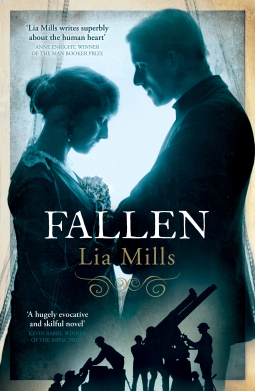
Fallen by Lia Mills

Liam Crilly is one of the ‘fallen’ – one of the many young men to be killed in action on the battlefields of World War I. When the tragic news reaches his family in Dublin, they each try to come to terms, in their different ways, with the terrible loss they have suffered. For his twin sister, Katie, losing Liam is like losing a part of herself and now all she has left of him are memories and the letters he sent home from the Western Front. Denied the chance to continue her education at university because her parents don’t believe it’s necessary, Katie finds solace in assisting Dorothy (Dote) Colcough, a friend and scholar, with the research for a new book she is writing.

Through Dote, Katie meets Hubie Wilson, an army officer who had fought with Liam in France and is now recovering at home after losing a hand. Katie is desperate to learn anything she can about Liam’s last days and Hubie is pleased to have found someone who is willing to listen to him talk about his traumatic experiences. Then, just as a relationship is beginning to form between the two of them, another violent conflict breaks out: the Easter Rising of 1916. Now, Katie’s priority is to keep her friends and family safe as armed insurrectionists take to the streets of Dublin with the aim of establishing an Irish Republic.

We actually learn very little about the Easter Rising itself – what lead to it, the politics behind it, how it ended or what the outcome was – and as this is not a subject I know much about myself, I was left feeling a bit lost and confused. However, I think that was probably intentional; the focus of the book is on the ordinary people of Dublin and how they coped with the violence going on around them in the city. Written from Katie’s point of view, she has a limited knowledge of what is happening behind the scenes, but describes to the reader the things she can see and hear for herself: the gunshots, the roadblocks, the looting of shops, the smashed windows and the fires burning in the streets. I couldn’t help thinking that she seems to move very easily from one part of the city to another, considering how dangerous it was supposed to be, but otherwise these sections of the novel feel vivid and real.

The personal side of the story was of less interest to me, which I think is because of the choice of Katie as narrator. I just didn’t find her a particularly engaging character; she’s a woman in her twenties, but her narrative voice makes her seem much younger – and I wasn’t really convinced by the romance with Hubie either. Some of the other characters appealed to me more, such as Liam’s grieving fiancée, Isobel, who feels shut out by the Crilly family after Liam’s death, and Katie’s new friends Dote and May, two unconventional women who are trying to live their lives the way they want to live them. I was sorry we didn’t spend more time with these characters, as I think their stories would have interested me more than Katie’s!

Fallen was selected as the One Dublin One Book choice for 2016, an initiative which encourages people to read a book connected with the Irish capital every April. I’m obviously very late with this one, but I can see why it was chosen, for the unusual perspective it offers on such an important event in Dublin and Ireland’s history.

Book 50/50 read for the 2021 Historical Fiction Reading Challenge.

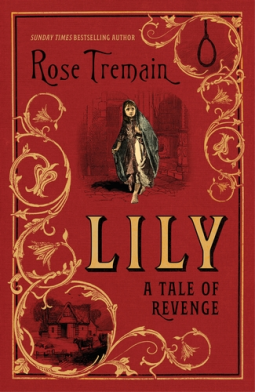
Lily by Rose Tremain

From the opening pages of Rose Tremain’s new novel, we know that Lily Mortimer is a murderer and that she expects to hang for what she has done. What we don’t know is who the victim was and what drove a young woman like Lily to commit such a terrible crime. To find the answers we have to go back in time, to a cold winter’s night in 1850 when policeman Sam Trench finds a baby abandoned by the gates of a London park. Sam takes her to the London Foundling Hospital where she is given the name Lily and sent to live with a foster family in the countryside. This is only a temporary arrangement – children are expected to return to the Hospital once they reach the age of six – but Lily’s foster parents, Nellie and Perkin Buck, grow to love the little girl and they are all heartbroken when the time comes for them to separate.

Back at the Foundling Hospital, Lily feels trapped and unhappy; she and the other children are badly treated by the women who are employed to take care of them and Lily herself seems to be singled out for the worst punishments. As the years go by, Lily becomes an adult and starts work as a wigmaker at Belle Prettywood’s Wig Emporium – but even though she has left the orphanage behind, she is still haunted by the events of her childhood.

After being disappointed by Rose Tremain’s last book, Islands of Mercy, I found this a much more compelling read. It took me a while to get into it as the timeline jumped around so much at the beginning, constantly moving from Lily’s present to her past and back again, which felt disjointed and confusing – and the absence of chapter breaks didn’t help – but eventually things settled down and I was drawn into the story. There are shades of Jane Eyre, particularly in the parts of the book that deal with Lily’s relationship with another orphan, Bridget, and I was also reminded of Stacey Halls’ The Foundling, another novel set partly in the London Foundling Hospital (although this book has a very different plot).

The Hospital – also known as Coram, after its founder Thomas Coram – is vividly described and comes to life as a grim, forbidding place where the abandoned children are made to pay for the ‘sins of their mothers’. Although Lily is occasionally shown some kindness by people such as her benefactress Lady Elizabeth Mortimer, most of the treatment she receives at Coram is harsh and cruel. It seemed such a shame to me that the children weren’t allowed to stay with foster families who loved and wanted them, although I understood that the idea of returning them to the Hospital was so that they could learn the skills that would equip them for life in Victorian society.

This is a bleak novel, but also quite a moving one and despite knowing that Lily considered herself a criminal, I had a lot of sympathy for her from the beginning and hoped that her story would have a happier ending than the one she was expecting. I would recommend Lily not just to Rose Tremain’s existing fans, but also to anyone looking for a dark Victorian tale to immerse themselves in this winter.

Thanks to Vintage for providing a copy of this book for review via NetGalley.

Book 49/50 read for the 2021 Historical Fiction Reading Challenge.

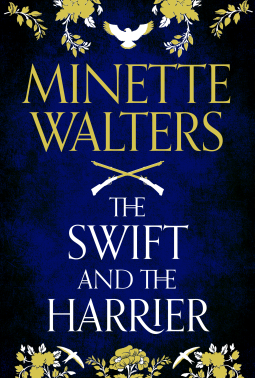
The Swift and the Harrier by Minette Walters

Minette Walters is better known as a crime writer, but she has made some forays into historical fiction in the last few years with The Last Hours and The Turn of Midnight, both set in England during the Black Death of 1348. Although I didn’t love either of those books, I did find them interesting, so I was keen to try her new one, The Swift and the Harrier, which is set in a completely different time period.

It’s 1642 and England is divided by civil war. On one side, the supporters of King Charles I; on the other, the Parliamentarians. In the middle, refusing to commit to either group, is Jayne Swift, a Dorset physician – although, as a woman, she is not allowed to officially give herself that title. The reason for her neutrality is that she values all human lives and doesn’t believe in denying treatment to someone in need just because they are the enemy. Most people, however, do take sides and Jayne finds that there are divisions within her own family.

Visiting her Puritan cousin in Dorchester one day, Jayne finds herself caught up in a crowd gathering to watch the hanging of some Catholic priests. She is rescued by a neighbour, Lady Alice Stickland, who introduces Jayne to her footman, William Harrier. Even on that first meeting, Jayne can’t help feeling that William doesn’t behave at all like a servant and, as their paths cross again and again, she begins to wonder who he really is. Footman, nobleman or soldier? Royalist or Parliamentarian? William is an enigma and Jayne must decide whether he can or cannot be trusted.

The Swift and the Harrier provides a wonderfully detailed depiction of life in the south of England during the Civil War. Real historical characters such as Oliver Cromwell and Prince Maurice (Charles I’s nephew) appear now and then and have a part to play in the story, but the main focus is on the ordinary people of Dorset and the impact the war has on them. I found the section of the book set during the Siege of Lyme Regis particularly interesting as I can’t remember reading much about it before, certainly not in as much detail as this.

However, I had difficulty believing in Jayne Swift as a 17th century woman. While I could maybe accept the premise that she had received some medical training from a male physician friend, I felt it was completely unrealistic that she would be able to practise her medicine so openly in the 1640s. The challenges she faces in getting the men she meets to accept her as a doctor seem to be very easily overcome and there is no sense of the danger Jayne would surely be in due to the witch hunts sweeping England at that time, when women with even a basic knowledge of healing and herbal remedies were at risk of accusations of witchcraft. Although I did find the plot quite gripping and enjoyed getting to know William Harrier and some of the secondary characters such as Alice Stickland, the fact that I found Jayne and her circumstances so unconvincing stopped me from becoming fully absorbed in the story.

Thanks to Allen & Unwin for providing a copy of this book for review via NetGalley.

Book 48/50 read for the 2021 Historical Fiction Reading Challenge.

The Royal Game by Anne O’Brien

With a title like The Royal Game, you might expect this novel to be about a king or a queen; in fact, it’s the story of the Pastons, who rose from humble origins to become members of the aristocracy and one of Norfolk’s most influential families during the 15th century. Their collection of personal letters, known as the Paston Letters, is the largest archive of private correspondence surviving from the period and tells us a lot about life in England at that time.

The Pastons’ story is retold by Anne O’Brien in fictional form, using the letters as a guide. She has chosen to focus on three characters in particular: Margaret Mautby Paston, wife of John Paston, who becomes head of the family after the death of his father; John’s sister Elizabeth (known as Eliza); and Anne Haute, a cousin of Edward IV’s queen, Elizabeth Woodville. There are chapters written from the perspectives of each of these women, mainly Margaret and Eliza at first, with Anne only introduced halfway through and becoming more prominent towards the end of the book.

During the period covered in the novel, the Wars of the Roses are playing out in the background as the House of Lancaster and the House of York fight for control of England’s throne. The Pastons are an ambitious family who see the changing political situation in terms of what it will mean for them and how they can turn things to their own advantage in order to increase their wealth and power. This means that much of the story is concerned with the gaining and losing of properties and land, disputes over wills and controversies surrounding inheritances. In particular, estates left to John Paston by his patron Sir John Fastolf (the inspiration for Shakespeare’s Falstaff), become the subject of a long legal battle.

I liked this book much more than Anne O’Brien’s previous one, The Queen’s Rival, partly because this one is written in a more straightforward format – although with the alternating narrators I mentioned above. I felt that the narrative voices of Margaret and Eliza were very similar and sometimes I had to remind myself which one I was reading about, but this was less of a problem as I got further into the book. Margaret is portrayed as a strong, intelligent and resourceful woman working alongside her husband to hold on to the family property, while Eliza is being badly treated by her mother and desperately hoping for marriage as a way of escape. Eventually, both women find themselves with the same focus in life: to protect their children’s titles and inheritances from jealous rivals who are trying to claim them for themselves. Our third narrator, Anne Haute, who is depicted as another young woman with ambition and hopes of an advantageous marriage, seems unconnected to the other two at first, but quickly becomes drawn into the Pastons’ world.

The Wars of the Roses is one of my favourite historical periods to read about and it made a nice change to move away from the usual novels set at the royal court or on the battlefields and see what was going on elsewhere in the country at that time. I enjoyed this book but it’s very long and detailed and I was surprised when I reached a cliffhanger ending and discovered that there’s going to be a sequel. I will look out for it, but while I wait maybe this would be a good time to read my copy of Blood & Roses, Helen Castor’s non-fiction book about the Paston family.

Thanks to HQ for providing a copy of this book for review via NetGalley.

Book 47/50 read for the 2021 Historical Fiction Reading Challenge.

Black Drop by Leonora Nattrass

The final decade of the 18th century is a time of revolution and political upheaval; in 1794, the year in which Black Drop is set, Britain is both at war with France – a country still in the grip of the Reign of Terror – and trying to negotiate a treaty with the recently independent America. Our narrator, Laurence Jago, is a London clerk working in the Foreign Office and facing the difficult task of trying to advance in his career while also hiding a secret that, if discovered, would lead to accusations of treason.

When details of Britain’s military plans are leaked to the press, suspicion falls at first on Jago – but then the blame shifts to another clerk, Will Bates, who is found to have hanged himself in his room. Was Will really the traitor or is he being used as a convenient scapegoat? Jago is sure he was innocent and that his death was actually murder rather than suicide so, with the help of his friend, the journalist William Philpott, he sets out to discover the truth.

I enjoyed this book, although it was more political thriller than murder mystery and I occasionally felt that the plot was becoming more complicated than it really needed to be; I struggled to keep track of all the characters, their roles within the government and which of them may or may not be a spy. Overall, though, it was a fascinating period to read about, with so much going on in the world at that time – not only the French Revolutionary Wars and American treaty mentioned above, but also the fight for political reform led by the British shoemaker Thomas Hardy (not to be confused with the author of the same name!) and the growing debate over slavery and abolition.

Laurence Jago is a great character and the sort of flawed hero I love. The ‘Black Drop’ of the title refers to the laudanum Jago depends upon to get through the day and to ease the fear of his secrets being discovered. As his addiction worsens, it begins to affect the way he judges people and situations and leads the reader to question whether or not everything he is telling us is completely reliable. Despite this, I liked him very much and connected with his narrative style immediately. Jago is one of several fictional characters in the novel whom we see interacting with real historical figures such as Thomas Hardy, Lord Grenville, the Foreign Secretary, and John Jay, the American envoy. I knew nothing about any of these people before reading this book; it’s always good to learn something new!

Black Drop is Leonora Nattrass’ first novel. The way this one ended made me think there could be a sequel, but if not I will be happy to read whatever she writes next.

Thanks to Viper for providing a copy of this book for review via NetGalley.

Book 46/50 read for the 2021 Historical Fiction Reading Challenge.

Book 7 for R.I.P. XVI