The Infernal Riddle of Thomas Peach by Jas Treadwell

READER! – Good-day to you!
And good-morrow, too! for our acquaintance is destined to be long. We are sure of it. We see it in your eye –

Who is Thomas Peach? Why has he fled London to take up residence in a quiet country village in Somerset? What is in the locked chest he keeps hidden beneath the stairs? Why does Mrs Peach never leave her bedroom and why is she not permitted visitors? Does she even exist – and if not, who is it that Thomas talks to at night, when the curious maidservant stands with her ear to the bedroom door?

These are the questions our narrator, an unnamed person who describes themselves as a necromantic historian, sets out to answer in this strange and fascinating new novel by the equally mysterious Jas Treadwell. By the end of the book, we have answers to these questions, as well as some others that are raised along the way, but what makes this such an intriguing and entertaining read, in my opinion, is not the plot so much as the style in which the book is written. Not everyone will agree, of course; I think whether or not you will enjoy Thomas Peach could depend on how you feel about the sort of book it is parodying – the 18th century novel.

Set in 1785, the book imitates the fiction of that time, with the narrator speaking directly to the reader, commenting on what has happened and what is about to happen and providing footnotes where they feel further information is necessary. If you’ve read Susanna Clarke’s Jonathan Strange and Mr Norrell, you will have an idea of what I mean, although the narrator in this book is much more intrusive and is there with us through every turn of the page. Chapter Ten, for example, begins like this:

Like the rustic, who closes his eyes at sun-set, after his day of wholesome toil, and wakes again with the dawn, we omit the night altogether, by the simple method of opening our new chapter upon the following day.

This is probably the kind of writing you either like or you don’t; it does require some patience, as those 18th century authors never used one word when they could use ten! Treadwell draws heavily on the literature of the period and there are lots of references to Samuel Richardson’s huge 1748 epistolary novel Clarissa (which I was glad I had read, as it meant I knew what the narrator was talking about without having to rely on the footnotes!) as well as books by other authors such as Henry Fielding and Tobias Smollett. You don’t actually need to have read any of these books, but a familiarity with some of them will add to your experience of the novel.

Due to the leisurely pace of the novel and all the diversions and digressions, Thomas Peach’s story unfolds very slowly – and when his secrets do eventually begin to be revealed, I felt that beneath the clever writing, the plot was less complex, less magical and less satisfying than I had expected it to be at first. Still, I enjoyed meeting Thomas Peach and the other characters, particularly Clary, a young woman about whom I can’t really say anything at all without spoiling the surprise! Although I couldn’t read a lot of books like this as the style would quickly become irritating, this one kept me entertained.

Thanks to Hodder & Stoughton for providing a copy of this book for review via NetGalley.

Book 9/20 of my 20 Books of Summer.

Book 38/50 read for the 2021 Historical Fiction Reading Challenge.
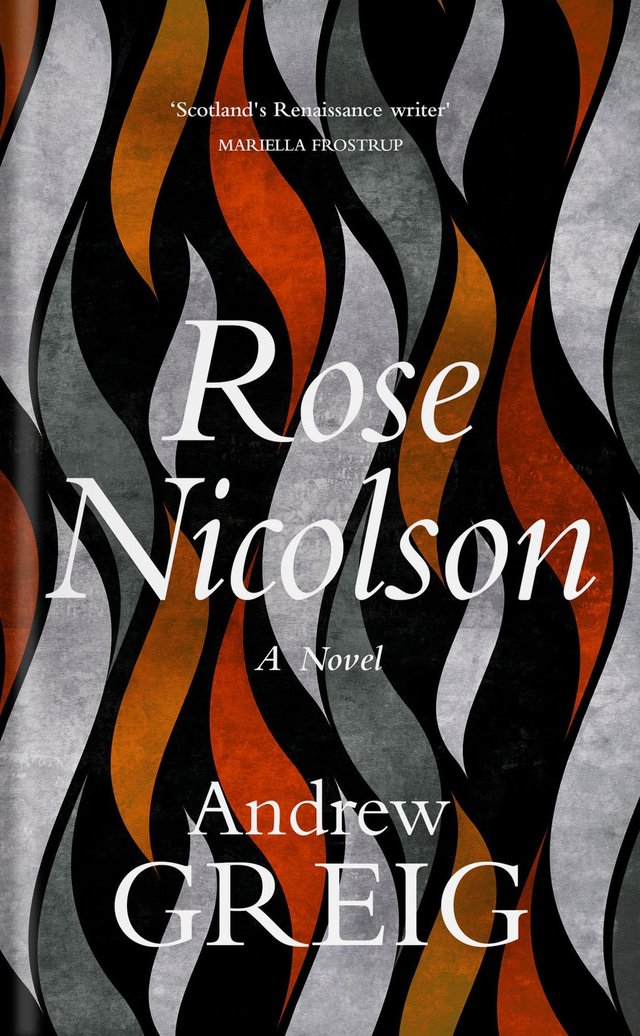
Rose Nicolson by Andrew Greig

I loved Andrew Greig’s last book, Fair Helen, a beautifully written historical novel based on a Scottish Border Ballad, so when I saw that his new one, Rose Nicolson, was going to be set in the same time and place I couldn’t wait to read it. Now that I’ve had the opportunity, I’m pleased to say that I enjoyed it just as much as Fair Helen and can highly recommend it to anyone interested in learning more about Scotland in the 16th century.

Rose Nicolson is a fictional account of the life of a real historical figure, William Fowler, a Scottish makar, or poet, and is presented as his memoir written as an older man looking back on his youth. His story begins in Embra (Edinburgh) in 1574: Mary, Queen of Scots has fled to England leaving her young son, James VI, on the throne, but the real power is held by the Earl of Morton, the latest of four regents to govern Scotland during the young king’s minority. The Protestant religion now dominates but there are still those who have not given up hope of restoring Mary to the throne and returning Scotland to the Catholic church. It is during this time of political and religious uncertainty that William Fowler, the only son of an Edinburgh merchant family, sets out for St Andrews where he will become a student at the university.

William’s time in St Andrews is vividly described: the education he receives; the enlightening conversations and debates on topics such as philosophy, religion, politics and literature; his first tentative attempts at writing poetry; and the friendships he forms with the other students as they bond over drinks at the howff (pub) or during a game of gowf (golf). As you can see, Andrew Greig sprinkles Scots dialect throughout his prose, as well as using language appropriate to the time period – apart from one or two words and phrases here and there that I thought seemed out of place – and the overall effect is a narrative style that feels authentic and convincing. There’s a glossary at the end of the book for anyone who needs it, but I found it easy enough to read without it.

You may be wondering where Rose Nicolson comes into the story. Well, she’s the sister of a friend William makes at university, Tom Nicolson. Rose and Tom are from a Fife fishing family, but while Tom has been given the opportunity to study and to pursue an academic life, that is not possible for Rose. William is captivated by her intelligence, courage and quick mind, but a marriage is already planned for Rose with a local fisherman, so despite William’s love for her it seems that she will never be his wife.

As well as the romantic thread of the novel and the academic one, we also learn a lot about the period of history during which the story is set. The reign of Mary, Queen of Scots is well covered in historical fiction, but the early years of James VI’s reign are written about less often, which is a shame as it’s a complex, interesting and very eventful period. Many of the characters William meets in the novel are people who really existed; these include George Buchanan, the Scottish historian and humanist scholar, who recruits William as a spy; Esmé Stewart, the first of the young king’s many favourites; and most notably, Walter Scott of Branxholme and Buccleuch, the clever and charismatic border reiver who becomes a good friend of William’s and really deserves a whole book to himself! As for our hero William Fowler, I knew nothing at all about him until I read this book; I resisted the temptation to look him up online until I had finished, but it seems that he led a fascinating life. Rose Nicolson only covers the early part of his career, but it looks as though there’s enough material for several more books!

Thanks to Quercus Books for providing a copy of this book for review via NetGalley.

Book 37/50 read for the 2021 Historical Fiction Reading Challenge.

The Country of Others by Leïla Slimani

I’ve never read anything by Leïla Slimani until now, but her latest book, The Country of Others, sounded appealing to me – and as it’s translated from French, it means I can contribute to this year’s #WITMonth (Women in Translation Month).

Originally published as Le pays des autres and available now in an English translation by Sam Taylor, the novel is set in France and Morocco during the 1940s and 50s. Mathilde is a young woman from the Alsace region of France who, in the final years of World War II, falls in love with a Moroccan soldier, Amine, who has been fighting for the French. Bored with her life and looking for adventure, Mathilde marries Amine and moves with him to Meknes in Morocco where he has inherited some farmland. Here, as she struggles to settle into her new home, Mathilde begins to think she has made a huge mistake; this is certainly not the romantic, idyllic life she’d imagined herself leading. Loneliness, hostile neighbours, financial difficulties, an unhappy, abusive husband and political upheaval as Morocco tries to gain independence from France are just some of the problems Mathilde has to deal with.

Mathilde finds that the other French people in Meknes look down on her for marrying a Moroccan Muslim, while Amine’s Moroccan friends are suspicious of his white, European, Catholic wife. It’s not an easy situation for Amine either and he becomes torn between admiration for Mathilde and embarrassment at her refusal to behave the way he believes a woman should, which leads to some unpleasant scenes of domestic violence and cruelty. The novel is written from the perspectives of both Mathilde and Amine, as well as several more characters, all of whom are trying to find a place for themselves in this ‘country of others’: these include Aïcha, Mathilde and Amine’s daughter, who is aware that her mixed race makes her different from the other children at school; Selma, Amine’s teenage sister, a young woman who feels trapped in this male-dominated society and is desperate for freedom; and Omar, their brother, a fierce and violent man who has joined the fight for Moroccan independence and wants the French out of his country.

Although I did have a lot of sympathy for the circumstances in which most of the characters found themselves, many of them were such unlikeable people I found myself less moved by their stories than I would have expected. It didn’t help that the book is written in a strangely detached, passionless style, which I suppose is appropriate for the bleak and miserable events that are being described, but didn’t enable me to form any real emotional connection with any of the characters, not even Mathilde or Aïcha. Sometimes I almost felt that I was reading a work of non-fiction rather than a novel – and in fact, I discovered when I was halfway through the book that it’s the first in a planned trilogy drawing on Slimani’s own family history, which probably explains why it felt like a memoir.

Despite not particularly enjoying or even liking this book, I still found it interesting. I wasn’t really prepared for something so relentlessly depressing and completely without hope and I probably won’t continue with the other two books, but I do feel that I learned a lot from this one – about the challenges faced by interracial couples, the place of women in 1940s Moroccan society, and the political situation as the country moved towards independence. This was a worthwhile read, but I don’t think Slimani is an author for me.

Book 36/50 read for the 2021 Historical Fiction Reading Challenge.

St Martin’s Summer by Rafael Sabatini

St Martin’s Summer is a term used to describe a period of unusually warm weather taking place in early November – but the title of this Rafael Sabatini novel from 1909 has a double meaning, as the name of our hero is also Martin: Martin Marie Rigobert de Garnache. When a young heiress, Valerie de la Vauvraye, writes to the Queen of France requesting urgent help, Garnache is the man the Queen sends to her assistance. Valerie is betrothed to Florimond de Condillac, but Florimond has been away fighting in Italy for the last three years and in his absence his stepmother, the Marquise de Condillac, has been trying to marry the girl to her own son, Marius, instead. Can Garnache rescue Valerie from the Marquise’s clutches and reunite her with Florimond?

Having read Rafael Sabatini’s most famous novels, Scaramouche, Captain Blood and The Sea-Hawk, I have moved on to his lesser known titles and have had mixed success with the ones I’ve chosen so far; some I have enjoyed, while others have been disappointing. I had high hopes for St Martin’s Summer, which seemed to be a popular one and came highly recommended by a blog reader (thank you, Cheryl T) – and I’m pleased to say that it definitely lived up to my expectations.

First of all, it’s a lot of fun to read. Set in early 17th century France, the story itself is quite simple and straightforward, revolving entirely around Garnache’s attempts to free Valerie from her imprisonment in the Chateau de Condillac and the Marquise’s attempts to thwart him. What makes the book so entertaining, though, are the lengths both sides go to in their efforts to get one step ahead: there are duels, disguises, impersonations and all sorts of other tricks and deceptions, some of which are obvious to the reader, but not to the characters, who repeatedly fall into each other’s traps!

Garnache is a wonderful character. Like many of Sabatini’s heroes, he has great courage, a quick brain and an array of other skills and talents, but also one or two serious flaws – in this case an inability to keep his temper under control:

The greatest stumbling-block in Garnache’s career had been that he could never learn to brook opposition from any man. That characteristic, evinced early in life, had all but been the ruin of him. He was a man of high intellectual gifts, of military skill and great resource; out of consideration for which had he been chosen by Marie de Medicis to come upon this errand. But he marred it all by a temper so ungovernable that in Paris there was current a byword, ‘Explosive as Garnache.’

Garnache’s temper gets him into trouble and ruins his plans again and again, which is frustrating to watch but makes him a more believable and sympathetic character than he would otherwise have been. At the beginning of the book he also has a low opinion of women – he has remained single to the age of forty – but as he spends more time in the company of Valerie, as well as being forced to pit his wits against such a formidable female opponent as the Marquise de Condillac, he begins to change his views! The Marquise is obviously a great villain, but I also liked Garnache’s quick-thinking servant Rabecque, who is sometimes more perceptive than his master, and Monsieur de Tressan, the Seneschal of Dauphiny, a cowardly man who tries to ‘run with the hare and hunt with the hounds’.

I really enjoyed this book – it was so much better than my last Sabatini, The Minion, and I hope my next choice will be another good one!

~

Book 22/50 from my second Classics Club list

Book 35/50 read for the 2021 Historical Fiction Reading Challenge.

Book 8/20 of my 20 Books of Summer 2021

Cecily by Annie Garthwaite

This impressive first novel by Annie Garthwaite tells the story of one of the women at the heart of the Wars of the Roses. As a member of the powerful Neville family, wife of Richard, Duke of York and mother to two kings, Edward IV and Richard III, Cecily Neville was a strong and intelligent woman who managed to wield some political influence at a time when it was rare for women to do so. This makes her the ideal subject for a book set during this period – and in fact, there have already been several, such as Red Rose, White Rose by Joanna Hickson and The Queen’s Rival by Anne O’Brien.

Beginning in 1431 and ending in 1461, Cecily is set during the reign of Henry VI, whose weakness as king and inability to rule effectively leads to political instability and eventually to war. Cecily’s husband, Richard of York, is one of several noblemen trying to gain control of the king and his kingdom, while Henry’s young queen, Margaret of Anjou, does everything she can to hold on to power and keep the throne safe for her son. I won’t describe the plot of the novel in any more detail here; you may already be familiar with the history and if you’re not, it’s far too complex for me to explain in a few paragraphs! If you read the book, you’ll certainly learn all you need to know.

Cecily, as she is portrayed here, is not a very lovable or endearing person. She is driven by ambition and pushes her husband Richard towards first of all trying to displace Edmund Beaufort, Duke of Somerset, as the king’s closest adviser, and then to aim at the throne himself. As a medieval noblewoman, Cecily is obviously limited in what she can actually do – battles, for example, are played out in the background of her story and she only learns the outcome afterwards from other people – but she takes any opportunity she can find to shape the future of her family and her country, whether this means securing advantageous marriages for her children (she had twelve, seven of whom lived past infancy) or writing to Margaret of Anjou to try to get her husband restored to the king’s favour. Richard, in comparison, is portrayed as weaker and less decisive and Cecily, who almost plays the role of Lady Macbeth, becomes frustrated by his lack of ruthlessness.

The book is written in the third person present tense, which is not a favourite style of mine. I sometimes find it distracting and distancing, but in the hands of some authors it works very well and I think Annie Garthwaite does a good job of using it to give the story a feeling of immediacy, while also giving us access to Cecily’s intimate thoughts and feelings. I was often reminded of Hilary Mantel’s Wolf Hall – not just because of the writing style, but also because both books feature a complex, flawed protagonist and focus on political intrigue close to the throne. This is not the light and fluffy kind of historical fiction and it does require some concentration, particularly if this period of history is new to you. The only problem, for me, was a slight lack of emotion; Cecily’s story was fascinating, but I never felt very moved by it.

This novel only covers the early stages of the Wars of the Roses, ending with the Battle of Towton in 1461. As Cecily Neville lived until 1495, I hope there is going to be a sequel telling the rest of her story!

Thanks to Viking for providing a copy of this book for review via NetGalley.

Book 34/50 read for the 2021 Historical Fiction Reading Challenge.

I Will Repay by Baroness Emmuska Orczy

I haven’t been very successful recently at finishing the books chosen for me by the Classics Club Spins, so I decided to make an early start on my current Spin book, I Will Repay by Baroness Orczy – and have finished it three weeks before the 22nd August deadline! It helped that it was a relatively short book, as well as a light and entertaining one that I found easy to read.

First published in 1906, this was the first sequel to The Scarlet Pimpernel to be published, but if you’re reading the series in chronological order, as I am, it’s the fourth. I have previously read Sir Percy Leads the Band and The League of the Scarlet Pimpernel and found them both disappointing in comparison to the original book, but I’m pleased to say that this one was more enjoyable. Not everyone will agree, as we do see very little of the Scarlet Pimpernel and nothing at all of his wife Marguerite, but I thought it was quite an exciting and gripping story in its own right.

The novel opens in 1783 with Paul Déroulède and the young Vicomte de Marny fighting a duel in a Paris tavern. When the Vicomte is accidentally killed, his father, devastated at losing his son and heir, forces his other child, fourteen-year-old Juliette, to swear an oath promising to avenge her brother’s death: “May my brother’s soul remain in torment until the final Judgment Day if I should break my oath, but may it rest in eternal peace the day on which his death is fitly avenged.”

Ten years later, the Revolution is underway and Paris has become a dangerous place for a young noblewoman like Juliette:

And the afternoons were very lively. There was always plenty to see: first and foremost, the long procession of tumbrils, winding its way from the prisons to the Place de la Révolution. The forty-four thousand sections of the Committee of Public Safety sent their quota, each in their turn, to the guillotine. At one time these tumbrils contained royal ladies and gentlemen, ci-devant dukes and princesses, aristocrats from every county in France, but now this stock was becoming exhausted…

Walking through the streets one day, Juliette’s expensive lace-trimmed clothes draw the attention of a mob and she escapes from them by hammering on the door of the nearest house, which happens to be the home of Paul Déroulède. Paul, who has made himself popular with the citizens of Paris despite his own royalist sympathies, protects her from the mob and takes her into his household. As Juliette gets to know her brother’s enemy, she finds herself falling in love – so when a chance comes to send Paul Déroulède to the guillotine, she faces a very difficult decision.

You’re probably wondering where the Scarlet Pimpernel himself comes into the story; as I’ve said, we don’t see very much of him, but he does have an important role to play towards the end. However, the absence of the Pimpernel for most of the novel probably explains why this book was not more popular on its publication as people who were expecting a Scarlet Pimpernel book would have been disappointed. Personally, this didn’t really bother me as I was so caught up in the story of Juliette and Déroulède, and all the detail of this period of the French Revolution. The novel is set shortly after the assassination of Jean-Paul Marat, during the ‘Reign of Terror’, and Orczy does a wonderful job of recreating the atmosphere on the streets of Paris where anyone with a drop of noble blood risks being denounced and sent to their death. Orczy makes no secret of the fact that she is clearly on the side of the aristocrats, while the ordinary citizens of Paris are portrayed as brutal and bloodthirsty, but I suppose you would expect bias from someone who was a baroness!

Having enjoyed this one, I’m planning to continue with the next book in the series, The Elusive Pimpernel, which I’ve been told is one of the best.

This is book 21/50 from my second Classics Club list.

Book 33/50 read for the 2021 Historical Fiction Reading Challenge.
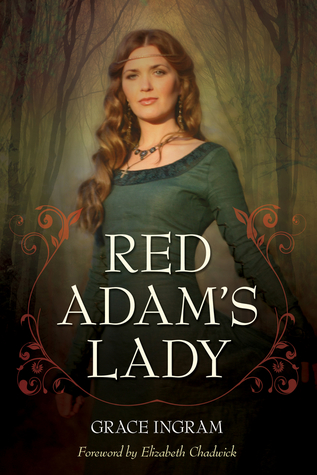
Red Adam’s Lady by Grace Ingram

Although Red Adam’s Lady was first published in 1973, I wasn’t aware of it until a few years ago when it was reissued by Chicago Review Press as part of their Rediscovered Classics series. This edition has a foreword by Elizabeth Chadwick, one of my favourite authors of medieval fiction, and knowing that she rates this book highly was enough to make me want to try it myself.

Julitta de Montrigord is taking shelter from the rain in an alehouse one evening when she is abducted by the drunken Red Adam de Lorismond, the new lord of Brentborough, who carries her off to his castle and into his bedchamber. She manages to defend her virtue by hitting him over the head with a stool and tying him to a bedpost, but is horrified when, in the morning, he insists on making amends by marrying her. Julitta can think of nothing worse – even being sent to a convent seems preferable to her – but her uncle and guardian sees his chance to form an importance alliance with Brentborough and she is eventually left with no option but to agree to the marriage.

Despite the efforts of Julitta’s new husband to redeem himself, she is determined that this will remain a marriage in name only. Meanwhile she has plenty of other distractions; after all, as Red Adam’s Lady she now has a castle to look after and servants to manage – including the jealous chatelaine, Constance, who seems set on making Julitta’s life as difficult as possible.

This vivid and detailed depiction of 12th century castle life is one of the things I particularly enjoyed about this novel. There’s nothing glamorous or fairytale-like about Brentborough Castle; when Julitta first arrives, she discovers that her new home is dirty, neglected and has been badly managed during the lifetime of the previous lord, Adam’s uncle, and it’s fascinating to see how she goes about setting things in order. Away from the domestic setting, we learn a little bit of what is going on elsewhere in the country, with Henry II’s son, the Young King, preparing to rebel against him and England’s nobility facing a choice between one side or the other. Julitta’s uncle and his friends are supporters of the Young King, but Red Adam’s loyalty to Henry II makes him a traitor in their eyes.

There’s also a mystery aspect to the novel, with Julitta and Red Adam trying to find out what really happened to the former lord’s pregnant wife, who was believed to have been murdered although no proof was ever found. When another young man claiming to be the true heir to Brentborough appears on the scene, it becomes more important than ever that the truth is uncovered at last.

As for the romantic element of the story, I think a romance that begins with the hero trying to rape the heroine is always going to be problematic from a modern point of view, though probably not so much in the 1970s when it was written. In this case, it seems so out of character for Adam that the whole opening scene felt to me a little bit contrived, as a way of getting Julitta into the castle and setting up the rest of the story. Apart from that, I thought the characters felt like believable and convincing 12th century people rather than present day people in medieval costume and there was none of the annoying anachronistic language I sometimes come across in the historical fiction being published today.

Grace Ingram’s other novels, Gilded Spurs and several that she wrote under the name of Doris Sutcliffe Adams, all still seem to be out of print. It would be nice if a publisher could give more of them the same treatment as Red Adam’s Lady and make them available to new readers.

Book 32/50 read for the 2021 Historical Fiction Reading Challenge.

Book 4/20 of my 20 Books of Summer 2021