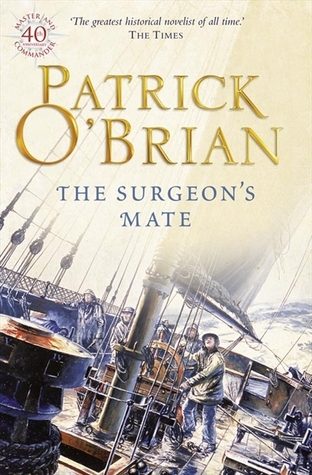
The Surgeon’s Mate by Patrick O’Brian

The Surgeon’s Mate is the seventh novel in Patrick O’Brian’s Aubrey and Maturin series. Every time I review one of these books I say that I’m not going to leave such a long gap before picking up the next one, but then I get distracted and before I know it two or three years have passed by! It was September 2017 when I read the previous book, The Fortune of War, so I was worried at first that I might struggle to get back into the story and was relieved to find that it wasn’t a problem. As soon as I started to read, the events of book six came back to me quite vividly.

If you have not yet met Captain Jack Aubrey and his friend, Dr Stephen Maturin, I would strongly recommend that you start at the beginning with Master and Commander. It will make it so much easier to follow the various storylines, which do continue from one book to the next, and to understand the complex relationships between the characters, particularly the one between Stephen and Diana Villiers.

This seventh novel opens with Jack, Stephen and Diana arriving in Halifax aboard the HMS Shannon following the Royal Navy’s victory over the American ship USS Chesapeake (a real event in the War of 1812). From Canada, they make their way home across the Atlantic to await further instructions. It’s not long before details of their next mission emerge: with his half-Catalan/half-Irish background, Stephen is required to travel to Grimsholm, a heavily fortified island in the Baltic, to persuade the Catalan army there to side with Britain against Napoleon. After seeing the pregnant Diana safely settled in Paris, Stephen accepts the job – on the condition that Jack Aubrey will command the ship on the voyage.

Jack is pleased to have a ship to command once again – and grateful to have an excuse to escape from the various entanglements of his life in England. Not only is he being cheated financially by a man he thought he could trust, he has also received a letter containing some unpleasant news from a woman he met in Halifax. The Baltic mission provides a welcome distraction, then, and at first things seem to be going well. Unfortunately, things then begin to go badly, and after a series of mishaps our heroes find themselves taken prisoner yet again!

I didn’t love this book quite as much as the previous two in the series; in fact, I felt that a lot of time was spent tying up some of the loose ends from those two and perhaps laying the foundations for the next one. There was still a lot to like, though; I enjoyed the sections set in Halifax and later in Paris and the details of Stephen’s work, both as a doctor and natural philosopher and as a spy, are always interesting. There are some funny moments too, although maybe not as many as in some of the earlier books; I loved Jack’s account of how he once played Ophelia in a sailors’ production of Hamlet:

‘Why, there was only one midshipman in the flagship pretty enough for a girl, but his voice was broke and he could not keep in tune neither; so for the part where she has to sing, I put on the dress and piped up with my back to the audience. But neither of us was going to be drowned and buried in real earth, Admiral or no Admiral, so that part fell to a youngster who could not defend himself; and that made three of us, do you see.’

I still struggle with the nautical jargon and the lengthy descriptions of sea battles, but seven books into the series I now know that I don’t really need to follow the battles too closely as long as I can get the basic gist of what has happened and what the outcome is. However, with this particular novel I found the nautical parts more confusing than usual, for some reason. Maybe I’m just out of practice and need to move quickly on to book eight!

This is book 11/20 from my 20 Books of Summer list.
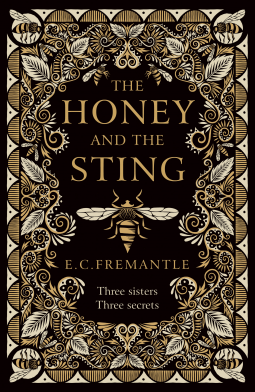
The Honey and the Sting by EC Fremantle

After 2018’s The Poison Bed, a Jacobean thriller based on a real life murder scandal, EC Fremantle has returned to the same period – the early seventeenth century – with another historical thriller, this time one which is only partly inspired by a true story.

Hester, Melis and Hope are three sisters who live together in a cottage in Iffley, Oxfordshire. With no male relative in the household, apart from Hester’s little boy Rafe, their living arrangements are unusual for the time – not quite respectable, some would say. Yet all three women have their reasons for avoiding outsiders and keeping themselves to themselves. Hester’s secret is perhaps the most scandalous: the father of her son is George Villiers, the powerful Duke of Buckingham and the King’s favourite. The beautiful, eccentric Melis experiences visions and premonitions which have an unsettling habit of coming true. And Hope’s African heritage makes her stand out from the other girls in Iffley, while also making her the target of unwelcome attention from men.

When we first meet the sisters, they are leading quiet lives at Orchard Cottage, filling their days with cooking, gardening, needlework and tending the bees in their hives. This will all change when George Villiers decides that the time has come to claim his son – something Hester refuses to contemplate as the Duke had cruelly cast her aside and left her to raise Rafe alone. In order to keep Rafe out of his hands, the three women are forced to go on the run, fleeing to an isolated house in the woods. But even here it seems there’s no guarantee of safety and they must decide who can and cannot be trusted.

Hester and her sisters are fictional, but their story is entwined with a sequence of real historical events involving George Villiers, Duke of Buckingham. I won’t say too much here, but if you know anything about Buckingham then as soon as a certain character appears in the novel you will be able to guess what is ultimately going to happen. Knowing this didn’t spoil the story for me, though; I found this particular character and the motivations for their actions very intriguing and their inclusion made the book much more compelling than it would otherwise have been.

The novel is written in present tense, never my favourite but I didn’t find it as annoying as I often do because it somehow suited the pace of the story and gave it a sense of urgency and danger. Some of the chapters are told from Hester’s perspective and these are written in the first person, but others are from Hope’s perspective, in the third person. I didn’t really understand the reason for this and would have preferred one style or the other. We don’t hear from Melis at all, only seeing her through the eyes of the other characters, but this is quite effective and adds to the aura of mystery that surrounds her. I think she was probably the sister I found most interesting; Hester and Hope both frustrated me with the number of poor decisions they made!

The only other thing that bothered me slightly was the way Hester refers to Buckingham throughout the novel as ‘George’. I felt that, as she had been a servant in Buckingham’s household when he seduced her, she would have spoken of him as ‘the Duke’ or ‘Buckingham’ or ‘His Grace’. A servant calling a nobleman by his first name in the seventeenth century just didn’t seem right to me, but maybe I’m just being pedantic. Overall, this was an enjoyable novel, even if it wasn’t one of my favourites by Fremantle.

Thanks to Penguin Michael Joseph for providing a copy of this book for review via NetGalley

This is book 10/20 of my 20 Books of Summer.

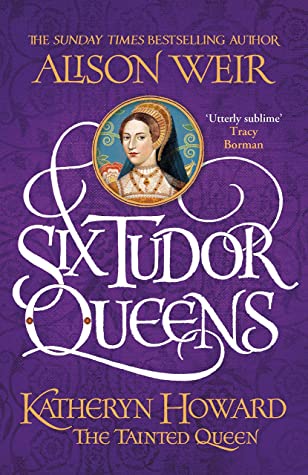
Six Tudor Queens: Katheryn Howard, the Tainted Queen by Alison Weir

Alison Weir’s Six Tudor Queens series aims to retell, in fictional form, the stories of all six of Henry VIII’s wives. This is the fifth book in the series so, as you would expect, the focus is on the fifth wife, Katheryn Howard. Having enjoyed the first three – on Katherine of Aragon, Anne Boleyn and Jane Seymour – I had been slightly disappointed by the one on Anne of Cleves, but I’m pleased to say that I thought this latest book was a return to form.

When Henry VIII sets aside Anne of Cleves and takes nineteen-year-old Katheryn Howard as his next wife, he believes her to be pure, innocent and virtuous, qualities he values highly in a woman. Telling her she is his ‘rose without a thorn’, he is delighted with his young bride and looks forward to her producing another son to secure his lineage. But what Henry doesn’t know is that Katheryn has had more experience with men than he has been led to believe.

Katheryn is surprised to find that, despite the age difference, she is becoming genuinely fond of her obese and ailing husband. The man she really loves, however, is Thomas Culpeper, one of the King’s courtiers, whom she continues to meet in secret even knowing that if they are discovered both of their lives could be in danger. Then there’s Francis Dereham, with whom she was sexually involved before her marriage to the King; Francis won’t leave her alone, insisting that she had been pre-contracted to marry him before she ever met Henry, and Katheryn lives in fear of the King hearing of their relationship.

Of course, history tells us that Katheryn (as Alison Weir chooses to spell her name) will fail to keep her past a secret, that her love affairs with Dereham and Culpeper will become public knowledge and that she will face the same fate as her cousin, Anne Boleyn – but that doesn’t mean there is no tension in this retelling of her story. We know from the start that Katheryn is doomed and we have to watch her make one mistake after another, choose the wrong people to trust and head irreversibly down a path which will lead her to the scaffold. Despite knowing what will eventually happen, though, we are kept in suspense waiting for the moment when she will be betrayed and her secrets will be revealed to Henry.

The novel sticks closely to the known facts of Katheryn Howard’s life; although obviously there are some areas where Weir has to use her imagination or make decisions as to how certain things should be interpreted, she doesn’t seem to invent large chunks of the story as she did in Anna of Kleve, Queen of Secrets. I suppose Katheryn’s life is more well documented than Anne of Cleves’ and already dramatic enough without the need for too much invention.

Although Katheryn is frustratingly naive and reckless, I did have a lot of sympathy for her. A lot of time is spent discussing her early life before her marriage to Henry, when she lived in the household of her father’s stepmother, the Dowager Duchess of Norfolk. The household included several other young women who were also wards of the Duchess and it seems that there was very little supervision and discipline; Katheryn appears to have been easily influenced and sometimes even encouraged by the other girls to behave in a way that would have been seen as promiscuous in the 16th century. Because of the nature of Katheryn’s story, there is a lot of focus on her sex life and her liaisons with various men and this does become a little bit repetitive and tedious at times, but I still found it a more compelling read than the previous book in the series.

I am looking forward to the final novel, which isn’t available yet, but which I’m assuming will be about Katherine Parr, the sixth and final wife.

Thanks to Headline for providing a copy of this book for review via NetGalley.

This is book 8/20 from my 20 Books of Summer list.
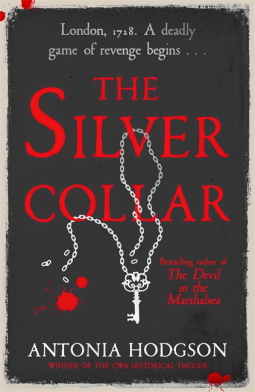
The Silver Collar by Antonia Hodgson

It’s been a four-year wait but The Silver Collar, the fourth book in Antonia Hodgson’s wonderful Thomas Hawkins series, is here at last. If you haven’t yet had the pleasure of meeting ‘Half-Hanged’ Hawkins and Kitty Sparks, this book does work as a standalone, but I would recommend going back to the beginning and starting with The Devil in the Marshalsea.

The Silver Collar is set in 1728. After their adventures in Yorkshire in the previous novel, Tom and Kitty are back in London running Kitty’s bookshop, The Cocked Pistol – ‘an establishment of such ill repute that a brief glance through its window could tarnish the soul‘. The couple still aren’t married and their relationship is still affectionate but stormy – and there are those who seem to want to drive them apart, such as Sir John Gonson, Tom’s old enemy, and the sinister Lady Vanhook.

When Tom is attacked in the street one day by men who appear to be intent on killing him, he is saved only by the intervention of his young ward Sam Fleet, son of an infamous underworld villain. With Sam’s help, Tom begins to investigate, determined to find out who was behind the attack, but while he is preoccupied, Kitty is facing problems of her own and has become reacquainted with a very unwelcome face from her past.

The Silver Collar also introduces another intriguing character by the name of Jeremiah Patience. Jeremiah’s story unfolds in the middle of the book, incorporating escaped slaves, a plantation in Antigua and a little girl forced to wear a silver collar – this was interesting, sensitively written and certainly very topical, but I felt it was a bit too similar to other storylines I’ve been coming across in historical fiction recently. I did like Jeremiah, though, and had a lot of sympathy for his situation.

It was also lovely to meet Tom and Kitty again after such a long wait. Tom, who narrates most of the novel in the first person, is such a great character – a lovable rogue who is always trying his best to reform himself but never quite managing it. In this book, though, his associations with other disreputable figures such as Sam Fleet and his mother Gabriela prove to be very helpful! Kitty is another strong character; I’ve enjoyed getting to know her over the course of the four books and I keep forgetting how young she still is. I didn’t think the parts of the book written from her perspective worked as well as Tom’s, though; they are written in the second person, which always feels a bit strange, I think.

This book is less of a mystery novel than the previous one (A Death at Fountains Abbey); historical thriller is probably a better description. However, we do see Tom keen to put the mystery-solving skills he gained in Yorkshire to good use by establishing a sort of Georgian-style detective agency. Sadly, he becomes too distracted by his own problems to spend much time worrying about other people’s, but maybe this is something that will be returned to in a future book.

I’ve enjoyed all four books in this series, including this one, but I still think The Devil in the Marshalsea was the best. Such a high standard was set with that book, it was always going to be hard for the others to live up to it. They are all entertaining reads, though, and I will look forward to a fifth book and finding out what the future has in store for Tom and his friends.

Thanks to Hodder & Stoughton for providing a copy of this book for review via NetGalley.

This is book 7/20 from my 20 Books of Summer list.
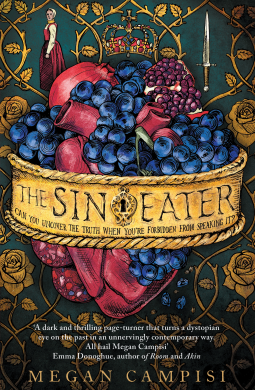
The Sin Eater by Megan Campisi

Megan Campisi’s unusual first novel is based around the historical concept of sin eating: the idea that a person close to death could call on a ‘Sin Eater’ to spiritually take on their sins. The dying person would do this by confessing to the Sin Eater, who would then consume a ritual meal consisting of a different type of food to represent each transgression. As you can imagine, this is not a pleasant job and certainly not something most people would want to do…but May Owens, the fourteen-year-old narrator of the novel, has no choice in the matter. After being arrested for stealing a loaf of bread, she is sentenced to live as a Sin Eater for the rest of her life.

With that sentence, everything changes for May. Overnight, she has become a social outcast. She is exiled to live alone on the edge of town and is forbidden to speak or be spoken to, except when listening to a confession. The heavy brass collar she is forced to wear around her neck, marked with an ‘S’, identifies her as someone to be avoided at all costs. It’s a lonely and miserable life, but May is a strong and resilient person and tries to carry out her work to the best of her ability.

Early in the novel, May accompanies another Sin Eater to the royal court to hear the deathbed confession of one of the Queen’s ladies. However, when the ritual meal is prepared, an extra item of food – the heart of a deer – is included, although it does not represent any of the sins confessed by the lady. What does the heart mean and who put it there? When another courtier falls ill and the same thing happens again, May decides to investigate.

By now you’re probably wondering about the time period in which this story is set. Well, it’s Elizabethan England – but not quite. Instead of Queen Elizabeth, Queen Bethany is on the throne, and her half-sister – the previous queen – was not Mary, but Maris. Bethany’s father did have six wives, but he was Harold II rather than Henry VIII. God is The Maker and England is Angland.

Megan Campisi states in her author’s note that the story is ‘spun out of fantasy’ and I can understand that using a fictitious setting rather than a real one would have given her more freedom to tell the story without needing to stick too closely to historical fact. It also gives the novel a bit of a fairy tale feel, as does the way most of the other characters are referred to not by names but by nicknames such as ‘Country Mouse’, ‘Willow Tree’ or ‘Fair Hair’. Sadly, though, I didn’t think any of these intriguing-sounding secondary characters really came to life; May herself was the only one who felt believable. And I’m afraid I found the thinly-disguised parallels with the Elizabethan court irritating; I think the story would have worked just as well set either at the real Elizabethan court or in an entirely fictional world.

Despite not enjoying this book as much as I’d hoped to, I do think the concept was fascinating and I can honestly say that I’ve never read anything quite like it!

Thanks to Pan Macmillan/Mantle for providing a copy of this book for review via NetGalley.

This is book 5/20 of my 20 Books of Summer.

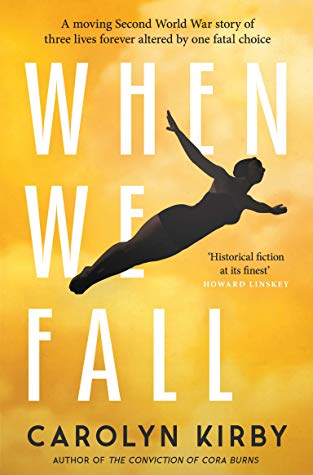
When We Fall by Carolyn Kirby

Carolyn Kirby’s new novel, set during World War II, was published in May to coincide with the 75th anniversary of VE day; unfortunately, I was in the middle of a lockdown-induced reading slump at that time, but I added the book to my 20 Books of Summer list to ensure that I would still read it sooner rather than later.

When We Fall, set in 1943, follows the stories of two women leading very different lives but both playing their part in the war effort. First, we are introduced to Valerie – Vee – Katchatourian, a British pilot whose job is to fly planes between airfields for the Air Transport Auxiliary. Forced to make an emergency landing due to fog one day, Vee encounters a Polish airman, Flight Sergeant Stefan Bergel of 302 Squadron. It’s only a brief meeting, but Stefan makes a big impression on Vee and she finds that she is unable to forget about him.

Meanwhile, in the city of Poznań in occupied Poland, Ewa Hartman is helping her father to run his guest house. At the same time as offering hospitality to German officers, Ewa is carrying out undercover work for the AK (the Polish resistance) – a dangerous thing to do, which becomes even more dangerous when she begins to attract the attention of a high-ranking German guest, SS-Obersturmführer Heinrich Beck. Ewa becomes close to Beck, but in her heart she remains loyal to her former lover, Stefan Bergel, whom she has not seen since he became a prisoner of the Soviet army a few years earlier.

Stefan provides the link between Ewa and Vee, but who is he really and where do his true allegiances lie? He is a complex and enigmatic character whose motives and loyalties are never clear, even to the reader who sees both sides of the story, unlike Ewa and Vee who see only their own. This, along with Ewa’s support for the resistance and the dangers of Vee’s work as a pilot, keeps the novel filled with tension and suspense until the end as there is no guarantee that any or all of our characters are going to survive the war.

The novel switches between the two storylines, although Vee’s almost disappears for a while in the middle of the book while most of the action is taking place in Poland. I liked both characters and both settings, but Ewa’s story was the most compelling, I thought. In all of my reading about the war, I don’t seem to have come across many books that describe life in occupied Poland, so I found it very interesting to read about the challenges Ewa faced on a daily basis. With the Nazi occupiers in the process of renaming streets and towns to make them sound more ‘German’ – Poznan becomes Posen, for example – Ewa must learn to respond to the German form of her own name (Eva), to avoid lapsing into her native language, and to come to terms with the local synagogue being converted into a swimming pool.

Names are also important for Vee, who was born in England but whose Armenian surname makes her the subject of prejudice and suspicion, as well as the prejudice she already experiences as a female aviator – even though the ATA was notable for paying women the same as men, Vee senses that she is not always considered an equal. Although I’m not really interested in aviation, Vee’s enthusiasm for her work as a pilot and for the different types of planes she is asked to fly comes across strongly.

Finally, I should mention the Katyn Massacre, a wartime atrocity which marked its 80th anniversary this year and casts its shadow over the lives of the characters in this book. I won’t say too much about it but will leave you to find out how it affects Stefan, Ewa and Vee if you decide to read When We Fall – which I do recommend, as it’s such an interesting and moving novel, very different from Carolyn Kirby’s previous book, The Conviction of Cora Burns, which I also enjoyed!

Thanks to No Exit Press for providing a copy of this book for review via NetGalley.

This is book 4/20 of my 20 Books of Summer. I am actually doing better with this than it seems – I have also read another four books from the list and just need to finish writing my reviews!

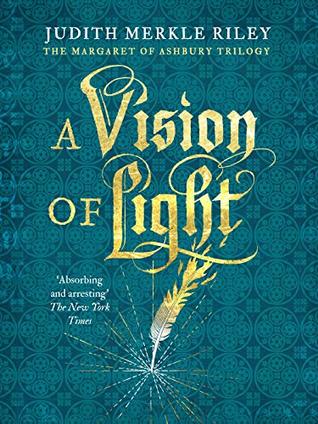
A Vision of Light by Judith Merkle Riley

I can’t believe it’s been nearly eight years since I read The Oracle Glass by Judith Merkle Riley. Having enjoyed that one, I had fully intended to explore her other books but never did; of course, it didn’t help that most of them seemed to be out of print at the time. Thanks to Canelo, all three books in her Margaret of Ashbury trilogy are now available, of which A Vision of Light (originally published in 1988) is the first.

The novel opens in the year 1355 with our heroine, Margaret, hearing the voice of God telling her that she must write a book:

“I am only a woman,” I said to the voice in my mind. “I have no letters, and do not know Latin. How shall I write a book, and what shall I put in it, as I have never done any great deeds?”

The Voice answered:

“Put in it what you have seen. There is nothing wrong with being a woman, and doing ordinary things. Sometimes small deeds can show big ideas. As for writing, do as others do: get someone to write it for you.”

The person she gets to write it for her is Brother Gregory, a young friar who is trying to make a living as a scribe writing letters for London’s largely illiterate population. Brother Gregory has a low opinion of women but he needs the money so he accepts the commission and reluctantly begins the task of chronicling Margaret’s life. He is sure a woman can’t possibly have a story worth telling, but once he begins to meet Margaret and listens to what she has to say he becomes drawn into her tale despite himself.

I won’t go into too much detail regarding Margaret’s story. There’s not really a central plot that I can describe; beginning with her early life in the little English village of Ashbury, it takes the form of a picaresque novel as she moves from place to place, having a series of adventures along the way. There are outbreaks of plague and accusations of witchcraft. There are encounters with humble peasants, wicked noblemen, travelling entertainers and mysterious alchemists. And then there is the Vision of Light which Margaret receives one day, leaving her blessed – or cursed – with the miraculous powers of healing.

I found A Vision of Light great fun to read, even though, like The Oracle Glass, it contains a few of the things that often irritate me in historical fiction: the occasional use of anachronistic language, for example, and a heroine whose views are sometimes more appropriate to the century in which the book was written rather than the one in which it is set. The writing is imbued with so much humour, life and energy that those things didn’t bother me the way they usually would; it’s a book that doesn’t take itself too seriously, while at the same time touching on some serious – and sometimes dark – topics, and getting the balance just about right.

Although the tale Margaret relates is the most compelling part of the novel, the framing narrative is also interesting, mainly for the interactions between Margaret and Gregory and the way their relationship develops as they spend more time together. Gregory is an intriguing character in his own right and although his attitude towards Margaret makes him difficult to like at first, I thought he did improve as the book went on! I’m sure I will read the second novel, In Pursuit of the Green Lion, at some point so I can find out how the story continues.