Becoming Belle by Nuala O’Connor

In Becoming Belle, Nuala O’Connor (a pseudonym of the Irish author Nuala Ní Chonchúir) brings to life a young woman whose picture hangs in the National Portrait Gallery in London but whose name is probably unfamiliar to most of us today. She is Belle Bilton, a star of the Victorian music hall who later became the Countess of Clancarty. O’Connor’s novel tells, in fictional form, the story of Belle’s rise to fame, her marriage and the scandalous court case that follows.

Born Isabel Maud Penrice Bilton, the eldest daughter of an artillery sergeant, Belle grows up in an army garrison watching her mother, an entertainer, perform for the troops. It is while taking her mother’s place on stage one night that Belle decides she also wants a career in entertainment, so at the age of nineteen she leaves the military life behind and heads for London to make her dream come true. Belle’s singing and dancing quickly causes a sensation and when she is joined by one of her younger sisters, Flo, the two form a double act that becomes the star attraction of the London theatres.

Following a performance one day in 1889, Belle meets and falls in love with William, the young Viscount Dunlo, son and heir to the Earl of Clancarty. It’s not long before she and William are standing in the Registrar’s Office in Hampstead taking their marriage vows and looking forward to spending the rest of their lives together. At twenty years old, however, William is still firmly under the thumb of his father, the Earl, who is furious when he hears of the secret wedding and makes it clear that he will do whatever it takes to separate his son from Belle.

Some books grab you from the first page, while others take much longer to settle into – and for me, Becoming Belle was one of the latter rather than the former. The account of Belle’s early life and first days on the stage didn’t interest me much and I came close to abandoning the book after a few chapters. Belle herself seemed as though she would be difficult to like – an ambitious social climber like Becky Sharp from Vanity Fair, but with little depth or substance to her character – and the focus on her sexual encounters also put me off. I’m glad I continued, though, because I thought the second half of the book, after Belle meets William, was much more compelling than the first.

I don’t want to say too much about how the story of Belle’s marriage plays out, but it involves a court case which draws in most of the characters we have met in the novel and which was widely reported in the media of the time. I managed to resist looking up the facts about the real Belle Bilton, so I didn’t know what the outcome of the court case would be, but by that stage of the book I was fully invested in Belle’s story and hoped there would be a happy ending for her. I still didn’t like her very much, but I had more sympathy for her than I’d had earlier in the novel because she’d had so much to contend with during her short time in London. However, I couldn’t really see her as a feminist heroine ‘ahead of her time’ as she is described in the book’s blurb; although I admired her for trying to get what she wanted out of life, for working hard at her chosen career and securing financial independence, she seemed too willing to give it all up to become Countess of Clancarty and too ready to forgive William for the appalling way he treats her at times.

I have no idea what the real William, Viscount Dunlo was supposed to be like, but based on the way he is portrayed in this book, I found him immature and pathetic, declaring his love for Belle while at the same time allowing his father to tear them apart. Luckily, there were plenty of other, stronger characters in the novel whom I found more appealing to read about: for example, Belle’s close friend Isidor Wertheimer, the antiques dealer, and her sister, Flo, both of whom support her through her various ordeals.

Despite struggling with the first half of this book, I ended up really enjoying Becoming Belle – although I was disappointed that we didn’t get to see more of her time at Garbally Court, the Clancarty estate in Ireland. Anyway, I went from thinking Nuala O’Connor was not an author for me to wanting to read more of her books. Miss Emily, her novel about the poet Emily Dickinson sounds like an interesting one.

Although I read this book in February, I have waited until now to post my review because this month Cathy at 746 Books is hosting her annual Reading Ireland event. I hope to have time to write about another book by an Irish author before the end of March.

The Great Matter Monologues by Thomas Crockett

So many novels have been written dealing with ‘the King’s Great Matter’ – Henry VIII’s struggle to divorce Katherine of Aragon and marry Anne Boleyn – that it must be getting very difficult for authors to find new and interesting ways to approach the subject. Thomas Crockett’s solution is to tell the story in the form of alternating monologues written from the perspectives of Henry, Katherine and Anne in an attempt to create a theatrical feel, as if the three main players were standing on a stage sharing their thoughts directly with the audience.

If you’ve read about this period before, there’s nothing very new here; for the most part, the plot follows the known historical facts, except where it’s necessary for the author to make personal choices on how to interpret certain points – for example, the question of whether Katherine’s earlier marriage to Henry’s brother, Prince Arthur, had been consummated (this was the basis for Henry’s claim that his own marriage to Katherine should be declared invalid). The appeal of the book, for me, was not so much what it was about but the way in which it was written, taking us into the minds of Katherine and Anne – and also Henry, as most of the other Tudor novels I’ve read have focused on the women and not really given Henry a chance to tell his side of the story.

Despite them sharing their private thoughts and emotions with us, I didn’t find any of the three narrators at all likeable. It’s certainly easiest to have sympathy for Katherine as she was treated so badly by Henry, blamed for their failure to produce a son and cast off to live the rest of her life under increasingly poor and unhealthy conditions as she is put under pressure to agree to the divorce. However, as she spends most of this period in the confines of the damp, cold castles to which she has been banished, not much actually happens to Katherine over the course of the novel and I felt that her monologues became very repetitive.

Anne Boleyn’s voice and story are stronger and more engaging as she talks about her struggle to be accepted as Henry’s queen and her own failure to give birth to a male heir, before falling out of favour in her turn. She is very much the villain of the book, though, which is often the case in Tudor novels and I would have preferred something more nuanced rather than yet another portrayal of Anne as ruthless, spiteful and consumed by hatred for Katherine and her daughter, Mary. As for Henry, it’s difficult to have much sympathy for him, knowing how he treated his wives, but I did feel his frustration over how long the Great Matter was taking to be resolved and his worries for the future of the kingdom should he die before the succession was secured.

The novel goes into a huge amount of detail regarding every aspect of the Great Matter and although the short, rapidly switching monologues made it tempting to keep saying ‘just one more chapter’, I didn’t find it a particularly quick or easy read. As part of the stream-of-consciousness style of writing, there’s an absence of punctuation to indicate when someone is speaking and that made it difficult to follow the dialogue at times. Still, overall I enjoyed reading this book and appreciate Thomas Crockett’s attempt to do something a little bit different. Although I’m not really a fan of audiobooks, I do think this particular novel would work well in audio format, with different narrators expressing the unique voices and personalities of the three characters.

In case it has escaped anyone’s notice, Hilary Mantel’s The Mirror and the Light will be published later this week, and I know some readers have been re-reading Wolf Hall and Bring Up the Bodies in preparation. I decided not to do that, but The Great Matter Monologues, in which Thomas Cromwell plays an important part, covers the same period of history, so this was the perfect time to read this book!

Thanks to John Hunt Publishing for providing a copy of this book for review via NetGalley.
The Mercies by Kiran Millwood Hargrave

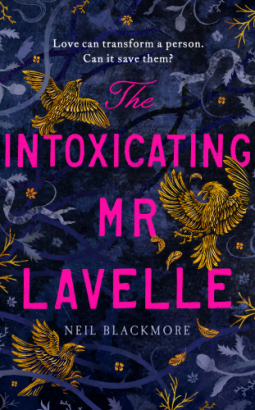
I am always drawn to books with pretty covers like this one, even though I know that the story inside doesn’t always live up to the promise of the cover. This one, set in 17th century Norway, did sound fascinating, though, so I hoped that in this case it would be as good as it looked!

The novel opens in December 1617 in the remote island town of Vardø, in the far northeast of Norway. It is Christmas Eve but the men of the island have gone out to sea as usual in search of the fish on which their livelihood depends. Twenty-year-old Maren Magnusdatter watches from her window as she sits by the fire with her mother and sister-in-law mending torn sails. Suddenly there’s a flash of lightning and Maren and her mother run to the window…

And then maybe both of them are screaming but there is no sound save the sea and the sky and all the boat lights swallowed and the boats flashing and the boats spinning, the boats flying, turning, gone.

The effects of that Christmas Eve storm are disastrous both for Maren, who loses her father and brother, and for the town of Vardø as a whole. Where the male population of the town used to be fifty-three, now only thirteen remain – and those thirteen consist of babies, young boys and elderly men. Now the women of Vardø have two choices: abandon the island and start a new life somewhere else – or stay and do the work of the men themselves, so that their community can survive.

Meanwhile, far away in Bergen, a young woman called Ursa is marrying a man chosen for her by her father. The man’s name is Absalom Cornet and he has been summoned from Scotland to take up a position as Commissioner of Vardø. When they arrive in Vardø, Ursa is struck by the strength and independence of the women she meets there and the resilience they have shown in coping with such a terrible tragedy. Commissioner Cornet, though, views the women differently – and when Ursa discovers the true nature of the work her husband has carried out in Scotland and why he has been brought to Norway, she becomes afraid for her new friends.

The Mercies is based on real historical events – the 1617 storm which almost wiped out all the men of Vardø really happened, and so did some of the things that take place later in the novel. I loved the descriptions of the island and the portrayal of a small, superstitious society where outsiders and anyone deemed to be different – such as Maren’s sister-in-law, an indigenous Sámi woman – are regarded with suspicion. It was particularly interesting to see things from two such different perspectives: Maren, who has lived in Vardø all her life, and Ursa, to whom everything is strange and unfamiliar. However, despite the drama and tragedy of Maren’s storyline, she never really came to life for me and I couldn’t quite warm to her; I found Ursa more sympathetic as she struggled to fit into her new community and to come to terms with her knowledge of the sort of man she had married.

This is the first book I’ve read by Kiran Millwood Hargrave (she has previously written YA novels and this is her first one aimed at adults) and I thought her writing was beautiful at times, but I really wish authors would stop writing in present tense; I find it so distracting and distancing! Still, there’s a lot of atmosphere – I think books set in countries like Norway and Iceland do tend to have a certain atmosphere – but apart from those vivid opening scenes describing the storm and its aftermath, I felt that the rest of the story was one I’d read several times before. As soon as I found out who and what Absalom Cornet was, I could predict what was going to happen and I was right.

If you read The Mercies and enjoy it, I would recommend reading The Glass Woman by Caroline Lea too; I thought the two books had a very similar feel and if you like one you will probably like the other.

Thanks to Picador for providing a copy of this book for review via NetGalley.
Blood Queen by Joanna Courtney

The fictional story of Macbeth, complete with witches, ghosts and prophecies, is well known thanks to Shakespeare’s play, but how many of us know the story of the real historical figure – King of Alba (Scotland) from 1040 until 1057 – on whom the play was based? I have read one version, Dorothy Dunnett’s wonderful King Hereafter, but it’s always interesting to see how different authors approach the same subject so when I came across Blood Queen, Joanna Courtney’s recent novel about ‘the real Lady Macbeth’, I decided to give it a try.

I remember reading one of Courtney’s previous books, The Chosen Queen, several years ago and my impression at that time was that she was a good storyteller but spoiled things by replacing the names of her historical characters with modern equivalents. She does the same in this book and again I found it annoying and unnecessary. She explains in her author’s note that some of the historical names sound unnatural to ‘the modern ear’, so Gruoch and Suthen become Cora and Sibyll, Lulach becomes Lachlan and Gillacomghain becomes Gillespie. I don’t really understand that decision at all; it’s a story set in the 11th century and readers will understand that, so why not just leave the names as they are?

Anyway, we first meet the sixteen-year-old Cora MacDuff on the eve of her wedding to Macbeth, son of the Mormaer of Moray. Cora fled to Moray several months earlier following an attack on her home in Fife by the men of King Malcolm, her father’s cousin. She swears to ‘make of myself a sword to avenge the wrong done to my father by his own blood’ and she is driven by this desire for the rest of her life. Cora believes that if she marries Macbeth, part of the royal bloodline of Aed, their heir would be able to challenge King Malcolm, or at least his son, Prince Duncan. Before the wedding can take place, however, Cora is abducted during a raid and forced into marriage with another man – Macbeth’s rival, Gillespie, who also believes he has a claim to the throne.

Cora’s story alternates with the story of Sibyll, the Danish-born wife of Prince Duncan. Sibyll, sister of Ward (or Siward), the Earl of Northumbria, is also no stranger to violence, having lost both parents when their small fishing community in Denmark was attacked by the Wend tribe. Her marriage to Duncan, which takes place early in the novel, means that their son, if they have one, will be king one day…but not if Cora’s son gets to the throne first.

In this novel, Joanna Courtney has chosen to focus on the parallel lives of Cora and Sibyll, showing how, although circumstances make them rivals, both women have the same hopes and ambitions, both just wanting the best for their children. A lot of care seems to have gone into the writing of the book; there are maps of Alba, descriptions of the system of alternate inheritance used in Alba at that time, genealogy charts showing the royal lines of Aed and Constantin, and a very extensive set of notes at the end. This is why I was surprised to come across a description in the third chapter of Gillespie as a ‘wide, cumbersome young man with a belly that already hung ponderously over his kilt’. Kilts in the 11th century? I don’t think so, though I’m happy to be corrected.

Blood Queen is the first book in a Shakespeare-inspired trilogy; the second, Fire Queen, is about Ophelia from Hamlet and the third, the upcoming Iron Queen, will be about Cordelia from King Lear. After trying two Joanna Courtney books I probably won’t read any more, but I have to admit that I know absolutely nothing about the inspiration for Ophelia or Cordelia and would have been interested to find out more.

Thanks to Piatkus for providing a copy of this book for review via NetGalley.
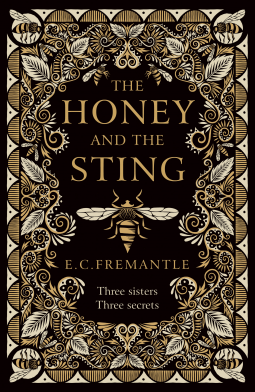
The Almanack by Martine Bailey

As someone who loves puzzles and word games of all kinds, I was captivated by Martine Bailey’s latest novel, The Almanack. Each chapter opens with a riddle, the answers to which are listed at the end of the book but are also carefully hidden somewhere within the relevant chapter. If, for example, the solution to a riddle is ‘cherry’, in the pages that follow you will see a character eating cherries. Sometimes the allusion is so brief you could easily miss it but in other cases it will form the theme for the whole chapter.

The story itself is a murder mystery set in Georgian England. It begins in 1752 with Tabitha Hart’s reluctant return from London to the village of Netherlea in Cheshire in answer to an urgent summons from her mother. Unfortunately she arrives too late; her mother has died under suspicious circumstances, the only clues to her fate being some cryptic notes scribbled in the margins of her almanack, in which she describes her terror of someone referred to only as ‘D’.

As Tabitha sets out to identify the mysterious D, she comes up against the hostility of the other villagers, who disapprove of the life she has been leading in London. However, she receives help in her search from an unlikely source: a troubled young writer called Nat Starling, a newcomer to Netherlea who may be hiding secrets of his own.

This is the first book I’ve read by Martine Bailey and I was very impressed by her recreation of 18th century village life. With her descriptions of ancient superstitions and beliefs, a community ruled by the seasons and the weather, and the conflict between the old ways of life and the new, I was often reminded of Thomas Hardy. The reluctance of the villagers to move forward and embrace change is illustrated particularly well when they discover that Britain is to switch from the Julian calendar to the Gregorian, jumping forward by eleven days in September. They are confused and angry about the ‘stolen days’, with some of them believing their lifespan has somehow been shortened.

Time and calendars are important themes in this novel. First, there is the almanack in the story, which Tabitha’s mother had been using to plan her days and which holds some of the keys to the mystery. Then there’s the way in which the book itself is structured like an almanack, with each chapter headed by the date, some astrological information and a prophecy relating to something that will happen that day. Riddles, prophecies and predictions are woven throughout the text of the novel too, with the unknown villain using them to taunt and tease Tabitha and Nat.

I really enjoyed this book and its many layers. There were times, though, when all of the extra little features started to distract me from the story; I became too caught up in looking for clues to the riddles and for prophecies coming true and found myself losing track of the central mystery. Still, this was an unusual and entertaining read and I will now have to try Martine Bailey’s other two books, An Appetite for Violets and The Penny Heart, both of which sound intriguing too.

Thanks to Black Thorn for providing a copy of this book for review via NetGalley.
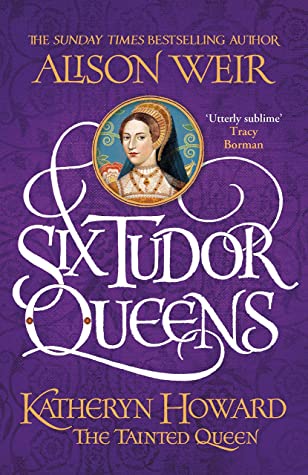
The Year Without Summer by Guinevere Glasfurd

Two years ago I read Guinevere Glasfurd’s first novel, The Words in My Hand, about a young Dutch woman and her relationship with the philosopher René Descartes. I loved that book so was hoping for a similar experience with her new one, The Year Without Summer. However, although I loved parts of this book too, I found it entirely different from The Words in My Hand and less enjoyable as a whole.

The title refers to the year 1816, which was the year following the eruption of Mount Tambora, an Indonesian volcano. It was known as ‘the year without a summer’ due to the effects of the volcanic activity on the weather. These effects were felt all over the world, far away from Asia: in Europe, low temperatures and heavy rain caused flooding, failed harvests and famine, while crops were also destroyed in North America by droughts and by frost and snow in June. In The Year Without Summer, Glasfurd explores, in fictional form, the stories of six different people whose lives were affected by the extreme weather.

The first character we meet is Henry Hogg, ship’s surgeon aboard the Benares, who sets sail in April 1815 for the island of Sumbawa to investigate reports of explosions and is shocked by what he finds: ash falling from the sky, the sea turning to stone and what had once been a green island now ‘a hellish scene’. Henry’s story is the only one in the book that takes us directly to the scene of the eruption – the others only mention the volcano briefly, if at all – yet, surprisingly, his is the one given the least time and attention.

The following spring, the English landscape painter, John Constable, is returning home to Suffolk from an unsuccessful visit to London in an attempt to gain recognition for his art and be admitted to the Royal Academy. Without that recognition and the money it would bring, John’s future looks bleak: how can he expect his beloved Maria to marry a struggling artist with no prospects?

The future of our third protagonist, Sarah Hobbs, looks even more uncertain. She and her friend Tessie are walking across the Fens from farm to farm looking for work, only to be told that there is no work to be had – and even if there was, the wages would only be half of what they were the year before. Meanwhile, Hope Peter, a soldier back from Waterloo, is having problems of his own. In his absence, his mother has died and his family home has been demolished; the life to which he’d thought he was returning no longer exists.

In the May of that year, Mary Godwin travels to Switzerland with her lover Percy Bysshe Shelley, their baby son Willmouse, and her half-sister Claire Clairmont. They are planning to spend the summer at Lake Geneva with Lord Byron and his doctor, John Polidori, but the gloomy weather keeps them indoors where they entertain themselves by writing horror stories. Finally, we meet Charles Whitlock, a preacher from Vermont, who gives us an American perspective on the summer of 1816. Charles is trying to gain the trust of his flock who are growing increasingly worried about the lack of rain and planning to abandon their farms to head west to Ohio.

These six very different storylines alternate throughout the book, never meeting or intersecting in any way, the only link between them being the unusual weather of 1816. They cover a range of issues including the social unrest which led to the Littleport Riots, the enclosure of land in the English countryside, the writing of Mary Shelley’s Frankenstein and the influence of the weather on John Constable’s paintings, and I found something to interest me in all of the stories – although most of them are very bleak and it would have been nice to have had a few more happy endings!

My problem with the book was that the way it was structured, with a chapter from one story, then a chapter from another, made it feel disjointed and made it difficult to stay engaged with each set of characters. As the six threads never came together at all, I think I would have preferred just a straightforward collection of six complete short stories – or maybe even just four, as the ones following the ship’s surgeon and the Vermont preacher felt very slight and undeveloped in comparison to the others.

As a whole, I don’t think this book was entirely successful, but still with more positives than negatives. It’s impossible not to draw parallels between the weather of 1816 and some of the extreme weather the world has been experiencing recently, which we can only expect to see more of in the future due to climate change, so this was a relevant read as well as an interesting one.

Thanks to Two Roads for providing a copy of this book for review via NetGalley.
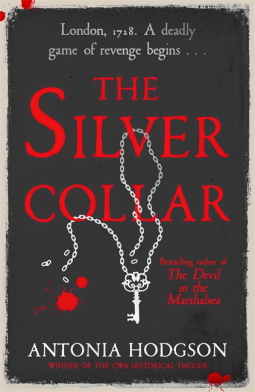
The Foundling by Stacey Halls

Stacey Halls’ new novel, The Foundling, begins on a cold November evening in 1747 with Bess Bright about to make a very difficult decision, one no new mother should ever have to face. She has brought her illegitimate baby daughter, Clara – less than a day old – to London’s Foundling Hospital and is planning to leave her there. Aware that, as an impoverished shrimp seller, she has little to offer her daughter but hunger and hardship, she is sure Clara will have a happier childhood at the Foundling, where at least she will be fed, clothed and educated. As she walks away from the hospital, leaving her baby behind, Bess consoles herself with the knowledge that it needn’t be forever; she has left a token – half of a heart made from whalebone – as proof of identity if she is ever in a position to bring Clara home again.

After six years of working hard and saving every penny she can, Bess returns to the hospital to collect her child, dreading being told that Clara has died of some childhood illness. Nothing can prepare her for the shock she receives when she enters the Foundling and is informed that her daughter has already been claimed – by someone who gave her name as Bess Bright and knew about the whalebone token. Bess is horrified. What has happened to Clara? Who has taken her little girl and what have they done with her?

I was very impressed with The Foundling, my first Stacey Halls novel. Although there wasn’t as much mystery as I would have liked and some of my biggest questions were answered a lot earlier than I’d expected, I was still kept in suspense wondering whether there would be a happy ending for Bess and her daughter or whether fate would have something else in store. I liked Bess and loved the descriptions of the London in which she lived and worked, from her lodgings in Black and White Court, where the alleys are ‘choked by coal smoke’, to the lively fish markets of Billingsgate where she and her father sell their shrimps.

However, this is not just Bess Bright’s story. It’s also the story of another woman, Alexandra Callard, a widow who is leading a very different sort of life in another part of London. Apart from attending church, Alexandra hasn’t left her elegant townhouse for years and neither has her little girl, Charlotte. Just the thought of going outside and walking along the street fills her with fear and she’s convinced that her child will be safer indoors too. Then one day, a friend persuades her to employ a nursemaid to help with Charlotte and the arrival of a new face in the household poses a threat to the secure little bubble Alexandra has built around herself.

I didn’t like Alexandra as much as Bess, but bringing a second narrator into the story – especially one who lived in such a different world – added variety and the chance to see things from another perspective. Unlike Bess, Alexandra doesn’t have to worry about money and has everything she needs within the four walls of her luxurious home, but due to her mental health problems her life is still not very happy. We eventually find out what has caused her agoraphobia and I did have a lot of sympathy, but I still found her a cold and rather selfish person.

As well as the two contrasting views of Georgian London, The Foundling explores several other interesting issues, particularly what it means to be a mother and what sort of environment is the most suitable in which to raise a happy, healthy child. The way the book ended was probably the best outcome, but I think there were at least two other possible endings and either could have been used to make a valid point. Having enjoyed this so much, I will have to read Stacey Halls’ previous book, The Familiars, about the Pendle Witch Trials.