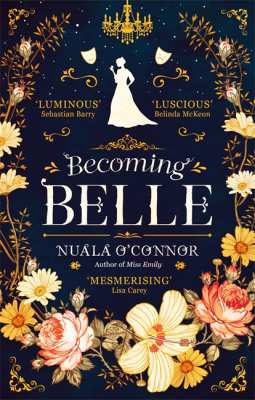
Bone China by Laura Purcell

Hester Why, the narrator of Laura Purcell’s latest gothic novel Bone China, is a woman with secrets. We know that Hester Why is not her real name, but what is the reason for her new identity? Why is she fleeing to Cornwall from London, who is she hiding from and how did she come to be addicted to gin and laudanum? These are questions we ask ourselves in the very first chapter and they are answered eventually, but first we must follow Hester to Morvoren House, perched high on the Cornish cliffs, where she is taking up a new position as nurse to Miss Louise Pinecroft.

Hester quickly discovers that her job is not going to be easy and soon she is asking questions of her own. What is wrong with Miss Pinecroft, who barely moves, never speaks and spends her days sitting in a cold room surrounded by china cups and plates? Who is Rosewyn, the strange, child-like young woman described as Miss Pinecroft’s ward? Is there any truth behind the claims of the superstitious servant Creeda that Rosewyn needs to be protected from fairies who are trying to steal her away and replace her with a changeling?

Bone China moves between three different timelines; as well as following Hester at Morvoren House, we also go back to an earlier time in her life, when she was known as Esther Stevens, and learn what went wrong in her previous employment, leading to her decision to run away and start again. Finally, in a third narrative we meet Louise Pinecroft as she was forty years earlier, when she and her father first arrived at Morvoren House after losing the rest of their family to consumption.

Laura Purcell has become known for writing dark, creepy Victorian novels and Bone China does have a lot of classic Gothic elements, including a gloomy, imposing clifftop house, family secrets and hints of madness. Despite this, I didn’t think this was a particularly scary or chilling story and although the exploration of Cornish folklore added atmosphere, I never doubted that the fairies and changelings existed only in legends and in Creeda’s stories. How much more spine-tingling it would have been if I had found myself feeling convinced that they could be real after all!

What I did find very disturbing and unsettling was the storyline set in Louise Pinecroft’s younger days, describing the work of her father, a doctor, who is looking for a cure for consumption (tuberculosis), the disease which took the lives of his wife and his other children. With Louise’s help, Dr Pinecroft carries out a revolutionary experiment, taking a group of prisoners who are suffering from the illness and lodging them in a cave beneath the cliffs where he claims the salty sea air will be good for their health. This part of the book was based on historical fact – cave air really was suggested as a possible cure for consumption at one time – and it was horrifying to read about the barbaric treatment of sick people due not to cruelty but to ignorance of modern medical procedures and a lack of understanding.

There are lots of interesting ideas incorporated into Bone China, then, but in the end I felt that the three threads of the story didn’t come together as neatly as they should have done. I also found the pacing uneven; in the second half of the book, the sense of mystery and carefully building tension of the earlier chapters was replaced by a sudden race to reach the conclusion. I didn’t enjoy this book as much as I’d hoped to, but I’m planning to read Laura Purcell’s first novel, The Silent Companions, soon and will see if I get on better with that one.

Those Who Are Loved by Victoria Hislop

This was one of several books on my 20 Books of Summer list this year that I didn’t have time to read before the September deadline, but if I’d know how much I was going to love it I would have made it a priority. It turned out to be one of the best books I’ve read this year and probably the most moving.

The novel opens in Greece in 2016 and introduces us to an elderly woman called Themis, whose family have gathered in her Athens apartment to celebrate her birthday. Aware of how little the younger generations know about their country’s history, she decides to share her life story with her two favourite grandchildren, Nikos and Popi. It seems as though almost every book I pick up recently is set in multiple time periods and, to be honest, I’m getting a bit bored with that format, but in this case the framing story only forms the beginning and end of the book – the bulk of the novel is set in the past, which makes it easier to become fully immersed in the story Themis is telling.

And what a fascinating story it is, beginning in the 1930s and taking us through the Axis occupation of Greece during the Second World War, the rise of communism and the Civil War that followed, the political crisis that led to a military junta taking control of the country and then the abolition of the monarchy and establishment of a more democratic society, bringing us right up to the present day. As I probably knew even less about 20th century Greek history than Nikos and Popi at the start of the novel, I found that I was learning a lot from the book, as well as being gripped by the personal stories of Themis and her family.

After their father leaves for America and their mother suffers a nervous breakdown, Themis and her three siblings are raised by their beloved grandmother. As they each grow up to hold different political opinions, a heated discussion takes place every evening when the family sit down around their large mahogany dining table. Themis and her brother Panos want to free Greece from German occupation and later, as their views move further to the left, they both decide to join the Communist army. Meanwhile, her eldest brother Thanasis and sister Margarita are much more right wing, believing that Nazi Germany is Greece’s friend and that the Communists are the dangerous ones.

One of the things I liked about the novel is that, although we naturally find ourselves siding with Themis as the main protagonist, the whole subject of political division and difference is treated with balance and sensitivity. We see that Thanasis and Margarita, despite standing for everything Themis dislikes, do still have some good qualities, while Panos and Themis find themselves doing some questionable things in the name of their own beliefs. The message I took away from the book is that violence, destruction and killing can never be justified, no matter how much someone may try to tell themselves they’re doing it for the right reasons.

I was struck by this quote which I think feels very relevant to today’s world as well as to 1940s Athens:

People seemed to be losing their humanity. The schism that existed between left and right had been allowed to widen, the polarisation to deepen, and now the city was paying the consequences.

Those Who Are Loved is a powerful, emotional story. So far the only other Victoria Hislop book I’ve read is The Sunrise, which I enjoyed, but found quite uneven. This one is a much stronger book, in my opinion, and held my interest from beginning to end. I do have a copy of The Thread, which will be the next one I read and also set in 20th century Greece.

Thanks to Headline Review for providing a copy of this book for review via NetGalley.

The Silver Pigs by Lindsey Davis

I love historical mysteries but have never felt drawn to Lindsey Davis’ Falco series as the setting – Ancient Rome – is not one of my favourites. Recently, though, I have discovered a few books set in Rome that I’ve enjoyed and have been open to reading more, so I thought I would give the first book, The Silver Pigs, a try. When I noticed that my library had the first four in the series available to download as audiobooks, I decided that as I was stepping slightly out of my comfort zone anyway with the Roman setting, I may as well step out of it completely with a format I usually avoid.

Audiobooks tend not to work for me because I find that my attention wanders more easily when I’m listening to a book than it does when I’m reading it on paper, but I did my best to concentrate on this one and was mostly successful. It is read by the British actor Christian Rodska and although I wasn’t sure about his voice at first (he sounded too old for the thirty-year-old Falco) I changed my mind after a while and decided that his voice was well suited to the down to earth, humorous style of the writing.

The novel opens in the year 70 AD with an encounter between our narrator, ‘private informer’ Marcus Didius Falco, and a young woman who is being chased through the Forum. After helping her to escape from her pursuers, Falco learns that the girl’s name is Sosia Camillina and that she is the niece of a powerful senator. It seems that Sosia has become embroiled in a conspiracy involving a secret stockpile of silver ingots (known as ‘silver pigs’) – a conspiracy which could pose a threat to the rule of the Emperor Vespasian.

To find out who is behind the plot, Falco is sent to the silver mines of Britannia, something he is less than thrilled about because Britannia is a cold, miserable place in winter. During his time there he meets the senator’s daughter Helena Justina, Sosia’s cousin, an intelligent, opinionated young woman to whom Falco takes an instant dislike – and the feeling is mutual. Given the job of escorting her back to Rome, Falco is unsure which task will give him more trouble: solving the mystery of the silver pigs or dealing with Helena!

As I’ve said, Ancient Rome is not one of my usual subjects when it comes to reading historical fiction, so this was an educational read for me as well as an entertaining one. Knowing that Lindsey Davis seems to be highly regarded for her research and accuracy, I could trust that what I was learning was correct (apparently since the book was first published in 1989 new evidence emerged showing that the description she gives of the process used in the formation of silver pigs may not be accurate, but that’s just proof of how our knowledge of history is still changing and evolving).

I wasn’t sure what to think of Falco as a character; I found him a bit off-putting in the opening chapters where his first thought on seeing sixteen-year-old Sosia Camillina is that she’s ‘wearing far too many clothes’ and then, when she tells him she’s not married, he thinks ‘she looked like a person who soon should be’. As I read on, though, I found that he is maybe not quite the sophisticated womaniser he wants us to think he is, but a young man who is trying to get out from under the thumb of his domineering mother and the shadow of his late brother, the military hero Didius Festus, and who is a beloved uncle to his little niece Marcia.

The mystery itself didn’t really interest me, to the point where I started to lose track of what was happening towards the end, although that could have been partly because, as I’ve mentioned, I find it harder to concentrate on the spoken word than the written word. This is the first book in the series, though, so it’s possible that some of the later ones have stronger plots. I will try the second one, but probably in traditional book format rather than audiobook.

Since I finished The Silver Pigs, it has been announced that there are plans for a new adaptation of the Falco novels by ITV and Mammoth Screen, so it seems I have chosen a good time to start reading them!

To Calais, in Ordinary Time by James Meek

It’s 1348, two years after England’s victory over France at the battle of Crécy, which led to the capture of the French port of Calais. And it is to Calais that we are headed in James Meek’s latest novel, in the company of a large and diverse group of characters.

First, there’s Lady Bernadine, a young noblewoman betrothed to a man her father’s age. Dreaming of the sort of love described in her favourite poem, Le Roman de la Rose, Bernadine has run away from her home and her arranged marriage in pursuit of the man she hopes to marry instead, the knight Laurence Haket. Haket has raised a band of archers to send to the English garrison at Calais and they are all on their way to Melcombe in Dorset where their ship awaits.

The newest recruit to the company of archers is Will Quate, a young bondsman from Bernadine’s village, Outen Green. Will hopes that Bernadine’s father, Sir Guy, will grant him his freedom in return for serving with the bowmen. The other archers are rough, battle-hardened men who were together at Crécy and are not the most pleasant of people, as Will quickly discovers – but it seems that they will not go unpunished for the crimes they have committed.

Finally, we meet Thomas Pitkerro, a Scottish proctor who has been working at the papal court in Avignon and is returning there after carrying out a commission at Malmesbury Abbey in England. The Abbot has asked him to travel with the archers and to listen to their confessions as the nearest thing to a priest they will have. And they certainly have a lot to confess!

To Calais, in Ordinary Time doesn’t have a huge amount of plot – the whole story consists of the journey through the south of England towards Melcombe, but there’s still a lot going on. We get to know more about the archers and the girl known as Cess who has come back with them from France; the characters find themselves asked to perform in a morality play; and there’s an exploration of identity and gender through the story of Hab the swineherd and his ‘sister’ Madlen. Meanwhile, unknown to the characters, every step they take towards Calais is taking them closer to the Black Death, the great pestilence coming in the opposite direction. The choice of Melcombe as the point where they will embark for France is significant because Melcombe will become known as the ‘Plague Port’ – one of the first locations where the Black Death would enter England. You can find parallels with modern catastrophes (James Meek has said that he was thinking of climate change) but any comparisons are lightly drawn and they are more something to keep in mind rather than an important part of the story.

But the most notable aspect of this book – and one you’ll probably either love or hate – is the language. Meek uses three very distinct styles to convey the different backgrounds and social classes of each of the three main characters or groups of characters. Thomas Pitkerro’s narrative, mainly in the form of letters to his friends in Avignon, is written in very formal prose with long sentences and big words, evoking the Latin used by the clergy at that time. As an English noblewoman in the 14th century, Bernadine would have spoken a form of Norman French, so this is indicated by peppering her speech with words like the French negative ‘ne’ (‘you ne understand’, ‘ne speak his name’). The others – Will, Hab and the archers – speak in their local Cotswold dialect (‘they say steven in place of voice, and shrift and housel for confession and absolution, and bead for prayer’). They also say neb for face, which I found quite jarring as where I live it means nose!

While I appreciated the imaginativeness and cleverness behind all of this, I have to admit that I just found it a distraction. Ironically, instead of helping to immerse me in the setting and the story, it kept pulling me back into the present day and reminding me that I was reading a modern work of fiction. As I’ve said, though, I’m sure other readers will love the use of language and so will probably enjoy this book a lot more than I did. It’s the sort of book I would expect to see being nominated for awards; it just wasn’t right for me personally.

Thanks to Canongate Books for providing a copy of this book for review via NetGalley.

The Doll Factory by Elizabeth Macneal

The Doll Factory was one of the books on my 20 Books of Summer list that I never got round to reading, so I added it to my Autumn TBR list instead, hoping that would give me a push into picking it up sooner rather than later. Now that I’ve finally read it, I can say that it was worth waiting for – and it was actually a perfect October read.

The Doll Factory is set in Victorian London and follows three main characters whose stories become more and more closely entwined as the novel progresses. First, we meet Silas Reed, a lonely and eccentric man of thirty-eight whose ‘shop of curiosities’ houses stuffed animals, jars of specimens and cabinets of butterflies. He dreams of one day opening his own museum and hopes he will get his chance to make a name for himself at London’s upcoming Great Exhibition, but a chance encounter with Iris Whittle proves to be a distraction.

Iris – like her sister, Rose – works at Mrs Salter’s Doll Emporium, painting faces on china dolls. What Iris really wants is to develop her skills as an artist and be taken seriously as a painter in her own right, so when she is approached by Louis Frost, a member of the Pre-Raphaelite Brotherhood who asks her to model for him, she jumps at the opportunity…on the condition that Louis teaches her to paint. As she and Louis begin to spend time together, Iris discovers that she is falling in love – but she is being watched by Silas Reed, who has already decided that Iris is the woman he has been waiting for all his life.

Ten-year-old Albie has links with both Silas and Iris, providing dead animals for the curiosity shop and running errands for the doll factory. Albie is a bright and observant boy, but has grown up in poverty; he needs all the money he can get if he is ever going to help his sister out of prostitution and achieve his dream of buying a new set of teeth for himself. Albie can see that Silas is becoming dangerously obsessed with Iris, but will he be able to help her before it’s too late?

There are so many things to admire about The Doll Factory. I loved the Victorian setting, which in Elizabeth Macneal’s hands feels vivid and convincing, and I loved the way she blends her fictional characters and storylines together with real history. I enjoyed reading about the art world of the 1850s; although we do meet some of the real Pre-Raphaelites such as Rossetti and Millais, they are just minor characters while the focus is on Iris’s relationship with the fictional Louis Frost (and his wombat, Guinevere). As a woman trying to find her way into this world, Iris knows she faces huge challenges and obstacles but she knows she has talent as an artist and is determined to find a way to express herself.

Because of the Pre-Raphaelite element of the novel, I kept being reminded of Crimson and Bone by Marina Fiorato, another book in which a young woman becomes an artist’s model, although I think this is the stronger and better written of the two. It’s also quite a dark novel; the signs are there from the beginning with the descriptions of taxidermy, the collection of dead creatures and some of the macabre paintings Iris and her sister create for mourning parents in the doll factory, but it becomes much darker and more disturbing in the second half of the book as Silas becomes increasingly obsessed with possessing Iris. The ending wasn’t perfect – the climax of the story seemed to go on for far too long and was the one part of the book that, for me, felt contrived and over the top – but other than that, I really enjoyed The Doll Factory. It’s an impressive first novel and I will be hoping for more from Elizabeth Macneal.

The Daughter of Hardie by Anne Melville

The Daughter of Hardie, originally published in 1988 as Grace Hardie, is the second in Anne Melville’s trilogy of novels following the story of a family of English wine merchants throughout the late nineteenth and early twentieth centuries. I think this book does stand alone quite well as it concentrates mainly on the younger generation of the Hardie family, but I would still recommend starting with the first one, The House of Hardie, if you can.

This second novel opens in 1898 with Grace Hardie growing up at Greystones, the family estate in the countryside near Oxford, where they have their wine shop. As the only girl in a family of boys and considered an invalid due to her severe asthma attacks, Grace is struggling to find her place in the world but she finds happiness in exploring the grounds of Greystones and playing with her beloved cat, Pepper. Then, one day, a tragic accident destroys Grace’s happiness and things are never quite the same again. Meanwhile, 1914 is approaching and with it the beginning of the First World War. With five brothers, four of whom are old enough to fight, there could be more tragedy ahead for Grace and her family…

I enjoyed the first Hardie novel, but I thought this one was even better. I wasn’t sure about it at first – I found the scenes describing the accident I alluded to earlier quite harrowing and I almost stopped reading at that point, but I’m pleased I didn’t because as the consequences of that incident and its impact on Grace and her brothers became clearer I started to understand why it was depicted in that way. By the time war broke out halfway through the novel I had been fully drawn into the story and was genuinely worried for the characters as they either went off to fight or were left behind to wait for news of their loved ones.

Anne Melville manages to cover almost every aspect of the war you could think of – men sent home from the front wounded, men left suffering from shellshock, gas attacks and zeppelin raids, conscription and desertion, women stepping into roles vacated by men, and the difficulties of keeping a large estate running during and after the war. This could easily have felt overwhelming, but it doesn’t…all of these storylines arise naturally from the stories of the various characters and the types of people they are.

But this is not just a book about war. One of the main themes of the first novel, women’s education, was at the forefront of this one too. Midge Hardie, my favourite of the ‘first generation’ characters, is now a school headmistress – a job she loves, even though she had been forced to make an unfair choice between marriage and a teaching career, as married headmistresses are considered ‘unacceptable’. Grace herself is not as certain as Midge about what she wants to do and it was interesting to follow her internal struggles over whether to marry and have children or to pursue a more independent way of life.

There was so much to enjoy in this book that I really don’t think the two big plot twists that come towards the end of the book were at all necessary. One in particular felt unbelievable and just a way of trying to tie up loose ends that didn’t need to be tied. That was a shame because otherwise I had loved the book, after that uncertain start. Despite those reservations, though, I will definitely be reading the final part of the trilogy, The Hardie Inheritance, and will look forward to finding out how the story ends.

Thanks to Agora Books for providing a copy of this book for review via NetGalley.

The King’s Evil by Andrew Taylor

The King’s Evil is the third in Andrew Taylor’s series of historical mysteries set during and after the Great Fire of London and featuring the characters of James Marwood and Cat Lovett. The first two, The Ashes of London and The Fire Court, were both excellent books so I had high expectations for this one as well, and I’m pleased to say that I think this might be my favourite of the three. If you’re new to the series, I don’t think it’s completely necessary to read the books in order but I would still recommend that you do so if possible.

‘The King’s Evil’ is another name for scrofula, a disease which causes the swelling of glands in the neck. Historically, it was believed that a touch from the king could cure the disease and as the novel opens we see James Marwood watching a ceremony at Whitehall where sufferers are being brought one by one to receive the touch of King Charles II. Marwood himself does not have scrofula, but is using the ceremony as cover for a rendezvous with Lady Quincy (a woman we first met in The Fire Court, which is one of the reasons why I think it’s best to read the series from the beginning).

Lady Quincy warns Marwood that his friend, Cat Lovett – who, as the daughter of a regicide responsible for the execution of Charles I, is in hiding under an assumed name – has been located by her stepson Edward Alderley. Worried that Edward is planning to take revenge on Cat after the events of The Fire Court, Marwood hurries to her hiding place to tell her she is in danger. Before Edward can do anything, however, he is found dead in a well in the grounds of the Duke of Clarendon’s London mansion. Cat, using her new identity of Jane Hakesby, has been helping the architect Simon Hakesby with his work on a garden pavilion at Clarendon House, and suspicion falls on her as the murderer. Marwood is asked to investigate on behalf of the government but, although those in power want him to find Cat guilty, he is sure she is innocent and must find a way to prove it.

This series is getting better and better. We are moving further away from the time of the Great Fire now, but its effects are still being felt across London as rebuilding takes place and people try to move on with their lives. The aftermath of the fire is less important to the plot of this novel than it was to the previous two, though, with the focus this time on the royal court and the question of who will succeed to the throne if Charles II fails to produce a legitimate heir. The king’s brother James and his two daughters are currently next in line, placing James’s father-in-law, the Duke of Clarendon, in a position of power. As Marwood begins to look into the circumstances of Edward Alderley’s death, he finds himself caught up in a rivalry between Clarendon and one of the king’s favourites, the Duke of Buckingham. Andrew Taylor is so good at blending fact and fiction, so that the fictional events of the story feel quite plausible within the context of the period and the murder mystery fits smoothly into the history and politics of the time.

When I read the first book, I mentioned that I didn’t find James Marwood a particularly strong character, but after three books he feels much more real to me now. I love his relationship with Cat – it’s not what you could describe as a romance and sometimes not even really a friendship, but it’s clear that there is still a strong bond between them. I enjoy spending time with both of them and am hoping it won’t be too long before they are back with another mystery to solve!