Lustrum by Robert Harris

Lustrum Lustrum (also published under the title Conspirata) is the second of a trilogy of fictional biographies of the Roman statesman, Marcus Tullius Cicero. The first book in the trilogy, Imperium, was one of my favourite reads of the year so far and I’m pleased to say that I enjoyed Lustrum even more. A note from the author at the beginning of the book states that both novels can be read independently, but my advice would still be to read them in order, particularly if, like me, you have never read about Cicero’s life before.

The three novels (the third is called Dictator) are narrated by Cicero’s slave and secretary, Tiro, a real historical figure believed to have invented an early form of shorthand and thought to have written a genuine biography of Cicero which was lost during the fall of Rome. Imperium is a recreation of the first part of Tiro’s biography and covers the beginnings of Cicero’s political career, ending just as he is elected one of Rome’s two consuls. Lustrum continues the story, taking us through the year of Cicero’s consulship and the four years that follow (the term ‘lustrum’ is the name given to a five-year period in Ancient Rome).

The period of Cicero’s life covered in Lustrum is a time of highs and lows. As consul for the year 63 BC, he faces the biggest challenge of his career so far when he uncovers a conspiracy led by the senator Catilina to assassinate him and overthrow the Roman Republic. Cicero is awarded the title “Father of the Country” for the part he plays in dealing with this threat to Rome, but even his newfound popularity can’t protect him from the further plots and machinations of his enemies Gaius Julius Caesar and Publius Clodius Pulcher.

What a great book this is! I was completely gripped from beginning to end, immersed in Cicero’s world, watching as he struggles with his conscience, tries to make difficult moral decisions and attempts to outwit powerful men like Caesar, Crassus and Pompey the Great (the First Triumvirate). I realise a book about Roman politicians may not sound very exciting, but this one really is.

While I found it difficult to keep track of some of the minor characters and the relationships between them (bearing in mind I have very little knowledge of Ancient Rome) there is some great characterisation when it comes to the more well known names. I particularly loved the portrayal of Cato the Younger! Caesar comes across very much as the villain in this trilogy, but remembering that we only see things from the perspective of Cicero (via Tiro), we are obviously being given a biased view of his actions. The same story told from Caesar’s point of view would clearly be very different.

By Glauco92 (Own work) [GFDL (http://www.gnu.org/copyleft/fdl.html) or CC BY-SA 3.0 (http://creativecommons.org/licenses/by-sa/3.0)], via Wikimedia Commons

Bust of Cicero, Musei Capitolini, Rome

Tiro himself remains in the background, as he did in Imperium, but there is a small amount of character development for him; he even finds a love interest, although nothing really comes of it. But at the heart of the story, of course, is Marcus Tullius Cicero. The portrait of Cicero given to us by Tiro is generally very positive – he is clever and ambitious and usually (though not always) tries to do what he believes is best for the Roman Republic. But he also has a lot of faults and flaws: his arrogance and overconfidence lead him to make some poor choices and he is not above entering into dubious political alliances with men such as his fellow consul, Hybrida, whom he knows are corrupt or incompetent and don’t have Rome’s best interests at heart.

One of the things I love about the way Robert Harris portrays Rome is that he manages to make it feel historically accurate yet strangely contemporary at the same time. There are debates over foreign policy, a court case involving a sex scandal and questions asked over politicians’ expenses, all things which still happen in modern politics. As with Imperium, the scenes set in the senate are particularly dramatic and full of tension, making me wish I had been there to hear one of Cicero’s famous speeches for myself.

Lustrum was shortlisted for the Walter Scott Prize for Historical Fiction in 2010. I am grateful to the Prize for pointing me in the direction of Robert Harris; as well as the two Cicero books, I also loved An Officer and a Spy (the 2014 winner). I’m now looking forward to finishing this trilogy with Dictator and also to reading more fiction set in the Roman Republic and seeing how other authors portray the same characters and events.
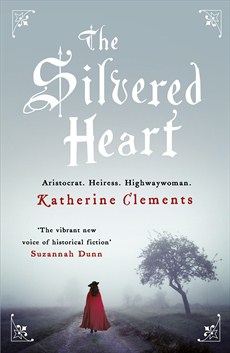
The Silvered Heart by Katherine Clements

The Silvered Heart This is Katherine Clements’ second novel, following her debut The Crimson Ribbon, which I read last year. Both books are set during the English Civil War, but while The Crimson Ribbon is written from a Parliamentarian perspective (the main character is a servant in the household of Oliver Cromwell), The Silvered Heart takes us into the Hertfordshire countryside and shows us what life was like for the Royalists after they found themselves on the losing side. Our heroine this time is Katherine Ferrers, a legendary seventeenth century highwaywoman, known as “the Wicked Lady”.

The story begins in 1648 in an England divided by war – a war which seems to be entering its final stages following a series of Royalist defeats and the imprisonment of the King at Carisbrooke Castle. Orphaned heiress Lady Katherine Ferrers is on her way to Ware Park, home of Thomas Fanshawe to whom she is being married off, when her carriage is attacked by a band of highwaymen. She survives this encounter, but what she experiences that day will go on to shape the course of her life.

Katherine’s marriage to Thomas is not a happy one, even after the war ends. Her husband spends most of his time in London plotting with his friends and dreaming of the day the monarchy will be restored, while Katherine struggles to get by at Ware Park, now impoverished and neglected, like many of the once great Royalist estates. With her own inheritance – her childhood home, Markyate Cell – lost to her, Katherine’s future looks bleak, especially as she is unable to give Thomas the child he so desperately wants. It’s only after meeting Rafe Chaplin, brother of her maid Rachel, and learning about his way of life, that Katherine discovers another option is open to her…if she chooses to take it.

I enjoyed The Silvered Heart – I thought it was a better book than The Crimson Ribbon – but it wasn’t quite what I’d expected. I had imagined lots of scenes involving moonlit roads, coaches appearing out of the mist, and shouts of “stand and deliver”. There was a little bit of that, but not as much as I was hoping for. I was disappointed that I was almost two hundred pages into the book before there was any hint of Katherine’s new career as a highwaywoman – and when it did happen, I wasn’t entirely convinced that the woman I had been getting to know in the first half of the novel would have chosen to turn to a life of crime.

Where The Silvered Heart does excel is in its portrayal of England in the aftermath of civil war, during the period known as the Interregnum: a time when those who had been loyal to their king find that they have their homes taken from them or are so heavily taxed and fined they can no longer afford to live in the manner they are used to; a time when men with Royalist sympathies risk exile or imprisonment in the Tower of London, and when networks of spies and double agents are formed as loyalties shift and allegiances change. This is the world in which Katherine finds herself and the backdrop against which her story is played out.

While the highway robbery aspect of the novel isn’t given as much attention as I would have liked, there is a lot of focus on Katherine’s romantic entanglements and relationships with the other main characters in the novel. I have already mentioned her unhappy marriage to Thomas Fanshawe and her partnership with Rafe Chaplin, but there are two more characters whom I found particularly interesting: Rachel, Katherine’s maid, whose relationship with her mistress is much more complex than it appeared to be at first, and Richard Willis, a scheming Royalist officer who knows more about Katherine than she is comfortable with.

I enjoyed reading the author’s note at the end of the book in which Clements tells us about the real life Lady Katherine Ferrers and shares with us a picture of the only known portrait of our heroine. It seems that there is a lack of actual evidence to link the real woman with the Wicked Lady of legend – Clements has drawn on both the historical facts and the details of the legend to create her version of events – but it’s interesting to consider the circumstances that may have led to these stories springing up around Katherine.

It appears that Katherine Ferrers has inspired a number of other novels (Deborah Swift’s recent young adult novel, Shadow on the Highway, is one) and also some films, including a 1945 adaptation starring James Mason and Margaret Lockwood. I’m surprised that I had never heard of her before reading The Silvered Heart, but I’m pleased to have been introduced to this fascinating woman at last!

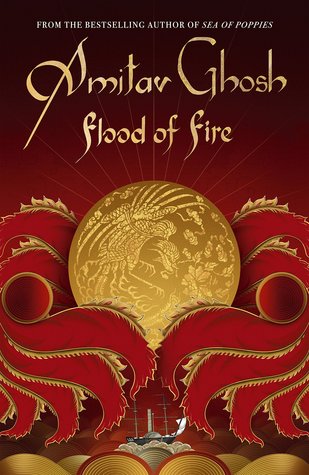
Flood of Fire by Amitav Ghosh

Flood of Fire Flood of Fire is the third and final part of Amitav Ghosh’s Ibis Trilogy and I think it’s probably my favourite of the three books. Set in India and China before and during the First Opium War, the trilogy follows the adventures of a group of people thrown together on board a former slaving ship called the Ibis.

This third novel pulls together threads from the first two and while it may be possible to still enjoy this book without having read the others, I would strongly recommend reading all three in order. While Sea of Poppies and River of Smoke took us through the build up to the conflict, describing the disputes over the trade of opium and the deterioration of relations between Britain and China, Flood of Fire covers the war itself.

The novel opens in 1839 and the first character we meet is Kesri Singh, brother of our old friend, Deeti. Kesri is a havildar (a rank equivalent to sergeant) in the Bengal Native Infantry, part of the East India Company, and through his storyline we are given some insights into army life and the contribution made by Indian regiments to Britain’s military victories in China. Next we are reunited with Zachary Reid, the American carpenter-turned-sailor who played a major part in Sea of Poppies but was absent from River of Smoke. In this book, Zachary begins an affair with his new employer, Mrs Burnham, before setting his sights on becoming a successful businessman.

We also rejoin Neel Rattan Halder, the former Raja of Raskhali, who is now living in Canton where he is able to use his skills as an interpreter to assist China’s war effort. Neel’s story is told mainly in the form of a journal and gives us a Chinese perspective of events. Finally, the widowed Shireen Modi is travelling to Hong Kong to visit the grave of her husband, Bahram, and to try to recover some of the money he lost when his cargo of opium was confiscated in River of Smoke. These are the four main characters in Flood of Fire, but other characters from the previous two novels also make appearances, including the French botanist Paulette Lambert; her childhood friend, Jodu; Bahram Modi’s illegitimate son, Ah Fatt (known as Freddie); and Baboo Nob Kissin, the Burnhams’ agent.

Before reading these books I knew nothing at all about the First Opium War, so this trilogy has provided a perfect introduction. Devoting three long novels to a relatively short period of history allows the author to go into a lot of depth, describing first the production of opium in India (Sea of Poppies), the merchants who transported the drug to China (River of Smoke) and finally, in Flood of Fire, the reasons why Britain went to war with China after the trading of opium was banned in Canton. The events of the war itself are given a lot of attention too, from descriptions of battles and strategies to the negotiations that would lead to the British acquisition of Hong Kong.

Although there were times when I felt too much time was being spent on one character and not enough on another, I did find all of their storylines compelling and interesting – with the exception of Zachary’s affair. It was obviously intended to add some comedy to the book, but it didn’t work for me at all and I didn’t think it fit the tone of the rest of the trilogy. Zachary is the character who changes the most over the course of the three novels – and not for the better; his transformation in Flood of Fire could be seen as an example of how greed and ambition can lead to corruption, and is written quite convincingly, but I still found it disappointing as he was such a likeable person at first. As for the other characters, some of their stories end in happiness and others in sadness or tragedy, but I was pleased that they were all given a proper resolution.

The book finishes with a very long list of sources, showing the amount of research which must have gone into the writing of the Ibis Trilogy. We are told that these sources were taken from the archives of Neel Rattan Halder (one of the characters in the story) and that Neel and his descendants have left behind more information which has not yet been used. This gave me hope that, although Flood of Fire is the last of this particular trilogy, it would be possible for Amitav Ghosh to continue the story by moving forward to another period of history. Whether he does or not, I am still happy to have had the opportunity to read these three wonderful novels!

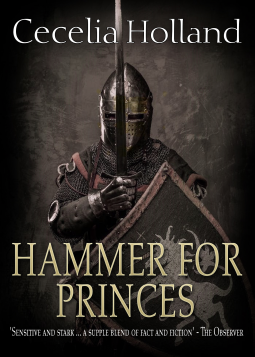
Hammer for Princes by Cecelia Holland

Hammer for Princes Cecelia Holland is an American author of historical fiction; her novels cover a wide range of time periods and settings as diverse as 12th century Iceland, the Mongol invasion of Eastern Europe, medieval France, and the search for Tutankhamun’s tomb. Earlier this year I read City of God, a story of Borgia-ruled Rome, and enjoyed it enough to want to try more of her work.

Hammer for Princes (which I have discovered was originally published in 1971 as The Earl) is set in England during the period known as The Anarchy. Since the death of King Henry I in 1135, the country has been divided between supporters of his nephew, King Stephen, and his daughter, the Empress Matilda. At the point when Hammer for Princes begins, Matilda’s son, Prince Henry, has taken up the battle for the throne and the country is still in a state of civil war. Fulk, Earl of Stafford, has pledged his loyalty to Henry and it is through Fulk’s eyes that the events of the novel unfold.

Fulk is an intelligent, shrewd man with a lot of experience when it comes to warfare and politics. But even as he leads his men in battle, storms castles and fights in tournaments, Fulk’s biggest problems come in the form of his own family. His scheming uncle Thierry has his eye on some of Fulk’s lands, which he believes are rightfully his, and to Fulk’s disappointment it seems that his own son, Rannulf, is ready to take Thierry’s side in the family feud.

This novel is written in the same detached, unadorned style I remember from City of God, which gives Cecelia Holland’s books a distinctive style all of their own. The characters are difficult to like and difficult to understand or connect with on an emotional level, but this just makes them all the more fascinating and complex. I’m not sure that I fully understood the purpose of everything Fulk said and did (I felt very much the same about the actions of Nicholas in City of God) but I do like books in which not everything is clearly explained for the reader and I don’t mind sometimes being left to interpret things for myself.

Hammer for Princes doesn’t have a lot of plot, being more of a series of episodes in Fulk’s life which, when added together, build up a vivid picture of the world of a medieval nobleman. The setting is a little unusual because Fulk is on the move all the time: on horseback, in camp, getting ready to ride into battle or journeying between castles. Holland does not write long, flowery descriptions but she does choose just the right words to set the scene and create atmosphere.

As I read Hammer for Princes I kept thinking of Wolf Hall; they are very different stories, of course, but the portrayal of Fulk reminded me very much of Hilary Mantel’s portrayal of Thomas Cromwell. Both novels are written in the third person, but delve deeply into the minds of their protagonists, both of whom are clever, subtle men with the sort of personal qualities that enable them to find their way through the shifting loyalties and political intrigues of their time.

I enjoyed following Fulk’s story and am looking forward to my next Cecelia Holland novel, whichever that may be.

Thanks to Endeavour Press for providing a review copy via NetGalley.

Who would be a queen?

I certainly wouldn’t, based on the stories of the two 16th century queens I’ve been reading about recently!

The Last Queen The first of our two queens is Juana of Castile, also known as Juana la Loca (‘the mad’), whose life is retold in fictional form in The Last Queen by C.W. Gortner. I think most of us will have heard of Juana’s younger sister, Katherine of Aragon, the first wife of Henry VIII who was divorced so that the King could marry Anne Boleyn, breaking away from Rome in the process. Juana’s story is less well known (outside Spain, at least) and less often covered in historical fiction, but just as interesting and tragic.

Juana is the third of five children born to Queen Isabella and King Ferdinand of Spain, whose joint rule has brought together the two Spanish kingdoms of Castile and Aragon. The King and Queen have arranged marriages for all of their children, in the hope of forming political alliances, and Juana finds herself married against her will to Philip, Duke of Burgundy, son of the Holy Roman Emperor. Despite her initial feelings, Juana quickly falls in love with her new husband – but her happiness doesn’t last long. The deaths of her elder brother and sister leave Juana as her parents’ heir and her relationship with Philip changes as a result.

Influenced by the scheming Archbishop Besançon, Philip sets his sights on taking the throne of Spain for himself and Juana finds herself betrayed and accused of insanity. Even as she discovers that the very people she should be able to trust want only to bully and manipulate her, she remains determined to fight for her throne and her country.

This is the first of C.W. Gortner’s books I’ve read and I will definitely consider reading more. I thoroughly enjoyed this moving and dramatic novel which took me through a period of Spanish history of which I previously knew almost nothing. There’s some beautiful descriptive writing which brings each of the various settings to life, from Granada during the Conquest of 1492 to the extravagance of the French court.

Gortner is a male author, if you’re wondering, and he writes very convincingly from the perspective of a young woman in this novel. Whether or not Juana actually suffered from mental illness is debatable; the point of view taken in this book is that the ‘madness’ developed as a result of years of stress and suffering – and branding her mad was a convenient way for her enemies to prevent her from ruling. I don’t know enough about her to say whether this is likely or not, but I did love Gortner’s portrayal of Juana and wished she could have had a little more happiness in her life.

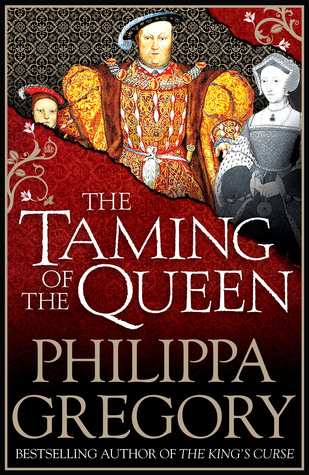
The Taming of the Queen Our second queen is Katherine Parr, sixth and final wife to Henry VIII, whose story is told in The Taming of the Queen by Philippa Gregory. I hadn’t really intended to read this book as I find Katherine one of the less interesting wives and, having read several other fictional accounts of her life (including Queen’s Gambit by Elizabeth Fremantle and The Secret Keeper by Sandra Byrd), I didn’t imagine this one would have anything new to add. When I saw it in the New Books section of the library, however, I couldn’t resist reading it – and I’m pleased I did as I found it to be one of Gregory’s better Tudor court novels.

Katherine Parr (or Kateryn as her name is spelled in this book) could be seen as one of Henry’s luckier wives, outliving the King and managing to avoid both divorce and beheading, but this doesn’t mean that she was happy or that she didn’t fear for her life at times. By this stage of his life Henry is, shall we say, past his prime: Gregory describes (sometimes in too much detail!) his gluttony at banquets, his bodily functions and the smell of his ulcerated leg. Add to this his temper, unpredictable behaviour and obsession with his third wife, Jane Seymour, and you can see how difficult things are for poor Kateryn, especially as she has been forced to give up her secret love for Thomas Seymour.

Kateryn finds some comfort in getting to know her new stepchildren – Mary, Elizabeth and Edward – and restoring them to their places at court, and also in religious study. She welcomes preachers to her rooms (including Anne Askew, who was later burned at the stake) and as a result of this narrowly escapes death herself; she debates religious reform with her ladies and sometimes with the King himself; and she writes several books, becoming the first Queen of England to publish under her own name.

Kateryn is an intelligent and mature woman who has already been widowed twice before her marriage to Henry and she is able to tolerate her situation and handle the King’s whims in a way that a younger, less experienced girl may not have done. I liked her, but I felt that there were times when Gregory attributed words and actions to her that didn’t feel consistent with the way her character was being portrayed. This made me think that maybe she is more comfortable writing from the perspective of younger, livelier narrators.

This is an entertaining read and if you’ve never read about Katherine Parr before, it provides a good overview of her life and of the final years of Henry’s reign (events such as the sinking of the Mary Rose are covered in dramatic detail). I did prefer Elizabeth Fremantle’s Queen’s Gambit, though, and would recommend that book ahead of this one.

Have you read any other novels about Juana of Castile or Katherine Parr? Which are your favourites?

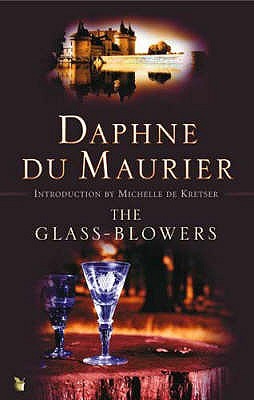
The Glass-Blowers by Daphne du Maurier

A glass blower, remember, breathes life into a vessel, giving it shape and form and sometimes beauty; but he can, with that same breath, shatter and destroy it.

The Glass-Blowers The Glass-Blowers was the book selected for me in the last Classics Spin at the end of August. The deadline for reading our Spin book is this Friday, so I’ve finished just in time! Although it has taken me a while to actually pick this novel up and read it, that’s not because I wasn’t looking forward to it. Daphne du Maurier is one of my favourite authors and I fully expected to love this book as I’ve loved most of her others. That didn’t really happen, unfortunately, but I did still find things to enjoy.

Published in 1963, The Glass-Blowers is historical fiction based on the lives of du Maurier’s own ancestors who lived in France during the Revolution. The story is narrated by Sophie Duval, an elderly woman writing her family history in the form of a letter to send to her nephew. Sophie begins by looking back on her childhood growing up in the Loir-et-Cher region of France as the daughter of master glass-blower Mathurin Busson. Most of her early memories revolve around her eldest brother, Robert, who is constantly getting into debt and finding himself in trouble. It is Robert who will eventually move to England and provide the link to Daphne du Maurier herself.

In France, meanwhile, Sophie and her other siblings – Pierre, Michel and Edmé – become swept up in the drama of the French Revolution. So much of what I’ve read about the Revolution is focused on Paris, so it was fascinating to read about the ways in which it affected the lives of those living in the countryside and in other cities such as Le Mans. The section set during the War in the Vendée is particularly gripping and vivid – probably because Sophie herself is caught up in the uprising and experiences it directly. Other major events happen in the background and Sophie only hears thirdhand accounts, which takes away some of the emotional impact of the story (I kept thinking of The Brethren by Robert Merle, another novel set in France which is written in a similarly passive style).

The distance between narrator and reader meant that I never became fully engaged in the lives of the Bussons and never felt that I had really got to know Sophie. Her brother and sisters were stronger characters, particularly Michel, who becomes a political activist and joins the National Guard, and Robert, who repeatedly reinvents himself as one business venture after another ends in failure. Robert infuriated me at first but he eventually became my favourite character and I found myself looking forward to his scenes as they added a spark of life to what I was beginning to find quite a tedious story.

One of the things I usually love about du Maurier is her descriptive writing and the way she creates a strong sense of time and place – and this is something that I thought was missing from The Glass-Blowers (apart from in the Vendée scenes, as I mentioned above). This hasn’t become a favourite du Maurier book, then, but in my opinion even her weaker novels are still worth reading. Now that I’ve read this one I’m planning to read Mary Anne, another fictional account of one of du Maurier’s ancestors, this time on the English side of the family. After that I’ll only have Frenchman’s Creek and Castle Dor left to read.

The Queen’s Man by Sharon Penman

The Queens Man Having read and loved three of Sharon Penman’s historical fiction novels – The Sunne in Splendour, Here Be Dragons and Falls the Shadow – I’ve been interested in trying her series of historical mysteries set in medieval England. I downloaded the first in the series, The Queen’s Man, when it was offered as the Kindle Daily Deal on Amazon a while ago and have been waiting for the right time to read it.

The Queen’s Man introduces us to Justin de Quincy who, as the novel begins in December 1192, has just discovered that he is the illegitimate son of the Bishop of Chester. Furious that his father will not acknowledge their relationship, Justin sets out on a journey to London where he hopes to start a new life. Before he reaches London, however, he witnesses a murder on a snowy road just outside Winchester. As the killers flee the scene, the dying man – a goldsmith called Gervase Fitz Randolph – gives Justin a letter and makes him promise to deliver it to Queen Eleanor in London.

Eleanor of Aquitaine, widow of Henry II, is anxiously awaiting news of her son, King Richard I, who has disappeared while on crusade. As the weeks go by with no word of the missing king, it’s starting to look likely that he is dead and Eleanor’s youngest son, John, Count of Mortain, is getting ready to claim the throne for himself. Justin de Quincy’s arrival at court in possession of a bloodstained letter gives the Queen a clue as to Richard’s fate – but she still wants to know more.

As Justin was the only witness to the murder and the only person able to identify the killers, the Queen commissions him to investigate. Who was responsible for Gervase’s death? Was it a member of the goldsmith’s own family who wanted him dead or could it have been John who paid the murderers to steal the letter before it could reach Eleanor?

I enjoyed The Queen’s Man; it doesn’t compare with Penman’s straight historical novels – it lacks the depth and the emotional impact – but I didn’t mind that as I knew from the beginning that this would be a different type of book. While the plot and characters (with some obvious exceptions) are fictional, the historical background is as accurate and detailed as you would expect from Penman, with lots of interesting snippets of information that bring the 12th century to life: a visit to both a lazar house (hospital for lepers) and a medieval horse fair are incorporated, for example, and there’s a fascinating description of ‘trial by ordeal’ using hot cauldrons.

As a murder mystery, the plot is quite complex with plenty of suspects and some red herrings – although it’s slightly disappointing that some important information is withheld from the reader until near the end, so it would have been difficult to have guessed the solution before it was revealed.

The Queen’s Man has an interesting variety of supporting characters, ranging from innkeeper’s widow, Nell, and the under-sheriff of Winchester, Luke de Marston, to one of Queen Eleanor’s ladies, the beautiful Claudine. My only concern is that I found Justin de Quincy himself very bland. Based on this first novel, I wouldn’t have thought he was a strong enough character to build a whole series around. I could be wrong about him, though, and I’m still interested enough to want to read the next book, Cruel as the Grave, at some point to see how his story continues.