The Name of the Rose by Umberto Eco

I can’t remember when I first read Umberto Eco’s The Name of the Rose; it was possibly in the early 2000s – long enough ago to have forgotten most of the story, but recently enough that certain scenes have stayed quite clearly in my mind. I knew I hadn’t understood everything the first time, so when I saw that Annabel of Annabookbel was hosting a readalong in January I thought it would be interesting to read it again. Unfortunately, it was a busier month than I expected and I fell too far behind to be able to participate in the readalong, but I have been re-reading the book anyway and finished a few days ago.

The Name of the Rose is set in 1327 and is narrated by Adso of Melk, a Benedictine novice from Austria. I think the best way I can describe the book is to quote directly from the back cover of my old Picador edition: “Whether you’re into Sherlock Holmes, Montaillou, Borges, the nouvelle critique, the Rule of St. Benedict, metaphysics, library design, or The Thing from the Crypt, you’ll love it. Who can that miss out?” It probably misses out quite a lot of people, actually, but at least that gives you a good idea of the range and number of different topics and influences found in the novel.

The story begins with Adso accompanying a Franciscan friar, William of Baskerville, to a remote Benedictine monastery in the Italian mountains. In a few days’ time, this monastery will host a meeting between an embassy from Pope John XXII and a group of Minorites, but preparations are not going according to plan…Adelmo, a young illustrator known for his beautiful illuminated manuscripts, has been found dead, having supposedly fallen from a window of the Aedificium, the large building which houses the abbey’s renowned library. Was it suicide or was it murder? William, who has already impressed the abbot by successfully locating a lost horse, is asked to investigate.

There’s a reason why Eco has given William the name ‘Baskerville’ – as he moves around the abbey asking questions and uncovering the circumstances behind Adelmo’s death, he uses his powers of deduction just like Sherlock Holmes. Adso, of course, fills the position of Dr Watson, needing William to explain things to him as he goes along (which benefits the reader as well). But when a second death occurs, this one more gruesome than the first, William knows that if he is to have any chance of solving the mystery, he will need to gain access to the library – the secret, forbidden library which only the librarian and his assistant are allowed to enter.

As a murder mystery, The Name of the Rose is quite a good one. Reading it for the second time, I remembered the solution and the culprit, but not every detail of the plot, so I enjoyed watching it all unfold again. There are clues – physical and spoken – there are secrets to uncover, complex relationships to untangle and red herrings which point us in the wrong direction for a while. There are also some wonderful descriptions of the library, a genuinely eerie and sinister place; the scenes in which William and Adso explore its labyrinthine passages and chambers are some of the highlights of the book.

But The Name of the Rose is much more than just a medieval mystery novel. It is also a very detailed and erudite study of the religious history of Europe in the early 14th century, which I think is why some people love the book while others struggle with it. At the time of our story, the papacy has moved from its usual home in Rome to Avignon during a period of conflict between the church and the kings of France. From the very beginning of the novel, we are given page after page of information on the divisions within the church and the various orders and sects, such as the controversial movement led by Fra Dolcino, as well as lots of theological discussions on subjects ranging from poverty to whether Jesus ever laughed. The first time I read the book I found myself skimming over most of this to get to the murder mystery parts; this time, I tried to concentrate and understand the religious detail, but Eco’s style does not make it easy to absorb the facts and I admit there was still a lot that went over my head.

I enjoyed my re-read of this book, although I’m not sure whether I really got much more out of it than I did on my first read. I did love revisiting the library scenes, the descriptions of monastery life, and the characters of William and Adso. I have never tried reading any of Umberto Eco’s other books, but maybe I should. Does anyone have a recommendation?

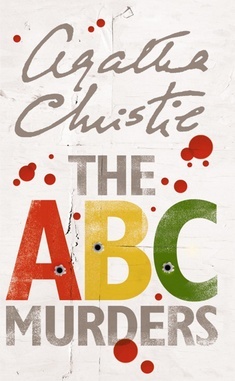
The ABC Murders by Agatha Christie

When I read about the Read Christie 2019 Challenge hosted at www.agathachristie.com – the idea being to tick off twelve books from twelve different categories over the course of the year – I was immediately tempted to join in. I didn’t want to think of it as a challenge as such, or make a definite commitment, but I thought I could use the monthly prompts to get through some of the many Christies I still haven’t read. This month’s category is “a recent TV adaptation” and the suggested book is The ABC Murders. I had started to watch the new BBC adaptation of The ABC Murders which was shown at Christmas, but struggled to get into it, so I thought I would try the book instead. And what a great book it is!

The murder of Alice Ascher in her small tobacconist shop in the town of Andover seems as though it should be an easy one to solve. There is an obvious culprit – the woman’s drunken husband – and he would certainly have been the prime suspect, if not for a mysterious coincidence which happened just days before the murder. Hercule Poirot had received a typewritten letter signed simply A.B.C. and warning of a crime to be committed in Andover on that particular date – and beside the body of the dead woman was a copy of the ABC Railway Guide.

But this will not be the only murder to take place:

‘I admit,’ I said, ‘that a second murder in a book often cheers things up. If the murder happens in the first chapter, and you have to follow up everybody’s alibi until the last page but one – well, it does get a bit tedious.’

When a similar letter arrives soon afterwards giving advance warning of a second murder which will happen in Bexhill, it doesn’t come as a surprise to Poirot when the second victim has a name beginning with B and when another ABC Guide is found next to the body. Convinced now that the killer is following an alphabetical pattern, Poirot must uncover his or her identity before they get all the way to Z.

This is one of several Poirot novels narrated by Captain Hastings (although there are a few chapters written from the perspective of other characters). I always seem to enjoy the ones with Hastings, partly because he, like the reader, is often in the dark and needs Poirot to explain things to him, but also because I think Poirot having a friend to discuss things with gives these books a different dynamic to the ones where he is working entirely on his own amongst strangers. Sometimes Hastings can make an observation or suggestion which proves to be useful later on, as he does once or twice in this book. Inspector Crome is investigating too, and a ‘legion’ of the victims’ families and friends is also formed to see whether they can shed any light on the situation.

What makes this book so intriguing is that each of the murders which takes place seems unrelated to the others, apart from the ABC theme and the letters sent to Poirot. They each have a separate set of suspects, all with their own motives, but what Poirot needs to do is find something which links them all to one man or woman – the mysterious A.B.C. I found this a particularly clever Christie novel and didn’t come close to solving it. I allowed myself to be sent in completely the wrong direction by the red herrings and took everything at face value; in fact, for a long time I thought I was reading a different sort of mystery entirely.

I loved this one and I think I did the right thing in reading it before trying to watch the adaptation again. I’m planning to read another Christie novel in February, although I don’t know what it will be yet – I’m waiting to see what the chosen category will be for the next stage of the challenge.

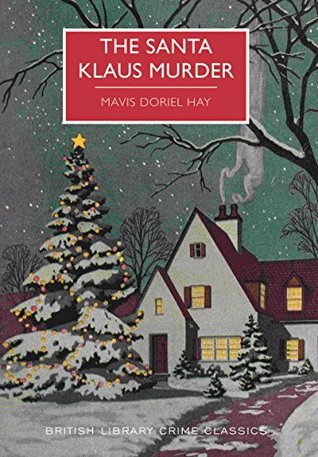
The Santa Klaus Murder by Mavis Doriel Hay

Mavis Doriel Hay wrote three mystery novels during the 1930s, all of which are now available as British Library Crime Classics. This one, The Santa Klaus Murder, sounded as though it would be perfect for the time of year, and of course it was. I enjoyed it, although I found it very similar to Agatha Christie’s Hercule Poirot’s Christmas and Georgette Heyer’s Envious Casca, and not as good as either of those books.

The Santa Klaus Murder is set in and around Flaxmere, a country estate belonging to Sir Osmond Melbury. The novel opens with several first-person accounts written by members of Sir Osmond’s family as they gather at the house to celebrate Christmas and in this way we get to know all of the main characters and learn a little bit about their backgrounds and the relationships between them.

It seems that for many years, Sir Osmond has been trying to control and manipulate the lives of his adult children. His son, George, has the security of knowing that, as the only male heir, his inheritance is safe, but for the four daughters things are much more uncertain. He has already tried to influence, with varying success, the marriages of the three eldest girls – Hilda, Edith and Eleanor – and is now trying to do the same with Jennifer, the youngest. Philip Cheriton, the man Jennifer loves, is attending the Christmas gathering, but Sir Osmond has also invited Oliver Witcombe, whom he would prefer to see as her husband. Jennifer is desperate to marry Philip but needs to find a way to do so without upsetting her father.

We do see a kinder side to Sir Osmond when, on Christmas Day, he asks Oliver to dress up in a Santa Klaus costume and distribute gifts to the family and servants. When the old man is discovered shot dead at his desk in the study that same afternoon, all the clues seem to point towards Santa…but why would Oliver want Sir Osmond dead? Colonel Halstock, the Chief Constable, is brought in to investigate and quickly discovers that almost everyone who spent Christmas at Flaxmere may have had a motive for murder. Could the killer be one of Sir Osmond’s children or one of their partners? What about his pretty young secretary, Grace Portisham, who may be expecting to receive something in his will? Or could it be Ashmore, the family’s old chauffeur, who lost his job at Flaxmere just before Christmas?

Most of the remaining chapters in the book, with one or two exceptions, are narrated by Col. Halstock as he tries to identify the culprit. There’s a lot of discussion of alibis, people’s movements, and the layout of the rooms, so if you enjoy trying to solve those sorts of puzzles – where somebody was at a certain time and what they were doing, or how somebody could have moved from one room to another without being seen – then this is probably the book for you. I didn’t work out who the murderer was, although I had my suspicions, but I did find other parts of the plot easy to predict. As a traditional country house mystery, there wasn’t much that made this book stand out from other books of its genre and era, but as an entertaining and undemanding Christmas read I found it satisfying enough.

Mavis Doriel Hay’s other novels are Murder Underground and Death on the Cherwell, both of which I’m now interested in reading.

The Sentence is Death by Anthony Horowitz

I loved The Word is Murder, Anthony Horowitz’s first book to feature the detective Daniel Hawthorne, so when I heard that there was going to be a second book I couldn’t wait to read it. I didn’t have to wait too long, as this one has been published only a year after the first, and I’m pleased to report that I enjoyed it just as much, if not more.

When high profile divorce lawyer Richard Pryce is found bludgeoned to death with an expensive bottle of wine, the culprit seems quite obvious. Just days earlier, Pryce had been threatened by a client’s ex-wife who poured a glass of wine over his head in a restaurant. Surely that can’t be a coincidence? But Pryce has plenty of other enemies, whose identities come to light as investigations continue. Could one of them have wanted him dead? And what is the significance of the numbers painted on the wall near Pryce’s body? As this is clearly a more complex case than it seemed at first, ex-police detective Hawthorne is asked to assist with solving the crime.

Having worked with Hawthorne on his previous mystery in The Word is Murder, author Anthony Horowitz reluctantly agrees to team up with him again and document the progress of the investigations in a second book, The Sentence is Death. Hawthorne is supposed to be the hero of the book, but this time Anthony decides to do some detecting of his own in the hope of reaching the solution first. Can he solve the mystery before Hawthorne does?

If this sounds confusing, I should explain that, as in the previous novel, Horowitz is a character in his own book. The Anthony in the story is clearly based on the author himself – he frequently discusses his career as a novelist and screenwriter and refers to his wife and his publisher by name – yet he interacts with fictional characters, takes part in fictional storylines and struggles to solve the mystery the real Horowitz has created. I think it’s a clever concept and great fun, though not everyone will agree – it’s probably something you’ll either love or you won’t.

It’s not really necessary to have read the first book before starting this one as the mysteries are entirely separate. Like the first, this is a strong, well-constructed mystery with plenty of clues but plenty of red herrings as well. I didn’t manage to solve it (I confess that I allowed myself to be distracted and misled by every one of those red herrings) but I was happy to be kept in suspense and wait for Hawthorne – or Anthony, of course, if he got there first – to explain it all for me.

However, I would still recommend reading both books in order if you can, so that you can watch the progression of Anthony’s relationship with Hawthorne. Hawthorne is no more pleasant or likeable now than he was when we first met him in The Word is Murder, and he is still every bit as much of an enigma, but we do pick up a few new bits of information about him here, with some glimpses of his home and his life away from his detection work. I think he’s a great character, for all of his flaws, and I love his partnership with the fictional Anthony.

When I read the first novel I found the details of Anthony’s publishing and television career a slight distraction from the main plot, but in this book they seemed to form a more intrinsic part of the story and I liked that aspect much more. Horowitz seems to be having fun at the expense of his fictional self, as Anthony stumbles from one disaster to another; I particularly enjoyed the opening scenes on the set of Foyle’s War and a later scene involving the theft of a book – and I’m curious to know whether the literary fiction author Akira Anno was based on a real person (although if she was, I doubt her true identity will ever be revealed).

I loved this book – and the good news for Horowitz and Hawthorne fans is that there’s going to be a third.

Thanks to Century for providing a copy of this book for review via NetGalley.
The Case of the Gilded Fly by Edmund Crispin

Like many people, I first encountered Edmund Crispin’s Oxford don detective Gervase Fen in The Moving Toyshop, the third in the series and the one which is usually said to be his best. I loved it and wanted to read more, so going back to the beginning of the series and reading The Case of the Gilded Fly seemed a good idea. As it was published in 1944 I had hoped to read it for last month’s 1944 Club but didn’t have time and ended up reading it after the event was over.

The novel opens with an introduction to each of the main characters as they travel to Oxford on the train. Among them are Gervase Fen, Professor of English Language and Literature at Oxford University, and his old friend the Chief Constable, Sir Richard Freeman. Ironically, Fen’s passion is for detection, while Sir Richard’s is for literature, which leads to some interesting conversations between the two of them. Although this is the first book in the series, it is implied that Fen already has some experience of solving mysteries. He certainly has no difficulty in solving the ‘Case of the Gilded Fly’, even though everyone else finds it baffling.

Also arriving on the same train as Fen and Sir Richard are Robert Warner, a playwright who has chosen an Oxford theatre for the premiere of his new play, and several members of the cast. One of these is the aspiring young actress Yseut Haskell, a spiteful, self-obsessed person who seems to cause trouble everywhere she goes. As we get to know the characters better during their first night in Oxford, we discover that almost everyone has a reason to dislike her, so when Yseut is found dead in a room in the college the next day, there’s no shortage of people with motives. The problem is, none of them seemed to have had an opportunity to enter the room unobserved and carry out the murder. How did the killer manage it? And what is the significance of the Egyptian-style gilded ring found on Yseut’s finger?

This is a complex locked-room-style mystery with a lot of discussion of alibis, floor plans and the timings of events. I didn’t come close to solving it, although Fen works it out very early on but has no proof and keeps us waiting until the end to find out who did it and how it was done. He also faces a moral dilemma: as Yseut was such an unpleasant person and nobody is particularly sorry to see her dead, does he really want the killer to be punished – especially as the police have already decided it was suicide? In my opinion Yseut had done nothing to deserve being murdered, but I suppose this provides a reason why Fen doesn’t immediately tell the police what he knows and bring the novel to an end before it even begins!

I enjoyed this book, but I found it slightly disappointing in comparison to The Moving Toyshop. As a more conventional sort of mystery, it doesn’t have quite the same feeling of originality and novelty, and although there are still plenty of witty comments and literary allusions flying back and forth between Fen and his friends, they are not as much fun as the limericks and ‘Detestable Characters in Fiction’ game in The Moving Toyshop. It’s possible that I would have liked The Case of the Gilded Fly more if I’d read it first and had nothing to compare it with.

Have you read any of the Gervase Fen mysteries? Which ones are your favourites?

The Grave’s a Fine and Private Place by Alan Bradley

After reading Alan Bradley’s Thrice the Brinded Cat Hath Mew’d last month, I decided to move quickly on to the next in the Flavia de Luce mystery series, The Grave’s a Fine and Private Place. This is the ninth Flavia novel and brings me completely up to date with the series (for now; another book is due early next year).

In this book, our twelve-year-old detective is coming to terms with the terrible news she received at the end of the previous novel. Along with her two elder sisters, Feely and Daffy (Ophelia and Daphne), and her father’s old friend and servant, Dogger, Flavia is taking a boating trip to try to relax and recover from the shock. Trailing her hands in the water as they sail down the river, Flavia suddenly feels her fingers get caught between teeth – it seems that she has discovered yet another dead body. Being Flavia, she is more excited than repulsed, and when the corpse of a young man is pulled to the shore she can’t wait to find out how and why he died.

The dead man is Orlando Whitbread, an aspiring actor with a local theatre company. As Flavia delves more deeply into Orlando’s background, she discovers links with a murder that took place several years earlier. In her usual way, she sets about searching for clues and speaking to suspects – but this time she has some help. It seems that Dogger has been carrying out some investigations of his own and is proving to be Flavia’s equal as a detective, while Daffy, who is never to be found without her nose in a book, offers her assistance in solving some literary clues. This is something new for Flavia, for whom crime-solving has always been a very solitary activity.

We see more of Dogger in this book than ever before and he and Flavia are working together almost as equals, but I was particularly happy with the improvement in her relationship with Daffy. She is getting on better with her other sister too, and for the first time seems to be appreciating that there’s more to Feely than meets the eye. Maybe it has taken some family tragedies to make them overcome their differences – or maybe they are all just growing up. There have certainly been some changes in Flavia and she has come a long way from the tantrum-throwing eleven-year-old she was at the beginning of the series. On the other hand, I think she’s less fun as a character and maybe that’s why I can’t help feeling that the last few books in the series have lacked the charm of the earlier ones. That charm was important because it was what kept me reading and loving the Flavia books, even when the mysteries weren’t particularly strong.

The mystery in this one is slightly more complex than some of the others and I enjoyed meeting the characters who are drawn into it, such as Hob Nightingale, the undertaker’s son, and Mrs Palmer, a published poet who befriends Daffy. I found the final solution a bit unconvincing, however – the reasons for both the original murder and Orlando’s death seemed quite weak. Back to Flavia’s personal story, though, and this book has a much happier ending than the previous one! There were hints that the series might be about to go in an intriguing new direction, but I will have to wait for book 10, The Golden Tresses of the Dead, to find out.

Hallowe’en Party by Agatha Christie

With this year’s R.I.P. Challenge rapidly coming to a close, I decided to squeeze an Agatha Christie novel in before the end of the month. Hallowe’en Party was one I hadn’t read before so I thought it would be a good choice for a late October read. As one of the final Poirot novels, published in 1969 towards the end of Christie’s career, I wasn’t expecting it to be one of her better books – and I don’t think it was – but I did still enjoy reading it.

At the beginning of the book, Mrs Drake is hosting a Halloween party for a group of teenagers. One of them, thirteen-year-old Joyce, who likes to be the centre of attention, tries to impress the others by insisting that she had once been a witness to a murder. Knowing Joyce’s reputation for telling lies, nobody believes her…but at the end of the party, she is found dead, drowned in the bucket of water which had been used for the traditional Halloween game of bobbing for apples. It seemed that somebody may have believed Joyce after all and has murdered her before she can say any more.

Among the adults helping out at the party is the crime novelist, Ariadne Oliver, who summons her old friend, Hercule Poirot, to the village, sure that he will be able to identify Joyce’s killer. But when Poirot arrives he quickly discovers that before he can begin to solve the mystery of Joyce’s death, there’s another murder to investigate first: the one which Joyce claimed to have witnessed and which someone was so desperate to cover up that they were prepared to kill again.

As I said, I found this an enjoyable Poirot novel but not a great one. The solution to the mystery didn’t seem as complex or original as some of the others and I found some of the characters hard to distinguish from each other. Having said that, I did guess who had committed the murders before the truth was revealed – although I have to confess my guess was just based on gut instinct and not because I’m a better detective than Poirot. There are some other surprises towards the end as well, although one particular revelation felt too far-fetched – it seemed to come out of nowhere with no real reason for it.

I enjoyed reading about the preparations for the party and the games that were played at it, but I was slightly disappointed that the Halloween theme didn’t continue after the first few chapters. The rest of the book could have been set at any time of the year, really. It’s still quite an atmospheric book, though; I particularly loved the descriptions of the ‘sunk garden’ in the quarry where some of the later scenes take place.

There’s not much more I can say about this book. It’s a good entry in the series, although not my favourite, and if you’re already a Poirot fan I’m sure you’ll find a lot to like – especially if you’ve read some of the earlier books featuring Ariadne Oliver. If you’re new to Poirot, I would probably recommend choosing a different one to start with.

I’m counting this book towards the R.I.P. XIII challenge (category: mystery).