Tropical Issue by Dorothy Dunnett

Tropical Issue Having read all of Dorothy Dunnett’s six-volume Lymond Chronicles, eight-volume House of Niccolò series and her standalone novel, King Hereafter, I suppose it was only a matter of time before I picked up one of her Johnson Johnson mystery novels. I wasn’t entirely sure that I was starting with the right book, as Tropical Issue (originally titled Dolly and the Bird of Paradise – Dolly being the name of Johnson’s yacht and the ‘bird’ being the female narrator of the story) was actually the sixth to be published. I had discovered, though, that it is also the first chronologically, so it seemed like a good place to start.

Our narrator is Rita Geddes, a Scottish make-up artist with a punk hairstyle (the book was published in 1983 and I should point out here that unlike the rest of Dunnett’s books, these were contemporary novels rather than historical ones). Rita’s latest client is the journalist and celebrity Natalie Sheridan and at the beginning of the novel Rita is in London preparing Natalie for a photo shoot with the photographer, Ferdy Braithwaite. Ferdy has borrowed his friend Johnson Johnson’s studio flat to use for the session and in this way, Rita meets Johnson for the first time. Not that she learns much about Johnson during this first meeting, other than that he is recuperating after being seriously injured in a plane crash – and that he is a portrait painter, has black hair and wears bifocal glasses.

Joining Natalie for another job on the island of Madeira, Rita learns that the life of her friend and fellow make-up artist Kim-Jim Curtis could be in danger. And when Johnson and his yacht, Dolly, also arrive in Madeira, a mystery unfolds which is complex, surprising and takes the reader through a range of exotic locations from the banana plantations of Barbados to the volcanic craters of St Lucia. As with all good mystery novels, you’ll need to pay attention as things which may seem irrelevant at first turn out to be important later in the book.

I liked the character of Rita from the beginning. She has a very distinctive narrative voice, with her strong personality coming across in every sentence – how can you not love a character who thinks, when disturbed by an intruder in the night, “I rather wished I was wearing something handier than a quilt, but if all else failed, I could smother the guy if I caught him”? As for Johnson, it was difficult not to want to make comparisons with Dunnett’s other heroes, Lymond, Nicholas and Thorfinn, but really, while they do all share some characteristics, there are also some big differences between them. However, I do think there were a lot of similarities in the way Dunnett introduces his character to us – viewing him only through the eyes of other people (in this case Rita), with his true thoughts and motives often being obscured and misinterpreted.

While I love all of Dorothy Dunnett’s other books, I can’t really say that I loved this one – but I did enjoy it. It took me a while to really get into the story, but after a few chapters I was won over by a wild and wonderful sledge race to rival the ostrich ride in Niccolò Rising. It made a nice change, in a way, to be able to read a Dunnett novel without becoming too emotionally involved in the lives of the characters! I don’t feel the same compulsion to immediately read the rest of the series as I did with Lymond and Niccolo, but it’s good to know that there are still another six books to look forward to.

Cat Among the Pigeons by Agatha Christie

Cat Among the Pigeons Cat Among the Pigeons, published in 1959, is one of Agatha Christie’s later Poirot mysteries and combines a girls’ school setting with the story of a revolution in Ramat, a fictional country in the Middle East. I still have a lot of reading to do before I’ll have finished all of the Poirot books, but this is one that I’ve particularly enjoyed.

Most of the action takes place at Meadowbank School, an exclusive girls-only school in England which is still run by its two founders, Miss Bulstrode and Miss Chadwick, but first we visit Ramat, where Prince Ali Yusuf is preparing to escape the uprising in his country. In an attempt to keep some of his fortune safe, the Prince gives some valuable jewels to his pilot and asks him to smuggle them out of the country. The pilot’s sister and young niece, Jennifer, have been visiting Ramat but are due to return to England the next day, so he hides the jewels in their luggage without telling them what he has done.

Back in England, Jennifer begins attending Meadowbank School, one of several new girls to join the school that term. There are also some new teachers, a new secretary and a new gardener. When a murder takes place at the school a few weeks later, it seems that whoever committed the crime may have been trying to find the missing jewels. Is there someone at Meadowbank who shouldn’t be there? In other words, is there a ‘cat among the pigeons’?

Well, I was completely fooled by this one! While I found it very easy to guess the hiding place of the jewels, I did not guess who the murderer was until the truth was revealed. The most annoying thing was that I did originally suspect the right person but was thrown off the scent halfway through the book and decided I must have been wrong. After that, I think I suspected almost everybody!

As I was reading I kept wondering when Hercule Poirot himself was going to enter the story and I was surprised to find that he doesn’t actually make his first appearance until the final third of the book. By the time he arrives on the scene the mystery has already been partially solved and while he does unravel the rest of the clues and identify the murderer, I’m not sure Poirot’s involvement really added anything to the story.

Although the mystery was a good one that kept me guessing, the reason I enjoyed this book so much was the setting rather than the plot. Like many British children I grew up reading Enid Blyton books and still have very fond memories of them. I loved her two school series, St Clare’s and Malory Towers, and in Cat Among the Pigeons Agatha Christie captures the same sort of atmosphere. The school setting, the focus on the lives of the girls and their teachers, and the very late appearance of Poirot, gives this book a slightly different feel from the others I’ve read.

Have you read this one? Which is your favourite Poirot mystery?

The Curse of the Pharaohs by Elizabeth Peters

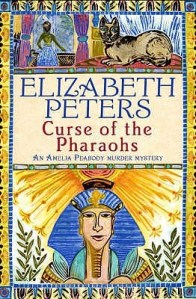
Curse of the Pharaohs This is the second book in Elizabeth Peters’ Amelia Peabody series. I read the first one, Crocodile on the Sandbank, two years ago in January 2012 and enjoyed it, so I’m not sure why it has has taken me so long to get round to reading this one.

The Curse of the Pharaohs is set in the late Victorian period and begins five years after the previous book ended. Amelia is happily married to the archaeologist Radcliffe Emerson and they now have a young son, Ramses. Despite longing to return to their work in Egypt, Amelia and Emerson have spent most of the last five years at home in England because they’re unable to agree on what to do about Ramses. But when Lady Baskerville, an old friend of Emerson’s whose husband has recently died, asks Emerson to continue Lord Baskerville’s excavation of an Egyptian tomb, he and Amelia are unable to resist. To make things even more interesting, there are suspicious circumstances surrounding Lord Baskerville’s death – and a possible link with an ancient pharaoh’s curse.

Leaving Ramses with his aunt and uncle, Amelia and Emerson head for Egypt where they begin the exciting task of excavating the pharaoh’s tomb, but soon there are more deaths and more attacks, often accompanied by sightings of a mysterious woman dressed in white. Amelia is now convinced that Lord Baskerville was murdered and that the murderer must be one of the people she and Emerson have met since their arrival in Luxor: the Irish Daily Yell reporter Kevin O’Connell maybe, or could it be Madame Berengaria, who believes she is the reincarnation of an Egyptian Queen, the rich American Mr Vandergelt, or even Lady Baskerville herself?

Beyond the actual mystery – which I found stronger and more complex than the one in the first book – there are two things I particularly liked about this book (and they are the same things I liked about the previous one). The first is the setting. Egypt is always fascinating to read about! I like the fact that although Peters herself has a PhD in Egyptology, she doesn’t go too deeply into the technical details of the subject, so that even those of us who know very little about Egyptian pharaohs, hieroglyphs or archeological digs can follow what’s happening and share in the enthusiasm Amelia and Emerson have for their work.

The second thing I love is Amelia’s narrative voice. From other people’s reviews of books in this series it seems that a lot of readers find Amelia’s strong, opinionated personality very off-putting at first. Luckily that hasn’t been a problem for me; it only took two or three chapters of Crocodile on the Sandbank for me to get used to her and start to warm to her. I think her practical, no-nonsense style fits perfectly with the entertaining plots and the ridiculous situations she finds herself in.

I enjoyed this second book as much as the first, although I did find the two very similar and while I’m looking forward to the third, The Mummy Case, I am concerned that they might lose their appeal unless I try to space them out. However, I have another sixteen or seventeen books to go, I think, so I’ll try not to let too much time go by before picking up book three! I can’t wait to get to know Ramses better in future books. He’s still just a lisping baby in this book but I’m looking forward to him being old enough to join Amelia and Emerson in their adventures!

A Monstrous Regiment of Women by Laurie R. King

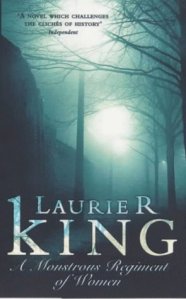
A Monstrous Regiment of Women This is the second in Laurie R. King’s series of novels featuring Mary Russell and Sherlock Holmes. It’s been almost exactly two years since I read the first in the series, The Beekeeper’s Apprentice, and I really didn’t mean to leave it so long before reading the next one. However, when I picked this book up and started reading a few days ago, I was pleased to find that I’d inadvertently chosen the perfect time to read it because the story is set during the Christmas and New Year period of 1920/1921 – although it’s not a typical festive read as Mary makes it clear in the first chapter that she sees Christmas as something to be survived rather than enjoyed!

At the beginning of the book, Mary is awaiting her twenty-first birthday when she will receive her inheritance and her freedom from her aunt. She is also struggling with her feelings for her friend, the detective Sherlock Holmes. While she’s trying to avoid Holmes, she meets another old friend who introduces her to Margery Childe, the charismatic feminist leader of The New Temple of God. Mary herself is a student of theology at Oxford and is instantly drawn to Margery, fascinated by her interpretations of the Bible and impressed by the work she and her church are doing to help women in need. But at the same time, Mary feels uneasy and when she discovers that several young women from the Temple have recently died under suspicious circumstances, she decides to investigate.

Before beginning this book I had been curious to see how the relationship between Mary Russell and Sherlock Holmes was going to develop. I don’t have a problem with the thirty-nine year age difference (they are both adults and Mary has matured a lot since she first met Holmes as a teenager in the previous book) and I love all of their interactions and conversations. My favourite scenes are the ones in which they are both together, so I was disappointed that there weren’t more of them in this book – although I do understand the reasons why they are working separately for such long periods of the story. The focus is on Mary and her personal development as well as on the development of her romance with Holmes.

The actual mystery seemed to take a long time to get started and I didn’t find the plot very exciting until the second half of the book, but it was still interesting to read about 1920s society and the way life had been affected by the end of the Great War, the changing roles of women as a result of the war and the suffrage movement, and the work of Margery’s church. The title of the novel refers to a 16th century pamphlet by John Knox, The First Blast of the Trumpet Against the Monstruous Regiment of Women, an attack on the rule of female monarchs (specifically Mary of Guise, the Queen Dowager of Scotland, and Mary I of England) and the subjects of feminism and religion both form part of the story.

I did enjoy this book, but not as much as The Beekeeper’s Apprentice, which I loved. I’m looking forward to reading the next one in the series – and will try not to wait another two years!

Speaking from Among the Bones by Alan Bradley

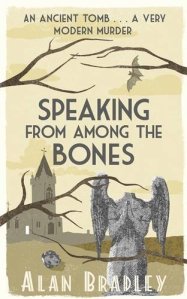
Speaking from Among the Bones Speaking from Among the Bones is Alan Bradley’s fifth novel featuring the wonderful Flavia de Luce. Flavia’s intelligence, her passion for chemistry (particularly poisons), and the fact that she is still only eleven years old makes her one of the most fascinating and unusual detectives in fiction. The series is set in the 1950s in the small English village of Bishop’s Lacey where Flavia lives with her father and two sisters, Ophelia and Daphne, at the family’s ancestral home, Buckshaw. In each book Flavia investigates a murder mystery, torments (and is tormented by) her sisters, conducts experiments in her chemical laboratory, and desperately searches for information about the mother she has never known.

Flavia’s fifth adventure begins as she excitedly awaits the removal of St Tancred’s bones from his tomb in the church crypt to commemorate the five-hundredth anniversary of his death. She is hoping to be the first person in Bishop’s Lacey to see the saint’s bones, but what she eventually discovers when the tomb is opened is something quite different: the body of the church organist, Mr Collicutt, who had disappeared a few weeks earlier. Who murdered him and what was their motive? And why is he wearing a gas mask? These are the questions Flavia must try to answer – hopefully before Inspector Hewitt solves the mystery first! Accompanied by her trusty old bicycle, Gladys, Flavia begins to search for clues, but as well as making some discoveries regarding the organist’s death and the possible identity of his killer, she also starts to uncover some of the secrets of her mother’s past.

I’ve enjoyed every book in the series so far, but I think this one might be my favourite (either this or the Christmas-themed one, I am Half-Sick of Shadows). As I’ve mentioned in my previous Flavia reviews, I love this series because I love Flavia, the supporting characters, and the setting of Bishop’s Lacey. The actual murder mysteries are not usually very complex or difficult to solve and are not the attraction of these books for me, but I thought this was an improvement on the previous ones. It was tightly plotted with lots of clues, suspects and red herrings and during her investigations Flavia finds herself crawling through underground tunnels, entering secret locked rooms, encountering a wooden effigy that appears to have started weeping blood in the church, and discovering that she is not the only amateur detective in Bishop’s Lacey!

While Flavia is still just eleven and has only aged slightly over the course of the series, I do think we’ve seen her grow up and mature since the first book. There has been development with some of the other characters too, particularly Ophelia (Feely) and Daphne (Daffy), Flavia’s two sisters, who are not quite as horrible to Flavia in this book as they have been previously – or maybe Flavia is just learning to deal with them better. Also in this book, their father is continuing to have financial difficulties, forcing him to consider putting Buckshaw up for sale and this shared trauma helps to bring the whole family together for once. By ‘family’ I’m including the servants, Mrs Mullet and Dogger. Dogger is a great character and a true friend to Flavia – I like him more and more with every book!

If you’re new to this series, beginning with book five probably wouldn’t be a problem, but if possible I would recommend starting with the first one, The Sweetness at the Bottom of the Pie, and enjoying all of Flavia’s adventures in order. This is the only one to finish with a cliffhanger ending, which means I now can’t wait to read the sixth book, The Dead in Their Vaulted Arches!

The Strange Fate of Kitty Easton by Elizabeth Speller

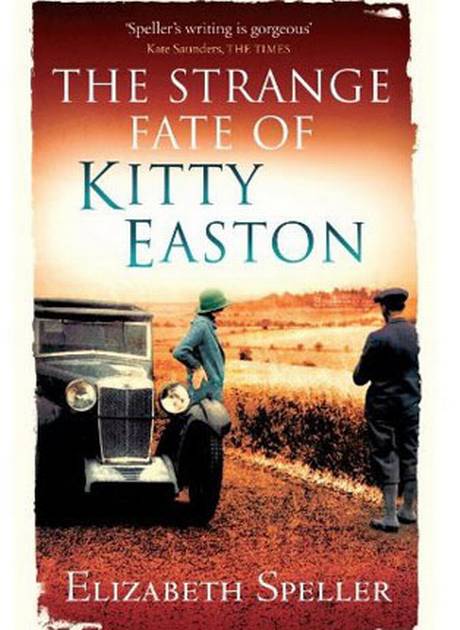
Kitty Easton I first met Laurence Bartram two years ago when I read The Return of Captain John Emmett, a mystery novel set in 1920s England. The Strange Fate of Kitty Easton is the sequel. In this book, Laurence’s friend William Bolitho, an architect, has asked Laurence to join him in the village of Easton Deadall. Easton Deadall lost many of its young men in the First World War and William has agreed to design a memorial window for the small church at Easton Hall. As an expert on churches and their renovations, Laurence’s help and advice is needed.

During the journey to Easton Deadall, Laurence learns about the disappearance of Digby and Lydia Easton’s five-year-old daughter, Kitty, several years earlier. Kitty went missing from her bed one night but her body was never found and her fate is still unknown. Since Kitty’s disappearance, the Easton family have continued to suffer; Digby was killed in the war, Lydia has become seriously ill and the relationship between Digby’s two surviving brothers, Julian and Patrick, is strained and tense.

After a slow start in which Elizabeth Speller introduces us to the characters, describes their tragic history and paints a portrait of a small English village trying to recover from the devastation of war, a mystery begins to develop. Another child disappears on a family trip to London to see the British Empire Exhibition and when a murder is committed in Easton Deadall, Laurence is sure both of these incidents are connected to the disappearance of Kitty Easton all those years ago.

I enjoyed this book almost as much as the previous one. The plot was well constructed with some interesting twists and lots of family secrets that are slowly revealed to the reader, but although I’ve referred to the book as a ‘mystery novel’ once or twice in this post, and in many ways it is a mystery novel, it’s also much more than that. The fate of Kitty Easton really only forms a small part of the story.

While reading both of the Laurence Bartram books, I have been impressed by the amazing sense of time and place the author creates. These books don’t just feel like pieces of historical fiction written in the modern day and set in the past – they almost feel as if they could really have been written in the 1920s. As with The Return of Captain John Emmett, my favourite thing about this book was the way it explores so many different aspects of the Great War and reminds us that although the war may have ended in 1918, its consequences were still being felt all over the world for many years afterwards.

There are lots of interesting characters to get to know too (I was particularly intrigued by the story of the youngest Easton brother, Patrick, resented by his family for abandoning them during the war after being excused from fighting on health grounds). The only thing that disappointed me slightly was that until we reach the final chapters of the book, Laurence seems to be on the outside watching and observing rather than taking an active role in the story. I do like Laurence but as the central character of a series I find him a bit bland and it would be nice to see his own personality coming through more strongly.

The way this book ended leaves plenty of scope for a third in the series and I hope there is going to be another one, though I notice that Elizabeth Speller has a new book due out in November with different characters, set during the Battle of the Somme.

The Doctor of Thessaly by Anne Zouroudi

The Doctor of Thessaly This is the third in Anne Zouroudi’s ‘Mysteries of the Greek Detective’ series following the investigations of Hermes Diaktoros, also known as ‘the fat man’. This appears to be a series that can be read in any order – I read the sixth book, The Bull of Mithros, first and then this one and haven’t had any problems; each novel is a complete story in itself. What the books do have in common is the character of the fat man, a theme based on one of the seven deadly sins and a beautiful Greek setting.

The Doctor of Thessaly is set in Morfi, a village on one of the Greek islands. The story begins with the discovery that the village doctor, Louis Chabrol, has been blinded in an attack that took place the night before his marriage to Chrissa Kaligi, the younger of two middle-aged sisters. This crime couldn’t have happened at a worse time, as the people of Morfi and their ambitious new mayor are preparing for a visit from a government minister.

Luckily, our hero, the enigmatic Hermes Diaktoros of Athens, has just arrived in Morfi and when he learns of the attack he begins to investigate. As he moves around the village speaking to witnesses, listening to gossip and collecting evidence he starts to build up a clearer picture of what has happened – and when he eventually discovers who is responsible for the crime, he dispenses his own form of justice.

I thought this was a better book than The Bull of Mithros, though I did like them both. I loved the atmospheric setting of Morfi, a quiet Greek village untouched by tourism or modern technology (it’s not clear when these books are supposed to be set, which I’m sure is intentional – it could be any time in the second half of the 20th century) and I enjoyed meeting the people who live there. I mentioned that each of the books in this series is based around one of the seven deadly sins. This one has a theme of ‘envy’ which is very appropriate as there are many people in Morfi who could be accused of this sin, from Chrissa’s bitter and resentful sister, Noula, to the group of four jealous, spiteful men who are determined to spoil things for the new mayor.

The fat man continues to be a mysterious, elusive character. Is it a coincidence that he has the name of a Greek god? Who are the higher authorities he claims to represent? And why is he so obsessed with keeping his white tennis shoes clean? These things were as much a mystery when I read the sixth book as they were reading this third book, so unless the truth about his identity and background are going to be revealed at the end of the series it seems that we are going to be left to make up our own minds about Hermes Diaktoros. I do like him though; not only is he concerned with making criminals pay for what they have done, he also wants to help the people he meets along the way and leave the village behind in a better, happier state than when he arrived.

I will continue to read the other books in the series, though I think they are the type of books that would start to feel repetitive if read too close together so I’ll probably wait a while before starting another one!