Sacrilege by S.J Parris

Sacrilege is the third in a series of historical mysteries set in Tudor England and featuring Giordano Bruno, a former monk who left his monastery in Italy to escape the Inquisition. Bruno is now in London working as a spy for Queen Elizabeth I’s Secretary of State and ‘spymaster’, Sir Francis Walsingham. At the beginning of Sacrilege, he is reunited with Sophia, a girl he met in a previous instalment of the series. Sophia has run away from her home in Canterbury after being accused of murdering her husband, Sir Edward Kingsley, and she wants Bruno to help clear her name.

Bruno agrees to travel to Canterbury with Sophia where he hopes to uncover the truth about Kingsley’s death and discover the real murderer, but he also has another reason for visiting the city: Walsingham has asked him to investigate rumours of a Catholic plot against the Queen. But soon after his arrival there’s another death and Bruno finds himself caught up in a conspiracy involving the remains of St Thomas Becket, the former Archbishop of Canterbury who was murdered in the cathedral centuries earlier.

If you’re new to this series it would probably be better to start at the beginning with Heresy, and read the books in order. I haven’t read the previous two novels and although I was able to follow the plot of this one without too many problems, I did feel I was missing out on some important background information. The novel is narrated in the first person by Giordano Bruno, but I felt I never really got to know him, which could be partly due to the fact that I started in the middle of the series. I thought he was likeable enough, but not really the charismatic narrator the blurb had promised.

I didn’t know anything about Bruno before reading this book, but he was a real person, an Italian philosopher, mathematician and astronomer. It was interesting to read about him after finishing the novel and discover how much of his back story given in the book was based on the known facts about his life. We do meet some of the better known historical figures of the Elizabethan period too (Francis Walsingham and Sir Philip Sidney, for example) but although they do have a role to play, during most of the story they are kept in the background while the focus is on Bruno and his investigations.

The actual mystery storyline was interesting and complex. Although things did move forward at quite a fast pace, there were also a lot of long descriptive passages and I found I had to really concentrate on these because they sometimes contained clues and information that were vital to the plot. The novel appears to have been well researched and I thought the atmosphere of 16th century Canterbury, the city and the cathedral, was evoked quite well, but it all felt just a bit too modern to be completely convincing. I did enjoy Sacrilege but I don’t think I liked it enough to want to read more books in this series.
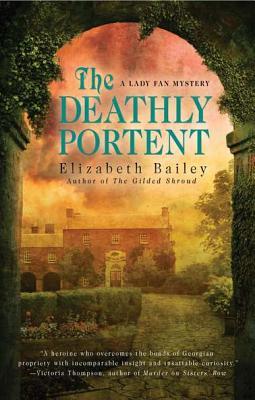
The Deathly Portent by Elizabeth Bailey

The Deathly Portent is the second in a series of historical mystery novels featuring Ottilia Fanshawe (also known as Lady Fan). The first in the series is The Gilded Shroud, but it’s not necessary to have read that one first as this is a complete story in itself.

The story is set in England during the Georgian period. Ottilia and her husband Lord Francis are riding home from a visit to Ottilia’s godmother when their coach breaks down near the village of Witherley. When they send their groom to look for the village blacksmith, they discover that Duggleby the blacksmith has been the victim of a murder – and that Cassie Dale, a young woman who has been branded a witch, is being blamed for it.

Ottilia has recently solved a mystery involving her husband’s family and is confident that she will be able to solve this one too. Believing Cassie Dale to be innocent, she begins to investigate in the hope of finding the real murderer and clearing Cassie’s name, but things soon start to become more dangerous than she had expected.

As soon as I started reading this book it reminded me in many ways of a Georgette Heyer novel – the time period, the language, the characters’ names, the dialogue – and so I wasn’t surprised to read that Heyer is one of Elizabeth Bailey’s influences. The appeal of this book for me was really the historical setting and the characters, though I did enjoy watching the mystery unfold too. There were lots of possible suspects, all with different motives for wanting Duggleby dead, and I was kept guessing until the truth was revealed at the end of the book.

One of the reasons I enjoy historical or vintage mysteries is that in the past we obviously didn’t have all the scientific methods of crime-solving that we have today and so detectives had to rely on making careful observations, hunting for clues, and talking to suspects and witnesses. And so Ottilia spends a lot of time getting to know the various residents of the village, listening to gossip and trying to make deductions from what she learns.

I loved Ottilia and Francis as a couple – they are both very easy to like and some of my favourite scenes were the ones in which they both appear together. Ottilia is a strong, intelligent character with a real enthusiasm for detective work and her husband is very supportive, although he can’t help worrying about her, particularly when he thinks she’s putting her life at risk unnecessarily. I’ll be interested to see how their relationship develops in any future novels in this series.

The events of the first Lady Fan novel, The Gilded Shroud, were referred to a few times in this book but not so much that I felt the previous novel had been spoiled. I will probably go back and read it at some point as I enjoyed meeting Lady Fan and would like to see how she solved her first mystery.

I received a copy of The Deathly Portent from the author for review.

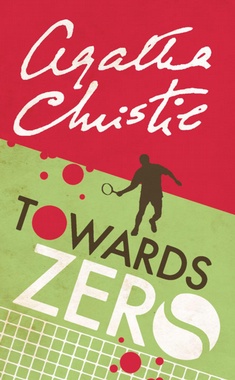
Towards Zero by Agatha Christie

Towards Zero is one of only a few Agatha Christie novels to feature the detective Superintendent Battle. There’s no Poirot or Miss Marple in this one (although there is a TV adaptation – which I haven’t seen – where Miss Marple does appear) but even without them I thought this was an excellent murder mystery novel that deserves to be more popular. The story revolves around the murder of an elderly woman, Lady Tressilian, who has invited a group of guests to her seaside home at Gull’s Point.

With this novel, Christie takes a slightly different approach to normal. Instead of beginning with a murder and then following the detective’s attempts to solve it, she chooses to spend half the book describing the backgrounds of the characters, some seemingly unconnected episodes from their pasts, and the sequence of events that lead to the murder finally being committed and the murderer’s objective being achieved (what one of the characters refers to as ‘Zero Hour’).

“I like a good detective story,” he said. “But, you know, they begin in the wrong place! They begin with the murder. But the murder is the end. The story begins long before that – years before sometimes – with all the causes and events that bring certain people to a certain place at a certain time on a certain day.”

So by the time the murder takes place halfway through the book, the characters are quite well-developed and we know a lot about each of the possible suspects. Could the murderer be the tennis player, Nevile Strange, one of Lady Tressilian’s guests? Or his beautiful wife, Kay? Or could it be his first wife, Audrey, who happens to be visiting at the same time? Maybe it’s Thomas Royde, who is secretly in love with Audrey – or Ted Latimer, a friend of Kay’s. And what about Mary Aldin, Lady Tressilian’s companion?

I thought the mystery was a difficult one to solve and I think I suspected all of the above people at some point in the story! I thought I’d figured it out once or twice but was proved wrong and there were at least two big plot twists towards the end of the book that took me by surprise. Looking back, there were plenty of clues, but plenty of red herrings too.

Towards Zero is atmospheric, very cleverly plotted, and although it’s not one of my favourite Agatha Christie novels it’s still one that I would highly recommend.

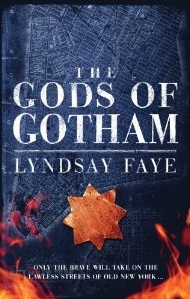
The Gods of Gotham by Lyndsay Faye

New York City, 1845: When Timothy Wilde loses everything in a fire that destroys a large part of Manhattan, his brother Valentine helps him get a job as a ‘copper star’ in New York’s newly formed police force. Due to his knowledge of ‘flash’, a slang spoken largely by criminals, Timothy is assigned to the Sixth Ward, one of the city’s most notorious areas where crime rates are high and where racial and religious tensions are increasing with the influx of Irish immigrants fleeing the potato famine.

Timothy is unenthusiastic about his new job until one night when he’s walking home from work and a ten-year-old girl runs into him, covered in someone else’s blood. Soon Tim finds himself on the trail of a child killer and discovers that he has an unexpected talent for detective work.

I must admit that when I received a copy of The Gods of Gotham from the publisher, I wasn’t sure this was going to be the type of book I would enjoy. Well, I couldn’t have been more wrong, because I loved it! I could tell from the first page that I liked the writing style and by the end of the first chapter I knew I was going to like the narrator too. But the thing I enjoyed most about The Gods of Gotham was the wonderful setting. Every time I picked up this book and started to read I felt I had left the modern world behind for a while and was actually there, walking through the streets of 19th century New York, which is the highest praise I can give to any historical fiction novel. I’ve read so many books set in Victorian London, and it made a nice change to read one set in New York during the same period.

We also meet lots of strong, interesting characters – Mercy Underhill, the reverend’s daughter and the woman Timothy loves; Bird Daly, the little Irish girl he met in the street at the start of the novel; and Silkie Marsh, who runs the brothel at the centre of the murder investigations. And at the heart of the story is the relationship between Tim and his brother Valentine. Timothy himself is easy to like but he isn’t perfect and has enough flaws to make him a believable character. Although he doesn’t always interpret things correctly, he’s intelligent, observant and compassionate. Val is a very different type of person – tough, aggressive, addicted to morphine and drinking – but by the end of the book we learn that there’s more depth to Val than there seemed to be at first.

The use of flash is something that you will probably either love or hate – personally I thought it added to the atmosphere of the book and made the dialogue feel lively and fun. I was surprised to find that I was already familiar with some of the words and it was interesting to see how many of them have now come into everyday use. But there were other words and phrases that meant nothing to me and so the glossary at the front of the book (based on George Washington Matsell’s Vocabulum, or The Rogue’s Lexicon) was very helpful, especially at first!

For me, the actual crime plot was secondary to the setting, the atmosphere and the characters but it was still good enough to keep me guessing until the truth was finally revealed. The Gods of Gotham was something different and original – I loved it and was pleased to discover that there’s going to be a sequel!

I received a review copy of this book from Headline Review.

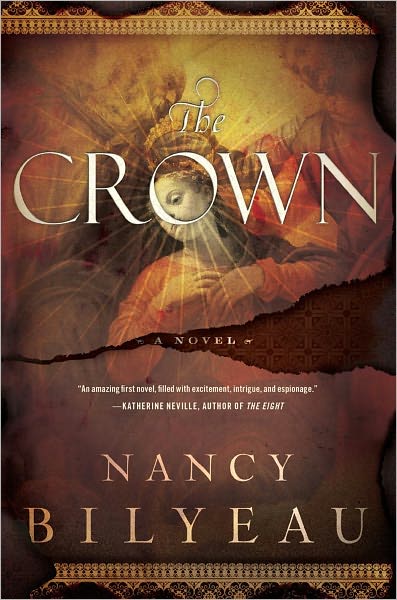
The Crown by Nancy Bilyeau

Nancy Bilyeau’s first novel, The Crown, is a historical mystery set during the Tudor period, beginning just before the death of Henry VIII’s third wife Jane Seymour. The story revolves around the search for a legendary crown which is said to possess special powers. Our heroine and narrator is Joanna Stafford, niece of the third Duke of Buckingham, and a novice nun at Dartford Priory.

When Sister Joanna escapes from the priory and travels to London to witness the execution of her cousin for treason she is unfortunate enough to be captured and taken to the Tower of London. Here she is visited by Stephen Gardiner, the Bishop of Winchester, who sends her back to Dartford on a mission to find the mysterious Athelstan crown which he believes could be hidden somewhere within the priory. As Joanna learns more about the crown she starts to wonder why the Bishop wants it so desperately, but with her beloved father also imprisoned in the Tower and threatened with torture, it seems she has no choice but to obey Gardiner’s orders…

This was one of the most entertaining Tudor novels I’ve read and a real page turner from beginning to end. When the search for the Athelstan crown began I was concerned it might become too much like The Da Vinci Code but that didn’t happen. The mystery of the hidden relic was an important part of the story, but not at the expense of the character development or the wonderful sense of time and place that the author creates.

I really liked Joanna Stafford. One of the things that makes her such an interesting narrator is the constant conflict between her commitment to the vows she’s required to take as a nun and her desire to do whatever is necessary to help her father, even if it means breaking some of these vows. The fact that she sometimes struggles with her conscience and doesn’t always make the right decisions helped me to believe in her as a character.

As a member of one of England’s most powerful families, Joanna meets a lot of famous names from the period including Katherine of Aragon, Anne and George Boleyn, Catherine Howard and Princess Mary, but unlike a lot of Tudor novels this one doesn’t really focus on the court. Instead we are given lots of details on life in a priory and what it was like to be a nun during the Dissolution of the Monasteries, when on the orders of Henry VIII the religious houses of England, Wales and Ireland were closed down, destroyed or sold. This is not something I knew much about before starting this book and I had no idea what happened to the monks and nuns after the monasteries were dissolved, so it was good to learn more about the process and what it involved. But although there’s plenty of history here, it really serves as a background to the plot and never slows the story down at all, so I think this book could be enjoyed by people who like thrillers and mystery novels as well as by fans of historical fiction.

The Crown is a complete story in itself, but the way it ended left me feeling that there were more adventures ahead for Joanna. Apparently Nancy Bilyeau has written a sequel and I’m already looking forward to reading it and entering Joanna’s world again.

I received a copy of The Crown through Netgalley

The Beekeeper’s Apprentice by Laurie R. King

This was the first book I finished in 2012 (the other books I’ve been posting about over the last few days were all reads from the end of 2011) and what a great book it was to start a new year with!

The Beekeeper’s Apprentice begins when fifteen-year-old Mary Russell, living with an aunt in England following the deaths of both her parents in America, is out walking one day and almost steps on a man who is sitting on a hill watching bees. This man happens to be the famous detective Sherlock Holmes, who has retired to the Sussex countryside. In Mary, Holmes finds a mind as intelligent and observant as his own, and the two soon become friends, with Holmes teaching Mary everything he knows about detection. Soon Mary finds herself working with the detective on what will be the first of many cases they’ll solve together and even after Mary leaves home to study theology at Oxford University, their friendship remains as strong as ever.

A lot of time in the first half of this book is spent introducing us to the characters and relating a few of Mary and Holmes’ earliest cases (one involving a woman whose husband is suffering from a mysterious illness and another involving an American senator’s kidnapped daughter). These two cases, and the third main one, appear to be unrelated at first but they do all add to the bigger picture. There was a section in the middle of the book where Mary and Holmes go to Palestine which didn’t seem to have much relevance to the plot, though I’ve since learned that we find out more about that in a later book in the series.

There were so many things to enjoy about this book: great characters, some intriguing mysteries to solve, a setting that I loved (the early 20th century, during and following World War I). I also liked the way the book began with Laurie R. King telling us that she had nothing to do with the book and had simply received a mysterious box of manuscripts written by Mary Russell herself. The Beekeeper’s Apprentice is therefore presented as if it was the first instalment of Mary’s memoirs, with her older self looking back on her younger days and the beginning of her relationship with Sherlock Holmes.

Most of all, I loved Mary Russell’s witty and engaging narrative voice. Her friendship with Holmes feels so natural and there’s some great dialogue between the two of them. The huge age difference (39 years, I think) is slightly disturbing when you think about it, considering Mary is only fifteen at the beginning, but it didn’t come across that way at all in the novel. Despite the differences in their ages and backgrounds, Mary and Holmes have a lot in common and Mary is Holmes’ equal when it comes to spotting clues and making deductions. I loved the portrayal of Sherlock Holmes too; he felt much more human and likeable than the Holmes I remember. And as they spend more time together, both characters change with Mary maturing into a confident young woman and Holmes eventually coming to accept her as his partner.

You might be wondering if it’s necessary to have read Arthur Conan Doyle’s Sherlock Holmes books first, but no, I don’t think it’s necessary at all (there are some references to people and events from the original books, but nothing that would prevent you from understanding this book). I have read Conan Doyle’s books, but it was a long time ago and I wasn’t really a huge fan, which I think might have actually made it easier for me to accept this depiction of Holmes and the other characters.

I can’t believe it’s taken me so long to discover these books (The Beekeeper’s Apprentice was published in 1994). The one advantage of coming to the series so late is that there are now another ten books to read without having to wait for each one to be published. I can’t wait to spend more time with Mary Russell and Sherlock Holmes and hopefully I’ll have many happy hours of reading ahead!

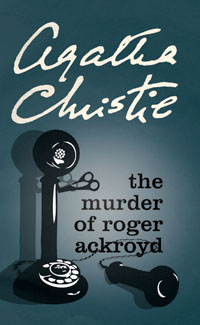
The Murder of Roger Ackroyd by Agatha Christie

2011, among other things, was the year I discovered that I do actually like Agatha Christie, having read a few of her books in the past which I didn’t enjoy very much. I think I had obviously just been choosing the wrong books because I read five in 2011 and loved all but one of them (The Mystery of the Blue Train).

This one, The Murder of Roger Ackroyd, is set in the fictional village of King’s Abbott, home to our narrator, Dr James Sheppard, and the retired detective Hercule Poirot. When Roger Ackroyd is found stabbed to death in his study, Poirot comes out of retirement to investigate the murder. The suspects include Ackroyd’s stepson, his secretary and butler, a big-game hunter and one of the parlourmaids. With Dr Sheppard’s assistance, Poirot begins to piece together the evidence to solve the mystery.

I loved this book and it might even have become my favourite Christie novel so far, if not for one little problem: I guessed the solution to the mystery very early in the story. Now, this is not something that usually happens – I’m normally completely mystified by Agatha Christie’s novels and don’t even bother trying to solve them. This is the first one I’ve ever figured out correctly, but it did mean that in some ways the book was spoiled for me. Not completely spoiled – it was still fun watching for more clues that would confirm whether I was right or not – but it would have been nice to have been surprised when the solution was finally revealed, as the author had intended.

As most Poirot novels are written either in the third person or narrated by Captain Hastings (who does not appear in this book) it took me a while to get used to the new narrator. It gave this book a slightly different feel to the other Poirots I’ve read. I also thought the characters had a bit more depth than usual and I loved the scenes with the doctor’s irritating gossip-loving sister, Caroline, who added some humour to the story. And even though the ending of the story didn’t have quite the impact for me that I would have liked it to have done, I could still appreciate how cleverly constructed the mystery was. There were plenty of suspects, all hiding secrets of their own, lots of red herrings and some plot twists. I’m looking forward to reading more Poirot throughout the year ahead!