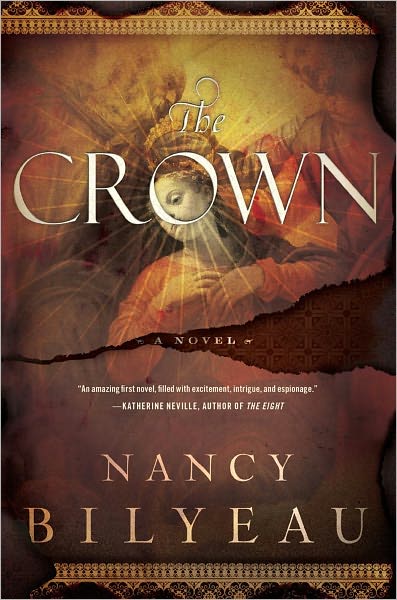
The Crown by Nancy Bilyeau

Nancy Bilyeau’s first novel, The Crown, is a historical mystery set during the Tudor period, beginning just before the death of Henry VIII’s third wife Jane Seymour. The story revolves around the search for a legendary crown which is said to possess special powers. Our heroine and narrator is Joanna Stafford, niece of the third Duke of Buckingham, and a novice nun at Dartford Priory.

When Sister Joanna escapes from the priory and travels to London to witness the execution of her cousin for treason she is unfortunate enough to be captured and taken to the Tower of London. Here she is visited by Stephen Gardiner, the Bishop of Winchester, who sends her back to Dartford on a mission to find the mysterious Athelstan crown which he believes could be hidden somewhere within the priory. As Joanna learns more about the crown she starts to wonder why the Bishop wants it so desperately, but with her beloved father also imprisoned in the Tower and threatened with torture, it seems she has no choice but to obey Gardiner’s orders…

This was one of the most entertaining Tudor novels I’ve read and a real page turner from beginning to end. When the search for the Athelstan crown began I was concerned it might become too much like The Da Vinci Code but that didn’t happen. The mystery of the hidden relic was an important part of the story, but not at the expense of the character development or the wonderful sense of time and place that the author creates.

I really liked Joanna Stafford. One of the things that makes her such an interesting narrator is the constant conflict between her commitment to the vows she’s required to take as a nun and her desire to do whatever is necessary to help her father, even if it means breaking some of these vows. The fact that she sometimes struggles with her conscience and doesn’t always make the right decisions helped me to believe in her as a character.

As a member of one of England’s most powerful families, Joanna meets a lot of famous names from the period including Katherine of Aragon, Anne and George Boleyn, Catherine Howard and Princess Mary, but unlike a lot of Tudor novels this one doesn’t really focus on the court. Instead we are given lots of details on life in a priory and what it was like to be a nun during the Dissolution of the Monasteries, when on the orders of Henry VIII the religious houses of England, Wales and Ireland were closed down, destroyed or sold. This is not something I knew much about before starting this book and I had no idea what happened to the monks and nuns after the monasteries were dissolved, so it was good to learn more about the process and what it involved. But although there’s plenty of history here, it really serves as a background to the plot and never slows the story down at all, so I think this book could be enjoyed by people who like thrillers and mystery novels as well as by fans of historical fiction.

The Crown is a complete story in itself, but the way it ended left me feeling that there were more adventures ahead for Joanna. Apparently Nancy Bilyeau has written a sequel and I’m already looking forward to reading it and entering Joanna’s world again.

I received a copy of The Crown through Netgalley

The Beekeeper’s Apprentice by Laurie R. King

This was the first book I finished in 2012 (the other books I’ve been posting about over the last few days were all reads from the end of 2011) and what a great book it was to start a new year with!

The Beekeeper’s Apprentice begins when fifteen-year-old Mary Russell, living with an aunt in England following the deaths of both her parents in America, is out walking one day and almost steps on a man who is sitting on a hill watching bees. This man happens to be the famous detective Sherlock Holmes, who has retired to the Sussex countryside. In Mary, Holmes finds a mind as intelligent and observant as his own, and the two soon become friends, with Holmes teaching Mary everything he knows about detection. Soon Mary finds herself working with the detective on what will be the first of many cases they’ll solve together and even after Mary leaves home to study theology at Oxford University, their friendship remains as strong as ever.

A lot of time in the first half of this book is spent introducing us to the characters and relating a few of Mary and Holmes’ earliest cases (one involving a woman whose husband is suffering from a mysterious illness and another involving an American senator’s kidnapped daughter). These two cases, and the third main one, appear to be unrelated at first but they do all add to the bigger picture. There was a section in the middle of the book where Mary and Holmes go to Palestine which didn’t seem to have much relevance to the plot, though I’ve since learned that we find out more about that in a later book in the series.

There were so many things to enjoy about this book: great characters, some intriguing mysteries to solve, a setting that I loved (the early 20th century, during and following World War I). I also liked the way the book began with Laurie R. King telling us that she had nothing to do with the book and had simply received a mysterious box of manuscripts written by Mary Russell herself. The Beekeeper’s Apprentice is therefore presented as if it was the first instalment of Mary’s memoirs, with her older self looking back on her younger days and the beginning of her relationship with Sherlock Holmes.

Most of all, I loved Mary Russell’s witty and engaging narrative voice. Her friendship with Holmes feels so natural and there’s some great dialogue between the two of them. The huge age difference (39 years, I think) is slightly disturbing when you think about it, considering Mary is only fifteen at the beginning, but it didn’t come across that way at all in the novel. Despite the differences in their ages and backgrounds, Mary and Holmes have a lot in common and Mary is Holmes’ equal when it comes to spotting clues and making deductions. I loved the portrayal of Sherlock Holmes too; he felt much more human and likeable than the Holmes I remember. And as they spend more time together, both characters change with Mary maturing into a confident young woman and Holmes eventually coming to accept her as his partner.

You might be wondering if it’s necessary to have read Arthur Conan Doyle’s Sherlock Holmes books first, but no, I don’t think it’s necessary at all (there are some references to people and events from the original books, but nothing that would prevent you from understanding this book). I have read Conan Doyle’s books, but it was a long time ago and I wasn’t really a huge fan, which I think might have actually made it easier for me to accept this depiction of Holmes and the other characters.

I can’t believe it’s taken me so long to discover these books (The Beekeeper’s Apprentice was published in 1994). The one advantage of coming to the series so late is that there are now another ten books to read without having to wait for each one to be published. I can’t wait to spend more time with Mary Russell and Sherlock Holmes and hopefully I’ll have many happy hours of reading ahead!

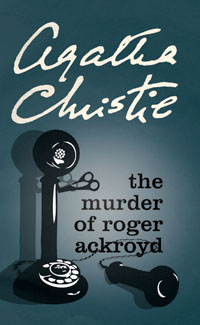
The Murder of Roger Ackroyd by Agatha Christie

2011, among other things, was the year I discovered that I do actually like Agatha Christie, having read a few of her books in the past which I didn’t enjoy very much. I think I had obviously just been choosing the wrong books because I read five in 2011 and loved all but one of them (The Mystery of the Blue Train).

This one, The Murder of Roger Ackroyd, is set in the fictional village of King’s Abbott, home to our narrator, Dr James Sheppard, and the retired detective Hercule Poirot. When Roger Ackroyd is found stabbed to death in his study, Poirot comes out of retirement to investigate the murder. The suspects include Ackroyd’s stepson, his secretary and butler, a big-game hunter and one of the parlourmaids. With Dr Sheppard’s assistance, Poirot begins to piece together the evidence to solve the mystery.

I loved this book and it might even have become my favourite Christie novel so far, if not for one little problem: I guessed the solution to the mystery very early in the story. Now, this is not something that usually happens – I’m normally completely mystified by Agatha Christie’s novels and don’t even bother trying to solve them. This is the first one I’ve ever figured out correctly, but it did mean that in some ways the book was spoiled for me. Not completely spoiled – it was still fun watching for more clues that would confirm whether I was right or not – but it would have been nice to have been surprised when the solution was finally revealed, as the author had intended.

As most Poirot novels are written either in the third person or narrated by Captain Hastings (who does not appear in this book) it took me a while to get used to the new narrator. It gave this book a slightly different feel to the other Poirots I’ve read. I also thought the characters had a bit more depth than usual and I loved the scenes with the doctor’s irritating gossip-loving sister, Caroline, who added some humour to the story. And even though the ending of the story didn’t have quite the impact for me that I would have liked it to have done, I could still appreciate how cleverly constructed the mystery was. There were plenty of suspects, all hiding secrets of their own, lots of red herrings and some plot twists. I’m looking forward to reading more Poirot throughout the year ahead!

I am Half-Sick of Shadows by Alan Bradley

I hope everyone had a great Christmas! I don’t usually read a lot of Christmas-themed books but the one I’m posting about today, I am Half-Sick of Shadows, was a perfect seasonal read.

I know not everyone will be familiar with Alan Bradley’s books, so for those of you who need some background information I can tell you that I am Half-Sick of Shadows is the fourth in a series of mystery novels set in the 1950s and featuring eleven-year-old amateur detective and chemistry genius, Flavia de Luce. Flavia lives with her father and her two older sisters Ophelia (Feely) and Daphne (Daffy), at Buckshaw, their family estate near the small English village of Bishop’s Lacey. Other recurring characters include the de Luces’ two servants, Mrs Mullet and Dogger, as well as the local vicar, the doctor, Inspector Hewitt and several more of the villagers.

At the beginning of this fourth instalment, Flavia’s father is having financial difficulties and in an attempt to bring in some money, he allows the cast and crew of Ilium Films to move into Buckshaw to do some filming over the Christmas period. While the snow falls outside, the people of Bishop’s Lacey gather at Buckshaw to watch the two stars, Phyllis Wyvern and Desmond Duncan, give a special charity performance of Romeo and Juliet. Things go badly wrong, however, and a murder takes place. With the de Luce family and all their neighbours snowed in overnight, there’s a long list of suspects. Flavia begins to investigate, but before she can concentrate on identifying the murderer she needs to finish working on a special project of her own: a trap to catch Santa Claus on his way down the chimney!

I have enjoyed all three of the previous books in this series, but I think I am Half-Sick of Shadows could possibly be my favourite so far. It took a long time (almost half the book) before the murder took place and the actual mystery began – and it was probably the weakest mystery in the series too – but that wasn’t a problem for me at all. I don’t read these books for the murder mystery plots; I read them because I love Flavia and love reading about her adventures.

As well as being shorter than usual, this book has a different feel to the first three because it is set entirely within the confines of Buckshaw. This means we get to see more of Flavia’s interactions with her family members and we also have the chance to learn more about Dogger, one of the most interesting characters in the series. I’ve mentioned before that I was starting to get impatient with Feely’s and Daffy’s nastiness towards their younger sister, but there seemed to be a slight change in Daffy’s relationship with Flavia in this book and I almost liked her at times! There was also a hint that maybe Feely didn’t really hate Flavia and that there might be another reason for her cruel behaviour. I’m still hopeful that the three of them will be friends by the end of the series, but we’ll have to wait and see – I’m already looking forward to the fifth book to find out if there are any further developments.

I’m glad I was able to find time to read this book last week as it really was perfect for the Christmas season. Oh, and in case you’re wondering, the title comes from the poem by Tennyson, The Lady of Shalott.

A Red Herring without Mustard by Alan Bradley

A Red Herring without Mustard is the third book in Alan Bradley’s Flavia de Luce mystery series. I loved the first two books in the series (The Sweetness at the Bottom of the Pie and The Weed that Strings the Hangman’s Bag) and I was pleased to find that this one is as good as the others.

A Red Herring without Mustard, like the previous books in the series, is set in 1950s England, in the village of Bishop’s Lacey. Flavia de Luce is an eleven-year-old girl who lives with her father and sisters on their family estate, Buckshaw. Flavia has a passion for chemistry and a talent for solving murder mysteries, despite the attempts of Inspector Hewitt to stop her becoming involved. Away from her detective work, Flavia enjoys riding her trusty bicycle, Gladys, spending time in her chemical laboratory and thinking up ways to get revenge on her two sisters, Ophelia and Daphne, who are forever torturing her.

In this book a gypsy woman, Fenella Faa, is brutally attacked while camping in The Palings, part of the de Luce estate. As Flavia begins to investigate the assault, a bizarre murder takes place in the grounds of Buckshaw. The two must be connected, but how? And why is there always a smell of fish at the scene of the crime?

I thought the mystery in this book was slightly more complex than the previous ones, but for me, the real charm of this book (and the series as a whole) is not the mystery plot but the character of Flavia herself and her interactions with the people around her. In this third instalment of the series there’s a lot of focus on Flavia’s family history and in particular, the story of her mother, Harriet, who died when Flavia was younger. I enjoyed learning more about the de Luce family and it seemed that there was some development with not only Flavia’s character but also of her father and sisters, Feely and Daffy. I would like to know exactly why Feely and Daffy are both so horrible to Flavia though, and I’m hoping their relationship will improve by the end of the series!

As well as Flavia’s family, there are a large number of other recurring characters who we meet again in this book including the de Luce servants, Mrs Mullet and Dogger. We are also introduced to a new character, Fenella’s granddaughter, Porcelain Lee. I don’t know if Porcelain will appear in any future books but I hope she does as I would like Flavia to have a friend.

The other thing I love about this series is the old-fashioned feel and the setting of Bishop’s Lacey, a small village community where everybody knows everybody else. It was also interesting to explore some of the hidden corners of Buckshaw, Flavia’s home.

If you’re new to Flavia de Luce, you could probably start reading at any point in the series but I would recommend beginning with the first one and reading them in order. If you’ve enjoyed either or both of the previous novels there’s a good chance that you’ll like this one too as it’s really very similar. And the good news for Flavia fans is that the fourth book, I am Half-Sick of Shadows is out now!

The Water Room by Christopher Fowler

The Water Room is the second in a series of novels about two elderly detectives, Arthur Bryant and John May, who work for the Peculiar Crimes Unit, a branch of the London Metropolitan Police specialising in unusual cases. Bryant and May have been working together since the 1940s and have formed a strong and effective partnership, combining Bryant’s eccentricity and lateral thinking with May’s common sense and more logical approach.

When Mrs Singh is found drowned in the seemingly dry basement of her home in Balaklava Street with her mouth full of river water, her brother, who is an old friend of Arthur Bryant’s, asks the Peculiar Crimes Unit for help. But no sooner have Bryant and May begun to investigate than another bizarre incident occurs in the same street. Meanwhile, the new owner of Mrs Singh’s house is being plagued by the sound of rushing water in the basement and damp patches appearing and disappearing on the walls. What is going on?

I read the first book in this series, Full Dark House, a couple of months ago and loved it, but I thought this one was even better. This is a series that I would particularly recommend to people who love London. I’m not familiar enough with London to fully appreciate everything in these novels, but Christopher Fowler’s love and knowledge of the city is obvious on every page. Full Dark House looked at the city’s theatrical world; in this book the focus is on the underground rivers that run under the streets of London. During the course of Bryant and May’s investigations we learn lots of little facts about these lost rivers and the mythology surrounding them. The historical information is woven into the plot throughout the book and I thought the balance between education and entertainment was just right.

This is not a very fast-paced book and does require some concentration, but the story moves along steadily and has a few surprising twists. The mystery plot was quite a good one, with plenty of clues and red herrings that seemed to implicate almost everybody in the street at one point or another. But the highlight of these books for me is the partnership of Bryant and May themselves and the dialogue between them.

As well as being part of a series, The Water Room is a complete mystery novel in itself and it’s not necessary to have read Full Dark House first. However, if you’re concerned about coming across spoilers it would be a good idea to start at the beginning of the series. After enjoying the first two books so much I’m sure I’ll be reading the others and am looking forward to meeting Mr Bryant and Mr May again in Seventy-Seven Clocks.

I received a copy of this book for review from Transworld as part of the Transworld Book Group.

The American Boy by Andrew Taylor

After I read The Anatomy of Ghosts earlier in the year, I asked for opinions on Andrew Taylor’s other books. Well, I’d like to thank the three people who left comments recommending The American Boy (published in the US as An Unpardonable Crime) as I thought this one was even better than The Anatomy of Ghosts. As someone who loves classic sensation novels (Wilkie Collins, Mary Elizabeth Braddon, Ellen Wood etc) it’s maybe unsurprising that I enjoyed this book so much. It has all the elements of a sensation novel and although it was published in 2003 it almost feels as if it could have been written in the 19th century.

The American Boy is set in England during the final months of the reign of George III. The story begins in September 1819 when our narrator, Thomas Shield, is starting a new job as a teacher at a small private school in the village of Stoke Newington. One of the boys at the school is the ten-year-old Edgar Allan Poe, the ‘American boy’ of the title. Shield is given special responsibility for tutoring Edgar and his best friend, Charles Frant, and through the two boys he becomes acquainted with two rich banking families – the Frants and their cousins, the Carswells. He soon becomes caught up in the dramas that are unfolding within the Frant and Carswell families and when two murders take place it seems that Shield’s own life could also be in danger.

The plot is so intricate and complex I won’t even try to go into any more detail, but in addition to the murders, there’s also a disputed will, mistaken identities, family secrets, betrayal, revenge and even romance. Thomas Shield’s adventures take place in a variety of wonderfully atmospheric locations from the dark, foggy streets and over-crowded slums of London to the snowy landscape of the Carswells’ country estate in Gloucestershire, complete with an ice house and ruined abbey. Taylor made his settings feel vivid and real without going into pages and pages of description.

I should point out that although Edgar Allan Poe does have an important part to play in the story, he’s really just a minor character. I actually thought this whole aspect of the book was unnecessary as the plot would have been strong enough without it and a fictional character could easily have been used in his place. I’m not complaining as I do like Poe and found his brief appearances interesting, but I don’t want to mislead anyone into thinking this is a book about Poe because it really isn’t.

Although I hadn’t included this book on my list for the RIP challenge, I’m going to count it as my first book for RIP anyway (I don’t know why I bother making lists for challenges as I never, ever stick to them!) The American Boy isn’t what I would describe as a scary book, but it is a very dark and suspenseful mystery – a perfect book to curl up with and enjoy at this time of year.

I know it’s a cliché but I didn’t want to put this book down and the very short chapters made it even more tempting to keep reading. If it hadn’t been so long (500 pages) I could have read it all in one sitting. I also appreciated the author’s attempts to make the book feel like an authentic 19th century novel through his use of language and Thomas Shield’s narrative style. It won’t be for everyone though; you either like this type of book or you don’t, but for anyone who has enjoyed books such as The Quincunx by Charles Palliser, The Meaning of Night by Michael Cox or The Woman in White by Wilkie Collins, I can highly recommend this one.