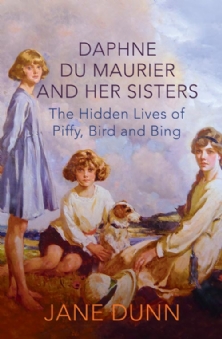
Daphne du Maurier and her Sisters: The Hidden Lives of Piffy, Bird and Bing by Jane Dunn

Daphne du Maurier and Her Sisters I don’t read a lot of biographies but I was pleased to have the opportunity to read this one as Daphne du Maurier is one of my favourite authors. Jane Dunn has previously written a book on Virginia Woolf and her sister Vanessa Bell and another about Elizabeth I’s relationship with Mary Queen of Scots, but this is the first time I’ve read any of her work.

Daphne du Maurier and Her Sisters, as the title suggests, tells the story of not just Daphne, but also her two sisters, Angela and Jeanne – or Piffy, Bird and Bing as they were nicknamed. Rather than looking at each of the sisters’ lives separately, Dunn blends their three stories together and shows us the different ways they reacted to the same experiences and the influence they had on each other both as people and as writers or artists.

The three girls were born into a family of celebrities at the turn of the 20th century. Their father, Gerald, was a famous actor and theatre manager and their mother, Muriel Beaumont, was also an actress, while their grandfather, George du Maurier, was a successful writer. Angela (Piffy), Daphne (Bing) and Jeanne (Bird) had a rich and privileged childhood, but not always a very happy one. With a mother who could often be very distant, it was the flamboyant, theatrical Gerald who was the biggest influence on his daughters’ lives – sometimes in a good way and sometimes bad. He was a popular, charismatic man but also a selfish and spoiled one who liked to be the centre of attention and Daphne, who was less outgoing than her sisters, soon grew to resent the non-stop parties and socialising.

As Daphne is by far the most famous of the du Maurier sisters, it’s natural that most people who pick up this book will do so because they want to learn more about Daphne’s life. Having read Justine Picardie’s novel, Daphne, I already knew some of the basic facts – her difficult marriage to the soldier, Tommy ‘Boy’ Browning; her obsession with Menabilly, the house in Cornwall that became the model for Manderley in Rebecca – but I was keen to find out more about the author whose books I love so much. As a fan of Daphne’s novels I was hoping there would be more information on her work, so I was slightly disappointed that Dunn devotes no more than one or two pages to most of her novels, although it was enough to show me how Daphne’s writing related to various aspects of her life and I can now see how autobiographical many of her books were, particularly The Parasites and I’ll Never Be Young Again.

Yet despite my interest in Daphne, of the three du Maurier sisters the one I found I really liked and sympathised with was Angela. Dunn portrays Angela as a passionate, romantic and naïve girl who was eager to please but often felt inadequate and inferior, aware that she was not as pretty as Daphne and not her parents’ favourite. After a failed acting career, Angela wrote several novels but again found herself overshadowed by the success of her younger sister. Whenever she was mistaken for Daphne and asked if she was the novelist she would reply “I’m only the sister” which even became the title of her autobiography. The youngest sister, Jeanne, is not given as much attention in this book as Daphne and Angela, though this is understandable as less is known about her. Daphne and Angela both left behind a legacy of written work which Dunn is able to quote from, but in Jeanne’s case there is less material to work with especially as her life-long partner, the poet Noël Welch, chose not to cooperate.

I was completely gripped by the first few chapters of this book. I loved reading about the du Mauriers’ early years and meeting these three creative, imaginative little girls who enjoyed re-enacting their favourite scenes from Peter Pan and creating their own games and fantasy worlds. The descriptions of life after World War I – the Jazz Age of the 1920s and the lifestyles of the ‘Bright Young Things’ – were also fascinating. But as the sisters grew older and Dunn began to focus on constant holidays to France and Italy, and an endless cycle of friendships and love affairs, I thought the book started to become more repetitive and less interesting.

While I didn’t find this book as enthralling as the first few chapters led me to expect, I did still enjoy getting to know Piffy, Bird and Bing and have been left wanting to read the remaining Daphne du Maurier novels I still haven’t read, as well as maybe trying to find one of Angela’s.

I received a copy of this book for review via Netgalley

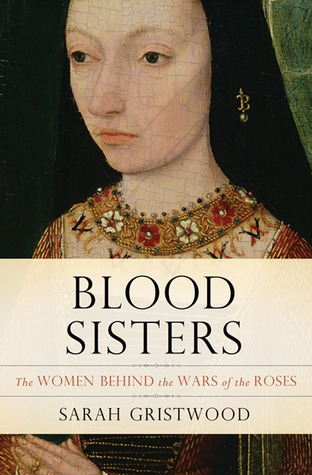
Blood Sisters: The Women Behind the Wars of the Roses by Sarah Gristwood

Blood Sisters Blood Sisters is a non-fiction book which looks at the lives of seven women who all played an important part in the period of history known as The Wars of the Roses or the Cousins’ War – the conflict between the House of York and the House of Lancaster, two branches of the English royal family. These seven women are listed below:

* Margaret of Anjou (Marguerite), Queen to Henry VI

* Cecily Neville, the mother of two Kings of England: Edward IV and Richard III

* Elizabeth Woodville, Queen to Edward IV and mother of the ‘Princes in the Tower’.

* Margaret of Burgundy, sister of Edward IV and Richard III and wife to the Duke of Burgundy.

* Anne Neville, wife of Richard III and daughter of the Earl of Warwick (the Kingmaker)

* Margaret Beaufort, mother of Henry Tudor (the future Henry VII).

* Elizabeth of York, Edward IV’s daughter and Henry VII’s wife.

Notice that I’ve defined these seven women by their relationships to the men, the Kings, and it would have been almost impossible not to do that, as their connections to the Plantagenet and Tudor Kings of England are the reasons they are still remembered today. But in this book, Sarah Gristwood shows that each of them also had an interesting story of her own and was historically important in her own right. Rather than devoting one section of the book to each woman and telling their stories separately, she weaves them together which makes sense considering that some of the women were related and several of them did meet or interact with the others in some way.

While Blood Sisters was very compelling and readable non-fiction, I have to admit I didn’t learn much that I didn’t already know about most of the women. The lives of Elizabeth Woodville and Margaret Beaufort were covered in another book I’ve read, The Women of the Cousins’ War, and a lot of the same information appears here too – though I suppose there’s a limit to how much information is actually available. Of the seven featured in this book, Margaret of Burgundy was the one I previously knew the least about and so I was particularly interested in reading about her.

As well as telling us about the major historical events of the period, Gristwood also gives us a lot of information to help us understand what daily life was like for these women: for example, records of household accounts, and descriptions of clothes worn at coronations or pageants and the dishes served at banquets. I also enjoyed reading about the disappearance of the Princes in the Tower and I appreciate the fact that Gristwood presented some of the different theories and possibilities rather than just blaming Richard III! A lot of attention is also given to the stories of the various Yorkist pretenders to the throne who caused so many problems for Henry VII during his reign, especially Perkin Warbeck, who claimed to be the younger son of Edward IV.

It’s frustrating that so much of the information we have about this period comes from the work of Thomas More and others who were writing during the Tudor period and so were likely to be biased, but Gristwood does take care to point out when something may not be completely accurate and when we need to use some caution. She explains which of her sources may have been unreliable or may have had their own reasons for wanting to portray a person or event in a certain way.

I would recommend Blood Sisters to anyone interested in learning more about this period from a female perspective and it’s also an ideal book for readers like myself who don’t often read non-fiction but want to build on the knowledge they’ve already gained through reading historical fiction.

I received a copy of this book for review via Netgalley

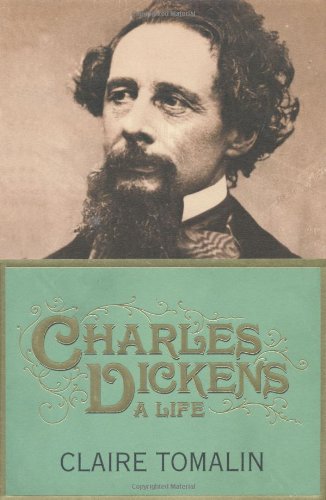
Charles Dickens: A Life by Claire Tomalin

I’ve only read one of Claire Tomalin’s other biographies (Samuel Pepys: The Unequalled Self) but having read that one, Charles Dickens: A Life was everything I was expecting: well researched, thorough and very readable. It took me a long time to finish it but that’s just because I was reading other books at the same time and is no reflection on how much I was enjoying it. Charles Dickens is an ideal subject for a biography as he had such an eventful life and career. One of the things I liked about Tomalin’s Samuel Pepys book was the way she attempted to give us a balanced view of Pepys, looking at both his good points and his bad points, and she does the same here with Dickens.

There are plenty of positive things about Dickens that we can take away from this biography: his incredible energy, his literary talent and the amount of hard work and effort he was prepared to put in to achieve his ambitions. But Tomalin also shows us Dickens’ flaws, particularly the insensitive and cruel way he treated his wife Catherine Hogarth and sometimes his children too. And of course, she discusses his affair with the actress Nelly Ternan (this is the subject of one of Tomalin’s other biographies, The Invisible Woman: The Story of Nelly Ternan and Charles Dickens, which I haven’t read).

It was interesting to read about the progress of Dickens’ career as a writer, and how he went from writing character sketches of the people around him to developing longer stories and eventually producing his famous novels. I enjoyed reading what Tomalin had to say about the Dickens novels that I’ve read – it seems that she admires most of his work though not all of it – but be aware that if you haven’t read all of his books she does include some spoilers. I can understand this, as many of the plot points and characters in Dickens’ novels give us insights into the mind of Dickens himself, and it would be hard to discuss the man without discussing his work. However, I’m sure there will be a lot of people like myself who will read this biography without having read Dickens’ complete works first, so I thought I should warn you that you might come across things you would prefer not to know!

Overall I was left with a negative impression of Dickens rather than a positive one. I can admire the motivation, ambition and talent of someone who worked his way up from a job in a boot blacking factory to become first a journalist and then one of the most famous and successful writers in the world. But the way he treated people in his personal life, as well as the high opinion he seemed to have of himself, makes it hard for me to like him.

I’m not sure how this book compares with other Dickens biographies as this is the only one I’ve ever read, but I enjoyed it, learned a lot from it and was left with a much better understanding of the complex person Dickens was. And as well as the huge amount of information this book contains about the life and work of Dickens himself, as someone who loves reading about the Victorian period in general I was fascinated by all the little details of 19th century life! The book also comes with plenty of additional material including maps, illustrations, a bibliography and a list of the important people in Dickens’ life.

Finally, this has nothing to do with this biography but I was surprised to find how much of Dickens’ life story was already familiar to me through reading novels like Drood and The Last Dickens. This shows that although historical fiction may not always be completely accurate it’s often a good way to absorb historical facts while being entertained at the same time!

Thomas Hardy by Jane Drake (Wessex Books)

Wessex Books are a publishing house based in Wiltshire who specialise in books about the history, mysteries and legends of the Wessex region of South West England. I was unaware of Wessex Books until they contacted me before Christmas to offer me a review copy of one of their titles, Thomas Hardy by Jane Drake, and as Hardy is one of my favourite authors I was very happy to receive this beautiful 32 page guide to his life and work.

Thomas Hardy, as you probably know if you’ve read any of his books, set most of his work in a fictional Wessex and Jane Drake’s book begins with a useful fold-out map and a list of the place names found in his writing. The pages that follow give some basic biographical information about Hardy with a focus on how his life related to his work. There are also some beautiful illustrations and photographs (many of them in colour) showing some of the places that were important to Hardy, including his birthplace at Higher Bockhampton, near Dorchester. And interspersed throughout the books are some of Hardy’s poems: Tess’s Lament, The Ghost of the Past, After the Last Breath, and a few others.

With all the poems, extracts from his novels, quotations, photos and captions taking up so much space, there’s not a huge amount of original text to read in this book. It’s not a comprehensive biography and at only 32 pages it’s obviously not intended to be. However, the book is lovely to look at and I’m sure it would make a nice gift either for someone who is interested in Hardy’s work or who is planning a visit to that part of the country.

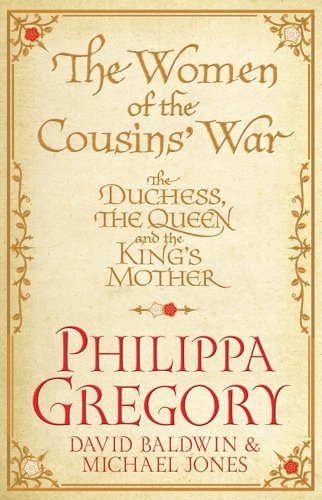
The Women of the Cousins’ War by Philippa Gregory, David Baldwin and Michael Jones

The Women of the Cousins’ War: The Duchess, the Queen and the King’s Mother is a non-fiction companion book to Philippa Gregory’s Cousins’ War series of historical fiction novels. The series tells the story of the Wars of the Roses from the viewpoints of some of the women who were involved, including Jacquetta of Luxembourg, her daughter Elizabeth Woodville, who was married to Edward IV, and Margaret Beaufort, the mother of Henry VII. Their stories were told in The Lady of the Rivers, The White Queen and The Red Queen respectively. The Women of the Cousins’ War features an essay on all three of these women, each written by a different historian, and in addition to the essays we are given some family trees, maps, list of battles, illustrations and colour photographs.

The book begins with a long introduction written by Philippa Gregory, which I actually found as interesting to read as the rest of the book! The introduction discusses the possible reasons why women in history have often been ignored and overlooked, and why it’s important to study the roles they played. Gregory also looks at the differences between writing history and writing historical fiction, and as a lover of historical fiction myself I find it fascinating to read about an author’s reasons for writing it.

The introduction is followed by Gregory’s essay on the life of Jacquetta of Luxembourg. Unfortunately very little is known about Jacquetta, there are no existing biographies and apparently there are only a few occasions where she actually appears in historical records, so Gregory didn’t have a lot of information to give us. For most of the essay she can only guess at what Jacquetta may or may not have done and how she probably reacted to the historical events going on around her. However, this was the essay I enjoyed the most and it was as easy to read as Gregory’s fiction. It sounds as if Jacquetta had a fascinating life and it’s a shame that so few historians have taken the time to study her.

The second essay is written by the historian David Baldwin and looks at Elizabeth Woodville. I did find Baldwin’s writing style slightly dry, but Elizabeth Woodville is a historical figure who interests me, so I still enjoyed reading the essay. The book’s final section is written by Michael Jones and examines the life of Margaret Beaufort. Again, there’s not a huge amount known about Margaret, but I thought Jones did a good job of working with what little information is available. He also spends some time discussing Margaret’s family history to help us understand the background she came from and to build up a more complete picture of the sort of person she was.

This book could be read either as a stand-alone non-fiction/reference book or as an accompaniment to Philippa Gregory’s three Cousins’ War novels. I’m not sure how satisfying it would be for a serious historian or history student though, as there are no footnotes or endnotes and only some brief lists of sources. I should point out that I have never studied the Wars of the Roses in any depth (most of what I know about the period comes from the small number of historical fiction novels I’ve read set during that time) and for the general reader like myself I would say that the book is very accessible and easy to follow. It filled some of the gaps in my knowledge and I thought it was worth reading, particularly for the wonderful introduction!

I received a copy of this book for review from Simon & Schuster

Winter King: The Dawn of Tudor England by Thomas Penn

Winter King: The Dawn of Tudor England is a biography of Henry VII, England’s first Tudor king – a king of whom Francis Bacon said, “he were a dark prince, and infinitely suspicious, and his times full of secret conspiracies and troubles”.

I previously knew very little about Henry VII and was drawn to this book in the hope that it would be a good introduction to the subject. The book opens with a prologue which details the years of unrest and uncertainty that accompanied the Wars of the Roses and explains how Henry VII came to the throne in 1485. Penn then takes us through all the important moments of Henry’s life and reign, including the marriage of his eldest son Arthur to Catherine of Aragon and Arthur’s subsequent death which led to Henry’s second son (the future Henry VIII) becoming his heir.

Henry VII himself is portrayed as a complex and secretive person, clever and shrewd, manipulative and controlling (especially where money and power are concerned). Something that is emphasised throughout the book is that Henry knew his claim to the throne had not been a strong one and that he went to great lengths to convince his subjects to accept him as a legitimate king of England and to prove to them that the rival houses of York and Lancaster had been reconciled under the Tudor name. Despite his efforts, though, he found himself the constant target of plots and conspiracies. The book goes into a lot of detail in recounting some of these planned rebellions and the reasons why they failed.

As someone who doesn’t read a lot of historical non-fiction and who is not an expert on the Tudors, I still had no problems understanding any part of this book. Although it does require some concentration, I found it a very interesting and absorbing read from beginning to end. For those of you who do already have a good knowledge of Henry’s reign, there might not be anything new here but I’m sure you’ll still find plenty to enjoy. Penn’s descriptions of royal weddings, funerals, court pageants etc are particularly well-written and vivid.

The book is very thorough and detailed, with all sources and references provided in the notes. It’s not what you could describe as a quick and easy read, but it’s still very enjoyable and I would highly recommend it to anyone who is interested in learning about the reign of Henry VII and the early life of his son, Henry VIII. Thomas Penn appears to have stayed objective and resisted the temptation to let his own opinions and theories get in the way of the facts, giving us a balanced and unbiased view of a fascinating period of history. I hope he goes on to write more books as he’s definitely a name to look out for.

I have to admit, before I started reading this book I already had a very negative impression of Henry VII due to the way he is portrayed in novels such as The Sunne in Splendour by Sharon Kay Penman and The Daughter of Time by Josephine Tey. Winter King hasn’t done much to change my opinion of him, but I’m pleased that at least I’ve now had the chance to fill in some of the gaps in my knowledge.

Samuel Pepys: The Unequalled Self by Claire Tomalin

As you may have noticed, I don’t often read non-fiction (a big clue can be found in my blog name) but this is something I’d like to change. I have heard a lot of praise for Claire Tomalin’s biographies, so I had high hopes for this one.

Samuel Pepys: The Unequalled Self is a long and comprehensive biography of an important historical figure, most famous for the diaries he kept during the 17th century. I haven’t actually read the diaries of Samuel Pepys yet but would certainly like to read them at some point in the future. I wasn’t sure whether not having read the diaries would cause problems with my understanding of the biography, but luckily it didn’t seem to matter – in fact, it might actually be best to read the biography first as it helps to put the diaries in context.

The first few chapters deal with Pepys’ childhood and early life (pre-diary) and understandably we don’t have a lot of information regarding this period of his life – we can only speculate about what Pepys may or may not have done. I found these chapters quite boring in comparison to the rest of the book, although I did enjoy learning about a typical day in a 17th century school – and I was fascinated by the description of the operation Pepys had to remove a stone from his bladder. I’ve always had an interest in the history of medicine and it never ceases to amaze me how anybody ever survived at all!

Tomalin explains that what makes Pepys’ diary so interesting and noteworthy is that he records a mixture of both public events and personal experiences. Pepys lived through a fascinating and eventful period of English history and his famous diary covers such events as the Restoration of Charles II, the plague of 1665 and the Great Fire of London in 1666. I was slightly disappointed that more attention wasn’t given to the plague as it’s a topic I find fascinating to read about (I hope that doesn’t sound too morbid!) but as Tomalin explains it was something that didn’t affect Pepys personally and so he doesn’t spend a lot of time talking about it.

The most interesting parts of the book for me were the descriptions of daily life. While I confess to struggling to get through some of the chapters about Pepys’ political and business activities, I found the more personal sections completely gripping. I thought Tomalin stayed very objective throughout the biography, drawing attention to both the good and the bad aspects of Pepys’ character (and to be honest, he didn’t seem to be the most pleasant of people). But I can tell that even though Tomalin doesn’t shy away from discussing his negative points, she has a lot of enthusiasm and liking for her subject. She also fleshes out the characters of other important people in Pepys’ life including his wife Elizabeth, with whom he had a very complex and volatile relationship. He could be very cruel to her and both physically and verbally abusive, but they did appear to have some genuine affection for each other and Tomalin describes some of the happy times they had together as well as the bad.

For someone like myself who doesn’t often read this type of literary biography, this was quite a challenging book but worth the effort. If I had tried to read this book straight through from beginning to end I probably wouldn’t have managed to finish it, but reading it over the course of a month, a few chapters at a time between reading my usual fiction books, worked perfectly for me.

Have you read any of Claire Tomalin’s biographies? Which ones would you recommend?