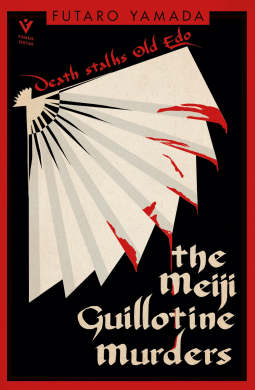
The Meiji Guillotine Murders by Futaro Yamada

Translated by Bryan Karetnyk

It’s 1869 and Japan has entered the Meiji era. The Tokugawa shogunate has fallen and the Emperor Meiji has been restored to the throne. After centuries of isolation, Japan is finally opening up to foreign trade and undergoing social, industrial and military reform. In Tokyo, a group of corrupt rasotsu (policemen) have found ways to exploit this period of change and upheaval for their own gain. With the arrival of two Chief Inspectors from the Imperial Prosecuting Office, Kawaji and Kazuki, it seems that the rasotsu will be forced to mend their ways – although the two men have other things to occupy their time as well as dealing with corruption.

With a number of bizarre murders taking place around Tokyo, Kazuki and Kawaji (based on a real person who is considered the founder of Japan’s modern police system) engage in a friendly competition to see who can solve the crimes first. A separate chapter is devoted to each case, which at first seem to be unrelated, making the book feel almost like a collection of short stories. There are five cases for the two detectives to solve, with the help of Esmeralda, a young Frenchwoman from a family of executioners whom Kazuki has brought to Japan along with that most deadly of French weapons: the guillotine. Despite the title, the guillotine is not necessarily used to carry out all of the murders in the book, but it represents the changes that Japan is experiencing as the country becomes exposed to modern, western influence. It also provides a reason for Esmeralda’s presence in Tokyo, which is important as she has a significant role to play in the solving of the mysteries.

The Meiji Guillotine Murders was first published in 1979 and is one of several Japanese crime novels that have recently been made available in English by Pushkin Press. However, although I’ve loved some of the others, I didn’t enjoy this one quite as much. Bryan Karetnyk’s translation is clear and readable (I’m already familiar with his work through some of his other translated novels), but I had problems with other aspects of the book. I struggled with the number of characters, particularly as so few of them have clearly defined personalities and with more and more of them being introduced with each new case the detectives investigate. My lack of engagement with the characters made it difficult for me to concentrate on following the plot, which is important as all of the separate cases are quite complex and you do need to be paying attention! I persevered and was rewarded with the final section of the book where, after some surprising twists and turns, everything is tied together perfectly.

I did like the historical setting of the book and felt I was learning a lot about Japan during the Meiji era. At times it seemed more like historical fiction than a murder mystery, which was fine with me, but I think someone picking the book up expecting a more traditional crime novel may be surprised by the amount of historical detail. It’s an interesting, unusual book, and although I’m not sure whether I would read any more by Yamada, I do hope more of them are translated into English for those readers who loved this one. I’m enjoying discovering Japanese crime authors through Pushkin and so far my favourites have been Seishi Yokomizo and Akimitsu Takagi.

Thanks to Pushkin Vertigo for providing a copy of this book for review via NetGalley.

This is book 7/20 of my 20 Books of Summer 2024.

Book 24/50 for the Historical Fiction Reading Challenge 2024
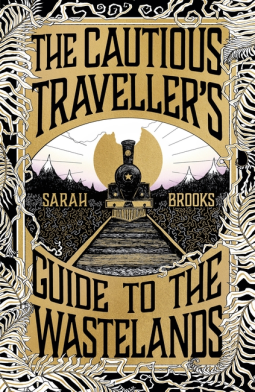
The Cautious Traveller’s Guide to the Wastelands by Sarah Brooks

It’s 1899 and passengers are boarding the Trans-Siberian Express, a twenty-carriage luxury train which will take them from Beijing to Moscow in time to attend the Great Exhibition. The four thousand mile journey will travel through the Wastelands, an abandoned wilderness where the landscape and wildlife seem to be undergoing strange changes and mutations. Since the changes were first recorded several decades earlier, Walls have been built to separate the Wastelands from the rest of Russia and China and passengers are not allowed to leave the train in the area between the Walls. On the previous journey, something went wrong: the glass in the windows cracked, exposing the train to the dangers of the Wastelands. The Trans-Siberian Company blamed the glassmaker and have assured passengers that the train is now safe, but doubts still remain.

The story of the 1899 Trans-Siberian crossing is told from the perspectives of several of the passengers. First, there’s Marya Petrovna, who has boarded the train under a false name and disguised as a mourning widow. At first we don’t know who Marya is or why she is hiding her identity, but we do know that she believes an injustice has been done and has come on this journey in search of answers. Then there’s Dr Henry Grey, an English naturalist whose latest theories have been disproved and who hopes to restore his reputation by studying the Wastelands. Finally, Zhang Weiwei is a sixteen-year-old girl known as ‘the child of the train’ because she was born in the Third Class sleeping car and has spent her whole life travelling backwards and forwards on the train. There are many other people onboard the train, but these are the central three around whom the novel revolves.

The Cautious Traveller’s Guide to the Wastelands is an unusual, imaginative novel and there were many things I enjoyed about it. I’ve read several other books set on trains, but usually, even in Murder on the Orient Express, the train simply provides a way of bringing a group of people together in close confines or of getting them from one destination to another. In this book, the train itself is an important part of the story and could even almost be viewed as another character. Sarah Brooks’ worldbuilding is very impressive; the novel has been compared to Susanna Clarke’s Piranesi and Erin Morgenstern’s The Night Circus and it did make me think of the latter in particular. So much attention to detail goes into describing the various carriages and compartments, the history of the train and its earlier crossings, and the fictional travel guide which gives the novel its name. The Wastelands themselves are less clearly described and although it’s suggested that life there has become tainted in some way, we don’t really know how or why, and much of the mystery still remains at the end of the book, which I’m sure was deliberate – but quite frustrating!

However, I felt that the setting and atmosphere came at the expense of the plot. The pace was very slow, with more than half of the novel devoted to setting the scene and introducing the characters, and it seemed to end just as things were starting to happen. I also would have preferred an explanation for what was happening in the Wastelands and was left wondering what we were intended to take away from the book. Was there a message in there about climate change and the environment – or migration, with walls being built to keep people out (or in)? I think we’re definitely supposed to question whether it’s best to travel cautiously or curiously, embracing change or turning away from it.

The Cautious Traveller’s Guide… is a fascinating alternate history novel, then, with lots to think about and debate. I didn’t find it completely satisfying, but I’m sure the right reader will love it.

Thanks to Orion Publishing Group for providing a copy of this book for review via NetGalley.

This is book 6/20 of my 20 Books of Summer 2024.

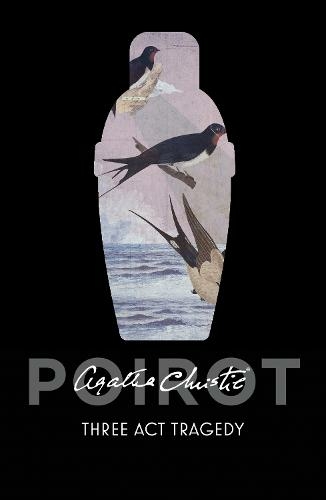
Three Act Tragedy by Agatha Christie

This month for the Read Christie challenge we are reading Christie novels published in the 1930s and I have chosen Three Act Tragedy from 1934. The book was also published in the US as Murder in Three Acts and that’s not the only difference – apparently the motive for one of the murders was also changed for the US edition. I’m not sure if there are any other Christie novels with significant differences between editions or if this is the only one.

Three Act Tragedy is a Poirot mystery but also features one of Christie’s other recurring characters, Mr Satterthwaite, who appears in The Mysterious Mr Quin and Murder in the Mews. At the beginning of the novel, Satterthwaite and Poirot are both attending a dinner party hosted by the stage actor Sir Charles Cartwright at his home in Cornwall. When one of the other guests, the Reverend Babbington, suddenly drops dead after taking a sip of his cocktail, several people suspect murder – yet there are no traces of poison in his glass. Soon afterwards, another death occurs under similar circumstances at a party attended by many of the same guests, but this time the victim is confirmed to have died from nicotine poisoning. Are the two deaths connected and if so, did the same person carry out both murders?

This is another entertaining Christie novel; maybe not one of her strongest plots, but the motive for the first murder is very unusual and I didn’t guess either that one or the motive for the second murder. I did start to suspect who was responsible, but not until much later in the book, so I can’t claim to have solved the mystery. We don’t see very much of Poirot himself as this is one of the books (like Lord Edgware Dies, which I read last month) where he sits at home and waits for other characters to provide him with information, rather than going out to interview suspects and search for clues himself. Instead, the deaths are investigated by Mr Satterthwaite and Sir Charles, with help from Miss Lytton Gore, affectionately known to her friends as Egg.

I would have liked Poirot to have played a bigger part in the story as although I like the elderly Mr Satterthwaite, he’s not very skilled at detecting, and I never really felt fully engaged with either Sir Charles or Egg. There’s an interesting cast of supporting characters, such as Muriel Wills, who writes plays under a male pseudonym, but I felt that some of these weren’t really used to their full potential. This wasn’t a favourite Christie, then, but I did still enjoy it – and it was good to see Poirot sharing a little bit of his personal history in a conversation with Satterthwaite, as he usually reveals very little about himself.

Next month for the Read Christie challenge (and for August and September as well) we are moving on to the 1940s and 1950s. There are plenty of books I still have to read from those decades, but one I definitely have lined up is N or M?, the third in the Tommy and Tuppence series. I’m hoping to make that one a July read.

This is book 5/20 of my 20 Books of Summer 2024.

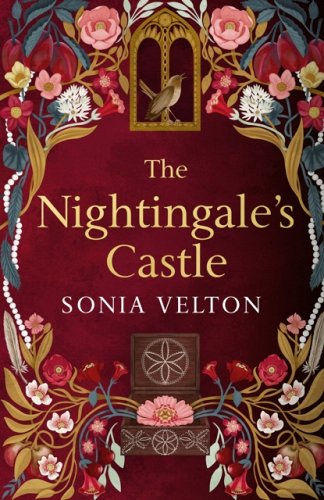
The Nightingale’s Castle by Sonia Velton

Countess Erzsébet Báthory (often anglicised to Elizabeth Bathory) has found her way into vampire folklore as one of the possible inspirations behind Bram Stoker’s Dracula. Known as the Blood Countess for her habit of bathing in the blood of her victims to retain her youthful appearance, she and her servants were accused of murdering hundreds of Hungarian peasant girls, making her one of the most notorious serial killers in history. In her new novel The Nightingale’s Castle, Sonia Velton reimagines Erzsébet’s story and looks at the woman behind the legends.

The novel opens in Hungary in 1610 and introduces us to fifteen-year-old Boróka, who has been raised by an adoptive father in the foothills of the Carpathian Mountains. When members of the Countess’s household arrive at Boróka’s cottage looking for girls to come and work at Čachtice Castle, she is initially reluctant to go, but her father persuades her that it would be dangerous not to accept. And so Boróka soon finds herself in a carriage heading up the hill towards the castle and a new way of life.

Within the walls of ÄŒachtice Castle, there are other girls like Boróka working as seamstresses, cooks and kitchen maids under the watchful eyes of the Countess’s personal staff, whom Boróka finds to be excessively cruel and vindictive. She struggles to settle in, but when she and Erzsébet Báthory eventually cross paths Boróka becomes a favourite of the Countess’s, which gives her some degree of protection. Then come the accusations of murder and torture and Boróka must try to make sense of what has really been going on in the castle and whether or not the allegations could be true.

I had heard of Erzsébet Báthory before starting this novel, but knew very little about her, so it was good to have the opportunity to learn more. Of course, this is fiction and obviously Sonia Velton will have had to use her imagination to flesh out the plot and characters, but I could see from her very detailed author’s note at the end of the book that she has carried out a lot of research and tried to put some theories together that fit the historical facts. This version of Báthory’s character is more sympathetic than the way she is usually portrayed and the servants who are arrested along with her, particularly Dorottya Szentes and Ilona Jó, are the real villains here. I would probably need to read some non-fiction on the subject before I could say whether I agreed with this or not.

Despite Erzsébet Báthory’s association with vampire legends, there are no vampires in Velton’s novel and for the most part this is a straightforward work of historical fiction. However, there’s a subplot involving a magical rosewood box which I thought seemed out of place; I felt that the book either needed more fantasy elements or none at all. Apart from that, I found The Nightingale’s Castle an interesting read and I’m sure other people will appreciate that little touch of magical realism more than I did.

This is Sonia Velton’s third novel. I haven’t read The Image of Her, which seems to be a contemporary thriller set in Dubai, but I enjoyed her first book, Blackberry and Wild Rose, about a community of Huguenot silk weavers in 18th century London. She does pick interesting subjects and settings for her novels, so I’ll look forward to seeing what she writes next.

Thanks to Abacus for providing a copy of this book for review via NetGalley.

Book 23/50 for the Historical Fiction Reading Challenge 2024
The Burial Plot by Elizabeth Macneal

It’s 1839 and Bonnie Fairchild has just killed a man. She didn’t intend to do it, but it has still happened and now she needs to escape from London, quickly, before she is caught. Bonnie is no stranger to crime – since fleeing to London to avoid an arranged marriage, she and her lover Crawford have been making their living through theft and fraud. This is the first time something has gone wrong, but Crawford thinks he has found a solution: Bonnie will apply for the position of lady’s maid at Endellion House, a grand estate outside the city owned by the wealthy Mr Moncrieff. Nobody will ever think to look for her there!

Arriving at Endellion House, Bonnie finds her new employer to be a sad, subdued man who devotes his time to designing mausoleums for his dead wife who drowned several months earlier. Meanwhile, his teenage daughter, Cissie, seems to have retreated into a fantasy world, writing imaginary love letters to herself. Then, just as Bonnie is beginning to make sense of this eccentric, unhappy household, Crawford reappears with another great scheme in mind…

I enjoyed both of Elizabeth Macneal’s previous novels, The Doll Factory and Circus of Wonders, so I was expecting good things from this one and I wasn’t disappointed at all; I think it’s probably my favourite of the three. Although I correctly predicted some of the twists and turns of the plot, there were others I didn’t see coming at all. One of the things that is obvious from the beginning, at least to the reader, is that Crawford is a con man who is using and manipulating Bonnie for his own purposes – and even though Bonnie is at least partly aware of this, she has convinced herself that she’s in love with him and so finds it impossible to free herself of him. The relationship between Bonnie and Crawford is the driving force behind the novel and is what kept me turning the pages, anxious to see what plan Crawford would come up with next and whether Bonnie would ever escape his grip.

The Burial Plot also gives some insights into the Victorian fascination with the rituals of death and mourning. The mourning industry in the 19th century was huge, with large sums of money being spent on clothes, accessories and elaborate funerals. At the beginning of the novel, Crawford has a job managing several private burial grounds in London but these are quickly becoming overcrowded and insanitary, leading to the creation of large, modern cemeteries such as Highgate, further away from central London. When Bonnie arrives at Endellion House, she suggests to Mr Moncrieff that he should build a cemetery like Highgate on his land so that he can bury his wife in style and then make money from selling the other burial plots. This storyline forms an important part of the novel and adds another layer of interest.

I loved this and am already looking forward to Elizabeth Macneal’s next book, whatever and whenever that may be!

Thanks to Picador for providing a copy of this book for review via NetGalley.

Book 22/50 for the Historical Fiction Reading Challenge 2024

This is book 4/20 of my 20 Books of Summer 2024.

The House of Doors by Tan Twan Eng

I loved Tan Twan Eng’s The Garden of Evening Mists but his latest novel, The House of Doors, sounded less appealing and I only decided to read it when I saw it had been longlisted (and then shortlisted) for this year’s Walter Scott Prize. Now that I’ve read it, I have mixed feelings about it; there was a lot to like and admire, but it definitely didn’t captivate me the way The Garden of Evening Mists did.

The House of Doors weaves the fictional story of Lesley and Robert Hamlyn around a real life visit in 1921 by the author William Somerset Maugham to Penang, Malaysia – or Malaya, as it was still known at the time. Lesley has spent her whole life in Malaya, while her husband Robert was born in Britain and moved to Penang as an adult. Maugham, referred to as Willie throughout the novel, is an old friend of Robert’s and has come to stay with them at their home, Cassowary House. Leaving his wife behind in England, he is accompanied by Gerald, his lover and secretary.

At first Lesley is not very happy about having visitors and it takes her a while to warm to Willie, but she eventually finds herself confiding in him and sharing with him stories about her past. She tells him about her involvement with Sun Yat Sen, the Chinese revolutionary who came to Penang to raise funds, and about her friend, Ethel Proudlock, who was charged with the murder of a man. Some of the things Willie hears and experiences during his time with the Hamlyns will later find their way into his fiction.

The book is beautifully written, which I had expected from my previous experience of Tan’s work, and the descriptions of Penang itself are particularly lovely and evocative. I can only think of one or two other novels I’ve read set in Malaysia, but it’s a setting I love and I enjoyed revisiting it through Tan’s descriptive writing. The book deals almost entirely with British characters and we learn a lot about the colonial lifestyles and attitudes of the time, but although Tan Twan Eng himself is a Malaysian author, if you’re hoping for a Malaysian perspective you won’t really find that here. Through the Sun Yat Sen storyline, we are given a little bit of insight into Chinese revolutionary politics, but again we see this from Lesley’s point of view, through her interactions with Sun Yat Sen and his associates.

The plot moves quite slowly, maybe because so much of the story is told in the form of flashbacks. At times I was bored, but one part of the book that I did find gripping was the Ethel Proudlock storyline. It’s based on a real murder case which I knew nothing about before reading this novel, so I had no idea what the outcome was going to be. Maugham used the case as the inspiration for his 1927 play The Letter, which was made into a film starring Bette Davis. There are references to other Maugham stories, novels and plays throughout the book as well, but they meant very little to me because I haven’t read any of his work apart from The Painted Veil. I think if I’d had more familiarity with Maugham’s writing it’s possible that I would have been able to get more out of this book. I had similar experiences with Colm Tóibín’s The Magician and Damon Galgut’s Arctic Summer, novels about Thomas Mann and E.M. Forster respectively (I haven’t read much of their work either and was left with the feeling that I’d missed something).

The House of Doors wasn’t a huge success with me, then, but the setting and the beautiful writing made it worth reading. The Walter Scott Prize winner is due to be announced later this week and of the shortlisted titles I’ve read so far, My Father’s House by Joseph O’Connor is still my favourite with this one second above Kevin Jared Hosein’s Hungry Ghosts. Maybe the winner will be one of the three I still haven’t read!

Book 21/50 for the Historical Fiction Reading Challenge 2024

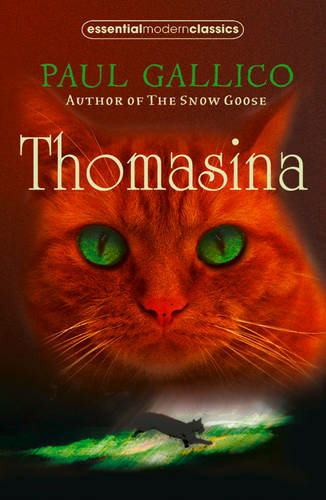
Thomasina by Paul Gallico – #ReadingtheMeow2024

When I saw that Mallika of Literary Potpourri was hosting her second Reading the Meow event this week – a celebration of cats in books – I knew exactly what I wanted to read. The Disney film The Three Lives of Thomasina was a favourite of mine as a child, but it never occurred to me to read the book on which it was based until I noticed that Lory of Entering the Enchanted Castle had read it for last year’s Reading the Meow so onto the list it went!

Published in 1957, Paul Gallico’s Thomasina is set in the fictional Scottish town of Inveranoch. Having lost his wife a few years earlier, veterinarian Andrew MacDhui has moved to the town from Glasgow and opened a surgery there, where he treats the pets of the townspeople, as well as looking after the health of the livestock on the surrounding farms. When the novel begins, MacDhui has only been living in Inveranoch for eighteen months and has already gained a reputation as a cold, bitter man who is good at his job but not mentally suited for it:

The gossips allowed that Andrew MacDhui was an honest, forthright and fair-dealing man, but, and this was the opinion of the strictly religiously inclined, a queer one to be dealing with God’s dumb creatures, since he appeared to have no love for animals, very little for man, and neither the inclination nor the time for God.

Since his wife’s death it seems that MacDhui has given what little love he still possesses to his seven-year-old daughter, Mary Ruadh, who is devoted to her ginger cat, Thomasina. When Thomasina becomes ill with a suspected meningeal infection, Mary takes her next door to her father’s surgery and begs him to save her pet’s life. Not pleased at being interrupted at his work and distracted by a difficult operation on a blind man’s dog, MacDhui tells her that Thomasina can’t be cured and orders his assistant to put the cat to sleep. Heartbroken, Mary vows never to speak to her father again and seems to really mean what she says. As the days go by and Mary’s silence continues, a desperate MacDhui pays a visit to Lori, a young woman who lives alone in the forest and is said to be a witch. Can Lori help repair the relationship between father and daughter or has too much damage been done?

Although I was already familiar with the plot, I found that this novel had far more depth than the Disney version and also a stronger religious element. There’s a lot of focus on MacDhui’s internal struggles as he tries to confront the loss of faith that has been with him since his wife died and on the efforts of Lori and the minister, Angus Peddie, to restore his belief in God and the power of love. Lori, a gentle, compassionate woman who tries to heal injured wild animals that others see as worthless, is a lovely character and reminded me a lot of Froniga in The White Witch by Elizabeth Goudge. However, I didn’t find the book overly sentimental because it’s balanced by the darker themes of loss and grief, as well as animal cruelty and its consequences for those who perpetrate it.

I’m sure younger readers will enjoy the chapters written from Thomasina’s own perspective, where she gives amusing descriptions of life in the MacDhui household, but I never really felt that I was reading a ‘children’s book’ and I think there’s enough here for readers of all ages to enjoy. Finally, without wanting to spoil too much, if you think Thomasina’s fate sounds too sad, I can assure you that her story is a happier one than you might expect.

This is book 3/20 of my 20 Books of Summer 2024.