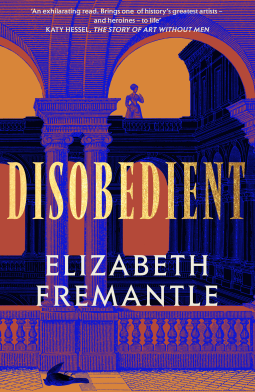
Disobedient by Elizabeth Fremantle

Elizabeth Fremantle is an author I always look forward to reading and I have enjoyed all six of her previous novels, including her two historical thrillers published under the name E.C. Fremantle. This seventh novel takes us to 17th century Italy and tells the story of Artemisia Gentileschi, one of the most important and accomplished female painters of her time.

Artemisia grows up in Rome, the daughter of the painter Orazio Gentileschi. Having lost her mother while still a child, Artemisia is raised by her father, spending time in his workshop learning to draw and paint. Orazio is a talented artist, heavily influenced by the more famous Caravaggio, but it quickly becomes obvious even to him that his daughter’s work is better than his own.

In 1611, the painter Agostino Tassi enters Artemisia’s life, first as her tutor and then as her intended husband. However, Tassi’s arrival leads to a terrible experience for Artemisia – something I won’t go into here because I think any reader who has come to this book with little or no knowledge of Artemisia’s life will probably prefer to discover her story for themselves. The second half of the book becomes quite dramatic as the repercussions of this incident become clear, so if you don’t already know all the details in advance, which I didn’t, it’s interesting just to watch it all unfold.

Artemisia is a great subject for historical fiction, being a strong, ambitious, determined woman whose work has left a lasting impact. Although we can’t know her true thoughts and feelings, Fremantle does a good job of getting inside Artemisia’s head and showing us what may have provided the inspiration for some of her paintings, such as Susanna and the Elders and Judith Slaying Holofernes. You’ll probably find yourself wanting to look up the paintings online as you read. As well as Artemisia, there are other characters in the novel who are equally well drawn; I’ve already mentioned Tassi and Artemisia’s father Orazio, but there’s also Zita, who becomes a model and chaperone for Artemisia, and Piero, Orazio’s assistant.

Disobedient covers only the earlier part of Artemisia’s life and the novel ends with a lot of her story still untold, but after reading Fremantle’s author’s note where she explains her personal reasons for wanting to write this book, I can see why she chose this period to focus on and I appreciate the courage it has taken for her to do so. I don’t think it’s my favourite of her novels, simply because some of the other settings and historical figures she has written about have interested me more, but I still enjoyed this book and am pleased to have had the opportunity to add to my knowledge of this fascinating artist.

Thanks to Penguin Random House/Michael Joseph for providing a copy of this book for review via NetGalley.

This is book 8/20 of my 20 Books of Summer 2023
This is book 29/50 for the 2023 Historical Fiction Reading Challenge.
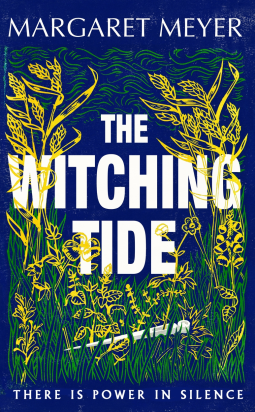
The Witching Tide by Margaret Meyer

I’ve read several novels about English witch trials in the 16th and 17th centuries, most recently The Bewitching by Jill Dawson, and I wondered whether this one – The Witching Tide, Margaret Meyer’s debut novel – would have anything new to offer. I’m pleased to say that although there are some obvious similarities with the other books I’ve read, this book also explores some different elements and ideas so was definitely worth reading.

The novel is set in 1645 in the small coastal village of Cleftwater, East Anglia. Martha Hallybread is a servant in the household of Kit Crozier, whom she nursed as a child. Martha has never married herself, choosing instead to devote her life to Kit and his family, as well as serving as the village midwife and healer. When the witchfinder Master Makepeace arrives in Cleftwater, Martha fears that she could become a target, particularly if anyone discovers her secret ‘poppet’, a wax doll inherited from her mother. However, a twist comes very early in the novel when Martha avoids being rounded up with the other suspected witches – and finds herself one of several women enlisted by the witchfinder as assistants.

Most books focus on the misogyny behind the witch hunts, but The Witching Tide reminds us that there were also women involved in condemning their fellow women. Some of them may have really believed they were cleansing their towns and villages of witchcraft, others probably just thought it was the best way to avoid falling under suspicion themselves; in Martha’s case, she hopes that her position will allow her to bring some comfort to the women awaiting trial and find a way to prove they are innocent.

Another thing that makes Martha an unusual protagonist is the fact that she is mute – and yet this is the aspect of the book I found least successful. Margaret Meyer has said that Martha’s lack of speech is intended to represent the way in which the ‘witches’ were silenced, denied a voice and prevented from defending themselves against their accusers, but although this is a clever idea, I felt that Martha made herself understood too easily, expressing complex ideas and sentences through gestures so that even strangers seemed to know what she meant. I could see what the author was trying to do, but I wasn’t completely convinced.

Martha’s story is fictional, but inspired by the real life East Anglian witch hunts of 1645-47 and the imaginary Cleftwater is loosely based on Aldeburgh, Suffolk, the location of one of the hunts. Knowing that real people experienced the things Martha and her friends went through makes the book even more meaningful.

Thanks to Orion Publishing Group/Phoenix for providing a copy of this book for review via NetGalley.

This is book 7/20 of my 20 Books of Summer 2023

This is book 28/50 for the 2023 Historical Fiction Reading Challenge.

Wonder Cruise by Ursula Bloom

If you’re not lucky enough to be going on a cruise this summer, this 1934 novel by Ursula Bloom is the next best thing! It will give you the opportunity to visit Gibraltar, Marseille, Malta, Naples and Venice, all without leaving your own home. You’ll sail on the Allando in the company of Ann Clements, a thirty-five-year-old single woman who has never been abroad in her life…until now.

At the beginning of the novel, Ann is living in rented rooms in London and working as a secretary, having been left penniless after her father’s death. Her routine rarely changes – long days in a gloomy office, then home to do the ironing and sewing, with only two weeks by the sea with her controlling, bullying older brother Cuthbert to look forward to. She has almost given up hope of having any excitement in her life, until the day she wins a large sum of money in a sweepstake she didn’t even know she had entered. Ignoring Cuthbert’s advice to invest the money in a trust fund for his daughter, Ann decides to spend it on a Mediterranean cruise – and this one decision will change her life forever.

Even while she’s boarding the ship, Ann is having second thoughts. Is she really brave enough to travel alone? Has she brought the right clothes? Surely she’s too old and boring to be having an adventure like this! As the days go by, however, she finds herself doing things she had never imagined herself doing before and for the first time she begins to learn who she really is and what she wants out of life.

I enjoyed this book from beginning to end; Ann is an endearing character and it was lovely to watch her grow in confidence, start to think for herself and leave behind the shy, insecure woman who has grown up under her brother’s thumb. Having been convinced that she would remain a spinster to her dying day, she also meets several men on the cruise who make her wonder whether it’s not too late to fall in love after all. Yet I wouldn’t describe this book as a romance so much as a book about a woman discovering that romance is possible, if that makes sense!

I also loved the descriptions of the places Ann visits, particularly as I’ve been to some of them myself, as well as life on the ship itself, as Ann gets to know her fellow passengers. They are a real mixture of people and although Ann has some preconceived ideas (thanks to Cuthbert’s influence) regarding those who are ‘not her sort’, as part of her transformation she is exposed to new ways of thinking and starts to change her own views.

Wonder Cruise is the first novel I’ve read by Ursula Bloom, but it seems she was very prolific and wrote over 500 books under various pseudonyms, which got her into the Guinness Book of Records in the 1970s! If you’ve read any of them maybe you can help me decide which one I should try next.

This is book 6/20 of my 20 Books of Summer 2023

Piranesi by Susanna Clarke

I wish it hadn’t taken me so long to decide to read Piranesi. Although I loved Susanna Clarke’s Jonathan Strange and Mr Norrell, this one sounded very different and didn’t immediately appeal to me, but I did still intend to read it sooner rather than later. Now that I have, I think Jonathan Strange is still my favourite, but I enjoyed this book a lot more than I expected to.

Our narrator, Piranesi, lives in a place he calls ‘the House’, a vast, labyrinthine structure containing hundreds of interconnected halls and vestibules. The lower levels of the building are flooded and there is a complex system of tides that only Piranesi understands. The House is his entire world; he believes he has always lived there and can’t remember any other way of life. His only human contact comes twice a week when he meets a man he thinks of as ‘the Other’ and assists him in his quest to find the Great and Secret Knowledge. Apart from himself and the Other, Piranesi is only aware of thirteen more people who have ever existed in the world, all now skeletons resting in the niches and alcoves of the House.

Piranesi is quite content with his solitary existence, exploring the enormous halls and passageways, studying the impressive statues he finds there and recording his discoveries in a series of notebooks. Then one day, everything changes. Could there be a sixteenth person in the world – and if so, who are they and what do they want?

I’m not going to say any more about the plot than that, partly because it’s a story that I don’t want to spoil for anyone who hasn’t read it yet but also because I found the plot secondary to the setting and the sense of place. The atmosphere Clarke creates really is wonderful; from the first chapter I felt fully immersed in the majestic, watery world of Piranesi’s House, a world that is somehow simultaneously both vast and claustrophobic. The book was published during the first year of the pandemic in 2020 and I’m sure if I’d read it then the themes of solitude and a life cut off from the outside world would have resonated with me even more than they did now. It’s no coincidence that Piranesi was also the name of an 18th century Venetian architect and artist famous for his etchings of ‘Imaginary Prisons’ showing huge subterranean vaults complete with staircases, arches and towers.

Towards the end of the book, as we finally began to learn more about the House and how Piranesi and the Other came to be there, I felt that the story started to slightly lose its magic. I had loved the eerie, otherworldly feel of the first half of the book and was less interested in the revelations that came at the end. Still, Piranesi is a very impressive novel and one that I would probably have to read again to fully appreciate everything Susanna Clarke was trying to say.

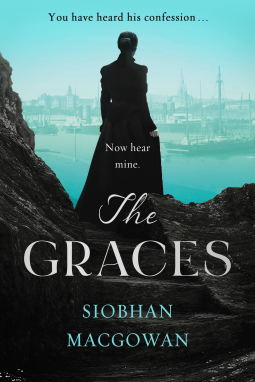
The Graces by Siobhan MacGowan

I found Siobhan MacGowan’s first novel, The Trial of Lotta Rae, a very powerful, emotional read and I was hoping for something similar from her new book, The Graces. I’m pleased to say that I thought this one was even better.

The novel opens on an August evening in 1918, as a group of pilgrims make their way to the bell tower of Mount St Kilian Abbey in Dublin. As Brother Thomas and Father Sheridan watch the candlelit procession weaving through the trees below the abbey, they remember the woman to whom the pilgrims are paying homage – Rosaleen Moore, known as The Rose, who died just three years earlier. On her deathbed, Rosaleen revealed a terrible secret to Father Sheridan, something which has left him so disturbed he decides to discuss it with Brother Thomas tonight.

In a series of long flashbacks, Rosaleen’s story unfolds, beginning with her childhood in rural County Clare, where she first discovers that, like her grandmother, she has been ‘touched by the Graces’ and is blessed – or cursed – with the sight. When her gift gets her into trouble in the village, she is sent away to live with an aunt in Dublin. Here she finds herself befriended by a group of spiritualists and healers who encourage her to use her special talents to help others. However, Rosaleen will learn that meddling in things she doesn’t fully understand is not a good idea and could have disastrous results.

The Graces is a fascinating, moving story, exploring the clashes between superstition and science and the consequences of thinking we know best. It reminded me of Hannah Kent’s The Good People and Emma Donoghue’s The Wonder, which have similar themes and are also set in Ireland, but although it’s bleak at times, the book is also very gripping and leaves you with a lot to think about after reaching the final page. Rosaleen herself is not always an easy character to like – her arrogance leads her to make poor decisions and I was disappointed in the role she plays in a love triangle with two different men, Lorcan and Rian – but I could still have sympathy with her situation because the whole thing is so desperately sad.

Away from the central plot, the political developments in early 20th century Ireland also form an important part of the story. Rosaleen is in Dublin during the time of the Easter Rising, the formation of the Cumann na mBan (an Irish republican women’s paramilitary group) and the move towards independence. Through her relationship with Lorcan, who is involved in all of these things, Rosaleen is exposed to new ideas and new ways of thinking, but she doesn’t fully embrace them herself and feels caught in the middle between two extreme views.

Having enjoyed both of Siobhan MacGowan’s novels (although I always feel that ‘enjoyed’ isn’t quite the right word to use with this sort of book), I’m already hoping for a third!

Thanks to Welbeck Fiction for providing a copy of this book for review via NetGalley.

This is book 5/20 of my 20 Books of Summer 2023

This is book 27/50 for the 2023 Historical Fiction Reading Challenge.
The Summer Tree by Guy Gavriel Kay

Having read most of Guy Gavriel Kay’s more recent novels, I decided it was time to go back to the beginning and read his earliest work, The Fionavar Tapestry, a fantasy trilogy published between 1984 and 1986. I had been warned that this was very different from his later books, and now that I’ve read the first volume, The Summer Tree, I would agree, but I was pleased to find that I enjoyed it anyway.

The Summer Tree begins with five Canadian students – Kevin Laine, Paul Schafer, Kimberly Ford, Jennifer Lowell and Dave Martyniuk – attending a lecture by Professor Lorenzo Marcus at Toronto University. After the lecture, the Professor invites the five of them back to his hotel, where he reveals to them that his true identity is Loren Silvercloak, a mage from the land of Fionavar. His High King, Ailell of Brennin, is celebrating his fiftieth year on the throne, and Loren has been sent to our world to bring five guests to the celebrations. Once in Fionavar, however, the five find themselves caught up in the politics of this other land and discover that each of them will have a part to play in the upcoming battle against the evil god Rakoth Maugrim, the Unraveller.

I was already familiar with Guy Gavriel Kay’s incredible worldbuilding from his other books – the way he plunges the reader straight into fully formed landscapes based on thinly disguised versions of real historical settings (such as China’s Song Dynasty in River of Stars or medieval Spain in The Lions of Al-Rassan). The worldbuilding is just as strong in this novel, but although he does draw on the mythology of our own world (particularly Celtic and Norse), this time he relies much more heavily on Tolkien and traditional high fantasy. That’s not surprising as Kay did work with Tolkien’s son Christopher on the editing of Tolkien’s posthumous book The Silmarillion. And so, in The Summer Tree we have Loren Silvercloak in the role of Gandalf the Grey, Rakoth Maugrim who resembles Sauron, an exiled Dwarf king, and the Elf-like lios alfar and their counterparts the svart alfar. There’s also a CS Lewis influence, I think, as there’s a character with the name Maugrim in the Narnia books and the Fionavar city of Paras Derval made me think of Narnia’s Cair Paravel.

With such a vast and complicated world to explore, Kay gives each of his five main characters individual storylines, taking them to different areas of Fionavar and allowing them to interact with different groups and tribes. For example, Dave Martyniuk becomes separated from the others early on and spends most of the novel getting to know the Dalrei, a plains-dwelling tribe of hunters, while Kim Ford discovers that she has the powers to become a Seer. However, I felt that some of the characters lacked depth and the novel as a whole feels less mature and polished than his later books.

I didn’t love The Summer Tree, but I liked it enough to want to continue with the second book in the series, The Wandering Fire – and as this one ended on a cliffhanger I probably shouldn’t wait too long before picking the next one up! I also still have A Song for Arbonne and The Sarantine Mosaic left to read, although at this point I’ll be surprised if anything surpasses Tigana as my favourite book by Kay.

This is book 4/20 of my 20 Books of Summer 2023

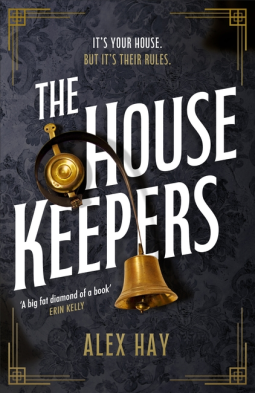
The Housekeepers by Alex Hay

It’s June 1905 and plans are underway for a ball at the grandest house on London’s Park Lane. Miss de Vries, who has recently inherited the house from her millionaire father, has decided to throw the party of the season to launch herself into society and find a suitable husband. However, someone else also sees the night of the ball as a great opportunity – an opportunity for revenge. She is Mrs King, the former housekeeper, who was dismissed from her job just a few weeks earlier and is now planning a daring heist. On the night of the Park Lane ball, she and a group of other carefully recruited servants will strip the house of its treasures – its artworks, books, furniture, silverware, even the carpets – and Miss de Vries and her guests won’t notice a thing until it’s too late. But will this plan work or will the housekeepers be caught in the act?

The Housekeepers is Alex Hay’s debut novel and I found it an entertaining read. It was fascinating to see how carefully Mrs King and her accomplices plan the heist – preparing inventories of each room, taking measurements, identifying escape routes and making sure nothing is left to chance! Despite their detailed planning, there are still some factors outside their control and a lot of things that could go wrong, so there’s plenty of suspense as we wait to see whether or not they will succeed. As the novel progresses and we learn more about what has been going on behind the doors of the Park Lane house, I found I didn’t have much sympathy for Miss de Vries and was definitely rooting for the servants!

The heist is Mrs King’s idea, but I thought some of the other women she enlists were more interesting characters. These include Mrs Bone, who runs a criminal network but seems to have a moral code of her own, the actress Hephzibah and the two trapeze artist sisters referred to as Jane-one and Jane-two. There’s also Winnie, who held the position of housekeeper before Mrs King, and Alice the sewing maid who is befriended by Miss de Vries and faces a battle with her conscience. I felt that too many characters were introduced too quickly at the beginning of the book, which made things confusing for a while, but I eventually managed to keep them all straight in my mind.

The novel is also an interesting exploration of the class system and the injustice of some people being born into a life of privilege while others are not. In his author’s note, Alex Hay describes the satisfaction of imagining the servants trying to claim some of that privilege for themselves! However, Miss de Vries herself is looked down upon by the people she most wants to impress because she had a father who made his fortune through diamond mining rather than inheriting wealth passed down through the generations.

I thought The Housekeepers was fun to read and with its period setting, portrayal of life above and below stairs, and vividly described heist sequences, I could easily imagine a BBC adaptation. As a first novel it’s quite impressive and I’ll certainly be looking out for more from Alex Hay!

Thanks to Headline Review for providing a copy of this book for review via NetGalley.

This is book 26/50 read for the 2023 Historical Fiction Reading Challenge.