The Square of Sevens by Laura Shepherd-Robinson

Laura Shepherd-Robinson’s books are getting better and better! This one will be on my books of the year list in December, without a doubt.

A standalone novel set in the first half of the 18th century, The Square of Sevens is the story of Red, the daughter of a Cornish fortune teller or ‘cunning-man’. Red can’t remember her mother and has spent the first seven years of her life moving from village to village with her father, telling fortunes using an ancient method of cartomancy known as the Square of Sevens. They need to keep on the move, her father says, to avoid being caught by enemies who wish them harm.

Life changes abruptly for Red when her father dies of a sudden illness and she becomes the ward of a respectable gentleman, Mr Antrobus. Going to live with him in his elegant home in Bath, Red finds herself thrust into society for the first time. Raised by Mr Antrobus and his kindly housekeeper, she settles into her new life while entertaining the people of Bath by reading their cards for them. It’s through her gift for card-reading that Red crosses paths with the wealthy De Lacy family, whom she believes hold the key to the secrets of her own past. And so a sequence of events are set in motion that take Red from Bath to London’s Bartholomew Fair and a grand house in Devon in search of answers.

It’s not really possible for me to say much more about the story without spoiling it, but if I tell you it includes family secrets, disputed inheritances, stolen documents, and lots of surprising twists and turns you’ll get the idea! It’s very entertaining, with the feel of a Charles Dickens novel at times, and I was often reminded of Charles Palliser’s The Quincunx (another great Dickensian novel with an inheritance at the heart of the plot).

I found Red a very engaging narrator; I initially had a lot of sympathy for her, as she struggles to uncover the secrets of her family background and find her place in the world, while others around her try to prevent her from learning the truth at all costs. However, I soon discovered that Red can be just as ruthless herself and is not above doing some plotting and scheming of her own in order to get what she wants. As she tells us at one point in the novel, If you’d wanted a saint, then you should have read a different book. There are plenty of other interesting and memorable characters to get to know – I was particularly intrigued by Lazarus Darke – and what makes the book so fascinating to read is that we can never be quite sure who can be trusted and who can’t.

The ‘Square of Sevens’ method of card reading was described in an 1897 book by Edward Irenaeus Stevenson and Shepherd-Robinson incorporates it throughout the novel. Red tells the fortunes of many of the characters she meets and the fortune-telling theme is carried further with each chapter heading including a picture of a playing card and an interpretation of that card’s meaning. Reading the author’s note at the end of the book, a lot of thought went into choosing the correct card for each chapter and I feel a bit guilty that I didn’t always pick up on the significance of that choice.

If you’ve read and enjoyed Laura Shepherd-Robinson’s two previous novels, the Georgian mysteries Blood and Sugar and Daughters of Night, I’m sure you’ll enjoy this book too – I think it’s even better. If you’re yet to try any of her books then this would be a great place to start!

Thanks to Mantle for providing a copy of this book for review via NetGalley.
This is book 24/50 read for the 2023 Historical Fiction Reading Challenge.
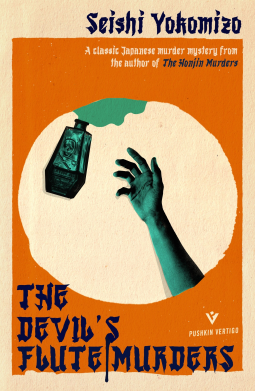
Random Harvest by James Hilton

“Sometimes I have a feeling of being — if it isn’t too absurd to say such a thing — of being half somebody else. Some casual little thing — a tune or a scent or a name in a newspaper or a look of something or somebody will remind me, just for a second — and yet I haven’t time to get any grip of what it does remind me of — it’s a sort of wisp of memory that can’t be trapped before it fades away…”

After enjoying Lost Horizon and Goodbye, Mr Chips, I decided that the next James Hilton book I read would be his 1941 novel Random Harvest. I knew very little about it except that it was very popular at the time it was published and that the film starring Greer Garson and Ronald Colman is one of my mother’s favourites. I haven’t seen it, but I think reading the book first was the right decision anyway, for reasons I’ll explain later.

The novel opens in 1937 with our narrator, Mr Harrison, falling into conversation with a stranger, Charles Rainier, whom he meets on a train to London. Rainier is now a successful businessman and politician, but he confesses to Harrison that since returning from fighting in World War I twenty years ago a whole chunk of memory has been lost to him. He remembers being injured in the trenches of France in 1917 and he remembers waking up in Liverpool one day in 1919, but can recall nothing at all of what happened in between – a period of two years which are now a complete blank to him.

When the train arrives at the station, the two men go their separate ways, but their paths soon cross again and Rainier offers Harrison a job as his secretary. As they get to know each other better, Rainier tells his new friend the story of his life since that day in Liverpool and gradually his earlier memories begin to return, with surprising results.

This book wasn’t quite what I’d expected; I thought it was going to be more of a romance, but although it does have a very moving love story at its heart, there’s much more to Random Harvest than that. It can be considered an anti-war novel, with it’s theme of loss that runs through the story from beginning to end – not just the obvious loss of memory, but also lost opportunities, lost or broken relationships, lost innocence and, on a wider scale, a way of life that has been lost forever as the world moves on from one war and heads straight for another:

It all depended whether one were tired or eager after the strain. Most of us were both — tired of the war and everything connected with it, eager to push ahead into something new. We soon stopped hating the Germans, and just as soon we began to laugh at the idea of anyone caring enough about the horrid past to ask us that famous question on the recruiting posters — ‘What did you do in the Great War?’ But even the most cynical of us couldn’t see ahead to a time when the only logical answer to that question would be another one — ‘WHICH Great War?’

The book has an unusual structure, divided into five long sections with no chapter breaks and moving backwards and forwards in time, piecing together Rainier’s memories as they begin to flood back. However, it’s always easy enough to follow what’s happening. The plot never becomes confusing and the story is structured the way it is for a good reason, allowing Hilton to obscure whole episodes in Rainier’s life from the reader and also from Rainier himself until it’s the right time to reveal them. And when the final revelation comes, right at the end of the book, I was taken completely by surprise as I hadn’t seen it coming at all. Apparently the film is structured differently, with the truth obvious from the beginning instead of being saved for the end, which is why I’m so glad I’ve read the book first and could experience everything as Hilton intended it.

This is a great book, possibly even better than Lost Horizon, and I’ll definitely be looking for more by James Hilton.

This is book 39/50 read from my second Classics Club list.

Voices of the Dead by Ambrose Parry

This is the fourth book in Ambrose Parry’s series of crime novels set in the medical world of 19th century Edinburgh – and it’s my favourite so far. Ambrose Parry is a pseudonym of Dr Marisa Haetzman, a consultant anaesthetist, and her husband, the crime author Chris Brookmyre, and they each bring their own set of skills and knowledge to the writing of these books. The series follows Dr Will Raven, assistant to the great Scottish obstetrician James Simpson (a real historical figure), and Sarah Fisher, who dreams of one day becoming a doctor herself, so each book includes a wealth of medical detail as well as a murder mystery to be solved.

In Voices of the Dead, set in 1854, Will is now married with a child and another on the way, but he doesn’t have much time to enjoy being a husband and father – not only is he struggling to move out from under the wing of Dr Simpson and establish his own reputation, he has also become mixed up in yet another murder case. Parts of a dismembered body have been turning up in random places around Edinburgh and Will’s friend, Dr Henry Littlejohn, has asked for his help in identifying the victim.

Meanwhile, Sarah Fisher’s plans to study medicine and follow in the footsteps of Dr Elizabeth Blackwell have had to be put on hold. Disappointed and frustrated, she turns instead to the emerging science of mesmerism, which is beginning to grow in popularity. An American mesmerist has just arrived in Edinburgh and Sarah is keen to learn more about the possible uses of mesmerism in healing patients. Will Raven, however, has a low opinion of such things and, not for the first time, he and Sarah find themselves in conflict. Eventually, however, Sarah is also drawn into the murder investigation and she and Will must work together again to find the culprit.

If you’re new to this series you may be wondering whether you could start here without having read the previous three books. Well, this one does work as a standalone mystery, but I would recommend reading all four in order if you can, starting with The Way of All Flesh. Will and Sarah have a complex relationship – made even more complex by the addition of Will’s wife, Eugenie – and it would be best to get to know them both from the beginning. There are also lots of recurring characters who develop throughout the series; in this book, I particularly enjoyed being reacquainted with Gregor the giant. Like the real life Irishman Charles Byrne (whom I read about recently in Hilary Mantel’s The Giant, O’Brien), Gregor’s size has made him the target of unscrupulous men who hope to acquire his body for exhibition after his death.

As well as the usual details of Will’s work as an obstetrician, I found it fascinating to read about the public displays of mesmerism, hypnotism and spiritualism being staged across Edinburgh and the differing views people held towards them. Were the mesmerists and spiritualists really just frauds preying on gullible victims, as Will believed, or were they acting with the best intentions, trying to provide comfort to people who needed it? This storyline introduces some colourful new characters, including a magician of whom I became quite fond and am hoping we’ll meet again.

Every book in this series has been very enjoyable, but I think this one is the best yet. I’m looking forward to the next one and hope we won’t have to wait too long for it!

Thanks to Canongate for providing a copy of this book for review via NetGalley.

This is book 23/50 read for the 2023 Historical Fiction Reading Challenge.
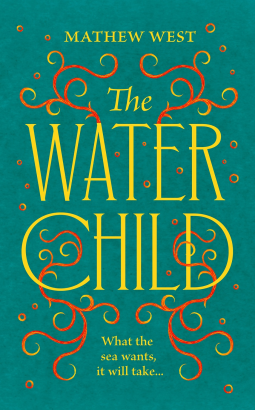
The Cat Saw Murder by Dolores Hitchens

This week, Mallika of Literary Potpourri is hosting Reading the Meow, a celebration of books featuring cats. When this event was first announced, I wasn’t sure if I had anything suitable; The Life and Opinions of the Tomcat Murr by ETA Hoffmann would have been perfect, if I hadn’t just read it last year. Then I came across a whole series of books with cats in them (or in the titles, at least): Dolores Hitchens’ Rachel Murdock mysteries, some of which have now been reissued as part of the American Mystery Classics imprint. The Cat Saw Murder, originally published in 1939, is the first and I hoped it would be a good choice for Reading the Meow.

The novel begins with elderly Miss Rachel Murdock going to stay with her adopted niece, Lily Sticklemann, who lives at Breakers Beach near Los Angeles. Lily has hinted that she’s in trouble and needs advice, so Miss Rachel has packed her case and set off by train to see if she can help. Her less adventurous sister Jennifer has stayed behind, but Miss Rachel is accompanied by Samantha, the black cat who once belonged to their other sister, Agatha. Agatha was an eccentric woman and on her death she left her fortune to the cat, meaning that Samantha is now a wealthy heiress in her own right. After meeting Lily and discovering that she is having financial difficulties, Miss Rachel becomes concerned for Samantha’s safety, suspecting that Lily has her eye on the cat’s inheritance. However, Lily herself is the one who is murdered – and it seems that Samantha may have been a witness.

There are plenty of suspects – Lily lives in a boarding house, Surf House, and is murdered in her bedroom, which means all of the other residents of the building immediately come under suspicion. Several also have a motive for the crime, as Lily owes gambling debts to some of them and is thought to have been romantically involved with another. Although this is not a locked-room mystery exactly (we know that the bedroom door opens and closes more than once during the night of the murder), it does share many elements of that kind of mystery, but thankfully never becomes too concerned with the puzzle-solving aspects at the expense of the characters and motives.

Miss Rachel is a great character; I found her very endearing and quite similar to Agatha Christie’s Miss Marple in many ways, although she’s more agile and energetic for her age than Miss Marple is and spends a portion of the book searching rooms and crawling around in the attic. She has a good relationship with the detective investigating the murder, Lieutenant Mayhew, and they both contribute, in their different ways, to the solving of the mystery.

The plot feels slightly disjointed at times and there are some confusing shifts between past and present tense (the book seems to be narrated by someone at an unspecified future date looking back on Mayhew and Miss Rachel’s first case), but otherwise I really enjoyed this book and it did turn out to be a good choice for Reading the Meow. Samantha the cat, although not the main focus of the story, does have a substantial part to play and provides some intriguing clues. The second book in the series is The Alarm of the Black Cat and I think I’ll be tempted to read it soon!

This is book 1/20 of my 20 Books of Summer 2023

The Last Lifeboat by Hazel Gaynor

We hear a lot about children being evacuated from the cities to the British countryside during World War II, but not so much about those who were sent away to safety overseas. Hazel Gaynor’s new novel, The Last Lifeboat, explores this often overlooked aspect of the war, taking as its inspiration the real life tragedy of the SS City of Benares, a British evacuee ship which was torpedoed by a German U-boat in September 1940 with almost 100 children on board.

The novel follows the stories of two women: Alice King and Lily Nicholls. Lily, who lives in London, is a widow and the mother of two young children, Georgie and Arthur. All she wants is to keep her children safe, but as bombs begin to rain down on the city, Lily starts to fear for their lives and when she hears about a new government scheme to evacuate children to other countries, she has a difficult decision to make. Meanwhile, schoolteacher Alice King is looking for a way to ‘do her bit’ for the war effort and has signed up with CORB (the Children’s Overseas Reception Board) as a volunteer escort who will accompany a group of children on a ship sailing for Canada.

These two separate storylines connect when Lily entrusts Arthur and Georgie to Alice’s care as parents are not allowed to accompany their children overseas. The ship on which they set sail – the SS Carlisle – is part of a large convoy so everyone assumes they will be protected from the German U-boats, but once out in the Atlantic things go badly wrong. The ship is hit by a torpedo and begins to sink, leaving the passengers and crew to pile into the lifeboats. Some are rescued, others are thrown into the waves, but one lifeboat drifts out of range with Alice King on board. The days that follow will be a traumatic period for Alice, as she and the others in the boat find themselves lost at sea with little hope of rescue and limited supplies of food and water, but it will be equally traumatic for Lily as news of the disaster reaches London and she discovers that one of her children is missing.

I think this is the best of the three Hazel Gaynor books I’ve read so far (the others are The Lighthouse Keeper’s Daughter, about Grace Darling, and The Cottingley Secret, the story of the Cottingley fairies). I liked both Lily and Alice and found each of their stories very moving. Alice’s is more dramatic as the days go by and she and the other lifeboat passengers struggle to survive while adrift in the Atlantic, but I could also feel Lily’s heartbreak and anger as she waits for news of her lost child and makes the shocking discovery that the evacuee ships were not being escorted to Canada as promised but left to fend for themselves after passing a certain point. Knowing that the book is based on a true story and that real people did have to go through the things that Alice and Lily went through just makes it even more powerful.

Thanks to HarperCollins for providing a copy of this book for review via NetGalley.

This is book 22/50 read for the 2023 Historical Fiction Reading Challenge.
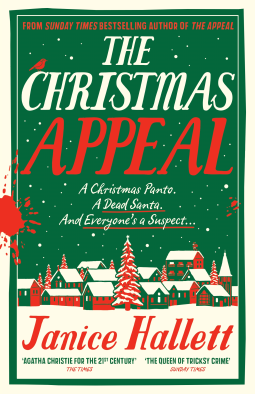
Inquest by Henrietta Clandon

Inquest is one of four Henrietta Clandon mysteries available from Dean Street Press. Many of you will have heard the sad news earlier this year of DSP publisher Rupert Heath’s death, but it has been confirmed that the titles currently in print will still be available as long they have the copyrights. I loved the first Clandon novel I read, Good by Stealth, so I thought I would read another one while I still had the opportunity.

Henrietta Clandon was a pseudonym of John Haslette Vahey, a Northern Irish author who also wrote under several other names, most often Vernon Loder. Inquest, originally published in 1933, was the first of his books under the Clandon name. I’ve never read anything else he has written, so I don’t know how much difference there is between the various pseudonyms in terms of writing style or topics.

The novel opens six months after the death of William Hoe-Luss, an English businessman believed to have been poisoned by consuming deadly mushrooms during a house party in France. Now his widow, Marie Hoe-Luss, has assembled all of the original guests – with the addition of Dr Soame, William’s physician – for another house party at Hebble Chase, her estate in England, where she plans to hold a sort of informal ‘inquest’ into her late husband’s death. However, when one of the guests breaks their neck falling from a high window, it seems that the killer may have struck again.

Although the police do eventually arrive on the scene, most of the sleuthing in the book is done by Dr Soame, who also narrates the whole novel. He’s an interesting choice of narrator as his medical knowledge and previous experience as a police surgeon means he works alongside the detectives at times, while also being one of the party, mixing with the suspects. Soame already knows some of the guests through his position as the Hoe-Luss family doctor, but others are new to him which allows the reader to get to know them along with Soame.

I enjoyed the first half of the book, which introduces the characters as they arrive at the estate for Marie’s inquest – an assortment of friends, family members, business partners and former lovers, which means there are plenty of tensions, entanglements and motives for murder. They aren’t the most pleasant bunch of people, but that’s common in Golden Age mysteries so not unexpected and not too much of a problem! However, I felt that later in the book, after the second death takes place, the plot became unnecessarily complicated and I began to struggle to keep everything straight in my mind.

I really wanted to love this book, so I’m disappointed that I didn’t. It’s a good, solid mystery novel, apart from getting a bit confusing towards the end, but there’s nothing to make it stand out from other similar books in the genre, unlike Good by Stealth, which was unusual, witty and clever. I’m not sure whether I’ll read the other two Henrietta Clandon books – I suspect I’ve already read the best one – but maybe I’ll try a Vernon Loder at some point.

Unfinished Portrait by Mary Westmacott

May’s theme for the Read Christie 2023 challenge is ‘betrayal’ and the suggested title this month is Unfinished Portrait, a 1934 novel which is one of six books Christie published under the pseudonym of Mary Westmacott. Although I haven’t managed to take part in the challenge every month so far this year, I was particularly keen to join in with this one as I’ve previously only read one Westmacott novel – Giant’s Bread – and have been looking forward to reading more of them ever since.

Unfinished Portrait begins by briefly introducing us to Larraby, a portrait painter who is visiting an unnamed island when he comes across a woman sitting alone in a garden. Sensing that something is wrong, Larraby engages her in conversation and discovers that he is correct – she is intending to commit suicide. Not wanting to leave her alone, he accompanies her back to her hotel and listens as she tells him the story of her life and explains the sequence of events that have put such desperate thoughts into her head.

The woman’s name is Celia – at least that’s what Larraby calls her, as he doesn’t know her real name – and her story forms the main part of the novel. A lot of time is spent on Celia’s sheltered childhood, growing up in the late Victorian period in a comfortable home with servants and a nanny until the family’s financial position is affected by the early death of Celia’s father. I only know the basics about Agatha Christie as a person, but apparently Unfinished Portrait is semi-autobiographical, drawing on her own childhood memories to create Celia’s tales of inventing imaginary friends, time spent abroad due to her father’s poor health, the close relationships she had with her mother and grandmother and her first attempts at writing books. Later, Celia finds herself trapped in an unhappy marriage to Dermot, a man who is insensitive, controlling and eventually unfaithful – which again is based on Agatha’s own marriage to Archie Christie. If I’d been more familiar with Christie’s own life I would have appreciated the autobiographical element of the book a lot more, which would probably have added to my enjoyment of it, but I still found Celia’s story compelling in its own right.

After finishing the book, I could see how it fits the challenge topic for this month, exploring the theme of betrayal from several different angles: Dermot betrays Celia with another woman, Celia herself betrays a previous lover, and later in life she feels she has betrayed her daughter. All of these betrayals combine to cause the deterioration in Celia’s mental state that leads to her feeling so unhappy the day she meets Larraby. It’s a sad and emotional story – even sadder knowing that it was how Christie felt about her own situation at that time. Of course, the book was published in the 1930s and so it’s an ‘unfinished portrait’, leaving a lot of things in Celia’s life (and Christie’s) unresolved and incomplete.

I found this book quite different from Giant’s Bread, the only other Westmacott book I’ve read, and I think I preferred that one overall. I’m definitely more of a Christie fan than a Westmacott fan, but these are still great books and I’m looking forward to reading the other four.