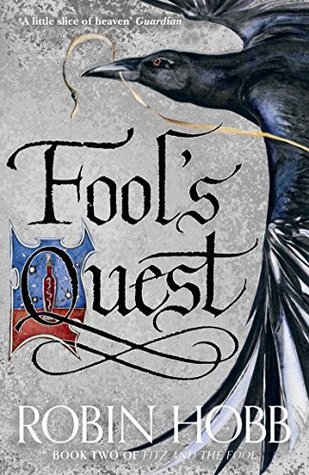
Fool’s Quest by Robin Hobb

Although I don’t read a lot of fantasy, I do love Robin Hobb’s books and would count her as one of my favourite authors. I’ve now read fifteen of her novels, all from the various trilogies and quartets that make up the larger sequence known as the Realm of the Elderlings. After this book, I’ll only have one more to read and then I’ll be finished.

Fool’s Quest is the second book in the final trilogy, Fitz and the Fool. If you’re new to Hobb, I think it’s quite obvious that you won’t want to start here – and I certainly wouldn’t recommend it! Begin with Assassin’s Apprentice instead and then continue from there. There may be spoilers in the rest of this post that you would prefer to avoid, so keep reading at your own risk!

Anyway, Fool’s Quest opens with FitzChivalry Farseer back at Buckkeep Castle, helping to heal the Fool, having unintentionally stabbed his old friend at the end of the previous book, Fool’s Assassin. Unknown to Fitz, in his absence a group of mysterious and menacing strangers have attacked his country estate of Withywoods and abducted his young daughter, Bee. It will be a while before Fitz receives this devastating news, but meanwhile another momentous event takes place in his life – something which I had been hoping would happen for a very long time!

The story moves forward at a very slow pace while we’re waiting for Fitz to discover what has happened to Bee – and even once he becomes aware, he still doesn’t set off in pursuit immediately but waits until he has gathered more information and made his preparations. This is a change from the more impetuous young Fitz we knew in the earlier books (and slightly frustrating for the reader) but at the same time, the slow pace didn’t bother me and I was never bored. While Fitz is at Buckkeep, Hobb continues to develop his relationships with long-standing characters such as Chade, Kettricken, Dutiful and Nettle, as well as introducing some new ones, including Chade’s latest apprentice assassin, Spark, and Motley the talking crow! We don’t hear as much from Bee herself as we did in the previous book – only a few chapters are written from her perspective, but what we do hear gives us an idea of the nature of her abductors and the plans they have for her.

Later in the novel, strong connections with the other trilogies and quartets in the sequence begin to emerge and I understood why other Hobb readers had recommended not skipping the Liveship Traders and Rain Wild Chronicles books. I was so glad that I’d read all of those books; not only do they add to an understanding of the world Hobb has created (particularly the role of dragons), but being reacquainted with characters like Malta and Reyn Khuprus or Rapskal the dragon keeper would have meant nothing to me. And as well as the appearances from the Liveship and Rain Wild characters, I was delighted to see Fitz reconnect with a long-departed character from the earlier Farseer novels.

By the end of the book, Fitz and the Fool are on their way to far-off Clerres in search of Bee and her captors and although I’m sure Robin Hobb could have brought us to this point in half the number of pages, I enjoyed every minute of this slowly-unfolding story. Once I’ve finished my 20 Books of Summer reading I’m looking forward to moving on to Assassin’s Fate and finding out what Hobb has in store next for Fitz and his friends.

This is book 12/20 from my 20 Books of Summer list.

The Flight Portfolio by Julie Orringer

After making such good progress with my 20 Books of Summer list in June and July, I seem to have slowed down a lot in August. Some of the books on my list have turned out to be a lot longer than I expected, including this one, which has almost 600 pages in the new UK paperback edition published today. I really enjoyed Julie Orringer’s 2011 novel The Invisible Bridge, about a Hungarian-Jewish student who leaves Budapest to study architecture in Paris during World War II, so I was looking forward to reading The Flight Portfolio – but I have to say, it really did feel like a 600 page book and I think it could easily have been a lot shorter!

The plot is quite a fascinating one, set in the same period as The Invisible Bridge, but this time based on the true story of a real historical figure: Varian Fry, an American journalist who helped thousands of Jewish refugees to escape from Occupied France. I knew nothing about Fry before starting this book, so it was interesting to read about the rescue network he created in Marseille – part of the Emergency Rescue Committee – where he and a group of other volunteers had an intricate system in place to provide people with fake documents and then to smuggle them across the border into Spain and from there to America.

However, the people Fry and the ERC rescue are not just anyone – they are what Fry describes as ‘the intellectual treasure of Europe’, famous artists, writers and philosophers, chosen based on their talent. This bothered me from the beginning – while I can understand the desire to save the life of someone who could potentially go on to provide pleasure and inspiration for millions of others, surely the lives of people without those particular talents have just as much value – so I was pleased that the characters do eventually begin to question and discuss the moral issues their work raises. It was also nice to come across Heinrich and Golo Mann as two of the refugees being rescued (Thomas Mann’s brother and son, who appeared in another of my recent reads, The Magician by Colm Tóibín). I love finding connections like that between books I’ve read and it was interesting to see Heinrich and Golo from the perspective of the person coordinating their escape, rather than just hearing about their adventures after they’d already reached safety, as we did in The Magician.

I felt that this book was much less exciting than it could have been, though. I never really got a true sense of the danger these people were in, which was disappointing as I’d expected a thrilling, suspenseful story. Maybe this is because the book concentrates mainly on the administrative side of the rescue scheme – obtaining visas, offering bribes, dealing with the US Consul and the Marseille police – or maybe there were just too many different writers, artists and intellectuals appearing in the story, making it difficult for me to become emotionally invested in any of them. A bigger problem for me was the amount of time Orringer devotes to a fictional romance between Fry and an old friend from Harvard, Elliot Grant. There seems to be some controversy over whether or not the real Varian Fry had homosexual relationships (we do know that he was married to Eileen Hughes, editor of Atlantic Monthly); however, although I don’t mind the author inventing a love story for Varian, it did seem that it became the main focus of the story for large sections of the book and the important work he was doing with the ERC was pushed into the background.

The Flight Portfolio wasn’t quite what I’d hoped it would be, but it was good to learn a little bit about Varian Fry and as I did love The Invisible Bridge, I would be happy to read more Julie Orringer books in the future.

Thanks to Little, Brown Group UK for providing a copy of this book for review via NetGalley.

This is book 11/20 from my 20 Books of Summer list.
This is book 41/50 read for the Historical Fiction Reading Challenge 2022.

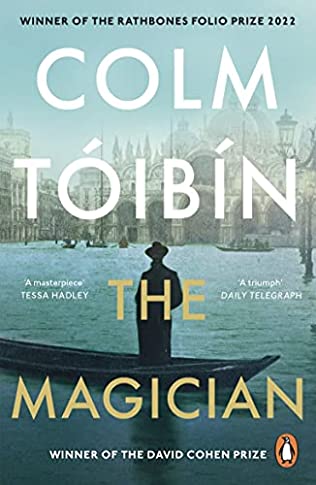
The Magician by Colm Tóibín

The Magician is probably a book I would never have chosen to read if it hadn’t appeared on first the longlist then the shortlist for this year’s Walter Scott Prize for Historical Fiction. I’ve read and enjoyed other books by Colm Tóibín: Brooklyn, about a young Irish immigrant in 1950s New York and House of Names, a retelling of the Oresteia. This one, though, a fictional biography of the author Thomas Mann, sounded less appealing to me, particularly as I’ve read very little of Mann’s work (only Death in Venice and Other Stories) and wasn’t sure if I was really interested in reading about his life. There was only one way to find out…

The Magician begins with Thomas Mann’s childhood in the German city of Lübeck towards the end of the 19th century, then takes us through his entire adult life as he marries, has children, becomes a successful author and leaves Germany for first Switzerland and then the US, where the family will live for several years. The childhood chapters help us to see what shapes Thomas into the man he will later become. His father dies in 1891, leaving Thomas and his siblings with their mother, a Brazilian woman who doesn’t quite conform to the expectations of their quiet, staid community in Lübeck, so they move to Munich where Thomas meets and marries Katia Pringsheim, the daughter of a Jewish mathematician.

A lot of time is devoted to Mann’s relationship with Katia and the six children they have together, but also to his sexual desires for young men, something Katia must have been aware of but seems to have ignored. Some of Mann’s repressed feelings for these men find their way into his writing, such as in Death in Venice where the middle-aged von Aschenbach becomes infatuated with the beautiful young Tadzio. Katia herself also inspires her husband’s work; her stay in a Swiss sanatorium after becoming ill in 1911 forms the basis of The Magic Mountain, a book I haven’t read. No knowledge of Mann’s work is required, but when I came across references like that, I did feel that if I’d been more familiar with his books it would have added something extra to the experience of reading The Magician.

The novel also explores Mann’s relationship with his older brother, Heinrich, another writer, and later in the book, the focus switches more and more to Thomas and Katia’s children, giving us a glimpse of what Thomas was like as a father – but only a glimpse, because Thomas remains a remote and distant figure throughout the novel. I felt that he never fully came to life and although I did learn a lot about him, there was no warmth and I wasn’t able to connect with him on an emotional level. I think a non-fiction book on Mann would probably have worked better for me.

However, as well as telling the story of Thomas Mann’s life, Tóibín also tells the story of the first half of the 20th century; not much time is spent on World War I, but I did find it interesting to see World War II unfold from the perspective of the Manns, a family who leave Germany for their own safety and become part of the German émigré community in Los Angeles. Although it takes Thomas a while to come to terms with what is happening in his home country, once he does he becomes a public critic of the Nazi regime. He also worries about the future of his own books and the loss of the freedom to write material that everybody is able to read:

He contemplated the idea that someday in the near future his books would be withdrawn in Germany, and it frightened him. He thought back to Buddenbrooks and The Magic Mountain, the books for which he was most famous, and realized that they would have been paler books, less confident, less intense, had he known when he was writing them that no German would be permitted to read them.

The Magician is a book that I admired, but not one that I loved. I’ll continue to read other books by Tóibín, but I think I prefer the way he writes about fictional characters rather than real ones.

This is book 40/50 read for the Historical Fiction Reading Challenge 2022.

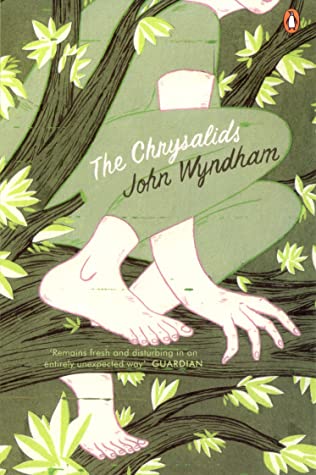
The Chrysalids by John Wyndham

The Chrysalids is the book that was chosen for me in the recent Classics Club Spin. The deadline for posting our Spin book reviews was supposed to be yesterday, but I got confused with the dates and am a day late! Anyway, after enjoying all of the books I’ve previously read by John Wyndham – The Midwich Cuckoos, Chocky and The Day of the Triffids – I had high hopes for this one and wasn’t disappointed. It’s another fascinating, exciting and thought-provoking novel – although not quite what I’d been expecting.

I deliberately tried not to read too much about this book before I started it, so I assumed the Chrysalids must be some sort of monstrous alien beings similar to the Triffids. However, this is not really that kind of book at all; it’s a post-apocalyptic novel exploring the changes in society brought about by an unspecified (though presumably nuclear) disaster known as the ‘Tribulation’. There are no monsters, although some of the characters view their fellow humans that way.

Our narrator, David Strorm, was born many years after the Tribulation in rural Labrador, a part of the world where normal life has resumed to some extent, although the ‘Old People’ have been almost forgotten and their technological advances have been lost in the mists of time. The people of Labrador are living an almost medieval existence, ruled by religious zealots who believe that as God created humans in his image, all human life should conform to a set of strict specifications. Anyone who is found to deviate from this in any way is considered a blasphemy and exiled to the Fringes, a wild and lawless region to the south. Unfortunately, as a result of the nuclear apocalypse, mutations have become very common.

David is still a child when his best friend Sophie is banished to the Fringes after her shoe comes off, revealing a sixth toe. Having witnessed Sophie’s fate, David becomes aware of the importance of keeping his own mutation – the power of telepathy – a secret. A mental abnormality should be easier to hide than a physical one, but the very fact that he and his telepathic friends look just like everyone else makes them a bigger threat to the religious leaders who are determined to identify and drive out every blasphemy. Can David and the others continue to keep their special ability hidden – and what will happen if they get caught?

What makes The Chrysalids so interesting is that although it was published in 1955 and set in some distant point in the future, the themes and ideas it explores are still very relevant to our lives today. Intolerance, bigotry and prejudice have sadly not gone away and there is still a tendency for some groups to judge others for not being ‘people like us’. The Chrysalids raises the interesting question of what being normal actually means and why any of us should have the right to decide whether another person is normal or not. Later in the novel another community is introduced who also consider their own way of life to be superior and to them it’s the religious fundamentalists of Labrador who are seen as primitive and savage.

Like the other Wyndham novels I’ve read, the science fiction elements in this one are really quite understated; the main focus is on the changes in society and in daily life caused by an apocalyptic or paranormal incident. I think this is why I enjoy reading Wyndham so much even though I don’t consider myself a big fan of science fiction in general. However, although I loved most of this book and found it quite gripping, I felt that the message became a bit unclear towards the end, possibly intentionally, with the introduction of that other community (it’s difficult to discuss it properly here while trying to avoid spoilers). Still, I was left with a lot to think about, which is always a good thing, and I wished there had been a sequel, or at least a few more chapters, as it seemed there was a lot more to learn about this world and our characters’ place in it. If you’ve read this book I would love to hear your thoughts!

This is book 31/50 from my second Classics Club list.

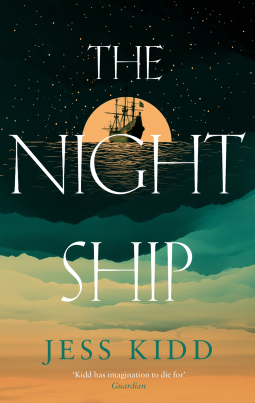
The Night Ship by Jess Kidd

Jess Kidd’s Things in Jars was one of my books of the year in 2019. I don’t think her new novel, The Night Ship, will achieve the same honour this year, but it’s still a book that I enjoyed very much. It takes as its starting point a real historical event – a 17th century shipwreck – and uses it to tell the stories of two children whose lives are separated by more than three hundred years.

In 1629, a nine-year-old Dutch girl, Mayken, is sailing to the Dutch East Indies aboard the Batavia, accompanied by her nursemaid. It’s a long journey and Mayken occupies herself by exploring the ship and getting to know some of the passengers and crew. When one of her new friends tells her about the legendary eel-like monster known as Bullebak, Mayken becomes convinced that Bullebak is the cause of everything bad that is happening aboard the ship and she sets out to capture the monster in a jug.

In 1989, nine-year-old Gil arrives on an island off the west coast of Australia to live with his grandfather following the death of his mother. Gil is a lonely child who has never fit in and he struggles to settle into his new life on the island. He finds some comfort in playing with his best friend, the tortoise Enkidu, and in watching the work of the scientists who have come to the island to investigate the wreck of the Batavia.

The stories of Gil and Mayken alternate throughout the novel so that we spend about the same amount of time with each of them. It soon becomes clear that although the two children are leading very different lives, there are also some parallels between them. Not only will Mayken’s ship be wrecked on Gil’s island, both children have recently lost their mother and are trying to come to terms with this. They are also both drawn to the tales of monsters who appear in their national folklore – for Mayken, it’s Bullebak, and for Gil, the Bunyip. However, I had expected the two storylines to tie together more closely at the end and was slightly disappointed that this didn’t really happen.

I knew nothing about the fate of the people on board the Batavia before I read this book and if you’re not familiar with it either I recommend not looking it up until you’ve finished. It wasn’t actually the shipwreck story that interested me the most, though – I found that I was drawn much more to Gil than to Mayken, despite Mayken’s storyline being more dramatic. Poor Gil has such a difficult time and parts of his story are heartbreaking. I should probably point out here that although both protagonists are young children, this is not a children’s book and is quite harrowing even for an adult to read! I must go back and read Jess Kidd’s earlier novels now; I meant to do that after finishing Things in Jars and never did.

Thanks to Canongate for providing a copy of this book for review via NetGalley.

This is book 39/50 read for the Historical Fiction Reading Challenge 2022.

The Bewitching by Jill Dawson

I seem to have read quite a few historical novels about witch trials over the last few years – The Witchfinder’s Sister by Beth Underdown, The Familiars by Stacey Halls and Widdershins by Helen Steadman, to name just three. Jill Dawson’s latest novel, The Bewitching, is another and it tells the story of the Witches of Warboys. I had never read anything about this particular case until now, yet it’s apparently one of the best-known of the 16th century witch trials and is thought to have strongly influenced the Witchcraft Act of 1604. In her author’s note, Jill Dawson states that many of the details described in the novel appeared in a pamphlet published at the time, although she has shortened the time frame and invented some of the characters and incidents.

Most of the novel is narrated by Martha, a servant in the household of the Throckmortons, a wealthy family who live in the village of Warboys in Cambridgeshire. Abandoned at birth by her mother and raised by a nun, Martha has been in the service of the Throckmortons for many years now and has watched her master, Robert Throckmorton, rise in the world to his current position of Squire of Warboys Manor. When, one by one, the squire’s five young daughters begin to suffer from sudden attacks of shaking and twitching, Martha is as distressed as if they were her own children. No one knows what is causing these fits, but one daughter after another accuses a neighbour, Alice Samuel, of bewitching them.

To the reader, it seems obvious from the beginning that Alice is innocent – and Martha also feels uneasy about the girls’ accusations, but knows that as a servant her opinion is unlikely to be wanted or welcomed. Although it’s clear that Alice is not a witch, what is less clear is why five previously healthy children should all suddenly be struck with the same affliction and why they should all choose to blame a woman who has done nothing to harm them. There’s a sense of mystery running throughout the whole novel which I found quite unsettling, because even if nobody has actually been ‘bewitched’, there’s definitely something sinister going on at Warboys Manor.

We don’t see very much of Alice’s point of view until later in the book, when she is forced to stand trial at Huntingdon Assizes in 1593 and her daughter, Nessie, and husband, John, also find themselves accused. By this time three ‘scholars of divinity’ have arrived from Cambridge University armed with a handbook on witch-hunting, the Malleus Maleficarum, and further accusations against the Samuels have been made by the powerful Cromwell family. In this atmosphere of superstition, misogyny and fear, poor Alice doesn’t stand a chance.

I found The Bewitching very slow at first, but it became more absorbing later on – and there were even one or two twists, which hadn’t occurred to me but probably should have done! The time period is beautifully evoked, with the language carefully chosen to suit the era and sometimes taken straight from the historical accounts (Alice wears a ‘black thrumbed cap’ and the girls don’t just ‘have fits’ – they are always described as being ‘in their fits’). It’s an eerie and unusual novel and although it didn’t always succeed in holding my attention, I enjoyed it overall. I’ll have to look for Jill Dawson’s earlier books now; she’s written so many and I don’t know how I’ve never come across any of them before!

Thanks to Sceptre for providing a copy of this book for review via NetGalley.

This is book 38/50 read for the Historical Fiction Reading Challenge 2022.

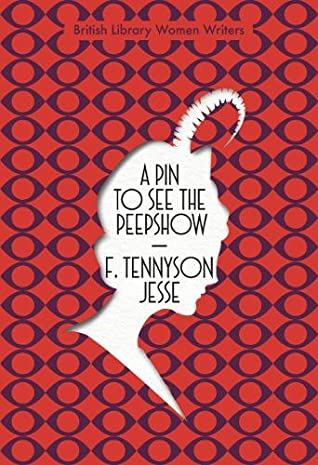
A Pin to See the Peepshow by F. Tennyson Jesse

I first came across a mention of the 1922 Thompson–Bywaters case when I read The Paying Guests by Sarah Waters several years ago and discovered that it was part of the inspiration for the novel. F. Tennyson Jesse’s A Pin to See the Peepshow was listed in the acknowledgments and I immediately wanted to read it. However, that was 2014 and it has taken me until 2022 to actually do it! The good thing about waiting this long is that the book has recently been reissued by the British Library as part of their Women Writers series and that’s the edition I read, complete with a very insightful new afterword by Simon Thomas of Stuck in a Book.

A Pin to See the Peepshow was first published in 1934 and begins just before the First World War. Julia Almond is sixteen years old and a typical schoolgirl, infatuated with one of her teachers, fiercely protective of her beloved dog, Bobby, and longing for some excitement to brighten up her humdrum existence. Starting work in a fashionable dress shop after leaving school gives her a glimpse of the sort of world she would like to inhabit, but it also makes her situation at home, where she is forced to share a bedroom with a much younger cousin, seem even more unbearable. Rushing into marriage with her parents’ friend, Herbert Starling, in the hope of finding the freedom she craves, Julia quickly discovers that she has made a terrible mistake. She doesn’t love Herbert and knows she never will, but divorce seems to be out of the question and she can see no other way of escape.

Several years into her marriage, Julia meets the much younger Leonard Carr and at last experiences the passion and romance she has always dreamed of. The two begin an affair and soon Leonard – or Leo, as Julia prefers to call him – is putting pressure on her to prove that she loves him and leave her husband. Julia knows that Herbert will never let her go and that she can’t afford to lose the security her marriage provides, but Leo won’t accept this and eventually decides to take matters into his own hands…

I loved this book, although I had expected the crime element to play a bigger part; the section of the novel based on the events of the Thompson-Bywaters case only takes up around 100 pages out of 464. The rest of the book is really a character study of Julia Almond and an exploration of the world in which she lives. Jesse spends a lot of time building this up, but I never felt that a word was wasted – every detail seemed necessary in order for us to understand the circumstances that led to the actions of the characters later in the book. Julia herself is not a particularly likeable character, but it would be difficult not to have at least some sympathy for her as her only ‘crime’ is to be constantly striving towards a happier life for herself and dreaming of things that are always just out of reach. This is illustrated by the metaphor of the toy peepshow she stares into as a schoolgirl and finds herself glimpsing a fantasy land:

The walls and lid of the box gave to it the sense of distance that a frame gives to a picture, sending it backwards into another space. Julia stared into the peepshow, and it was as though she gazed into the depths of a complete and self-contained world, where she would go clad in snow-shoes and furs, and be able to tame savage huskies and shoot bears; a world of chill pallor, of an illimitable white sky, both only saved from a cruel rigour by the rosy all-pervading light.

The events that unfold towards the end of the book are tragic for everyone involved, but are particularly unfair for Julia, who is judged by the standards of the time. Her position in society places her at a disadvantage and as Jesse points out, if Julia had only belonged to either a higher class or a lower one, her situation could have been very different. This is a fascinating novel and now I’ll have to read E.M. Delafield’s Messalina of the Suburbs, which is based on the same case!

This is book 10/20 from my 20 Books of Summer list.
This is also book 30/50 from my second Classics Club list.