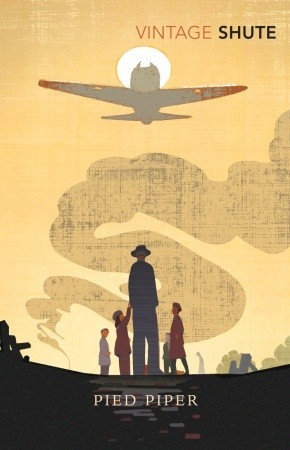
Pied Piper by Nevil Shute

Nevil Shute is an author I’ve been intending to try for a long time. His 1942 novel, Pied Piper, is on my Classics Club list and I decided to also put it on my 20 Books of Summer list to give me some extra motivation to pick it up and read it sooner rather than later! I have no idea whether this was the best Shute novel to begin with – A Town Like Alice and On the Beach are probably better known; however, it turned out to be a good choice for me.

The ‘pied piper’ of the title is John Sidney Howard, an elderly Englishman who goes to France in the spring of 1940 to spend some time fishing, relaxing and trying to come to terms with the death of his son whose plane came down in the Battle of the Heligoland Bight. It may seem a strange time to be taking a holiday in Europe, but Howard believes the situation in France is stable and that he won’t be in any danger. However, when the Nazis begin to advance much more quickly than he expected, Howard decides to return home immediately. His departure is delayed when an English couple staying in the same hotel ask him to take their two young children with him to the safety of England, but soon Howard, accompanied by little Sheila and Ronnie, is boarding the train to Paris for the first stage of his journey.

Of course, things don’t go according to plan and Howard and the children find themselves facing one obstacle after another, including sickness, cancelled trains and German bombing raids. Along the way, Howard collects more lost or orphaned children and together they try to avoid the rapidly advancing German army and make their way to safety.

I usually enjoy novels with World War II settings, but I find it particularly interesting when they were actually written during the war itself. It makes a book feel very different when you know that at the time of writing, the author had no idea what would happen next or how the war would eventually end. It’s intriguing to think of how a 1942 reader may have viewed a book like this compared to those of us who are reading it today with the benefit of hindsight and a knowledge of history.

Another thing which makes Pied Piper different from a lot of other wartime novels is that Shute’s protagonist is so ordinary – not a soldier or a spy or a romantic young lover, but a quiet, unassuming old man who becomes a hero unintentionally through a mixture of circumstance and his own basic decency and humanity. The only link between Howard and the sinister ‘Pied Piper of Hamelin’ (apart from the obvious connection with children) comes when we see Howard making whistles from hazel twigs for his young companions to play with.

Although Howard and the children witness and experience some terrible things during their journey, they also encounter several people who offer kindness and generosity, so the novel shows us both the best and the worst of human nature. The book is structured using a framing narrative where Howard is relating the story of his adventures in France to a friend in a London club during an air raid several weeks into the future. This means we know almost from the first page that Howard has survived to tell the tale, yet there’s still plenty of suspense and I was genuinely afraid for him and for the children at various points throughout the novel!

Which of Nevil Shute’s books should I read next?

~

This is book 7/20 from my 20 Books of Summer list.

~

This is also book 29/50 from my second Classics Club list.
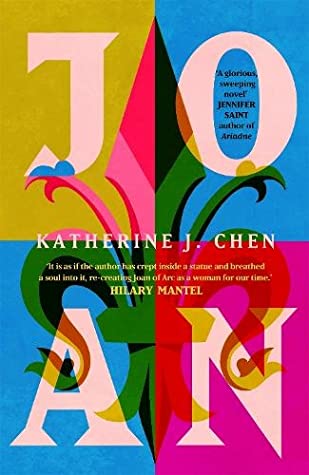
Joan by Katherine J. Chen

Against all odds, fate has brought us together. You, who are your kingdom’s future, and I who am no one.

It wasn’t until I started reading this impressive new novel by Katherine J. Chen that I realised how little I know about Joan of Arc; she’s someone I’ve always been aware of, obviously, and I knew a few basic facts but apart from where she has appeared in the background in other historical novels, I’ve never read anything where Joan is the main focus of the book.

After a brief description of the political situation in France in the early 15th century, the novel opens in Domrémy, the small French village where Joan was born. It’s 1422 and France is currently engaged in the Hundred Years’ War, a conflict with England over the succession to the French throne. In quiet Domrémy, Joan grows up far away from the fighting, but faces conflict of her own – with her father, Jacques d’Arc, a violent and abusive bully who has never got over his disappointment that Joan was born a girl and not a boy. Then, one day, the village is attacked and burned by the English, Joan’s sister is raped, and Joan is left swearing revenge on the men she now sees as her enemies: the future Henry VI of England, his regent the Duke of Bedford and Philip, Duke of Burgundy.

A lot of time is devoted to these early years of Joan’s life and I did wonder when we would leave the child Joan behind and meet the warrior Joan, leading her troops into battle – but I can see why it was necessary to cover Joan’s childhood in so much detail. Only by reading about her treatment at the hands of her father, the stories told to her by her beloved uncle, her anger at the fate of her sister and her desire for revenge can we understand what made Joan the strong, determined and inspirational young woman she became. And eventually, of course, we do see Joan meeting the Dauphin of France and riding off with his army to lift the siege of Orléans.

What we don’t see at any point in this novel are miracles, visions or any other religious phenomena of any sort. Katherine J. Chen explains in her author’s note that this was a deliberate decision; her portrayal of Joan is a personal one rather than a traditional one and is a ‘reimagining’ of her life. Removing the religious aspects from Joan’s story makes her feel human, flawed and real, but at the same time the 15th century was a period in which religion was an important part of most people’s daily lives and taking this away from the story of a woman who has been declared a saint seems a bit odd.

This is a beautifully written novel and although I wish authors would stop using the present tense, it does work quite well here, as it did in Annie Garthwaite’s Cecily (a book this one is being compared with – and I would definitely agree with that comparison). It was good to have the opportunity to learn a bit more about Joan of Arc, even if this is only one author’s interpretation and a largely fictional one; if anyone has read any other books about her, I would love to hear your recommendations.

Thanks to Hodder & Stoughton for providing a copy of this book for review via NetGalley.

This is book 33/50 read for the Historical Fiction Reading Challenge 2022.

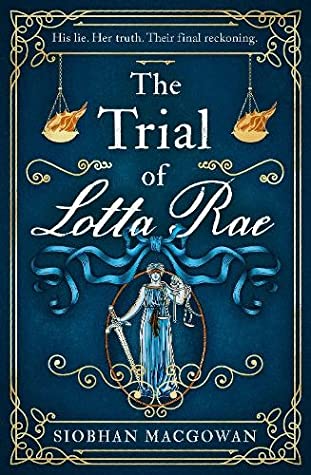
The Trial of Lotta Rae by Siobhan MacGowan

Sometimes the books that are the most difficult to read are also the most compelling. This was one of those books; although I was horrified by what I was reading, I was so engrossed in the story I didn’t want to put it down.

Charlotte Rae – known to her family and friends as Lotta – is an ordinary young woman working in the office of a London brewery in the early 1900s. After an argument with her boyfriend at the brewery Halloween party, Lotta wanders outside for some fresh air, where she is approached by an older man, Henry Allen Griffiths. Pretending that he has come to comfort her, Griffiths takes her arm, leads her down a secluded street and then rapes her. With the support of her parents, who report the crime to the police, Lotta decides to testify against her attacker in court. She has faith in the justice system and is sure her lawyer, William Linden, will do his best to defend her.

Once the trial is over and a verdict has been reached, Lotta tries to move on with her life, joining the Suffragette movement and working towards fairness and equality for women. Then she makes the unpleasant discovery that William Linden had betrayed her during the trial and her world falls apart again. Unable to forgive William for what he has done, Lotta begins to search for a way to take her revenge.

Although Lotta Rae, as far as I can tell, is a fictitious character, the description of her trial seemed so real I was convinced it must have been a true story! I have rarely felt so angry and frustrated when reading a novel as I did here; all the odds are stacked against Lotta from the beginning and some of the developments in court are disgusting and shocking to read about, even if not entirely surprising. During and after the trial things go from bad to worse for poor Lotta and her story is truly heartbreaking.

I found the second half of the book slightly weaker than the first, which is understandable after such a powerful opening. It does provide some fascinating insights into the suffragette movement, particularly as we see this partly through the involvement of William Linden’s son, Raff, one of a group of men actively campaigning for women’s suffrage. Lotta’s feelings for Raff are complicated because she loves him for the person he is, but hates the fact that he is the son of her corrupt lawyer, and this adds another interesting angle to the story.

There’s a supernatural element that feels a bit out of place and I wished the story could have ended in a different way, but otherwise I loved this book, despite it being so sad and infuriating! I wasn’t aware until after I’d finished the book that Siobhan MacGowan is the sister of Shane MacGowan from The Pogues, as well as a successful journalist and musician in her own right. This is her first novel and I hope she’ll be writing more.

This is book 32/50 read for the Historical Fiction Reading Challenge 2022.

Godmersham Park by Gill Hornby

I enjoyed Gill Hornby’s previous novel, Miss Austen, about the life of Jane Austen’s sister Cassandra. Her new one, Godmersham Park, is also inspired by the Austens, telling the story of Anne Sharp, who became one of Jane’s closest friends after taking up the position of governess to her niece, Fanny.

We first meet Anne in 1804 on the day of her arrival at Godmersham Park, the estate in Kent that is home to Edward Austen Knight, his wife Elizabeth and their many children. (If you’re in the UK and have a current £10 note to hand, Godmersham Park is the house depicted on the back beside the portrait of Jane Austen). At thirty-one years old, Anne has no experience of teaching or caring for children, but following the death of her mother she has found herself in need of employment and somewhere to live. This change of circumstances comes as a shock to Anne and it takes her a while to settle into her new job and way of life.

When Anne’s eleven-year-old charge, Fanny, shows her the letters she has been receiving from her Aunt Jane (yes, that Jane), Anne finds them charming and immediately decides that Jane is her ‘favourite Austen’. Anne will have to wait a long time for her chance to meet this mysterious letter-writer, but first she makes the acquaintance of another Austen – Jane and Edward’s brother Henry, who comes to stay at Godmersham Park and quickly befriends the new governess.

This is a lovely novel and, like Miss Austen, although it doesn’t self-consciously try to recreate the style of Jane Austen’s work, the language still transports you back to the early years of the 19th century. There are no glaring anachronisms that I noticed and it even feels like the sort of story Austen herself could have written. The pace is slow and apart from a subplot involving a mystery surrounding the whereabouts of Anne’s father, nothing very dramatic happens, yet I was drawn in by the characters and the setting and found it quite absorbing. It was particularly interesting to read about Anne’s experience of working as a governess and how she struggled to find her place within the household, not being fully accepted either as one of the family or one of the servants.

The novel is inspired by the diaries kept by Fanny Austen Knight, letters exchanged between Anne Sharp and Jane and Cassandra Austen, and a first edition of Emma that Jane signed for Anne. All of these things add to our knowledge of Anne’s life and personality and provide evidence of her close friendship with Jane Austen. However, almost nothing is known of Anne’s background before she arrived at Godmersham Park and Gill Hornby explains in her author’s note that she had to use her imagination to create a backstory for Anne. The overall result is a convincing blend of fact and fiction, which I really enjoyed.

Thanks to Century for providing a copy of this book for review via NetGalley.

This is book 6/20 from my 20 Books of Summer list.

This is book 31/50 read for the Historical Fiction Reading Challenge 2022.

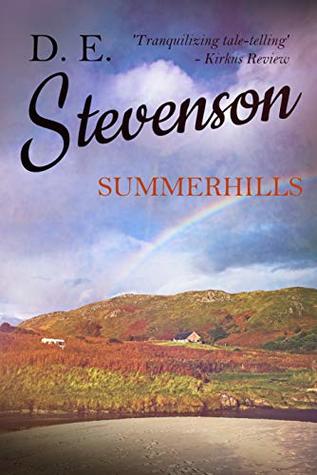
Summerhills by D.E. Stevenson

Summerhills, first published in 1956, is the second book in D.E. Stevenson’s Ayrton family trilogy which began with Amberwell. I knew it had been a few years since I read the first book but was shocked to find that it was actually more than six years! I was worried that I’d left it so long I would struggle to get back into the story, but that turned out to not be a problem; although I could barely remember what happened in Amberwell, Stevenson provides enough of a recap in the opening chapters that I could easily pick up all the threads again.

The book begins with Roger Ayrton, now an officer in the Army, returning to his family home in Scotland for a visit. The house, Amberwell, is where Roger and his brothers and sisters grew up before the outbreak of World War II and it still holds a special place in his heart. Some of the family have moved on, but Amberwell is still home to Roger’s stepmother and his younger sister Nell, who has been taking care of his son, Stephen, since his wife’s death. Stephen is now eight years old and Roger thinks it’s time he was sent away to school, but Nell objects, wanting him to stay close to home. As there are no suitable schools near Amberwell, Roger comes up with what he thinks is the perfect plan – he’ll open a school of his own!

At first it seems that the creation of the school – which becomes known as Summerhills – is going to be the main focus of the book, but the plot soon branches off into several different directions. Roger finds himself unexpectedly falling in love, as does Nell, while his youngest sister, Anne, whose first marriage ended unhappily is trying to move on from her traumatic past and has become housekeeper to an elderly neighbour. A new cook arrives at Amberwell, adding a touch of humour to the story, and there’s also a new governess, Georgina Glassford, who enjoys running and is always looking for someone to time her mile. Although most of the main characters in the book are very likeable, I did find their treatment of Georgina very unkind, particularly as their dislike of her seems to be based on the fact that she wears trousers and gets up early to exercise.

I enjoyed the glimpse of life in post-war Scotland – even though the lifestyles of the Ayrton family seem largely unchanged thanks to Roger receiving a large inheritance on his wife’s death, all around them other once-wealthy families are having to sell their country houses as they can no longer afford to maintain them or pay for servants. This is how Roger manages to acquire a large house to convert into a school (of course there’s no question of an Ayrton boy being sent to an ordinary day school – it must be a boarding school – and there’s no mention of the girls being allowed to go either). At least he does promise to charge reduced fees so that less fortunate boys can attend and gives the job of headmaster to his friend Arnold Maddon (one of my favourite characters), who has lost a foot during the war and has been struggling to find work.

I would have liked Anne’s storyline to have had a proper conclusion – it was left very open-ended – and I was sorry that we saw very little of the other Ayrton sister, Connie, and nothing at all of their brother Tom, who has become a doctor. There’s also a strange subplot in the middle of the book where Roger goes to Rome in search of Aunt Beatrice; I couldn’t really see the point of this as it didn’t have much relevance to the rest of the novel. Still, Stevenson’s writing style is so readable that even pointless episodes like this are quite enjoyable. There is a third novel, Still Glides the Stream, which is described as the final book in the Ayrton trilogy, but seems to be about a completely different family. Have any of you read that one?

This is book 5/20 from my 20 Books of Summer list.

The White Hare by Jane Johnson

‘Once you’ve lived in this valley, you’ll never be free of it. Its uncanny beauty gets inside you, right into the marrow. It has its own climate, its own peculiar character. In the same way as people can draw you in and repel you at the same time; both beguile and frighten you.’

I love Jane Johnson’s books; they always have such fascinating settings – 17th century Morocco in The Sultan’s Wife, 15th century Spain in The Court of Lions, and the author’s native Cornwall in The Tenth Gift. She returns to Cornwall again for her new novel, The White Hare, a book steeped in the myths and legends of that region of England.

The novel begins in 1954, with Mila Prusik, her mother Magda and five-year-old daughter Janey arriving at White Cove near Eglosberyan on the Cornish coast. Having left Poland for England during World War II, the family had been settled in London until a disastrous relationship with a married man left Mila desperate to make a fresh start. She and Magda have bought a neglected old house in the Cornish countryside and are planning to restore it to its former glory and turn it into a guest house. However, not everyone is happy to see the house under new ownership and the Prusiks receive a hostile welcome.

As Mila and her mother begin their restoration work, they hear hints from their neighbours that the house has a sinister past and should be left alone. The two women think this is nonsense and continue with their plans, but Mila becomes increasingly concerned about the changes in Janey’s behaviour – particularly her obsession with Rabbit, a stuffed toy that seems to have a mind of its own. How is all of this related to sightings of the legendary White Hare and to the strange symbols and carvings Mila finds all over the house and its grounds?

The White Hare is one of the most atmospheric books I’ve read for a while, not just because of the supernatural aspects – which are subtle, ambiguous and unsettling – but also because of the way the setting is so beautifully described. As Jane Johnson explains in her author’s note, the town of Eglosberyan and its valley are not real but are inspired by several real places. I could picture the white house surrounded by dark woodland, the stream tumbling between mossy rocks, the lonely beach framed by granite cliffs – they are all brought so vividly to life.

I also found it interesting to follow the relationship between Mila and Magda. When they first arrive in Cornwall, Mila is timid and submissive, allowing herself and Janey to be bullied by the hard and domineering Magda, but both characters do grow and change throughout the novel as the valley works its magic on them. There’s also a love interest for Mila, but although I did like him I felt that this part of the story took too much of a dramatic turn towards the end. Still, this is a very enjoyable novel and, while it’s quite different from the other Jane Johnson books I’ve read, being set entirely in one period and not as far into the past, I liked it just as much.

I still have three novels by Jane Johnson left to read: The Sea Gate, The Salt Road and Pillars of Light. If you’ve read any of them, please help me decide which I should read next!

Thanks to Head of Zeus for providing a copy of this book for review via NetGalley.

The Colour Storm by Damian Dibben

Damian Dibben’s previous novel, Tomorrow, was a fascinating and unusual story of an immortal dog searching for his master across two centuries (it was better than it sounds, honestly!). I was curious to see what his next book, The Colour Storm, would be like, but it turns out that it’s a much more conventional historical novel this time. It’s also a very good one; although the subject reminded me of another of my recent reads, The Fugitive Colours by Nancy Bilyeau, the setting gives it a very different feel.

The Colour Storm is the story of the Italian painter Giorgio Barbarelli, who lived and worked in Venice during the Renaissance. He was a real person, as are many of the other characters in the novel, and you may already be familiar with his paintings – if not, you can easily find images online of some of the pieces attributed to him which will give you an idea of the quality of his work.

At the beginning of the novel, Barbarelli – or ‘Zorzo’ as he is called throughout the book – is finding life difficult. Work is becoming hard to find, the competition from other artists is fierce and Zorzo’s debts are increasing. He’s responsible not only for himself, but also for his team of young apprentices and assistants, so he urgently needs to find some way of gaining commissions from rich clients. An opportunity arises when a wealthy German merchant, Jakob Fugger, arrives in Venice and is said to be looking for an artist to paint an altarpiece for St Peter’s Basilica. When Zorzo hears that Fugger also possesses a new colour, a pigment known as ‘prince orient’, he becomes even more determined to bring himself to the merchant’s attention.

In an attempt to win Fugger’s favour, Zorzo agrees to paint a portrait of his wife, Sybille – but as he becomes closer to Sybille, he finds that he has become involved in a conspiracy which could have huge implications for the people of Europe. And then, while Zorzo is still considering his next move, a new threat arrives in Venice…the plague:

Only the poorest folk, who have no choice but to go to work, are continuing as normal, but they’re wary, treading more carefully than usual. Many cover their faces with their sleeves or improvised masks and everyone keeps their distance. From behind closed windows and shutters, Zorzo’s aware of families pressed together, restless shadows, watching and fretting as to whether this episode will pass – as most do – without significant horror, or if this one will be severe.

Still very relevant, isn’t it? The plague plays a part in the later stages of the novel, but before that we follow the story of Zorzo’s search for the prince orient and his entanglement with Jakob and Sybille (also real historical figures). We are given some insights into the workings of an artist’s studio in Renaissance Venice and there are appearances by other famous names from the art world, including Bellini, Titian, Michelangelo and Leonardo da Vinci. By focusing on the dark side of life in 16th century Venice, Dibben creates plenty of atmosphere, and although the parts of the book that concentrate on Zorzo’s relationships with Sybille and her husband interested me less, I found this an enjoyable read overall.

Thanks to Michael Joseph for providing a copy of this book for review via NetGalley.

This is book 4/20 from my 20 Books of Summer list.

This is book 30/50 read for the Historical Fiction Reading Challenge 2022.