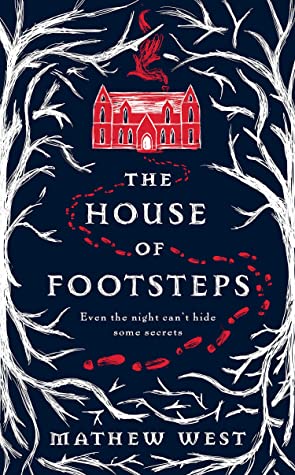
The House of Footsteps by Mathew West

“You make it sound like I’m on my way to Castle Dracula,” says Simon Christie, the narrator of Mathew West’s debut novel The House of Foosteps, after arriving in the remote village of Cobsfoot during a funeral procession and taking refuge in the nearest tavern where he asks for directions to Thistlecrook House – “a strange place, where the master takes dark, wild moods”. It’s 1923 and Simon has been sent by his auction house to evaluate a collection of rare artworks owned by the Mordrake family – and as he enters Thistlecrook House for the first time and makes the acquaintance of the reclusive, secretive Victor Mordrake, it was Dracula that continued to come to mind.

As I read on, I was reminded of other classic Gothic novels and ghost stories and each chapter seemed to raise more questions than it answered. Who is Amy, the beautiful young woman who sits curled up in a chair in the library every evening, begging Simon not to mention her presence to anyone else in the house? What really happened to Victor’s wife, said to have drowned in a frozen lake on the estate? What causes the dark shadows Simon can see under his bedroom door every night? And why does Victor, a vegetarian who can’t even bear having dead flowers in the house, have a whole collection of paintings depicting violent and macabre biblical scenes?

The answers to some of the novel’s many mysteries are revealed gradually as the story unfolds. Others are still unanswered at the end, leaving the reader to make up their own mind about what exactly was going on at Thistlecrook House. I do sometimes enjoy an ambiguous ending, but in this case I was disappointed that we weren’t given more clarity; I had been so intrigued by some of the strange happenings and really wanted to be given a proper explanation for them! However, I still thoroughly enjoyed reading this book – and until I reached that unsatisfactory ending, I had been going to say that it was one of my favourite reads of the year so far.

The novel has a wonderfully dark and sinister atmosphere and despite being set in the 1920s, the remote location – a rural village in the far north of England, close to the Scottish border – creates the feeling that the story could be taking place in a much earlier period. Although I was sometimes frustrated by Simon’s actions and choices, I was always completely absorbed in his story, wondering who could and could not be trusted and watching the boundaries blur between reality and fantasy. If you’ve enjoyed books like The Woman in Black or The Haunting of Hill House I would recommend giving The House of Footsteps a go.

This is book 8/50 read for the Historical Fiction Reading Challenge 2022.
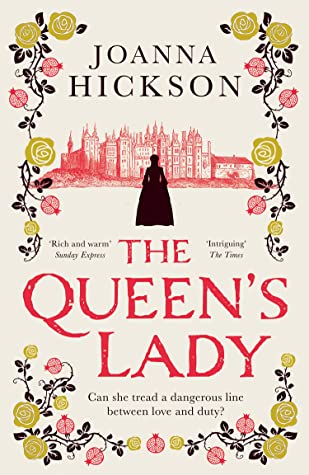
The Queen’s Lady by Joanna Hickson

Joanna Hickson’s new novel is a sequel to 2020’s The Lady of the Ravens and continues the story of Joan Vaux, lady-in-waiting to Elizabeth of York, wife of Henry VII. The ravens that formed such an important part of the first book appear less often here, but Joan still has a strong affinity for them and still believes firmly in the legend that should the ravens ever abandon the Tower of London, the kingdom will fall.

Joan’s position at court means that she witnesses – and is sometimes personally involved in – some of the key events of this period of history. The novel begins in 1502 with the death of Prince Arthur shortly after his marriage to Katharine of Aragon and it is up to Joan to try to comfort his grieving mother, Queen Elizabeth. When Elizabeth herself dies just a year later, Joan’s place at the Tudor court becomes more insecure, particularly when her husband Sir Richard Guildford is imprisoned on suspicion of treason. Eventually, with a new king on the throne – the young Henry VIII – Joan and her family begin to rise to royal favour again, but there’s more drama ahead both for Joan and for the Tudors.

I enjoyed The Lady of the Ravens, but I think this is the stronger of the two books. Although Joan was a real person, she’s one that I knew absolutely nothing about before reading these two novels and I found it fascinating to read about familiar events and people from a completely new perspective. I was particularly interested in the sections where Joan accompanies the two Tudor princesses – Margaret and Mary – to their respective marriages with the King of Scotland and King of France. The fact that Joan is chosen to carry out these important duties is proof of her high standing with the royal family and yet, at various times throughout the novel, we see how quickly this can change and how the King and Queen hold the fates of everyone around them in their hands.

As well as retelling the story of the end of Henry VII’s reign and the beginning of Henry VIII’s, the novel also explores Joan’s personal life: her marriage to Sir Richard Guildford and how she copes during the period of his imprisonment; her often difficult relationship with her son, Hal, who has been raised as a companion to Henry VIII; and her feelings for Anthony Poyntz, a much younger man who had once been like a son to her but is now becoming something more. As Joan is not a well-known historical figure, I had no idea how her story would play out, so was able to enjoy watching it unfold without knowing what was going to happen next.

I think this is my favourite of Joanna Hickson’s books (I’ve read them all apart from one, The Tudor Bride, the second of her two novels about Catherine of Valois). I’ll be interested to see which historical woman she chooses to write about next.

Thanks to HarperCollins for providing a copy of this book for review via NetGalley.

This is book 7/50 for the Historical Fiction Reading Challenge 2022.

The Lady of the Camellias by Alexandre Dumas, fils

Translated by Liesl Schillinger

As a fan of the elder Alexandre Dumas, author of The Count of Monte Cristo, The Three Musketeers and many more, I thought it was time I tried the work of his son, Alexandre Dumas fils. His 1848 novel La Dame aux Camélias – often published in English as The Lady of the Camellias or Camille – was on my Classics Club list and when the Club announced another of their ‘dares’ this February (“Simply read a classic book from your #CClist that you classify as romantic, glamorous, sexy or alluring. It could even be a book or author that you are predisposed to love”) I thought this would be a good opportunity to read it!

The lady of the title is Marguerite Gautier, a Parisian courtesan or ‘kept woman’, who is the mistress of several men including a wealthy duke. Her nickname comes from the fact that she is rarely seen without a bouquet of camellias, red on the days of the month when she is unavailable to her lovers, white when she is free again. One evening at the opera, she catches the attention of a young man called Armand Duval. Armand becomes obsessed with Marguerite and although she informs him that he isn’t rich enough to maintain her extravagant lifestyle, he is determined to become her only lover and put an end to her involvement with other men.

We know from the beginning of the novel that Marguerite will die of consumption (tuberculosis), that she will be in debt at the time of her death and that her possessions will be sold at auction. It’s at this auction that our unnamed narrator buys a book belonging to Marguerite with an inscription by Armand Duval. The purchase of the book leads to a meeting between Armand and the narrator during which Armand tells him the tragic story of his relationship with Marguerite.

Despite knowing that the story was not going to end happily and despite not particularly liking either Armand or Marguerite, I still found The Lady of the Camellias quite gripping and difficult to put down. It’s also beautifully written (and beautifully translated from the original French by Liesl Schillinger in the Penguin Classics edition I read). Although I prefer the style of Dumas père, it’s worth remembering that Dumas fils was only twenty-three years old when he wrote this book, basing it on his own relationship with the courtesan Marie Duplessis, which probably explains the immaturity of the young Armand Duval in the novel.

After falling in love at first sight, in the way only characters in 19th century novels do, and before even getting to know Marguerite, Armand decides that he must ‘possess’ her – and then, once he has her, doesn’t trust her and fails to understand or appreciate the sacrifices she is making for him. My sympathies lay much more with Marguerite, although it took me a long time to warm to her. I think it would have helped if we had been given more information on her background, to explain why she was so obsessed with money and jewels and how she had come to live the frivolous life she was leading. Still, her story is very sad and a good example of double standards between men and women.

If you think this story sounds familiar, it has been adapted many times for stage and screen and was the inspiration for Verdi’s opera La traviata and the 2001 film Moulin Rouge.

This is book 27/50 read from my second Classics Club list.

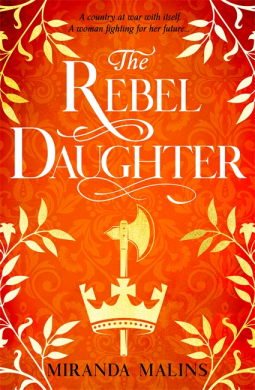
The Rebel Daughter by Miranda Malins

In The Rebel Daughter, Miranda Malins returns to the family at the heart of her previous novel, The Puritan Princess: the Cromwells. However, where The Puritan Princess told the story of Frances, Oliver Cromwell’s youngest daughter, in this second novel we get to know Bridget – or Biddy – the eldest of his four daughters.

In 1643, nineteen-year-old Bridget is living at home in Ely, Cambridgeshire with her mother and younger brothers and sisters while her father and eldest brother are away fighting in the civil war that is currently tearing England apart. Bridget longs to join the men in shaping the future of their country, and although she watches with envy as her younger sister Betty falls in love, she knows she wants more from life than just to be a wife and mother. When she receives a marriage proposal from General Henry Ireton, a fellow commander of her father’s in the Parliamentarian army, she decides to accept in the hope that this marriage will provide the opportunities she’s been hoping for.

The relationship between Bridget and Henry is not a passionate or romantic one, but they get on well together and Bridget is able to involve herself in politics, offering opinions and advice as the war begins to come to an end and her husband and father must decide what happens next. The majority of the novel is set during this period, when with the Royalists defeated, the question of what to do about the King arises and Parliament and the army split into opposing factions, each with their own views on this very important question.

Bridget’s position as a member of the Cromwell and Ireton families leads her to cross paths with other important historical figures of the period such as Thomas Fairfax, commander of the New Model Army, and his wife Anne, and political activist Elizabeth Lilburne and her husband John Lilburne, one of the leaders of the movement known as the Levellers. Bridget herself doesn’t have a large role to play in politics, but Oliver and Henry value her input and she feels she is able to have a small amount of influence on their decision-making.

As well as the political situation, the novel also explores the human cost of war. Bridget experiences this for herself with the deaths of her brother and cousin and later, on a wider scale, when she sees the devastation of besieged Colchester, filled with crumbling buildings, smoke-filled streets and starving children – and this is nothing compared to the horrors she witnesses when she crosses the Irish Sea to join Henry after his appointment as Lord Deputy of Ireland. I wished we had seen more of life away from Parliament and the constant wrangling over the fate of the King, which did get a bit tedious at times.

Of the two books, I think I preferred The Puritan Princess, but I did find this one interesting and am pleased to have had the chance to learn more about Bridget Cromwell. I wonder whether Miranda Malins will write about the other two Cromwell sisters, Elizabeth and Mary, or whether she’ll be moving onto a new subject for her next novel.

Thanks to Orion for providing a copy of this book for review via NetGalley.

This is book 6/50 read for the Historical Fiction Reading Challenge 2022.
The Leviathan by Rosie Andrews

I was drawn to this book, Rosie Andrews’ debut, by the title, the cover and the comparisons to other books I’ve read, such as The Essex Serpent, Once Upon a River and The Mermaid and Mrs Hancock – comparisons which for once turned out to be quite accurate!

It’s 1643 and Thomas Treadwater is on his way home to the family farmhouse in Norfolk. England is currently torn apart by civil war but Thomas has been summoned home from the fighting by his sixteen-year-old sister, Esther, who has accused a new servant of seducing their widowed father. Arriving back at the farm, Thomas finds the sheep dead in their field, with no visible signs of violence – and there are bigger shocks to come. Entering the house, he learns from Esther that their father has suffered a stroke and is dying, and the servant, Chrissa, has been arrested on suspicion of witchcraft.

What follows is a story which at first appears to be a tale of witch hunting in the 17th century, but eventually develops into something even darker and more unusual as Thomas discovers links with a shipwreck that occurred years earlier. The narrative moves back and forth between the 1640s and the year 1703, where Thomas is now living in ‘a place far from the sea’ and is trying to come to terms with what happened in the past and the impact it is still having on his life in the present.

I loved the first half of The Leviathan. The atmosphere is wonderful and the author creates an authentic sense of time and place through attention to detail and careful research. The pace is slow as characters are introduced and the scene is set, but I quickly became drawn into the story, intrigued by the mystery surrounding the ‘witch’ Chrissa Moore and the strange events at the Treadwater farm. There’s a real aura of mystery as Thomas begins to investigate, speaking to the witchfinder, the magistrate and the witch herself in an attempt to find out what is really going on.

In the second half of the book, the magical realism elements of the novel come to the forefront and the story then goes too far in that direction for my taste. The pace speeds up and things become more exciting, but the sinister, slowburning sense of foreboding that I loved in the earlier chapters was gone. I was still invested enough in this part of the book to read on to the end and I was interested to see that John Milton (author of Paradise Lost) makes some appearances as Thomas Treadwater’s former tutor and has some input into the unfolding of the story, taking it into the territory of biblical allegory. This is a novel with lots of layers, and although it wasn’t a complete success for me, I think other readers will love it much more than I did.

Thanks to Raven Books for providing a copy of this book for review via NetGalley.

This is book 5/50 read for the Historical Fiction Reading Challenge 2022.

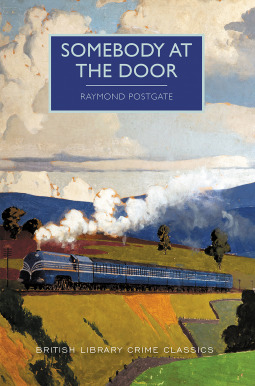
Somebody at the Door by Raymond Postgate

I loved Raymond Postgate’s Verdict of Twelve, but it has taken me a few years to get around to reading his other novel available as a British Library Crime Classic, Somebody at the Door. I wish I’d found time to read it sooner, as it’s another one I really enjoyed – with one or two reservations.

One evening in the winter of 1942, Councillor Henry Grayling travels home from London by train, bringing with him a large sum of money – the wages for the workers of the Barrow and Furness Chemistry and Drugs Company, which he is planning to distribute the next day. By the time he reaches his own front door, he has become seriously ill and dies later that night from what appears to be mustard gas poisoning. The money has disappeared, but was that the motive for his murder or could there be another reason? Suspicion falls on the other passengers who had shared his train carriage that evening and it is up to Inspector Holly to decide which of them did it and why.

This novel has a very similar structure to Verdict of Twelve. In that book, Postgate tells the stories of the twelve people who are serving on the jury for a murder trial, showing the effects of their backgrounds, experiences and prejudices on their decision-making. In Somebody at the Door, he explores the stories of the people on the train and how their paths had crossed with Grayling’s, giving them the motive and the opportunity to commit the crime. The book feels more like a collection of short stories than a conventional crime novel – although we do return briefly to Holly’s investigations now and then, the focus is much more on getting to know the personal history of each suspect rather than on watching the detective solve the mystery.

Some of the stories are very compelling in their own right, even if most of what we are told has very little relevance to the overall plot. I particularly liked the first one, about a young man who works for the Barrow and Furness Company and gets himself involved with a blackmailer, and the third one, which follows an attempt to help a refugee escape from Nazi Germany. The final story, however, about two people having an affair, didn’t interest me much at all – and unfortunately, this was one of the longest stories. This did spoil the book for me slightly, but after this final tale comes to an end we return to the Grayling murder again and things are wrapped up nicely.

I think what I liked best about this novel was the setting. Postgate writes about life in wartime Britain as only someone can who is actually living through it themselves (the book was published in 1943). Some of the characters’ stories are related directly to the war, such as the one about the refugee and another about a Corporal in the Home Guard, and the war is a constant presence in the novel as a whole, with references to bombing raids and the blackout.

I preferred Verdict of Twelve and would recommend starting with that one if you’re new to Raymond Postgate, but both books are entertaining and interesting reads as long as you don’t go into them expecting a traditional detective novel.

I, Mona Lisa by Natasha Solomons

Many of us will, on a trip to Paris, have stood in the Louvre in front of Leonardo da Vinci’s Mona Lisa. We may also know some of the details of the painting’s history – its creation in Renaissance Italy, its theft from the Louvre in 1911. However, this new novel by Natasha Solomons adds a whole new dimension to the Mona Lisa story, taking us inside the mind of the painting itself and showing us the world through the eyes that look out from the portrait. Whether or not you enjoy this book will probably depend on whether you can accept that a painting is narrating the story. If you’re happy with that idea, then I think you’ll find I, Mona Lisa an interesting and entertaining read.

Most of the novel is set in 16th century Florence, during the period when Leonardo is working on his most famous masterpiece. From the painting’s own perspective, we get to know some real historical figures such as Lisa del Giocondo, the woman who sits for the portrait; Michelangelo and Raphael, da Vinci’s rivals; Niccolò Machiavelli, who approaches da Vinci with a scheme to divert the Arno River; and Salaì, a student in Leonardo’s workshop who is jealous of his master’s relationship with Mona Lisa. Although Mona is an inanimate object, she is portrayed in the novel as having the thoughts and feelings of a real woman, with an emotional attachment to her creator Leonardo.

When Leonardo eventually dies, leaving her vulnerable and unprotected, Mona embarks on the journey that will lead her to France. As the centuries go by, she spends time at the court of the Sun King in Fontainebleau and then at Versailles during the French Revolution, before finding her way to the Louvre where, as the 20th century dawns, she forms a new friendship with another great artist.

I, Mona Lisa is an unusual novel and a unique way of exploring some key moments in history. However, because so much time is spent in Renaissance Italy, the parts of the novel set in France feel more rushed and the characters less well developed. This was maybe the author’s intention, as Mona finds it difficult to bond with the people she meets after Leonardo’s death and makes it clear that her heart will always be in Florence, but it also meant that I felt less engaged with these sections of the book.

I do think that if you’re going to write a book about a painting with human emotions, the Mona Lisa is a perfect choice as it’s such a realistic and iconic portrait. The Mona of the novel is obviously very limited in what she can see and experience (and with whom she can communicate – just Leonardo and a handful of other painters and paintings), but Natasha Solomons does a great job of bringing Mona and her world to life. This is the third of her books I’ve read – the others are The Novel in the Viola and House of Gold. Three very different books, but I would recommend any or all of them.

Thanks to Hutchinson Heinemann for providing a copy of this book for review via NetGalley.

This is book 4/50 read for the Historical Fiction Reading Challenge 2022.