They Do It with Mirrors by Agatha Christie

This month’s theme for the Read Christie 2021 challenge is ‘a story set after WWII’. There were plenty of options for this one – any book published after 1945 would count – and I eventually decided on They Do It with Mirrors, a 1952 Miss Marple novel.

The story begins with Miss Marple meeting an old friend, Ruth, who tells her that she’s worried about her sister, Carrie Louise, although she doesn’t give any specific reasons for her concern. Carrie Louise, like Ruth, has had several husbands and her latest, Lewis Serrocold, has established a rehabilitation centre for juvenile criminals at their home, Stonygates. Miss Marple agrees to go and visit Stonygates to see if she can find out what’s going on and, on her arrival, she finds a large number of people assembled at the house, including Carrie Louise’s daughter, granddaughter and stepson, as well as several other family members and servants.

As Miss Marple gets to know the various members of the household, she also begins to feel that something is not quite right – and she is proved to be correct when Christian Gulbrandsen, the son of Carrie Louise’s first husband, is found shot dead in his room. At the same time, Lewis Serrocold is shot at in his study by one of the ‘juvenile delinquents’, a young man who claims to be Winston Churchill’s son. Lewis is unharmed, but as one of the other characters remarks, “you don’t expect murder and attempted murder in the same house on the same night!” The police, led by Inspector Curry, soon arrive on the scene and begin their investigations, but it’s Miss Marple, of course, who eventually solves the mystery.

I don’t think this is one of Christie’s best, but I did still enjoy it – and unlike my last Christie novel, Death on the Nile, where I guessed the solution almost immediately, I didn’t manage to solve this one before the culprit was revealed. The title of the book refers to the fact that things and people are not always what they seem and sometimes, like a magician, ‘they do it with mirrors’ to cause confusion and misdirection. Well, I certainly allowed myself to be misdirected, but I do think it would have been possible to work it out if I’d been paying more attention.

This book has an interesting setting which gives Christie a chance to explore Lewis Serrocold’s work with the young offenders and the way in which these young men were viewed by 1950s society. This doesn’t really play a big part in the story and it could have worked just as well as a conventional country house mystery without this element, but it does provide some extra interest.

December’s theme for Read Christie 2021 is ‘a story set during bad weather’. The suggested title is The Sittaford Mystery, which is one I haven’t read yet.
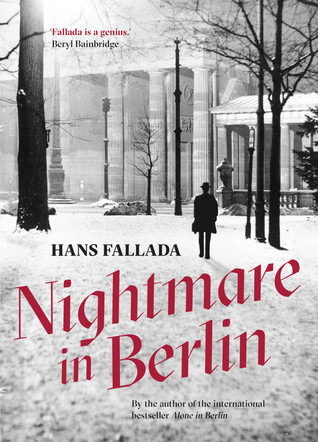

Nightmare in Berlin by Hans Fallada

The war had destroyed everything, and all that was left to him were the ruins and the ugly, incinerated detritus of former memories.

For this year’s German Literature Month, hosted by Lizzy and Caroline, I decided to read a book by one of my favourite German authors, Hans Fallada. Nightmare in Berlin was one of his final novels, written just before his death in 1947, and although I don’t think it’s as good as some of his others – particularly Alone in Berlin and Little Man, What Now? – I did find it an interesting and powerful read. This 2016 translation by Allan Blunden is the first time the book has been made available in English.

Nightmare in Berlin begins in the spring of 1945, just as the war ends and the Red Army march into Berlin. Dr Doll, who had been a successful author before the war, and his much younger wife Alma, live in a small rural town and, unlike most of their neighbours, choose to welcome the Soviet troops into their home. Doll is rewarded by being appointed mayor of the town, but soon finds that he is being viewed with suspicion and resentment by his fellow Germans. Eventually, they decide that it’s time to move back to Berlin, having fled from the city to the countryside during the war. When they arrive in Berlin, however, they discover that someone else has moved into their apartment and that it’s going to be much harder than they’d expected to pick up the threads of their old life.

As Doll sets out to look for help in finding somewhere to live and in getting medical treatment for his wife’s injured leg, he is struck by the greed and selfishness of many of the people he encounters, who think nothing of cheating other Germans to get what they want. Disillusioned and depressed, Doll is overcome with shame and apathy, beginning to despair for Germany’s future.

In this time of the country’s collapse and defeat, no feelings last for long; the hatred passed away, leaving only emptiness, deadness, and indifference behind, and people seemed remote, out of reach.

Although this is obviously quite a bleak novel, it does have its more uplifting moments: there are times when Doll is shown some kindness and compassion, restoring his faith in human nature at least temporarily. The relationship between Doll and Alma is portrayed as a warm and loving one, so that no matter what is going on around them, they know they can always rely on each other. However, the Dolls are also both reliant on drugs, taking morphine and sleeping pills to escape from reality and get through the day, and the middle section of the novel follows their experiences in the hospitals and sanatoriums where they are being treated for their addictions. This part of the book was of much less interest to me (I wanted to see more of post-war Berlin, rather than the inside of a hospital) and I felt that it seemed to come out of nowhere – drugs were never mentioned until the Dolls left their rural town to return to Berlin and yet they had apparently both been addicts for a long time.

Nightmare in Berlin seems to be a very autobiographical novel. Hans Fallada (born Rudolf Wilhelm Friedrich Ditzen) struggled with morphine addiction himself, as did his younger second wife, Ursula Losch. Like Dr Doll, he was appointed mayor of a small country town shortly after the Soviet invasion and then spent the remainder of his life going in and out of hospital. I think the book might have worked better as non-fiction rather than a novel, but maybe Fallada found it easier to write about his own experiences by disguising them as fiction. Still, this is a fascinating novel and worth reading for the insights it offers into the mood of the German people in the aftermath of the war.

This is book 24/50 from my second Classics Club list.

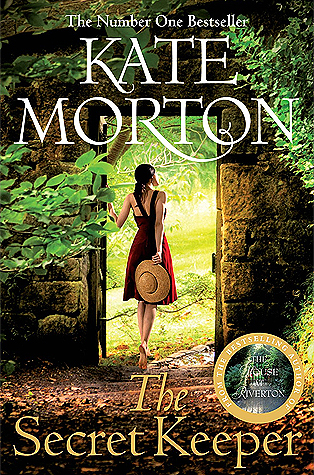
The Secret Keeper by Kate Morton

There are many events taking place in the book blogging calendar this month and AusReading Month hosted by Brona’s Books is one of them. I have a few books by Australian authors waiting to be read, but I decided to read one that has been waiting a long time: Kate Morton’s 2012 novel, The Secret Keeper. I’ve previously read three books by Morton and had mixed experiences with them; I loved The Forgotten Garden but was slightly disappointed in both The Distant Hours and The Clockmaker’s Daughter, so wasn’t sure whether I wanted to bother with this one. I’m pleased I did, because I enjoyed it much more than I expected to.

Like Morton’s other books, The Secret Keeper is set in multiple time periods. It begins in 1961, with sixteen-year-old Laurel Nicolson hiding in a wooden tree house during a family celebration. Laurel just wants some time alone to think, but this means that, from her position in the tree, she is able to see a strange man approaching the Nicolson farmhouse – and is witness to a violent crime involving her mother, Dorothy. We then jump forward fifty years to 2011, when the Nicolsons are gathering at their childhood home for Dorothy’s ninetieth birthday. Laurel, now a successful actress, is still haunted by what she saw on that long ago day and decides that, with Dorothy in poor health, she needs to find out what really happened before her mother dies and takes her secrets with her.

As Laurel begins to investigate her mother’s past, the novel moves back and forth between 2011 and 1940s London where the young Dorothy is looking forward to marrying war photographer Jimmy as soon as their financial situation improves. Dorothy has also made a new friend (or so she thinks): the beautiful, wealthy Vivien, who lives in the house opposite. But when she is betrayed by Vivien, Dorothy puts together a plan of revenge – with unexpected and tragic results.

As is usually the case when I read books set in more than one time period, it was the historical one I enjoyed the most. The present day story was interesting – I enjoyed Laurel’s interactions with her younger brother Gerry, who helps her to uncover the truth about their mother – but I felt that it was effectively just a frame for the much more compelling story of Dorothy, Jimmy and Vivien. I was surprised by how absorbed I became in these parts of the novel, considering that I found Dorothy a particularly unpleasant and irritating character! I did like Jimmy, was intrigued by Vivien and loved the wartime setting, especially as things build to a climax during the London Blitz.

Somewhere in the second half of the book I started to have some suspicions regarding Laurel’s mother and the secrets she was hiding, but this came late enough that it didn’t spoil my enjoyment of the story and I was pleased to find that my guess was correct. Of Kate Morton’s other books, I only have The House at Riverton and The Lake House left to read. Which should I read first?

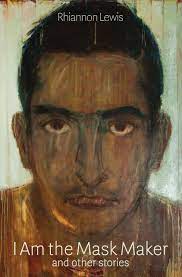
I am the Mask Maker and other stories by Rhiannon Lewis

I enjoyed Rhiannon Lewis’ My Beautiful Imperial, a fascinating novel set in 19th century Wales and Chile, so I was pleased to receive a copy of her new book, I am the Mask Maker and other stories. This is a collection of eleven short stories, some of which have previously been shortlisted or won prizes in literary competitions and been published in other anthologies. The stories are very varied (apart from two which work together as a pair and provide opposite perspectives on the same event). The settings range from a farm in 1960s Wales and a nursing home for the elderly to a bookshop in London and a version of heaven where the angels have decommissioned their halos and are getting ready to leave. Some of the stories are funny and uplifting; others are more poignant, but every one of them left me with a lot to think about.

I find it difficult to write about the individual stories in collections like this without giving away too many of the surprises that each one contains, so I will just briefly highlight a few that I thought were particularly impressive. These include Piano Solo, the story of an unhappy, middle-aged school teacher whose life takes on new meaning when he sits down at his piano, and Being Bob, in which an Oscar-winning actor takes the place of his driver, Bob, for the day – with unexpected results. But I think my favourite story was The Significance of Swans, an eerie tale of disappearances following the sighting of seven flying swans. I was so intrigued by this one and wished it had been longer!

The final story in the collection, I am the Mask Maker, also deserves a mention. When I first saw the title it made me think of the masks many of us have been wearing throughout the pandemic, but this is a story set in Renaissance Venice where our young narrator dreams of learning to make the beautiful decorative masks for which the city is famous. However, halfway through the story it becomes obvious that it’s much more timely than it appeared to be at first.

I’m not always a fan of short stories as I prefer fiction in its longer form, but I found these eleven stories entertaining, original and thought-provoking – and the perfect length for dipping into as a break from my other current reads. It’s also nice to be able to support a small independent publisher like Victorina Press. The book ends with a short piece by the artist David Hopkins describing his artwork which appears on the cover of the book. The painting is called Javi and fits the ‘mask’ theme of the book. I found it very interesting to read about the background to the painting and how he came to create it!

Thanks to Rhiannon Lewis and Victorina Press for providing a copy of this book for review.

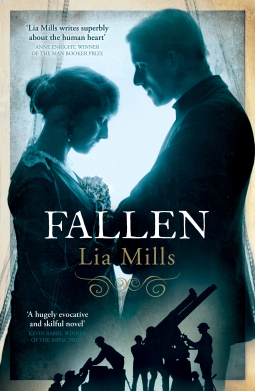
Fallen by Lia Mills

Liam Crilly is one of the ‘fallen’ – one of the many young men to be killed in action on the battlefields of World War I. When the tragic news reaches his family in Dublin, they each try to come to terms, in their different ways, with the terrible loss they have suffered. For his twin sister, Katie, losing Liam is like losing a part of herself and now all she has left of him are memories and the letters he sent home from the Western Front. Denied the chance to continue her education at university because her parents don’t believe it’s necessary, Katie finds solace in assisting Dorothy (Dote) Colcough, a friend and scholar, with the research for a new book she is writing.

Through Dote, Katie meets Hubie Wilson, an army officer who had fought with Liam in France and is now recovering at home after losing a hand. Katie is desperate to learn anything she can about Liam’s last days and Hubie is pleased to have found someone who is willing to listen to him talk about his traumatic experiences. Then, just as a relationship is beginning to form between the two of them, another violent conflict breaks out: the Easter Rising of 1916. Now, Katie’s priority is to keep her friends and family safe as armed insurrectionists take to the streets of Dublin with the aim of establishing an Irish Republic.

We actually learn very little about the Easter Rising itself – what lead to it, the politics behind it, how it ended or what the outcome was – and as this is not a subject I know much about myself, I was left feeling a bit lost and confused. However, I think that was probably intentional; the focus of the book is on the ordinary people of Dublin and how they coped with the violence going on around them in the city. Written from Katie’s point of view, she has a limited knowledge of what is happening behind the scenes, but describes to the reader the things she can see and hear for herself: the gunshots, the roadblocks, the looting of shops, the smashed windows and the fires burning in the streets. I couldn’t help thinking that she seems to move very easily from one part of the city to another, considering how dangerous it was supposed to be, but otherwise these sections of the novel feel vivid and real.

The personal side of the story was of less interest to me, which I think is because of the choice of Katie as narrator. I just didn’t find her a particularly engaging character; she’s a woman in her twenties, but her narrative voice makes her seem much younger – and I wasn’t really convinced by the romance with Hubie either. Some of the other characters appealed to me more, such as Liam’s grieving fiancée, Isobel, who feels shut out by the Crilly family after Liam’s death, and Katie’s new friends Dote and May, two unconventional women who are trying to live their lives the way they want to live them. I was sorry we didn’t spend more time with these characters, as I think their stories would have interested me more than Katie’s!

Fallen was selected as the One Dublin One Book choice for 2016, an initiative which encourages people to read a book connected with the Irish capital every April. I’m obviously very late with this one, but I can see why it was chosen, for the unusual perspective it offers on such an important event in Dublin and Ireland’s history.

Book 50/50 read for the 2021 Historical Fiction Reading Challenge.

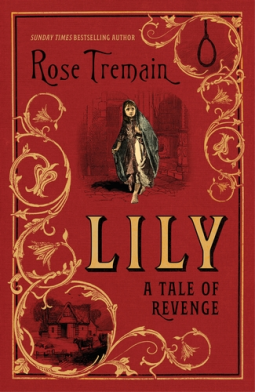
Lily by Rose Tremain

From the opening pages of Rose Tremain’s new novel, we know that Lily Mortimer is a murderer and that she expects to hang for what she has done. What we don’t know is who the victim was and what drove a young woman like Lily to commit such a terrible crime. To find the answers we have to go back in time, to a cold winter’s night in 1850 when policeman Sam Trench finds a baby abandoned by the gates of a London park. Sam takes her to the London Foundling Hospital where she is given the name Lily and sent to live with a foster family in the countryside. This is only a temporary arrangement – children are expected to return to the Hospital once they reach the age of six – but Lily’s foster parents, Nellie and Perkin Buck, grow to love the little girl and they are all heartbroken when the time comes for them to separate.

Back at the Foundling Hospital, Lily feels trapped and unhappy; she and the other children are badly treated by the women who are employed to take care of them and Lily herself seems to be singled out for the worst punishments. As the years go by, Lily becomes an adult and starts work as a wigmaker at Belle Prettywood’s Wig Emporium – but even though she has left the orphanage behind, she is still haunted by the events of her childhood.

After being disappointed by Rose Tremain’s last book, Islands of Mercy, I found this a much more compelling read. It took me a while to get into it as the timeline jumped around so much at the beginning, constantly moving from Lily’s present to her past and back again, which felt disjointed and confusing – and the absence of chapter breaks didn’t help – but eventually things settled down and I was drawn into the story. There are shades of Jane Eyre, particularly in the parts of the book that deal with Lily’s relationship with another orphan, Bridget, and I was also reminded of Stacey Halls’ The Foundling, another novel set partly in the London Foundling Hospital (although this book has a very different plot).

The Hospital – also known as Coram, after its founder Thomas Coram – is vividly described and comes to life as a grim, forbidding place where the abandoned children are made to pay for the ‘sins of their mothers’. Although Lily is occasionally shown some kindness by people such as her benefactress Lady Elizabeth Mortimer, most of the treatment she receives at Coram is harsh and cruel. It seemed such a shame to me that the children weren’t allowed to stay with foster families who loved and wanted them, although I understood that the idea of returning them to the Hospital was so that they could learn the skills that would equip them for life in Victorian society.

This is a bleak novel, but also quite a moving one and despite knowing that Lily considered herself a criminal, I had a lot of sympathy for her from the beginning and hoped that her story would have a happier ending than the one she was expecting. I would recommend Lily not just to Rose Tremain’s existing fans, but also to anyone looking for a dark Victorian tale to immerse themselves in this winter.

Thanks to Vintage for providing a copy of this book for review via NetGalley.

Book 49/50 read for the 2021 Historical Fiction Reading Challenge.

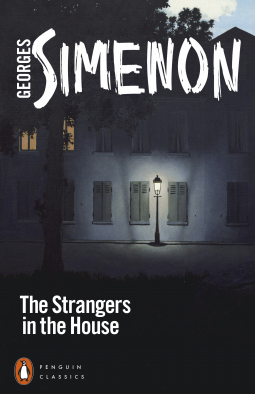
The Strangers in the House by Georges Simenon

Since enjoying my first Georges Simenon book, The Man from London, last year, I’ve been looking forward to reading more. I had intended to try one of his Maigret books next, but the opportunity to read this one came up first; it’s a new Penguin Classics edition of a novel originally published in 1940, The Strangers in the House, and is translated by Howard Curtis. Unfortunately, at 224 pages in the paperback version, it’s just slightly too long to count towards Novellas in November!

The Strangers in the House is one of the many standalone novels written by Simenon that are described as romans dur, or ‘hard novels’. I’m not entirely sure what that term means, but as far as I can tell, it refers to the dark, noirish atmosphere, and the hard, bleak lives that the characters are leading. And the life of our protagonist, Hector Loursat, is certainly bleak! Once a successful lawyer, he fell into a depression when his wife left him eighteen years earlier and turned to alcohol for comfort. Since then, he has spent his time sitting alone with his books and a constant supply of red wine, living in the same house as his daughter Nicole, but barely aware of her presence.

Loursat’s miserable, solitary existence continues until, one night, he hears a gun being fired inside the house and discovers a dead body in one of the bedrooms. When Nicole and her friends become implicated in the murder investigation, Loursat is forced to acknowledge that his daughter is now a stranger to him…or is it in fact Loursat himself who is the stranger in the house?

There’s a detective fiction element to this novel, as Loursat sets out to uncover the truth behind the murder. When suspicion falls on Nicole’s lover, he agrees to defend the young man in court and finds that getting involved in the legal profession again gives him some purpose in life. However, although we see Loursat speaking to the suspects, getting to know Nicole’s circle of friends and learning all he can about the victim, this is not a conventional mystery novel and not one that the reader has much chance of being able to solve. If you’re expecting a story with clever twists and surprises you’ll be disappointed; even the court scenes which take up about half of the book lack suspense.

The book is much more successful as a psychological study of a lonely, reclusive man who is forced to confront his own behaviour and gradually engage with the people and things he has neglected for years. Watching Loursat’s reawakening as he becomes aware of the things that have been going on in his own house without his knowledge is fascinating. Whether or not he finds redemption and whether it’s too late to repair the damage to his relationship with Nicole I will leave you to discover for yourself, if you read the book. All I will say is that Simenon’s storytelling is realistic, unsentimental and ‘hard’.

Have you read this or any of Georges Simenon’s other books? Which can you recommend?

Thanks to Penguin Classics for providing a copy of this book for review via NetGalley.