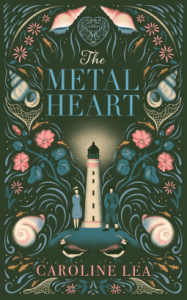
The Metal Heart by Caroline Lea

I enjoyed Caroline Lea’s previous book, The Glass Woman, but even if I hadn’t already known that I liked her writing I would have been drawn to The Metal Heart anyway by that beautiful cover! Books don’t always live up to their covers, of course, but I think this one almost does.

Set during World War II, the novel takes as its inspiration the building of a chapel in the Orkney Islands by Italian prisoners of war. Around this, Caroline Lea has created a fictional story involving two identical twin sisters, Dorothy and Constance – known as Dot and Con. The sisters have very different personalities but are devoted to each other, so when Con suffers a traumatic experience which leaves her afraid to be around other people, the two of them leave their home in Kirkwall on mainland Orkney and take refuge on the small, uninhabited island of Selkie Holm. Needless to say, Con is not at all happy when hundreds of Italian prisoners arrive on the island, along with their guards, and when a romance begins to blossom between Dot and Cesare, one of the Italians, the sisters’ bond becomes strained.

The novel is written from several different perspectives, giving Con, Dot and Cesare each a chance to tell their own side of the story. Despite their identical appearance, the twins have opposite outlooks on life – Dot is warm, friendly and trusting, while Con, understandably, is withdrawn, cautious and slow to trust. There is a romantic element to the novel, of course, but although the love story between Dot and Cesare is important, its real significance is in the impact it has on the relationship between the sisters. When we first meet Dot, she has sacrificed her own freedom and happiness for Con’s sake, but over the course of the novel, through her romance with Cesare – and also her work in the prisoners’ hospital on the island – she must find a way to lead her own life while helping Con to lead hers.

Although the author has changed some of the historical and geographical details, such as names and dates, we know that there really was a prisoner of war camp in Orkney and that the Italian prisoners really did create a chapel from metal and concrete, which can still be seen on the island of Lamb Holm today. Through the story of Cesare and the other prisoners, we see what conditions were like in the camp and the treatment they received from the guards, as well as their reaction to being ordered to build barriers to prevent further attacks on the harbour at Scapa Flow (these would become known as the Churchill Barriers). At the end of the book, Caroline Lea explains which parts of the novel are based on fact and which are fictional, but while I could understand why she adjusted the timeline to give the story more urgency, I couldn’t see why it was necessary to create a fictional island, Selkie Holm, when we know that the name of the island where the camp was located was Lamb Holm.

Anyway, this is a beautifully written novel (apart from the fact that it is written in the present tense, which is never going to be my favourite style). The descriptions of the Orkney Islands – the landscape, the sea, the people and the Orcadian folklore – are atmospheric and vivid; I have never been, but I’m sure it must be a fascinating place to visit. Of the two Caroline Lea books I’ve read, I preferred this one, although I did love the Icelandic setting of The Glass Woman too and will look forward to seeing where her next book will be set!

Thanks to Penguin Michael Joseph UK for providing a copy of this book for review via NetGalley. The book will be published on 29th April 2021.
Book 21/50 read for the 2021 Historical Fiction Reading Challenge.
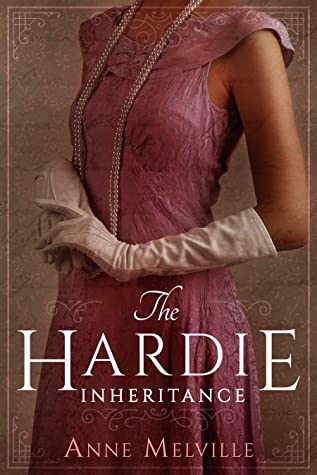
The Hardie Inheritance by Anne Melville

The Hardie Inheritance, first published in 1990 and recently reissued, is the last in a trilogy of novels following a family of English wine merchants from the late nineteenth to mid-twentieth century. The first two books are The House of Hardie and The Daughter of Hardie, but if you haven’t read them it shouldn’t be a problem as the author provides enough of the backstory for new readers to be able to pick up the threads, without completely spoiling the plots of the other two books.

While the previous novel covered the period of World War I and its aftermath, The Hardie Inheritance takes us forward to 1932. There are now only three Hardies – Grace, Philip and their mother, Lucy – still living at Greystones, the family estate in Oxfordshire, and they have settled into a quiet, uneventful life together. Grace, now in her late thirties and expecting to remain a spinster, keeps herself busy with her sculpting, while her brother Philip, who returned from the war suffering from shell shock and weak lungs, fills his days looking after the gardens. Then, one sunny day in July, four unexpected visitors arrive at Greystones and set Grace’s life on a different course.

First, there’s Ellis Faraday and his six-year-old daughter, Trish. Ellis, a photographer, is the son of the architect who designed Greystones and he is keen to take pictures of the interior. At first, Grace is reluctant, aware that due to lack of money she has not been able to maintain the building properly, but she agrees to let him see the house and soon he and Trish have become part of her life – although not quite in the way you might expect. Also that same day, they are visited by Rupert, a cousin who has just discovered his connection with the Hardie branch of the family. And finally, Andy Frith, the gardener’s son who had once been Grace’s beloved childhood friend, returns from France to see his dying father.

The novel follows the stories of all of these people and more, but with a particular focus on Grace as she comes to terms with the changes in her household and faces some important decisions to secure the future of Greystones, and on Trish as she grows into a woman and begins her own search for happiness. Meanwhile, the outbreak of World War II poses new challenges for the Hardies and their friends. The whole novel takes place within a domestic setting and we don’t actually see any of the fighting, but we do see the impact it has on the lives of those left at home. One of my favourite storylines involves Trish being sent to Oxford to collect a family of evacuees from London who, it seems, would rather not be evacuated at all. And although there would obviously have been many people who suffered much more greatly, I still had sympathy for Rupert whose beautiful home, Castlemere, is requisitioned for use as a boarding school!

I think The Hardie Inheritance is my favourite of the three books in the trilogy. There were a lot of new characters introduced early in the book, but I had no problem keeping track of them all and I became very fond of some of them, particularly Trish. Some parts of the book were quite predictable, but others took me by surprise, particularly the ending which I hadn’t expected but which, when I thought about it, was the perfect way to bring the saga of Greystones to a close.

Anne Melville (a pseudonym of Margaret Potter) was a very prolific author who wrote in several different genres using different names – I have read her mystery novel, Murder to Music, which was published under the name Margaret Newman, but most of her other books are out of print so I hope more of them will eventually be made available again.

Book 20/50 read for the 2021 Historical Fiction Reading Challenge.
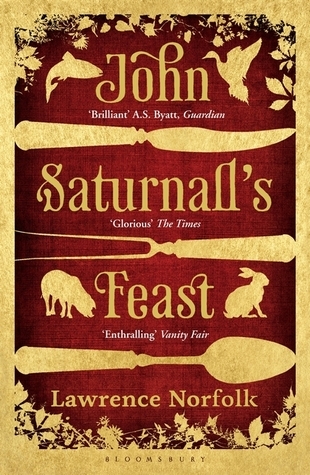
John Saturnall’s Feast by Lawrence Norfolk

This book has been on my TBR since it was published in 2012; I couldn’t get into it at the time, so put it aside to try again later, not really intending ‘later’ to be nearly ten years later! Anyway, although I had one or two problems with it I’m pleased to have read it at last and am now interested in reading more of Lawrence Norfolk’s novels, all of which sound intriguing.

John Saturnall’s Feast begins in a place called Buckland, a small village where John Sandall lives with his mother, a herbalist and midwife. It’s the early 17th century, a time when women with skills like these risk being accused of witchcraft – and this is what happens to John’s mother. Finding themselves the target of their Puritan neighbours and the fanatical preacher Marpot, they flee to the safety of nearby Buccla’s Wood. Here, John continues to receive an education from his mother, who teaches him to read from a book of ancient recipes and reveals to him the secrets of a traditional Feast which have been passed down through the generations.

When John’s mother dies, leaving him an orphan, he is taken into the kitchens of Buckland Manor, where he impresses the other cooks with his knowledge of food. At the Manor, we meet Lady Lucretia, the young daughter of Sir William Fremantle. A marriage has been arranged for Lucretia, in order for her to inherit the estate, but she has chosen to defy her father by refusing to eat. Can John Sandall – now known as John Saturnall, Master Cook – create a dish that will tempt her from her fast?

This is an unusual and complex novel; I have simplified the plot in the paragraphs above, but there is a lot more to it than that and I would probably need to read the book again to fully appreciate all the different layers of the story. I don’t think I quite understood the significance of the ritual of the Feast, for example – was it intended as a myth, an allegory or something real? I felt that important plot points and details were sometimes getting lost beneath the overwhelming descriptions of ingredients, smells, tastes and colours that filled almost every page. I also struggled to keep track of the characters; there are so many of them, particularly working in the kitchens, and none of them are very strongly drawn, so I found it difficult to distinguish one from another.

I did really enjoy the first half of the book, which describes John’s childhood in Buckland and the events that lead to his arrival at the Manor. The portrayal of his life in the kitchens – the huge, subterranean network of rooms, the heat, the smells, the sounds, and the complex social hierarchy that exists between the cooks and the humble kitchen hands – is vivid and fascinating. I was reminded very strongly of Abiatha Swelter’s kitchens in Mervyn Peake’s Gormenghast books! In the second half of the novel, though, there’s a change of scene and pace as civil war breaks out in England and John and his friends exchange the kitchen for the battlefield. There seemed to be very little build up to this and I felt that the war chapters didn’t really add much to the overall story.

Although not every aspect of this book was a success with me, the wonderful atmosphere and the imaginative plot still kept me turning the pages. I would like to try one of Lawrence Norfolk’s other three books, so if you have read any of them please let me know what you thought!

Book 19/50 read for the 2021 Historical Fiction Reading Challenge.
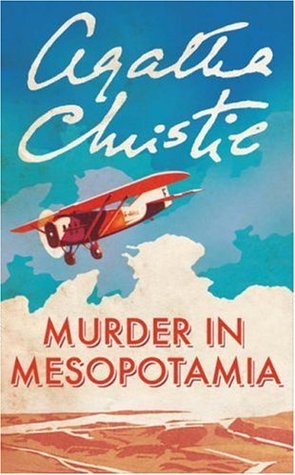
Murder in Mesopotamia by Agatha Christie – #1936Club

This is the second book I’ve read for the 1936 Club (hosted by Karen and Simon) and an obvious one for me as I’m also taking part in Read Christie 2021 this year. The monthly prompt for Read Christie is ‘a story set before WWII’, which makes Murder in Mesopotamia, published in 1936, the perfect choice!

Murder in Mesopotamia is a Poirot mystery and one of several to feature a first person narrator – usually Captain Hastings, but in this case Nurse Amy Leatheran. At the beginning of the novel she agrees to travel to the site of an archaeological dig near Hassanieh in Iraq to nurse the wife of the expedition leader, Dr Leidner. Louise Leidner is being blamed by some of the other archaeologists for causing tension on this year’s dig, but when Nurse Leatheran arrives at the site what she finds is a nervous, frightened woman who claims to be receiving threatening letters from a former husband. A few days later, Louise is found dead in her bedroom, having been hit on the head by a blunt object. It seems impossible that a stranger could have entered the site without being seen, therefore the murderer must be someone on the dig…but who?

When I first began to read, I couldn’t help making comparisons with They Came to Baghdad, one of my favourite Christie novels, which features lots of colourful descriptions of Iraq. The sense of place in this one isn’t quite as strong – and in fact, we see very little of Iraq beyond the confines of the dig site – but there’s still plenty of atmosphere. The descriptions we do get of the dig and the various roles of the members of the expedition are fascinating and feel authentic, which is to be expected as Christie herself was married to an archaeologist, Max Mallowan, and often accompanied him on digs. Not only could she draw on her own personal knowledge and experience in the writing of this novel, she also apparently based some of the characters on people she knew.

Nurse Leatheran is a very opinionated narrator who doesn’t hold back on her views of ‘Foreigners’ (including Poirot), but apart from that I quite enjoyed her narration. We get to know the other participants in the dig through her eyes and, because she is an outsider, meeting all of these people for the first time, we can never be completely sure whether or not she is giving us an accurate impression of them. Poirot himself appears halfway through the novel, conveniently passing through Hassanieh after working on a case in Syria – and we are told that a week later, after solving this mystery, he will go on to investigate the Murder on the Orient Express.

As usual, I didn’t manage to solve the mystery myself. I came up with a few theories, but none of them were correct, which isn’t surprising as the final solution is so far-fetched I don’t think I would ever have thought of it! The method by which the murder is carried out seems unlikely, if not impossible, but the motive relies on us accepting something which I found impossible to believe. Still, this was an entertaining read and another great 1936 book.

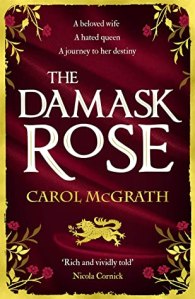
The Damask Rose by Carol McGrath

This is the second book in Carol McGrath’s She-Wolves trilogy, telling the story of three medieval queens of England who have all been given the label ‘she-wolf’ at various times. I enjoyed the first novel, The Silken Rose, about Henry III’s wife, Eleanor of Provence, so I was looking forward to this one, which moves on to Eleanor of Castile, the first wife of Edward I.

I’ve read other books set during Edward I’s reign, so presumably I’ve come across Eleanor of Castile before, but I mustn’t have been paying attention as I couldn’t have told you much about her before reading The Damask Rose (except that she was commemorated by the Eleanor Crosses which were erected in several English towns in her memory). It’s always good when you can learn something new from historical fiction and in this case, almost the entire story was new to me.

The novel begins in 1264 when Henry III is still alive and on the throne of England, but only just – he and his son, Prince Edward, have been captured by the forces of Simon de Montfort at the Battle of Lewes. Edward’s wife, Lady Eleanor, is at Windsor Castle awaiting news of her husband when Gilbert de Clare, one of de Montfort’s supporters, arrives and forces her to relinquish the castle. This traumatic incident instils in Eleanor a lifelong hatred of de Clare as well as a determination that she will never put herself in such a vulnerable position again. Once the threat of Simon de Montfort has been removed at the Battle of Evesham, Edward and Eleanor travel to the Holy Land on crusade. It is during this journey that they learn of the death of Henry III and return to England to take their place as king and queen.

I enjoyed learning more about Eleanor, but although I don’t think she deserved to be described as a ‘she-wolf’ (the term seems to have mainly referred to her unpopular methods of acquiring land and properties, which were seen as greedy and ruthless), she’s not a character I liked or managed to warm to either. It seems that the real Eleanor was also accused of being ‘unmaternal’, which McGrath suggests could be due to the fact that she lost so many children she was afraid to get too close to the ones who survived, but it still irritated me that Eleanor complained constantly about her children’s relationships with other adults while at the same time saying she was far too busy to spend time with them herself.

Part of the novel is written from the perspective of Olwen, a herbalist whom Eleanor introduces into the royal household to provide advice on plants and healing. Olwen is a fictional character but her story complements Eleanor’s very well; in fact, I think I preferred her sections of the book as I found her much easier to like and I enjoyed the different point of view she brings to the novel. I cared about Olwen and wanted her to be happy, whereas I felt that some parts of Eleanor’s story, particularly towards the end, became too factual, too concerned with just describing things that had happened rather than providing any real emotional depth.

The third book in the series is going to be about Isabella of France; I am much more familiar with Isabella than with the previous two queens and I think she will be a fascinating subject to bring the trilogy to an end!

Thanks to Headline for providing a copy of this book for review via NetGalley.

Book 18/50 read for the 2021 Historical Fiction Reading Challenge.
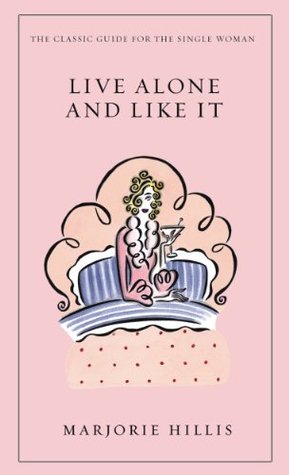
Live Alone and Like It by Marjorie Hillis – #1936Club

This week Karen and Simon are hosting another of their clubs where we all read and write about books published in the same year – and I think this particular year, 1936, is one of the best so far. I’ve already read a lot of great 1936 books and there are many more that I considered reading for the club.

Live Alone and Like It by Vogue editor Marjorie Hillis, is a self-help book for single women who, either intentionally or unintentionally, find themselves living alone. I’m not someone who normally reads self-help books, but I thought it might be fun to read one published in 1936 and, as I do live alone, to see if Hillis has any good advice for me!

As nice, perhaps, as any other way of living, and infinitely nicer than living with too many people (often meaning two or more others) or with the wrong single individual. You can live alone gaily, graciously, ostentatiously, dully, stolidly. Or you can just exist in sullen loneliness, feeling sorry for yourself and arousing no feeling whatever in anybody else.

As you can probably tell from the quote above, Hillis has very little patience with women who indulge in self-pity and sit around complaining about their living arrangements. Her view is that single women can easily become a burden to other people and should avoid doing so at all costs: ‘Remember that nothing is so damaging to self-esteem as waiting for a telephone or door-bell that doesn’t ring.’ Instead, in her brisk, no-nonsense style she urges us to take control of our own lives and raise our self-esteem by giving ourselves little treats, cooking nice meals, wearing new clothes, and not telling ourselves that it ‘doesn’t matter because nobody sees you’.

There are some amusing question and answer sections, with questions like ‘How late is it proper for a woman living alone to entertain a man friend, and how can she get him to go at the correct time?’ and each chapter ends with a selection of case studies, showing how some women have perfectly mastered the art of successfully living alone while others unfortunately haven’t. She devotes a whole chapter to the pleasures of sleeping in a single bed, pointing out that ‘most people have more fun in bed than anywhere else, and we are not being vulgar’ and another takes us step-by-step through the correct preparation, cooking and serving of meals for one person:

Very well, then, have your orange juice and black coffee and toast…Our plea is merely for plenty of orange juice, coffee and toast; really good orange juice, coffee and toast; and orange juice, coffee and toast attractively served.

There’s no doubt that Hillis’ target audience were women of a certain class; she seems to take it for granted that you will probably have a maid – and if you don’t, you’re very unfortunate as you’ll have to do everything yourself – and she provides lots of tips on hosting the perfect cocktail party or bridge night. There’s also an assumption that you will be living in a large city like New York with plenty of clubs, theatres and exhibitions to go to; women who live alone in a small town or in the countryside aren’t given as much attention, except in a few of the case studies. However, a lot of her advice is still relevant today and to everyone, such as how to meet people and make new friends. I will leave you with a quote that I think applies to all of us live-aloners, whatever our personal circumstances:

Living alone, you can – within your own walls – do as you like. The trick is to arrange your life so that you really do like it.

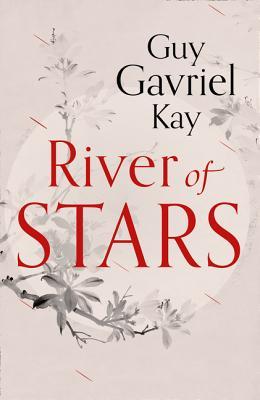
River of Stars by Guy Gavriel Kay

River of Stars is a sequel to an earlier novel by Guy Gavriel Kay, Under Heaven, but being set several centuries apart, the two books stand alone and it’s not essential to read them in order. However, the world Kay creates in this novel has been shaped by the events of the previous one, so that’s something worth bearing in mind.

The world to which I’m referring is a thinly disguised version of China during the time of the Song Dynasty – or Twelfth Dynasty, as it is called in the novel. Since the fall of the glorious Ninth Dynasty, described in Under Heaven, Kitai (the name given to China) has been in decline; their Fourteen Prefectures have been lost to barbarians from the northern steppes, and their once mighty empire is no more. With the army greatly weakened, military decisions are now made by government ministers while bad news is hidden from the emperor who immerses himself in poetry, calligraphy and the creation of a magnificent garden.

As the story of this fallen empire unfolds, we are introduced to a large number of characters. Two of the most prominent are Ren Daiyan, who believes his purpose in life is to reclaim the lost Fourteen Prefectures and restore Kitai to its former glory, and Lin Shan, a woman who writes poetry and thinks for herself, at a time when women are not expected to do either of those things. The paths of Ren Daiyan and Lin Shan cross now and then and their actions carry the story towards its conclusion, but along the way we meet an assortment of emperors and barbarians, prime ministers and war-leaders, diplomats and poets, some of whom have a big part to play in the story and some a small one, but all are significant in one way or another.

Although Kay’s novels are usually described as historical fantasy, most of them have very few traditional elements of fantasy – in this particular book I only noticed two or three, including an encounter with a fox-woman and a few mentions of ghosts. His books are much closer to historical fiction, which is probably one of the reasons why I enjoy them so much (along with the beautiful, lyrical writing). Before starting this one, I knew nothing at all about the Song Dynasty, so despite Kay’s renaming of people and places, it’s good to know that I now have at least a small amount of knowledge of the period, of the Disaster of Jingkang and the Jin-Song Wars.

River of Stars is a fascinating novel and one that requires some patience; it’s not a book that you can rush through, as every character, every conversation, every decision could be important later on. In case we might be in danger of forgetting this, Kay gives us frequent reminders:

It was possible for people to enter your life, play a role, and then be gone. Although if you could sit on a horse in a wood under dripping leaves years after and think about them, about things they’d said, were they really lost?

And:

He ought to feel sympathy. He didn’t. You said certain things, damaged someone’s life, and your own fate might take a different course because of it.

However, although this is an impressive novel and I did enjoy it, I think his two books set in China are my least favourites so far. The characters in them just didn’t seem to come to life for me the way they did in books like Tigana and The Lions of Al-Rassan and I think the constant foreshadowing and discussions of fate and consequences made me too aware of the structure of the novel rather than allowing me to become completely immersed in the story. At least I still have plenty of Kay’s earlier books left to look forward to: The Fionavar Tapestry trilogy, Ysabel, The Sarantine Mosaic duology and A Song for Arbonne.