The Last Protector by Andrew Taylor

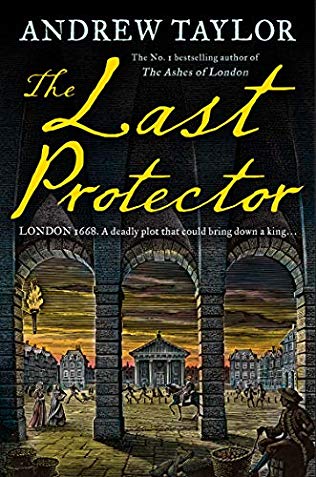
The Last Protector is the latest addition to Andrew Taylor’s wonderful Marwood and Lovett series set in England during the Restoration. It’s now 1668, and Charles II, restored to his throne eight years earlier, is beginning to lose the support of the people due to the extravagance of his lifestyle and the immoral behaviour of his courtiers. Many are starting to long for the days of the Lord Protector Oliver Cromwell and his son, Richard – and when Richard returns (in disguise) from exile, he becomes the centre of a conspiracy into which James Marwood and Cat Lovett are drawn.

At the beginning of the novel, government agent Marwood, still working for Joseph Williamson, Under-Secretary of State to Lord Arlington, is sent to spy on a duel between Lord Shrewsbury and the Duke of Buckingham, who is believed to be plotting against the king. Unfortunately, Marwood is seen by Buckingham’s men, making him a target of the Duke. Meanwhile, Cat, now married to the elderly architect Simon Hakesby (and not really enjoying the experience) has a chance encounter with a young woman she hasn’t seen for years. The woman’s name is Elizabeth Cromwell, the daughter of Richard, the last Protector. Richard has become caught up in Buckingham’s plans to gain power and he wants Cat and Simon to help him. In this way, Cat and Marwood are both pulled, via different routes, into the same circle of events and their two separate storylines become entwined.

This is the fourth book in the series and I would recommend reading them all in order if you can (the previous books are The Ashes of London, The Fire Court and The King’s Evil). It’s not really essential as the novels do all stand alone to a certain extent, but Marwood and Cat have a complex relationship and I think it’s best to follow their stories from the beginning. They don’t seem to have as many opportunities to interact in this book as they do in the earlier ones, but the occasions when their paths do cross are always worth looking forward to.

As usual, there’s also an interesting collection of secondary characters to get to know. One of the many things I enjoy about this series is the way the books incorporate both the lives of the nobility and the lower classes and there are two characters in particular who stand out this time: Ferrus, the ‘mazer-scourer’, a tall, skinny man whose job it is to squeeze himself down sewers to clear blockages underground, and Chloris, a kind-hearted prostitute who does her best to help Marwood despite her humble position in life.

Compared with the previous three novels, this book is more of a thriller than a mystery, still with plenty of twists and turns to the plot. And of course, the atmosphere and attention to detail are excellent, bringing to life the London of the period as the city continues to rebuild following the Great Fire of 1666. I hope there’s going to be a fifth book, especially as there’s a certain development towards the end of this one that has left me wondering what the future might hold for Cat and Marwood.

Thanks to HarperCollins for providing a copy of this book for review via NetGalley.
The Honjin Murders by Seishi Yokomizo

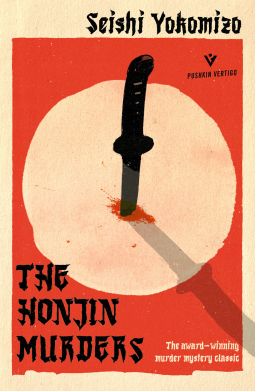
A three-fingered man. A room painted all in red. The eerie music of a Japanese koto. A katana – a sword – standing blade-first in the snow. These all form part of this classic murder mystery, originally published in Japanese in 1946 and now available from Pushkin Press in an English translation by Louise Heal Kawai.

The Honjin Murders is set in November 1937 in the village of Okamura, home to the Ichiyanagi family, whose ancestors once ran a honjin – an inn where noble travellers would stay during the Edo period. Those times are long gone, but the Ichiyanagis are still proud of their illustrious lineage. At the beginning of the novel, the various members of the family are gathering for the wedding of the eldest son and heir, Kenzo, to a young schoolteacher, Katsuko. Kenzo’s family are not very happy about the bride’s humble origins, but the marriage goes ahead and everyone retires to bed for the night. A few hours later, screams are heard from the newlyweds’ room and the pair are found inside stabbed to death.

With the doors locked and no fresh footprints in the snow surrounding the building, it seems that the perfect locked room murder has been committed. Luckily, Katsuko’s uncle Ginzo knows just the man who will be able to solve it: his friend, the private detective Kosuke Kindaichi. Ginzo sends for Kindaichi who arrives in the village looking dishevelled, unassuming and unimpressive (it’s difficult not to make comparisons with that other famously untidy detective, Columbo, although this book was published decades earlier) but appearances can be deceptive and it quickly becomes clear that Kindaichi has the sort of sharp mind and powers of deduction that are necessary to solve such a complex crime.

I won’t say any more about the plot of the novel or the mystery itself. I didn’t work out how the murder was committed or who the culprit was and I was happy just to watch the solution unfold – although like another Japanese mystery novel I read last year, Murder in the Crooked House by Soji Shimada, I felt that there seemed to be more focus on puzzle solving and providing an ingenious technical explanation for the crime rather than on character and motivation. Maybe that is a common feature of Japanese crime fiction; I haven’t read enough of it yet to know.

What I particularly loved about this book was the style in which it was written, with the narrator (presumably meant to be Yokomizo himself) speaking directly to the reader and breaking off from the story now and then to discuss other classic mystery novels, especially of the locked room variety, and their similarities to the Honjin case:

The first that came to mind were Gaston Leroux’s The Mystery of the Yellow Room and Maurice Leblanc’s The Teeth of the Tiger; then there’s The Canary Murder Case and The Kennel Murder Case, both by S.S. Van Dine; and finally, Dickson Carr’s The Plague Court Murders…But this real-life case wasn’t quite like any of the above-mentioned. Maybe, just maybe, the killer had read a selection of stories like these, dissected all of the different devices used, then picked out the elements that he needed, constructing his own device. At least that’s one theory.

Yokomizo may have drawn inspiration from some of those earlier mysteries, but The Honjin Murders itself feels original and different, as well as being a very clever and entertaining novel. Although I hadn’t heard of Kosuke Kindaichi until I read this book, it seems that he appears in over seventy novels (one of which, The Inugami Curse, is also available in English from Pushkin Press). I will look forward to meeting him again!

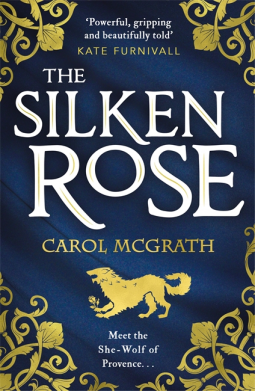
The Silken Rose by Carol McGrath

The Silken Rose is the first in a new trilogy of novels telling the stories of three medieval queens who have been referred to at one time or another as ‘she-wolves’ because of their unpopularity or because they managed to wield power or influence in a period dominated by men. The second and third books in the series are going to focus on Eleanor of Castile and Isabella of France, but this first novel is about Eleanor of Provence. Carol McGrath uses the alternative spelling of Ailenor, so I will do the same throughout the rest of this post.

Ailenor of Provence is not a queen I’ve ever read much about; I think it’s safe to say that she and her husband, King Henry III of England, are not the most popular subjects for historical fiction! They appear in Sharon Penman’s Falls the Shadow, but otherwise I’m struggling to think of other books I’ve read about them and that’s a good thing because it means that the story which unfolds in The Silken Rose feels fresh and different. It begins in 1236 with Ailenor, at the age of only thirteen, arriving in England from France for her wedding to Henry, a man more than twice her age. Although her new husband treats her with kindness and their marriage is not an unhappy one, Ailenor finds it difficult adjusting to life in a strange country and values the friendships she forms with two very different women.

One of these women is Henry’s sister, Eleanor, known as Nell, who has taken a vow of chastity after being widowed. Ailenor quickly discovers that Nell is in love with Simon de Montfort, one of the most powerful noblemen at Henry’s court, and she decides to help her sister-in-law break free from her oath and marry Simon. However, this marriage will eventually have serious repercussions for Henry and for England. The other friend Ailenor makes is Rosalind, a talented embroideress who is brought to court to teach Ailenor and her ladies to embroider intricate new patterns. Unlike most of the other characters in the novel, Rosalind is a fictional character, but she plays an important part in the story, providing a link between the nobility and the merchant classes.

Although Ailenor is the main focus of the novel, there are some sections written from Rosalind’s perspective (and occasionally from Nell’s), which helps to build up a full picture of the events that take place during this period, rather than only being limited to things that Ailenor experiences herself. The story Carol McGrath builds around Rosalind feels believable and fits seamlessly into Ailenor’s story – but despite this, I didn’t find her as interesting or engaging to read about as Ailenor and although I did understand the reasons for her inclusion in the book, I would have preferred it if the novel had stuck solely to the real historical characters. Apart from that, I really enjoyed The Silken Rose; there’s not a huge amount of drama, but I was never bored.

You may be wondering why Ailenor has been described as a ‘she-wolf’; well, it seems that this was partly due to the fact that she brought a large number of her relatives to England with her, where they were given positions of power and were able to influence the king. These included several of her uncles (the ‘Savoyards’), one of whom was made Archbishop of Canterbury, and her sister, Sanchia, who married the king’s younger brother. This and some of the other reasons for Ailenor’s unpopularity are explored in the novel, yet she remains a sympathetic character and one I very much enjoyed getting to know. I am looking forward to reading the other two books in the trilogy.

Thanks to Headline for providing a copy of this book for review via NetGalley.
This is book 3/20 from my 20 Books of Summer list.

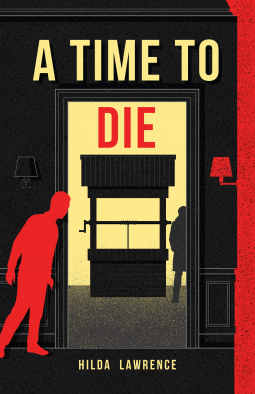
A Time to Die by Hilda Lawrence

This is the second of Hilda Lawrence’s three mystery novels featuring the private detective Mark East, but the last one I have read. Having previously enjoyed the first book, Blood Upon the Snow, and the third, Death of a Doll, I was hoping that this one would be just as good. It was originally published in 1945 and has been reissued by Agora Books as part of their Uncrowned Queens of Crime series.

Like Blood Upon the Snow, A Time to Die is set in the small town of Crestwood, near Bear River. Mark East, having solved a crime there the winter before, has returned in the summer to spend a few weeks with the friends he made during his previous visit. He’s looking forward to a nice relaxing break this time, but on the evening of his arrival he is invited to a charity supper at the church where two fellow guests – a child and an old woman – are struck by arrows during an archery contest. When, later that night, the Beacham family’s governess goes missing, it seems that the two incidents could be related. Aware that his peaceful holiday is quickly becoming much more eventful than he’d anticipated, Mark is reluctant to take on the case, but changes his mind when a body is discovered…

Of the three books in the Mark East series, I think this one is the weakest, but I did still find it entertaining. The plot is quite complex, or at least it seems to be at the beginning when I felt I was wading through a jumble of confusing and unconnected events and struggling to follow what was happening, but once things begin to fall into place and we learn a little bit more about the background of the missing governess, the story becomes much more compelling. The novel has a huge cast of characters (more than necessary really; a lot of them could probably have been left out without having any impact on the story), which means there are plenty of suspects and I didn’t guess who the murderer was before the solution was revealed.

If you haven’t read any of Hilda Lawrence’s novels yet, I would recommend reading Blood Upon the Snow before this one if you can. Many of the characters we meet in this book were introduced in the previous one and it’s also interesting to revisit the same community in two different seasons and see how life in the town has changed now that the cold, snowy winter weather has been exchanged for blazing summer heat. One thing that disappointed me, though, was that Beulah and Bessy, the two elderly spinsters who play important roles in solving the mysteries in the other two books, hardly appear at all in this one – I think we only see Bessy once or twice. It’s a shame because seeing them carrying out their own amateur detective work in parallel with Mark had been one of the highlights of this series.

Not my favourite by Hilda Lawrence, then, but I’m glad I discovered this series and I just wish she had written more than three of these books!

Thanks to Agora Books for providing a copy for review via NetGalley.

This is book 2/20 from my 20 Books of Summer list.

Mrs Whistler by Matthew Plampin

Thanks to everyone who commented on my post earlier this month asking for recommendations of novels about artists; I now have a whole list of titles and authors to investigate – and as promised, here are my thoughts on one of my recent reads, Mrs Whistler by Matthew Plampin. The Whistler the title refers to is, of course, the American painter James Abbott McNeill Whistler, and ‘Mrs Whistler’ is his model, muse and mistress, Maud Franklin. Although I was familiar with a few of his most famous paintings, such as Arrangement in Grey and Black No.1 (known as Whistler’s Mother), I knew nothing about his personal life or what sort of man he was, and I’m sorry to say that I hadn’t even heard of Maud.

The story of Maud’s relationship with Whistler is played out against a backdrop of some of the significant events that occurred in their lives between 1876 and 1880. The first part of the novel concentrates on the controversial Peacock Room, a decorative interior Whistler creates in the dining room of Frederick Richards Leyland’s London townhouse. Leyland is not at all happy when he sees what Whistler has done and a bitter feud follows. Later, the novel explores Whistler’s decision to sue the art critic John Ruskin for libel after he describes Whistler’s painting Nocturne in Black and Gold as ‘flinging a pot of paint in the public’s face’.

These two incidents form the basis of the plot and as I had no prior knowledge of any of this, I found that I was learning a lot about Whistler, his paintings and his life. But this is not so much a book about Whistler as a book about what it was like to know Whistler, to be near him and to share both his triumphs and his troubles. Maud Franklin must have known him as well as anyone – she was with him for around fifteen years and they had two children together (whom she had to see raised by foster parents), which makes her a logical choice of character to focus on. However, according to Plampin’s author’s note the real Maud had refused to talk to Whistler’s biographers who complained that ‘Maud could tell the whole story, but she will not’. This means Plampin has had to use his imagination to decide how Maud felt about Whistler and the other people in his life and how she may have thought, spoken and reacted.

Whistler, at least as seen through the fictional Maud’s eyes, does not come across as a very pleasant man. He’s self-absorbed, he treats Maud badly at times and often lacks awareness and judgement, which is particularly illustrated by his relationship with his friend Charles Augustus Howell, known as Owl. It is obvious to the reader that Owl cannot be trusted, but Whistler remains irritatingly loyal to him, not able to see what we and (eventually) Maud can see. I did have sympathy for Maud and wouldn’t have blamed her if she had left Whistler, but she stayed with him, I suppose, through a combination of love and a need for security. It’s a sad and often frustrating story, but told in a way that I found believable and convincing.

This is the first book I have read by Matthew Plampin, but I know he has written four others. If you’ve read any of them, maybe you can help me decide which one I should read next.

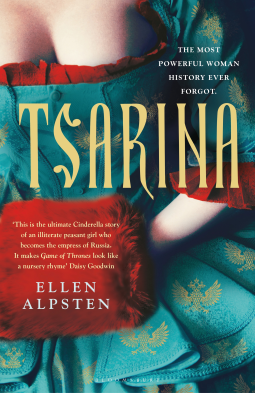
Tsarina by Ellen Alpsten

Tsarina is the story of Catherine I of Russia – not to be confused with Catherine the Great! Born Marta Skowronska in 1684, we first meet her as an illiterate peasant growing up in Livonia. When a rich merchant passes through her village, Marta’s family sell her to him as a maidservant and she is forced to leave her home behind and embark on a new and very different life. From these humble origins, we follow Marta’s rise to become the most powerful woman in Russia, first through her marriage to Peter the Great, who renames her Catherine Alexeyevna, and then as Empress in her own right.

I wasn’t sure what to expect from this book. I had initially been put off by the cover, which hinted that it would be more of a bodice ripper than the serious sort of historical fiction I prefer, but as I had seen some very positive reviews I decided to give it a try anyway. Although I’ve read quite a lot of novels set during other periods of Russian history, I’ve never read any that cover the life of Catherine I, so I thought if nothing else this would be a good introduction to a woman of whom I previously knew very little. And in that respect, it was a success because I finished it feeling that I’d learned a lot and had come away with a good knowledge of Catherine’s life and significance, while remembering that the book is a work of fiction and not everything in it can be assumed to be completely true – particularly in the early chapters, as so little is known for certain about Catherine’s early years.

Tsarina is a long novel and I could tell the author had put a lot of effort into researching it and trying to create a complete and believable 18th century Russian world. The book begins with a map of Russia under Peter the Great and a full list of characters, including all the members of the Tsar’s large family, the many courtiers at the Russian Imperial Court and the serfs and peasants with whom Marta/Catherine grew up in her village in the Baltics. Despite all of this I didn’t find the book quite as immersive as I would have liked, and although some parts of the story are certainly very gripping, I found myself struggling to get through other sections. As I’d suspected, there’s a lot of focus on Catherine’s sex life and many pregnancies, as well as a lot of long and graphic descriptions of the general violence, drunkenness and debauchery of Peter’s court – and while I’m sure it was all quite accurate, it did become repetitive after a while.

Still, it would be hard not to have some admiration for a woman like Catherine who overcame so much hardship in life (I won’t spoil the plot for those of you who know nothing about Catherine, but the novel shows how she was repeatedly exploited as a young woman and treated with brutality and unkindness) and even after she began to rise to power, she knew that her position was precarious and that she couldn’t afford to be caught off guard even for a moment. As for Peter, the author captures the many different facets of his personality, from his monstrous cruelty and ruthlessness to his intelligence and his vision of Russia as a modern western empire.

Although this wasn’t really the right book for me (or maybe I was just in the wrong mood for it) it was good to have the opportunity to get to know Catherine I. If any of you have read any other books about her, I would love to hear about them.

Thanks to Bloomsbury for providing a copy of this book for review via NetGalley.
This is book 1/20 from my 20 Books of Summer list.

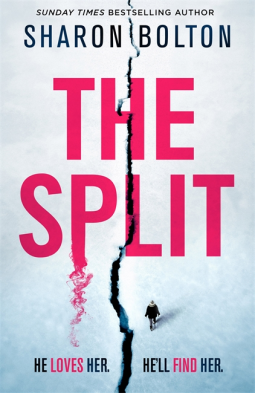
The Split by Sharon Bolton

Sharon Bolton is an author whose books I always enjoy, even though I don’t read a lot of contemporary crime fiction these days. I had expected her next book to be the promised sequel to 2018’s The Craftsman, but I was quite happy to find that The Split was a standalone thriller as her earlier standalones such as Sacrifice, Awakening and Little Black Lies have been some of my favourites.

The Split takes us to South Georgia, a remote and inhospitable island in the southern Atlantic Ocean where twenty-eight-year-old Felicity Lloyd is working as a glaciologist for the British Antarctic Survey. It’s fascinating work and Felicity knows she has been given a wonderful opportunity, but she also has another reason for accepting the job – a chance to put as much distance as possible between herself and Freddie, a man from her past of whom she is still afraid. However, it seems that even here, on the other side of the world, she has been unable to escape. Freddie is coming for her, on the last tourist boat of the summer, and has sent her a letter that fills her with fear:

My dearest Felicity,
Finally, I’ve found you. South Georgia? Wow! Know, my darling, that there is nowhere you can go that I won’t follow –

Who exactly is Freddie and what does he want with Felicity? We find out later in the book, but first we have to go back nine months in time to Cambridge where a series of murders has been committed. Felicity’s connection, if any, with these murders is unclear; all we do know is that she is still haunted by some previous traumatic experiences and has been attending sessions with a therapist. Eventually everything will be revealed, but before we get to that point there are plenty of the twists and turns that are to be expected from a Sharon Bolton novel.

When I first started to read this book it was the South Georgia setting that initially appealed to me, but although we are given some beautiful descriptions of the landscape and the cold, harsh environment, I found I wasn’t being drawn into the story as much as I would have liked. The details of whaling operations and Felicity’s research into glaciers didn’t really interest me – and being thrown straight into the middle of the story with no idea of who anybody was or what was happening didn’t help, even though I understood the reasons for that structure. It wasn’t until the action switched to Cambridge and the backgrounds of Felicity and the other characters began to be explored that I was able to settle into the novel and enjoy it.

I can’t really tell you much about the Cambridge section of the book as it would be too difficult to avoid spoilers, but it quickly becomes clear that we can’t rely on everything Felicity tells us because she has been left so badly scarred by her past experiences. Joe, her therapist, who is one of the other main characters whose perspective we see, has suffered his own recent traumas and it’s obvious that there is also more going on in his life than we are aware of at first. The truth about these two characters – and others, including Bamber, a wild and angry young woman who is very protective of Felicity, and Sean, a mysterious figure who stalks the streets of Cambridge at night – unfolds slowly, with everything coming together when we return to South Georgia in the dramatic final third of the novel. However, I found most of the twists quite easy to guess, which is unusual for a Sharon Bolton book and a bit disappointing.

This hasn’t become one of my favourites, then, but I did enjoy it after a slow start. I must find time to read Blood Harvest, the only one of her previous books I still haven’t read!

Thanks to Trapeze for providing a copy of this book for review via NetGalley.