Six Degrees of Separation: From The End of the Affair to Earth and High Heaven

It’s the first Saturday of the month which means it’s time for another Six Degrees of Separation, hosted by Kate of Books are my Favourite and Best. The idea is that Kate chooses a book to use as a starting point and then we have to link it to six other books of our choice to form a chain. A book doesn’t have to be connected to all of the others on the list – only to the one next to it in the chain.
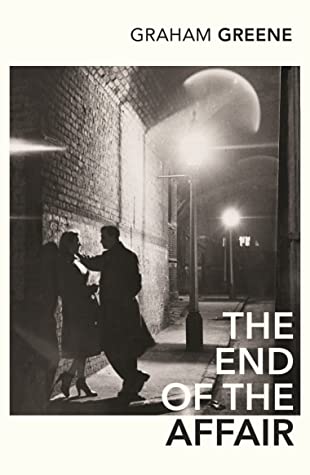
This month we’re starting with The End of the Affair by Graham Greene. As usual, it’s a book that I haven’t read! Here’s what it’s about:

“This is a record of hate far more than of love,” writes Maurice Bendrix in the opening passages of The End of the Affair, and it is a strange hate indeed that compels him to set down the retrospective account of his adulterous affair with Sarah Miles.

Now, a year after Sarah’s death, Bendrix seeks to exorcise the persistence of his passion by retracing its course from obsessive love to love-hate. At first, he believes he hates Sarah and her husband, Henry. Yet as he delves deeper into his emotional outlook, Bendrix’s hatred shifts to the God he feels has broken his life, but whose existence at last comes to recognize.

~
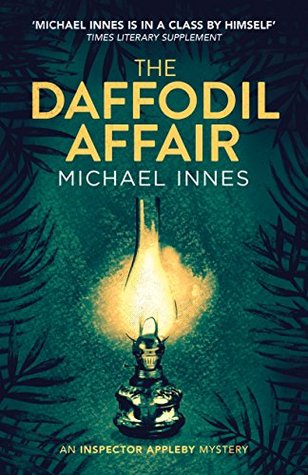
I really didn’t know where to start with this month’s chain. I haven’t read anything at all by Graham Greene, so I tried to think of other books about the end of an affair but came up with nothing. I’m afraid I’ll have to take the easy way out and just link to another book with the word ‘affair’ in the title: The Daffodil Affair by Michael Innes (1). This is part of the Inspector Appleby mystery series but is not a typical detective novel at all. It has a very bizarre plot involving a mind-reading horse, a missing girl and a haunted house! It’s not an Appleby novel that I can recommend; I found it too strange and not what I’d expected when I picked it up.

Daffodil is the name of the horse in the above novel; a book which really is about a flower is The Black Tulip by Alexandre Dumas (2). Dumas is a favourite author of mine and although this book, set in the Netherlands in the 17th century, is much less well known than The Count of Monte Cristo or The Three Musketeers, I still loved it. A book about a contest between two men who both hope to grow the world’s first black tulip may not sound very exciting, but in Dumas’ hands it certainly is! It actually has some similar themes to The Count of Monte Cristo, but is a much shorter novel and could be a good starting point if you’re new to Dumas and daunted by the length of his other books.
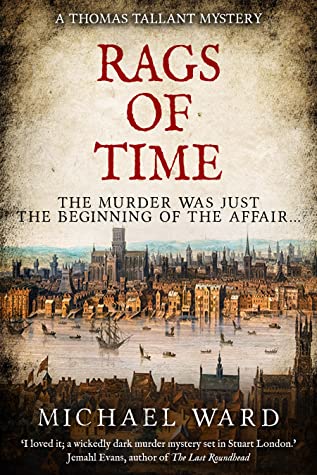
Rags of Time by Michael Ward (3) is the first book in a series of historical mysteries featuring Tom Tallant, a London spice merchant, and set, like The Black Tulip, in the 17th century. This first novel takes us to Amsterdam during the period known as ‘Tulipmania’ where tulip bulbs are being bought and sold for higher and higher prices. I found this part of the book fascinating, particularly the descriptions of the Dutch practice of windhandel, or ‘trading in promises’. As I was putting this post together, I noticed that the cover of the book says “The murder was just the beginning of the affair,” so I could actually have linked this to The End of the Affair and used it as the first link in my chain!
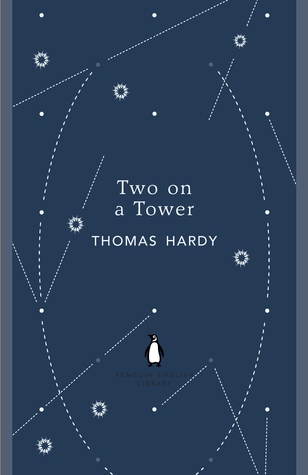
In Rags of Time, Tom teams up with Elizabeth Seymour, a young woman who is a keen astronomer. Swithin St Cleeve in Two on a Tower by Thomas Hardy (4), is also an astronomer – or at least he dreams of becoming one. When Lady Constantine allows him to create an observatory in a tower on her land, the two meet in the tower to study the beauty of the night sky and gradually begin to fall in love, determined to overcome their differences in class and age. I found this a gentler story than some of Hardy’s others, less tragic but also less moving and although it’s still a book that I liked very much, it’s not a favourite of mine.

Although I don’t think Two on a Tower is one of his very best novels, I do love Thomas Hardy and have read most of his books now. A few years ago, I enjoyed dipping into this brief but beautiful guide to his life and work by Jane Drake, titled simply Thomas Hardy (5). The book includes a fold-out map of Hardy’s fictional Wessex, illustrations and colour photographs, some snippets of biographical information, quotations and extracts from several of his novels and poems. At only 32 pages, it’s too short to be completely satisfying and you won’t really learn a lot from it, but I think it would make a nice gift for a Hardy fan.

Drake is also the surname of Erica Drake, one of the main characters in Gwethalyn Graham’s Earth and High Heaven (6). This 1944 novel published by Persephone is set in Canada and follows Erica’s relationship with Marc Reiser. Marc comes from a Jewish family and Erica’s parents – who are English-Canadian – refuse to accept him as a suitable husband for their daughter. This fascinating novel explores the tensions and divisions between these two groups, and also the French-Canadian community. I enjoyed this book and, like many Persephones, it explores themes that are still important and relevant today.

~

And that’s my chain for March! My links have included the word ‘affair’, flowers, Tulipmania, astronomers, Hardy’s Wessex and the name Drake.

Next month we’ll be starting with Our Wives Under the Sea by Julia Armfield.

The Clockwork Girl by Anna Mazzola

The Clockwork Girl is Anna Mazzola’s third novel and, I think, her best so far. Not only is the cover beautiful, the setting is also wonderfully dark and atmospheric and the story is fascinating.

The year is 1750 and Madeleine Chastel, daughter of a Parisian brothel owner, is about to start a new job as a maid in the household of Dr Reinhart, a Swiss clockmaker. Madeleine is pleased to have an opportunity to escape from her mother’s clutches, but this particular job is not one she has chosen for herself – she has been forced to take it by the chief of police, who wants her to spy on Dr Reinhart and report back on any suspicious activities she witnesses. But although Madeleine soon becomes convinced that the police are correct and something strange is going on in the Reinhart household, she finds that she is growing fond of the clockmaker’s daughter, Veronique, and is reluctant to betray her new friend.

The novel is written from the perspectives of three different characters: Madeleine is one, Veronique is another and the third is Jeanne Poisson, better known as Madame de Pompadour, mistress of King Louis XV. I found the choice of narrators very effective as it means we are given insights into every level of Parisian society – the working class, the bourgeoisie or middle class, and the aristocracy. Our story takes place several decades before the French Revolution would begin, but you can see the foundations being laid here as tensions start to simmer. The various locations in which the novel is set are vividly described, with sharp contrasts between the dark, dirty streets where the poor people live in squalor and the luxury and opulence of the royal palaces of Versailles and the Louvre.

Although The Clockwork Girl is a work of fiction, it is inspired by several real historical events. First, the disappearance of children from the streets of Paris in 1750, a scandal known as ‘The Vanishing Children of Paris’. And secondly, the technological advances during the 18th century in the creation of automata – clockwork dolls, animals and other machines with moving parts. Anna Mazzola weaves both of these things into the plot and the result is an engaging and unusual novel that I thoroughly enjoyed reading.

If this book doesn’t appeal, you may prefer Anna Mazzola’s first book, The Unseeing, based on a true crime (the Edgware Road Murder) or The Story Keeper, a novel set on the Isle of Skye. I enjoyed both of them.

Thanks to Orion for providing a copy of this book for review via NetGalley.

This is book 9/50 read for the Historical Fiction Reading Challenge 2022.

My Commonplace Book: February 2022

A selection of words and pictures to represent February’s reading:

commonplace book
noun
a book into which notable extracts from other works are copied for personal use.

~

There are few people so obstinate as the man who half thinks he is wrong.

Somebody at the Door by Raymond Postgate (1943)

~

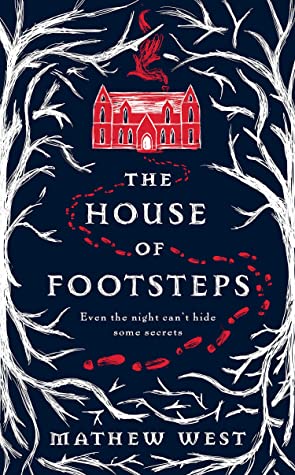
Yet it seems to me that most people, in most situations where the best means to proceed is unclear, will favour a careful, restrained approach over wild impulsive action based on an assumption that all of one’s darkest suspicions are the unvarnished truth. How often does a person shrug off the most bizarre events as mere coincidence, or happenstance, or good or ill fortune, without giving any serious consideration to a deeper meaning, or a deliberate design, or sinister intent? So it was for me.

The House of Footsteps by Mathew West (2022)

~

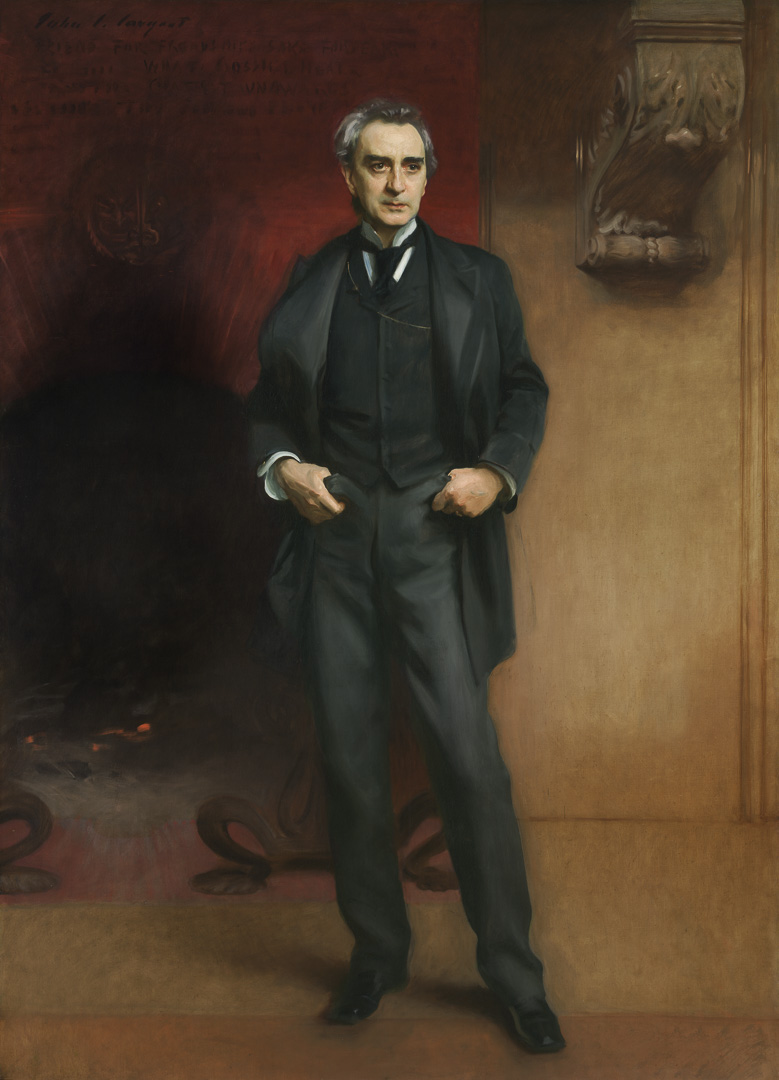
Portrait of Edwin Booth by John Singer Sargent, 1890

Is that what real acting is, that moment you stop pretending? And if so, can a person ever be sure, even offstage, even in the parlour of his own house, that he isn’t simply acting a part? All the world’s a stage etc, etc. You don’t have to be the son of a Shakespearean actor to have such thoughts. Everyone has them.

Booth by Karen Joy Fowler (2022)

~

I squeezed my eyes shut before I could stop myself. I have always been free, I reminded myself. I have always been free. I knew now that slavery was nothing to be ashamed of, that being born free meant I was lucky, not special, but horror was still my gut reaction.

Theatre of Marvels by Lianne Dillsworth (2022)

~

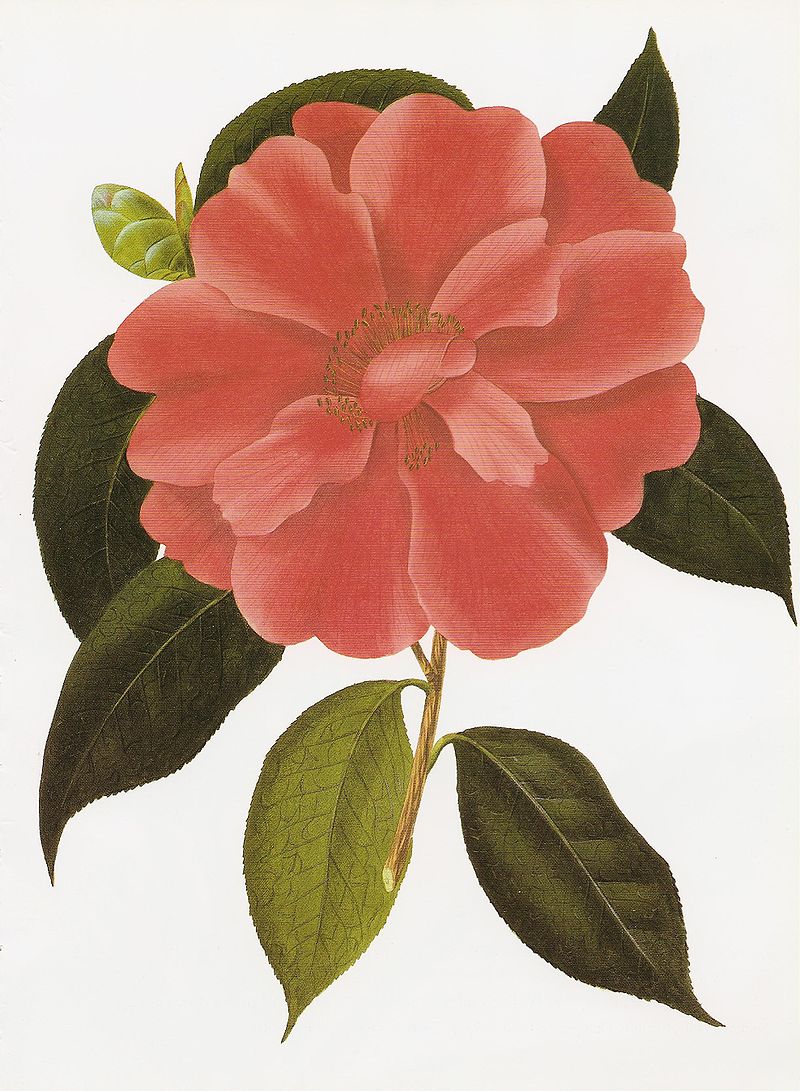
Camellia reticulata

Everything was believed except the truth.

The Lady of the Camellias by Alexandre Dumas, fils (1848)

~

‘There will never be the neat ending you crave, Betty; we cannot go back to how things were, only forward to how things could be. Else why have we suffered so much?’

The Rebel Daughter by Miranda Malins (2022)

~

We fret and sweat over the choices that seem certain to tip the balance of our fortunes, but in truth it’s not the crossroads of our lives that determine their lengths. It is the unseen thorn which poisons our finger, the forgotten key we turn back for, the single careless step.

Traitor in the Ice by KJ Maitland (2022)

~

“A dream, your father states, is like a poem. It invents and reinvents its own language. It’s lyrical, ambiguous. And most importantly, it never quite gets to the point.”

Death and the Conjuror by Tom Mead (2022)

~

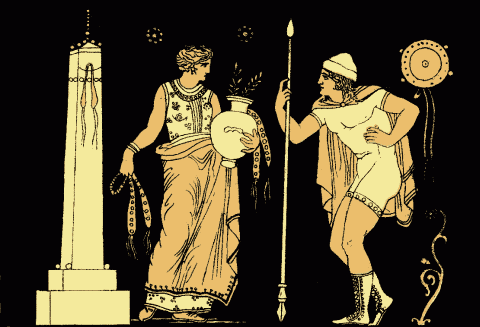
Electra and Orestes, from an 1897 Stories from the Greek Tragedians, by Alfred Church

Since my return from Aulis, I had thought the world empty of surprise. To be surprised, you had to have a belief that the world would always follow its rhythms and patterns as it had always done.

Elektra by Jennifer Saint (2022)

~

It was one thing to challenge a legend. It was quite another to challenge reality.

The Reindeer Hunters by Lars Mytting (2022)

~

Favourite books read in February:

Booth and Death and the Conjuror

Authors read for the first time in February:

Mathew West, Karen Joy Fowler, Lianne Dillsworth, Alexandre Dumas fils, Tom Mead

Places visited in my February reading:

England, USA, Ireland, France, Greece, Norway

~

Reading notes: I’ve continued working through the books on my NetGalley shelf and am up to date with the ones being published in March and April now (reviews to follow nearer publication dates). I also managed to fit in a book for the Classics Club Dare and a book from the British Library Crime Classics series, although I decided not to take part in the Read Christie challenge this month as the February book was Death on the Nile, which I’ve already read.

In March, I’m hoping to take part in Reading Ireland Month at 746 Books and Reading Wales Month at Book Jotter, read at least one or two books from the Walter Scott Prize longlist ahead of the shortlist announcement in April, and possibly join in with the next Read Christie book, which is After the Funeral.

How was your February? Do you have any reading plans for March?

The House of Footsteps by Mathew West

“You make it sound like I’m on my way to Castle Dracula,” says Simon Christie, the narrator of Mathew West’s debut novel The House of Foosteps, after arriving in the remote village of Cobsfoot during a funeral procession and taking refuge in the nearest tavern where he asks for directions to Thistlecrook House – “a strange place, where the master takes dark, wild moods”. It’s 1923 and Simon has been sent by his auction house to evaluate a collection of rare artworks owned by the Mordrake family – and as he enters Thistlecrook House for the first time and makes the acquaintance of the reclusive, secretive Victor Mordrake, it was Dracula that continued to come to mind.

As I read on, I was reminded of other classic Gothic novels and ghost stories and each chapter seemed to raise more questions than it answered. Who is Amy, the beautiful young woman who sits curled up in a chair in the library every evening, begging Simon not to mention her presence to anyone else in the house? What really happened to Victor’s wife, said to have drowned in a frozen lake on the estate? What causes the dark shadows Simon can see under his bedroom door every night? And why does Victor, a vegetarian who can’t even bear having dead flowers in the house, have a whole collection of paintings depicting violent and macabre biblical scenes?

The answers to some of the novel’s many mysteries are revealed gradually as the story unfolds. Others are still unanswered at the end, leaving the reader to make up their own mind about what exactly was going on at Thistlecrook House. I do sometimes enjoy an ambiguous ending, but in this case I was disappointed that we weren’t given more clarity; I had been so intrigued by some of the strange happenings and really wanted to be given a proper explanation for them! However, I still thoroughly enjoyed reading this book – and until I reached that unsatisfactory ending, I had been going to say that it was one of my favourite reads of the year so far.

The novel has a wonderfully dark and sinister atmosphere and despite being set in the 1920s, the remote location – a rural village in the far north of England, close to the Scottish border – creates the feeling that the story could be taking place in a much earlier period. Although I was sometimes frustrated by Simon’s actions and choices, I was always completely absorbed in his story, wondering who could and could not be trusted and watching the boundaries blur between reality and fantasy. If you’ve enjoyed books like The Woman in Black or The Haunting of Hill House I would recommend giving The House of Footsteps a go.

This is book 8/50 read for the Historical Fiction Reading Challenge 2022.

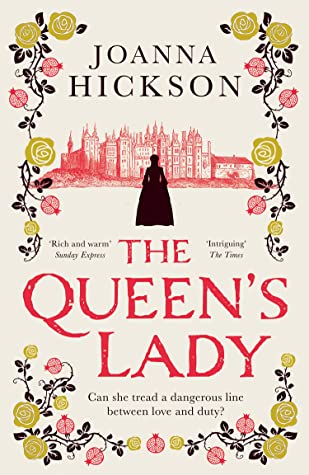
The Queen’s Lady by Joanna Hickson

Joanna Hickson’s new novel is a sequel to 2020’s The Lady of the Ravens and continues the story of Joan Vaux, lady-in-waiting to Elizabeth of York, wife of Henry VII. The ravens that formed such an important part of the first book appear less often here, but Joan still has a strong affinity for them and still believes firmly in the legend that should the ravens ever abandon the Tower of London, the kingdom will fall.

Joan’s position at court means that she witnesses – and is sometimes personally involved in – some of the key events of this period of history. The novel begins in 1502 with the death of Prince Arthur shortly after his marriage to Katharine of Aragon and it is up to Joan to try to comfort his grieving mother, Queen Elizabeth. When Elizabeth herself dies just a year later, Joan’s place at the Tudor court becomes more insecure, particularly when her husband Sir Richard Guildford is imprisoned on suspicion of treason. Eventually, with a new king on the throne – the young Henry VIII – Joan and her family begin to rise to royal favour again, but there’s more drama ahead both for Joan and for the Tudors.

I enjoyed The Lady of the Ravens, but I think this is the stronger of the two books. Although Joan was a real person, she’s one that I knew absolutely nothing about before reading these two novels and I found it fascinating to read about familiar events and people from a completely new perspective. I was particularly interested in the sections where Joan accompanies the two Tudor princesses – Margaret and Mary – to their respective marriages with the King of Scotland and King of France. The fact that Joan is chosen to carry out these important duties is proof of her high standing with the royal family and yet, at various times throughout the novel, we see how quickly this can change and how the King and Queen hold the fates of everyone around them in their hands.

As well as retelling the story of the end of Henry VII’s reign and the beginning of Henry VIII’s, the novel also explores Joan’s personal life: her marriage to Sir Richard Guildford and how she copes during the period of his imprisonment; her often difficult relationship with her son, Hal, who has been raised as a companion to Henry VIII; and her feelings for Anthony Poyntz, a much younger man who had once been like a son to her but is now becoming something more. As Joan is not a well-known historical figure, I had no idea how her story would play out, so was able to enjoy watching it unfold without knowing what was going to happen next.

I think this is my favourite of Joanna Hickson’s books (I’ve read them all apart from one, The Tudor Bride, the second of her two novels about Catherine of Valois). I’ll be interested to see which historical woman she chooses to write about next.

Thanks to HarperCollins for providing a copy of this book for review via NetGalley.

This is book 7/50 for the Historical Fiction Reading Challenge 2022.

The Lady of the Camellias by Alexandre Dumas, fils

Translated by Liesl Schillinger

As a fan of the elder Alexandre Dumas, author of The Count of Monte Cristo, The Three Musketeers and many more, I thought it was time I tried the work of his son, Alexandre Dumas fils. His 1848 novel La Dame aux Camélias – often published in English as The Lady of the Camellias or Camille – was on my Classics Club list and when the Club announced another of their ‘dares’ this February (“Simply read a classic book from your #CClist that you classify as romantic, glamorous, sexy or alluring. It could even be a book or author that you are predisposed to love”) I thought this would be a good opportunity to read it!

The lady of the title is Marguerite Gautier, a Parisian courtesan or ‘kept woman’, who is the mistress of several men including a wealthy duke. Her nickname comes from the fact that she is rarely seen without a bouquet of camellias, red on the days of the month when she is unavailable to her lovers, white when she is free again. One evening at the opera, she catches the attention of a young man called Armand Duval. Armand becomes obsessed with Marguerite and although she informs him that he isn’t rich enough to maintain her extravagant lifestyle, he is determined to become her only lover and put an end to her involvement with other men.

We know from the beginning of the novel that Marguerite will die of consumption (tuberculosis), that she will be in debt at the time of her death and that her possessions will be sold at auction. It’s at this auction that our unnamed narrator buys a book belonging to Marguerite with an inscription by Armand Duval. The purchase of the book leads to a meeting between Armand and the narrator during which Armand tells him the tragic story of his relationship with Marguerite.

Despite knowing that the story was not going to end happily and despite not particularly liking either Armand or Marguerite, I still found The Lady of the Camellias quite gripping and difficult to put down. It’s also beautifully written (and beautifully translated from the original French by Liesl Schillinger in the Penguin Classics edition I read). Although I prefer the style of Dumas père, it’s worth remembering that Dumas fils was only twenty-three years old when he wrote this book, basing it on his own relationship with the courtesan Marie Duplessis, which probably explains the immaturity of the young Armand Duval in the novel.

After falling in love at first sight, in the way only characters in 19th century novels do, and before even getting to know Marguerite, Armand decides that he must ‘possess’ her – and then, once he has her, doesn’t trust her and fails to understand or appreciate the sacrifices she is making for him. My sympathies lay much more with Marguerite, although it took me a long time to warm to her. I think it would have helped if we had been given more information on her background, to explain why she was so obsessed with money and jewels and how she had come to live the frivolous life she was leading. Still, her story is very sad and a good example of double standards between men and women.

If you think this story sounds familiar, it has been adapted many times for stage and screen and was the inspiration for Verdi’s opera La traviata and the 2001 film Moulin Rouge.

This is book 27/50 read from my second Classics Club list.

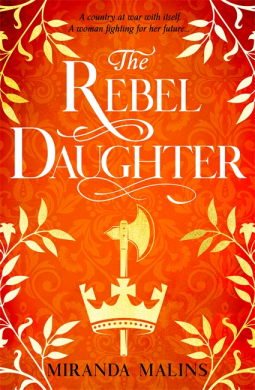
The Rebel Daughter by Miranda Malins

In The Rebel Daughter, Miranda Malins returns to the family at the heart of her previous novel, The Puritan Princess: the Cromwells. However, where The Puritan Princess told the story of Frances, Oliver Cromwell’s youngest daughter, in this second novel we get to know Bridget – or Biddy – the eldest of his four daughters.

In 1643, nineteen-year-old Bridget is living at home in Ely, Cambridgeshire with her mother and younger brothers and sisters while her father and eldest brother are away fighting in the civil war that is currently tearing England apart. Bridget longs to join the men in shaping the future of their country, and although she watches with envy as her younger sister Betty falls in love, she knows she wants more from life than just to be a wife and mother. When she receives a marriage proposal from General Henry Ireton, a fellow commander of her father’s in the Parliamentarian army, she decides to accept in the hope that this marriage will provide the opportunities she’s been hoping for.

The relationship between Bridget and Henry is not a passionate or romantic one, but they get on well together and Bridget is able to involve herself in politics, offering opinions and advice as the war begins to come to an end and her husband and father must decide what happens next. The majority of the novel is set during this period, when with the Royalists defeated, the question of what to do about the King arises and Parliament and the army split into opposing factions, each with their own views on this very important question.

Bridget’s position as a member of the Cromwell and Ireton families leads her to cross paths with other important historical figures of the period such as Thomas Fairfax, commander of the New Model Army, and his wife Anne, and political activist Elizabeth Lilburne and her husband John Lilburne, one of the leaders of the movement known as the Levellers. Bridget herself doesn’t have a large role to play in politics, but Oliver and Henry value her input and she feels she is able to have a small amount of influence on their decision-making.

As well as the political situation, the novel also explores the human cost of war. Bridget experiences this for herself with the deaths of her brother and cousin and later, on a wider scale, when she sees the devastation of besieged Colchester, filled with crumbling buildings, smoke-filled streets and starving children – and this is nothing compared to the horrors she witnesses when she crosses the Irish Sea to join Henry after his appointment as Lord Deputy of Ireland. I wished we had seen more of life away from Parliament and the constant wrangling over the fate of the King, which did get a bit tedious at times.

Of the two books, I think I preferred The Puritan Princess, but I did find this one interesting and am pleased to have had the chance to learn more about Bridget Cromwell. I wonder whether Miranda Malins will write about the other two Cromwell sisters, Elizabeth and Mary, or whether she’ll be moving onto a new subject for her next novel.

Thanks to Orion for providing a copy of this book for review via NetGalley.

This is book 6/50 read for the Historical Fiction Reading Challenge 2022.