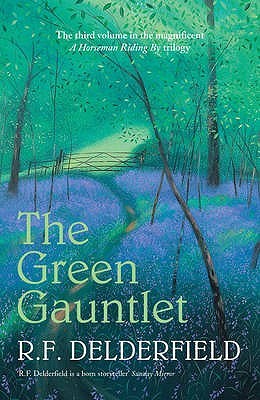
The Green Gauntlet by RF Delderfield

I loved the first two books in RF Delderfield’s A Horseman Riding By trilogy and am sorry it has taken me three years to get around to reading the third book, The Green Gauntlet. It was lovely to be back in the Shallowford Valley and become reacquainted with Paul and Claire Craddock and their family, friends and neighbours.

If you’re new to this trilogy, I would strongly recommend beginning with the first novel, Long Summer Day, which is set in the Edwardian period and tells the story of how the young Paul Craddock buys an estate in the Devon countryside and becomes Squire of Shallowford, gaining the trust and respect of the other valley families along the way. The second book, Post of Honour, continues the story through World War I and finally, in The Green Gauntlet, we follow some of the same characters throughout World War II and its aftermath. By the time you reach this third and final novel there are a huge number of characters and storylines to keep track of, which makes it difficult to give a summary of the plot, so instead I will just pick out a few things that I particularly enjoyed.

First of all, there’s the conflict between the old ways of life and the new as change comes to the valley in the form of new technology, improvements to transport networks and differences in generational attitudes. Paul is disappointed to find that many of the younger people, including several of his own children, don’t share his love for their little corner of England and are only interested in the money they can make out of it. Although the book was published in 1968, some of the issues it covers, such as the over-development of land and destruction of the environment are still very relevant. There’s a sense that Paul himself belongs to a world that is rapidly disappearing and that the valley he remembers now exists only in his mind:

His patriotism, as she saw it, was at once more localised and more broadly based, drawing its strength from the books he read and the thoughts he thought. It had to do with Valley crafts and Valley loyalties, with the food they grew and the dialects they used. It reached back into the history of history books that, for most people, herself included, had no more reality than the stories of the Old Testament but for him had a message that had regulated the whole of his life since she had known him. If it brought him comfort now who was she to question it?

Another of the novel’s themes is the war, of course, and Delderfield occasionally takes us into the heart of the fighting where several of our characters – including Paul and Claire’s twin sons, Andy and Stevie, and their son-in-law Rumble Patrick are serving in various branches of the armed forces. The valley itself doesn’t remain unscathed either, with bombs falling, sea mines being washed ashore and a German pilot descending in the woods. Although there’s plenty of action and always something happening in the Valley, the story moves along at a leisurely pace and the focus is on the daily lives of the characters and the relationships between them. I was particularly gripped by the story of Andy’s wife Margaret, who finds herself married to one twin while in love with the other and with no guarantee that either of them would come home alive.

I do think this book could have been made a lot shorter without losing any of the plot and the last few chapters seemed to go on forever as every loose end was tied up. Despite this, I was still sorry to reach the final page and to have to leave the Valley and its people behind. Luckily, RF Delderfield wrote plenty of other novels which I can look forward to reading and I already have one of them, Farewell, the Tranquil Mind, waiting on my shelf.

This is book 12/20 of my 20 Books of Summer 2021. Obviously I’ve failed to complete my list this year, but I’ve almost finished two more books that I won’t have time to review by the deadline, so I’m not too unhappy with my result!

Evil Under the Sun by Agatha Christie

August’s theme for the Read Christie 2021 challenge is ‘a story set by the seaside’, which seemed the perfect opportunity to pick up an unread Poirot novel, Evil Under the Sun. It’s set on an island off the coast of Devon, where Hercule Poirot is on holiday at the exclusive Jolly Roger Hotel.

Christie begins by introducing us to all of the people staying at the hotel, including Arlena Stuart, a beautiful former actress. Arlena is described by one of the other characters as ‘the personification of evil’ – and she certainly seems to be causing plenty of trouble. Fellow guest Patrick Redfern can’t take his eyes off her and Arlena appears to be encouraging his attentions, regardless of how hurtful this is to Patrick’s young wife, Christine. Arlena’s own husband, Captain Marshall, claims he hasn’t noticed her behaviour, but is he telling the truth? Meanwhile, Marshall’s teenage daughter from a previous marriage hates her stepmother and resents the way she has come into the family home, bringing scandal and unhappiness with her.

When Arlena’s dead body is found at Pixy Cove, a secluded part of the island, almost everyone becomes a suspect. It’s fortunate that Poirot is already on the scene and can begin investigating immediately! In fact, as he later tells his friend, Captain Hastings, he had begun even before the murder took place…

Hastings said, staring: “But the murder hadn’t happened, then.”

Hercule Poirot sighed. He said: “But already, mon cher, it was very clearly indicated.”

“Then why didn’t you stop it?”

And Hercule Poirot, with a sigh, said as he had said once before in Egypt, that if a person is determined to commit murder it is not easy to prevent them. He does not blame himself for what happened. It was, according to him, inevitable.

Having just read three Miss Marple novels in a row for Read Christie, it made a nice change to get back to Poirot for this month’s read. I usually prefer the Poirots to the Marples and Evil Under the Sun – first published in 1941 – is another good one. Setting the story on a private island, for the use of the hotel guests only, is not just an atmospheric setting but also a clever one as it immediately limits the suspects to those already on the island at the beginning of the book. With his understanding of the kind of person Arlena was, Poirot is quickly able to pick out one suspect as the most likely culprit, but due to timings and alibis it seems impossible that this person could have committed the crime. As the novel progresses, more clues emerge, along with the usual red herrings and misdirections Christie likes to throw in our way!

I didn’t manage to solve the mystery, but once the solution was revealed I could see how perfectly all of the clues fitted together – like a jigsaw puzzle, as Poirot describes it. It did seem that the way in which the crime was carried out depended on a lot of good luck and on people behaving in a certain manner, but I still think Christie was fair with the reader and I have no complaints. I’m now looking forward to September’s book, which will be Crooked House.

Ready for RIP XVI

I can’t believe this is the sixteenth year of RIP (Readers Imbibing Peril). I have been taking part since RIP V all the way back in 2010 and have never missed a year! Things have changed a lot since then and it seems that RIP is now something that takes place mainly on Instagram and Twitter. However, it’s always been a very relaxed event and whether or not you use social media there’s no reason why you can’t put a pile of books together and join in. As long as they are mysteries, ghost stories, thrillers, Gothic novels, or anything else suitably dark and atmospheric they will count!

RIP begins next Wednesday and runs throughout September and October. You can find out more on Twitter or on Instagram. For those who want to get more involved, there are bingo cards, photo challenges and a group read of Shirley Jackson’s The Sundial.

Part of the fun of RIP is looking through our TBR piles to see what we could read. Here are a few of the books I’m thinking about reading this year – a mixture of NetGalley review copies, books I didn’t get to last year, and books by some favourite authors.

Carmilla by Sheridan Le Fanu
The Grey King by Susan Cooper
Black Drop by Leonora Nattrass
A Line to Kill by Anthony Horowitz
The Mummy Case by Elizabeth Peters
The Silent Companions by Laura Purcell
Wildfire at Midnight by Mary Stewart
A Gathering of Ghosts by Karen Maitland
One Corpse Too Many by Ellis Peters
The Golden Tresses of the Dead by Alan Bradley
Mrs England by Stacey Halls
Tombland by CJ Sansom

I will also be continuing with the 2021 Read Christie challenge and have Crooked House lined up for September and Death on the Nile for October – and I have a classic horror anthology I downloaded for Kindle a while ago which includes stories by MR James, Washington Irving, E Nesbit and others.

Of course, I could end up reading none of the above books and find myself drawn to a completely different selection!

Will you be joining in with RIP this year? What are you planning to read?

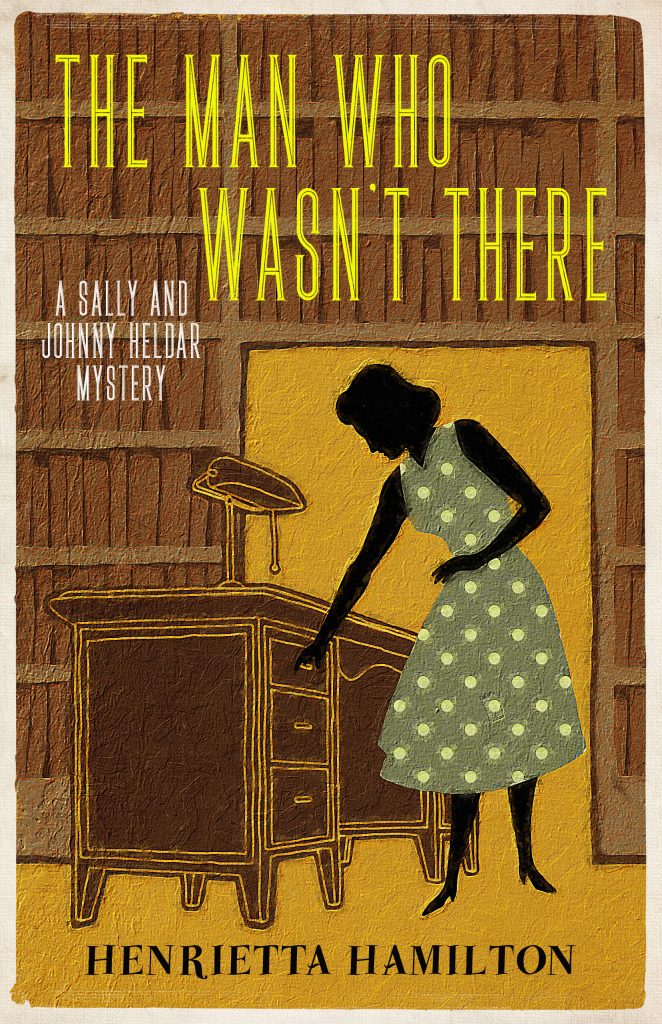
The Man Who Wasn’t There by Henrietta Hamilton

Henrietta Hamilton is an author I discovered recently through Agora Books’ Uncrowned Queens of Crime series. Hamilton (a pseudonym of Hester Denne Shepherd) had four novels published between 1956 and 1959, all featuring the crime-solving husband and wife team of Johnny and Sally Heldar. I have read two of them – Answer in the Negative, which I didn’t particularly enjoy, and The Two Hundred Ghost, which I did. When I was given the opportunity to read The Man Who Wasn’t There, I assumed it was another of the four books, but I quickly discovered that the circumstances behind the publication of this novel are more intriguing.

After Hamilton’s death in 1995, her nephews found some typed manuscripts of thirteen books that had never been published in her lifetime – including several more Sally and Johnny mysteries. This is one of them, made available at last by Agora Books. As one of the author’s nephews suggests in the introduction, it may have been changing tastes in literature that led to his aunt’s books no longer being published; by the late 1950s the Golden Age of detective fiction was largely over and The Man Who Wasn’t There does feel like a book written a decade or two earlier.

Johnny and Sally Heldar are a young married couple who run an antiquarian bookshop and are gaining a reputation for themselves as amateur detectives. Therefore, when Johnny’s cousin Tim discovers that his fiancée, Prue, is involved in a murder case, he turns to Johnny and Sally for help. Prue had been working as secretary to the murdered man, Mr Frodsham, who has been found shot dead in his study and Prue herself has become one of the suspects. Tim is hoping the Heldars can prove her innocent – and it certainly seems that there are plenty of other people with motives, including Frodsham’s mistress and her husband, another woman he was blackmailing, and some old enemies from his days in the French Resistance.

I like Sally and Johnny and it was nice to spend some more time in their company (although I do wish Johnny would let his wife take a more active part in the investigations), but I found the plot of this particular novel a bit too complicated and detailed for such a short book. I struggled to keep track of all the characters, what time they arrived at or left the victim’s house, what they were all doing during the war, even the number of different guns involved. Most of this information is delivered in the form of long conversations as Johnny and Sally ‘think out loud’ to each other or interview suspects, so you also need to remember who said what and to whom. Still, I think Hamilton was fair to the reader and gave us all the clues we needed to be able to solve the mystery.

I probably won’t read any more books in this series as I’ve tried three now and only really enjoyed one of them, but I can see from looking at other reviews that lots of people love her books so I hope the rest of the unpublished manuscripts find their way into print very soon.

Thanks to Agora Books for providing a copy of this book for review via NetGalley.

A Corruption of Blood by Ambrose Parry

This is the third book in Ambrose Parry’s historical mystery series featuring Dr Will Raven and Sarah Fisher. The first two are The Way of All Flesh and The Art of Dying, but if you haven’t read either of those it shouldn’t be a problem – although I would still recommend reading them in order if possible so that you can understand the background of the relationship between Will and Sarah.

Ambrose Parry is a pseudonym used by husband and wife team Chris Brookmyre and Marisa Haetzman; Brookmyre is an experienced crime novelist while Haetzman is an anaesthetist and medical historian, which explains why the 19th century world of murder and medicine portrayed in the books feels so real and convincing.

At the beginning of A Corruption of Blood, Sarah travels to Paris and Gräfenberg hoping for a meeting with Elizabeth Blackwell, the first woman to obtain a medical degree in America and become a doctor. Sarah has an interest in medicine herself and is sure that she could achieve the same as Dr Blackwell if given the chance, but things don’t go as planned and Sarah goes back to Edinburgh feeling disillusioned and frustrated. On returning home, she receives more bad news when she learns that Dr Will Raven has just become engaged to another woman, Eugenie Todd. Sarah has always resented Will for being able to take advantage of the opportunities that have been denied to her because of her gender, but recently they have been on friendlier terms and she is disappointed to hear of his engagement.

Meanwhile, Will is having problems of his own. Through his work with the famous Scottish obstetrician Dr James Simpson, he has become used to witnessing the trauma of childbirth and, sadly, the deaths of children – however, even he is not prepared for the sight of a dead baby wrapped in a parcel being fished out of the river. Soon after this, Will’s new fiancée asks for his help; her friend Gideon has been accused of murdering his father, Sir Ainsley Douglas, and she wants to prove that he is innocent. Will knows and dislikes Gideon from his student days, but agrees to investigate. Could both deaths somehow be connected?

This is such an interesting series, not so much because of the murder mystery aspect (which I don’t think is particularly strong) but because of the Victorian Edinburgh setting and all of the information we are given on the medical science of the period, as well as the challenges faced by women like Sarah and Dr Blackwell who wanted to make a career for themselves in a field dominated by men. This particular novel also includes a storyline involving the unpleasant, distressing but sadly quite common practice of baby farming, where unwanted or illegitimate children were sold to a ‘baby farmer’, who in theory would look after the child in return for a payment, although it was often more profitable for the baby farmer if the child conveniently died while in her care.

It took me a while to get into this book; the pace is very slow at the beginning and it takes a while for the plot to take shape and the different threads of the story to start coming together. Things improve in the second half, though, and there are a few surprises and plot twists that I hadn’t really expected. The relationship between Sarah and Will continues to develop, with the way each of them feels about Eugenie adding some extra interest, and I will look forward to seeing how this progresses in the next book. I hope there is going to be a next book and I hope we don’t have to wait too long for it!

Thanks to Canongate Books for providing a copy of this book for review via NetGalley.

Book 11/20 of my 20 Books of Summer.

Book 39/50 read for the 2021 Historical Fiction Reading Challenge.

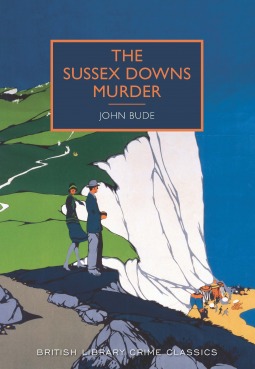
The Sussex Downs Murder by John Bude

I am now halfway through my 20 Books of Summer list and obviously not going to finish all of the remaining books by the end of the month, but I’m pleased that I’ve managed to read this one, The Sussex Downs Murder, as I’ve had it on my shelf for a few years now and could never seem to find the right time to read it. It turns out that summer was the perfect time, as the story takes place in July…

The novel opens on a Saturday evening with John Rother saying goodbye to his brother and sister-in-law and leaving their Sussex farm, Chalklands, to drive to Harlech in Wales for a holiday. He doesn’t get very far, however, and his car is found abandoned the next morning just a few miles away from the farm. John has disappeared, but there are bloodstains inside the car and signs of a violent struggle. Has he been killed? Kidnapped? Superintendent William Meredith is called in and when human bones are found in a delivery of lime from the Chalklands lime-kilns a few days later, it seems that he is dealing with a murder case.

In his careful, methodical way Meredith begins to investigate, examining every clue and interviewing every possible witness. He forms a theory almost immediately, but when a second crime occurs and proves him wrong, he is forced to think again, and slowly – too slowly for his Chief Constable who threatens to bring in Scotland Yard – starts to piece together what has happened.

John Bude, whose real name was Ernest Elmore, is a popular author within the British Library Crime Classics series, but this is the first of his books that I’ve read. Originally published in 1936, it’s the second Superintendent Meredith novel and I enjoyed it enough to want to read more of them. I liked Meredith, although we don’t get to know very much about his background or personal life – apart from some great scenes with his son, Tony – and I appreciated the way his thoughts are shared with the reader, so that we can follow each step of his investigations and see in which direction the clues are leading him. I also liked the Sussex setting; it’s not an area that I know, but there’s a map at the beginning and all of the towns and villages, chalk hills and rings of trees – are real places and geographical features.

My only problem with this book was that the solution to the mystery was far too easy to guess; I had my suspicions from very early in the story and was proved right. I don’t usually manage to solve the crime before the detective does, so I wonder if other readers found this one particularly obvious too.

This is book 10/20 of my 20 Books of Summer 2021

The Infernal Riddle of Thomas Peach by Jas Treadwell

READER! – Good-day to you!
And good-morrow, too! for our acquaintance is destined to be long. We are sure of it. We see it in your eye –

Who is Thomas Peach? Why has he fled London to take up residence in a quiet country village in Somerset? What is in the locked chest he keeps hidden beneath the stairs? Why does Mrs Peach never leave her bedroom and why is she not permitted visitors? Does she even exist – and if not, who is it that Thomas talks to at night, when the curious maidservant stands with her ear to the bedroom door?

These are the questions our narrator, an unnamed person who describes themselves as a necromantic historian, sets out to answer in this strange and fascinating new novel by the equally mysterious Jas Treadwell. By the end of the book, we have answers to these questions, as well as some others that are raised along the way, but what makes this such an intriguing and entertaining read, in my opinion, is not the plot so much as the style in which the book is written. Not everyone will agree, of course; I think whether or not you will enjoy Thomas Peach could depend on how you feel about the sort of book it is parodying – the 18th century novel.

Set in 1785, the book imitates the fiction of that time, with the narrator speaking directly to the reader, commenting on what has happened and what is about to happen and providing footnotes where they feel further information is necessary. If you’ve read Susanna Clarke’s Jonathan Strange and Mr Norrell, you will have an idea of what I mean, although the narrator in this book is much more intrusive and is there with us through every turn of the page. Chapter Ten, for example, begins like this:

Like the rustic, who closes his eyes at sun-set, after his day of wholesome toil, and wakes again with the dawn, we omit the night altogether, by the simple method of opening our new chapter upon the following day.

This is probably the kind of writing you either like or you don’t; it does require some patience, as those 18th century authors never used one word when they could use ten! Treadwell draws heavily on the literature of the period and there are lots of references to Samuel Richardson’s huge 1748 epistolary novel Clarissa (which I was glad I had read, as it meant I knew what the narrator was talking about without having to rely on the footnotes!) as well as books by other authors such as Henry Fielding and Tobias Smollett. You don’t actually need to have read any of these books, but a familiarity with some of them will add to your experience of the novel.

Due to the leisurely pace of the novel and all the diversions and digressions, Thomas Peach’s story unfolds very slowly – and when his secrets do eventually begin to be revealed, I felt that beneath the clever writing, the plot was less complex, less magical and less satisfying than I had expected it to be at first. Still, I enjoyed meeting Thomas Peach and the other characters, particularly Clary, a young woman about whom I can’t really say anything at all without spoiling the surprise! Although I couldn’t read a lot of books like this as the style would quickly become irritating, this one kept me entertained.

Thanks to Hodder & Stoughton for providing a copy of this book for review via NetGalley.

Book 9/20 of my 20 Books of Summer.

Book 38/50 read for the 2021 Historical Fiction Reading Challenge.