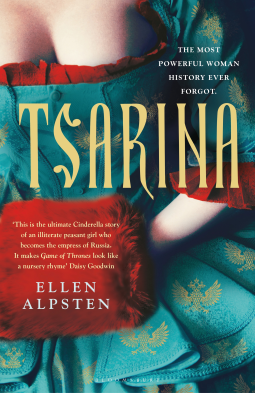
Tsarina by Ellen Alpsten

Tsarina is the story of Catherine I of Russia – not to be confused with Catherine the Great! Born Marta Skowronska in 1684, we first meet her as an illiterate peasant growing up in Livonia. When a rich merchant passes through her village, Marta’s family sell her to him as a maidservant and she is forced to leave her home behind and embark on a new and very different life. From these humble origins, we follow Marta’s rise to become the most powerful woman in Russia, first through her marriage to Peter the Great, who renames her Catherine Alexeyevna, and then as Empress in her own right.

I wasn’t sure what to expect from this book. I had initially been put off by the cover, which hinted that it would be more of a bodice ripper than the serious sort of historical fiction I prefer, but as I had seen some very positive reviews I decided to give it a try anyway. Although I’ve read quite a lot of novels set during other periods of Russian history, I’ve never read any that cover the life of Catherine I, so I thought if nothing else this would be a good introduction to a woman of whom I previously knew very little. And in that respect, it was a success because I finished it feeling that I’d learned a lot and had come away with a good knowledge of Catherine’s life and significance, while remembering that the book is a work of fiction and not everything in it can be assumed to be completely true – particularly in the early chapters, as so little is known for certain about Catherine’s early years.

Tsarina is a long novel and I could tell the author had put a lot of effort into researching it and trying to create a complete and believable 18th century Russian world. The book begins with a map of Russia under Peter the Great and a full list of characters, including all the members of the Tsar’s large family, the many courtiers at the Russian Imperial Court and the serfs and peasants with whom Marta/Catherine grew up in her village in the Baltics. Despite all of this I didn’t find the book quite as immersive as I would have liked, and although some parts of the story are certainly very gripping, I found myself struggling to get through other sections. As I’d suspected, there’s a lot of focus on Catherine’s sex life and many pregnancies, as well as a lot of long and graphic descriptions of the general violence, drunkenness and debauchery of Peter’s court – and while I’m sure it was all quite accurate, it did become repetitive after a while.

Still, it would be hard not to have some admiration for a woman like Catherine who overcame so much hardship in life (I won’t spoil the plot for those of you who know nothing about Catherine, but the novel shows how she was repeatedly exploited as a young woman and treated with brutality and unkindness) and even after she began to rise to power, she knew that her position was precarious and that she couldn’t afford to be caught off guard even for a moment. As for Peter, the author captures the many different facets of his personality, from his monstrous cruelty and ruthlessness to his intelligence and his vision of Russia as a modern western empire.

Although this wasn’t really the right book for me (or maybe I was just in the wrong mood for it) it was good to have the opportunity to get to know Catherine I. If any of you have read any other books about her, I would love to hear about them.

Thanks to Bloomsbury for providing a copy of this book for review via NetGalley.

This is book 1/20 from my 20 Books of Summer list.
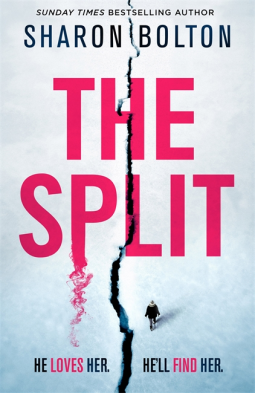
The Split by Sharon Bolton

Sharon Bolton is an author whose books I always enjoy, even though I don’t read a lot of contemporary crime fiction these days. I had expected her next book to be the promised sequel to 2018’s The Craftsman, but I was quite happy to find that The Split was a standalone thriller as her earlier standalones such as Sacrifice, Awakening and Little Black Lies have been some of my favourites.

The Split takes us to South Georgia, a remote and inhospitable island in the southern Atlantic Ocean where twenty-eight-year-old Felicity Lloyd is working as a glaciologist for the British Antarctic Survey. It’s fascinating work and Felicity knows she has been given a wonderful opportunity, but she also has another reason for accepting the job – a chance to put as much distance as possible between herself and Freddie, a man from her past of whom she is still afraid. However, it seems that even here, on the other side of the world, she has been unable to escape. Freddie is coming for her, on the last tourist boat of the summer, and has sent her a letter that fills her with fear:

My dearest Felicity,
Finally, I’ve found you. South Georgia? Wow! Know, my darling, that there is nowhere you can go that I won’t follow –

Who exactly is Freddie and what does he want with Felicity? We find out later in the book, but first we have to go back nine months in time to Cambridge where a series of murders has been committed. Felicity’s connection, if any, with these murders is unclear; all we do know is that she is still haunted by some previous traumatic experiences and has been attending sessions with a therapist. Eventually everything will be revealed, but before we get to that point there are plenty of the twists and turns that are to be expected from a Sharon Bolton novel.

When I first started to read this book it was the South Georgia setting that initially appealed to me, but although we are given some beautiful descriptions of the landscape and the cold, harsh environment, I found I wasn’t being drawn into the story as much as I would have liked. The details of whaling operations and Felicity’s research into glaciers didn’t really interest me – and being thrown straight into the middle of the story with no idea of who anybody was or what was happening didn’t help, even though I understood the reasons for that structure. It wasn’t until the action switched to Cambridge and the backgrounds of Felicity and the other characters began to be explored that I was able to settle into the novel and enjoy it.

I can’t really tell you much about the Cambridge section of the book as it would be too difficult to avoid spoilers, but it quickly becomes clear that we can’t rely on everything Felicity tells us because she has been left so badly scarred by her past experiences. Joe, her therapist, who is one of the other main characters whose perspective we see, has suffered his own recent traumas and it’s obvious that there is also more going on in his life than we are aware of at first. The truth about these two characters – and others, including Bamber, a wild and angry young woman who is very protective of Felicity, and Sean, a mysterious figure who stalks the streets of Cambridge at night – unfolds slowly, with everything coming together when we return to South Georgia in the dramatic final third of the novel. However, I found most of the twists quite easy to guess, which is unusual for a Sharon Bolton book and a bit disappointing.

This hasn’t become one of my favourites, then, but I did enjoy it after a slow start. I must find time to read Blood Harvest, the only one of her previous books I still haven’t read!

Thanks to Trapeze for providing a copy of this book for review via NetGalley.

Historical Musings #61: Art through the ages

Welcome to my monthly post on all things historical fiction.

The winner of this year’s Walter Scott Prize for Historical Fiction was announced on Friday: The Narrow Land by Christine Dwyer Hickey. Unfortunately I haven’t had time to read all of the shortlisted titles (I posted the shortlist back in March) but I hope to catch up with them eventually. The Narrow Land is about the American artists Edward and Jo Hopper and the summer they spent in Cape Cod in 1950, so I thought it would be interesting this month to look at other historical fiction novels which feature famous artists.

Most recently, I have read Mrs Whistler by Matthew Plampin, which explores the relationship between James Abbott McNeill Whistler and his model and muse, Maud Franklin. I’m currently working through a backlog of books I need to review, so you will be able to read my thoughts on that one eventually!

Thinking of others I’ve read, the first that comes to mind is Girl With a Pearl Earring by Tracy Chevalier. Set in the Netherlands in the 1660s, it tells the story of a maid in the household of the artist Johannes Vermeer. There’s also The Master of Bruges by Terence Morgan, a fictional memoir of the 15th century artist, Hans Memling.

Novels about early female artists are particularly interesting as they have received so little attention throughout history. The Creation of Eve by Lynn Cullen is a book about the Italian Renaissance painter Sofonisba Anguissola, who spent many years painting portraits at the Spanish court, while Michelle Diener’s In A Treacherous Court features Susanna Horenbout, a Flemish artist who worked as an illuminator at the court of Henry VIII. And although she’s not the main focus of the novel, Sisters of Treason by Elizabeth Fremantle is written partly from the perspective of Levina Teerlinc, another female artist working during the Tudor period and best known as a painter of miniatures.

I’m sure I must have read other books about artists but these are all I can think of at the moment (I have read plenty of books with fictional artists, but that would be a topic for a separate post), so now it’s your turn. Have you read any fiction about the lives and work of artists – of any nationality and from any time period? I would love some recommendations.

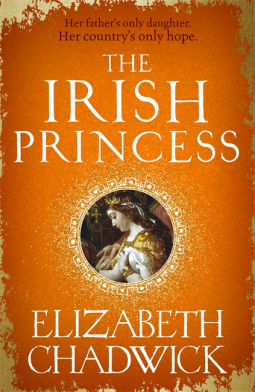
The Irish Princess by Elizabeth Chadwick

I love Elizabeth Chadwick’s books and some of her very best, in my opinion, are the ones she has written about William Marshal – described as ‘the greatest knight that ever lived’ – and his family. In The Scarlet Lion we met William’s wife, Isabelle de Clare; now The Irish Princess tells the story of Isabelle’s parents, Richard de Clare and Aoife MacMurchada. There’s not really a lot of historical information available on Aoife (even how and when she died is unknown) but I know that Elizabeth Chadwick is an author who does her research and I’m sure this novel is as accurate as she could possibly make it.

Born in Ireland in the middle of the 12th century, Aoife is the daughter of Diarmait MacMurchada, King of Leinster. Growing up during a turbulent period of Irish history, Aoife is loved by her father but also valuable to him as a way of forming alliances with those who may be able to help him gain power. When his lands are invaded by a rival and he loses his kingdom of Leinster, Diarmait is forced to flee to Wales and then to England, where he seeks the help of King Henry II. Henry gives him permission to recruit men to try to reclaim his lands – and one of those who agrees to join him is Richard de Clare, lord of Striguil.

Richard had fought on the ‘wrong side’ in the recent civil war between Henry II’s mother, Empress Matilda, and her cousin, King Stephen. Now that Henry has come to the throne of England, Richard, who had been one of Stephen’s supporters, has found himself disinherited and out of favour with the new king. When Diarmait offers him Aoife as a wife in return for his assistance in Ireland, Richard sees this as an opportunity to regain power and influence. But this is no unhappy, forced marriage; when Aoife meets the man who is to become her new husband, she finds that he is a man she is able to love and trust.

I liked Aoife and thought she was a great subject for historical fiction, particularly as she’s somebody who isn’t written about very often. Although it may seem at first that she is little more than a pawn to be used in the schemes of men, it quickly becomes clear that Aoife has a mind of her own and is quite capable of coming up with her own plans and schemes, especially in her dealings with Henry II, in order to get what she wants from life. Richard proves to be the perfect partner for her; although they don’t always see eye to eye they treat each other with respect and I loved watching them settle into their marriage over the course of the novel. Richard, nicknamed Strongbow (thought to be derived from the word ‘Striguil’ rather than a reference to his skill with a bow), is also an interesting character in his own right and I enjoyed getting to know him as well as Aoife.

Although the relationship between Aoife and Richard is at the heart of the novel – there is a stronger romantic element here than in Chadwick’s last few books, I think – their personal stories fit seamlessly into the history of the period and the events of the Anglo-Norman invasion of Ireland are clearly described so you should find it all easy enough to follow even if, like me, you start the novel with little or no knowledge. I don’t think I would rank this book amongst my favourites by Elizabeth Chadwick as I found it a bit too long for the story being told and slightly repetitive at times, but it’s still a very enjoyable read and a good opportunity to meet two historical characters who are rarely given much attention.

Thanks to Little, Brown Book Group UK for providing a copy of this book for review via NetGalley.

Six Degrees of Separation: From Normal People to The Ivy Tree

It’s the first Saturday of the month which means it’s time for another Six Degrees of Separation, hosted by Kate of Books are my Favourite and Best. The idea is that Kate chooses a book to use as a starting point and then we have to link it to six other books of our choice to form a chain. A book doesn’t have to be connected to all of the others on the list – only to the one next to it in the chain.

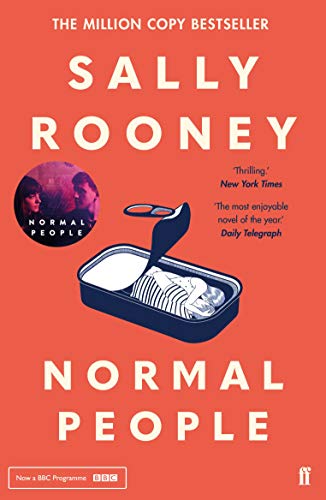
This month, the book we are starting with is Normal People by Sally Rooney. I haven’t read this book and probably won’t, but here is the blurb:

Connell and Marianne grow up in the same small town in the west of Ireland, but the similarities end there. In school, Connell is popular and well-liked, while Marianne is a loner. But when the two strike up a conversation – awkward but electrifying – something life-changing begins.

Normal People is a story of mutual fascination, friendship and love. It takes us from that first conversation to the years beyond, in the company of two people who try to stay apart but find they can’t.

Thinking of another book with the word ‘people’ in the title leads me to The Good People by Hannah Kent (1), a novel set in Ireland in the 1820s and steeped in legend, folklore and ancient beliefs.

Stories of fairies, changelings and people being swept away to fairyland feature heavily in The Good People, as they do in one of my recent reads, The Ninth Child by Sally Magnusson (2), although this book has a different setting – Scotland during the construction of the Loch Katrine Waterworks.

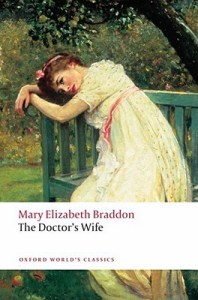
One of the main characters in The Ninth Child is Isabel, a doctor’s wife. This immediately made me think of the title character in Mary Elizabeth Braddon’s The Doctor’s Wife (3), whose name is also Isabel.

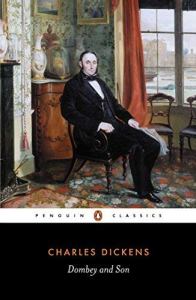
The Doctor’s Wife is a Victorian novel which explores the feelings of a woman who is trapped in a boring, unexciting marriage and dreams of adventure and romance. One of her heroines is Edith Dombey, who appears in Dombey and Son by Charles Dickens (4), the next link in my chain. I read Dombey earlier this year and will try to post a review soon!

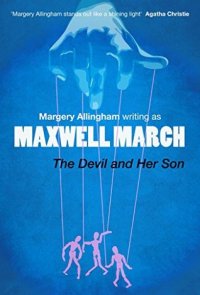
I have written in the past about the number of books with ‘daughter’ in the title. Other than Dombey and Son, I can only think of a few books I’ve read with ‘son’ in the title and one of them is The Devil and Her Son (5) by Maxwell March, a pseudonym of Margery Allingham.

The Devil and Her Son is an entertaining novel about a young woman who switches identities with a friend, only to find herself the victim of an even bigger deception. Another book about impersonations and stolen identities is The Ivy Tree (6) by one of my favourite authors, Mary Stewart – a good choice to bring this month’s chain to an end!

~

And that’s my chain for June. My links have included the word ‘people’, fairies, doctor’s wives, Edith Dombey, the word ‘son’ and identity switches.

Next month we will be starting with What I Loved by Siri Hustvedt.

My Commonplace Book: May 2020

A selection of words and pictures to represent May’s reading:

commonplace book
noun
a book into which notable extracts from other works are copied for personal use.

~

It’s extraordinary how we go through life with eyes half shut, with dull ears, with dormant thoughts. Perhaps it’s just as well; and it may be that it is this very dullness that makes life to the incalculable majority so supportable and so welcome. Nevertheless, there can be but few of us who had never known one of these rare moments of awakening when we see, hear, understand ever so much – everything – in a flash – before we fall back again into our agreeable somnolence.

Lord Jim by Joseph Conrad (1900)

~

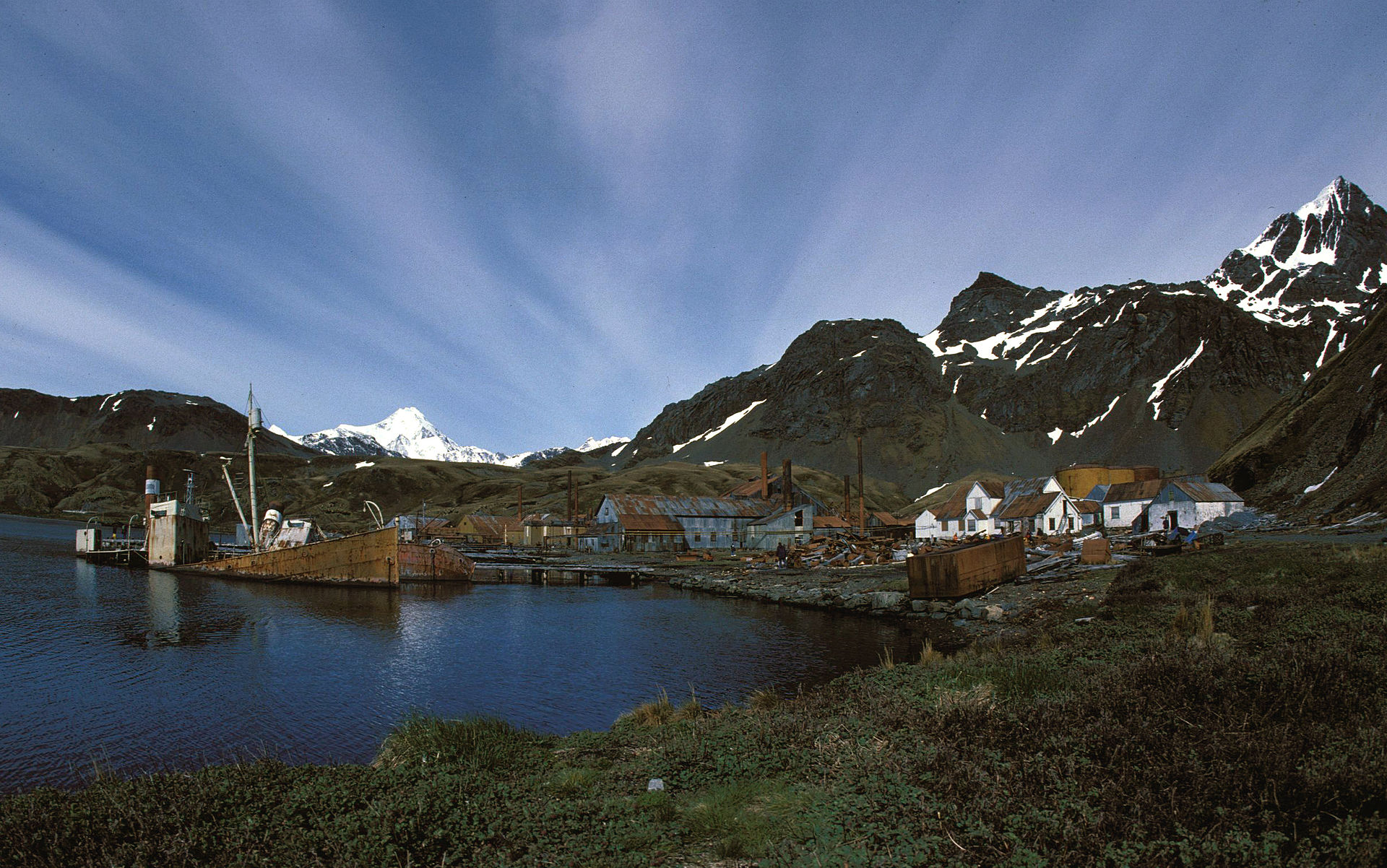
Grytviken, South Georgia

South Georgia is more beautiful than he could have imagined. Ribbon-thin streams pour over mountains that shine gold in the early sun. The water of Cumberland Bay is aquamarine, still as glass. Even the derelict whaling station is picturesque at a distance, a scattering of rust-red buildings along the curve of the coast…The mountains are astonishing, circling along the bay, towering above the tiny buildings, sweeping almost down to the sea edge. A single dirt track links the two settlements of Grytviken and King Edward Point, but elsewhere roads don’t exist. Human life can barely survive here.

The Split by Sharon Bolton (2020)

~

The ghost climbed out of a hackney carriage.
His head twitched from side to side as he checked to see if anyone was following him. Rachel Savernake was sure he’d failed to spot her. She stood deep in the shadows, on the opposite side of Westminster Bridge Road. A veil masked her face. Like the phantom, she was dressed in black from head to toe. During the half hour she’d waited for him to arrive, not one passer-by had given her a second glance. Women in mourning were a familiar sight outside the private station of the London Necropolis Company. This was the terminus for the funeral train.

Mortmain Hall by Martin Edwards (2020)

~

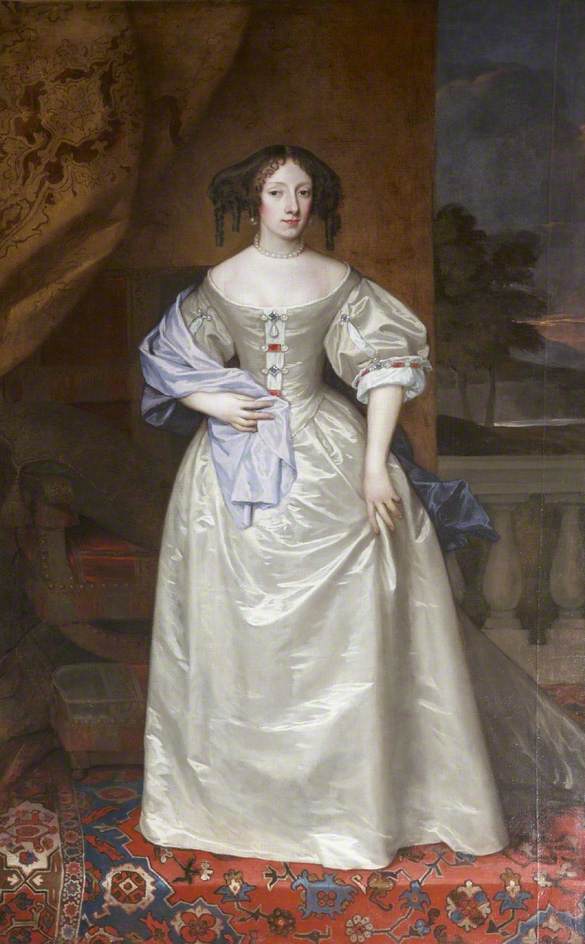
Princess Henrietta (Minette), painted by Peter Lely

It was at this moment that Minette grew up; for it was at this moment that she was recognised to be grown up and of importance. It is the unimportant who are kept back longest as children, discouraged from taking their place in the world, since there is no place for them to take. She had been one of these, but now that was changed.

Royal Flush by Margaret Irwin (1932)

~

To Amyot, as to every true lad in love, the world held no foreboding at all. He was a lad out of nowhere, innocent of allegiance to the gods of our country. He only knew the sky was clearer, every leaf brighter, every bird’s note somehow acuter, more intelligible.

Castle Dor by Daphne du Maurier (1961)

~

Favourite book read in May:

The Split

New authors read in May:

Martin Edwards

Countries visited in my May reading:

England, South Georgia, France, Patusan (fictional country)

~

Have you read any of these books? Which books did you enjoy reading in May?

20 Books of Summer – 2020

20 Books of Summer, hosted by Cathy at 746 Books, is a very simple idea: make a list of twenty books (there are also ten and fifteen book options) and read them during the summer months. However, it’s not as easy as it sounds, and although I’ve taken part for the last three years I have never managed to read all twenty books on my list. I don’t expect to succeed this year either, especially as I’m still struggling to concentrate and not reading as much as I normally would. I’m hoping that making a list of potential reads will help me to focus, even if I don’t end up reading many of them.

This year’s 20 Books of Summer starts tomorrow (Monday 1 June) and finishes on Tuesday 1 September and here is my list of books. 1-10 are review copies from my NetGalley shelf. The others are a mixture of re-reads, the next books in series I’m working through, long anticipated reads, books for other challenges and projects – and my Classics Spin book from April which I really did mean to start reading but never got round to!

~

1. Moonflower Murders by Anthony Horowitz
2. A Time to Die by Hilda Lawrence
3. The Silver Collar by Antonia Hodgson
4. The Honey and the Sting by EC Fremantle
5. Tsarina by Ellen Alpsten
6. The Sin Eater by Megan Campisi
7. The Land Beyond the Sea by Sharon Penman
8. When We Fall by Carolyn Kirby
9. Katheryn Howard, the Tainted Queen by Alison Weir
10. The Silken Rose by Carol McGrath
11. Sleeping Murder by Agatha Christie
12. City of Dragons by Robin Hobb
13. The Surgeon’s Mate by Patrick O’Brian
14. The Green Gauntlet by RF Delderfield
15. Confusion by Elizabeth Jane Howard
16. Greenwitch by Susan Cooper
17. The Wheel of Fortune by Susan Howatch
18. These Old Shades by Georgette Heyer
19. Daniel Deronda by George Eliot
20. The Horseman by Tim Pears

Have you read any of these? Will you be taking part in 20 Books of Summer this year?