My Commonplace Book: May 2020

A selection of words and pictures to represent May’s reading:
commonplace book
noun
a book into which notable extracts from other works are copied for personal use.

~

It’s extraordinary how we go through life with eyes half shut, with dull ears, with dormant thoughts. Perhaps it’s just as well; and it may be that it is this very dullness that makes life to the incalculable majority so supportable and so welcome. Nevertheless, there can be but few of us who had never known one of these rare moments of awakening when we see, hear, understand ever so much – everything – in a flash – before we fall back again into our agreeable somnolence.

Lord Jim by Joseph Conrad (1900)

~
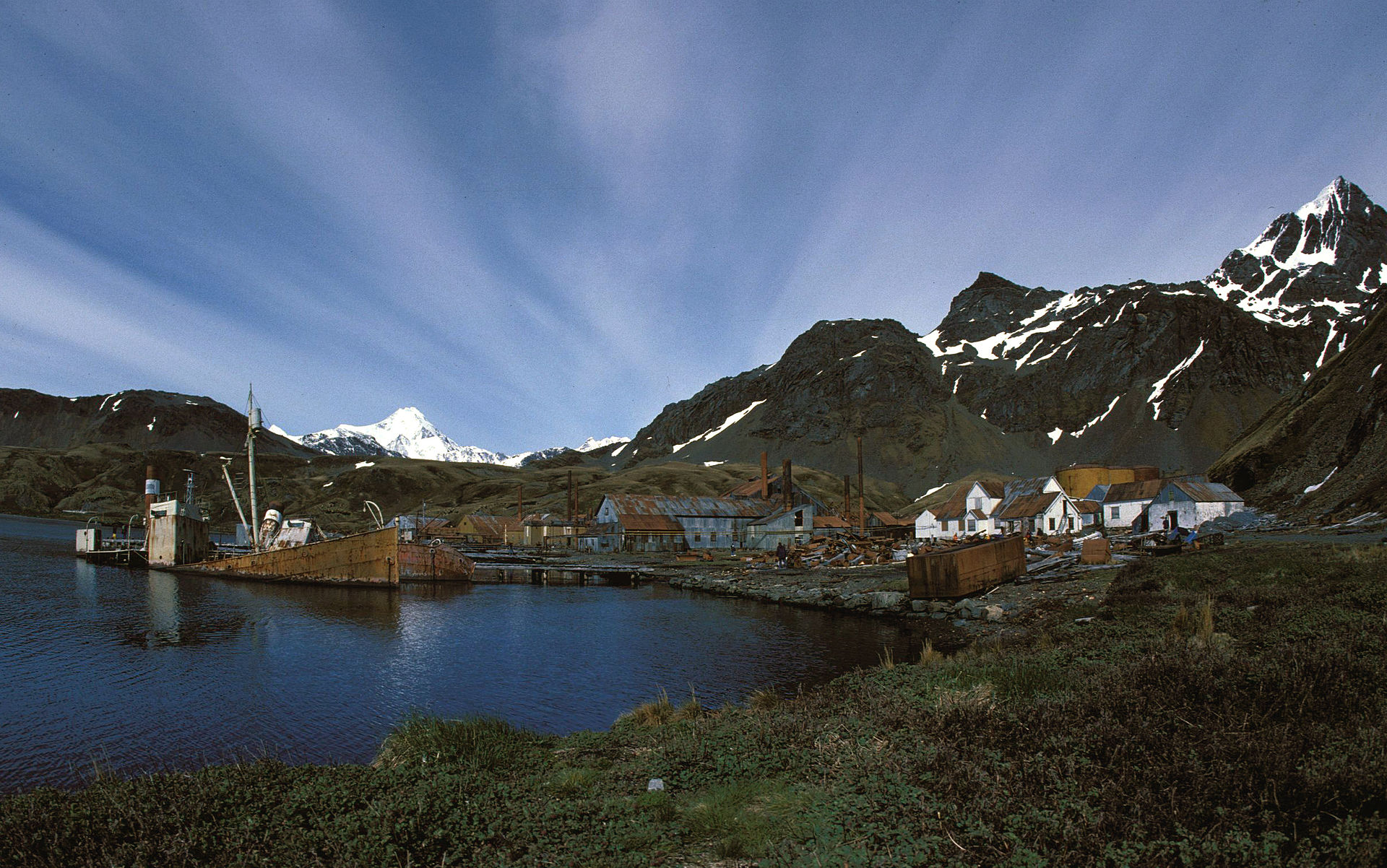
Grytviken, South Georgia

South Georgia is more beautiful than he could have imagined. Ribbon-thin streams pour over mountains that shine gold in the early sun. The water of Cumberland Bay is aquamarine, still as glass. Even the derelict whaling station is picturesque at a distance, a scattering of rust-red buildings along the curve of the coast…The mountains are astonishing, circling along the bay, towering above the tiny buildings, sweeping almost down to the sea edge. A single dirt track links the two settlements of Grytviken and King Edward Point, but elsewhere roads don’t exist. Human life can barely survive here.

The Split by Sharon Bolton (2020)

~

The ghost climbed out of a hackney carriage.
His head twitched from side to side as he checked to see if anyone was following him. Rachel Savernake was sure he’d failed to spot her. She stood deep in the shadows, on the opposite side of Westminster Bridge Road. A veil masked her face. Like the phantom, she was dressed in black from head to toe. During the half hour she’d waited for him to arrive, not one passer-by had given her a second glance. Women in mourning were a familiar sight outside the private station of the London Necropolis Company. This was the terminus for the funeral train.

Mortmain Hall by Martin Edwards (2020)

~
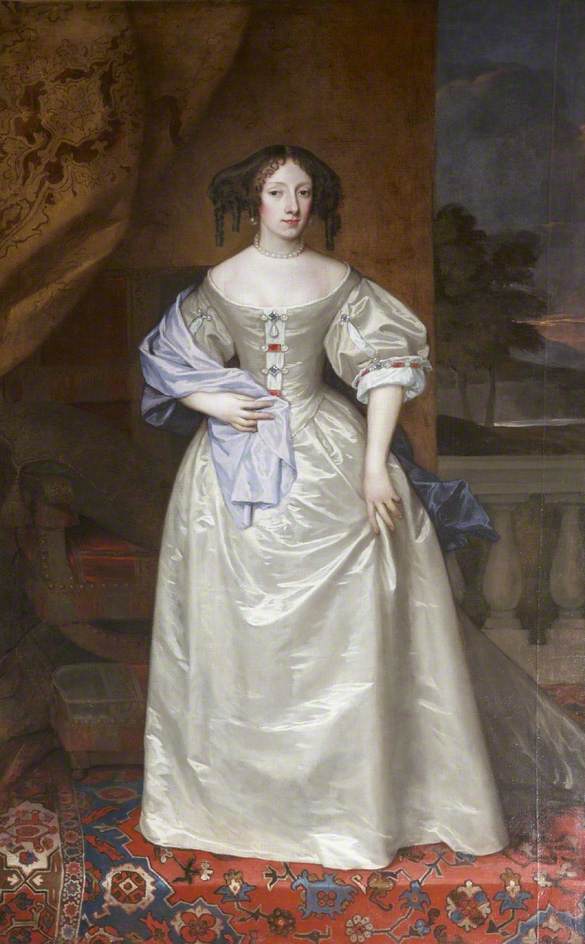
Princess Henrietta (Minette), painted by Peter Lely

It was at this moment that Minette grew up; for it was at this moment that she was recognised to be grown up and of importance. It is the unimportant who are kept back longest as children, discouraged from taking their place in the world, since there is no place for them to take. She had been one of these, but now that was changed.

Royal Flush by Margaret Irwin (1932)

~

To Amyot, as to every true lad in love, the world held no foreboding at all. He was a lad out of nowhere, innocent of allegiance to the gods of our country. He only knew the sky was clearer, every leaf brighter, every bird’s note somehow acuter, more intelligible.

Castle Dor by Daphne du Maurier (1961)

~

Favourite book read in May:

The Split

New authors read in May:

Martin Edwards

Countries visited in my May reading:

England, South Georgia, France, Patusan (fictional country)

~

Have you read any of these books? Which books did you enjoy reading in May?

20 Books of Summer – 2020

20 Books of Summer, hosted by Cathy at 746 Books, is a very simple idea: make a list of twenty books (there are also ten and fifteen book options) and read them during the summer months. However, it’s not as easy as it sounds, and although I’ve taken part for the last three years I have never managed to read all twenty books on my list. I don’t expect to succeed this year either, especially as I’m still struggling to concentrate and not reading as much as I normally would. I’m hoping that making a list of potential reads will help me to focus, even if I don’t end up reading many of them.

This year’s 20 Books of Summer starts tomorrow (Monday 1 June) and finishes on Tuesday 1 September and here is my list of books. 1-10 are review copies from my NetGalley shelf. The others are a mixture of re-reads, the next books in series I’m working through, long anticipated reads, books for other challenges and projects – and my Classics Spin book from April which I really did mean to start reading but never got round to!

~

1. Moonflower Murders by Anthony Horowitz
2. A Time to Die by Hilda Lawrence
3. The Silver Collar by Antonia Hodgson
4. The Honey and the Sting by EC Fremantle
5. Tsarina by Ellen Alpsten
6. The Sin Eater by Megan Campisi
7. The Land Beyond the Sea by Sharon Penman
8. When We Fall by Carolyn Kirby
9. Katheryn Howard, the Tainted Queen by Alison Weir
10. The Silken Rose by Carol McGrath
11. Sleeping Murder by Agatha Christie
12. City of Dragons by Robin Hobb
13. The Surgeon’s Mate by Patrick O’Brian
14. The Green Gauntlet by RF Delderfield
15. Confusion by Elizabeth Jane Howard
16. Greenwitch by Susan Cooper
17. The Wheel of Fortune by Susan Howatch
18. These Old Shades by Georgette Heyer
19. Daniel Deronda by George Eliot
20. The Horseman by Tim Pears

Have you read any of these? Will you be taking part in 20 Books of Summer this year?

Lord Jim by Joseph Conrad

Seeing a few reviews of Joseph Conrad books on other blogs recently reminded me that I’d had a copy of one of his novels, Lord Jim, unread on my shelf for a long time, so a few weeks ago I decided to read it. My previous experience with Conrad amounted to a failed attempt to read Heart of Darkness, so I wasn’t really expecting to love this book – and I didn’t, but at least I managed to finish this one!

Published in 1900, Lord Jim is the story of a young seaman – Jim – who, at the beginning of the novel is serving as first mate on the Patna, a ship packed with hundreds of Muslim pilgrims on their way to Mecca. During the voyage, the ship hits an object submerged in the sea and begins to take on water. Believing that the Patna is sinking, Jim and the rest of the crew jump into lifeboats and abandon the ship, leaving the pilgrims to their fate. Although the other crew members manage to avoid taking responsibility for what they have done, Jim will be haunted by this moment of cowardice for the rest of his life.

Our narrator, Marlow, is a sea captain who is intrigued by Jim and decides to help him rebuild his life following an official inquiry into his actions on the Patna, during which he loses his seaman’s certificate and is told he can no longer serve as an officer. Jim takes up several new positions arranged for him by Marlow, but wherever he goes his past seems to follow him until eventually he ends up at a remote trading post in Patusan, a fictional land somewhere in Asia.

I won’t say any more about what happens to Jim after he arrives in Patusan, but I will mention the structure, which I thought was both one of the most effective things about the book and the most confusing. Because the novel is narrated by Marlow, in the form of an account told to a group of friends one evening, we never actually see things from Jim’s own point of view – and within Marlow’s narration, other characters also take their turn to narrate. This leads to lots of quotation marks nested within each other as one character tells a story that had been told to them by another character and so on, until it becomes very difficult to remember who each narrator is. To make things even more challenging, events are not always related in chronological order either and often the plot will go off on a tangent, jumping forward in time for a while and telling us about something that will happen later. All of this meant that I found myself really struggling to follow the story and stay engaged with it.

The way the book is written, showing us Jim only through the eyes of others, gives more complexity and ambiguity to his character than there would probably have been if he’d had the chance to tell his story himself, but it also makes it hard to connect with Jim and to try to understand what is going on inside his head. There’s always a distance between Jim and the reader, but of course that’s surely the whole point because Jim, after the Patna tragedy, has tried to distance himself from the people who knew him before and to avoid his past catching up with him again. As a psychological study, Lord Jim is a fascinating book and I found the writing beautiful and poetic; as an adventure novel I thought it was less successful – the Patusan sections raise some interesting issues about colonialism, empire and race, but the muddled structure disrupted the flow of the story for me and I have to admit that I was glad to reach the end of the book.

I think I’ve probably tried enough Joseph Conrad now, but maybe I’ll give him another chance at some point in the future.

Coincidentally, just after finishing this book I came across the 1965 film starring Peter O’Toole on Sony Movies last week and although it diverges from the novel quite a lot in the second half, I did find it helpful to see some of the scenes and characters brought to life!

Top Ten Tuesday – and Historical Musings #60: Ten reasons I love historical fiction

It’s been a while since I took part in Top Ten Tuesday (hosted by Jana at That Artsy Reader Girl) so I decided I would join in today. This week’s topic is: “Reasons Why I Love…[a favourite book, genre, author etc]”. I didn’t get round to putting one of my Historical Musings posts together for this month – I’m finding that even though I’m on furlough with all the time in the world to read and blog, I somehow seem to be getting less done than ever before – so I’m combining the two here by listing 10 reasons to love historical fiction.

~

1. It provides the perfect opportunity to learn about other times and places.
When I read a good historical fiction novel, I am left with the feeling that not only have I been entertained by a great story, I’ve also learned something new. If a subject particularly interests me, I sometimes look for a non-fiction book so that I can add to my knowledge with some factual information, but in many cases my initial introduction to a new historical period or historical figure has been through fiction.

2. I find it much easier to retain facts gained through reading fiction rather than non-fiction.
For some reason, no matter how hard I try and no matter how fascinating the subject, I often seem to struggle to concentrate when I’m reading non-fiction. By the time I reach the end of the book I find I’ve forgotten a lot of the information I’ve just read. I am much more likely to remember names, dates and facts if they are given to me in the form of historical fiction.

3. It’s a great way of escaping from modern life for a while.
Although I do sometimes like to read contemporary fiction, I am usually much happier reading books set in the past (both classics which were actually written in the past and historical fiction). I live in the modern day, so I like my reading to take me somewhere – and sometime – different, especially at the moment with everything that’s going on in the world!

4. Reading historical fiction can be a thoroughly immersive experience.
I love books where the author has clearly gone to a lot of effort to create a complete and believable historical world – and yet the very best authors make it seem so effortless! My favourite historical fiction books often contain maps, family trees, character lists, authors’ notes and other material all of which adds to the world building. I really do like to feel as though I’ve stepped into a time machine and been transported back in time.

5. Understanding the past can help us to understand the present – and maybe even the future.
Just because a novel is set in the past doesn’t mean it can’t incorporate themes which are universal and timeless. When I read Robert Harris’s Cicero trilogy, I was struck by the similarities between modern politics and the politics of the Roman Republic, while Guinevere Glasfurd’s The Year Without Summer draws parallels between the extreme weather of 1816 and the climate change the world is experiencing today.

6. There’s so much variety!
Historical mysteries, historical romances, historical adventure novels, quick and light reads, long, challenging or ‘literary’ reads, books set in Ancient Greece, books set at the Tudor court, family sagas, classic novels such as A Tale of Two Cities, Romola or The Three Musketeers…the term ‘historical fiction’ encompasses such a wide range of different types of book that it should always be possible to find something to suit your mood.

7. I love to see how different authors portray the past and how they tackle some of history’s greatest mysteries and controversies.
Some people may wonder why I enjoy reading about the same topics over and over again. Well, no two books are exactly the same and every author has a different approach and a different way of interpreting the same historical people and events. One of my favourite periods is the Wars of the Roses and no two novels I’ve read set in that period offer the same opinion on Richard III or the disappearance of the Princes in the Tower. Only by reading as much as possible can you begin to put together a balanced picture and to start to form your own views.

8. Historical fiction can give a voice to women who were unable to tell their own story.
History has often been described as written ‘by men, about men’ and fiction can help to redress the balance. For example, I knew nothing about women like Ana de Mendoza, Princess of Eboli until I read That Lady by Kate O’Brien or Lizzie Burns until I read Mrs Engels by Gavin McCrea.

9. It’s a chance to get to know historical figures who have been forgotten or ignored.
Following on from reason 8, I have already mentioned some of the lesser-known women who have been subjects of historical fiction; there are also lots of men who have played important roles throughout history but whose names have been largely forgotten. How many people have heard of the Scottish soldier Thomas Keith and yet he had a fascinating life and career which is recounted in Blood and Sand by Rosemary Sutcliff.

10. There are just so many great stories to be told.
From the Thomas Overbury scandal to the Gunpowder Plot, from the Affair of the Poisons to the Pendle Witch Trials, the possibilities are endless!

~

Do you enjoy reading historical fiction? Can you think of any other reasons to add to this list?

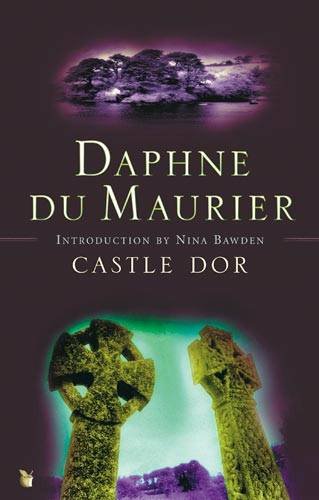
Castle Dor by Daphne du Maurier

My choice for this year’s Daphne du Maurier Reading Week (hosted by Ali of Heavenali) is one of du Maurier’s more obscure novels; in fact, it’s debatable whether it should really be considered one of her novels at all, as it was begun by another author, Sir Arthur Quiller-Couch, also known as Q. At the time of his death, Quiller-Couch had left the novel unfinished and du Maurier completed it at the request of his daughter. I have seen some very mixed reviews of this book so wasn’t expecting too much from it; however, I have now read all of her other books – apart from some of her non-fiction – so I wanted to read this one as well for completion.

Published in 1961, Castle Dor is set in 19th century Cornwall and is based on the legend of Tristan and Iseult. The novel opens with a chance encounter between Linnet Lewarne, a young woman married to a much older man, and Amyot Trestane, a Breton onion seller, who fall in love and embark on a romance which will closely follow the events of the legend. Linnet and Amyot themselves are unaware of the parallels with that much older love story, although they know that something unusual is happening to them – that they have knowledge they really shouldn’t possess, are using words that should be unknown to them, and are behaving in ways they cannot control.

Local doctor and scholar Dr Carfax has a particular interest in Cornish legends and as he observes Linnet and Amyot together, he grows more and more concerned about the relationship between them and how it is mirroring the tale of Tristan and Iseult – and he begins to wonder whether he himself is playing a role in the retelling of the story.

If you’re not familiar with Tristan and Iseult, I won’t tell you what happens, but like most legendary love stories, it’s dramatic and tragic. Something in the way the novel is written, though, makes it feel less dramatic and tragic than I had expected, which was disappointing; the characters feel strangely flat and never really come to life and I struggled to believe in the romance between Linnet and Amyot. I expect that is at least partly due to the change in authors in the middle of the book; we will never know how Q had planned to develop the characters or how du Maurier would have depicted them if she had written the book from the start.

The exact point where du Maurier takes over from Q is not known and the transition is smooth and seamless so it’s not easy to detect the change, but I definitely noticed a difference in the writing style in the later parts of the book. The earlier chapters, which we know were definitely written by Q, are more heavily laden with historical and geographical detail as Carfax and his friends discuss various sources of the Tristan and Iseult story and try to locate some of the landmarks associated with the legend. I found this interesting, but not particularly compelling; the second half of the book was faster paced and more engaging as du Maurier brought the story towards its conclusion.

Although there are some similarities with du Maurier’s later time travel novel, The House on the Strand, this book is not really representative of her work (I think it’s unfair that Quiller-Couch is not credited on the cover). Unless you’re particularly interested in Tristan and Iseult, I think it’s one you should come to after reading some of her other novels first; it definitely wouldn’t give you the best impression of the qualities I love in her work. Still, Castle Dor was an interesting read and I have now reached my goal of reading all of Daphne du Maurier’s novels!

This is also book 16/50 read from my second Classics Club list.

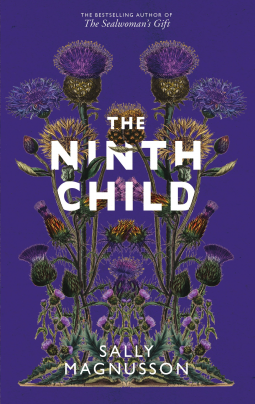
The Ninth Child by Sally Magnusson

I enjoyed Sally Magnusson’s first book, The Sealwoman’s Gift (with one or two reservations), so I had been looking forward to reading her next one, The Ninth Child, which sounded very different but equally interesting. However, although some aspects of it certainly are fascinating, there are other parts that I struggled with and on the whole I think I preferred The Sealwoman’s Gift.

The Ninth Child is set in Scotland in the 19th century and tells the story of the construction of the Loch Katrine Waterworks, an engineering scheme designed to provide clean water to the people of Glasgow. The story is told from the perspectives of several characters associated with the scheme, the main one being doctor’s wife Isabel Aird. Having suffered several miscarriages during her six years of marriage, Isabel is depressed and unhappy, a state of mind which is not improved when her husband, Alexander, informs her that they will be moving to the Trossachs where he will be involved in the building of the new waterworks.

As a doctor, Alexander believes that the recent outbreaks of cholera in Glasgow are caused by the contaminated water supply, so he is looking forward to doing something that can really make a difference to people’s lives. Isabel accompanies him, reluctantly at first, but as she settles into her new home she finds comfort in walking in the countryside by the loch, especially when she begins to believe she is receiving messages from her lost children. It is during one of these walks that she meets the Reverend Robert Kirke, a man said to have been taken by the fairies two hundred years earlier. Are the stories about Robert true – and if so, why has he returned to the land of the living and what is his interest in Isabel?

The novel is written from the perspectives of several different characters: Isabel herself; Robert Kirke; Kirsty, the wife of one of the men working at Loch Katrine; and, surprisingly, Prince Albert, who is staying at Balmoral with Queen Victoria and preparing to appear at the official opening of the new waterworks. Unfortunately, the transitions from one character’s narrative to another are not very smooth and sometimes I couldn’t immediately tell who was narrating (something which wasn’t helped by the poor formatting of the NetGalley copy I was reading and will presumably have been improved in the finished version). The Victoria and Albert storyline felt unnecessary and out of place to me, but the others all added something different and complemented each other well, with Robert and Kirsty’s stories steeped in Scottish folklore and “the hills and the hollows and the brown peat moors and the ancient mounds of the Sìthichean – that’s fairies to you.”

Robert Kirke was a real person – an Episcopalian minister who lived from 1644 to 1692 and was the author of The Secret Commonwealth of Elves, Fauns and Fairies, which was later published by Sir Walter Scott. Legends arose after Kirke’s death saying that he had been spirited away to fairyland after revealing their secrets and this is the basis of the story Sally Magnusson creates for him in The Ninth Child. I loved this aspect of the novel, which reminded me in some ways of James Hogg’s Private Memoirs and Confessions of a Justified Sinner, but I couldn’t help feeling that this magical, fantastical tale didn’t really belong in the same book as the much more realistic and factual story of the Loch Katrine Waterworks. Lots of fascinating ideas found their way into the pages of The Ninth Child, but in the end I felt that it didn’t quite work either as fantasy or historical fiction.

Thanks to John Murray Press for providing a copy of this book for review via NetGalley.

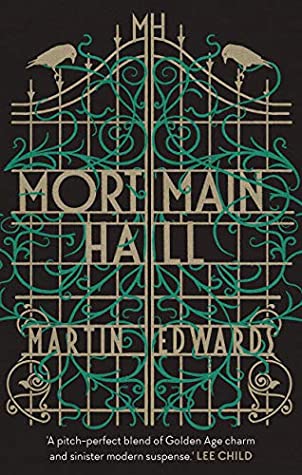
Mortmain Hall by Martin Edwards

Until recently I had only known Martin Edwards as the editor of the British Library Crime Classics anthologies, but he has also written a large number of crime novels of his own. This one, Mortmain Hall, is the second in a new series set in the 1930s and featuring Rachel Savernake, an amateur detective and daughter of a notorious judge. I hadn’t read the first book, Gallows Court, but I hoped that wouldn’t matter too much.

Beginning with an epilogue (not a prologue), and then a first chapter with the opening line “The ghost climbed out of a hackney carriage”, the novel was off to an intriguing start. As Rachel follows the ‘ghost’ into a station and onboard a train, a story begins to unfold of an author – Gilbert Payne – who faked his own death and escaped to Tangiers.

Just as I was becoming interested in Gilbert’s story, however, we leave him behind and join journalist Jacob Flint, who is in court watching a trial – a case of a possible miscarriage of justice. Also watching in court that day is Leonora Dobell, Britain’s leading criminologist who has an obsession with murder to equal Rachel’s own. Mrs Dobell has a particular interest in injustices, last minute acquittals and people who have narrowly escaped hanging. Descriptions of some of these trials follow, but we won’t find out how they are connected until the second half of the book, where Mrs Dobell invites a group of guests – including Rachel – to a house party at Mortmain Hall, her remote Gothic estate on the North Yorkshire court. But before the truth is revealed, another murder will take place…

Mortmain Hall is a fascinating murder mystery, but I do think it was a mistake to read it without having read Gallows Court first; I felt as though there must have been a lot of backstory for Rachel and the other characters that I didn’t understand. Add this to the number of different storylines introduced in the first few chapters of the book and the descriptions of various criminal trials, each with their own set of murderers, victims and witnesses, and I quickly found myself becoming confused. Eventually, though, all the threads of the novel began to come together and I could appreciate the cleverness and complexity of the plot.

The book ends with a ‘Cluefinder’ (a tradition in Golden Age detective novels), in which all of the clues that appeared throughout the story are listed and explained. I have to confess, I missed most of them, but I’m sure other readers will have been much more observant than I was!

Thanks to Head of Zeus for providing a copy of this book for review via NetGalley.