On Christmas Eve…

On Christmas Eve, Heilige Abend, Anna’s household watched curiously as she set up a little fir tree in the hall, and decorated it with apples, nuts and some paper flowers she had made.

‘Martin Luther may be a heretic,’ she told them, fixing candles to the branches, ‘but he started a delightful custom that we in Kleve like to observe. One night, he was walking through a forest when he looked up and saw thousands of stars twinkling through the branches of the trees. It inspired him to set up a fir tree in his house, lit with candles, to remind his children of the starry heavens whence our Saviour came.’

From one of my current reads, Anna of Kleve, Queen of Secrets by Alison Weir.

~

Merry Christmas to those of you who celebrate it!

Classics Club Spin #22: The result

The result of the latest Classics Club Spin was revealed yesterday.

The idea of the Spin was to list twenty books from my Classics Club list, number them 1 to 20, and the number announced by the Classics Club represents the book I have to read before 31st January 2020. The number that has been selected is…

13

And this means the book I need to read is…

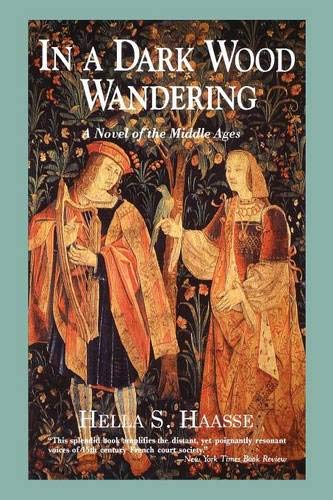
In a Dark Wood Wandering by Hella S Haasse

This novel exemplifies historical fiction at its best; the author’s meticulous research and polished style bring the medieval world into vibrant focus. Set during the Hundred Years War (1337-1453), the narrative creates believable human beings from the great roll of historical figures. Here are the mad Charles VI, the brilliant Louis d’Orleans, Joan of Arc, Henry V, and, most importantly, Charles d’Orleans, whose loyalty to France brought him decades of captivity in England. A natural poet and scholar, his birth and rank thrust him into the center of intrigue and strife, and through his observant eyes readers enter fully into his colorful, dangerous times. First published in the Netherlands in 1949, this book has never been out of print there and has been reprinted 15 times.

I’m very happy with this result! In a Dark Wood Wandering has been on my TBR for years and I’m not sure why I keep putting off reading it as it definitely sounds like my sort of book. I think it will get 2020 off to a good start!

Have you read this book? What did you think of it?

Historical Musings #56: My year in historical fiction – 2019

It’s my final Historical Musings post of 2019, which means it’s time for my annual summary of my year in historical fiction! I have kept the same categories as in the previous three years so that it should be easy to make comparisons and to see if there have been any interesting changes in my reading patterns and choices (my 2018 post is here, 2017 here and 2016 here).

I know the year is not quite over yet, but I have a lot of other posts to fit in before the end of December and I don’t think I’ll read enough historical fiction in the final two weeks of the year to significantly affect these statistics anyway.

~

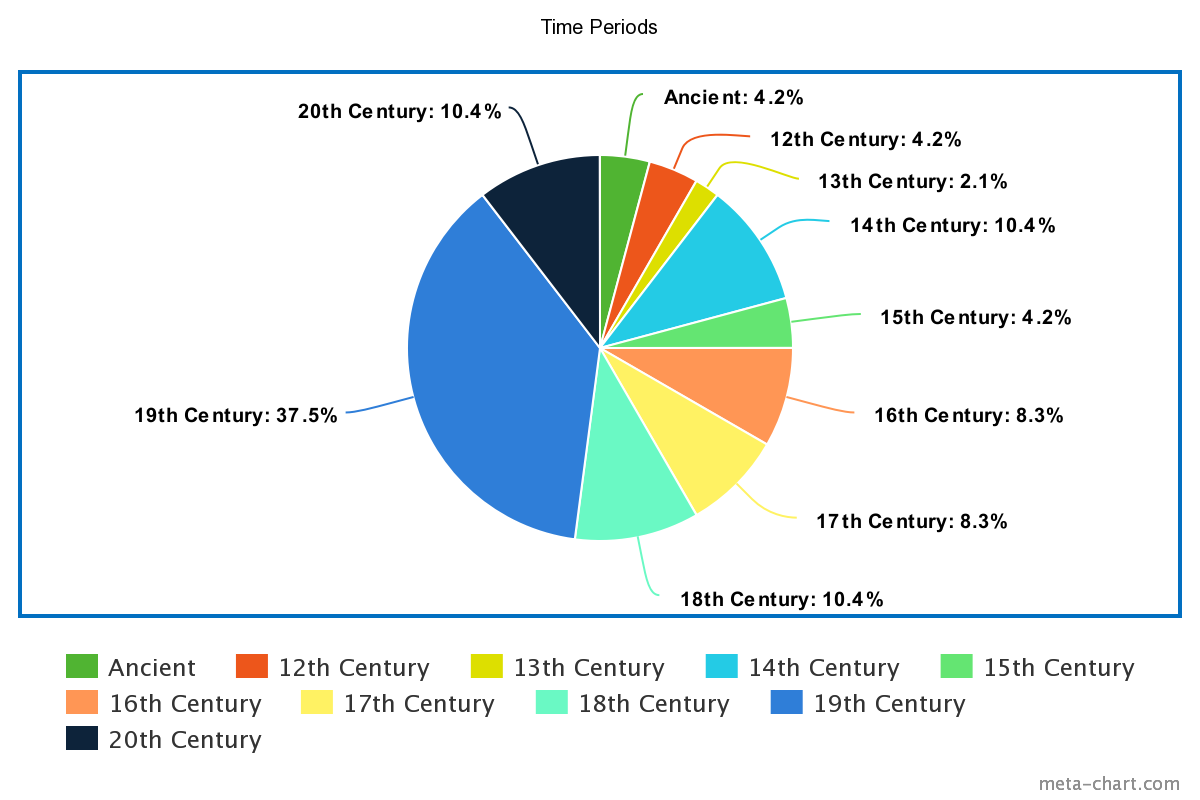
Time periods read about in 2019

The 19th century has been the most popular time period in my historical fiction reading for the last three years and yet again it’s the clear winner.

I’ve only read two books set earlier than the 12th century this year and they were The Mark of the Horse Lord by Rosemary Sutcliff and The Silver Pigs by Lindsey Davis.

~

54.2% of the historical fiction authors I read this year were new to me.

This is up from 31.2% last year (and higher than 47.3% in 2017 and 26.4% in 2016 too).

Three books I’ve read by new-to-me historical fiction authors in 2019:
Bodies of Light by Sarah Moss
The Outrageous Fortune of Abel Morgan by Cynthia Jefferies
The Confessions of Frannie Langton by Sara Collins

~

Publication dates of books read in 2019

No big surprises here. Most of the historical fiction novels I’ve read this year have been new releases with the rest spread evenly across 1950-2018 and only a few published earlier than that. The earliest was from 1810 – The Scottish Chiefs by Jane Porter.

~

20.8% of my historical reads in 2019 were historical mysteries.

Up from 14.3% in 2018.

Three historical mysteries I’ve read this year:
The House on Half Moon Street by Alex Reeve
The King’s Evil by Andrew Taylor
Blood & Sugar by Laura Shepherd-Robinson

~

I’ve read historical fiction set in 16 different countries this year.

Sadly, this is down from 22 countries in 2018 and 21 in 2017 – I’ll have to make more effort next year! As usual, I have read more books set in my own country (England) than any other, which is not a deliberate choice but more a reflection of the subjects and time periods I tend to be drawn to. France and Scotland were in second and third place this year (the opposite way round from last year).

Three books I’ve read set in countries other than my own:
The Island of Sea Women by Lisa See (South Korea)
Those Who Are Loved by Victoria Hislop (Greece)
The Glass Woman by Caroline Lea (Iceland)

~

Four historical men I’ve read about this year:

Sir James Simpson

Richard II (A King Under Siege by Mercedes Rochelle)
James Simpson (The Art of Dying by Ambrose Parry)
William Wallace (The Scottish Chiefs by Jane Porter)
Casanova (Casanova and the Faceless Woman by Olivier Barde-Cabuçon)

~

Four historical women I’ve read about this year:

Grace Darling

Constance of York (A Tapestry of Treason by Anne O’Brien)
Grace Darling (The Lighthouse Keeper’s Daughter by Hazel Gaynor)
Isabella of France (The She-Wolf by Maurice Druon)
Nest ferch Rhys (The Drowned Court by Tracey Warr)

~

What about you? Have you read any good historical fiction this year? Have you read any of the books or authors I’ve mentioned here and have you noticed any patterns or trends in your own reading?

The Art of Dying by Ambrose Parry

This is the second book in a new series of historical mysteries written by Ambrose Parry, a pseudonym used by husband and wife team Chris Brookmyre and Marisa Haetzman. The books are set in 19th century Edinburgh, where great advances are taking place in the world of medicine, and with Brookmyre being an experienced crime writer and Haetzman a consultant anaesthetist, they each bring different strengths to their collaborations.

The Art of Dying opens with a brief and dramatic section set in Berlin in 1849, before the action switches back to Edinburgh, where Will Raven has just returned from studying medicine in Europe to take up a position as assistant to the renowned obstetrician Dr James Simpson. Will had previously served as Simpson’s apprentice (as described in the previous novel, The Way of All Flesh), but he is now a qualified doctor himself and is eager to start building his own career and reputation.

Working with Simpson again brings Will back into contact with Sarah Fisher, Simpson’s former housemaid who is now assisting him at his clinic, having displayed a passion and aptitude for medicine. Sarah is deeply frustrated by the lack of equality for women, as she is sure she has the ability to become a doctor herself if only she could be given the same opportunities as men. This had been a source of conflict between Will and Sarah when we met them in the first book, but he has still been looking forward to seeing her again and is disappointed to find that during his absence she has married another man. When one of Dr Simpson’s patients dies under suspicious circumstances, however, and his rivals start to point the finger of blame, Will and Sarah must work together to try to clear Simpson’s name.

The crime element of the novel comes in the form of a number of unusual, unexplained deaths taking place around the city. At first Will is excited, thinking he has discovered a new disease to which he’ll be able to give his name, but Sarah is convinced that something more sinister is happening. My main criticism of The Way of All Flesh was the weakness of the murder mystery, but I found this one much stronger. It was easy enough to guess who or what was causing the deaths, because we are given plenty of hints right from the start, but what I didn’t know was why or exactly how it was being done and I enjoyed watching Will and Sarah (mainly Sarah at first) putting the clues together to find the culprit.

As with the first book, though, it was the medical aspect of the story that I found most interesting. In The Way of All Flesh, we learned that James Simpson had been carrying out experiments into the use of chloroform to ease the pain of childbirth. This book continues to explore the development of anaesthetics, showing not only the potential benefits for surgery and obstetrics, but also the dangers of administering too much of a substance which was still not fully understood.

I enjoyed this book more than the first one and I think it does work as a standalone, but I would still recommend starting with The Way of All Flesh so you will understand the background to Will and Sarah’s relationship. Both characters have changed and grown since the beginning of the series and I’m sure there’s lots of scope for more development ahead; I’m hoping we won’t have to wait too long to find out!

Top Ten Tuesday: My Winter TBR

This week’s Top Ten Tuesday, hosted by Jana at That Artsy Reader Girl, asks us to list ten books on our Winter TBR. As usual, I have a lot more than ten books that I’m hoping to read in the next few months, but I have chosen a selection of them to list below.

~

1. The Pale Horse by Agatha Christie – This is December’s book for the Read Christie 2019 Challenge and one that I was planning to read anyway as there’s a new BBC adaptation coming in 2020. I’ve enjoyed taking part in the challenge this year and was pleased to discover that it’s happening again next year!

2. The Ten Thousand Doors of January by Alix E. Harrow – I picked this up to start reading a month or two ago, but decided the time wasn’t right. I do still want to read it as I’ve heard so many positive things about it, so it is going to be a winter read now instead of an autumn one.

3. Big Sky by Kate Atkinson – In November I finally managed to catch up with the fourth book in the Jackson Brodie series, Started Early, Took My Dog, and now I have the fifth book, Big Sky, from the library so will need to read it soon.

4. The Wheel of Fortune by Susan Howatch – I don’t do nearly enough re-reading these days, but Susan Howatch’s Penmarric was a re-read for me in 2018 and Cashelmara in 2019, so it makes sense to pull this one off my shelf for a re-read in 2020!

5. The Sun Sister by Lucinda Riley – This is the sixth book in the Seven Sisters series and is set partly in Kenya. I’ve been putting off starting this one because of the length, but I’ll have some time off work over Christmas so will probably read it then.

6. The Dutch House by Ann Patchett – This will be my first Ann Patchett book so I don’t know what to expect, but it does sound good!

7. Greenwitch by Susan Cooper – After enjoying Over Sea, Under Stone and The Dark is Rising earlier this year, I’m looking forward to moving on to Greenwitch, the third book in the sequence.

8. The Brothers York by Thomas Penn – Most of my reading tends to be fiction, but I wanted to include at least one non-fiction book on my Winter TBR too. This book is about one of my favourite periods of history, the Wars of the Roses, so I’m looking forward to reading it.

9. The Hardie Inheritance by Anne Melville – This is the final book in a trilogy and as I loved the first two, both of which I’ve read this year, I’m hoping this will be another enjoyable read.

10. My Classics Club Spin book! I’ll find out on Sunday which book I’m going to be reading from the Spin list I posted two days ago.

~

Have you read any of these? What did you think? And what is on your own winter TBR?

Classics Club Spin #22: My list

I don’t seem to have read as many classics as usual this year, so I was pleased to see the Classics Club announce another of their Spins today. I really enjoyed my last Spin book (Two on a Tower by Thomas Hardy) so I’m hoping for another good result this time.

If you’re not sure what a Classics Spin is, here’s a reminder:

The rules for Spin #22:

* List any twenty books you have left to read from your Classics Club list.
* Number them from 1 to 20.
* On Sunday 22nd December the Classics Club will announce a number.
* This is the book you need to read by 31st January 2020.

And here is my list:

1. Daniel Deronda by George Eliot
2. Moonfleet by John Meade Falkner
3. Castle Dor by Daphne du Maurier
4. The Cloister and the Hearth by Charles Reade
5. The Grapes of Wrath by John Steinbeck
6. Claudius the God by Robert Graves
7. Fire from Heaven by Mary Renault
8. Jane and Prudence by Barbara Pym
9. A Passage to India by E.M. Forster
10. I Will Repay by Baroness Emmuska Orczy
11. Sandokan: The Tigers of Mompracem by Emilio Salgari
12. The Black Arrow by Robert Louis Stevenson
13. In a Dark Wood Wandering by Hella S Haasse
14. The Brothers Karamazov by Fyodor Dostoevsky
15. La Reine Margot by Alexandre Dumas
16. The Chrysalids by John Wyndham
17. Germinal by Emile Zola
18. High Rising by Angela Thirkell
19. The White Guard by Mikhail Bulgakov
20. The Duke’s Children by Anthony Trollope

Which of these do you think I should be hoping for?

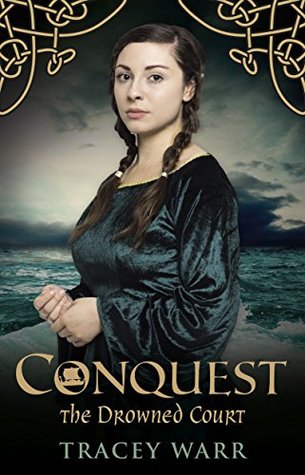
The Drowned Court by Tracey Warr

This is the second of a trilogy of novels telling the story of the Welsh princess Nest ferch Rhys. I read the first book, Daughter of the Last King, in 2017 and enjoyed learning about this little-known historical figure, so a few weeks ago I decided it was time I picked up the next volume and continued Nest’s story.

In Daughter of the Last King, Nest’s father – the king of Deheubarth – is killed in battle and the twelve-year-old Nest is taken captive. The novel goes on to describe her years of captivity in the household of the powerful Montgommery family and the eventual downfall of that family, her time as mistress to King Henry I and her marriage to Gerald Fitzwalter, the Norman castellan of Pembroke Castle.

Book two, The Drowned Court, begins in the year 1107 and we see that Nest has been settling into married life with Gerald. Although he is not the husband she would have chosen, Nest is growing fond of Gerald and the couple already have several half-Norman/half-Welsh children. However, Nest still can’t stop thinking about Owain ap Cadwgan, the Welsh prince of Powys to whom she had once been betrothed. It seems that Owain has not forgotten her either, but the time for him to come to her rescue has long passed; if he enters her life again now it can only cause trouble for Nest and her family. Meanwhile, her brother Gruffudd ap Rhys, is gathering support in an attempt to reclaim his kingdom, putting further strain on Nest’s loyalties as she becomes torn between her Welsh past and her Norman present.

As in the first book, Nest’s story alternates with the story of Sister Benedicta, a nun at Almenêches in Normandy whose brother, the Flemish knight Haith, is in the service of Nest and Gerald. Benedicta is a fictitious character and played a fairly minor role in the previous book; she is much more prominent in this one as her skills as a scribe earn her a place in a network of spies run by Henry I’s sister, Adela of Blois. Writing part of the novel from Benedicta’s point of view allows Tracey Warr to explore some of the political developments taking place in Europe which would have been out of the range of Nest’s own experience, but I have to admit that I never felt fully engaged with these sections of the book and was always glad to get back to Nest’s more personal story.

I knew nothing at all about Nest ferch Rhys before reading these books and I have resisted looking up the details of her life, so I never had any idea what was going to happen next and could just enjoy watching her story unfold and knowing that I was learning something new along the way. However, this also means that I can’t really comment on the historical accuracy. All I can say is that the book does feel as though it has been well researched, but as very little is known about Nest anyway, a lot of imagination has obviously had to be used to fill in the gaps between the historical facts.

The final book in the trilogy is not available yet but it will be called The Anarchy. I’m looking forward to reading it and seeing how Nest’s story concludes.