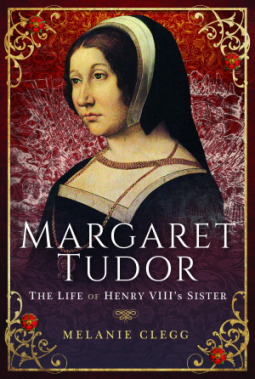
Margaret Tudor by Melanie Clegg

Henry VIII’s sister Margaret is one of the lesser known Tudors and doesn’t usually get a lot of attention either in fiction or non-fiction, yet she was important historically as both an English princess and a queen of Scotland. This very enjoyable new biography by Melanie Clegg takes us through the whole of Margaret’s life from her birth in 1489 to her death in 1541, throwing some light on her childhood, her time as queen and her unhappy second and third marriages.

As the eldest daughter of Henry VII and Elizabeth of York, Margaret had the sort of privileged childhood you would expect – perhaps more so than usual because Henry, not yet secure on his recently claimed throne, wanted to do everything he could to increase the rank and status of the new Tudor dynasty. Margaret grew up well aware of her own importance and value to her father in his efforts to arrange marriages for his children and form alliances with other royal families. In 1503, at the age of thirteen, Margaret was married to the thirty-year-old James IV of Scotland and made the long journey north while still in mourning for her mother, who had died earlier that year. It must have been a daunting experience for such a young girl, but James, despite already having several mistresses and illegitimate children, treated her with respect and kindness and helped her to settle into life in her new country.

Margaret was still just in her twenties when James was killed fighting the English at the battle of Flodden in 1513, leaving her to rule as regent for their young son who was crowned James V. She did not remain a widow for long, however, and soon married again, this time to a husband of her own choice, Archibald Douglas, Earl of Angus, a move which angered the rest of the Scottish nobility and resulted in her losing the regency. The remainder of Margaret’s life was marked by political turmoil and personal tragedy – including the death of her younger son, divorce from Angus and an equally unhappy and unsuccessful third marriage to Henry Stewart, Lord Methven.

I thoroughly enjoyed this biography. It is written in a clear and easy to read style and although it may not be academic enough for some readers (sources are just listed at the back of the book, for example, rather than being directly referenced in the text) for the general reader this is a good introduction to Margaret Tudor’s life and to this period of Scottish and English history. Melanie Clegg’s portrayal of Margaret feels quite fair and balanced, so that the reader feels some sympathy for her while also being aware of her flaws. There are parallels with the life of her granddaughter Mary, Queen of Scots (James V’s daughter), who also made some poor decisions when it came to choosing husbands!

Clegg shows how, in Margaret’s first few years in Scotland she has little interest in politics and government, but as time goes by she begins to grow in knowledge and experience. She is often torn between her adopted country and the country of her birth and does everything she can to bring about peace between Scotland and England, not always successfully. It can’t have been easy being the sister of a man like Henry VIII, after all (though maybe slightly preferable to being his wife). She should have been able to rely on him for support, especially after James is killed at Flodden, but instead he tries to make his own plans for Margaret and her children, aimed at uniting the two countries under one crown. Of course, this is what would eventually happen anyway, if not quite in the way Henry had hoped, through the marriage between Margaret’s granddaughter Mary Queen of Scots and grandson, Lord Darnley (son of Margaret’s daughter, Margaret Douglas) which resulted in the birth of the future James VI of Scotland and I of England.

I particularly enjoyed the second half of the book, which deals with the rivalries between the various factions of Scottish noblemen, the conflict between Margaret and the Duke of Albany (the next nearest in line to the throne) and her escape to England. The earlier chapters, although less dramatic, are interesting too and I loved the way James IV was portrayed. Staying in this fascinating period of history, I am looking forward to reading another new non-fiction book I have waiting on my TBR, The Afterlife of King James IV by Keith J Coleman.

Thanks to Pen and Sword for providing a copy of this book for review via NetGalley.
Six Degrees of Separation: From The Dry to The Red House Mystery

It’s the first Saturday of the month which means it’s time for another Six Degrees of Separation, hosted by Kate of Books are my Favourite and Best. The idea is that Kate chooses a book to use as a starting point and then we have to link it to six other books of our choice to form a chain. A book doesn’t have to be connected to all of the others on the list – only to the one next to it in the chain.

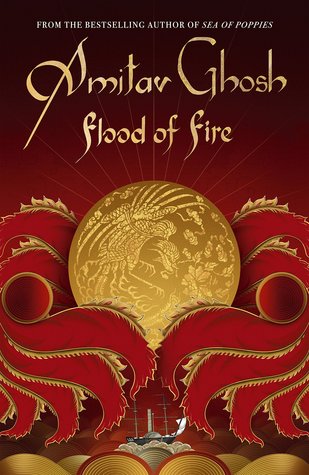
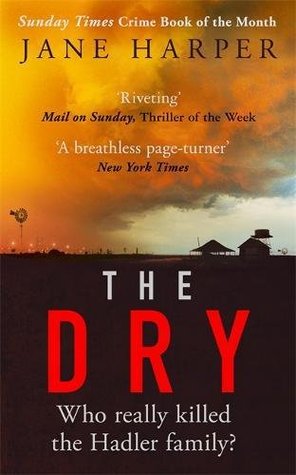
This month we are beginning with The Dry by Jane Harper. I haven’t read that book, but I know that a lot of bloggers whose opinions I trust have enjoyed it so I would like to give it a try. The story is set in a fictional Australian community during a drought. The opposite of a drought is a flood, so for my first link I have chosen Flood of Fire by Amitav Ghosh. This was the third book – and probably my favourite – in Ghosh’s Ibis Trilogy, set in India, China and at sea during the period of the First Opium War.

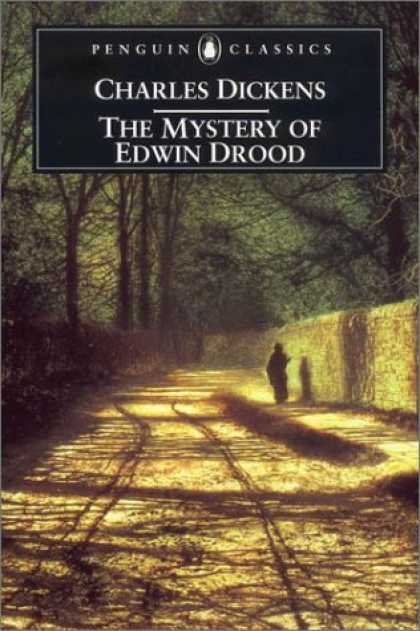
Opium provides the link to the next book in my chain, which is The Mystery of Edwin Drood by Charles Dickens. In the opening scene of the book, we see Edwin Drood’s uncle, the choirmaster John Jasper, visiting a London opium den run by a mysterious woman known as Princess Puffer.

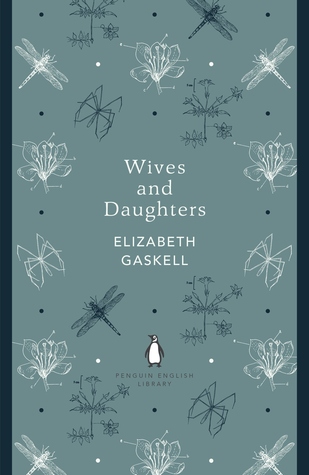
The Mystery of Edwin Drood was the novel Dickens was working on when he died and was unfortunately left unfinished. I enjoyed it and do recommend reading it, but the fact that it ends before the mystery is solved is as frustrating as you would expect! Another classic novel that was unfinished at the time of the author’s death is Elizabeth Gaskell’s Wives and Daughters, although I found the ending of that one much more satisfying.

I want to move the chain away from classic Victorian novels now, so I have selected a very different type of book for my next link, but one which also has ‘Wives’ in the title: The Secret Lives of Baba Segi’s Wives by Lola Shoneyin. The novel describes a polygamous marriage through the stories of Nigerian businessman Baba Segi and his four wives, who each take their turn as narrator.

I’ve read a few other books set in Nigeria, the most memorable being Half of a Yellow Sun by Chimamanda Ngozi Adichie, a beautiful, emotional novel which follows the lives of several characters before and during the Nigerian-Biafran War of 1967-1970.

To bring my chain to an end, I have chosen another book with a colour in the title, not yellow this time but red. That book is The Red House Mystery by A.A. Milne. Although Milne is best known for the Winnie the Pooh stories, he also wrote this detective novel, published in 1922, which I thought was great fun to read!

And that is my chain for this month. My links included droughts and floods, opium dens, unfinished novels, wives, Nigeria and colours!

In June we’ll be starting with Murmur by Will Eaves, another book I haven’t read.

My Commonplace Book: April 2019

A selection of words and pictures to represent April’s reading:

commonplace book
noun
a book into which notable extracts from other works are copied for personal use.

~

‘Books were my companions,’ I said at last, raising my voice above the wind sweeping the leaves and her skirts. ‘And I am grateful I could learn something, no matter how I came to do so. It was a way to know that lives could change, that they could be filled with adventures. There were times I pretended I was a lady in a novel or a romance myself. It might sound foolish. But it made me feel a part of a world that otherwise I could never belong to.’

The Confessions of Frannie Langton by Sara Collins (2019)

~

‘I daresay there isn’t a better liked man in England, and as for you ladies – ! The caps that have been set at him! You will be the envy of every unmarried woman in town.’
‘Do you think so indeed, Papa? How delightful that would be! But perhaps I might feel strange and unlike myself. It wouldn’t be comfortable, not to be acquainted with myself.’

Sprig Muslin by Georgette Heyer (1956)

~

Margaret Tudor

Idleness was considered to be the gateway to sin and so the young Tudor princesses were never for a moment left to their own devices, but rather provided with a constant round of activities such as needlework, which could be picked up whenever they had any spare time to fill. Although they undoubtedly had some toys, such as the usual dolls – in Margaret’s case as elaborately painted and dressed as any court lady – and carved wooden figures, right from the start their activities were all designed to prepare them for a useful and productive adulthood.

Margaret Tudor by Melanie Clegg (2019)

~

Moreover, I have very strong views on the subject. I believe that an author who cannot control his characters is, like a mother who cannot control her children, not really fit to look after them.

The Return of Mr Campion by Margery Allingham (1989)

~

What I’m saying is, I had secrets of my own, and I kept other people’s. People tended to tell me things; I think they thought I was a safe bet, not because they were interested in me, but because they were so interested in themselves. That’s how it is, you see. Some people consider themselves to be the stars of life, and they relegate everyone else to the shadows at the back of the dress circle.

After the Party by Cressida Connolly (2018)

~

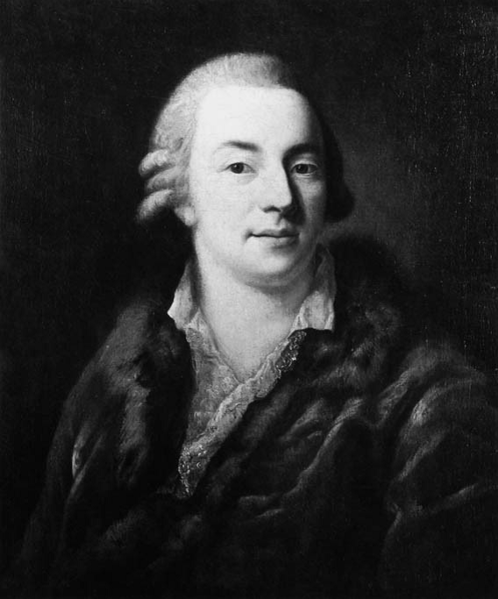
Portrait of Casanova by Alessandro Longhi

‘Because, Mademoiselle, if thoughts are not allowed to circulate freely, there can be no other freedom. But those in power do not wish it, because the more people think, the more learning and intelligence they acquire, and that flies in the face of their leaders’ plans for their subjugation.’

Casanova and the Faceless Woman by Olivier Barde-Cabuçon (2012)

~

“I believe everything out of the common. The only thing to distrust is the normal.”

The Thirty-Nine Steps by John Buchan (1915)

~

If he could last another year or so, they might give him his Wooden Foil with the silver guard, and he would be free. But his mind never got beyond the first triumphant moment of gaining his freedom, any more than it got beyond the sting of the death blow, because he had been born a slave and knew no more of what it would be like to be free than he knew of what it would be like to die.

The Mark of the Horse Lord by Rosemary Sutcliff (1965)

~

But the truth isn’t solid, like the earth; she knows that now. The truth is water, or steam; the truth is ice. The same tale might shift and melt and reshape at any time.

The Glass Woman by Caroline Lea (2019)

~

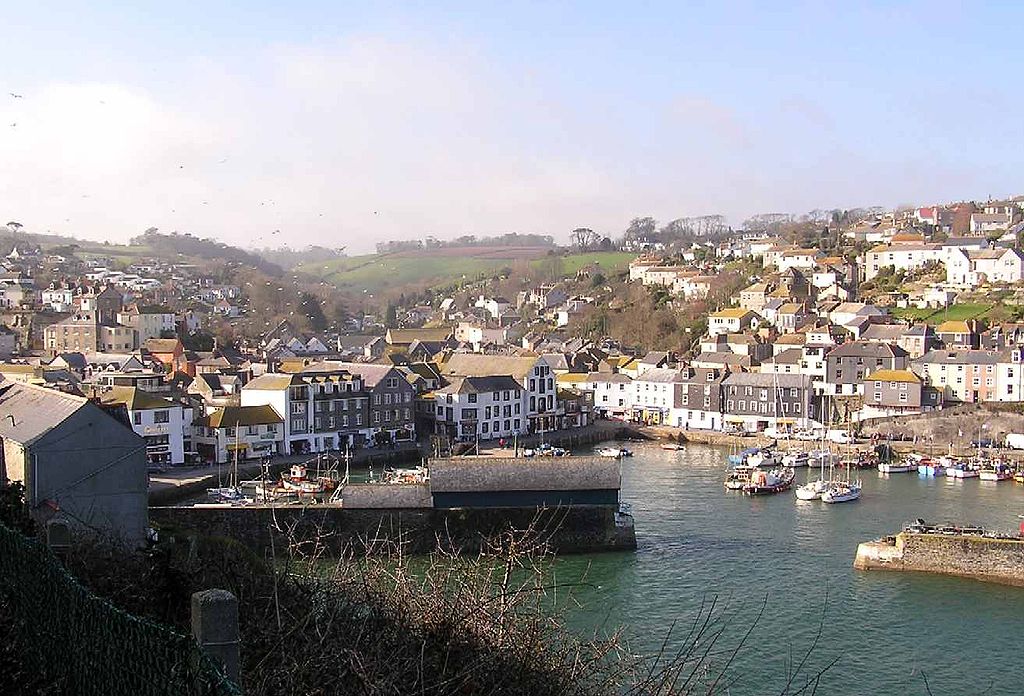
Mevagissey (the inspiration for Trewissick in the novel)

“First of all, you have heard me talk of Logres. It was the old name for this country, thousands of years ago; in the old days when the struggle between good and evil was more bitter and open than it is now. That struggle goes on all round us all the time, like two armies fighting. And sometimes one of them seems to be winning and sometimes the other, but neither has ever triumphed altogether. Nor ever will,” he added softly to himself, “for there is something of each in every man.”

Over Sea, Under Stone by Susan Cooper (1965)

~

He paused by the table as she chopped the herbs, then scraped the leaves and stems together and chopped them in the opposite direction. Bianca sensed his thoughts were still elsewhere, and she let him be.

It occurred to her that companionship exists in these small moments. Moments spent in thought, isolated, secret and silent. They string together and make a lifetime of partnership.

The Alchemist of Lost Souls by Mary Lawrence (2019)

~

‘No. The South Seas. I know that. That’s exciting enough to start with, while I’m learning to explore.’

‘You don’t learn to explore, boy. You explore in order to learn.’

Gordon puzzled over this and failed to understand.

The House of Hardie by Anne Melville (1987)

~

Favourite books read in April:

Sprig Muslin and Over Sea, Under Stone

New authors read in April:

Sara Collins, Melanie Clegg, Susan Cooper, Olivier Barde-Cabuçon, Cressida Connolly, Caroline Lea, Mary Lawrence, Anne Melville, John Buchan

Countries visited in April:

England, Jamaica, Scotland, France, Iceland, China

~

Have you read any of these books? Which books did you enjoy in April?

Top Ten Tuesday: Lines from Lymond

This week’s topic for Top Ten Tuesday (hosted by That Artsy Reader Girl) is:

Inspirational/Thought-Provoking Book Quotes

There are so many quotes I find thought-provoking or inspirational from various books that I really didn’t know where to begin, so I decided to narrow things down slightly by choosing ten from my favourite series, The Lymond Chronicles by Dorothy Dunnett. I say ‘slightly’ because all six of these books are worth quoting in full, in my opinion! Anyway, here is a selection…

~

1. “You cannot love any one person adequately until you have made friends with the rest of the human race also. Adult love demands qualities which cannot be learned living in a vacuum of resentment.”
Checkmate

~

2. “I despised men who accepted their fate. I shaped mine twenty times and had it broken twenty times in my hands.”
The Game of Kings

~

3. “Lack of genius never held anyone back,” said Lymond. “Only time wasted on resentment and daydreaming can do that.”
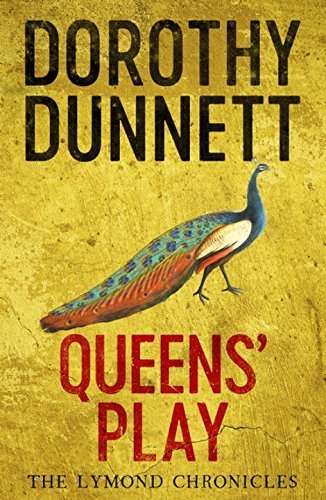
Queens’ Play

~

4. “Man is a being of varied, manifold and inconstant nature. And woman, by God, is a match for him.”
The Disorderly Knights

~

5. “I don’t like this war. I don’t like the cold-blooded scheming at the beginning and the carnage at the end and the grumbling and the jealousies and the pettishness in the middle. I hate the lack of gallantry and grace; the self-seeking; the destruction of valuable people and things. I believe in danger and endeavour as a form of tempering but I reject it if this is the only shape it can take.”
The Game of Kings

~

6. “Man is not intellect only,” Guthrie said. “Not until you reject all the claims of your body. Not until you have stamped out, little by little, all that is left of your soul.”
The Ringed Castle

~

7. “Remember, some live all their lives without discovering this truth; that the noblest and most terrible power we possess is the power we have, each of us, over the chance-met, the stranger, the passer-by outside your life and your kin. Speak, she said, as you would write: as if your words were letters of lead, graven there for all time, for which you must take the consequences. And take the consequences.”
Queens’ Play

~

8. “The more modest your expectations, the less often you will court disappointment.”
Checkmate

~

9. “I ask for no apology,” said Míkál. “I ask nothing but kindness.”
“I have learned,” said Lymond, “that kindness without love is no kindness.”
Pawn in Frankincense

~

10. “Today,” said Lymond, “if you must know, I don’t like living at all. But that’s just immaturity boggling at the sad face of failure. Tomorrow I’ll be bright as a bedbug again.”
The Disorderly Knights

~

What are your favourite lines from your favourite books?

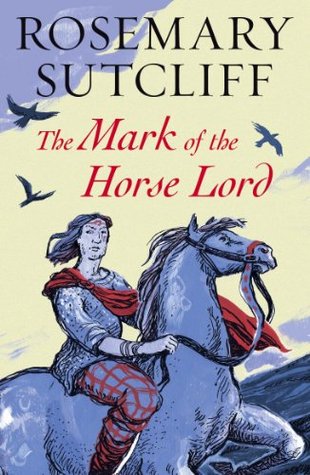
The Mark of the Horse Lord by Rosemary Sutcliff

This is the second book I’ve read for this week’s 1965 Club, hosted by Simon from Stuck in a Book and Karen from Kaggsy’s Bookish Ramblings. Like my first, Over Sea, Under Stone by Susan Cooper, Rosemary Sutcliff’s The Mark of the Horse Lord is described as a book for younger readers, although it doesn’t really feel like one. I have previously read two of Sutcliff’s adult books (The Rider of the White Horse and Blood and Sand) and I found this one just as beautifully written and with just as much to offer an adult reader.

The story is set during the time of the Roman Empire and our hero, the gladiator Phaedrus, is the son of a Greek wine merchant and his slave. The novel opens with Phaedrus, a slave himself, winning the Wooden Foil (and therefore his freedom from slavery) when he is victorious in a fight in the arena of Corstopitum, a town on the great wall built by Hadrian in what is now the north of England. His freedom is short-lived, however, when he is imprisoned after getting into trouble while out celebrating in the town, but this time he is rescued by a group of men who have noticed that he closely resembles their king and are hoping to persuade him to take part in a conspiracy.

Soon Phaedrus is heading north into what we now call Scotland, a land which at this time is home to both the Caledones (Picts) and the Dalriadain (Scots). The plan is for Phaedrus to impersonate Midir of the Dalriadain, who has been usurped by the Caledonian Queen Liadhan and blinded to prevent him from trying to rule. As he travels to the Antonine Wall and beyond, Phaedrus educates himself on the history and culture of his new people and comes to understand the significance of his new role as Horse Lord. But will he manage to convince everyone that he really is Midir – and who will win the upcoming battle between the Dalriads and the Caledones?

There was so much to enjoy about this book. I loved the descriptions of the Roman settlements along Hadrian’s Wall, including Corstopitum or Corbridge, as it is now known (I can recommend a visit to Corbridge Roman Town, run by English Heritage, if you’re ever in the area), and the contrast with the tribes in the north, where Roman rule hasn’t reached. I also found it fascinating to read about the differences in culture between the patriarchal Dalriads, whom Sutcliff tells us have ‘become a Sun People, worshipping a male God’ and the matriarchal Caledones who ‘had held to the earlier worship of the Great Mother’.

The plot was good enough to hold my interest to the end and made me think of other imposter stories I’ve read (such as The Great Impersonation and, in particular, The Prisoner of Zenda), but the setting, the time period and the themes it explores make it different and original. Also, without wanting to spoil anything, I thought the ending was perfect – both powerful and poignant. And yet, there was still something that prevented me from enjoying this book as much as I would have liked to. I’m not sure why, but I sometimes seem to struggle with books set in more ancient periods of history; I often don’t engage with the characters and storylines as thoroughly as I do when a book is set in slightly later periods. I’ve no idea why that should be, especially when an author writes as well as Rosemary Sutcliff does!

Katrina from Pining for the West has also reviewed The Mark of the Horse Lord for 1965 Club, if you would like to read a Scottish perspective on the book.

Over Sea, Under Stone by Susan Cooper

This week Simon from Stuck in a Book and Karen from Kaggsy’s Bookish Ramblings are hosting another of their club events, where bloggers read and write about books published in a chosen year. This time the year is 1965 and as usual I found a wide variety of books to choose from, as well as a few that I’d already read. Over Sea, Under Stone, the first book in Susan Cooper’s The Dark is Rising sequence was published in 1965 and as I’ve wanted to read that series for a long time this seemed the perfect opportunity to begin.

I did wonder whether I might have read this book when I was younger and forgotten about it, but as soon as I started to read I knew I couldn’t have done as it didn’t seem familiar at all. The story begins with three children – Simon, Jane and Barney – arriving in Trewissick, a small fishing village in Cornwall where they will be spending the summer holidays with their parents and Great Uncle Merry. The children have fun exploring the large house the family are renting, particularly when they move some furniture and discover a secret door leading into a dusty hidden room.

Up to this point, I thought the book had a feeling of The Lion, the Witch and the Wardrobe about it, but the plot soon goes in a very different direction when the children find an ancient manuscript inside the hidden room. The manuscript includes a drawing of what appears to be the Trewissick coastline and some text which they are unable to translate, apart from a possible reference to King Arthur and his knights. Could it be a treasure map – and if so, what sort of treasure is it leading them to?

On sharing their news with Great Uncle Merry, the children learn the true significance of the map they have found and set off to follow the clues it contains. But it seems that other people have also been looking for the map and will stop at nothing to get hold of it and discover its secrets for themselves.

Over Sea, Under Stone is described as a children’s novel, but I think it is one of those books that can be enjoyed by readers of all ages. It did often remind me of the Enid Blyton adventure stories I loved as a child, but this book feels darker than anything Blyton wrote. The villains are quite sinister and there were several points in the novel when I was genuinely worried about the children! It doesn’t help that our young heroes and heroine make some stupid decisions and choose the wrong people to trust – but they are children, after all! I liked the way Susan Cooper gives each of them his or her own strengths and weaknesses and their own chance to shine and play a part in solving the mystery.

The Cornish coastline is beautifully described and although the village of Trewissick is fictional, it felt very real to me and I wasn’t surprised to learn later that Susan Cooper based it on Mevagissey, a real fishing port in Cornwall. The coast, with its rocks and caves, beaches, cliffs and bays, is an integral part of the story and not just a pretty setting!

This is a great book and I do regret not reading it as a child, as I’m sure I would have loved it then. I will definitely be continuing with the rest of the series, although I’m aware that the other books are a bit different and have a stronger fantasy element.

~

I will have another 1965 read to tell you about later in the week, but for now here are some other 1965 books I have previously reviewed on my blog:

Airs Above the Ground by Mary Stewart

Stoner by John Williams

The Flight of the Falcon by Daphne du Maurier

Classics Club Spin #20: The Result

The result of the latest Classics Club Spin has been revealed today!

The idea of the Spin was to list twenty books from my Classics Club list, number them 1 to 20, and the number announced today (Monday) represents the book I have to read before 31st May 2019. The number that has been selected is…

19

And this means the book I need to read is…

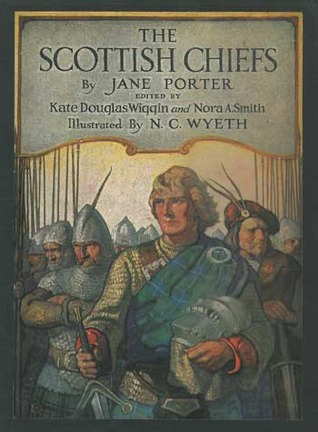
The Scottish Chiefs by Jane Porter

I don’t know much about this book but had added it to my list because it had been recommended to me a few times and sounded similar to Sir Walter Scott’s books, which I enjoy. It was published in 1810 and is the story of William Wallace and Robert the Bruce. I’m hoping it will be more fun than my last spin result, Dombey and Son, which I still haven’t managed to finish!

Have you read this book? If you participated in the spin, are you happy with your result?