Top Ten Tuesday: Books on my Spring 2019 TBR

This week’s Top Ten Tuesday, hosted by That Artsy Reader Girl, asks us for ten books on our spring TBR. I have a lot more than ten books that I would like to read this spring, but I’ve chosen a selection of them to list below.

~

1. The Confessions of Frannie Langton by Sara Collins – I’ll be reading this soon for a blog tour on the 10th of April.

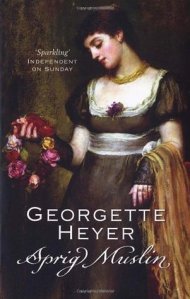
2. Sprig Muslin by Georgette Heyer – I have a few unread Heyer novels on my shelf, but this one is a library book so I will need to read it first.

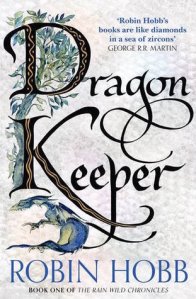
3. The Dragon Keeper by Robin Hobb – Having read and loved Hobb’s Farseer Trilogy, Liveship Traders Trilogy and Tawny Man Trilogy over the last few years, I think it’s time to move on to her next series, The Rain Wild Chronicles!

4. The Duke’s Children by Anthony Trollope – This is on my Classics Club list. I’m looking forward to reading it as it will bring the wonderful Palliser series to a close and will mean I can then try some of Trollope’s standalones.

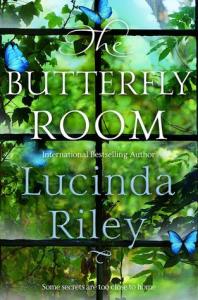
5. The Butterfly Room by Lucinda Riley – I’ve received a review copy of Lucinda Riley’s latest novel, which is being published in May.

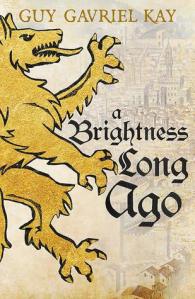
6. A Brightness Long Ago by Guy Gavriel Kay – On my NetGalley shelf. I can’t wait to read Kay’s new historical fantasy novel inspired by Renaissance Italy.

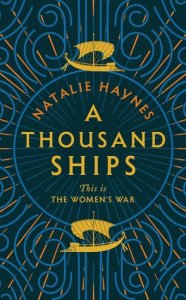
7. A Thousand Ships by Natalie Haynes – There have been several retellings of the Trojan War from female perspectives recently and this is another one.

8. The Wheel of Fortune by Susan Howatch – I’ve just finished re-reading Howatch’s Cashelmara and it has left me wanting to move straight on to a re-read of this one.

9. The Surgeon’s Mate by Patrick O’Brian – It’s been far too long since I last read an Aubrey/Maturin book. This will be my seventh.

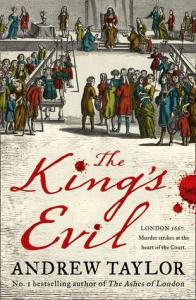
10. The King’s Evil by Andrew Taylor – I enjoyed the first two books in Andrew Taylor’s Marwood and Lovett series, so I’m expecting to enjoy this one too.

~

As well as these books, I will be continuing to take part in the Agatha Christie Challenge for which I’ve been reading one Christie novel every month, and I also need to choose something to read for the upcoming 1965 Club in April. I have lots of books to explore from this year’s Walter Scott Prize longlist too! I think it’s safe to say that I won’t be running out of things to read in the near future.

Have you read – or will you be reading – any of these books? What is on your spring TBR?

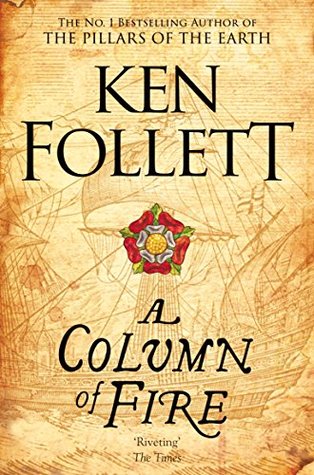
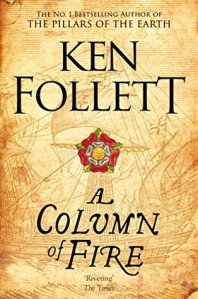
A Column of Fire by Ken Follett

Years before I started this blog – sometime in the 1990s, anyway – I read The Pillars of the Earth, Ken Follett’s epic novel about the building of a cathedral in the English market town of Kingsbridge during the 12th century. I found it much more exciting than it had initially sounded and I was soon gripped by the evil machinations of William Hamleigh, Prior Philip’s battle against the ruthless Bishop Waleran, and the seemingly doomed romance between Jack and Aliena. I’m sure I would be much more critical of it if I re-read it today and more likely to be bothered by the historical inaccuracies, but I loved it at the time. I wasn’t expecting a sequel, but one was published in 2007 – World Without End, set in the same fictional town (or city, as it has now become) more than a century later. I enjoyed that one too, although in some ways it felt to me like the same story being told again.

A Column of Fire, published in 2017, takes us back to Kingsbridge again for a third story, set this time in the 16th century. As the novel opens in 1558, Ned Willard is returning home to Kingsbridge from Calais, where he has spent a year working in the family business. Ned can’t wait to be reunited with his mother, Alice, who runs the Kingsbridge branch of the business, but there’s also someone else he is looking forward to seeing again – Margery Fitzgerald, the young woman he hopes to marry. Unfortunately for Ned, things have changed during his absence and Margery is now betrothed to Bart, the heir of the Earl of Shiring (and those of you who have read the other Kingsbridge novels will remember exactly what those Earls of Shiring are like). Margery would prefer to marry Ned, but her parents won’t allow it – the Fitzgeralds, like the Earl and his family, are Catholic, but the Willards are suspected of having Protestant sympathies.

While Mary Tudor still sits on the throne of England, families like the Fitzgeralds and the Shirings may have the upper hand, but Ned knows that one day things will change. Mary’s half-sister Elizabeth, promising greater religious tolerance, is waiting for her turn to wear the crown and, when she does, she will need men like Ned to be her trusted servants and spies.

Across the sea, meanwhile, France is also experiencing a period of religious conflict and turmoil as the ambitious and staunchly Catholic Guise brothers, whose young niece Mary, Queen of Scots has married the heir to the throne, engage in a power struggle with Catherine de’ Medici, the Queen of France. In Paris, we meet one of the villains of the novel, Pierre Aumande, a man who believes he has Guise blood and will do anything to inveigle his way into that family – including hunting down French Protestants and sending them to their deaths.

So far, I have only touched on a few of the characters and storylines this novel contains. There are many, many more. We follow the adventures of Ned’s brother Barney in Spain and then the New World. We meet Sylvie Palot, a French Huguenot who works in a Parisian bookshop, buying and selling forbidden literature. We see the story of Mary, Queen of Scots play out as she returns to Scotland and eventually becomes a prisoner on the orders of Elizabeth I. And we witness the Siege of Calais, the St Bartholomew’s Day Massacre, the Spanish Armada and the Gunpowder Plot. The novel has a huge scope, and that, I think, was a problem. There’s too much happening – far too much for one book – and that made it difficult for me to become truly absorbed in the lives and struggles of any of the characters. There’s no depth, no passion, no emotion; I didn’t really care about Ned and Margery’s romance, and I didn’t hate Pierre and the other villains as much as we were probably supposed to either.

That doesn’t mean I found nothing to like about this book. It’s certainly a fascinating period of history to read about and I can understand why Follett didn’t want to leave anything out, even though I would have preferred a tighter focus on just a few of the historical figures and incidents, rather than everything and everyone! The main theme of religious change and conflict was handled well. I really enjoyed the first half of the book but my interest started to wane as characters were abandoned for long stretches while others were introduced and as we spent more time in France, Spain, Scotland and the Caribbean, almost losing sight of Kingsbridge entirely.

I’m not really sure why this book involved Kingsbridge at all; I’m assuming it was probably done for marketing purposes, to pull in readers who enjoyed the previous two novels, but I think if it had been written as a standalone with no connection to the other two I would have had different expectations and might have judged it less harshly. One of the things I liked about The Pillars of the Earth and World Without End was that they were set in and around Kingsbridge Cathedral itself. We get to know the people who live and work in the city and there’s a strong sense of community as they come together to confront their enemies and face the threats of the outside world, but A Column of Fire is a different sort of story with a different feel. If anyone else has read this book I would be interested to know what you thought of it and how you felt it compared to the first two books.

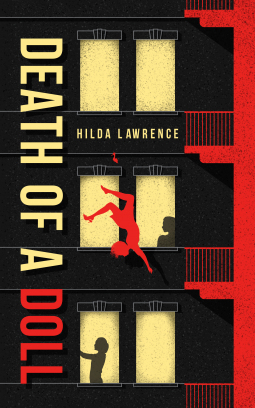
Death of a Doll by Hilda Lawrence

Hilda Lawrence was an American crime author best known for her series of novels featuring the private investigator Mark East, published during the 1940s. This one from 1947, Death of a Doll, is the third in the series and has been reissued this month by Agora Books. Lawrence is one of several ‘forgotten’ or lesser known crime writers to be brought back into print by various publishers recently; sometimes it’s easy to see why an author’s books have been allowed to fade into obscurity, but I was very pleasantly surprised by this one and am hoping the rest of the Mark East series will be made available again too.

The story is set in and around Hope House, a home for young women in New York City run by Monica Brady and her assistant Angelina Small. The home provides seventy girls with a safe refuge where, for a small fee, they can have a bed, hot water, two meals a day and the opportunity to make new friends. At the beginning of the novel we meet Ruth Miller, a woman in her twenties who works in Blackmans department store and who is excitedly telling her regular customer, Roberta Sutton, that she has been offered a place at Hope House. We don’t know why Ruth has found herself with nowhere else to go and nobody to turn to, but she gives the reader a hint that there has been some sort of trouble in her past. Later that day, we see her arriving at her new home, suitcase in hand, full of optimism for the future.

Two days later, Ruth is dead, having fallen from a window on the seventh floor of Hope House during a party at which all of the girls were dressed in rag doll costumes. Suicide is assumed, but Roberta is not convinced. Why would Ruth have killed herself just as her life was beginning to improve? What the reader knows, but the characters don’t – although some of them suspect – is that during those few days at Hope House, Ruth came face to face with someone from the past…but who was it and how could this have led to her death?

Roberta calls in her private investigator friend, Mark East, who arrives in New York accompanied by two more amateur detectives, the elderly spinsters Miss Beulah and Miss Bessy. It’s going to be difficult to know where to start – there’s so little known about Ruth and her background, and the fact that all of the girls were dressed in identical doll costumes on the night of her death doesn’t help – but surely between the three of them they can solve the mystery?

I really enjoyed this book. Although the story is slow to unfold – a lot of time is spent on exploring the relationships between the various girls and employees at Hope House – I still found it difficult to put down. I didn’t guess the culprit correctly, but felt as though I probably should have done! I did suspect almost all of the ‘dolls’ at one point or another, constantly changing my mind as more information was revealed. The setting is wonderful too; I could vividly picture the interior of Hope House, with Kitty answering the phones on the switchboard, Jewel operating the elevator, and Miss Brady and Miss Small seeing that everything ran smoothly, while making ambitious plans for the future.

My only problem with the book was that I felt there were too many characters and that we saw things from too many different viewpoints. I’m not sure whether we really needed three detectives either. I think Beulah and Bessy were probably included to lighten the mood and provide some comedy, but they didn’t add much to the story in my opinion and I would have preferred to have spent more time following Mark’s investigations instead. Otherwise, this was a great first introduction to Hilda Lawrence’s work and an unusual combination of the cosy and the dark and suspenseful.

I received a copy of this book for review via NetGalley.

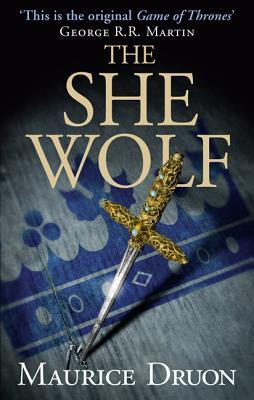
The She-Wolf by Maurice Druon

First published in French in 1959 as La Louve de France (The She-Wolf of France), this is the fifth novel in Maurice Druon’s Accursed Kings series. The series – which began with The Iron King – tells the story of Philip IV of France and his descendants, a line of kings “cursed to the thirteenth generation” by the Grand Master of the Knights Templar, whom Philip sent to burn at the stake. So far, the curse seems to have been very effective, as in the first four novels we have seen poisoned kings, strangled queens, failed marriages and family feuds.

In this book, the action switches to England for a while, where Isabella – Philip’s daughter – is unhappily married to the English king, Edward II. Feeling that her husband cares more for his favourite, Hugh Despenser the Younger, than he does for her, Isabella has turned to Roger Mortimer for comfort. As the novel opens, Roger escapes from imprisonment in the Tower of London and flees to France, where he hopes to gain support to return to England at the head of an army.

Meanwhile, Isabella’s brother, Charles, has just become France’s fourth king in eight years following the death of their elder brother, Philippe V. The new Charles IV proves to be a weak king but others who surround him at court continue to plot and scheme, looking for ways to gain power for themselves. But unknown to Charles, the person who could pose the biggest threat to his reign is far away, growing up in the care of Marie de Cressay, his existence known only to a select few.

It’s been a few years since I read the fourth book in this series (The Royal Succession) and I worried that I might struggle to remember what had happened in the previous novels. Luckily, the prologue gives us a reminder and then fills us in on the details of the reign of Philippe V the Long, who had just taken the throne at the end of The Royal Succession and is dead before this book begins. I was sorry that we weren’t able to spend more time with Philippe in The She-Wolf as I thought he was a much more interesting character than his brother Charles, but I’m sure Druon must have had his reasons for not writing much about that period and moving quickly on to the next king.

So far, most of the history covered in this series has been new to me and the books have given me a good introduction to the reigns of the Capet kings of France. With The She-Wolf I was on more familiar ground as there was more focus on English history and Isabella is someone I have read about several times before (both in non-fiction such as Helen Castor’s She-Wolves and in novels including Isabella by Colin Falconer and, indirectly, Susan Howatch’s Cashelmara which I’m currently re-reading). I was a bit disappointed that Isabella isn’t really given a chance to shine in this book; despite her strength and intelligence, it is Roger Mortimer who is shown to be in control and making all the decisions. Having said that, I did like the fact that she and Roger are portrayed as being genuinely in love; this helped me to believe in their characters and their relationship.

Edward II comes across very badly in this book (which does usually seem to be the case and I can’t really think of any positive portrayals of him in fiction). Druon takes the view that Edward’s relationships with Piers Gaveston and then Hugh Despenser were of a homosexual nature, although there is some debate about this today, and he also sticks with the traditional story surrounding the method of Edward’s death, which again has not been proved. The book was written in the 1950s, though, and I assume they were probably the accepted theories at that time. I can’t comment at all on the accuracy of the French sections of the novel, but I think it’s clear that Druon did his research – as with the other books in the series, there’s an extensive section of historical notes at the back which are referenced throughout the text. And as ever, Humphrey Hare’s English translation is clear and easy to read.

I was disappointed that the battle of wits between the scheming Mahaut d’Artois and her nephew Robert, which has played such a big part in the previous novels, was pushed into the background and I was also sorry not to see more of two other recurring characters, Marie de Cressay and Guccio Baglioni. For those reasons, although I did enjoy this book, it’s not one of my favourites in the series, but I’m still looking forward to reading the final two and finding out what happens in the next one, The Lily and the Lion.

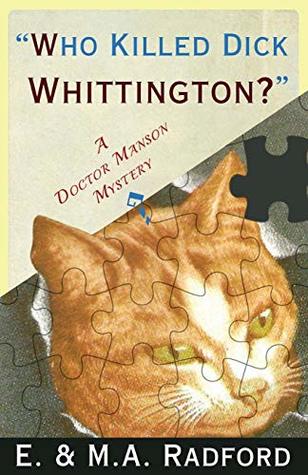
Who Killed Dick Whittington? by E and MA Radford

Dean Street Press have recently brought an intriguing selection of Golden Age crime novels back into print, including several by husband and wife writing team E and MA (Edwin and Mona Augusta) Radford. This book – and the other two Radford titles which have just been reissued, Murder Jigsaw and Murder Isn’t Cricket – all feature Harry Manson, a detective and forensic scientist who works at Scotland Yard’s Crime Research Laboratory.

Who Killed Dick Whittington?, published in 1947, has a theatrical setting and takes place during the Christmas season. The Henri de Benyat theatre company are performing Dick Whittington at the Pavilion in Burlington-on-Sea and, in the tradition of all good British pantomimes, the hero is played by a woman. Her name is Norma de Grey and to say she is not popular with the rest of the cast would be an understatement. When she is killed with a lethal dose of prussic acid one night while on stage in the role of Dick, suspicion falls on the actor playing her Cat – but when the Cat is also found poisoned, it seems that someone else must have been responsible.

Doctor Manson is called in to investigate, but as well as the Dick Whittington poisonings he is also busy with another case, this one involving a series of suspicious fires which have possibly been caused deliberately as part of an insurance fraud. At first the two cases seem entirely separate, but eventually links begin to emerge between the two. Manson uses a range of scientific methods to carry out his investigations and I thought this aspect of the book was fascinating. As it was written in the 1940s, there were obviously fewer, less sophisticated techniques available to Manson than there would be to modern day scientists, but I was still impressed by how much he was able to discover by, for example, weighing the ash found at the fire scenes or analysing the hairs inside the Cat costume.

I also found the details of theatrical life interesting. Apparently Mona Radford had been an actress herself and this does come through in the novel, which shows a deep understanding of everything involved in rehearsing and staging a pantomime, including the things that go on behind the scenes! When a book is written by a pair or team of writers, I am always curious to know how they broke down the writing duties amongst themselves. Well, according to the introduction to this new edition:

The plot was usually developed by Mona and added to by Edwin during the writing. According to Edwin, the formula was: “She kills them off, and I find out how she done it.”

Another thing I liked about this book was the way the authors make it clear that they have tried to give the reader all the clues needed to be able to identify the culprit. There are several ‘Interludes’ at certain points in the novel which are addressed directly to the reader, asking us to put together what we have learned so far and solve various aspects of the mystery. I obviously wouldn’t make a good detective as I still wasn’t able to work any of it out despite the hints, but I was happy to wait until Doctor Manson revealed the truth at the end of the book.

I thought this was a very entertaining mystery by two authors I had never come across before. I’m interested in reading more books by E and MA Radford now.

Thanks to Dean Street Press for providing a copy of this book for review.

Historical Musings #48: The Welsh Edition

Welcome to my monthly post on all things historical fiction!

This month Paula of The Book Jotter is hosting her first ever Wales Readathon* (also known as Dewithon 19). I have started to read How Green Was My Valley by Richard Llewellyn but I’m not sure if I’ll have time to finish it and write a review before the end of March so, as I do still want to participate in some way, I thought it would be interesting to devote this month’s Historical Musings post to Welsh historical fiction.

I’m listing below some of the historical novels set in Wales that I’ve already read and written about on my blog (some are by Welsh authors and some are not), but I’d love to hear your recommendations too.

Starting with the book set in the earliest time period, Daughter of the Last King by Tracey Warr takes us back to 11th century Wales and introduces us to Nest ferch Rhys, daughter of the last king of Deheubarth. I have the sequel, The Drowned Court, on my shelf to read soon.

Then there’s Sharon Penman’s Welsh Princes Trilogy, which begins with Here Be Dragons, the story of Llewelyn ab Iorweth (known as Llewelyn the Great) and his wife Joanna, an illegitimate daughter of England’s King John. The second book in the trilogy, Falls the Shadow, is set several years later and tells the parallel stories of Simon de Montfort’s rebellion against Henry III and, in Wales, the rivalries between Llewelyn’s sons and grandsons. I still need to read the final book, The Reckoning.

A Morbid Taste for Bones by Ellis Peters, the first in her Cadfael mystery series, involves a journey to a Welsh village to bring back a saint’s relics to Shrewsbury Abbey.

Sleeper’s Castle by Barbara Erskine is a time slip novel set in Hay-on-Wye, close to the border between England and Wales. The historical thread of the story involves a young woman who becomes caught up in Owain Glyndŵr’s rebellion against the rule of Henry IV of England.

In First of the Tudors, Joanna Hickson looks at the Welsh origins of the Tudor dynasty, with a focus on Jasper Tudor, Earl of Pembroke, uncle of the future Henry VII.

The Child From the Sea by Elizabeth Goudge is a beautifully written novel about Lucy Walter, a mistress of King Charles II and the mother of his eldest son, the Duke of Monmouth. Lucy grows up at Roch Castle, on the Pembrokeshire coast, and her Welsh childhood is described in vivid detail.

My Beautiful Imperial by Rhiannon Lewis begins in 19th century Wales with a young boy dreaming of a life at sea before developing into a fascinating novel about the Chilean civil war.

Moving forward into the 20th century, I remember enjoying Blow on a Dead Man’s Embers by Mari Strachan (renamed simply Dead Man’s Embers since I read it a few years ago). The book is set in the 1920s and follows the story of a woman whose husband returns home to Wales after the First World War suffering from shell shock.

I found all of the books mentioned above interesting in different ways and would recommend any of them. But now it’s your turn…

Have you read any of these books? Can you think of any other good historical fiction novels set in Wales?

* It’s also Reading Ireland Month – you can see my earlier post on Irish historical fiction here.

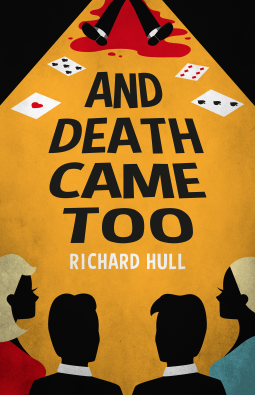
And Death Came Too by Richard Hull

Richard Hull’s The Murder of My Aunt was one of my favourite books read in 2018; I loved the humour, the narrative voice and the clever plot twists and couldn’t wait to read more of the author’s classic crime novels. The one I chose next was And Death Came Too, which has recently been reissued by Agora Books.

First published in 1939, the novel gets off to a very intriguing start, introducing us to four friends who are attending a series of charity balls at Trevenant Hall when they receive an invitation from a neighbour, Arthur Yeldham, who has recently moved into nearby Y Bryn House. The four – Martin Hands and his sister Patricia; Patricia’s fiancé Gerald Lansley; and a friend, Barbara Carmichael – don’t really want to go, but reluctantly accept and set off together for Y Bryn.

On their arrival, they are surprised to find that there is no sign of their host. Instead, there are two strangers sitting at the table: a man playing a game of solitaire who says his name is Mr Salter, and a mysterious woman whose name nobody knows. As you can imagine, the conversation is extremely awkward, especially when the unknown woman suddenly stands up and leaves with no explanation. Next, a police constable enters the room and helps himself to a drink before announcing that there has been a murder: Arthur Yeldham has been found dead in his study but no weapon has been found and the time of death is unclear. With at least six suspects to choose from – and a range of clues which could point the way to the truth or be complete red herrings – it’s not going to be an easy mystery to solve.

At this point I was anticipating another unusual and original novel like The Murder of My Aunt, but apart from the fascinating opening scenes this was a much more conventional detective story. I still enjoyed following the investigations and sorting through the clues, but in the second half of the novel it became quite obvious who the murderer was and I wasn’t at all surprised when the truth was revealed. The ending was very abrupt as well; the story just seemed to end in the middle of a conversation!

The main characters in the novel – the four friends and the two strangers they encounter at Yeldham’s house – have interesting backgrounds and motives, although none of the six are very likeable. We don’t see any of them getting very involved in amateur investigations – all of that is left to the police, and one element of the book which I did find slightly unusual is that we meet so many different policemen! There are several of them, some local and some from Scotland Yard, of different positions and ranks, all working on separate aspects of the crime. The competition and rivalry between them added another layer of interest to the novel, although on the other hand I think I prefer having just one or two detectives to follow and get to know.

This is a perfectly good, solid murder mystery novel, but I was slightly disappointed with it because, based on my previous experience of Richard Hull, I had hoped for something more imaginative. I will probably still try one or two more of his books. I like the sound of The Ghost It Was and Keep It Quiet, also from Agora Books. Has anyone read either of those – or any other Richard Hull novels?

I received a copy of this book for review via NetGalley.