My Commonplace Book: January 2019

A selection of words and pictures to represent January’s reading:
commonplace book
noun
a book into which notable extracts from other works are copied for personal use.

~

“You think you’re very clever, Carlton,” she said. “And so you are, my dear, as a rule. But it’s not very clever to underestimate one’s opponent. That’s one of the most elementary of tactical errors, isn’t it?”

Rogues’ Holiday by Maxwell March (1935)

~
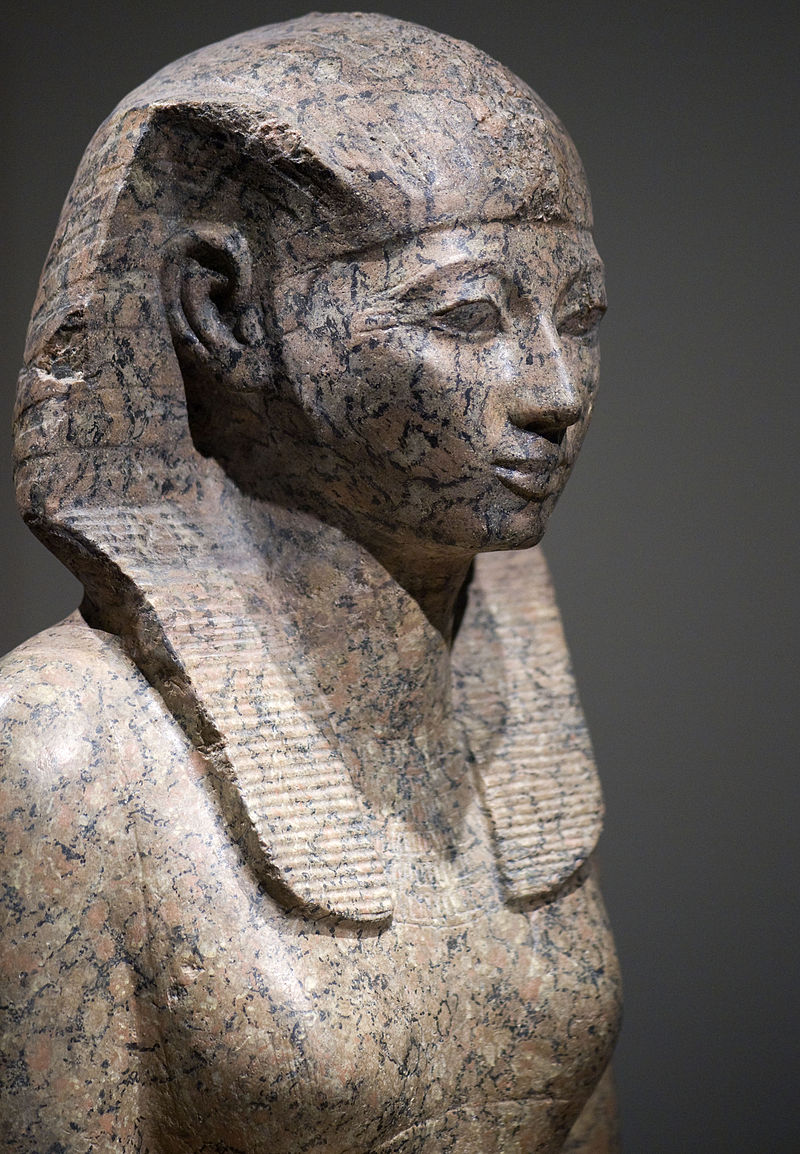
Hatshepsut

Success in Egypt was an abstract for which others could easily take credit, leaving the real person responsible for some actions or monuments unknowable for generations, lost to cultural memory, making Hatshepsut’s name more unpronounceable as the generations crept by. Doing everything right ensured Hatshepsut’s lost legacy.

When Women Ruled the World by Kara Cooney (2018)

~

She thought – was this religion? – a snare to make one fall into the hands of one’s enemies? Were holy things always to be abused, and words of love and worship turned into a death-trap? Should one man’s belief be set up against another’s, and men kill each other for not holding the same ideas, it would mean wars without end throughout the world, for it was the glory of men’s minds to hold different thoughts, and the only thing by which they could be judged was their actions, right or wrong.

Elizabeth, Captive Princess by Margaret Irwin (1948)

~
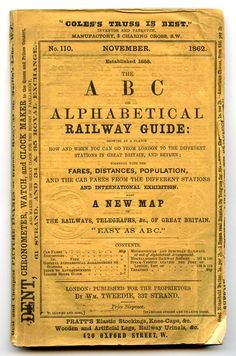
ABC Railway Guide

“Words, mademoiselle, are only the outer clothing of ideas.”

The ABC Murders by Agatha Christie (1936)

~

The sand itself, in contrast with the surrounding sea, seemed the home of weird noises, compounded of the ceaseless lapping of the ripples on the edge of it, the eerie cries of unseen gulls, and the intermittent wail of the distant lighthouse. It was an uncanny feeling, alone on this lost corner of the earth, which belonged neither to the realm of the sea or of the land.

The Secret of High Eldersham by Miles Burton (1930)

~

‘We all think, Leo, but none of us know. Matters of the heart are like the river. They bend this way and then that way, and sometimes there are rocks around the corner. Sometimes. But sometimes not. You never know.’

The House on Half Moon Street by Alex Reeve (2018)

~

Sometimes during a great emotional crisis the mind rallies. The gentlest spirit sometimes revives as though it had received from some unsuspected depth a new lease of courage and endurance.
It is at such times that hitherto helpless, unsophisticated souls goaded by circumstances so terrible as to be almost outside their comprehension make an unexpected stand, receiving from their reserves a small measure of that exhilaration in the face of danger normally possessed only by their stronger brethren.

The Devil and Her Son by Maxwell March (1936)

~

There is no principle worth having that does not exact a price. We must recognise the cost of our principles and take responsibility for that cost. We must not deny the consequences of our own actions.

Bodies of Light by Sarah Moss (2014)

~

Radcot Bridge

What we see on a map is only the half of it. A river no more begins at its source than a story begins with the first page.

Once Upon a River by Diane Setterfield (2018)

~

Here lay the tragedy. Western man is so constituted that he cannot abide contentment. It is the unforgivable sin. He must forever strive towards some unseen goal, whether it be material comfort, a greater and purer God, or some weapon that will make him master of the universe. As he becomes more conscious he becomes more restless, more grasping, forever finding fault with the warm dust from which he sprang and to which he must return, forever desirous of improving and so enslaving his fellow-men.

The Breaking Point by Daphne du Maurier (1959)

~

Favourite books read in January:

The ABC Murders, Once Upon a River

Where did my reading take me in January?

England, Ancient Egypt, Italy, Greece

Authors read for the first time in January:

Kara Cooney, Sarah Moss, Miles Burton, Alex Reeve

~

Have you read any of these books? Which books did you enjoy in January?
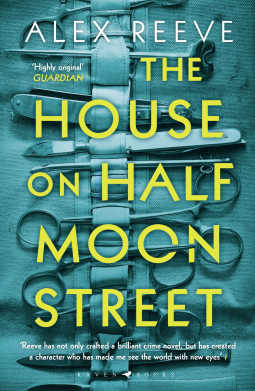
The House on Half Moon Street by Alex Reeve

The House on Half Moon Street is both an interesting historical crime novel set in Victorian London and a sensitive exploration of what it means to be transgender in a less enlightened time. This is apparently the first in a planned series and I will certainly be looking out for the next one.

Our hero, Leo Stanhope, is a coroner’s assistant in 1880s London. As the novel opens, the body of a man washed up by the Thames has been brought to the hospital where Leo works. Identified as Jack Flowers and believed to have fallen into the river accidentally, the man’s death seems to be an unfortunate tragedy, but not something which affects Leo personally. However, the next body to arrive is that of a woman – a woman who happens to be the love of Leo’s life, Maria Milanes, and who appears to have been murdered.

Before her death, Maria was a prostitute at a brothel on Half Moon Street, but that didn’t matter to Leo. He loved her and knew that she loved him. Maria was one of the few people he had trusted with his secret, one of the few people who knew that Leo Stanhope was born Charlotte Pritchard. Now Maria is gone and Leo vows to find out who has killed her. Joining forces with pie maker Rosie, Jack Flowers’ widow, he begins to uncover some links between both deaths – but at the same time he must ensure that his own secret is not uncovered, because the truth could have serious consequences.

On one level, as I’ve said, this is a compelling and well-constructed murder mystery. Although I found the pace a bit slow at times, I did enjoy watching Leo move around Victorian London, looking for clues in the Half Moon Street brothel, playing chess with his friend Jacob and word games with his landlord’s daughter in the pharmacy where he lodges, or paying a visit to the midwife and abortionist Madame Moreau, whom he hopes may be able to shed some light on the situation. All of these people and locations are vividly described and all play their part in Leo’s investigations.

Leo himself is easy to like and to warm to; he narrates his story in the first person, letting us into his mind and his heart. I know things are not perfect for transgender people today and that they still face a lot of prejudice, obstacles and challenges, but I can hardly imagine how difficult life must have been for people like Leo who lived more than a hundred years ago. I admired him for his courage in being true to himself and not just continuing to be someone he was not; I was sorry for the sacrifices he’d had to make in adopting his true male identity and the lack of support he received from those he should have been able to rely on; and I was afraid for him too, because he is in such a vulnerable position.

I should warn you that due to the nature of the story, the type of mystery it is and Leo’s vulnerability, the novel does become very dark in places. Although I didn’t find it unnecessarily graphic or violent, there are still a few scenes which are quite disturbing. The Victorian era was certainly not the safest time in which to live if you were seen as different in any way. I’m sure Leo will have more ordeals to go through as the series progresses, but I hope there will be some happiness in store for him too.

Thanks to Raven Books for providing a copy of this book for review via NetGalley.

Top Ten Tuesday: Ten recent additions to my TBR

Top Ten Tuesday is a weekly meme hosted by That Artsy Reader Girl. It’s perfect for those of us who have both a love of books and a love of lists! This week’s topic is…

The Ten Most Recent Additions to My To-Read List

~

In no particular order, here are ten books I’ve acquired recently:

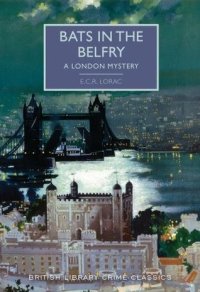
1. Bats in the Belfry by E.C.R. Lorac – All of the Lorac novels published as British Library Crime Classics sound intriguing, so I’m looking forward to trying this one.

2. The Binding by Bridget Collins – I’m reading this now. I’m a few chapters into it and although it sounded fascinating, I’m not sure that it’s really my sort of thing.

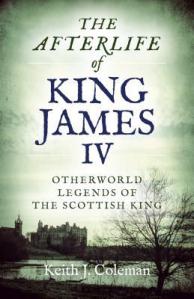
3. The Afterlife of King James IV by Keith J Coleman – This non-fiction book appealed to me when I saw it on NetGalley. I hope it’s good!

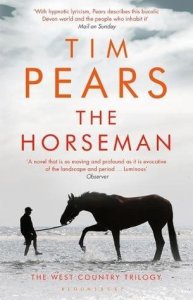
4. The Horseman by Tim Pears – This is the first in a trilogy, so if I enjoy it I’ll be looking for the other two.

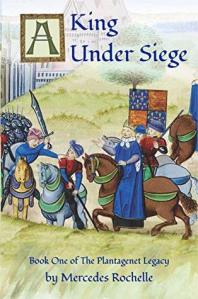
5. A King Under Siege by Mercedes Rochelle – I’ve received a review copy of this new novel about Richard II.

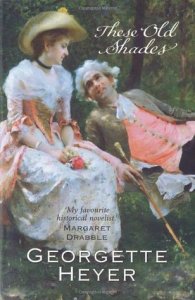
6. These Old Shades by Georgette Heyer – I’m gradually building up my Georgette Heyer collection and this is one I’ve been particularly looking forward to reading.

7. Eleanor the Queen by Norah Lofts – I’ve been interested in trying something by Norah Lofts for a long time and recently came across a copy of this book about Eleanor of Aquitaine.

8. Miss Boston and Miss Hargreaves by Rachel Malik – I really need to make some progress with my Reading the Walter Scott Prize project and this book was on last year’s shortlist for the prize.

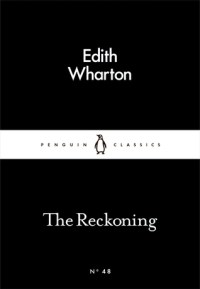
9. The Reckoning by Edith Wharton – Part of the Penguin Little Black Classics series, this book contains two short stories by Edith Wharton.

10. Casting Off by Elizabeth Jane Howard – This is the fourth book in the Cazalet Chronicles and I still have the third to read before I can start this one.

~

Have you read any of these? What have you added to your TBR recently?

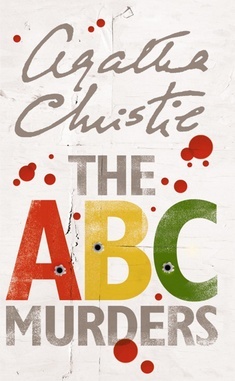
The ABC Murders by Agatha Christie

When I read about the Read Christie 2019 Challenge hosted at www.agathachristie.com – the idea being to tick off twelve books from twelve different categories over the course of the year – I was immediately tempted to join in. I didn’t want to think of it as a challenge as such, or make a definite commitment, but I thought I could use the monthly prompts to get through some of the many Christies I still haven’t read. This month’s category is “a recent TV adaptation” and the suggested book is The ABC Murders. I had started to watch the new BBC adaptation of The ABC Murders which was shown at Christmas, but struggled to get into it, so I thought I would try the book instead. And what a great book it is!

The murder of Alice Ascher in her small tobacconist shop in the town of Andover seems as though it should be an easy one to solve. There is an obvious culprit – the woman’s drunken husband – and he would certainly have been the prime suspect, if not for a mysterious coincidence which happened just days before the murder. Hercule Poirot had received a typewritten letter signed simply A.B.C. and warning of a crime to be committed in Andover on that particular date – and beside the body of the dead woman was a copy of the ABC Railway Guide.

But this will not be the only murder to take place:

‘I admit,’ I said, ‘that a second murder in a book often cheers things up. If the murder happens in the first chapter, and you have to follow up everybody’s alibi until the last page but one – well, it does get a bit tedious.’

When a similar letter arrives soon afterwards giving advance warning of a second murder which will happen in Bexhill, it doesn’t come as a surprise to Poirot when the second victim has a name beginning with B and when another ABC Guide is found next to the body. Convinced now that the killer is following an alphabetical pattern, Poirot must uncover his or her identity before they get all the way to Z.

This is one of several Poirot novels narrated by Captain Hastings (although there are a few chapters written from the perspective of other characters). I always seem to enjoy the ones with Hastings, partly because he, like the reader, is often in the dark and needs Poirot to explain things to him, but also because I think Poirot having a friend to discuss things with gives these books a different dynamic to the ones where he is working entirely on his own amongst strangers. Sometimes Hastings can make an observation or suggestion which proves to be useful later on, as he does once or twice in this book. Inspector Crome is investigating too, and a ‘legion’ of the victims’ families and friends is also formed to see whether they can shed any light on the situation.

What makes this book so intriguing is that each of the murders which takes place seems unrelated to the others, apart from the ABC theme and the letters sent to Poirot. They each have a separate set of suspects, all with their own motives, but what Poirot needs to do is find something which links them all to one man or woman – the mysterious A.B.C. I found this a particularly clever Christie novel and didn’t come close to solving it. I allowed myself to be sent in completely the wrong direction by the red herrings and took everything at face value; in fact, for a long time I thought I was reading a different sort of mystery entirely.

I loved this one and I think I did the right thing in reading it before trying to watch the adaptation again. I’m planning to read another Christie novel in February, although I don’t know what it will be yet – I’m waiting to see what the chosen category will be for the next stage of the challenge.

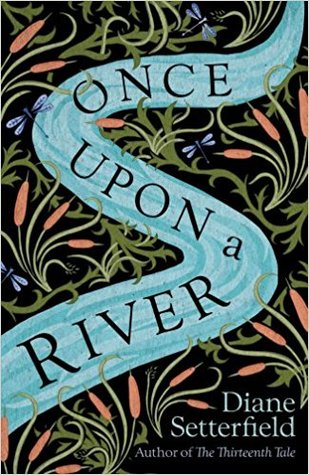
Once Upon a River by Diane Setterfield

The Swan Inn at Radcot on the bank of the Thames is a place famous for its storytelling. Every night the people of the village gather there to drink, to listen to tales of local folklore, myth, magic and history and to entertain their friends with stories of their own. But the old stories are growing stale and the listeners are ready for something new…

On the night of the winter solstice in 1887, a man appears in the doorway of the Swan – injured, wet from the river, and carrying the seemingly lifeless body of a young girl. Rita Sunday, who has some medical knowledge and acts as nurse and midwife for Radcot, is called to the inn and, unable to find a pulse, concludes that the girl is dead. Hours later, after attending to the man’s injuries, Rita looks at the child again and is amazed to find that she has started to breathe. It seems that the little girl will survive after all, but she can’t or won’t speak and tell anyone who she is or where she came from.

For the drinkers at the Swan, the girl’s apparent death and miraculous return to life is a wonderful story in itself, but it also provides a starting point around which many other stories begin to unfold and entwine. What is the girl’s name? Who are her parents? How did she end up in the river? Questions are raised and answers are searched for, theories are suggested and people come forward to claim the child as their own – but what is the truth? Will we ever know? As Rita grows closer to Henry Daunt, the man who pulled the girl from the water, they try to find a solution to the mystery and uncover yet more stories as they do so.

I am tempted to discuss some of those stories here and to talk about the characters who feature in them, but I’m not going to because I would risk spoiling some of the surprises Once Upon a River contains. Instead I’m going to stay on safer ground and discuss the role the river plays in the novel, both physically and metaphorically. The river is a constant presence right from the first chapter and the people in the story live and work on or around it – gravel-diggers, cressmen, bargemen and boat-menders. Their favourite folk tales revolve around the river too, including the legend of Quietly the ferryman who guides people in trouble either to safety or to ‘the other side’. The river and its surroundings give the novel a strong sense of place, although the sense of time is less clear – we are told that it has been five hundred years since the Battle of Radcot Bridge in 1387 but, apart from some references to photography, I felt that the story could have been set at a much earlier time in history.

The story itself flows like a river, carrying the characters – and the reader – gently along with the current. And like the tributaries of a river, there are other stories which began months or years before the girl’s arrival at the Swan and we go back to explore those stories too. This can make the novel feel slow at times and some patience is needed while the backgrounds of the various characters are explored, but I never felt bored. I was prepared to wait and see where the river took me and who the little girl would turn out to be. I was happy with the ending, although I do have one small criticism which is that I thought the way Rita’s story ended was very predictable and I would have preferred her to do have done something different.

I enjoyed Once Upon a River much more than Diane Setterfield’s previous novel, Bellman and Black; possibly more than The Thirteenth Tale too, as I didn’t love that one as much as most people seemed to. If you’ve never read any of her books before, though, I would recommend trying any or all of them to see what you think.

Thanks to Doubleday for providing a copy of this book for review via NetGalley.

Top Ten Tuesday: Books I meant to read in 2018 but didn’t get to

Top Ten Tuesday is a weekly meme hosted by That Artsy Reader Girl. It’s perfect for those of us who have both a love of books and a love of lists! This week’s topic is:

Books I Meant to Read In 2018 but Didn’t Get To

~

These four books were on my Autumn 2018 TBR but I didn’t have time to read them:

1. The Green Gauntlet by RF Delderfield
2. Transcription by Kate Atkinson
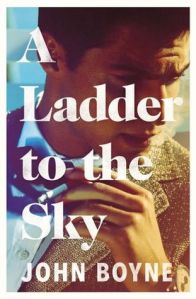
3. A Ladder to the Sky by John Boyne
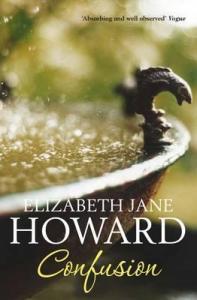
4. Confusion by Elizabeth Jane Howard

And here are two unread books from my Spring 2018 TBR list:

5. Munich by Robert Harris
6. Under Heaven by Guy Gavriel Kay

A book that I didn’t get to from my 2018 20 Books of Summer list:

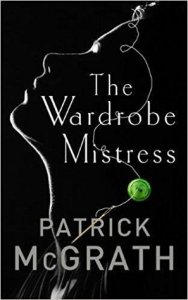
7. The Wardrobe Mistress by Patrick McGrath

And a few that I’d planned to read for last year’s R.I.P. challenge:

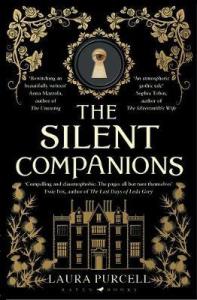
8. The Silent Companions by Laura Purcell
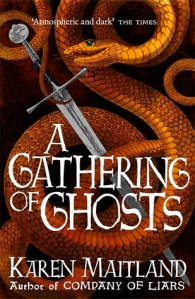
9. A Gathering of Ghosts by Karen Maitland
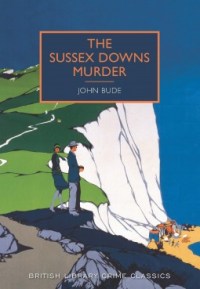
10. The Sussex Downs Murder by John Bude

~

You can expect to see me reading some, if not all, of these books in 2019 instead.

Have you read any of them? Are there any that I really need to read as soon as possible?

An Infamous Army by Georgette Heyer

Georgette Heyer’s 1937 novel, An Infamous Army, is one I was particularly interested in reading because it sounded a bit different from most of her others, being as much a story of the Battle of Waterloo as a Regency romance. It can be read as a standalone novel but it also features characters (or descendants of characters) who appeared in her previous novels These Old Shades, Devil’s Cub and Regency Buck.

Several years have passed since Regency Buck ended and the Earl of Worth is in Brussels with his wife, Judith, and their young son. As the threat of Napoleon draws closer, Brussels has become the centre of fashionable society – a place to entertain oneself with dances, picnics and concerts while the outcome of the Vienna Congress and the arrival of the Duke of Wellington are awaited. Judith is hoping to bring about a match between Worth’s brother Charles Audley and her friend Lucy, but she hasn’t counted on Charles falling passionately in love with Lady Barbara Childe, a beautiful but notorious young widow with a reputation for wildness. Although Barbara – or Bab, as she is known – claims to love Charles too, she shows no sign of changing her ways and Judith is sure her brother-in-law is going to be hurt.

The relationship between Charles and Bab develops throughout the first half of the novel, so that by the time the Battle of Waterloo arrives, we are already emotionally invested in the lives of some of the characters who are going to be affected by the battle in one way or another. Heyer is one of those authors you can always count on to have done her research, but everything in this book feels particularly authentic (she famously claimed that every word she attributes to her fictional Duke of Wellington was either spoken or written by him in real life).

Each stage of the battle is described in an incredible amount of detail, not just the tactics and the military manoeuvres, but also the human cost as lives are lost, men are injured and those on the sidelines wait for news of their loved ones. As I’ve mentioned before, I am not usually a fan of lengthy battle scenes, however well written they are, so although I certainly appreciated the accuracy of Heyer’s account of Waterloo and the quality of her writing, I can’t really say that this has become a favourite Heyer novel. This is just a matter of personal taste though, and I’m sure other people will love this book precisely because it does include long battle scenes (by long, I mean they take up most of the second half of the novel).

As for the Charles and Bab storyline, I enjoyed following the course of their relationship, especially as I thought it was difficult to tell at first how Bab really felt about Charles. She comes across at the beginning as self-centred, reckless and fun-loving, the sort of person who causes a scandal wherever she goes (not that it takes much to cause a scandal in 1815 – painting your toenails gold, for example). It took me a while to warm to her, but when I did I found that she was also kind hearted, compassionate and courageous. Even so, she is not one of my favourite Heyer heroines – although, again, I can see why other readers might love her.

Reading An Infamous Army has inspired me to finally try one of Heyer’s six historical novels (i.e. not the ones that are Regency or Georgian romances). I am currently a few chapters into Beauvallet and enjoying it so far; you can expect to hear more about it soon!