My Beautiful Imperial by Rhiannon Lewis

When the Walter Scott Prize Academy published their list of twenty recommended historical fiction novels earlier this year, My Beautiful Imperial was one of the titles that sounded particularly appealing to me, so I was delighted to be offered a copy for review. I love books set in times and places I know nothing about and which are educational as well as entertaining – and this is one of those books.

It begins in 19th century Wales, where young Davy Davies is dreaming of following in his father’s footsteps and becoming a sailor. Beginning navigation classes with the remarkable Sarah Jane Rees brings him closer to achieving his ambition, but it is not until tragedy strikes the Davies family that Davy must leave his home in Cardigan behind and embark on his career at sea. The years go by and Davy eventually becomes captain of the Imperial – and as luck would have it he is sailing up and down the coast of South America just as civil war breaks out in Chile.

President Balmaceda retains control of the Chilean Army but his Navy rebel and side against him and Davy finds that the Imperial is commandeered by the President’s forces, who are desperate for ships. Davy agrees to continue in his role as captain, but soon instead of carrying passengers, cargo and mail, the Imperial is transporting troops, supplies and ammunition. These are dangerous times, but Davy is sustained by his love for Estella, whom he meets while the ship is in harbour in Valparaiso. The only problem is, Estella is already married…

I really enjoyed reading My Beautiful Imperial. I don’t think I’ve ever read a book set in Chile before and I certainly knew nothing about the Chilean Civil War of 1891. Although the main focus of the novel is on Davy’s own involvement in the war, there are also scenes written from the perspectives of several other characters, ranging from President Balmaceda himself to a reporter sent to Chile to cover the story for his newspaper, and in this way we are able to learn about the political situation in Chile, the causes of the conflict and some of the key events that take place before, during and after the war.

I sometimes struggle with books in which large sections of the story are set at sea, but that was not a problem here. The nautical terminology is kept to a level that I could understand and the descriptions of sea chases and manoeuvres are easy enough to follow. There are plenty of land-based sections too, giving us some glimpses of life in Valparaiso and other parts of Chile, as well as the opening chapters depicting Davy’s childhood in Wales. Davy’s path crosses with Estella’s several times throughout the novel, but their romance is only one small element of the story and I thought it was all the more moving because their meetings were few and far between.

I was interested to learn that Rhiannon Lewis had based this novel on the life of her great-great-uncle – he really was a Welsh sailor who became caught up in the Chilean Civil War. You can find pictures and more information on the author’s website. With such a strong personal connection, it must have been a fascinating book to research. It is certainly a fascinating one to read!

Thanks to the author for providing a copy of My Beautiful Imperial for review.

This is book 6/20 for my 20 Books of Summer challenge.

Classics Club Spin #18: My List

The Classics Club

I love taking part in the spins hosted by The Classics Club – this is the eighteenth and although I’ve missed one or two I think I’ve managed to participate in most of them. As I just recently started my second Classics Club list, I have plenty of books to choose from for this spin and I’ll be happy to read any of them.

Here are the rules for Spin #18:

* List any twenty books you have left to read from your Classics Club list.
* Number them from 1 to 20.
* On Wednesday 1st August the Classics Club will announce a number.
* This is the book you need to read by 31st August 2018

And here is my list:

Five 19th century classics

1. Two on a Tower by Thomas Hardy
2. The Cloister and the Hearth by Charles Reade
3. The Duke’s Children by Anthony Trollope
4. Daniel Deronda by George Eliot
5. Nicholas Nickleby by Charles Dickens

Five classic historical fiction novels

6. The Fifth Queen by Ford Madox Ford
7. Claudius the God by Robert Graves
8. The Black Arrow by Robert Louis Stevenson
9. That Lady by Kate O’Brien
10. The Turquoise by Anya Seton

Five classics in translation

11. La Reine Margot by Alexandre Dumas
12. In a Dark Wood Wandering by Hella S Haasse
13. Germinal by Emile Zola
14. The White Guard by Mikhail Bulgakov
15. The Black Sheep by Honoré de Balzac

Five 20th century classics

16. The Grapes of Wrath by John Steinbeck
17. Jane and Prudence by Barbara Pym
18. High Rising by Angela Thirkell
19. The Chrysalids by John Wyndham
20. Goodbye Mr Chips by James Hilton

~

Have you read any of these books? Which numbers do you think I should be hoping for on Wednesday?

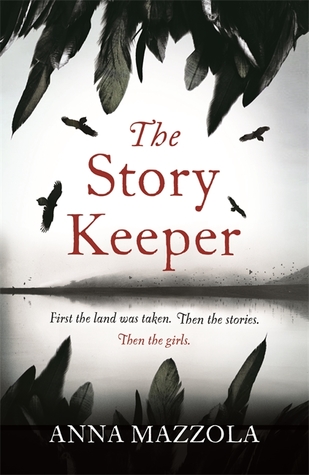
The Story Keeper by Anna Mazzola

This is Anna Mazzola’s second novel, following her debut, The Unseeing, which I read last year. There are some similarities between the two – they are both set in the 19th century and they are both inspired by true crimes – but the stories are very different and, of the two, I found this new one much more enjoyable.

It’s 1857 and Audrey Hart is desperate to get away from London following a traumatic experience at the orphanage where she has been volunteering. Audrey’s mother, who disappeared while out walking many years earlier, had an interest in folklore, so when Audrey sees a job advertised for a collector of folk tales on the Isle of Skye, she applies at once. After arriving on the island and meeting her new employer, Miss Buchanan, she becomes aware that her task is going to be much more difficult than she had expected…

During the recent Highland Clearances, many of the crofters have been forced to leave Skye, taking their stories with them, and those who remain are reluctant to speak to Audrey. Some of this reluctance could simply be due to the fact that Audrey is from England and therefore an outsider, but she senses that there is more to it than that – the islanders seem to be afraid to share their stories and to have them written down. Then Audrey finds the body of a girl washed up on the beach – and when another girl also goes missing, she begins to wonder whether the people of Skye are right to be afraid.

The Story Keeper is a wonderfully atmospheric novel set in a small, remote Scottish community where people’s daily lives are influenced by the old superstitions and traditions in which they still believe. Throughout the novel, as one strange occurrence follows another, we are kept wondering whether there are supernatural forces at work on Skye or whether there is another explanation for what is happening. It all feels quite sinister, and genuinely eerie in places. Some of the superstitions and beliefs Audrey encounters are dark, disturbing and even dangerous. The novel reminded me in that respect of The Good People by Hannah Kent.

As well as the mystery unfolding on the Isle of Skye, there are also hints of other mysteries in Audrey’s past. Why did she leave her home in London without telling her father and stepmother where she was going? What really happened while she was visiting the orphanage? And what was the true story behind her mother’s disappearance, all those years ago? These things are all explained, but the truth only emerges very slowly, meaning that there is plenty of suspense from the beginning of the book until the end.

If I have a criticism, it is that some of the developments towards the end of the book, especially where one particular character is concerned, feel a bit too dramatic and far-fetched. I liked the final twist, though, as it was something I hadn’t worked out for myself. I also enjoyed the fairy tale extracts at the start of some of the chapters and the lines from the poem Kilmeny by James Hogg, which I had to look up and read in its entirety after finishing the book.

Although I couldn’t help thinking The Story Keeper would have been better suited to a cold, dark winter’s night, I still enjoyed reading it during our current summer heatwave and I’m looking forward to whatever Anna Mazzola writes next.

Thanks to Headline for providing a copy of this book for review.

This is book 5/20 of my 20 Books of Summer. I am doing slightly better with this than it seems – I just need to catch up with writing my reviews!

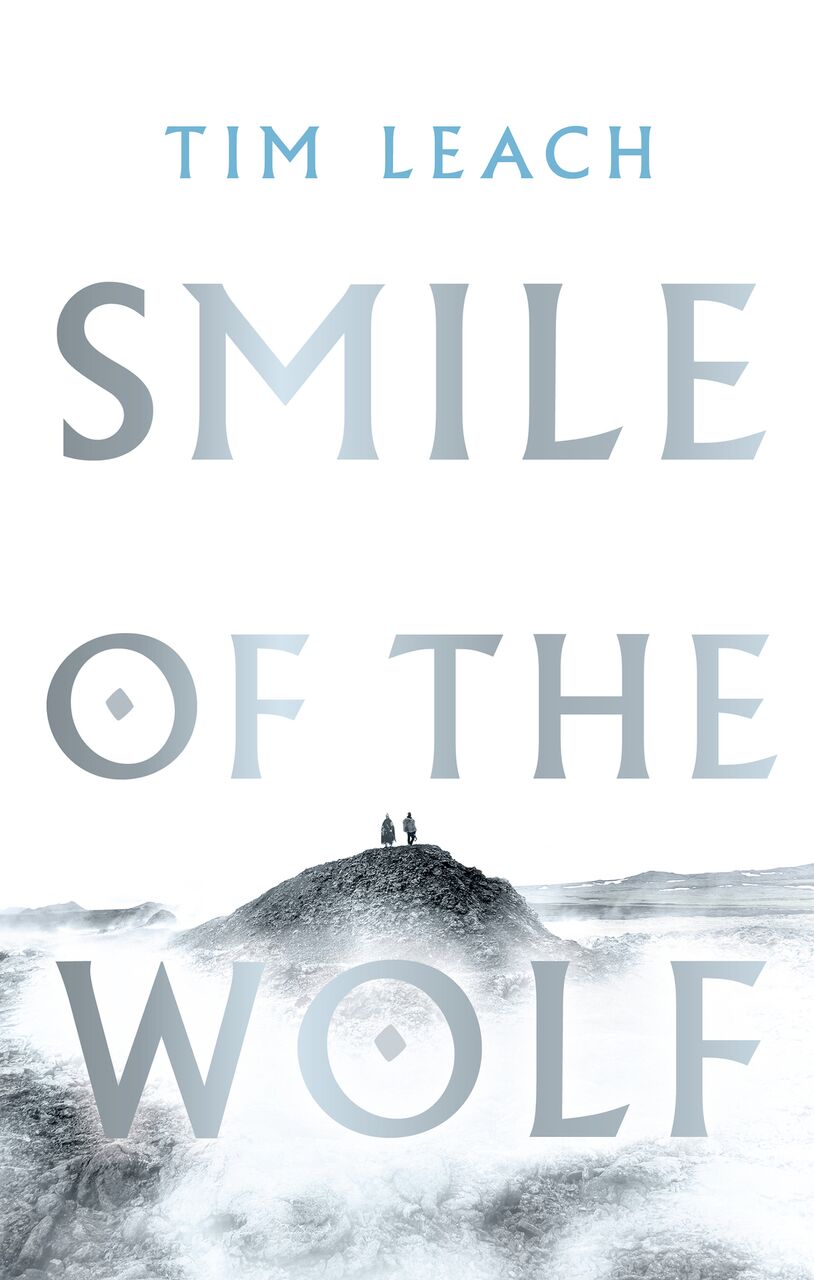
Smile of the Wolf by Tim Leach

This is Tim Leach’s third novel and although I haven’t read his first two, which are both about King Croesus of Lydia, I have heard good things about them. His new book, Smile of the Wolf, has a completely different setting but sounded equally fascinating, so I was pleased to have an opportunity to read it as part of a blog tour arranged by the publisher Head of Zeus.

Smile of the Wolf takes us to 10th century Iceland, where a tale of revenge and betrayal, loyalty and friendship is played out across a cold, harsh, beautiful landscape. At the centre of the tale, which is inspired by the Icelandic Sagas, are Gunnar, a warrior and farmer, and his friend, the travelling poet – or skald – Kjaran. Kjaran has no lands of his own but moves from household to household providing songs and stories in exchange for the hospitality of his hosts. It is while spending the winter with Gunnar and his family that rumours begin to circulate of a ghost that wanders in the night. Gunnar and Kjaran set out to hunt down the ghost – but when a misunderstanding leads to a man being killed, a deadly feud is set in motion.

This is a beautifully written novel, which is very appropriate as our narrator is Kjaran the poet, a man whose livelihood depends on his skill with language. Tim Leach uses just the right words and phrases to transport me to another time and place and to help me understand the people who lived there.

In the long winter, even the wealthiest of Icelanders curses the day that their ancestors came to this land. They forget the dream of the people, that dream of a world without kings, and know only that they live in a dark, lonesome place. But when the sun begins to ride higher in the sky and the snow begins to quicken and thaw, it is an easy land to love. The dream grows strong once more, for we are a stubborn people.

Iceland is a country with a very strong tradition of storytelling and the author has drawn on some of the stories told in the Sagas – stories of ghosts and feuds and friendships which take place in a land of snow and ice. We also learn a lot about Icelandic culture and customs, systems of law and punishment, and the conflict between Christianity and the older beliefs.

The relationship between Kjaran and Gunnar is well drawn, showing their very different personalities and the very different ways in which they react to the same situations. Gunnar prefers to settle disputes with spears and shields, while the more cautious Kjaran takes the time to look for other solutions. Although the two main characters – and most of the characters on the other side of the feud – are men, there are also some women who have a big part to play in the novel. These include Vigdis, whose schemes cause the feud to spiral out of control and last much longer than it needs to, and Sigrid, the woman Kjaran hopes to marry.

The combination of interesting characters, atmospheric setting and poetic writing make this a great read – both moving and gripping. It has left me determined to read The Last King of Lydia and its sequel as soon as I can.

Thank you to Head of Zeus for providing a copy of this novel for review.

For more stops on the tour, please see the banner below.

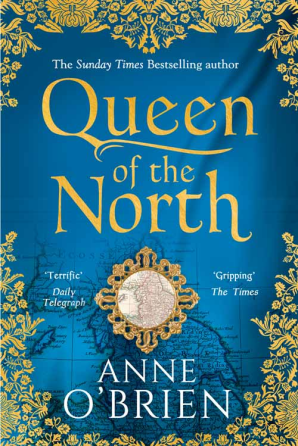
Queen of the North by Anne O’Brien

Having enjoyed some of Anne O’Brien’s previous books, I was excited to learn that her latest novel, Queen of the North, was going to tell the story of Elizabeth Mortimer, wife of the famous Harry Hotspur, heir to the Earl of Northumberland in the late 14th and early 15th centuries. So much English historical fiction concentrates on London and the south, it’s always nice to find something set in my part of the country instead.

The novel opens in 1399; King Richard II is still on the throne, but for how much longer? His power is weakening rapidly and the exiled Henry of Lancaster is preparing to return to England and reclaim his lands. Elizabeth Mortimer’s husband, Harry Percy (known as Hotspur), and his father, the Earl of Northumberland, are among the northern Lords who decide to take Lancaster’s side against the King. This worries Elizabeth, who is convinced that Lancaster’s ultimate goal is the throne of England itself – and soon she is proved right.

Although Lancaster is Elizabeth’s cousin, she is disappointed when the Percy family support him in deposing Richard and claiming the crown. She believes that her young nephew, Edmund Mortimer, has a stronger claim and she is determined to do whatever it takes to help him take his rightful place as King. This will bring Elizabeth into conflict not only with the newly crowned Henry IV but also with her husband and she will have to decide where her loyalties truly lie: with the Mortimers or with the Percys?

Elizabeth’s efforts on Edmund’s behalf eventually lead her to Wales, where Owain Glyn Dŵr is planning a rebellion and looking for support from the Mortimers and Percys. Alliances are formed and broken, friends become enemies then friends again in an instant; it’s a dangerous time, but a fascinating one to read about!

I loved Queen of the North; I think it’s my favourite of the five Anne O’Brien novels I’ve read so far. As I’ve said, I really liked the northern setting, which gave me some glimpses of places I know and have visited, such as the Percy stronghold of Warkworth Castle when it was a living, working building rather than the semi-ruin it is today. The Percys were one of the most powerful and influential families in the north of England at that time; they were wardens of the Marches (the area surrounding the border with Scotland) and virtually ruled the north on behalf of the king, but this did not mean they could not be brought down and replaced if they fell out of royal favour. Anne O’Brien does a great job of showing how precarious their position actually was, when an error of judgement, a wrong decision or an act of betrayal could mean their downfall.

The central two characters in the novel are well drawn, strong and convincing. I liked Elizabeth – although her obsession with putting her nephew on the throne becomes frustrating at times (partly because we already know from history that she wouldn’t succeed), but it’s obvious that it means a lot to her and that she is only doing what she believes is right. With her husband reluctant to help and the old Earl completely in opposition, she takes matters into her own hands and although her actions are not always sensible I did admire her courage and persistence. I also liked Harry, nicknamed Hotspur because of his brave, reckless and impulsive nature. His relationship with Elizabeth is very convincingly portrayed – their personalities clash at times and they don’t always see eye to eye, but their love is strong enough to survive these differences of opinion.

Because we are seeing things through Elizabeth’s eyes, a lot of important events – such as battles, rebellions and some of Hotspur’s meetings with Henry IV – take place ‘off the page’. However, this does not mean that Elizabeth’s personal story is boring; she has plenty of adventures of her own as she tries to navigate her way through the various plots and schemes of the shrewd old Earl of Northumberland, the Welsh hero Owain Glyn Dŵr, and her own Mortimer relatives. There’s never a dull moment and in comparison to Anne O’Brien’s last book, on Joan of Kent, I think this is a much more exciting and compelling novel. Speaking of O’Brien’s other books, there is also some overlap here with The Queen’s Choice, which tells the story of Henry IV’s wife, Joanna of Navarre.

I really enjoyed Queen of the North – and have been reminded that I never did look for the final two books in Carol Wensby-Scott’s Lion trilogy, which was my only other encounter in fiction with Elizabeth and Hotspur. Can anyone recommend any more books set in this time and place?

Thanks to the publisher HQ for providing a copy of this book for review via NetGalley.

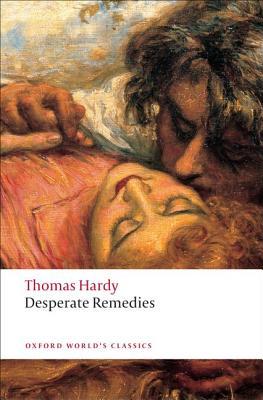
Desperate Remedies by Thomas Hardy

Desperate Remedies (1871) was Thomas Hardy’s first published novel, following an earlier manuscript which failed to find a publisher and was later destroyed. I love Thomas Hardy’s books and have been looking forward to reading this one as it has been described as a sensation novel, a genre of Victorian fiction that I’ve enjoyed since I first discovered authors like Wilkie Collins, Mary Elizabeth Braddon and Ellen Wood, in the years before I started my blog.

At the beginning of the novel, we learn that our heroine, Cytherea Graye, was named after her father’s one true love, a woman who disappeared without explanation and left him heartbroken. Mr Graye later married and had two children – Cytherea and her brother Owen – whom he raised alone after his wife’s death. When Mr Graye himself dies, having made some poor business decisions in the final years of his life, Cytherea and Owen are faced with making their own way in the world. Owen decides to pursue a career as an architect, while his sister advertises for work as a governess.

Finding it harder to get a job than she had expected, Cytherea eventually accepts a position as lady’s maid to Miss Aldclyffe, a middle-aged unmarried woman who seems to be hiding a number of secrets. Why does she have so much affection for Cytherea, whom she has never met until now? Why does she go to such great lengths to employ the mysterious Aeneas Manston as steward on her estate – and why is she so keen to encourage Cytherea to marry him? Manston is another person with secrets and Cytherea is reluctant to marry someone she feels she can’t fully trust, especially as she has already fallen in love with Edward Springrove, her brother’s friend. Unfortunately, Edward is engaged to another woman – and when Cytherea’s financial situation becomes increasingly desperate, she finds herself drawn into Aeneas Manston’s schemes.

I loved Desperate Remedies! It starts off slowly, introducing Cytherea and her family background and explaining the circumstances that lead to her arrival at Miss Aldclyffe’s house, but it quickly develops into an intriguing and entertaining page-turner with plenty of twists and surprises. I liked Cytherea; there are stronger, more interesting heroines in some of Hardy’s later novels, but Cytherea is by no means a weak and helpless woman and I enjoyed following her story.

I did find two of the novel’s big secrets quite easy to guess, but there were still times when I wasn’t sure where the story was going and when the actions of one character or another left me mystified. The plot makes it feel quite similar to a Wilkie Collins novel, but there are still some elements which make it recognisable as a book written by Thomas Hardy, such as the descriptions of the landscape and the portrayal of a small rural community. This isn’t one of my absolute favourite Hardy novels – I think some of his later ones are better – but it’s still a great read.

The remaining novels I have left to read by Hardy are all books that I know nothing about: The Well-Beloved, Two on a Tower, A Laodicean, The Hand of Ethelberta and The Trumpet-Major. Does anyone have any recommendations from those five? I also haven’t read any of his short story collections, Wessex Tales, Life’s Little Ironies and A Group of Noble Dames, so I still have lots of Hardy to look forward to.

This is book 4/20 of my 20 Books of Summer and book 6/50 from my second Classics Club list.

The Big Book of Swashbuckling Adventure, edited by Lawrence Ellsworth

After reading Lawrence Ellsworth’s new translation of the Alexandre Dumas novel The Red Sphinx last year, I discovered that Ellsworth was also the editor of the enticingly titled The Big Book of Swashbuckling Adventure. As a fan of the swashbuckling genre, I knew I would have to read it.

This is certainly a big book, containing eighteen stories and poems written in the 19th or early 20th centuries. Some of them are by well-known classic authors such as Dumas, Arthur Conan Doyle and Baroness Orczy, but some of the others are more obscure – authors who may have enjoyed some success at the time, but have been largely forgotten today. Ellsworth provides a brief introduction to each author’s work, including a short biography and some background information on the story which follows and why he selected it for this collection. All different types of swashbuckling hero are represented: the pirate, the musketeer, the jester, the swordsman, the aristocrat and more.

I’m not going to discuss all of the stories in depth here – there are too many of them – but I will highlight a few favourites and just give the others a quick mention.

One that I particularly enjoyed was Crillon’s Stake by Stanley J Weyman, an author I’ve heard about but have never actually read until now. Set in France in 1587, two men sit down to play a game of dice in which the stakes become higher and higher until they are literally gambling with their lives. The outcome of the game will have surprising consequences, however, as the participants become entangled in a conspiracy against the king.

Another favourite was The Black Death by Marion Polk Angellotti, one of only a few female authors to be featured in the book. This story is part of a series that she wrote about the adventures of the 14th century mercenary captain Sir John Hawkwood. On a journey through the mountains of Italy, Hawkwood tries to protect his men from attack by enemy soldiers, but with the Black Death raging across the country, he could be leading them into a different type of danger instead.

I also enjoyed Pirate’s Gold by H. Bedford-Jones, which was first published in an American ‘pulp magazine’ in the 1920s. George Roberts accepts a position as first mate on a ship sailing to Virginia, The King Sagamore, which is captained by the charismatic Captain Low. It is only when the ship has left port and is out at sea that Roberts discovers his captain is actually the notorious pirate better known as Bloody Ned. This is a much longer story than most of the others in the book – more of a novella, really, which allows more development of storyline and characters – and although I doubt I’ll look for anything else by Bedford-Jones, this was fun to read.

The Sin of the Bishop of Modenstein by Anthony Hope is another fun read, set in the kingdom of Ruritania, the same world as his famous novel The Prisoner of Zenda. In this story, King Rudolf of Zenda gambles away his castle and estate, but when the new owner, Count Nikolas of Festenburg, moves in, he discovers that Rudolf’s sister, Princess Osra, is still there…

I was surprised to find that I had already read some of the pieces in the book. The Cabaret de la Liberté by Baroness Orczy is taken from her collection The League of the Scarlet Pimpernel, which I read a few years ago. I couldn’t really remember this particular Pimpernel story, so I was happy to read it again. I did not re-read White Plume on the Mountain by Alexandre Dumas, which is not actually a standalone story, but a reproduction of several chapters from the end of The Red Sphinx.

For the same reason I didn’t bother with Captain Blood’s Dilemma by Rafael Sabatini, and I only briefly looked at The Fight for Black Bartlemy’s Treasure by Jeffery Farnol, which are also the concluding chapters of full-length novels (Captain Blood and Black Bartlemy’s Treasure respectively). It just seemed an odd decision to include these in a collection of ‘short stories’ and will surely spoil the actual novels for anyone who hasn’t read them. On the other hand, Ellsworth does include the opening chapters of Johnston McCulley’s first Zorro novel, turning them into a story titled Señor Zorro Pays a Visit. This seems a much more sensible way to introduce a new reader to an author’s work!

There’s also a second story by Sabatini (Sword and Mitre, a true standalone this time), and one each by Sidney Levett-Yeats, John Bloundelle-Burton and Harold Lamb. I hadn’t come across any of the last three authors and I found their stories entertaining but forgettable (although Lamb’s is slightly different, being set in India). Finally, there’s a story by Arthur Conan Doyle which features his hero Brigadier Gerard, and a Robin Hood adventure by Pierce Egan. The collection is completed by several short poems, Cheerly O and Cheerly O by Jeffery Farnol, The Buccaneer’s Last Shot by Farnham Bishop and The Pirate Sea by Lilian Nicholson. These are interspersed amongst the stories and add a bit of extra variety.

As is usually the case with anthologies of this kind, the stories and the writing are of mixed quality and I found it quite uneven, especially towards the end. With such a variety of different types of story, though, I think there should be something for almost everyone here.