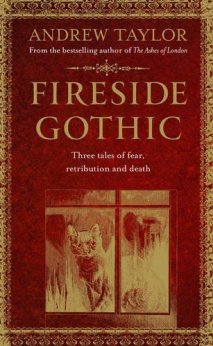
 Having read and enjoyed some of Andrew Taylor’s historical crime novels, I was immediately intrigued when I heard about Fireside Gothic, a hardback collection of three novellas which had originally been published separately in ebook form as ‘Kindle Singles’. The stories are all quite different but, as Taylor says in his author’s note, they do share some common themes.
Broken Voices, the first of the three, has the feel of a classic Christmas ghost story. Set in an English cathedral city just before the First World War, it follows the adventures of two schoolboys whose circumstances mean they have to stay at school in the care of a retired teacher over the Christmas holidays. After listening to the teacher’s tales of mysterious happenings in the nearby cathedral, one of the boys begins to hear ghostly music and persuades his friend to sneak into the cathedral with him late one night to investigate.
Broken Voices gets the collection off to a good start. Although I would describe it as an eerie story rather than a scary one, with its haunting atmosphere, winter setting and vivid descriptions of the deserted cathedral, this is the most obviously ‘gothic’ of the stories in the book.
The second story, The Leper House, is my favourite. Set in the modern day this time, our narrator is driving home from his sister’s funeral when his car breaks down on a lonely country road near the Suffolk coast. Setting off through the rain and wind in search of help, he manages to find shelter for the night and during his stay he has a brief but unforgettable encounter with a woman who lives in a neighbouring cottage. In the morning, he discovers that both the woman and the cottage have disappeared – and becomes obsessed with finding an explanation for his strange experience.
I can’t say too much, but the story then goes in a direction which was completely unexpected and which I loved. It raises a lot of fascinating questions and some of them are still unanswered at the end. There are some ideas here which I would have liked to have seen developed further; this story has all the ingredients of a full-length novel and I was sorry it had to come to an end so soon!
The collection finishes with The Scratch, another contemporary story. Unlike the first two, this one is narrated by a woman. Her name is Clare and she lives in the Forest of Dean with her husband, Gerald, and their pet cat. At the beginning of the story, their orphaned nephew, Jack, comes to stay with them on his return from fighting in Afghanistan. Jack’s time in the army has left him with a fear of cats, a dislike of enclosed spaces and a scratch on his arm which won’t seem to heal.
This is an interesting story, but the focus is mainly on the complicated relationships between Clare, Gerald and Jack, so the supernatural elements are much more subtle than in the other novellas. This is my least favourite of the three, although there are some clever little twists at the end which took me by surprise!
Fireside Gothic is an entertaining and unusual collection. The title and cover had led me to expect something slightly different – something spookier and, well, more gothic – but I did still enjoy these three novellas, particularly the middle one. While it’s still winter, this would be an ideal time to get yourself a copy of this book and spend a cold, dark evening reading it by the fire.
Thanks to HarperCollins for providing a review copy of Fireside Gothic.
 My first introduction to Margery Sharp’s work came this time last year when I read
 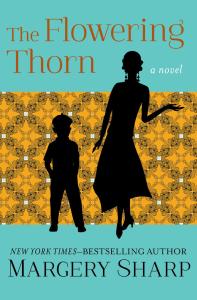 The Flowering Thorn introduces us to Lesley Frewen, a twenty-eight-year-old socialite living in London. Lesley’s days and nights are a whirl of bridge parties, lunch engagements, shopping trips, hair appointments and visits to matinees and art exhibitions. Despite all of this, there’s still something missing from her life: love. Having discovered that the one man she really wants appears to be the one man she can’t have, Lesley is still in low spirits when she joins her aunt for afternoon tea the next day. This could explain why, when her aunt introduces her to Patrick, the orphaned child of a servant who has recently died, Lesley finds herself volunteering to adopt the boy.
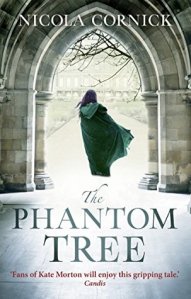 I have always found the concept of time-travel fascinating – and equally fascinating are the number of ways in which various authors choose to approach the subject when writing time-travel fiction. The Phantom Tree is one of many dual time period time-slip novels I have read over the last few years, but I found it refreshingly different in that it deals not with the usual idea of a modern day character going back in time but a woman from the past coming forward to the present time.
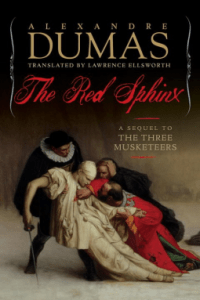 Well, it may be only January but I think I already know one book which will be appearing on my books of the year list this December! Having read and enjoyed all of Alexandre Dumas’ d’Artagnan novels over the last few years (beginning with a re-read of

 Night’s Dark Secrets (first published in 1936 as The Golden Violet, The Story of a Lady Novelist) was the first of the two books that I read. The novel opens with the marriage of Angel Cowley, an author of romance novels, to Thomas Thicknesse, the owner of a sugar plantation in Jamaica. Angel has been busy preparing her latest novel, The Golden Violet, for serialisation in a magazine, but this has to be postponed when Thomas insists that the newly married couple leave England and return to his plantation, Venables Penn.
 Having said all of that, I did still find the story itself compelling and kept reading to the end. And I was happy to go on to try a second Shearing novel, Forget-Me-Not. This novel, published in 1932, also appeared under the title The Strange Case of Lucile Clery, and Bowen claimed it was based on true events which led to the downfall of Louis Philippe I, King of the French, in the revolution of 1848.
 She Reads Novels