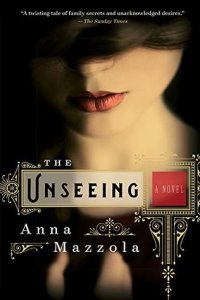
 It’s Christmas 1836 and Hannah Brown is looking forward to her wedding to James Greenacre. However, the marriage will never take place; instead, Hannah is brutally murdered and in the weeks that follow, the parts of her dismembered body are discovered in various locations around London. Her fiancé, Greenacre, is arrested and found guilty – but although he admits to disposing of the body, he claims that Hannah was already dead when he found her. This makes no difference to the judge and jury and Greenacre is sentenced to hang, along with his mistress, Sarah Gale, who is accused of concealing the murder.
Sarah had been living with Greenacre as his housekeeper before being asked to leave so he could marry Hannah. She insists that she knew nothing about the murder and Greenacre also denies that she had any involvement, but this is not enough to save her. As she sits in a cell in Newgate Prison, Sarah’s only hope is the petition she has submitted asking for clemency. The lawyer appointed by the Home Secretary to look again at Sarah’s case is Edmund Fleetwood, young, idealistic and principled. After speaking to Sarah and hearing her talk about her life, Edmund is convinced that she should be freed, but how can he prove it? And is it possible that he is becoming too emotionally involved in the case to be able to see the facts clearly?
Anna Mazzola’s debut novel, The Unseeing, is based on a true crime; the Edgware Road Murder, as it became known, really did take place and James Greenacre really was found guilty and was sentenced to death. Sarah Gale was also arrested, but I won’t tell you what her eventual fate would be. I didn’t know and that meant I was kept in suspense wondering what would happen to her. It’s important to remember, though, that this is fiction and not everything in the book is taken from historical fact – which could explain why some of the developments towards the end of the novel didn’t completely convince me.
Edmund Fleetwood, who plays such a major role in the novel, is a fictional character and the author has created a fictional story for him running alongside Sarah’s. I thought the two stories worked well together – I did like Edmund and I shared his frustration as Sarah repeatedly refused to provide any information which could have helped her defence – but there were times when I felt I was being distracted from the central plot and I just wanted to get back to Sarah in the Newgate. The portrayal of prison life is one of the novel’s strong points and reminded me of other prison-based historical novels such as Antonia Hodgson’s The Devil in the Marshalsea and Sarah Waters’ Affinity.
The most interesting aspect of the book, though, is the exploration of what it meant to be a woman accused of a crime in the 19th century: the unfairness of the law, the way in which evidence against a woman was considered, the possible bias that could arise from a verdict being reached by an all-male jury, and whether the punishments handed out were in proportion to the crime. The fact that many of these women had children – like Sarah’s little boy, George – added another complication. Sarah is lucky enough to have a sister, Rosina, who takes care of George while she is in prison, but what will happen to him if the worst happens and she can never come home?
The Unseeing is an interesting blend of fact and fiction; I did enjoy it, but I felt that there wasn’t enough to make this book stand out from others of its type. I couldn’t quite love it, but I liked it and will be looking out for more from Anna Mazzola.
Thanks to Sourcebooks Landmark for providing a review copy via NetGalley.
 You would think that by now I would be a good judge of which books I would be likely to enjoy or not enjoy, wouldn’t you? Well, apparently not. East of Eden has been on my
 I can’t talk about time-slip novels without mentioning Susanna Kearsley, whose books have impressed me more than Erskine’s. Not all of them involve a form of time travel, but those that do include
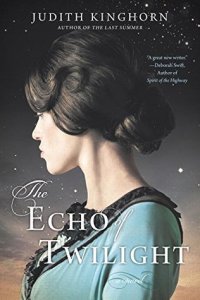 It’s 1914 and Pearl Gibson, a young woman in her twenties, is about to take up a new position as lady’s maid. Her new employer, Ottoline Campbell, has estates in Northumberland and Scotland, which means Pearl will have to leave London and move north. She’s prepared to do this, however, because it’s not as if she has much to leave behind – her relationship with her boyfriend, Stanley, already seems to be fizzling out, and she has no other friends or family. Her mother killed herself just after Pearl’s birth and Pearl was raised by a great-aunt who is also now dead.
 I’m very happy with the way my reading is going so far this year. I’ve read some great books already and this is another one. Published in 1933, Lost Horizon is the novel which introduced into popular culture the idea of Shangri-La as a sort of earthly paradise. It’s a fascinating story and very absorbing – I started it on a Saturday and was finished by Sunday; at just over 200 pages it’s a quick read but also the sort of book that leaves the reader with a lot to think about after the final page is turned.
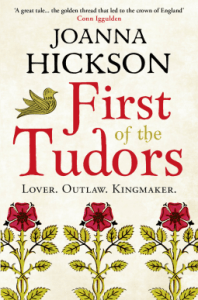 Yes, I’ve been reading yet another Wars of the Roses novel! One of the things I’m enjoying about reading so many books set in the same time period is seeing the variety of ways in which different authors choose to approach the same subject as they search for a new angle and some fresh insights. In First of the Tudors, Joanna Hickson takes us right back to the early days of the conflict and the beginnings, more or less, of the Tudor dynasty to tell the story of Jasper Tudor, uncle of the future Henry VII.
 I was drawn to this book first by the cover – and then by the mention of Russian fairy tales and folklore. It seemed a little bit different from the usual books I read and I hoped it would prove to be an enchanting, magical read, perfect for the winter months.
 She Reads Novels